

In This Article
Snake plants have a reputation as the houseplant you can’t kill. Forget to water one for a month and it shrugs. Stick one in a hallway and it survives out of sheer spite. But surviving and thriving are two very different things, and that gap is exactly where grow lights for snake plants earn their keep. A plant parked in a dim corner will hold its shape while barely adding a leaf, and the right light changes that.
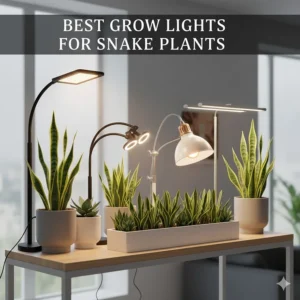
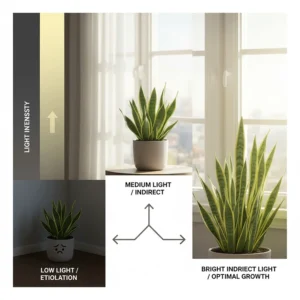
Here is what extension horticulturists and plant-care sources agree on. Brighter light means faster growth and stronger color, while dim light means a slow crawl. Snake plants also tolerate low light but can’t grow in darkness. The right grow lights for snake plants close that gap without scorching leaves or wrecking your décor. Botanists reclassified these plants from Sansevieria to the genus Dracaena in 2017, as Clemson’s Home & Garden Information Center notes, so you’ll see both names on product pages and care guides. They’re the same plant.
What Are Grow Lights for Snake Plants?
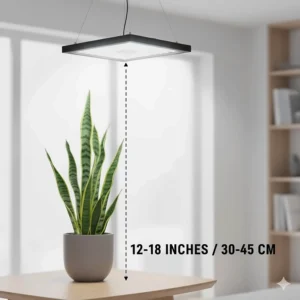
Grow lights for snake plants are full-spectrum LED or fluorescent fixtures that supply the bright, indirect light these plants prefer when windows fall short. They typically run 8 to 12 hours daily on a timer, hang roughly 12 to 24 inches above the foliage, and turn dim corners, offices, and gray winter rooms into places where snake plants grow properly.
This guide covers seven real products across budget, mid-range, and premium tiers, using manufacturer specs, published reviews, and extension guidance. You’ll also get setup steps, mistakes to dodge, and a decision framework for picking the right snake plant grow light for your space.
Quick Comparison: Grow Lights for Snake Plants at a Glance
| Product | Type | Power | Price Range* | Best For |
|---|---|---|---|---|
| Soltech Aspect Gen 2 | Pendant fixture | Dimmable, small & large sizes | Premium | Design-minded owners who want one fixture over several plants |
| Soltech Aura Lamp | Ambient lamp | Warm, low-to-medium output | Around $250 | Living rooms where the light must look good |
| Soltech Vita | Screw-in bulb | 20W, 3000K | Mid-range | Anyone with an existing lamp or clamp fixture |
| SANSI 36W | Screw-in bulb | 36W, 4000K | Budget-to-mid | Bigger snake plants and a medium collection |
| GE 9W Balanced Light | Screw-in bulb | 9W | Budget | One small plant on a desk or shelf |
| Barrina T5 | Linkable strips | 10W per 2-ft strip | Budget | Shelves and plant stands |
| Mars Hydro TS 600 | Panel | 100W | Mid-range | Large collections and dark rooms |
*Ranges are approximate and prices change often. Check current price before buying.
Looking at the table, the real split is between fixtures designed to be seen (Soltech Aspect Gen 2, Soltech Aura Lamp) and hardware designed to disappear or sit on a shelf (Barrina T5, GE 9W Balanced Light). Most snake plant owners need modest light, so the cheaper bulbs are often enough. The Mars Hydro TS 600 is the outlier, built for grow tents and larger than most snake plant setups need.
💬 Just one click — help others make better buying decisions too! 😊
Top 7 Grow Lights for Snake Plants: Expert Analysis
Each entry below weighs real specs and aggregated review themes. None of it comes from hands-on testing, and where verified reviews are thin, that’s stated plainly.
1. Soltech Aspect Gen 2 — best looking, most flexible pendant
The Soltech Aspect Gen 2 is a slim aluminum pendant that most visitors won’t clock as a grow light. It comes in small and large sizes, and the maker says it delivers 110% more output than the original Aspect, with improved anti-glare optics and a built-in dimmer.
The small version targets low to medium indirect light, which is snake plant territory. The large one targets bright light. Its light is soft and warm white rather than the purple-pink glare of older LED lights. A plant reviewer using the Soltech Aspect Gen 2 measured about 180 µmol/s/m² at the canopy for a tropical vine, which is a useful reference for what the light can deliver. Note that this review was a paid partnership, so weigh it accordingly.
Based on the specs, the small model suits snake plants well. A single fixture hung over a cluster of pots covers more ground than a bulb can, and the dimmer lets you tune intensity as the seasons change. Aggregated customer feedback on the maker’s site praises the clean look and build quality. Those reviews live on the manufacturer’s own store, so treat them as one data point.
Pros:
- ✅ Warm white light that blends into living rooms
- ✅ Built-in dimmer for tuning intensity
- ✅ Backed by a 100-day money-back guarantee
Cons:
- ❌ Costs far more than bulb-based options
- ❌ More power than a single snake plant needs
Price range: premium tier, so check current price. The verdict is strong value if the fixture will be seen daily, and overkill if it will live behind a bookshelf.
2. Soltech Aura Lamp — the decorative lamp that happens to grow plants
The Soltech Aura Lamp isn’t a clip-on or a bar. It’s a design-forward lamp that sits in a room the way any nice lamp would, with no mounting required.
A Bob Vila review of the lamp, which listed it at around $250, described the light as warm and strong enough to light a corner while supporting plants with medium to low light needs. That profile matches snake plants closely. Soltech lists a 30,000-hour LED lifespan, and the lamp ships with a manual outlet timer. The same reviewer could not get the advertised inline dimmer to work, a fair reason to ask questions before buying.
Here’s the analytical take. The Soltech Aura Lamp will not push a stubborn snake plant through a dark winter. It is a gentle, ambient light, best for a plant already sitting in a moderately bright room that needs a lift. If you’ve been hunting for grow lights for snake plants that don’t look like lab equipment, this is the stylish end of the market.
Verified review data is limited beyond that single editorial test, so look at the maker’s current product page for owner feedback.
Pros:
- ✅ Looks like furniture, not equipment
- ✅ Warm, gentle light for low-to-medium plants
- ✅ Free-standing with no installation
Cons:
- ❌ Pricey for what it delivers
- ❌ Dimmer reportedly did not work in one test
Price range: around the $250 mark at the time of that review, so check current price. The verdict is a style purchase more than a performance one.
3. Soltech Vita — the screw-in bulb with a high color rendering score
The Soltech Vita is a 20-watt screw-in bulb with a warm 3000K color, about 1,500 lumens, and a color rendering index (CRI) of 98. It fits a standard E26 socket in a PAR30 shape and is dimmable, with a 30,000-hour lifespan listed.
In practice, that CRI of 98 means your snake plant’s yellow-edged leaves look natural rather than washed out. A plant blog’s review notes it uses the same LED technology as the maker’s Aspect fixtures in bulb form, so you can screw it into a lamp you already own.
Here’s what the spec sheet won’t mention. Buyers on one retail listing warn that the bulb is long and heavy, around a pound by one account, and one frustrated reviewer said you may be better off with smaller bulbs unless your fixture is sturdy. Check your lamp’s weight rating before you buy.
For snake plants, this bulb sits in the sweet spot. It supplies enough light for a medium-sized plant a foot or two away without the harshness of high-output bulbs. Owners with north-facing windows describe it as a good supplement.
Pros:
- ✅ Excellent color rendering for natural-looking plants
- ✅ Works in lamps you already own
- ✅ Dimmable for fine adjustment
Cons:
- ❌ Heavy and long for flimsy fixtures
- ❌ Fewer coverage options than a fixture
Price range: mid-range for a bulb, so check current price. The verdict is excellent value for a single statement plant.
4. SANSI 36W — the high-output bulb for bigger plants
The SANSI 36W is a BR30-style bulb with a 4000K daylight spectrum, a 60° beam angle, and an optical lens that focuses output downward. It’s marketed as a 400-watt incandescent equivalent and is not dimmable.
Published output figures vary between listings, so treat any single PPF number with caution. One owner measured the bulb with a lux meter, getting about 22,000 lux a foot below and about 8,000 lux at two feet. Converted roughly, that is around 2,000 foot-candles at one foot and about 740 at two feet. By the Colorado State extension scale, where medium light is 500 to 1,000 foot-candles, a snake plant two feet below is comfortably in its happy zone.
Based on the spec comparison, this is the bulb for a tall snake plant or a small cluster, not a lone desk plant. Reviewers repeatedly mention its brightness, with one saying it can uncomfortably light a bedroom. Others report the maker honoring its warranty, though a minority report a defective unit out of the box.
Pros:
- ✅ Strong output for the price
- ✅ Directional beam needs no shade
- ✅ Good fit for medium collections
Cons:
- ❌ Heavy, around a pound
- ❌ Glare makes it unpleasant in living spaces
Price range: budget-to-mid, so check current price. The verdict is the best raw value for brightness.
5. GE 9W Balanced Light — the cheapest way to try a grow light
The GE 9W Balanced Light is a 9-watt BR30 LED that screws into a regular lamp. Bob Vila’s testing team measured a PPF of 16 micromoles per second and described a full-spectrum light that looks white to the eye, covering about a one-foot square.
That’s the honest scope. It’s perfect for one small snake plant, a tabletop Laurentii or a baby Moonshine, and not enough for a collection or a floor-standing specimen. The balanced white spectrum also means no purple glow in your living room.
Reviews on retail listings are mostly positive about plant response, but a few owners complain about a cold, bluish tint, and at least one reported failure within six months despite the warranty window. Treat it as a low-cost experiment rather than a decades-long fixture.
If you’ve never used grow lights for snake plants before, this bulb answers the “does it even help?” question cheaply. If your plant stretches toward the lamp or perks up, you’ll know to upgrade.
Pros:
- ✅ Very cheap entry point
- ✅ Natural white light
- ✅ Fits ordinary lamps
Cons:
- ❌ Covers only about a one-foot area
- ❌ Some reports of early failure
Price range: budget, roughly in the teens to low $20s per bulb, so check current price. The verdict is an easy trial buy.
6. Barrina T5 — shelf-friendly strips that link together
The Barrina T5 is a linkable LED strip light with 5000K full spectrum output, each strip switchable on its own, with magnetic bars, clips, and ties included. One listing describes 2-foot, 10-watt strips in 8-packs that can chain up to 16 units.
These suit a plant stand or wire shelf, where a row of snake plants sits at one height. The strip shape spreads light more evenly than a bulb’s cone, so the plants at the edges of the shelf don’t get left behind.
A reviewer comparing it to a rival strip on cuttings found plants under the Barrina T5 looked slightly better, while noting the light had a warmer, yellowish cast. A competitor’s blog, which has its own agenda, notes limits for high-light crops. For snake plants, which are not high-light crops, that limit barely matters.
The design makes sense for owners with many small to mid-sized pots. Snake plants don’t mind sharing shelf space, and a single strip run along the underside of the shelf above is a tidy solution.
Pros:
- ✅ Even coverage across shelves
- ✅ Linkable and switchable per strip
- ✅ Multiple mounting options included
Cons:
- ❌ Too weak for tall floor plants
- ❌ Slightly yellow cast per one reviewer
Price range: budget, roughly $25 to $50 for multi-packs, so check current price. The verdict is the best choice for shelves.
7. Mars Hydro TS 600 — the powerhouse for big collections
The Mars Hydro TS 600 is a 100-watt panel with 225 LED chips and a patented reflector, rated by its maker at around 190 µmol/s PPF with 2.0 µmol/J efficiency. It’s sold as a beginner light, with a 2026 dimmable version, and sized for roughly a 2.3-foot-square tent. The maker says it can bring obvious improvement to one or two plants.
It is overkill for most snake plants. Note that the chip mix includes 660nm red and 730nm infrared diodes, so expect a visible tint, which may not suit a living room. The upside is power: mounted high above a big collection in a basement or a windowless room, it has headroom the bulbs lack.
Owner reviews are plentiful, but nearly all come from tent growers praising value, not houseplant owners. No verified review data speaks directly to snake plants, so the fit here is inferred from specs. It is a fixed-voltage light, so confirm compatibility with your outlet.
Pros:
- ✅ Large coverage for a whole collection
- ✅ Dimmable 2026 version available
- ✅ Strong value per watt
Cons:
- ❌ Visible color tint in living areas
- ❌ More light than most snake plants need
Price range: mid-range, roughly $60 to $100, so check current price. The verdict is best for dedicated plant rooms, not shelves.
Light Output and Coverage Compared
| Product | Manufacturer-Stated Output | Practical Coverage | Best For |
|---|---|---|---|
| Soltech Aspect Gen 2 | 110% over the original model | Several pots under one pendant | Statement living-room setups |
| Soltech Aura Lamp | Not published | Single corner | Decor-first buyers |
| Soltech Vita | About 1,500 lumens | One large plant | Existing lamps |
| SANSI 36W | Listings vary widely | Medium collection | Tall plants |
| GE 9W Balanced Light | 16 µmol/s PPF | About one square foot | Desk plants |
| Barrina T5 | Per-strip, linkable | Full shelf runs | Plant stands |
| Mars Hydro TS 600 | About 190 µmol/s PPF | Roughly 2 x 2 ft footprint | Plant rooms |
The numbers confirm a simple pattern. Output climbs with price and size, but snake plants sit at the low end of what these lights can do. If your plant is already in decent window light, the GE 9W Balanced Light or Soltech Vita will likely cover the gap. If you’re lighting a room with no windows, the Barrina T5 or Mars Hydro TS 600 make more sense.
✨ Don’t Miss These Exclusive Deals!
🔍 Take your plant care to the next level with these carefully selected products. Click on any highlighted item to check current pricing and availability. These lights will help you grow the full, upright, richly colored snake plants you’ve been picturing!
How to Choose Grow Lights for Snake Plants
Picking the right setup is easier when you follow a sequence. Here are the steps, with the reasoning behind each.
- Measure your starting light. Colorado State’s extension service defines low light as 50 to 500 foot-candles and medium as 500 to 1,000, and notes that few plants tolerate anything under 50. A free phone light-meter app gives a rough read, as in this CSU Extension guide to interior plants and light. If you’re under 50, you need a real fixture, not a bulb.
- Count your plants and pots. A single plant fits a bulb. A shelf wants strips. A room wants a panel.
- Pick the form factor. Bulbs use lamps you own, strips mount under shelves, and pendants look good in plain sight.
- Choose a white, full-spectrum light. Snake plants don’t need magenta-heavy lights. Plain white light shows true leaf color and is easier to live with.
- Check output, not just wattage. Look for PPF or PPFD figures, or a distance chart. Wattage alone tells you little.
- Add a timer. Consistent daily hours matter more than a high price tag.
- Verify warranty and support. Longer coverage is cheap insurance on any light left running daily.
Common Mistakes When Buying Grow Lights for Snake Plants
The first mistake is buying for the wrong plant. Most marketing targets seedlings and tomatoes. Snake plants are modest, and a 100-watt tent light may be wasted money.
The second is ignoring weight and fit. Several bulbs above weigh close to a pound. Check your lamp’s rating, or it will sag or tip.
The third is chasing wattage. A 36-watt bulb with a focusing lens can outshine a diffuse 50-watt panel at close range. Compare delivered light, not input power.
The fourth is skipping the timer. Hand-switching leads to inconsistent days, and consistent photoperiods are one of the few real rules in indoor growing.
The fifth is treating the plant as invincible. It tolerates neglect, but sources say too-close lights can scorch leaves. Distance is a setting, not an afterthought.
Features That Actually Matter (And Those That Don’t)
What matters: a full-spectrum white light, a verifiable output number, a timer or dimmer, and a mounting method you can live with. Color rendering also matters if the plant sits in your living space, since a high CRI shows true leaf color.
What doesn’t: “400-watt equivalent” claims, since equivalence compares nothing useful for plants. Smartphone apps are nice but not essential for a plant that barely needs tending. Exotic spectrum charts matter more for flowering crops than for foliage.
The Oklahoma State extension fact sheet on LED grow lights for plant production offers a useful rule of thumb, suggesting about 16 watts per square foot for low-light plants and 25 for high-light ones. Snake plants fall at the low end, which explains why modest hardware works.
What to Expect: Real-World Performance of Grow Lights for Snake Plants
Snake plants are slow growers, and grow lights don’t change that dramatically. Expect steadier new leaves, deeper green tones, and sturdier upright growth over weeks and months, not days.
Where light was truly scarce, such as a north-facing room or a windowless office, the difference is clearer. Sources note that plants in dim spots stay alive but grow very slowly, while brighter placement speeds growth and sharpens color. Under supplemental light, a snake plant behaves like one in a better room.
One practical note: more light also means more evaporation, so watering rhythms shift. Sources warn that brighter conditions raise water needs, so check soil dryness before you assume the old schedule still works.
Setup Guide: Using Grow Lights for Snake Plants in Your First 30 Days
Good hardware can still fail through bad setup. Follow this sequence to start right.
Week one: position and hours. Hang or place the light so it sits 12 to 24 inches above the foliage, a range cited in one home-guide source for LED bars. Start with 8 hours daily, then extend toward 10 to 12 if the plant is under artificial light alone. Plant sources cite 6 to 8 hours as a floor with natural light and 10 to 12 hours when lamps are the only source.
Week two: add a timer. A plain mechanical outlet timer is plenty. Consistency beats cleverness.
Weeks three and four: observe and adjust. Healthy plants stand upright with strong color. Leaves leaning hard toward the light suggest the fixture is too weak or too far. Brown or bleached patches mean it’s too close or too long.
Maintenance: Wipe dust off the fixture monthly, since dust cuts output. Rotate the pot a quarter turn weekly so growth stays even.
First-month mistakes to avoid: moving the plant from dark to intense light overnight, overwatering because it “looks thirsty,” and leaving lights on around the clock.
Real-World Scenarios: Matching Grow Lights for Snake Plants to Your Home
Scenario 1: The studio apartment renter. One north-facing window, two snake plants, and a tight budget. A Soltech Vita in an existing desk lamp, or the cheaper GE 9W Balanced Light, gives each plant a daily boost without new furniture. Running costs stay trivial.
Scenario 2: The plant collector with a basement shelf. Eight snake plants of mixed sizes on a metal rack, no natural light at all. A chained set of Barrina T5 strips along each shelf edge delivers even coverage. The Mars Hydro TS 600 is the alternative if the collection grows beyond the rack.
Scenario 3: The design-conscious family room. A tall Laurentii in a corner and guests who’ll see the fixture daily. The Soltech Aspect Gen 2 or Soltech Aura Lamp keeps the room looking intentional. One reasonable approach is to pair the lamp’s gentle light with the plant’s existing window exposure rather than rely on it alone.
In every scenario, matching light to space matters more than chasing the highest spec.
Problem and Solution: Fixing Snake Plant Issues With Grow Lights
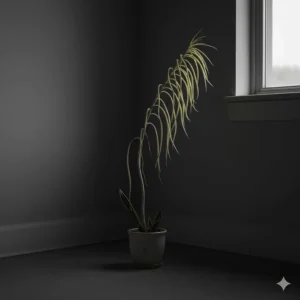
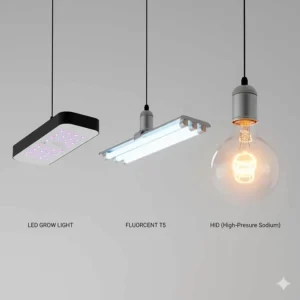
Problem: tall, floppy, pale leaves. This usually signals insufficient light. Move the light closer within the 12 to 24 inch range, or step up from a 9-watt bulb to a stronger option like the SANSI 36W.
Problem: brown or bleached spots. Direct, intense light can burn leaves. Raise the fixture, shorten hours, or dim it. The Soltech Aspect Gen 2 and Mars Hydro TS 600 2026 version both offer dimming.
Problem: stalled growth in winter. Reduced daylight hours slow growth, and supplemental light on a timer fills the gap. Plant-care sources specifically recommend supplemental LEDs for low-light rooms in winter.
Problem: uneven growth on one side. Rotate the pot weekly, a tip echoed by plant guides, and center the light above the plant.
Problem: soil staying wet. Counterintuitively, a stronger light dries soil faster, but a weak light plus frequent watering invites rot. Water only after soil dries, as snake plants store moisture in leaves and rhizomes.
Grow Lights vs Window Light for Snake Plants
| Factor | Grow Lights | Window Light | Standard Room Lamp |
|---|---|---|---|
| Consistency | Same every day | Changes with season and weather | Weak and uneven |
| Placement freedom | Anywhere with an outlet | Near glass only | Anywhere |
| Winter performance | Unaffected | Drops sharply | Little help |
| Upfront cost | Moderate | Free | Free |
| Best For | Dark rooms, offices, winter | Bright rooms with east or west windows | Mood lighting only |
A bright window still beats most lamps when sun is plentiful, but it fades in winter and disappears entirely in interior rooms. Grow lights for snake plants win on consistency and freedom of placement, which is why they suit offices and apartments. A hybrid approach, window light by day with a lamp extending the evening, often delivers the best result for the least cost.
Long-Term Cost and Maintenance of Grow Lights for Snake Plants
Running costs are small. One retailer listing estimates a 36-watt LED costs about $1.56 per month at 12 hours daily and $0.12 per kilowatt-hour. That math checks out, and it means even a larger setup costs little to run.
The real expense is replacement. Bulbs rated for 25,000 to 30,000 hours last years at 10 hours daily, but warranty claims are common enough in reviews that keeping your purchase record is wise. Strips and panels spread that risk across more diodes.
In practical terms, spending a bit more on a better-rated light usually pays back through fewer replacements. A cheap GE 9W Balanced Light is a low-risk trial. A Soltech Aspect Gen 2 is a long-term fixture with a 5-year warranty on its set. Clean dust from every fixture regularly and recheck distances as the plant grows.
Grow Lights for Snake Plants for Specific Audiences
Beginners: Start with a GE 9W Balanced Light or a Soltech Vita in a lamp you own. Low cost, low risk, and easy to learn from.
Office workers: A clip-on or desk lamp bulb works. Pair it with a timer so it switches off after hours.
Plant collectors: The Barrina T5 strips or the Mars Hydro TS 600 scale to many pots.
Design-focused homeowners: The Soltech Aspect Gen 2 and Soltech Aura Lamp fit visible spaces.
Pet owners: Soltech’s own care page notes snake plants are toxic if ingested, so keep both plants and cords out of reach.
Safety and Compliance Guide for Grow Lights for Snake Plants
LED lights run cooler than older technologies, but they are still electrical devices. Give bulbs airflow, since one seller recommends a few extra centimeters of clearance and no tight shades, to avoid heat buildup that shortens bulb life.
Use plug-in timers rated for the load. The Mars Hydro TS 600 is a fixed-voltage fixture, so confirm it matches your outlets. Keep fixtures away from watering spills, and run cords where pets and kids can’t pull them.
For deeper reading on lighting levels and plant needs, the University of Maine Cooperative Extension bulletin on houseplants under artificial lights gives practical guidance on duration and distance that applies well to snake plants.
FAQ
❓ Can snake plants grow under grow lights alone?
❓ How many hours a day should grow lights for snake plants run?
❓ Can a regular LED bulb replace grow lights for snake plants?
❓ Are grow lights for snake plants expensive to run?
❓ Will a grow light burn my snake plant?
Conclusion
The best grow lights for snake plants are the ones that match your space, not the ones with the biggest numbers. A lone desk plant is well served by a GE 9W Balanced Light. A medium collection thrives under a SANSI 36W or a Soltech Vita. Shelves belong to the Barrina T5, big plant rooms to the Mars Hydro TS 600, and visible living spaces to the Soltech Aspect Gen 2 or Soltech Aura Lamp.
Snake plants forgive almost everything, but they reward good light with steadier growth and richer color. Start modest, set a timer, watch the leaves, and adjust. Your plant will tell you whether it wants more.
✨ Ready to give your snake plants the light they deserve? 🌿 Pick the option that fits your space, check current pricing and availability, and watch your plants turn from surviving to thriving!
Recommended for You
- Led Grow Light Strips: 7 Best Proven Picks Compared (2026)
- Solar Grow Light: 7 Best Picks to Boost Your Plants in 2026
- T8 Grow Lights: 7 Smart Picks for 2026
Disclaimer: This article contains affiliate links. As an Amazon Associate, I earn from qualifying purchases. If you purchase products through these links, we may earn a small commission at no additional cost to you.
✨ Found this helpful? Share it with your friends! 💬🤗
