
In This Article
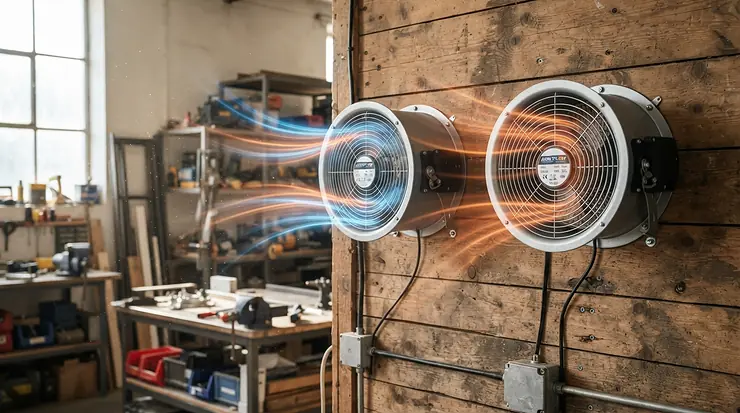
What is AC Infinity Cloudline 6 inch vs Terrabloom 6 inch? It’s a head-to-head between two of the most talked-about EC-motor inline duct fans for grow tents, AV closets, workshops and HVAC boosting. Both promise quiet, adjustable airflow at low wattage. They differ in raw CFM, controller options, build materials and what you get per dollar.
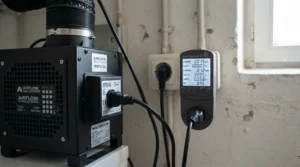
Here’s the short version before we dive in. On paper, the AC Infinity model moves roughly 40% more air, while the Terrabloom model sips less power and wraps its guts in a coated steel shell. Neither is “better” in a vacuum. Which one wins depends on your duct run, your carbon filter, your tolerance for noise and whether you want a smart controller.
Why do EC motors matter here? Because an EC (electronically commutated) motor is basically a brushless DC motor with its own onboard electronics, and that design lets a fan slow down gracefully without wasting energy as heat. A Fantech study published by Systemair found an EC duct fan using 62% less power than its AC sibling at the same duty. That gap is the reason this entire category exists.
I pulled real manufacturer specs, retailer data and aggregated review themes for this guide, then stress-tested the claims against each other. Where listings disagree (and a few do), I’ll flag it rather than pick the flattering number. Prices below are ranges only, so check current price before you buy. Let’s get into it.
Quick Comparison Table: 7 Six-Inch Fans at a Glance
| Product | Motor | Airflow (listed) | Noise (listed) | Power (listed) | Price range | Best For |
|---|---|---|---|---|---|---|
| Cloudline S6 | EC | 402 CFM | 32 dBA | 38W avg / ~64-70W max | Around $100 | Best all-round pick |
| Terrabloom ECMF-150 | EC | 288 CFM | 31 dBA | 36W max | Around $100 | Low-wattage, metal-body buyers |
| Cloudline T6 | EC | 402 CFM | 32 dBA | Same as S6 | $140-$170 | Automated temp/humidity control |
| Cloudline A6 | EC | 352 CFM | 34 dBA | 35W avg / 65W max | Under $100 | Value-minded Cloudline fans |
| VIVOSUN AeroZesh T6 | EC | 408 CFM | 32-45 dBA (varies by listing) | ~35W | $130-$170 | VIVOSUN app ecosystem |
| Hon&Guan 469 CFM EC | EC | 469 CFM | 45-55 dB (varies by listing) | 77W | Well under $100 | Maximum CFM per dollar |
| Hon&Guan 345 CFM | Not EC (per maker’s chart) | 345 CFM | 32 dB (maker’s claim) | 19.2W (maker’s claim) | Lowest in this roundup | Tight budgets |
Read the table as a map of trade-offs, not a leaderboard. The Cloudline S6 delivers the best balance of airflow, verified static pressure and noise, while the Terrabloom ECMF-150 trades about 114 CFM for a lower wattage ceiling and a tougher casing. Buyers who want automation should look at the Cloudline T6, and anyone shopping purely on price will land on the Hon&Guan 345 CFM, accepting the noise and build compromises that come with it.
💬 Just one click — help others make better buying decisions too!😊
Top 7 Six-Inch Inline Fans: Expert Analysis
Every fan below gets the same treatment: what the specs mean in practice, who it suits, what reviewers consistently report and a straight value verdict. Review sentiment is aggregated from real listings and roundups, not invented, and where I couldn’t verify reviews I say so.
1. AC Infinity Cloudline S6 — best all-round 6-inch EC fan
The Cloudline S6 is the benchmark for this entire comparison, and the reason is static pressure. AC Infinity lists 503 Pa, which is the number that tells you how well the fan keeps pushing air through a carbon filter and a few ducting bends.
On the spec sheet it’s rated at 402 CFM and 32 dBA, with a mixed-flow impeller and dual ball bearings rated at 67,000 hours. That bearing design lets you mount it in any direction, a genuine convenience when your ceiling is a mess of straps and hooks. The motor box also detaches from the frame for cleaning, which matters more than it sounds when dust builds up on blades over a year.
My take: this is the fan to beat for a 4×4 tent. Retailer sizing guidance suggests that 402 CFM gives roughly three to four times the airflow a 4x4x6.5 tent needs, so you’ll typically run it at 40-60% speed and enjoy low noise. One review roundup notes that noise climbs noticeably above the third speed setting, so don’t expect full-blast silence.
Pros:
- ✅ Strong 503 Pa static pressure rating
- ✅ Detachable motor box for easy cleaning
- ✅ Mount it in any orientation
Cons:
- ❌ Noise rises above low speed settings
- ❌ Manual controller only, no automation
Price range: around $100. Value verdict: easily the best performance per dollar in the lineup.

2. Terrabloom ECMF-150 — lowest wattage ceiling with a metal shell
The Terrabloom ECMF-150 is the natural rival in any AC Infinity Cloudline 6 inch vs Terrabloom 6 inch showdown. Its headline spec is efficiency: 288 CFM from a listed 36W, which works out to about 8 CFM per watt.
Spec honesty alert. Different retailer pages for Terrabloom’s 6-inch fans list different numbers: 288 CFM at 36W on one, 351 CFM at 44W on another and an older 395 CFM at 70W unit on a third. These are probably different generations or variants, so verify the exact model number on the page you’re buying from. The ECMF-150 listing also describes a coated steel housing with an IPX4 rating, 31 dBA noise and dual ball bearings.
What does that mean for you? A metal, airtight casing is tougher than plastic if you’re hanging the fan near humidity, though it’s not a magic noise-killer. Reviewers across listings describe the fan as quiet and well made, with one user reporting it was quiet enough to buy a second for intake duty. One reviewer on a different Terrabloom unit reported it got loud after a year, a reminder that long-term bearing wear is the hidden variable on any fan.
Pros:
- ✅ Low listed power draw of 36W
- ✅ Coated steel casing with IPX4 rating
- ✅ Smooth 0-100% speed control
Cons:
- ❌ Noticeably less airflow than the Cloudline S6
- ❌ Spec numbers differ across listings
Price range: around $100. Value verdict: a smart pick if wattage and build matter more than maximum CFM.
3. AC Infinity Cloudline T6 — best for automated temperature and humidity control
The Cloudline T6 is the same fan as the Cloudline S6, with the same 402 CFM and 32 dBA ratings, just wrapped in a smart controller. That detail matters because it tells you what you’re really paying for: software, not hardware.
The smart controller lets you set temperature and humidity triggers, schedules and (per one review roundup) even VPD-based triggers. If you run a grow space where conditions drift through the day, automation turns the fan from a dumb blower into a climate tool. If you only need a simple exhaust, you’d be paying roughly $40-$70 more than the S-series for features you won’t use.
Reviewers who value automation call the controller the main reason to buy, while the price gap over basic inline fans is the most common sticking point. Honestly, the “buy once, never touch” appeal is real: a set-and-forget fan beats a dial you forget to adjust.
Pros:
- ✅ Temperature and humidity-based automation
- ✅ Same 402 CFM and 32 dBA as the S6
- ✅ Built for multi-device smart setups
Cons:
- ❌ Costs noticeably more than the S-series
- ❌ Overkill for simple exhaust jobs
Price range: $140-$170. Value verdict: worth it only if you’ll actually use the automation.
4. AC Infinity Cloudline A6 — the value entry to the Cloudline family
The Cloudline A6 is AC Infinity’s budget-friendly route into the same EC-motor family. Listed at 352 CFM and 34 dBA, with 35W average and 65W max power draw, it gives up about 50 CFM versus the Cloudline S6 in exchange for a lower price.
That’s a modest trade. For a 2×4 or 3×3 tent, 352 CFM is plenty, and you’ll rarely push it past 50%. The A6 includes a wired 10-speed controller and stays compatible with Cloudline smart controllers, so you can upgrade your control setup later without replacing the fan.
Reviewer sentiment is strong: one retailer feed shows a rating near 4.8 stars across more than 700 ratings at the time of research, which is unusually high for any fan category (ratings change, so verify before you buy). The small noise bump to 34 dBA is the main thing buyers mention.
Pros:
- ✅ Same EC-motor design as pricier Cloudline fans
- ✅ Smart controller compatibility for later upgrades
- ✅ Excellent aggregate review score
Cons:
- ❌ About 50 CFM lower than the S6
- ❌ Slightly louder at 34 dBA
Price range: under $100. Value verdict: the sensible pick for small and medium tents.
5. VIVOSUN AeroZesh T6 — the ecosystem play for app-controlled setups
The VIVOSUN AeroZesh T6 is a 6-inch EC fan with a mixed-flow design rated at 408 CFM, running at about 3,100 RPM. One kit listing quotes the motor at only 35W while moving that air, which would make it extremely efficient if the number holds.
Here’s the catch. Noise ratings vary by page: some VIVOSUN listings say 32 dBA, while specification tables show “under 45 dB” for the 6-inch model. That’s a meaningful spread, so treat the quietest claim cautiously and consider the louder one a realistic ceiling.
The pitch is ecosystem. Pair the fan with the GrowHub E42A controller and app, and you get environmental probe-based automation and multiple modes. If you already own VIVOSUN lights or sensors, this slots in cleanly. If you’re brand-agnostic, the Cloudline T6 is the more established alternative. I couldn’t verify a clean aggregated review score for this specific model, so I won’t pretend there’s a consensus.
Pros:
- ✅ Strong 408 CFM rating
- ✅ App-based automation with GrowHub controllers
- ✅ Efficient EC motor design
Cons:
- ❌ Noise claims vary across listings
- ❌ Only a one-year warranty on some retailer pages
Price range: $130-$170, depending on the controller bundle. Value verdict: best for VIVOSUN-ecosystem owners.
6. Hon&Guan 469 CFM EC — maximum airflow for the money
The Hon&Guan 469 CFM EC is the highest-airflow fan in this roundup, listed at 469 CFM, 4,300 RPM and 77W. That’s more air than the Cloudline S6, but it comes with a trade-off that its listings reveal clearly.
The manufacturer’s comparison chart lists noise under 45 dB, while one distributor’s listing says 55 dB. A 10 dB gap is audible, because every 10 dB is roughly a doubling of perceived loudness. In plain English, this fan likely sounds fine on lower speeds and gets noticeably louder when pushed.
The housing is durable plastic with an IP44-rated junction box, suited for air temperatures from -4°F to 140°F. That’s a decent range for attic or garage runs. It’s a strong pick when you need to push air through a long duct run on a budget, but I’d steer noise-sensitive bedrooms and office closets toward the Cloudline S6 instead.
Pros:
- ✅ Highest airflow in this lineup
- ✅ EC motor with variable speed control
- ✅ Wide operating temperature range
Cons:
- ❌ Louder than the premium EC options
- ❌ Plastic housing feels less premium
Price range: well under $100. Value verdict: unbeatable CFM per dollar if noise isn’t your priority.
7. Hon&Guan 345 CFM — the bargain budget option
The Hon&Guan 345 CFM is the cheapest way into 6-inch inline ventilation here, and the maker’s own comparison chart lists it without an EC motor. It’s rated at 345 CFM, 3,300 RPM and just 19.2W, with a 32 dB noise claim and a variable speed controller included.
Those are manufacturer numbers, so treat them as best-case. The reviews are the interesting part: one reviewer replacing a metal duct fan said the 345 CFM claim held up and that it beat a pricier metal alternative on airflow, power draw and noise. The family sits around 4.3 stars across thousands of ratings on one retailer listing at the time of research.
The compromises are what you’d expect. The housing and blades are plastic, and non-EC speed control tends to be less refined at low speeds than PWM-driven EC fans. For occasional bathroom, workshop or booster use, it’s a sensible spend. For 24/7 grow-tent exhaust, I’d rather spend a little more on an EC model.
Pros:
- ✅ Very low purchase price
- ✅ Respectable 345 CFM for the money
- ✅ Includes a variable speed controller
Cons:
- ❌ All-plastic construction
- ❌ Less refined speed control than EC fans
Price range: the lowest in this roundup, so check current price. Value verdict: great for intermittent, low-stakes jobs.
Cloudline vs Terrabloom CFM Comparison: What the Numbers Really Mean
Airflow is the headline number, so let’s give the Cloudline vs Terrabloom CFM comparison the scrutiny it deserves. A fan’s CFM rating is measured in free air, with nothing attached. The moment you add a carbon filter, 10 feet of ducting and a couple of bends, delivered airflow falls, sometimes by a third or more. The AC Infinity guide on inline fans and boosters makes the same point: only fans with strong airflow keep working normally once filters and ducts load them down.
| Spec | Cloudline S6 | Terrabloom ECMF-150 |
|---|---|---|
| Listed airflow | 402 CFM | 288 CFM |
| Listed noise | 32 dBA | 31 dBA |
| Static pressure | 503 Pa | Not verified on sources I reviewed |
| Power | 38W avg / ~64-70W max | 36W max |
| Listed CFM per watt (full speed) | ~6 | ~8 |
| Bearings | Dual ball, 67,000 hrs | Dual ball |
| Housing | Plastic | Coated steel, IPX4 |
| Best For | Filtered grow tents, long runs | Efficiency-first, rugged setups |
Here’s what the table says. The Cloudline S6 delivers about 40% more free-air airflow and has a published static pressure figure, which is what predicts real-world delivery through a carbon filter. The Terrabloom ECMF-150 wins on listed CFM per watt at full speed, but 288 CFM can run thin on a 4×4 tent once filter resistance bites. Buyers with a short, straight duct and a small space can happily use the Terrabloom, while anyone with a filter and elbows should lean toward the Cloudline.
One caution: efficiency per watt compares different operating points, because the Cloudline S6 rarely runs at full power in a tent. At 40-50% speed, its power draw falls steeply, which narrows the real-world gap considerably.

EC Motor vs AC Motor 6 Inch Fan: What Actually Changes
Understanding EC motor vs AC motor 6 inch fan design explains why every fan above, except the budget Hon&Guan 345 CFM, uses EC motors. A traditional AC fan controls speed by cutting voltage, which wastes energy as heat and often makes the motor hum at low settings. An EC fan runs a brushless DC motor with built-in electronics, so it slows down by changing how the motor is driven, not by choking its power.
The ebm-papst explanation of EC fan technology notes that EC fans generate less heat, which helps extend the life of motor components. That tracks with how AC Infinity describes the Cloudline S6: PWM control that lets the motor run at very low RPM without generating motor noise or the heat seen with variable-voltage controllers.
| Factor | EC motor fan | Traditional AC motor fan |
|---|---|---|
| Speed control | PWM, smooth at low RPM | Voltage reduction, can hum |
| Heat | Low | Higher at reduced speeds |
| Energy at partial speed | Falls steeply | Drops less efficiently |
| Upfront cost | Higher | Lower |
| Best For | Quiet, always-on use | Occasional, short-run jobs |
The takeaway: EC motors earn their premium in always-on applications where low-speed noise and wattage matter. An AC fan that runs an hour a day in a bathroom never repays that premium. But a grow tent fan running around the clock will.
EC Motor Efficiency: Translating Watts into Real Dollars
EC motor efficiency sounds abstract until you convert it to a power bill. Let’s run the numbers, assuming roughly 17 cents per kWh and a fan running 24/7 for a year (about 8,760 hours). Your rate will differ, so scale accordingly.
- Terrabloom ECMF-150 at its listed 36W maximum: about 315 kWh, or roughly $54 per year.
- Cloudline S6 at its listed 38W average: about 333 kWh, or roughly $57 per year.
- Cloudline S6 pinned at ~70W max: about 613 kWh, or roughly $104 per year.
- A conventional-motor 6-inch laser-exhaust fan I reviewed lists 130W for 440 CFM: about 1,139 kWh, or roughly $194 per year.
Those are estimates built on manufacturer ratings, not metered tests. Still, the pattern is useful: running an EC fan at moderate speed is roughly one-third of the energy bill of a 130W-class alternative. Physics helps too, because fan power rises with the cube of speed. Slowing a fan by a fifth can cut power by roughly half, which is why EC fans running at 40-60% are so thrifty.
A New York City demonstration project with EC fan retrofits showed a 33.3% electricity reduction on one steam-shop fan, a real-world reminder that these savings show up outside spec sheets. Bottom line: the efficiency difference between the Terrabloom ECMF-150 and Cloudline S6 is a few dollars a year, but the gap versus an old-style fan is hundreds over a few years.
How to Choose a 6-Inch EC Inline Fan: 6 Steps
- Size your airflow need. Multiply your space volume (in cubic feet) by the air changes per minute you want. A 4x4x6.5 tent is about 104 cubic feet, so even one exchange per minute needs only about 104 CFM at the fan. Heavy filtration and long ducts raise that requirement.
- Add a resistance cushion. A carbon filter and bends can swallow a third or more of free-air CFM. Aim for at least 2-3x your minimum so you can run the fan slowly and quietly.
- Check static pressure. CFM alone misleads. Static pressure (like the Cloudline S6‘s 503 Pa) shows how well a fan pushes through resistance.
- Decide on control. A basic dial works for steady setups. Choose the Cloudline T6 or VIVOSUN AeroZesh T6 if you want temperature or humidity automation.
- Weigh noise honestly. If listings disagree on dBA, plan for the louder number and use speed control.
- Match build to environment. Humid, dusty or exposed locations favor the Terrabloom ECMF-150‘s steel casing. Dry indoor spaces make plastic perfectly fine.
Terrabloom Alternative to Cloudline: When Switching Makes Sense
Looking for a Terrabloom alternative to Cloudline, or the other way around? The decision usually comes down to three questions.
Do you need more air than 288 CFM? If so, move from the Terrabloom ECMF-150 to the Cloudline S6, or to the VIVOSUN AeroZesh T6 at 408 CFM. Do you want smarter control? The Cloudline T6 and VIVOSUN AeroZesh T6 both pair with controllers that automate speed. Is budget the only deciding factor? The Cloudline A6 gives you the same EC design for less, while the Hon&Guan 345 CFM is the rock-bottom fallback.
Going the other direction, a Cloudline owner might want a Terrabloom for its metal casing or lower listed wattage. That’s a legitimate reason when the fan lives somewhere damp or rough, or when you’re running it at near-full power and every watt counts. Otherwise, the Cloudline’s higher airflow and published static pressure make it the safer default. One practical note: controllers are not cross-compatible between brands, so plan to replace the control hardware along with the fan.
✨ Don’t Miss These Top Picks!
🔍 Take your ventilation setup to the next level with these carefully selected fans. Click on any highlighted product to check current pricing and availability. These picks will help you create a quiet, well-ventilated space you’ll love!
Practical Usage Guide: Setting Up and Dialing In Your 6-Inch EC Fan
Amazon listings give you specs. They rarely tell you how to get quiet, steady performance. Here’s a setup routine that works for any fan above, though you should always follow your fan’s manual.
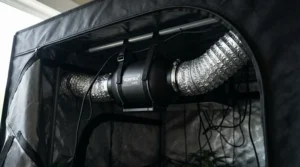
Layout. The standard grow-tent order is carbon filter inside the tent, then the fan in the duct, then ducting out. The fan pulls air through the filter, creating gentle negative pressure so odors stay inside. Keep ducting as straight and short as possible, because every bend costs airflow.
Hang, don’t bolt. Suspend the fan with straps or ropes so vibration doesn’t transfer to the frame. Noise-reduction clamps help, and the Cloudline S6 can be mounted in any direction thanks to its dual ball bearings.
Start slow. Run the fan at about 40% for the first week and watch temperature and humidity. Raise speed only if conditions drift. Because of that cube law, small speed bumps raise wattage and noise faster than they raise airflow you can feel.
Maintenance schedule. Every two to three months, power the fan down, wipe the blades and check the filter. The Cloudline S6‘s detachable motor box makes this easy. Replace the carbon filter when odor control fades.
Common first-30-days mistakes: running at full speed “just to be safe,” leaving ducts kinked, mounting a fan rigidly to a metal frame and forgetting that a smart controller needs its probe placed at canopy height.
Real-World Scenarios: Which Fan Fits Which Buyer?
Scenario 1: The 4×4 tent grower on a moderate budget. You run lights 18 hours a day, with a filter and 8 feet of ducting. Your priorities are noise and consistency. The Cloudline S6 is the strongest fit, running at 40-60% for low noise and ample margin. Monthly power cost is small, and you can upgrade the controller later.
Scenario 2: The small-tent or closet user on a tight budget. You have a 2×4 tent or a ventilated AV closet. The Cloudline A6 gives you EC performance for less, and 352 CFM is plenty. If you only need occasional venting and don’t care about silence, the Hon&Guan 345 CFM can save more.
Scenario 3: The automation-first, multi-zone grower. You manage temperature, humidity and VPD across rooms. The Cloudline T6 or VIVOSUN AeroZesh T6 fits best, because their controllers adjust the fan automatically. Choose based on which ecosystem you already own.
Scenario 4: The damp workshop or rugged-install user. Humidity, dust or an exposed run points toward the Terrabloom ECMF-150, with its coated steel casing and IPX4 rating, assuming 288 CFM covers your duct run.
Problem and Solution Guide: Fixing Common Inline Fan Frustrations
“My fan is too loud.” First, drop the speed. Noise tends to rise sharply above low settings, and one Cloudline S6 review roundup mentions exactly this above speed three. Then isolate vibration by hanging the fan on straps and add a silencer or noise-reduction clamps.
“My airflow feels weak.” Check for kinked ducting and a clogged carbon filter. If the system is right-sized, stepping up from the Terrabloom ECMF-150 to the Cloudline S6 or VIVOSUN AeroZesh T6 adds meaningful headroom.
“The fan hums at low speed.” That’s classic voltage-controlled behavior. EC fans like the Cloudline A6 avoid it by design, so consider upgrading if you’re stuck with a basic fan.
“My settings reset after a power cut.” The Cloudline S-series controllers advertise backup memory that retains the last speed, a small feature that matters in storm-prone areas.
Common Mistakes When Buying a 6-Inch Inline Fan
Buying on CFM alone. Free-air CFM flatters every fan. Static pressure, ducting and filters decide real delivery, and a 469 CFM fan with higher noise isn’t automatically better than a 402 CFM fan you can actually tolerate.
Trusting one noise number. The VIVOSUN AeroZesh T6 and Hon&Guan 469 CFM EC both show wildly different dBA figures across listings. Treat the highest as your planning figure.
Ignoring the controller. Fans that look cheaper may need a separately purchased controller. Check what’s in the box.
Skipping duct size matching. A 6-inch fan needs 6-inch ducting and filters. Reducers choke airflow.
Overbuying automation. Paying for a Cloudline T6 when a Cloudline S6 dial would do is common. Conversely, running a manual dial on a swing-temperature room invites constant fiddling.
Features That Actually Matter (And Those That Don’t)
Matter: published static pressure, honest noise ratings, controller type, bearing quality (both Cloudline and Terrabloom list dual ball bearings) and easy maintenance access. These determine your day-to-day experience.
Matter somewhat: housing material. A coated steel shell like the Terrabloom ECMF-150‘s adds durability in rough conditions, but plastic is fine in a clean, dry tent.
Don’t matter much: headline CFM beyond what your duct can use, “up to” efficiency percentages and color. A fan rated at 469 CFM that’s too loud to run above half speed isn’t giving you 469 CFM of usable airflow.
FAQ
❓ Is the Terrabloom 6 inch fan quieter than the Cloudline S6?
❓ How many CFM do I need for a 4x4 tent with a carbon filter?
❓ Can I mix a Cloudline fan with a Terrabloom controller?
❓ Is a 6 inch EC fan worth the extra cost over a basic fan?
❓ Can I mount the Cloudline S6 sideways or upside down?
Conclusion
So, who wins the AC Infinity Cloudline 6 inch vs Terrabloom 6 inch contest? For most buyers, the Cloudline S6. It offers about 40% more listed airflow than the Terrabloom ECMF-150, a published 503 Pa static pressure rating and a long track record in tent setups, all at roughly the same price. If you need to push air through a filter and a long duct, that headroom is exactly what you want.
The Terrabloom ECMF-150 earns its place when wattage and ruggedness outrank raw airflow. Its listed 36W draw, coated steel casing and IPX4 rating suit damp or demanding installations, as long as 288 CFM covers your duct run and you’ve verified the exact model’s specs.
Beyond those two, the Cloudline A6 is the smart budget route, the Cloudline T6 and VIVOSUN AeroZesh T6 are the automation picks, the Hon&Guan 469 CFM EC is the raw-airflow bargain and the Hon&Guan 345 CFM is the cheap occasional-use option. Whatever you choose, size for your filter, plan around the louder noise rating and run the fan slow.
✨ Ready to upgrade your airflow?
Check current prices, compare your favorites and pick the fan that fits your space. Your plants, your closet and your ears will thank you! 🌿
Recommended for You
- AC Infinity Cloudline 6 Inch Vs Vivosun 6 Inch: 7 Best Fans 2026
- AC Infinity Cloudline 6 Inch Review For 4×4 Tent: 7 Proven Fans 2026
- Price AC Infinity Cloudline 6 Inch Fan: 7 Smart Buys (2026)
Disclaimer: This article contains affiliate links. As an Amazon Associate, I earn from qualifying purchases. If you purchase products through these links, we may earn a small commission at no additional cost to you.
✨ Found this helpful? Share it with your friends! 💬🤗
