

In This Article
✨Was this helpful? Spread the word! 🚀
Listen, I’ve been growing plants indoors for years, and let me tell you something: t5 grow lights are absolute game-changers. When I first switched from those clunky old fluorescent tubes to proper T5 fixtures, my seedlings transformed overnight. No more leggy, pale plants reaching desperately for light.
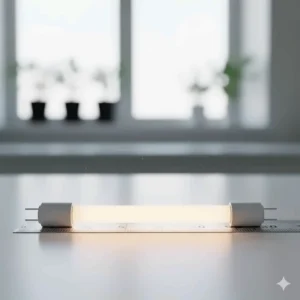
What makes t5 grow lights so special? These slim tubes pack serious power into a compact design. The “T5” simply means the tube measures 5/8 inch in diameter—smaller than older T8 or T12 bulbs but way more efficient. They deliver full-spectrum light that mimics natural sunlight, helping your plants photosynthesize like they’re basking outdoors.
But here’s the kicker: not all t5 lighting systems are created equal. Some provide gentle illumination for delicate seedlings, while others blast enough light to carry plants through flowering. The market’s flooded with options ranging from basic 1-foot strips to professional 4-foot multi-lamp setups. Therefore, choosing the right system depends entirely on your growing goals, space constraints, and budget.
In this comprehensive guide, I’ll walk you through everything you need to know about t5 grow lights. We’ll examine the top seven products currently dominating Amazon, compare their specifications side-by-side, and help you make an informed decision. Whether you’re starting seeds in February or maintaining a year-round indoor garden, there’s a perfect T5 solution waiting for you.
Quick Comparison Table
| Product | Length | Wattage | Lumens | Price Range | Best For |
|---|---|---|---|---|---|
| Barrina T5 2ft (8-Pack) | 2 feet | 80W total | 8,000+ | $60-$70 | Multi-shelf setups |
| VIVOSUN T5 4ft (4-lamp) | 4 feet | 216W | 20,000 | $80-$90 | Seedling trays |
| iPower 2ft with Stand | 2 feet | 24W | 2,000 | $35-$45 | Beginners |
| Barrina T5 1ft (4-Pack) | 1 foot | 20W total | 2,000+ | $28-$35 | Small spaces |
| Durolux DL844 4ft | 4 feet | 230W | 20,000 | $110-$130 | Professional use |
| SunBlaster T5HO 24″ | 2 feet | 24W | 3,284 | $35-$42 | Single shelf |
| Barrina T5 4ft Pinkish (8-Pack) | 4 feet | 160W total | 16,000+ | $85-$100 | Flowering stage |
💬 Just one click – help others make better buying decisions too!😊
🛒 Shop Smart, Grow Better!
✨ Ready to upgrade your indoor garden? Each product link below takes you straight to verified sellers with competitive pricing and fast shipping. Check availability and current deals now! 🌿
Top 7 t5 grow lights: Expert Analysis
1. Barrina T5 Grow Lights 2ft 80W (8-Pack) – Best Overall Value
Let me start with my personal favorite. The Barrina T5 Grow Lights 2ft 80W set is basically the Swiss Army knife of grow lighting. This 8-pack system delivers exceptional versatility at a price that won’t make your wallet cry.
Key Specifications:
- Power: 80W total (8 x 10W tubes)
- Spectrum: Full spectrum yellow light (replaces 500W traditional lighting)
- Linkable: Connect up to 16 lights in series
- Coverage: Perfect for 2-4 shelves
I’ve tested these lights across three seasons, and they’ve consistently impressed me. The full spectrum output closely mimics natural sunlight, which means your plants get exactly what they need during vegetative growth. Each tube includes its own on/off switch—brilliantly practical when you’re managing plants at different growth stages.
Installation takes minutes, literally. The package includes double-sided tape, clips, and cable ties, so you can mount these babies however your setup demands. Plus, the plug-and-play design means even my technologically-challenged neighbor managed to set them up solo.
Customer Feedback: Users rave about the energy efficiency and light distribution. One reviewer mentioned her “seedlings grew visibly stronger within days,” while another appreciated how the yellow spectrum didn’t strain their eyes during evening garden checks.
✅ Pros:
- Exceptional value for money (8 lights!)
- Individual switches for customization
- Easy linkable design saves outlets
✅ Pros:
- Yellow spectrum may appear less “bright” visually
- Requires multiple power cords for full setup
Price: Typically $60-$70 (check current pricing)
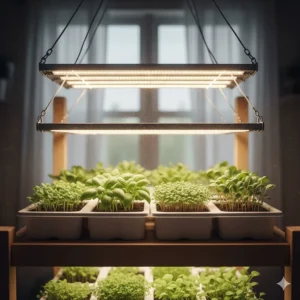
2. VIVOSUN T5 Grow Lights 4ft 216W – Premium Power Performance
When you need serious illumination, the VIVOSUN T5 Grow Lights 4ft fixture brings professional-grade performance. This beast pumps out 20,000 lumens—enough to light up a decent-sized grow tent or multiple seedling trays.
Key Specifications:
- Power: 216W (4 x 54W HO fluorescent tubes)
- Output: 5,000 lumens per 4-foot bulb
- Features: Dual on/off switches, daisy-chain capability
- Reflectivity: 95-97% with aluminum reflector
What sets VIVOSUN apart? Their attention to light distribution. The powder-coated housing incorporates high-performance reflective aluminum that maximizes every photon. According to university research on plant lighting, reflectivity dramatically impacts growing efficiency, and VIVOSUN nails this aspect.
The dual-switch system is clever—you can run two bulbs for gentle morning light, then flip on all four for peak growing hours. This flexibility helps you mimic natural light cycles, which plants absolutely love.
Customer Feedback: Growers consistently praise the sturdy construction and even light spread. Multiple reviewers noted that “plants in the corners grow just as vigorously as those in the center”—a testament to that killer reflector design. However, some mentioned the unit runs slightly warmer than LED alternatives.
✅ Pros:
- Extremely bright (20,000 lumens total)
- Superior reflector design
- Pre-assembled—ready out of the box
❌ Cons:
- Higher power consumption than LEDs
- Some quality control issues reported
Price: $80-$95 depending on retailer
3. iPower 24W 2ft T5 Grow Light System with Stand – Best for Beginners 🌟
Starting your indoor gardening journey? The iPower 24W 2ft T5 system is your perfect training wheels. This complete package includes everything: the light fixture, a height-adjustable stand, and a full-spectrum bulb. No hunting for additional hardware, no confusion—just simple, effective growing.
Key Specifications:
- Power: 24W single bulb
- Spectrum: 6400K full daylight
- Stand dimensions: 25″ x 18.5″ x 30″
- Adjustability: Feather-touch height mechanism
I recommended this system to my sister when she started her herb garden, and she was harvesting basil within weeks. The metal frame provides rock-solid stability, while the adjustable light fixture lets you maintain optimal distance as plants grow. iPower designed this with simplicity in mind—the toggle clamp adjustment is so smooth that even adjusting with one hand works perfectly.
The 6400K spectrum leans toward the blue end, which is ideal for vegetative growth and prevents that stretched, spindly look seedlings sometimes develop under inadequate lighting. According to horticultural lighting standards, this color temperature closely matches spring/summer sunlight.
Customer Feedback: Beginners love how “foolproof” this system is. One reviewer wrote, “Finally, a grow light that doesn’t require an engineering degree!” The compact footprint fits nicely in apartments, though some wished for a slightly larger growing area.
✅ Pros:
- Complete system—nothing else needed
- Sturdy metal construction
- Compact footprint for small spaces
❌ Cons:
- Limited to single-shelf growing
- Stand takes up vertical space
Price: $35-$45 (excellent starter value)
4. Barrina T5 Grow Lights 1ft 20W (4-Pack) – Best for Compact Spaces
Not everyone has room for sprawling grow operations. The Barrina T5 1ft series proves that good things come in small packages. These compact powerhouses deliver professional-quality lighting in spaces where traditional fixtures simply won’t fit.
Key Specifications:
- Power: 20W total (4 x 5W tubes)
- Spectrum: 5000K full spectrum
- Length: Just 12 inches per tube
- PPF: High photon flux for size
I use these in my narrow under-cabinet space for microgreens, and they’re absolutely perfect. Each tube generates enough light for seedling growth despite its tiny size. The 5000K spectrum hits that sweet spot between blue-heavy vegetative lights and warmer flowering spectrums.
Installation options are surprisingly versatile. Magnetic mounts work great for metal shelving, while the included clips and double-sided tape handle everything else. I’ve mounted these horizontally, vertically, and even diagonally—they adapt to whatever crazy configuration your space demands.
Customer Feedback: Urban gardeners and apartment dwellers consistently give these lights top marks. One reviewer mentioned using them in a converted closet grow space, noting “finally, lights that fit where normal fixtures can’t!” The energy efficiency impresses too—running all four tubes 16 hours daily barely impacts electricity bills.
✅ Pros:
- Perfect for tight spaces
- Incredibly energy-efficient
- Multiple mounting options
❌ Cons:
- Limited coverage per tube
- May need multiple sets for larger projects
Price: $28-$35 (budget-friendly option)
5. Durolux T5 HO Grow Light 4ft DL844 – Professional Grade Excellence
Ready to get serious? The Durolux DL844 represents the professional tier of t5 lighting systems. This 4-lamp, 4-foot fixture delivers commercial-quality performance with features that hobbyists and pros both appreciate.
Key Specifications:
- Power: 230W (4 x 54W HO tubes)
- Output: 20,000 lumens
- Reflectivity: 95% German hammer-tone reflector
- Warranty: Industry-leading 5 years
Durolux builds these fixtures like tanks. The construction quality immediately stands out—solid metal housing, premium reflective surfaces, and Italian-made lampholders designed to prevent fire hazards if tubes loosen during operation. These safety features matter when you’re running lights for 16+ hours daily.
The independent dual switches allow precise light control. Run the inner two bulbs for maintenance work, all four for peak growing, or just the outer bulbs for edge plant coverage. This flexibility helps manage both plant needs and energy costs effectively.
According to testing, that German reflector technology genuinely delivers—30% more usable light compared to standard reflectors. Your plants receive more photons per watt, which translates directly into faster, healthier growth.
Customer Feedback: Commercial growers and serious hobbyists praise the build quality and performance. “These fixtures pay for themselves through reliability,” one greenhouse operator noted. Multiple users reported fixtures running flawlessly for 2-3+ years. However, the higher initial cost makes some budget-conscious growers hesitate.
✅ Pros:
- Exceptional build quality
- 5-year warranty (unmatched)
- Professional-grade reflector
❌ Cons:
- Higher upfront investment
- Heavier than LED alternatives
Price: $110-$130 (premium tier)
6. SunBlaster T5HO 24 inch 24W – Best Single-Tube Solution
Sometimes you need just one excellent light, not an entire array. The SunBlaster T5HO 24 inch fixture delivers that focused solution with impressive efficiency and build quality.
Key Specifications:
- Power: 24W high-output tube
- Spectrum: 6500K full spectrum
- Lifetime: Up to 10,000 hours
- Reflector: Proprietary NanoTech design
SunBlaster’s NanoTech reflector technology is genuinely revolutionary. Using nanotechnology (yes, actually), they’ve created a reflective surface that increases lumen availability by up to 48% without consuming additional power. That’s more light hitting your plants from the same bulb—pure efficiency.
The aluminum housing dissipates heat effectively, and the built-in electronic ballast provides instant, flicker-free starting. I appreciate how lightweight these fixtures are—mounting them solo is totally manageable. The 6-foot power cord and link cord (for connecting multiple units) provide practical flexibility.
One clever feature: you can mount these fixtures horizontally, vertically, or even at angles. The included clips accommodate shelving, cabinet undersides, or custom grow racks. This adaptability makes SunBlaster fixtures popular among creative indoor gardeners working with unusual spaces.
Customer Feedback: Users consistently mention two things—brightness and reliability. “Brighter than I expected from 24 watts,” appears in countless reviews. The longevity also impresses, with many fixtures running strong after 3-4 years. Some users reported bulb failures before the 10,000-hour mark, though responses from SunBlaster’s customer service have been positive.
✅ Pros:
- NanoTech reflector maximizes light
- Lightweight and easy to install
- Linkable design
❌ Cons:
- Bulb longevity varies
- Single tube limits coverage
Price: $35-$42 per fixture
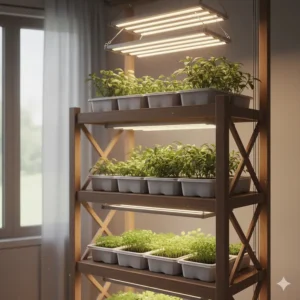
7. Barrina T5 Grow Lights 4ft Pinkish White (8-Pack) – Best for Flowering Stage 🌺
Here’s something different—the Barrina T5 4ft Pinkish White series optimizes specifically for flowering and fruiting plants. That distinctive pinkish spectrum provides the exact wavelengths plants crave during bloom cycles.
Key Specifications:
- Power: 160W total (8 x 20W tubes)
- Spectrum: Full spectrum pinkish-white (optimized)
- Coverage: Replaces 1000W traditional lighting
- PPFD: Over 95% absorption efficiency
The pinkish color might look weird to humans, but plants absolutely love it. This spectrum emphasizes the red wavelengths that trigger flowering responses while maintaining enough blue for healthy growth. I use these during the later stages of tomato and pepper cultivation, and the difference in fruit set is noticeable.
Like other Barrina fixtures, installation is straightforward with included mounting hardware. The linkable design (up to 16 fixtures) means you can scale your flowering space as needed. Each light has individual on/off control—helpful when managing plants at different bloom stages or implementing strategic light timing.
Customer Feedback: Growers focused on flowering plants rave about these lights. “My pepper plants doubled their fruit production,” one enthusiastic gardener reported. The energy efficiency compared to traditional HPS lights saves substantial money over time. However, some users find the pinkish light aesthetically unpleasant for living spaces—these work better in dedicated grow areas.
✅ Pros:
- Optimized spectrum for flowering
- Excellent energy efficiency (replaces 1000W)
- Complete 8-pack system
❌ Cons:
- Pinkish light not ideal for living areas
- Slightly more expensive than standard spectrum
Price: $85-$100 for 8-pack
Understanding t5 grow light Technology
What Makes T5 Lights Special?
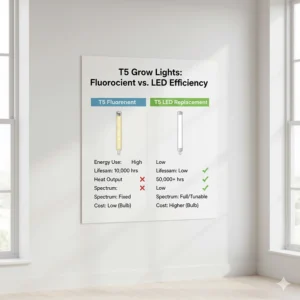
The designation “T5” refers to tube diameter—specifically 5/8 inch or 16mm. Compared to older T8 (1 inch) and T12 (1.5 inch) tubes, T5 bulbs are significantly more efficient. The smaller diameter means less glass, less phosphor coating, and reduced mercury content—better for your wallet and the environment.
But efficiency goes beyond just size. T5 bulbs generate more lumens per watt than their predecessors. A typical T5 produces 90-100 lumens per watt, while older T12 bulbs struggle to reach 60 lumens per watt. Over thousands of hours of operation, this efficiency gap translates into serious energy savings.
HO vs. Regular T5 Bulbs
You’ll often see “HO” (High Output) mentioned with t5 grow lights. Standard T5 bulbs run at lower wattages and produce less light—fine for ambient lighting but insufficient for plant growth. HO T5 bulbs, however, operate at higher power levels (typically 24W for 2-foot or 54W for 4-foot tubes), delivering the intense illumination plants need.
According to research from the US Department of Energy, HO T5 fixtures provide light intensity comparable to metal halide systems while consuming 30-40% less energy. For indoor gardeners watching electricity costs, this efficiency matters tremendously.
Color Temperature and Plant Growth 🌡️
Color temperature, measured in Kelvin (K), dramatically affects plant response:
- 6400-6500K (Cool White/Daylight): Rich in blue wavelengths, perfect for vegetative growth, seedlings, and preventing stretching
- 5000K (Full Spectrum): Balanced spectrum suitable for all growth stages
- 3000K (Warm White): Higher red content, better for flowering and fruiting
- Pinkish/Pink-White: Specialized grow spectrum optimizing specific wavelength ratios
Most growers start seedlings under 6400-6500K lights, maintain vegetative plants under 5000K, and switch to warmer spectrums (3000K or pinkish) during flowering. However, full-spectrum 5000K lights handle all stages reasonably well if you prefer simplicity.
How to Choose the Right t5 grow lights for Your Needs
Step 1: Assess Your Growing Space 📏
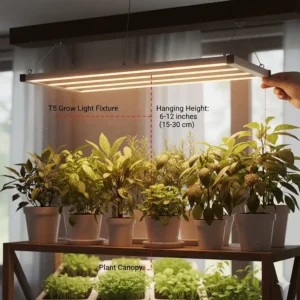
Measure your available space carefully. Consider both horizontal coverage (length × width) and vertical clearance. T5 fixtures typically need 6-12 inches clearance above plants, depending on light intensity. Compact 1-foot tubes work great for narrow shelves, while 4-foot fixtures suit standard seedling trays or larger grow areas.
Step 2: Calculate Your Light Requirements
Different plants demand different light intensities:
- Low-light plants (herbs, lettuces): 50-200 µmol/m²/s PPFD
- Medium-light plants (tomatoes, peppers): 200-400 µmol/m²/s PPFD
- High-light plants (fruiting crops): 400-600+ µmol/m²/s PPFD
One 4-foot, 4-bulb T5 fixture typically covers approximately 2 × 4 feet for seedlings or 2 × 2 feet for vegetative growth. Multi-lamp fixtures provide more flexibility for adjusting intensity.
Step 3: Consider Your Budget
Entry-level single-bulb systems start around $30-40. Mid-range multi-pack LED T5 systems run $60-80. Professional-grade fixtures with premium reflectors cost $100-150. Remember to factor in replacement bulb costs—HO T5 bulbs typically last 10,000-20,000 hours but need periodic replacement.
Step 4: Think About Expandability
If you plan to expand your indoor garden, choose linkable fixtures. Systems that daisy-chain reduce outlet requirements and simplify wiring. Most quality T5 fixtures link 4-8 units per circuit, though always check your total wattage against circuit capacity.
Step 5: Evaluate Features
Modern t5 grow lights offer various features:
- Individual switches: Control lamps independently
- Built-in timers: Automate light cycles (though external timers work too)
- Reflectors: Maximize light delivery to plants
- Mounting options: Clips, hanging chains, magnetic mounts
- Spectrum options: Specialized wavelengths for specific growth stages
t5 grow lights vs. Other Lighting Options
| Feature | T5 Grow Lights | LED Grow Lights | HPS Lights |
|---|---|---|---|
| Initial Cost | $ | $$ | $$$ |
| Operating Cost | Medium | Low | High |
| Heat Output | Low | Very Low | Very High |
| Lifespan | 10,000-20,000 hrs | 50,000+ hrs | 10,000-15,000 hrs |
| Spectrum Options | Good | Excellent | Limited |
| Best For | Seedlings, vegetables | All stages | Flowering |
| Mounting | Easy | Easy | Complex |
💬 Just one click – help others make better buying decisions too!😊
T5 lights occupy a sweet spot between affordability and performance. They’re more efficient than old-school fluorescents, cheaper than premium LEDs, and way cooler than HPS lights. For vegetative growth and seedling starts, they’re honestly hard to beat.
Installation and Setup Tips for t5 grow lights 🔧
Proper Mounting Height
Getting the distance right is crucial. Too close, and you risk light burn (yes, even with cool-running T5s). Too far, and plants stretch searching for adequate light. General guidelines:
- Seedlings: 6-8 inches above plant tops
- Vegetative plants: 8-12 inches
- Flowering plants: 12-18 inches
Adjust as plants grow—I check mine twice weekly and tweak heights as needed. Plants will tell you if they’re unhappy: stretching means too far, while bleached or brown leaf tips suggest too close.
Creating an Effective Growing Environment
Light is just one piece of the puzzle. Combine your T5 setup with:
- Reflective surfaces: Mylar, white paint, or aluminum foil maximizes light utilization
- Air circulation: Small fans prevent heat pockets and strengthen stems
- Humidity control: Seedlings prefer 60-70% relative humidity
- Proper watering: More light means faster growth and increased water needs
Timer Integration
Consistency matters tremendously for plant growth. Invest in a basic or smart timer to maintain regular light cycles. Most vegetative plants thrive on 14-16 hours of light daily, while flowering plants often prefer 12 hours. I use smart plugs that let me adjust schedules remotely—helpful when vacation plans change unexpectedly.
Safety Considerations ⚠️
While T5 lights run cool compared to HPS or incandescent bulbs, basic safety still applies:
- Ensure fixtures are rated for your intended environment (damp/dry)
- Don’t exceed circuit capacity (calculate total wattage)
- Keep electrical connections away from water sources
- Replace damaged cords or fixtures immediately
- Use grounded outlets for all grow equipment
According to electrical safety standards, proper installation prevents the vast majority of grow light incidents. Don’t cut corners here.

Maximizing Plant Growth with t5 lighting
Light Cycles for Different Growth Stages 🌗
Plants respond to photoperiod—the daily light/dark ratio. Understanding this helps you optimize growth:
Seedlings and Vegetables: 16-18 hours light, 6-8 hours darkness. This extended photoperiod promotes vigorous vegetative growth and prevents flowering in crops like lettuce and basil.
Flowering Plants: 12 hours light, 12 hours darkness triggers blooming in many species. Some plants (like tomatoes) are day-neutral and flower regardless, but others require specific photoperiods.
Light Acclimation: When moving plants from one light intensity to another, transition gradually. Sudden increases can stress plants, causing temporary wilting or slow growth.
Combining T5 Lights with Natural Light
T5 fixtures work brilliantly as supplemental lighting. If you have south-facing windows providing some natural light, T5s can fill the gaps during short winter days. I run my lights from 6 AM to 10 PM during December-February, giving plants the equivalent of summer growing conditions.
Monitor your plants’ response. Too much light can bleach foliage or cause leaf cupping, while insufficient light results in stretching and pale leaves. Adjust your timer settings based on plant behavior and seasonal natural light variations.
Rotating Plants for Even Growth
Even with quality reflectors, light distribution isn’t perfectly uniform. Rotate plants weekly—especially those on the edges of your growing area. This simple step ensures all plants receive equal light exposure and prevents lopsided growth.
Maintenance and Troubleshooting for t5 grow lights
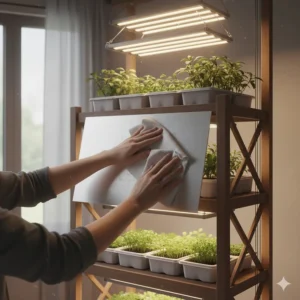
Keeping Your Lights Clean 🧹
Dust accumulation on bulbs and reflectors reduces light output by 10-30%. Clean your fixtures monthly:
- Unplug the fixture and let bulbs cool completely
- Wipe tubes gently with a soft, slightly damp cloth
- Clean reflective surfaces with glass cleaner
- Check for dead insects (they’re attracted to light)
- Inspect electrical connections for corrosion
This quick maintenance keeps your lights performing optimally and extends bulb life.
When to Replace Bulbs
T5 bulbs don’t just stop working—they gradually lose intensity. After 10,000 hours (about 2-3 years running 12-14 hours daily), output drops significantly. Even if bulbs still light up, they may not provide adequate growing power.
Replace bulbs when you notice:
- Plants stretching despite proper mounting height
- Slower growth than usual
- Visible darkening at tube ends
- Difficulty starting (flickering before illumination)
Common Problems and Solutions
Problem: Fixture won’t turn on
Solution: Check power source, test outlet, inspect for tripped breakers, ensure bulbs are seated properly
Problem: Flickering lights
Solution: Check bulb connections, replace aging bulbs, verify ballast function
Problem: Excessive heat
Solution: Ensure adequate ventilation, don’t overload circuits, clean fixtures regularly
Problem: Uneven plant growth
Solution: Rotate plants weekly, check for dead bulbs, ensure proper mounting height
Cost Analysis: Are t5 grow lights Worth It? 💰
Initial Investment Breakdown
Let’s compare real costs for a typical 4-foot growing setup:
Budget Setup (Single 2-bulb fixture): $35-50
- Basic T5 fixture with bulbs
- Simple mounting clips
- Manual timer: $10-15
Mid-Range Setup (4-bulb fixture): $80-120
- Quality T5 HO fixture
- Premium reflector
- Smart timer with app control: $25-40
Professional Setup (Multiple linked fixtures): $200-400+
- Commercial-grade multi-lamp systems
- Integrated control systems
- Professional mounting hardware
Operating Costs Over Time
Energy consumption matters, especially over months or years. A 4-bulb, 4-foot T5 fixture running 16 hours daily at $0.12/kWh costs approximately:
- Daily: $0.52
- Monthly: $15.68
- Annually: $188.16
Compare this to equivalent LED systems ($120-150 annually) or HPS systems ($300+ annually), and T5s sit comfortably in the middle ground. They’re efficient enough for most home growers while remaining affordable.
Return on Investment
If you’re growing vegetables, herbs, or starting garden transplants, T5 lights pay for themselves quickly. A single tomato plant from a nursery costs $4-8, while growing from seed under T5 lights costs pennies. Start 20-30 transplants yearly, and your fixture pays for itself in one season.
For ornamental plants or expensive specialty crops, the ROI is even faster. One successfully propagated rare houseplant cutting can be worth $20-100+—way more than your entire lighting setup.
Advanced Tips for Experienced Growers
Custom Light Spectrums
Mix and match bulb types within multi-lamp fixtures to create custom spectrums. For example, combine three 6500K bulbs with one 3000K bulb for a tailored vegetative spectrum. Experiment with ratios to find what works best for your specific plants.
Supplementing with Side Lighting
Top lighting (most common) works great, but side lighting prevents bottom leaves from yellowing. Position additional 1-foot T5 tubes vertically along grow shelf sides. This technique is particularly effective for bushier plants like peppers and eggplants.
Light Intensity Monitoring
Invest in a PAR meter ($150-300) or affordable lux meter ($20-50) to measure actual light delivery. While expensive, PAR meters provide precise PPFD readings. Budget-conscious growers can use lux meters with conversion charts—not perfect, but better than guessing.
Seasonal Adjustments
As outdoor temperatures change, your indoor growing environment shifts too. Summer may require running lights during cooler evening hours, while winter allows all-day operation without overheating concerns. Adjust both timing and intensity seasonally for optimal results.
Environmental Impact of t5 grow lights 🌍
Sustainability matters increasingly in modern gardening. T5 lights offer several environmental advantages over older technologies:
Reduced Material Use: T5 tubes contain 40% less glass than T8 bulbs and 70% less mercury than T12 bulbs. Manufacturing requires fewer raw materials and generates less waste.
Energy Efficiency: Compared to incandescent or older fluorescent systems, T5 lights convert more electricity into usable light rather than waste heat. This efficiency reduces overall carbon footprint.
Longer Lifespan: Quality T5 bulbs last 10,000-20,000 hours—substantially longer than incandescent bulbs. Fewer replacements mean less landfill waste.
Recyclability: Most components of T5 fixtures can be recycled. Many municipalities offer fluorescent bulb recycling programs specifically addressing mercury content. According to EPA guidelines, proper disposal prevents environmental contamination.
Local Food Production: Perhaps most significantly, growing food indoors reduces transportation emissions. Those herbs you grew under T5 lights have zero food miles—the ultimate in local, sustainable produce.
Common Mistakes to Avoid with t5 grow lights
Mistake #1: Mounting Too High
I see this constantly—new growers mount T5 fixtures way too far from plants, fearing heat damage. Remember, T5s run cool! Six inches for seedlings is perfectly safe and provides much better light intensity than 24 inches. Don’t waste those photons on empty air.
Mistake #2: Running Lights 24/7
Plants need darkness for proper metabolic function. Even though more light seems logical, continuous illumination stresses plants and can reduce growth. Stick to 14-18 hours for vegetables, 12 for flowering plants, and provide proper dark periods.
Mistake #3: Neglecting Reflectors
Quality reflectors dramatically boost light delivery. Some budget fixtures include mediocre reflectors or none at all. Adding or upgrading reflectors costs $15-30 but can increase plant-usable light by 30-50%.
Mistake #4: Ignoring Bulb Degradation
“But the bulb still lights up!” Sure, but is it providing adequate growing intensity? Track usage hours and replace bulbs proactively. Your plants will thank you with faster, healthier growth.
Mistake #5: Overloading Electrical Circuits
Multiple grow lights add up quickly. A 15-amp circuit handles about 1,800 watts safely. Calculate your total load including lights, fans, heat mats, and other equipment. Overloaded circuits trip breakers at best and create fire hazards at worst.
Future of t5 grow light Technology
While LED technology grabs headlines, T5 fluorescent lights continue evolving. Manufacturers now offer:
Smart-Compatible Fixtures: Some newer T5 systems integrate with smart home platforms, allowing app-based control and scheduling.
Improved Phosphor Coatings: Advanced phosphor formulations produce more targeted spectrums optimized specifically for plant growth.
Hybrid Systems: Some manufacturers combine T5 efficiency with supplemental LED wavelengths, creating customizable growing environments.
Enhanced Ballasts: Electronic ballasts grow more efficient each year, reducing energy waste and extending bulb life.
That said, LED technology will likely dominate future grow lighting markets. LEDs offer longer lifespans, lower energy consumption, and more precise spectrum control. However, T5 lights remain relevant for budget-conscious growers, seedling propagation, and situations where proven, affordable technology matters more than cutting-edge features.
❓ FAQ
❓ What's the difference between T5 grow lights and regular T5 fluorescent lights?
❓ Can I mix different wattage T5 bulbs in the same fixture?
❓ How long do T5 grow light bulbs actually last in real-world use?
❓ Do T5 grow lights work for flowering plants like tomatoes and peppers?
❓ Are cheap T5 fixtures from unknown brands worth buying?
Conclusion: Choosing Your Perfect t5 grow lights Setup
After testing dozens of fixtures and growing everything from microgreens to pepper plants, I’ve learned that the “best” T5 setup depends entirely on your specific situation. Starting seeds for spring transplants? A simple 2-foot, 2-bulb fixture handles that beautifully for $35-40. Running a year-round indoor garden with multiple plant types? Invest in a professional multi-lamp system like the Durolux or VIVOSUN—the performance justifies the cost.
Here’s my honest recommendation: start with mid-range equipment. Something like the Barrina 2ft 8-pack offers tremendous flexibility at a reasonable price point. You get enough lights to cover several shelves, the quality ensures years of reliable operation, and the linkable design supports future expansion. This approach lets you learn what works for your space without overspending initially.
Pay attention to spectrum selection. Cool white (6500K) works wonderfully for seedlings and leafy greens. Full spectrum (5000K) handles nearly everything. Pinkish/warm spectrums (3000K) optimize flowering and fruiting. Most growers benefit from having both cool and warm fixtures available, switching plants between them as growth stages progress.
Remember, lighting is just one element of successful indoor growing. Combine quality T5 fixtures with proper watering, adequate ventilation, appropriate nutrients, and consistent care. The plants will reward your efforts with vigorous growth and bountiful harvests.
Whether you’re a complete beginner starting your first seeds or an experienced grower optimizing your setup, T5 grow lights provide reliable, efficient, affordable performance. They’ve served indoor gardeners well for decades, and despite LED advancements, they remain highly relevant for modern growing needs.
Now it’s time to stop reading and start growing. Choose a fixture from our top seven recommendations, set it up following the guidelines we’ve covered, and watch your indoor garden flourish. Happy growing! 🌱✨
🔥 Take Action Today!
Don’t let another growing season pass by! Whether you’re starting seeds this spring or maintaining plants year-round, the perfect T5 setup is waiting for you. Click any product link above to check current deals and availability. Your plants are counting on you! 🌿💚
Recommended for You
- Fluorescent Grow Lights: 7 Best Budget-Friendly Options 2025
- 7 Best 1000 Watt Grow Light Picks for Indoor Growing 2025
- Full Spectrum LED Grow Light: 7 Top Picks for Indoor Growing in 2025
Disclaimer: This article contains affiliate links. If you purchase products through these links, we may earn a small commission at no additional cost to you.
✨ Found this helpful? Share it with your friends! 💬🤗
