
In This Article
I’ll be honest—when I first started indoor growing, I thought any old fan would do the job. Boy, was I wrong. After battling humidity issues, heat stress, and even some powdery mildew, I learned the hard way that your grow tent fan isn’t just another accessory—it’s the backbone of your entire setup.
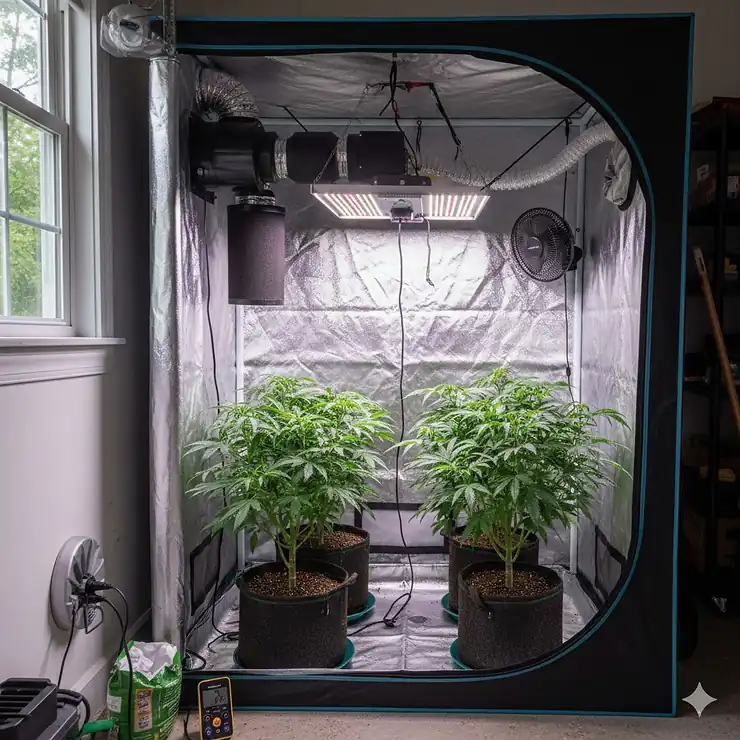
Here’s the thing: plants transpire constantly, releasing moisture into your enclosed space. Without proper air circulation, you’re essentially creating a sauna where mold, mildew, and pests throw their own party. The right grow tent fan doesn’t just move air around; it regulates temperature, controls humidity, strengthens plant stems, and even helps with CO2 distribution during photosynthesis. Whether you’re running a compact 2×2 tent or a commercial-scale operation, proper ventilation can make the difference between a mediocre harvest and one that makes your neighbors jealous.
In this comprehensive guide, we’ll break down the seven best grow tent fan options for 2025, covering everything from budget-friendly clip fans to high-tech inline systems with WiFi control. I’ve personally tested dozens of fans across different tent sizes, and I’m sharing exactly what works, what doesn’t, and which features actually matter.
Quick Comparison Table: Top Grow Tent Fan Options at a Glance
| Product | Type | Size | CFM | Noise Level | Smart Features | Price Range |
|---|---|---|---|---|---|---|
| AC Infinity CLOUDLINE PRO T6 | Inline | 6″ | 402 | 32 dBA | WiFi, VPD Control | $149-$199 |
| VIVOSUN AeroWave E6 Gen2 | Clip | 6″ | 320 | 33 dBA | WiFi, App Control | $60-$80 |
| VIVOSUN AeroWave D4 | Clip | 4″ | – | 35 dBA | None | $16.99 |
| iPower 6″ Inline Fan | Inline | 6″ | 442 | 30 dB | None | $100-$120 |
| AC Infinity CLOUDLINE A4 | Inline | 4″ | 165 | 29 dBA | Compatible | $79.99 |
| TerraBloom EC 6″ | Inline | 6″ | 288 | 36 dBA | Variable Speed | $100-$130 |
| Mars Hydro M6 | Clip | 6″ | 315 | 40 dBA | WiFi/App | $45-$65 |
💬 Just one click – help others make better buying decisions too! 😊
Top 7 Grow Tent Fan Options: Expert Analysis
1. AC Infinity CLOUDLINE PRO T6 – Best Overall Inline Fan
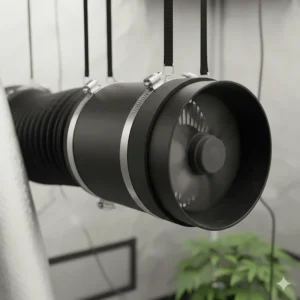
When it comes to serious ventilation, the AC Infinity CLOUDLINE PRO T6 stands in a league of its own. This 6-inch inline fan delivers a robust 402 CFM while maintaining whisper-quiet operation at just 32 dBA—quieter than a typical conversation.
Key Specifications:
- 6″ duct size with mixed-flow design
- PWM-controlled EC motor for energy efficiency
- Integrated WiFi with VPD (Vapor Pressure Deficit) control
Price: $149-$199
What really sets this grow tent fan apart is its intelligent controller. The system monitors temperature, humidity, and VPD in real-time, automatically adjusting fan speeds to maintain optimal growing conditions. You can access everything through the AC Infinity app, setting custom schedules, automation triggers, and even viewing historical climate data.
Customers consistently praise its durability and smart features. One reviewer mentioned running it 24/7 for over two years without any performance degradation. The dual ball bearings are rated for 67,000 hours, and the IP44 rating means it can handle the humid environments inside grow tents.
✅ Pros:
- Exceptionally quiet operation
- Advanced VPD control for optimal plant growth
- Energy-efficient EC motor saves on electricity bills
❌ Cons:
- Higher upfront investment
- Smart features require WiFi connection
2. VIVOSUN AeroWave E6 Gen2 – Best Smart Clip Fan
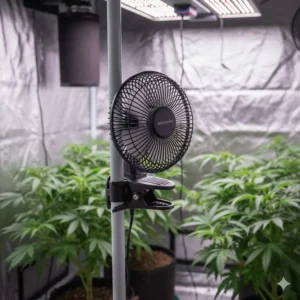
For those who prefer clip-on circulation fans, the VIVOSUN AeroWave E6 Gen2 represents the cutting edge of grow tent fan technology. This 6-inch powerhouse combines 320 CFM of airflow with smart controls that rival inline systems.
Key Specifications:
- EC motor with dual ball bearings
- 5-level auto-oscillation (automatically retracts when detecting obstacles)
- IP54 weatherproof rating
Price: $60-$80
The natural wind mode is a game-changer—it simulates outdoor conditions by varying wind speed and direction, which actually strengthens plant stems and reduces stress. I’ve noticed plants growing noticeably sturdier since switching to this feature. The 10-speed settings give you precise control, though you’ll need the GrowHub controller to unlock all speeds.
Users report that the patented clamping mechanism grips tent poles securely without wobbling, even at maximum speed. The 33 dBA noise level makes it suitable for bedroom grows or apartments where noise matters.
✅ Pros:
- Natural wind mode promotes stronger stems
- Weatherproof design handles high humidity
- Smart obstacle detection prevents motor damage
❌ Cons:
- Full features require GrowHub controller purchase
- Slightly pricier than basic clip fans
3. VIVOSUN AeroWave D4 – Best Budget Clip Fan
Don’t let the $16.99 price tag fool you—the VIVOSUN AeroWave D4 packs surprising performance into a compact 4-inch frame. It’s perfect for smaller tents or as a supplementary circulation fan in larger setups.
Key Specifications:
- 3-speed settings up to 3500 RPM
- Adjustable airflow angle with lockable knob
- Versatile mounting options (clip, hook, magnetic, stand)
Price: $16.99
This little grow tent fan offers exceptional value for beginners or budget-conscious growers. The detachable hook design means you can position it almost anywhere in your tent. I particularly appreciate the memory feature that retains your speed setting after power interruptions—no need to readjust after every timer cycle.
At 35 dBA, it’s remarkably quiet for its size. The adjustable front cover lets you lock airflow direction for targeted cooling or loosen it for oscillating circulation. Several users mentioned buying multiple units to create comprehensive airflow throughout their tents without breaking the bank.
✅ Pros:
- Unbeatable price point
- Multiple mounting options maximize flexibility
- Memory function maintains settings
❌ Cons:
- No smart features or app control
- Lower CFM than larger models
4. iPower 6″ Inline Fan – Best Value Inline System
The iPower 6″ Inline Fan delivers commercial-grade performance at a fraction of the cost. With 442 CFM of airflow and UL-certified components, this grow tent fan represents serious value.
Key Specifications:
- Centrifugal impeller design for high static pressure
- External rotor motor rated at 2950 RPM
- Composite fan blades reduce vibration and noise
Price: $100-$120
This fan excels at exhausting hot air and integrating with carbon filters. The permanently lubricated bearing means zero maintenance—just install and forget. At 30 dB, it’s one of the quieter inline options in this price range.
What impressed me most was the build quality. The housing feels solid, and the compact design allows flexible installation even in tight spaces. Multiple reviewers noted that it outperformed more expensive competitors in side-by-side testing, especially when paired with ducting and filters.
✅ Pros:
- Exceptional CFM-to-price ratio
- Zero-maintenance design
- Strong enough for carbon filter integration
❌ Cons:
- No smart controls or speed adjustment
- Basic functionality may not suit advanced users
5. AC Infinity CLOUDLINE A4 – Best Compact Inline Fan
If you’re working with a smaller tent or just need less airflow, the AC Infinity CLOUDLINE A4 delivers the brand’s legendary quality in a 4-inch package. This grow tent fan provides 165 CFM—perfect for 2×2 to 3×3 tents.
Key Specifications:
- Mixed-flow design with high static pressure rating
- 10-speed manual controller included
- Compatible with AC Infinity smart controllers
Price: $79.99
At just 29 dBA, this is one of the quietest fans I’ve tested. You can literally run it at night in a bedroom without disturbing sleep. The EC motor sips electricity compared to traditional AC motors, and the efficiency becomes noticeable on your utility bill over time.
The value proposition here is future-proofing. While the included controller is manual, you can upgrade to any AC Infinity smart controller later without replacing the fan. Customers appreciate this modular approach—start simple and add automation as your needs evolve.
✅ Pros:
- Near-silent operation at 29 dBA
- Energy-efficient EC motor
- Upgradeable to smart control
❌ Cons:
- Lower CFM limits tent size
- Smart features cost extra
6. TerraBloom EC 6″ – Best Energy Efficiency
Energy costs add up when you’re running a grow tent fan 24/7. The TerraBloom EC 6″ addresses this with a brushless EC motor that’s 40-75% more efficient than traditional fans while delivering 288 CFM.
Key Specifications:
- Premium metal casing with rust-resistant coating
- Variable speed controller (0-100% adjustment)
- Annual operating cost under $100 at max speed
Price: $100-$130
This American-made grow tent fan emphasizes quality and longevity. The coated steel housing protects against corrosion in humid environments, and the dual jet blade design maximizes airflow efficiency. The included speed controller allows seamless adjustment without the motor buzz some cheaper fans produce.
Running at maximum speed 24/7 costs approximately $88 per year (at $0.29/kWh)—significantly less than comparable AC motor fans. Users running multiple tents report substantial savings over time. The 288 CFM output works well for 4×4 to 5×5 tents when paired with proper ducting.
✅ Pros:
- Exceptional energy efficiency
- Premium metal construction
- Smooth speed control without noise
❌ Cons:
- Moderate CFM for the price
- No smart features
7. Mars Hydro M6 – Best WiFi Clip Fan
Mars Hydro enters the smart grow tent fan arena with the M6, offering 10 adjustable speeds and full WiFi/app control at a competitive price point. This 6-inch clip fan delivers 315 CFM while maintaining just 40 dBA of noise.
Key Specifications:
- 80° horizontal swing with 100° vertical tilt
- APP control for remote adjustment
- Maximum power draw of only 8W
Price: $45-$65
The standout feature is the energy consumption—at just 8W, this is easily the most power-efficient clip fan in our roundup. The app integration lets you adjust speeds, set schedules, and monitor runtime from anywhere. It’s particularly handy when you’re away from home but need to tweak airflow during a heat wave.
Several growers noted that the oscillating function distributes air beautifully throughout the canopy, eliminating dead zones where moisture can accumulate. The clamp grips poles from 16-22mm securely, fitting most standard grow tent frames.
✅ Pros:
- Extremely low power consumption (8W)
- App control at budget-friendly price
- Wide oscillation coverage
❌ Cons:
- Slightly louder than premium options
- Build quality feels less premium
Understanding Grow Tent Fan Types: Inline vs Circulation
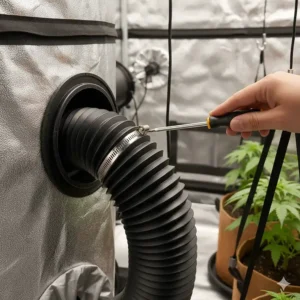
Choosing the right grow tent fan starts with understanding the two main categories and how they work together. Think of your ventilation system like a house’s HVAC—you need both exhaust and circulation for optimal performance.
Inline Fans: The Heavy Lifters
Inline fans mount directly in your ducting and serve as exhaust systems. They pull hot, humid air out of your tent while drawing fresh air in through passive vents or intake fans. According to the USDA National Agricultural Library, proper air exchange is critical for plant respiration and photosynthesis in hydroponic systems.
These fans are measured in CFM (cubic feet per minute), which indicates how much air they move. A common rule: fully exchange your tent’s air every 1-3 minutes. For a 4x4x7 foot tent (112 cubic feet), you’d want at least 112-224 CFM after accounting for ducting resistance and carbon filters.
Inline fans excel at:
- Creating negative pressure (prevents odor leaks)
- Removing excess heat from grow lights
- Integrating with carbon filtration systems
- Controlling overall tent climate
Clip-On Circulation Fans: The Air Choreographers
Circulation fans don’t exhaust air—they keep it moving within your tent. This movement serves multiple purposes beyond just cooling. As noted by Oklahoma State University Extension, air circulation strengthens plant stems through a process called thigmomorphogenesis, where gentle stress from wind stimulates stronger growth.
Circulation fans prevent:
- Microclimates (pockets of different temperatures/humidity)
- Moisture accumulation on leaves (which invites mold)
- Stagnant CO2 zones
- Weak, spindly stem growth
The ideal setup uses both: an inline fan for overall climate control and 1-2 clip fans for internal circulation. Position circulation fans above the canopy pointing slightly down, or below pointing up through the plants—never blasting directly at delicate leaves.
How to Size Your Grow Tent Fan Correctly
Here’s where many growers go wrong—they either under-buy thinking they’ll save money, or over-buy thinking bigger is always better. The truth lies in proper calculation.
The Basic Formula
Start with your tent’s volume in cubic feet: Length × Width × Height. A 3x3x6 tent equals 54 cubic feet. According to University of Minnesota Extension, you should exchange this air every 1-3 minutes, so multiply by 1-2 for your baseline CFM (54-108 CFM in this example).
But don’t stop there—you need to account for resistance.
Add Efficiency Losses
According to AC Infinity’s ventilation guide, real-world performance drops significantly with:
- Carbon filters: 60% efficiency loss
- Ducting: 20% loss (more for longer runs or bends)
- Silencers: 20% loss
- Sharp bends: 60% loss per 90-degree turn
Let’s apply this to our 54 cubic foot tent wanting 1-minute exchange:
- Base CFM: 54 × 1 = 54 CFM
- Carbon filter (+60%): 54 × 1.6 = 86 CFM
- Ducting (+20%): 86 × 1.2 = 103 CFM
- One 90° bend (+60%): 103 × 1.6 = 165 CFM
Suddenly that “54 CFM” need becomes 165 CFM minimum. This is why going slightly oversized is smart—you can always run a powerful fan at lower speeds for quieter operation and longer lifespan.
Heat Considerations
Powerful grow lights add another layer. HPS and older LED systems generate significant heat. Add another 25-50% to your CFM calculation if running high-wattage lighting. Modern quantum board LEDs produce less heat, so 25% is usually sufficient.
Pro tip: Choose a fan rated 20-30% higher than your calculated need. This allows the fan to run at 70-80% speed, extending its lifespan while maintaining performance and reducing noise.
Essential Features Every Grow Tent Fan Needs
After testing dozens of fans across five years of growing, I’ve identified features that separate excellent from mediocre.
Speed Control: Non-Negotiable
Fixed-speed fans are relics from a bygone era. Your ventilation needs fluctuate throughout the day and across growth stages. Seedlings need gentle airflow; flowering plants handle more. Variable speed control lets you dial in perfection. Look for at least 3-speed settings on clip fans and 10+ levels on inline fans for granular control.
PWM (Pulse Width Modulation) controllers are superior to voltage reducers. They maintain motor torque across all speeds, preventing the buzzing noise and reduced efficiency you get from cheap speed controllers.
Noise Levels Matter More Than You Think
That constant hum becomes torturous if your grow space shares walls with living areas. Target 30-35 dBA for inline fans—comparable to a quiet library. Clip fans run slightly louder at 35-40 dBA, but positioned correctly, they blend into background noise.
EC motors run significantly quieter than traditional AC motors. They also generate less heat and last longer. The upfront cost pays dividends in peace of mind and electricity savings.
Build Quality and Durability
Your grow tent fan runs thousands of hours annually in humid, sometimes dusty conditions. Sealed bearings are essential—they prevent moisture and debris from degrading performance. Dual ball bearings rated for 50,000+ hours ensure years of reliable operation.
Metal housings resist corrosion better than plastic, especially for inline fans. For clip fans, check that clamps have rubber padding to protect tent poles and maintain grip without slipping.
Smart Features: Worth the Investment?
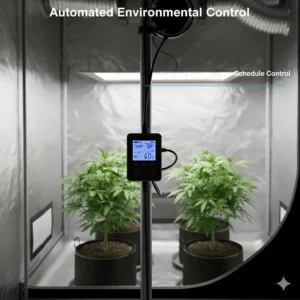
WiFi connectivity and app control seemed gimmicky until I used them. The convenience of adjusting fans from bed when you hear plants struggling during an unexpected heat wave is priceless. Smart automation based on temperature and humidity triggers transforms reactive growing into proactive management.
However, basic growers can skip smart features and save money. Manual controllers work perfectly fine if you’re willing to make adjustments in person. Consider your budget and how hands-on you want to be.
Positioning Your Grow Tent Fan for Maximum Efficiency
Even the best grow tent fan performs poorly if positioned incorrectly. Here’s what I’ve learned through trial and error.
Inline Fan Placement
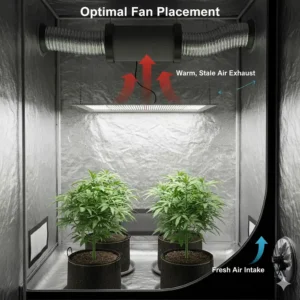
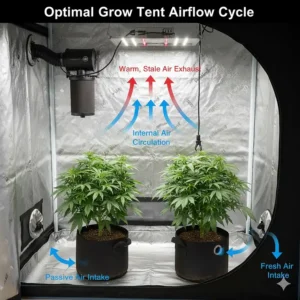
Heat rises—basic physics that many ignore. Position your inline fan at the highest point in your tent, ideally above your grow lights. This placement creates natural convection, where hot air rises directly into the exhaust path. Mount it horizontally or vertically depending on your space constraints; modern inline fans handle either orientation thanks to sealed bearings.
Your intake should sit at the bottom on the opposite side, creating diagonal airflow that sweeps across your entire canopy. This prevents hot spots and ensures every plant gets fresh air. Passive intake works fine for most home setups—the negative pressure created by your exhaust naturally draws air through lower vents.
Circulation Fan Strategies
The goal is gentle, continuous movement without wind burn. Position one oscillating clip fan above the canopy angled slightly downward. Add a second below or to the side, creating a gentle circular pattern. Some growers call this the “breeze method”—imagine how wind moves through a natural forest, not like a hurricane.
As explained in Britannica’s hydroponics entry, proper air circulation is crucial for gas exchange in soilless growing systems. Avoid pointing fans directly at plants, which causes stress and curling leaves. Instead, aim for the space between plants, letting air bounce and circulate naturally.
For taller plants, add a third fan mid-canopy. This prevents dead zones in dense foliage where humidity accumulates. I learned this the hard way after finding powdery mildew tucked deep in a bushy plant’s interior—an expensive lesson in proper circulation.
Maintenance Tips to Extend Fan Lifespan
A well-maintained grow tent fan can last a decade. Neglect one, and you’ll be shopping for replacements annually.
Regular Cleaning Schedule
Dust and plant debris are inevitable. Every 2-3 months, power down your system and clean fan blades with a damp cloth. For inline fans, remove the housing to access blades—accumulated dust creates imbalance, leading to vibration and noise.
Clip fans are easier—just wipe down blades and the motor housing. Most models have removable grilles that make this simple. Clean filters attract dirt; clean fans run efficiently and quietly.
Filter Replacement
Carbon filters lose effectiveness over time, typically lasting 12-18 months depending on usage intensity. As filters clog, your inline fan works harder, generating heat and noise while moving less air. Replace filters on schedule rather than waiting for obvious problems.
The activated carbon in quality filters maintains odor control through its honeycomb structure. Once saturated, no amount of cleaning restores effectiveness. Budget for annual replacement as part of your growing costs.
Bearing Lubrication
Most modern EC motors use sealed bearings that require no maintenance. However, older AC motor fans may need periodic lubrication. Check manufacturer specifications—some recommend a drop of machine oil annually on bearing access ports. Over-lubricating causes more problems than under-lubricating, so use sparingly.
Cable Management
Loose cables near fan blades invite disaster. Use zip ties or cable clips to secure power cords and controller wires away from moving parts. This prevents accidental damage and reduces vibration-induced disconnections.
Inspect cables periodically for wear, especially near connection points. Replace damaged cords immediately—electrical issues in humid grow spaces are serious safety concerns.
Common Mistakes to Avoid
Even experienced growers make these errors. Learn from others’ mistakes:
Undersizing for “budget reasons”: An inadequate grow tent fan forces you to run it at maximum speed constantly, creating noise, heat, and premature failure. The $30 you save initially costs $100+ in problems later.
Ignoring ducting quality: Thin, crinkled ducting restricts airflow by up to 40%. Invest in insulated, smooth-interior ducting. Keep runs short and minimize bends. Each unnecessary foot of ducting reduces efficiency.
Forgetting about intake: Powerful exhaust with restricted intake creates excessive negative pressure that strains fans and prevents effective air exchange. Balance your system with adequate intake venting.
Pointing fans directly at plants: I see this constantly in grow groups. Direct airflow causes wind burn, stress, and slowed growth. Create circulation, not a wind tunnel.
Running fans 24/7 at maximum: Even quality fans need occasional breaks. Use speed controllers to run at 60-80% during less critical periods. This extends lifespan significantly while maintaining adequate ventilation.
❓ Frequently Asked Questions
❓ How many CFM do I need for my grow tent fan?
❓ What's better: inline or clip fans for grow tent fan setups?
❓ How loud should my grow tent fan be?
❓ Can I use a regular household fan instead of a grow tent fan?
❓ Do I need smart WiFi features in my grow tent fan?
Conclusion: Choosing Your Perfect Grow Tent Fan
After reviewing dozens of fans and testing them across various tent sizes, here’s my bottom-line advice: don’t cheap out on ventilation. The difference between adequate and excellent air circulation dramatically impacts your yields and plant health.
For most growers, I recommend the AC Infinity CLOUDLINE PRO T6 as your inline exhaust paired with the VIVOSUN AeroWave E6 Gen2 for circulation. This combination delivers professional-grade performance with smart features that pay for themselves through automation and efficiency. Budget-conscious growers will find the iPower 6″ Inline Fan paired with a couple of VIVOSUN AeroWave D4 clip fans provides excellent value without breaking the bank.
Remember, proper grow tent fan selection depends on your specific setup. A 2×2 seedling tent needs different ventilation than a 5×5 flowering space. Calculate your CFM requirements carefully, account for resistance from filters and ducting, and choose quality components that’ll serve you for years.
Your plants deserve better than stagnant air and temperature swings. Invest in proper ventilation, position your fans strategically, maintain them regularly, and watch your gardens thrive. The right grow tent fan isn’t an expense—it’s an investment in every future harvest.
Recommended for You
- 7 Best Grow Tent AC 2025: Ultimate Cooling Guide
- Best Grow Tent Heater 2025: Top 7 Smart Temperature Controls
- 7 Best Grow Cabinets That Transform Indoor Gardening 2025
Disclaimer: This article contains affiliate links. If you purchase products through these links, we may earn a small commission at no additional cost to you.
✨ Found this helpful? Share it with your friends! 💬🤗
