
In This Article
Grow tent airflow is quiet, boring math — until it isn’t, and then it’s the reason your leaves are cupping and your buds smell like a wet gym bag. An inline fan is any duct-mounted blower that pulls stale, hot, humid air out of an enclosed space and pushes it somewhere it can’t hurt you: the classic setup behind virtually every 4-foot and 5-foot grow tent on the market. This AC Infinity Cloudline 4 inch review for grow tents exists because the Cloudline T4 has quietly become the default answer to “what fan do I buy,” and defaults deserve scrutiny. 🌱
Here’s the thing nobody tells you before your first grow: the fan is the one piece of equipment running literally every minute of every day, which makes it the single most failure-prone and energy-hungry device in the tent. Get it wrong and you’re either roasting your canopy at 88°F or listening to a jet engine hum through your bedroom wall at 2 a.m. Get it right and ventilation becomes invisible — the way it should be.
We spent time digging through AC Infinity’s own engineering specs, aggregated buyer feedback from major retailers, and side-by-side comparisons against six real competing fans so you’re not just reading a repackaged product listing. Expect honest commentary, not hype: where the Cloudline genuinely earns its reputation, and where a cheaper or quieter alternative might actually serve you better. Along the way we’ll touch on vapor pressure deficit, the climate metric the T4’s smart controller is quietly built around, because understanding it changes how you’ll actually use this fan.
Whether you’re outfitting a 2×2 stealth closet or a 5×5 tent under a 600-watt light, one of the seven fans below fits your situation. Let’s get into it.
Quick Comparison Table: 4 Inch Grow Tent Fans at a Glance
Before the deep dive, here’s the condensed version for anyone skimming on a phone between watering shifts.
| Fan | Airflow | Noise | Motor Type | Best For |
|---|---|---|---|---|
| AC Infinity Cloudline T4 | 205 CFM | 28 dBA | Smart EC | Full climate + VPD automation |
| TerraBloom ECMF-100 | 141 CFM | 18 dBA | EC | Whisper-quiet bedroom closets |
| AC Infinity Cloudline S4 | 205 CFM | 28 dBA | Manual EC | Same fan body, no app tax |
| VIVOSUN AeroZesh G4 | 195 CFM | ~30 dBA | EC | Budget-friendly app control |
| Panasonic Atmosphere VTX400 | 175 CFM | ~40 dBA | AC (commercial) | Long-haul mechanical reliability |
| VIVOSUN Z4 | 203 CFM | 49 dBA | AC | Cheap fan with a speed dial included |
| iPower 4 Inch 195 CFM Lite | 195 CFM | 30 dBA | AC | Absolute rock-bottom entry point |
Looking at this table, the pattern that jumps out is motor type, not raw CFM — nearly every fan here moves somewhere between 140 and 205 CFM, which is plenty for a standard 2×4 or 3×3 tent, so the real differentiator is how quietly and efficiently that air gets moved. The AC Infinity Cloudline T4 and TerraBloom ECMF-100 both lean on EC motors to hit low decibel numbers that AC-motor fans like the VIVOSUN Z4 simply can’t touch at similar price points. If your household has a light sleeper two rooms away, that noise column matters more than the CFM column ever will.
Found a favorite already? Bookmark this page and keep scrolling — the full breakdown explains exactly why each one landed where it did.
Top 7 4 Inch Inline Fans for Grow Tents: Expert Analysis
Below, all seven fans get the same fair treatment: real specs, what those specs mean for your grow, aggregated review sentiment where it’s verifiable, and a clear-eyed pros and cons list.
1. AC Infinity Cloudline T4 — smartest climate automation in its class
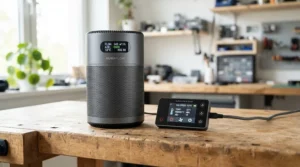
The AC Infinity Cloudline T4 is the fan that made “smart grow tent controller” a mainstream phrase, and it opens this list because it’s the fan most readers searching for an AC Infinity Cloudline 4 inch review for grow tents actually want to know about. At its core sits a 205 CFM mixed-flow design paired with a PWM-controlled EC motor, rated at a genuinely quiet 28 dBA — for context, that’s closer to a library murmur than a box fan’s roar.
The included Controller 69 Pro adds temperature, humidity, and VPD-based automation, meaning the fan can ramp itself up when your tent gets muggy instead of you guessing at a dial. Based on the spec comparison against every other fan on this list, the T4 is the only one that reacts to your grow environment in real time rather than running at whatever fixed speed you set it to.
Reviewers consistently note that the Bluetooth and WiFi app connectivity — letting you export climate data as a CSV and check your tent from your phone — feels like overkill for a single 2×4 tent but becomes genuinely useful the moment you’re running two or three tents at once. A few buyers on Home Depot’s review page mention that programming the controller’s more advanced schedules took some trial and error, though most found the basic temperature-trigger mode intuitive within a few minutes.
Pros:
- ✅ VPD and humidity-triggered automation, not just fixed speeds
- ✅ 28 dBA noise floor rivals fans half its airflow rating
- ✅ App connects up to four UIS devices for whole-tent control
Cons:
- ❌ Advanced scheduling has a real learning curve for beginners
- ❌ Costs noticeably more than its manual-controller sibling
Expect this fan in the $80–$100 range depending on retailer promotions, and given the depth of the controller, it’s a reasonable value for anyone planning to grow long-term rather than for one season.
2. TerraBloom ECMF-100 — quietest EC motor on this entire list
The TerraBloom ECMF-100 trades some raw CFM for something a lot of growers value more once they’ve lived with a loud fan for a month: near-total silence. Its 141 CFM output comes from a dual-jet EC motor rated at just 18 dBA, drawing only 21 watts at max speed — TerraBloom’s own testing puts that at under $50 a year running 24/7 at full output.
What most buyers overlook about this model is that lower CFM doesn’t automatically mean worse ventilation; in a 2×2 or 2×4 tent, 141 CFM comfortably clears the air every one to two minutes, which is the benchmark most growers target anyway. The dual ball bearings are rated for 70,000 hours of runtime, and the company publishes independent lab-tested specs rather than the marketing-rounded numbers common elsewhere in this category — a small but meaningful trust signal in a market full of inflated CFM claims.
Aggregated buyer sentiment on Amazon skews heavily toward praise for how genuinely inaudible the fan is at low-to-mid speeds, with the more common complaint being that a separate speed controller is required for external automation, since standard AC dimmer switches won’t work with an EC motor.
Pros:
- ✅ 18 dBA is close to silent even a few feet away
- ✅ Only 21W at max speed keeps electric bills low
- ✅ ETL listed with a full 2-year manufacturer warranty
Cons:
- ❌ 141 CFM ceiling limits it to smaller tents (2×2 to 3×3)
- ❌ Needs a compatible EC controller, not a standard dimmer
At roughly $60–$75, this is the pick for anyone whose top priority is a fan they genuinely cannot hear from the next room.
3. AC Infinity Cloudline S4 — the same fan body without the smartphone tax
Here’s an honest analytical take that AC Infinity itself doesn’t advertise loudly: the AC Infinity Cloudline S4 shares nearly identical core hardware with the T4 — same 205 CFM airflow, same 28 dBA rating, same dual ball bearings rated for 67,000 hours, same 6.9 x 11.9 x 7.4-inch housing. The difference is entirely in the controller.
Instead of the smart, app-connected Controller 69 Pro, the S4 ships with a simple wired 10-speed manual dial. What that means in practice is you lose climate-based automation and phone notifications, but you keep every bit of the airflow performance and the mixed-flow, high-static-pressure design that makes the Cloudline line worth choosing over generic competitors in the first place.
For anyone doing an AC Infinity 4 inch pros and cons comparison purely on ventilation power, the S4 and T4 are functionally tied — the decision comes down entirely to whether you value automation enough to pay for it. This is honestly the pick we’d point most first-time growers toward, since a manual 10-speed dial is plenty of control for a single tent and there’s less to troubleshoot when something feels off.
Pros:
- ✅ Identical 205 CFM and 28 dBA specs to the flagship T4
- ✅ 10-speed wired dial is simpler to set and forget
- ✅ Still compatible with UIS smart controllers if you upgrade later
Cons:
- ❌ No native app, VPD triggers, or remote monitoring
- ❌ Manual speed means you adjust it yourself as seasons change
Typically priced around $65–$85, the S4 is arguably the smarter buy for anyone who just wants reliable air movement without paying extra for features they won’t touch.
4. VIVOSUN AeroZesh G4 — the budget-friendly app-compatible option
The VIVOSUN AeroZesh G4 is VIVOSUN’s answer to the smart-fan category, and it’s a genuinely credible one. It moves 195 CFM through a PWM-controlled EC motor with a mixed-flow design, paired with the E12 speed controller offering ten selectable speeds, backup memory after a power cut, and three cycle modes for on/off timing.
What the spec sheet won’t tell you, but the product ecosystem does, is that the E12 controller can be upgraded to VIVOSUN’s E42A multi-device hub, which then integrates with their GrowHub app for remote automation — essentially mirroring AC Infinity’s smart-tier experience at a noticeably lower entry price. This is a fan built for growers who want app-based control eventually but don’t want to pay premium pricing on day one.
Reviewers frequently mention that build quality feels a step below AC Infinity’s fit and finish, with slightly more motor whine reported at maximum speed compared to the Cloudline’s near-silent operation, though most agree the difference is marginal in a typical grow tent with some ambient noise from lights and other equipment already present.
Pros:
- ✅ EC motor with PWM control at a lower price than Cloudline
- ✅ Upgrade path to full app automation via E42A controller
- ✅ Three cycle modes built into the included controller
Cons:
- ❌ Slightly more audible motor whine at top speed
- ❌ App ecosystem is smaller and less refined than AC Infinity’s
Expect a price in the $45–$65 range, making this the strongest middle-ground pick if the T4 feels like more fan than your budget wants to justify.
5. Panasonic Atmosphere VTX400 — the overbuilt, commercial-grade alternative
The Panasonic Atmosphere VTX400 approaches this category from a different angle entirely: it’s a centrifugal in-line fan built for demanding HVAC and multi-port duct applications, rated at 175 CFM under 0.2 inches of static pressure — a spec most hobbyist fans don’t even publish, and one that matters if you’re running long duct runs with multiple bends.
On paper this means the VTX400 is engineered to hold its airflow rating in scenarios where lighter hobby fans lose 20–30% of their output fighting resistance from carbon filters and tight bends. Here’s what most buyers overlook about this model: it’s not marketed to growers at all, so you’re paying HVAC-grade construction and reliability standards rather than hydroponics-industry pricing, which shows up clearly in the noise level — a noticeably louder, more industrial ~40 dBA compared to the EC-motor options on this list.
Honest framing matters here: this isn’t the quiet, set-and-forget choice, but it’s the one professional installers reach for when a fan genuinely has to survive years of continuous commercial duty without complaint.
Pros:
- ✅ Holds airflow rating better under high static pressure
- ✅ Commercial-grade motor built for continuous multi-year duty
- ✅ Accommodates single or multi-port 4-inch duct configurations
Cons:
- ❌ Noticeably louder than any EC-motor fan on this list
- ❌ Premium pricing without grow-specific features like VPD control
Priced around $140–$180, this is a niche pick reserved for growers who prioritize brute mechanical longevity over quiet operation or smart features.
6. VIVOSUN Z4 — the budget fan that still includes a speed controller
The VIVOSUN Z4 delivers 203 CFM from a fan speed of roughly 2,500 RPM, and its standout feature is that a variable speed controller ships in the box rather than being sold separately, which is a real cost saving compared to some competitors. Reviewers consistently note the galvanized steel housing and factory-painted finish resist the humidity-driven corrosion that plagues cheaper plastic-bodied fans over a season or two of grow tent use.
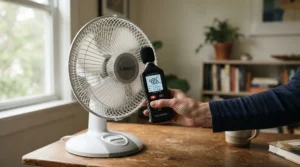
Here’s the honest trade-off, though: at a rated 49 dBA, this is an AC-motor fan in every sense, meaning it’s noticeably louder than the EC-motor options above — expect a steady hum you’ll notice in a quiet room, not the near-silent hush of the T4 or ECMF-100.
Based on the spec comparison, the Z4 makes the most sense for growers operating in a garage, basement, or spare room where ambient noise already exists and a few extra decibels won’t matter, rather than a bedroom closet grow where every hum is amplified by silence.
Pros:
- ✅ Variable speed controller included at no extra cost
- ✅ Corrosion-resistant galvanized steel housing
- ✅ Dual flanges make ducting hookup straightforward
Cons:
- ❌ 49 dBA noise level is loud for bedroom-adjacent setups
- ❌ AC motor draws more power than EC alternatives at similar CFM
At roughly $40–$55, it’s a legitimately solid budget pick as long as noise tolerance is on your side.
7. iPower 4 Inch 195 CFM Lite — the bare-bones entry point
The iPower 4 Inch 195 CFM Lite strips things down to the essentials: 195 CFM at 2,500 RPM, a 30 dB noise rating, and a flat 28-watt AC motor with no speed controller included at all — it’s simply on or off. Key specs with real-world meaning: that fixed-speed design means you either run it wide open or you add a separate controller (or a smart outlet on a timer) to dial things back, which is a genuine limitation for anyone chasing precise humidity control.
Reviewers consistently frame this fan as the “it just works” option — praise centers on easy flange installation and reliable operation for basic exhaust duty, with the most common complaint being the lack of adjustability rather than any failure of the motor itself.
This is honestly the right call for someone testing whether growing is even a hobby they’ll stick with before investing in anything fancier, or for a secondary intake fan role where fixed-speed operation is genuinely fine.
Pros:
- ✅ Lowest price point of any fan on this list
- ✅ Simple flange-based installation with a 5.9-foot cord
- ✅ Reliable for basic fixed-speed exhaust or intake duty
Cons:
- ❌ No speed control included — it’s fully on or fully off
- ❌ 30 dB AC motor hums more than EC-motor alternatives
Usually found under $35, this is the fan to grab if you’re not ready to commit real money to your first tent.
✨ Don’t Miss the Right Fit for Your Tent!
🔍 Take your ventilation setup to the next level by matching your fan to your tent size, noise tolerance, and budget — not just whichever one has the most reviews. Click through on any highlighted pick above to check current pricing and availability before you decide.
Practical Usage Guide: Setting Up Your Inline Fan Right
Buying the right fan is half the job — installing and running it correctly is the other half, and it’s the half most first-time growers rush through. 🔧
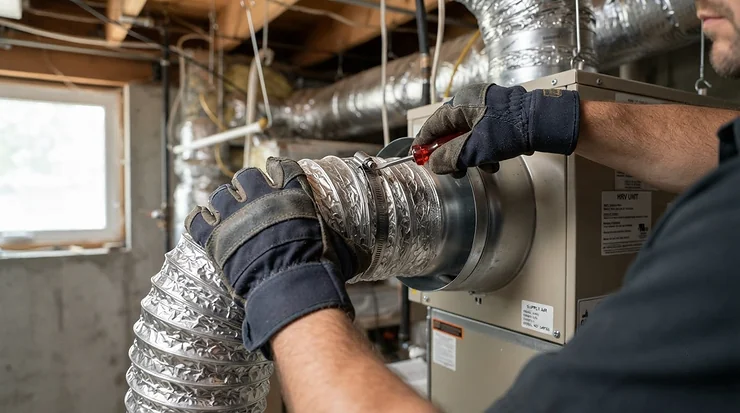
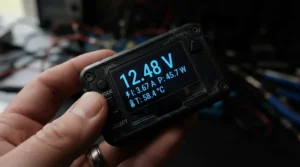
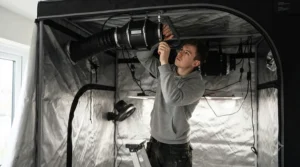
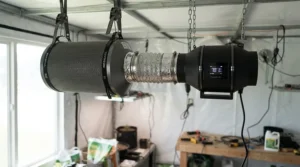
Start by mounting the fan outside the tent whenever your space allows, ideally suspended with rope ratchets rather than resting on a shelf, since even EC motors produce a faint vibration that transfers into anything it’s touching. Orient the fan so airflow pulls through your carbon filter first and exhausts through the fan — this “negative pressure” configuration keeps odor-laden air from leaking out of tent seams before it’s filtered, which is the single most common setup mistake in first-time grows. During your first 30 days, resist the urge to run the fan at 100% around the clock; most EC-motor fans, including the Cloudline T4 and S4, perform best around 50–70% speed for typical 2×4 tents, reserving full power for hot afternoons or flowering stages when heat and humidity peak.
Maintenance is refreshingly low-effort if you stay ahead of it: wipe down the intake grille every two to three weeks to prevent dust and pollen buildup, and fully detach the motor housing every three to four months for a deeper clean, since AC Infinity and TerraBloom both design their fans with removable motor boxes specifically for this. A quick monthly listen test also matters — a new rattle or grinding sound almost always means a bearing issue worth addressing before it becomes fan failure mid-grow.
Real-World Scenarios: Matching the Fan to Your Setup
Specs only mean so much until you place them against an actual room and an actual grower. Here are three profiles pulled from common grow tent configurations. 🏠
If you’re a college student running a 2×2 tent in a dorm-adjacent closet with paper-thin walls, noise tolerance is your entire decision criteria — the TerraBloom ECMF-100 at 18 dBA is built almost exactly for this scenario, since its 141 CFM output is more than sufficient for a tent that small, and nobody in the next room will ever know it’s running. If you’re a hobbyist growing in a converted spare bedroom with a 3×3 or 4×4 tent under a 400–600 watt light, you need real airflow headroom for heat management without turning your house into a wind tunnel — the AC Infinity Cloudline S4 hits that balance, giving you 205 CFM of manually adjustable, quiet exhaust without paying for app features you may never open. If you’re a serious multi-tent grower running two or three setups in a basement or garage, the calculus shifts toward automation and remote monitoring — the AC Infinity Cloudline T4‘s app connectivity genuinely earns its price premium here, since checking climate data across multiple tents from one phone screen saves real time compared to walking the basement with a handheld hygrometer.
What Is a 4 Inch Inline Fan and How to Choose One
A 4 inch inline fan is a duct-mounted blower sized to fit standard 4-inch ducting, designed to exhaust hot, humid, or odor-laden air out of an enclosed grow tent while pulling fresh air in through a passive or active intake — the workhorse of nearly every small-to-mid grow tent ventilation system.
Choosing the right one comes down to a handful of decision points, and working through them in order will save you from buying twice:
- Calculate your tent’s volume first. Multiply length by width by height in feet, then plan for a full air exchange every one to three minutes — a standard 2x4x5 tent (40 cubic feet) needs roughly 40–120 CFM at minimum before accounting for filter and duct losses.
- Add 20–30% CFM headroom for your carbon filter. Filters restrict airflow noticeably, so a fan rated at your exact minimum will underperform once a filter and ducting are attached.
- Decide how much you value silence. If your tent sits near a bedroom, prioritize dBA rating over raw CFM — an EC-motor fan like the T4 or ECMF-100 will feel worlds quieter than an AC-motor fan at similar airflow.
- Match controller complexity to your actual habits. A smart, app-connected controller only pays off if you’ll genuinely use scheduling and climate triggers; otherwise a manual speed dial does the same job for less money.
- Check duct compatibility with your existing filter and ducting. Nearly every fan here uses standard 4-inch flanges, but confirm before buying if you already own ducting or a filter.
- Factor in warranty and motor type for long-term reliability. EC motors generally outlast and outperform AC motors on efficiency and lifespan, and a 2-year warranty (like TerraBloom’s) signals more manufacturer confidence than a 1-year term.
- Budget for the whole system, not just the fan. Ducting, a carbon filter, and mounting hardware often add 30–50% to your total ventilation cost, so price the full kit before committing to one component.
Cloudline T4 vs Cloudline S4: Smart Control vs Manual Simplicity
Since these two fans share nearly identical hardware, this comparison deserves its own space rather than a single table row. The AC Infinity Cloudline T4 and AC Infinity Cloudline S4 both move 205 CFM at 28 dBA through the same mixed-flow housing and dual ball bearing motor — mechanically, you are choosing between identical fans. The entire difference lives in the controller: the T4’s Controller 69 Pro adds temperature, humidity, and VPD-triggered automation plus Bluetooth and WiFi app access, while the S4’s wired 10-speed dial requires you to manually adjust speed as your grow’s needs change through veg and flower.
In practice, this Cloudline T4 performance review distinction matters most for growers managing multiple tents or anyone who travels and wants remote visibility into their grow environment — the automation genuinely reduces daily hands-on management. For a single tent checked on daily anyway, the S4’s manual dial accomplishes nearly the same outcome for meaningfully less money, since you’re the one providing the “automation” by glancing at a hygrometer and turning a dial. Neither fan is the wrong choice; the right one depends entirely on how much you value not having to think about it.
Common Mistakes When Buying a 4 Inch Grow Tent Fan
Even experienced growers trip over the same handful of purchasing errors. 🚫 The most frequent one is buying based on CFM alone without checking noise ratings — a 250 CFM AC-motor fan can be dramatically louder than a 200 CFM EC-motor fan, and CFM headlines dominate product listings while dBA specs get buried. A close second is underestimating filter and duct losses: buyers routinely purchase a fan rated at their exact calculated minimum CFM, then wonder why airflow feels weak once a carbon filter and 8 feet of flexible ducting are attached, typically cutting effective airflow by 20–40%. Another common misstep is assuming all “quiet” claims are measured the same way — noise ratings from different manufacturers aren’t always tested under identical conditions, so treat published dBA figures as directionally useful rather than perfectly comparable across brands. Finally, plenty of buyers skip checking motor type entirely, not realizing that a standard household dimmer switch will damage an EC motor’s electronics, while AC-motor fans require exactly that kind of external controller if one isn’t included.
What to Expect: Real-World Performance in a Grow Tent
Numbers on a spec sheet translate into a fairly predictable real-world experience once a fan is actually humming away in your tent. A properly sized EC-motor fan running at 50–60% speed in a 2×4 or 3×3 tent should keep temperatures within 3–5 degrees of ambient room temperature under a standard LED, with humidity swings smoothed out gradually rather than in dramatic spikes. What the spec sheet won’t tell you is how quickly a fan responds to lights turning on — heat load jumps almost instantly when a grow light kicks on, and this is precisely where the AC Infinity Cloudline T4‘s automated speed ramping shows its value, since it reacts within seconds rather than waiting for you to notice a temperature spike and adjust manually. Fixed-speed fans like the iPower 4 Inch 195 CFM Lite handle this differently: you’ll want to run them at a speed that comfortably manages your worst-case heat load (lights-on, midsummer) even if that means slightly more airflow than needed during cooler periods, since there’s no dynamic adjustment available.
Long-Term Cost & Maintenance: EC Motors vs AC Motors
Growers ask about Cloudline reliability long term more than almost any other question in this category, and the honest answer requires separating motor type from brand loyalty. EC motors, like those in the AC Infinity Cloudline T4, Cloudline S4, TerraBloom ECMF-100, and VIVOSUN AeroZesh G4, use electronically commutated design — a brushless architecture that runs cooler, draws less power at partial speeds, and generally outlasts traditional AC motors because there’s less mechanical wear from constant full-speed operation. Over a full year of 24/7 operation, an EC motor drawing 20–28 watts at moderate speed can cost roughly $25–$50 in electricity, compared to $60–$90 for an AC motor drawing 28–75 watts continuously — a gap that compounds noticeably across multiple grow cycles.
Dual ball bearings, rated between 67,000 and 70,000 hours across the AC Infinity and TerraBloom lineups, translate to roughly 7–8 years of continuous runtime before bearing wear becomes a realistic concern, assuming reasonable dust maintenance. Warranty length is a genuinely useful proxy for manufacturer confidence here: TerraBloom’s 2-year term on the ECMF-100 signals real trust in their EC motor’s longevity, while most AC-motor budget fans top out at a single year. None of this guarantees a specific unit won’t fail early — every mechanical product has some failure rate — but the pattern across EC-motor fans in this category points toward meaningfully lower long-term operating costs and fewer mid-grow surprises.
Safety, Certification & Ventilation Compliance Guide
Ventilation isn’t just about plant health — it’s also a moisture and electrical safety issue that deserves real attention. 🛡️ Grow tents create a genuinely humid microclimate, and the EPA’s guidance on mold and moisture control recommends keeping indoor relative humidity below 60%, ideally between 30–50%, specifically because sustained higher humidity creates conditions where mold can establish itself — a real risk in an under-ventilated tent running lights and a reservoir simultaneously. This is precisely why an undersized or fixed-speed fan can become a plant health issue and a household air-quality issue at the same time.
On the certification side, look for ETL listing (the mark that appeared repeatedly across the TerraBloom, VIVOSUN, and AC Infinity fans in this review) since it indicates independent third-party testing against recognized electrical safety standards — a meaningful signal when a device is going to run continuously in a damp environment for months at a stretch. Route power cords away from standing water or reservoirs, use a grounded outlet, and avoid daisy-chaining multiple high-draw devices off a single extension cord, since fans, lights, and humidifiers running simultaneously can add up faster than a single outlet is rated to handle.
Features That Actually Matter (And Those That Don’t)
Marketing copy loves to pile on feature lists, but not every spec deserves equal weight in your decision. Airflow (CFM) and noise (dBA) matter enormously — they directly determine whether your tent stays healthy and whether your household stays sane. Motor type (EC vs AC) matters just as much, since it drives both noise and long-term electricity cost. Bearing rating and warranty length matter because they’re honest proxies for how long the fan will actually last under continuous duty.
AC Infinity 4 Inch Pros and Cons at a Glance
Running an AC Infinity 4 inch pros and cons check across the T4 and S4 specifically: the pros are consistent airflow performance, quiet EC operation, and a genuinely useful automation tier if you want it; the cons are a real price premium over generic competitors and, for the T4 specifically, a controller with more menus than a first-time grower strictly needs.
What matters far less than the marketing suggests: app aesthetics, color options, and headline CFM numbers in isolation without matching them to your actual tent size. A fan rated for 400 CFM in a 2×2 tent isn’t better — it’s just going to be louder and more powerful than you need, running at 30% speed permanently to avoid stripping moisture from your canopy too fast.
Problem → Solution: Fixing Common Grow Tent Airflow Issues
Real problems deserve real, specific fixes rather than vague advice. 🔧 If your tent runs too hot despite an adequately sized fan, check first whether your intake is too restrictive — an exhaust fan can only move air as fast as fresh air can replace it, and undersized passive vents choke even a powerful fan like the AC Infinity Cloudline T4. If your fan sounds noticeably louder after a few months, the most likely culprit is dust buildup on the impeller blades throwing them slightly off-balance; a full teardown and clean, as covered in the usage guide above, usually resolves it. If humidity keeps spiking despite constant fan operation, you may be running an undersized fan for your filter and duct combination — recalculate your required CFM including the 20–30% filter-loss buffer and compare it against your fan’s rated output. If you’re getting odor leakage despite a carbon filter, double-check your airflow direction; the filter needs to sit on the intake side of the fan (pulling air through it before exhausting), not the exhaust side, a wiring mix-up that’s more common than you’d think. Finally, if an AC-motor fan seems louder than its published rating suggests, remember that dBA ratings are typically measured at a fixed distance under ideal lab conditions — real-world noise in a small room with hard surfaces will always read a bit louder than the spec sheet implies.
Price Range & Value Analysis
| Tier | Price Range | Representative Fan | Value Verdict |
|---|---|---|---|
| Budget | Under $35–$55 | iPower 4 Inch 195 CFM Lite, VIVOSUN Z4 | Fine for a first tent; expect more noise |
| Mid-Range | $45–$85 | VIVOSUN AeroZesh G4, AC Infinity Cloudline S4 | Best balance of quiet operation and price |
| Premium | $80–$180 | AC Infinity Cloudline T4, Panasonic Atmosphere VTX400 | Pay for automation or commercial durability |
The clearest takeaway from this breakdown is that the mid-range tier delivers the strongest cost-per-decibel-avoided value in the category — both the VIVOSUN AeroZesh G4 and AC Infinity Cloudline S4 get you EC-motor quiet operation without premium automation pricing. Budget-tier fans remain a completely reasonable choice for a first tent or a low-stakes grow, but expect the noise trade-off to become more noticeable the longer you live with the fan running daily.
Frequently Asked Questions
❓ How many CFM do I need for a 4x4 grow tent?
❓ Is the AC Infinity Cloudline T4 worth the extra cost over the S4?
❓ Can I use a 4 inch inline fan for intake instead of exhaust?
❓ How loud is 28 dBA compared to a normal room?
❓ Do EC motor fans really last longer than AC motor fans?
Conclusion
If there’s one honest takeaway from this AC Infinity Cloudline 4 inch review for grow tents, it’s that airflow math is genuinely simple, but matching a fan to your actual habits and tolerance for noise is where most buying decisions go sideways. The AC Infinity Cloudline T4 earns its reputation as the smartest, quietest all-around choice for growers who want climate automation and don’t mind paying for it, while the AC Infinity Cloudline S4 quietly offers nearly identical airflow performance for less money if you’re comfortable with a manual dial. Budget shoppers have real, legitimate options in the iPower 4 Inch 195 CFM Lite and VIVOSUN Z4, and anyone chasing near-silent operation should give the TerraBloom ECMF-100 serious consideration before defaulting to the bigger brand name.
There’s no single “best” fan here — only the one that matches your tent size, your noise tolerance, and how much daily fiddling you’re willing to do. Run the CFM math from the “How to Choose” section above, be honest with yourself about how much you’ll actually use smart features, and you’ll land on the right pick the first time instead of buying twice. 🌿
Recommended for You
- AC Infinity Cloudline 4 Inch vs Vivosun 4 Inch: 7 Fans Compared
- AC Infinity Cloudline 4 Inch Bundle Deal: 7 Kits Ranked (2026)
- 4 Inch Inline Duct Fan for Microgreens Tent: 7 Picks for 2026
Disclaimer: This article contains affiliate links. As an Amazon Associate, I earn from qualifying purchases. If you purchase products through these links, we may earn a small commission at no additional cost to you.
✨ Found this helpful? Share it with your friends! 💬🤗
