
In This Article
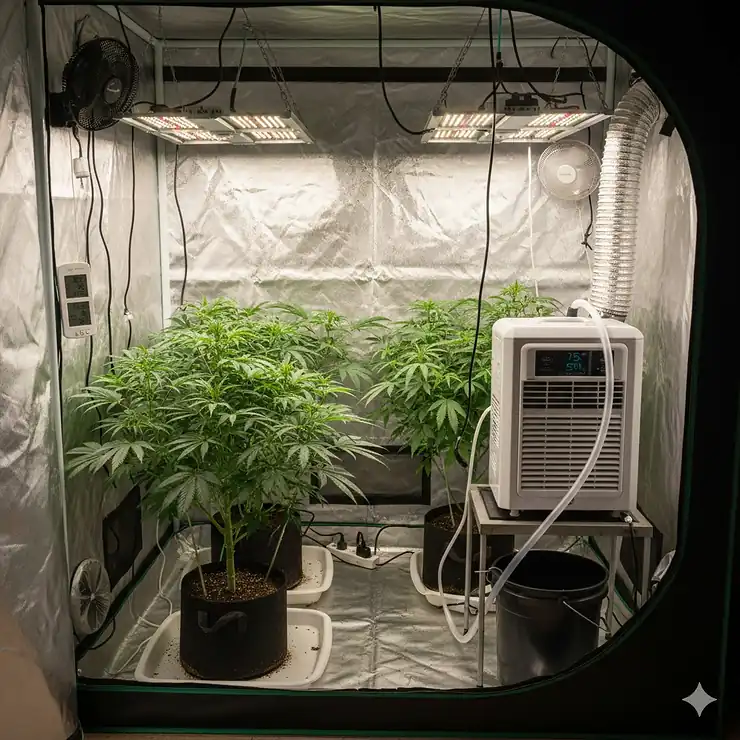
Ever walked into your grow tent on a scorching summer day and felt like you stepped into a sauna? You’re not alone! Temperature control stands as one of the most critical factors in indoor cultivation success, yet it’s where most growers struggle the hardest.
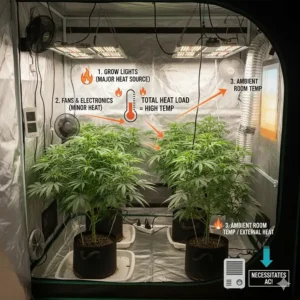
Here’s the thing: plants are surprisingly picky about their environment. Too hot, and you’ll watch your precious plants wilt faster than ice cream on asphalt. Too cold, and growth slows to a crawl. According to Cornell University’s Controlled Environment Agriculture program, maintaining consistent temperature is one of the two most important environmental variables for plant growth.
A quality grow tent ac doesn’t just cool the air—it transforms your enclosed space into a perfectly calibrated growing environment. We’re talking precise temperature control, humidity management, and the ability to maintain optimal vapor pressure deficit (VPD) levels that maximize plant transpiration and growth. The right AC unit can be the difference between mediocre harvests and crops that make your neighbors jealous.
In this comprehensive guide, I’ll walk you through the 7 best grow tent ac units available in 2025, breaking down exactly what makes each one worth your investment. Whether you’re running a compact 2×2 tent or a sprawling 10×10 operation, there’s a perfect cooling solution waiting for you
Quick Comparison Table: Top Grow Tent AC Units at a Glance
| Product | BTU Rating | Coverage | Key Feature | Price Range |
|---|---|---|---|---|
| AC Infinity TERRAFORM 7 | 8,000 | 10×10 ft | 4-way ducting, VPD controller | $1,200-$1,400 |
| VIVOSUN AeroLush C08 | 8,000 | 5×5 ft | Smart sensors, app control | $900-$1,100 |
| BLACK+DECKER BPACT14HWT | 14,000 | Up to 700 sq ft | Heat & cool, WiFi enabled | $450-$550 |
| Whynter ARC-14S | 14,000 | 500 sq ft | Dual hose, auto-drain | $500-$600 |
| Whynter ARC-14SH | 14,000 | 500 sq ft | Heating capability, carbon filter | $550-$650 |
| LG LP0821GSSM | 8,000 | 350 sq ft | Voice control, ultra-quiet | $350-$450 |
| LG LP0823GSSM | 8,000 | 350 sq ft | ThinQ app, auto-evaporation | $380-$480 |
💬 Just one click – help others make better buying decisions too! 😊
Top 7 Grow Tent AC Units: Expert Analysis & Reviews
1. AC Infinity TERRAFORM 7 – The Professional’s Choice
If you’re serious about indoor growing, the AC Infinity TERRAFORM 7 represents the cutting edge of grow tent ac technology. This isn’t just an air conditioner—it’s a complete environmental control system designed specifically for cultivation spaces.
Key Specifications:
- 8,000 BTU cooling capacity
- 4-way ducting system for pressure control
- Integrated VPD controller with 10-level triggers
What sets this unit apart? The revolutionary 4-way ducting allows you to configure positive, negative, or neutral pressure inside your tent. This means total control over odors and airborne particles—something standard portable ACs simply can’t match. The built-in VPD programming monitors temperature and humidity in real-time, automatically adjusting to maintain optimal growing conditions.
Customer feedback consistently praises the TERRAFORM 7’s WiFi connectivity through the AC Infinity app. Growers love being able to check and adjust their tent environment from anywhere, receiving instant alerts if conditions drift outside target ranges.
Pros:
✅ Purpose-built for grow spaces
✅ Comprehensive environmental control
✅ Exceptional build quality
Cons:
❌ Premium price point
❌ Requires dedicated circuit
Best for: Serious growers with 8×8 to 10×10 tents who demand professional-grade climate control
2. VIVOSUN AeroLush C08 – Smart Growing Made Simple
The VIVOSUN AeroLush C08 brings sophisticated climate control to mid-sized operations without breaking the bank. This smart AC unit excels at maintaining the delicate balance your plants crave.
Key Specifications:
- 8,000 BTU compressor
- Precision Sensirion sensors
- Real-time temperature, humidity, and VPD monitoring
Here’s what makes it special: those Sensirion sensors aren’t your average temperature probes. They provide laboratory-grade accuracy, ensuring your readings are spot-on. The 4-in-1 functionality (cooling, drying, heating, and fan modes) means year-round climate control in a single unit.
Users particularly appreciate the seamless integration with the VIVOSUN Smart Grow System. When paired with other VIVOSUN devices, the whole setup works in perfect harmony, automatically adjusting based on your plants’ needs.
Pros:
✅ Excellent sensor accuracy
✅ Self-evaporating system
✅ Auto-restart after power outages
Cons:
❌ Recommended for tents up to 5×5 ft
❌ Duct fan must stay at low speeds
Best for: Tech-savvy growers with medium tents (4×4 to 5×5 ft) wanting smart automation
3. BLACK+DECKER BPACT14HWT – Year-Round Versatility Champion
Don’t let the mainstream brand fool you—the BLACK+DECKER BPACT14HWT punches well above its weight class for grow tent applications. This dual-purpose unit cools in summer and heats in winter, making it incredibly versatile.
Key Specifications:
- 14,000 BTU cooling / 12,000 BTU heating
- Covers up to 700 sq ft
- Smart home integration (Alexa, Google Assistant)
The Follow Me remote is brilliant for grow tents. It acts as a mobile thermostat, ensuring the AC responds to the actual temperature at plant canopy height rather than wherever the unit sits. Smart WiFi control means you can adjust settings without opening your tent and disrupting your plants.
Growers report solid performance in spaces up to 6×6 ft, with the heating function proving invaluable during cold months when temperatures drop too low.
Pros:
✅ Heating and cooling in one unit
✅ Budget-friendly for the features
✅ Easy window installation kit
Cons:
❌ Single-hose design (less efficient than dual-hose)
❌ Bulkier footprint
Best for: Budget-conscious growers needing both cooling and heating capabilities
4. Whynter ARC-14S – The Award-Winning Workhorse
Named Good Housekeeping’s 2025 “Best Overall Portable Air Conditioner,” the Whynter ARC-14S has earned its reputation through consistent, reliable performance. This dual-hose powerhouse delivers professional-grade cooling at a reasonable price.
Key Specifications:
- 14,000 BTU (9,500 BTU SACC)
- Dual-hose operation
- 71 pint/day dehumidification
The dual-hose system is where this unit shines. Unlike single-hose models that pull conditioned air from your tent to cool themselves, the ARC-14S uses separate intake and exhaust hoses. This means faster cooling and better efficiency—crucial when you’re battling intense grow lights.
The patented auto-drain technology recycles collected moisture to produce cooler air, minimizing manual drainage needs. Customer reviews consistently mention how quietly it operates, especially on low speed (51 dBA).
Pros:
✅ Award-winning performance
✅ Eco-friendly R-32 refrigerant
✅ Activated carbon air filter
Cons:
❌ Heavier unit (requires stable placement)
❌ Premium pricing in its category
Best for: Growers prioritizing efficiency and proven performance in medium to large tents
5. Whynter ARC-14SH – Ultimate All-Season Control
Building on the ARC-14S’s success, the Whynter ARC-14SH adds heating capability for complete year-round climate control. It’s essentially getting two professional-grade units in one package.
Key Specifications:
- 14,000 BTU cooling (9,200 BTU SACC)
- Heating function included
- 3-speed fan operation
What I love about this model: the versatility. Summer heat wave? No problem. Unexpected cold snap in early spring? You’re covered. The activated carbon filter and washable pre-filter maintain superior air quality, which translates to healthier plants.
Business Insider ranked it as the best portable AC with heater for medium to large rooms, noting its exceptional performance in cooling tests. For grow operations in areas with dramatic seasonal temperature swings, this unit is pure gold.
Pros:
✅ Four operational modes (cool, heat, dehumidify, fan)
✅ Dual-hose efficiency
✅ Sleek platinum/black design
Cons:
❌ Higher initial investment
❌ Requires adequate venting space
Best for: Four-season growers needing reliable heating and cooling in 500 sq ft spaces
6. LG LP0821GSSM – The Quiet Performer
If noise drives you crazy, the LG LP0821GSSM might be your perfect match. This whisper-quiet unit operates at just 51 dB on low mode while delivering solid cooling performance.
Key Specifications:
- 8,000 BTU (SACC)
- Voice control via LG ThinQ, Alexa, Google Assistant
- Auto-swing air vent for even distribution
The smart features really shine here. Imagine adjusting your tent temperature using voice commands from another room—no need to interrupt your plants’ dark cycle by opening the tent. The LG ThinQ app provides detailed energy usage tracking, helping you optimize operating costs.
The auto-evaporation system minimizes drainage needs, which is huge for tent growers who don’t want to constantly empty drip trays. Users consistently praise the even air distribution from the auto-swing vents.
Pros:
✅ Exceptionally quiet operation
✅ Comprehensive smart home integration
✅ 24-hour programmable timer
Cons:
❌ Best for smaller tents (up to 4×4 ft)
❌ Single-hose configuration
Best for: Stealth growers in residential settings who prioritize quiet operation
7. LG LP0823GSSM – Modern Efficiency Meets Style
Rounding out our list, the LG LP0823GSSM combines sleek design with modern technology. This unit proves you don’t have to sacrifice aesthetics for functionality.
Key Specifications:
- 8,000 BTU SACC (12,000 BTU ASHRAE)
- WiFi-enabled with app control
- Gray finish with easy-roll casters
The 3-in-1 operation (cool, dehumidify, fan) adapts to your changing needs throughout the growing cycle. Early vegetative stage needing gentle air circulation? Use fan mode. Mid-flower in humid conditions? Switch to dehumidify. The flexibility is fantastic.
What sets this apart from its sibling (LP0821GSSM) is the updated design and slightly improved energy efficiency. The washable filter slides out easily for quick monthly cleaning—a small detail that saves time in the long run.
Pros:
✅ Modern aesthetic
✅ Auto-restart function
✅ Portable with smooth-rolling casters
Cons:
❌ Coverage limited to 350 sq ft
❌ Remote batteries not included
Best for: Design-conscious growers with small to medium tents wanting modern features
Understanding BTU Requirements for Your Grow Tent
Choosing the right BTU rating isn’t rocket science, but it does require some calculation. Here’s the reality: your grow lights generate massive amounts of heat that standard room calculations don’t account for.
The Basic Formula
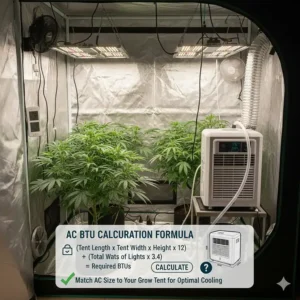
Start with 3.5 BTU per watt of grow light power. Running 1,200 watts of LED? That’s 4,200 BTU right there. Add your tent’s base cooling needs based on size, and you’ve got your target.
Size-Based Guidelines
Small Tents (2×2 to 4×4 ft): Need 5,000-8,000 BTU, depending on light intensity. Units like the LG models work perfectly here.
Medium Tents (5×5 to 6×6 ft): Require 8,000-10,000 BTU minimum. The VIVOSUN AeroLush C08 or TERRAFORM 7 excel in this range.
Large Tents (8×8 to 10×10 ft): Demand 12,000-14,000+ BTU. Go with the Whynter or BLACK+DECKER options for adequate cooling power.
The University of Alaska’s greenhouse management guidelines emphasize that proper temperature control is fundamental to successful indoor agriculture. Don’t skimp here—undersized AC units run constantly, wear out faster, and still fail to maintain target temperatures.
Key Features to Prioritize When Shopping
Ducting Configuration
Dual-hose systems outperform single-hose models by 20-30% in efficiency. The separate intake prevents your AC from constantly fighting your exhaust fan.
Smart Controls & Automation
Modern grow tent ac units with WiFi connectivity aren’t just convenient—they’re game-changers for maintaining consistent conditions. Temperature fluctuations stress plants; automation eliminates human error.
Dehumidification Capacity
Your AC should handle at least 50 pints/day if you’re running a serious operation. Plants transpire constantly, especially under intense lighting. Excess humidity invites mold and mildew disasters.
Noise Levels
Look for units operating under 55 dB if your tent is near living spaces. The difference between a 52 dB and 65 dB unit is massive in real-world comfort.
Installation Best Practices for Maximum Efficiency
Positioning Strategies
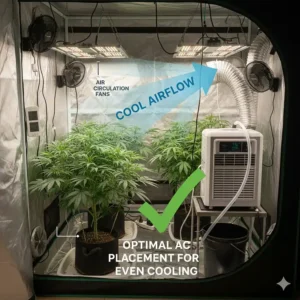
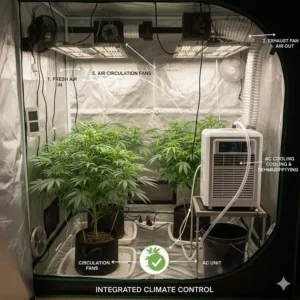
Place your grow tent ac outside the tent when possible, ducting only the cold air intake inside. This keeps the unit’s heat output from affecting tent temperature and provides easier maintenance access.
Exhaust Management
Never let your AC exhaust vent back into your growing room. Route it outside or into a different space. Michigan State University research shows that proper exhaust management dramatically improves cooling efficiency.
Duct Length Considerations
Keep exhaust hoses as short and straight as possible. Every foot of duct and each bend reduces efficiency by roughly 5-10%. Four feet straight beats eight feet with two elbows every time.
Sealing & Insulation
Seal all connections with HVAC tape, not duct tape (which actually sucks for ducts). Insulate exposed ducting in unconditioned spaces to prevent condensation and maintain temperature.
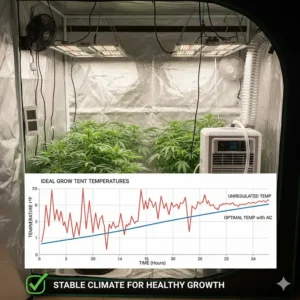
Maintaining Optimal Grow Tent Temperatures Year-Round
Summer Challenges
Combat heat with strategic AC placement, reflective tent material, and proper ventilation. Consider running lights during cooler nighttime hours to reduce daytime cooling demands.
Winter Complications
Yes, you might need cooling even in winter! Grow lights still generate significant heat. Many growers run AC units year-round, just at lower settings. This is where dual-purpose units like the BLACK+DECKER or Whynter ARC-14SH prove invaluable.
Transitional Season Tactics
Spring and fall create tricky situations where you need cooling during the day but heating at night. Programmable thermostats or smart AC units handle these transitions automatically.
VPD Optimization Through Temperature Control
Vapor pressure deficit represents the relationship between temperature and humidity—it’s what plants actually “feel.” Your grow tent ac plays a crucial role in maintaining optimal VPD ranges (0.8-1.1 kPa for vegetation, 1.0-1.5 kPa for flowering). Get this right, and your plants will reward you with explosive growth.
Comparison: Portable AC vs. Mini-Split Systems
| Feature | Portable AC | Mini-Split |
|---|---|---|
| Initial Cost | $300-$1,400 | $1,500-$4,000+ |
| Installation | DIY-friendly | Requires professional |
| Portability | Fully mobile | Permanent installation |
| Efficiency | Good to Very Good | Excellent |
| Noise | Moderate | Very Quiet |
| Best For | Rental spaces, flexibility | Permanent setups, larger operations |
Portable units make sense for most home growers. They’re movable, require no permanent modifications, and offer enough cooling power for standard tent sizes. Mini-splits excel in commercial operations or permanent grow rooms where upfront cost isn’t prohibitive.
Common Mistakes to Avoid
Undersizing Your Unit
The most frequent error! Growers calculate room size but forget light heat output. A 1000W HID light adds 3,500 BTU to your cooling needs—that’s significant.
Ignoring Humidity Control
Temperature and humidity work together. An AC that cools but doesn’t dehumidify forces you to buy separate equipment, increasing costs and complexity.
Poor Vent Routing
Recirculating hot exhaust air defeats your AC’s purpose. Route exhaust outside your growing space, period.
Neglecting Maintenance
Dirty filters reduce efficiency by 15-30%. Clean monthly, replace as needed. Most growers skip this until performance tanks.
Energy Efficiency Tips to Lower Operating Costs
Seal your tent properly—light leaks let cool air escape too. Insulate ducting runs. Use LED grow lights instead of HID to reduce heat generation from the source. Run your AC on a timer aligned with your lighting schedule; many units consume 50% less power at lower speeds.
Consider your local climate when choosing equipment. If you’re in Arizona, invest in higher BTU capacity. Pacific Northwest? Maybe you only need AC during peak summer months.
The Missouri University Extension’s CEA guidelines note that well-managed environmental controls significantly reduce overall energy consumption through efficiency gains.
Grow Tent AC vs. Traditional Cooling Methods
Swamp Coolers: Only work in dry climates and add humidity—terrible for most grow operations.
Window Units: Can’t be ducted effectively into tents; better suited for whole-room cooling.
Ice/DIY Solutions: Temporary fixes that waste time and provide inconsistent cooling.
Inline Duct Coolers: Work for small setups but lack the power for serious operations.
A dedicated grow tent ac provides consistent, controllable cooling that DIY methods can’t match. The initial investment pays for itself through improved yields and fewer environmental disasters.
Troubleshooting Common AC Issues in Grow Tents
Unit Cycles Too Frequently
Usually indicates undersizing. The AC can’t maintain temperature, so it runs constantly without reaching the shutoff point. Solution: upgrade BTU capacity or reduce heat sources.
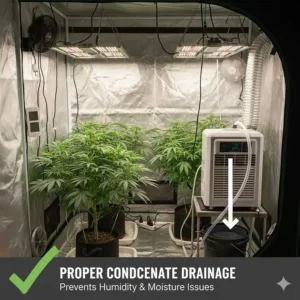
Excessive Condensation
Poor drainage or overly humid environment. Check drain hoses for clogs, ensure proper tent ventilation, and consider reducing plant density.
Inadequate Cooling Despite Proper Sizing
Check for air leaks in ducting, dirty filters, or refrigerant issues. Sometimes simply straightening kinked exhaust hoses solves the problem.
High Energy Bills
Could indicate inefficient unit operation, poor insulation, or too-small capacity running constantly. Verify your unit’s SEER rating and actual power consumption.
❓ Frequently Asked Questions
❓ What size grow tent ac do I need for a 4x4 tent?
❓ Can I use a regular portable AC for my grow tent?
❓ How often should I clean my grow tent ac filters?
❓ Do I need cooling if I use LED grow lights?
❓ What's the difference between BTU and SACC ratings?
Conclusion: Choosing Your Perfect Grow Tent AC
After reviewing dozens of units and countless hours of research, here’s my straight talk: there’s no single “best” grow tent ac for everyone. Your perfect unit depends on tent size, budget, climate, and growing goals.
For serious growers with professional aspirations, the AC Infinity TERRAFORM 7 justifies every penny through precision control and purpose-built features. Budget-conscious beginners will find excellent value in the LG LP0821GSSM or BLACK+DECKER BPACT14HWT. The Whynter ARC-14S strikes an ideal middle ground between cost and performance for most medium-sized operations.
Remember: your grow tent ac investment directly impacts yield quality and quantity. Skimping here often costs more long-term through lost crops, increased pest pressure, and equipment failures. Buy once, buy right.
Temperature control transforms good grows into great ones. Whether you’re cultivating exotic orchids, starting vegetable seedlings, or pursuing any indoor horticultural passion, stable climate control is non-negotiable. These seven units represent the best available technology to help you succeed.
Now get out there and create the perfect growing environment your plants deserve!
✨ Don’t Miss These Exclusive Deals!
🔍 Take your indoor growing to the next level with these carefully selected products. Click on any highlighted item above to check current pricing and availability. These climate control solutions will help you create authentic results that exceed your expectations!
Recommended for You
- Best Grow Tent Heater 2025: Top 7 Smart Temperature Controls
- 7 Best Grow Cabinets That Transform Indoor Gardening 2025
- 7 Best Grow Tent Humidifiers 2025 (Tested & Reviewed)
Disclaimer: This article contains affiliate links. If you purchase products through these links, we may earn a small commission at no additional cost to you.
✨ Found this helpful? Share it with your friends! 💬🤗
