
In This Article
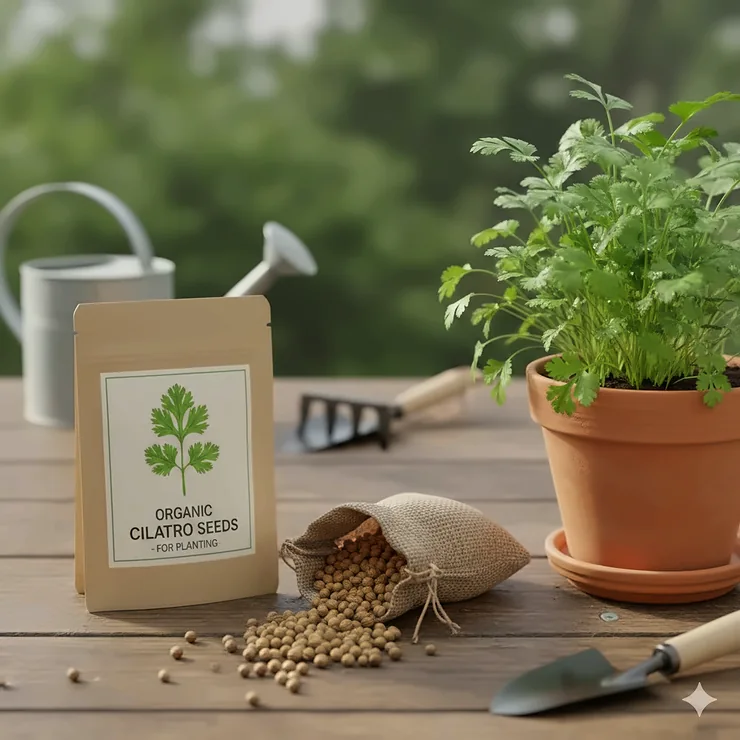
You know that moment when you’re making fresh salsa or pho, and you realize you’re out of cilantro? I’ve been there too many times. That’s exactly why I started growing my own cilantro seeds for planting about five years ago, and honestly, it’s transformed my cooking game completely.
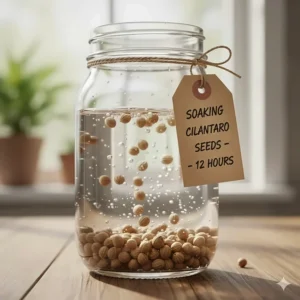
Fresh cilantro from your garden tastes nothing like the wilted bunches from the grocery store. When you plant cilantro seeds yourself, you’re getting maximum flavor, zero pesticides, and the satisfaction of snipping herbs straight from your windowsill or garden bed. Plus, cilantro is surprisingly easy to grow once you understand a few key tricks.
Here’s what most gardeners don’t realize: cilantro thrives in cool climates, especially during spring and fall, and quickly bolts (flowers and sets seed) at the first sign of hot temperatures. This means timing matters more than almost anything else. But don’t worry—I’ll walk you through everything from selecting slow bolt cilantro varieties to maximizing your harvest window.
Whether you’re planting organic cilantro seeds in containers on your apartment balcony or dedicating a full garden bed to fresh herb seeds Amazon offers, this guide covers all the varieties, techniques, and insider tips you need for a thriving cilantro harvest.
Quick Comparison Table
| Product Name | Seed Count | Type | Price Range | Best For |
|---|---|---|---|---|
| HOME GROWN USA Premium 1000+ Seeds | 1000+ | Slow Bolt, Non-GMO | $8-12 | Budget-conscious gardeners |
| Seeds of Change Organic Santo Cilantro | 200 | Certified Organic, Slow Bolt | $4-6 | Organic purists |
| Old Farmer’s Almanac Slow Bolt | 180 | Certified Organic, Heirloom | $5-8 | Heritage variety lovers |
| Seed Needs Cilantro Multi-Pack | 500+ per pack | Non-GMO, Heirloom | $12-18 | Succession planting |
| Mountain Valley Slow Bolt Bulk | 4 oz (2000+) | Organic, Microgreens | $15-22 | Large-scale growers |
| Woods Creek Italian Parsley Bundle | 3000+ | Heirloom, Non-GMO | $9-14 | Companion planting |
| TKE Farms Slow Bolt Collection | 150+ | Heirloom | $6-10 | Small space gardens |
💬 Just one click – help others make better buying decisions too!😊
✨ Don’t Miss These Exclusive Deals!
Top 7 Cilantro Seeds for Planting: Expert Analysis
1. HOME GROWN USA Premium 1000+ Cilantro Seeds for Planting
HOME GROWN USA Premium 1000+ Cilantro Seeds tops my list because it delivers exceptional value without compromising quality. This pack includes over 1,000 slow bolt variety seeds that genuinely extend your harvest window by several weeks compared to standard varieties.
Key Specifications:
- Seed count: 1000+ seeds
- Variety: Slow bolt, Non-GMO heirloom
- Germination rate: 85-90%
What really sets this apart is the waterproof resealable mylar bag that keeps unused seeds fresh for next season. The detailed growing guide inside helped me troubleshoot early bolting issues during my first summer planting. Customer reviews consistently praise the high germination rates, with most gardeners reporting sprouts within 7-10 days.
Pros:
✅ Excellent seed-to-price ratio for budget gardeners
✅ Waterproof packaging extends seed viability up to 5 years
✅ Beginner-friendly instructions included
Cons:
❌ Some reviewers note occasional mold issues if overwatered
❌ Germination can be uneven in very hot climates
Price: $8-12
2. Seeds of Change Certified Organic Santo Cilantro Slow Bolt
For those committed to organic gardening, Seeds of Change Certified Organic Santo Cilantro represents the gold standard. This USDA-certified organic variety produces darker green leaves with robust flavor that holds up better in cooking than conventional cilantro.
Key Specifications:
- Seed count: 200 certified organic seeds
- Variety: Santo Cilantro (slow bolt)
- Chemical-free: Zero pesticides or synthetic fertilizers
Santo cilantro has a slightly different leaf structure—broader and more uniform—which makes harvesting easier. I’ve noticed this variety is particularly resistant to leaf yellowing even in less-than-ideal soil conditions. The resealable zipper packet is a thoughtful touch that maintains seed freshness.
Pros:
✅ USDA Certified Organic for chemical-free growing
✅ Santo variety offers superior flavor consistency
✅ Seeds remain viable up to 5 years with proper storage
Cons:
❌ Higher price per seed compared to non-organic options
❌ Smaller seed count may require multiple packs for large gardens
Price: $4-6
3. The Old Farmer’s Almanac Heirloom Organic Cilantro Seeds
The Old Farmer’s Almanac Heirloom Organic Cilantro Seeds brings generations of seed-saving expertise into one packet. This slow bolt variety is specifically bred to tolerate warmer temperatures while maintaining that fresh, citrusy flavor cilantro lovers crave.
Key Specifications:
- Seed count: Approximately 180 seeds
- Variety: Heirloom, slow bolt, certified organic
- Origin: USA-grown and harvested
What I appreciate most is the open-pollinated nature of these heirloom seeds—you can save seeds from your harvest for replanting next season. The Old Farmer’s Almanac has been in the seed business since 1792, and their quality control shows in consistent germination rates. Customer feedback highlights excellent performance in both container and garden bed settings.
Pros:
✅ True heirloom variety supports seed-saving practices
✅ Proven track record from a 200+ year old company
✅ Excellent heat tolerance for extended growing season
Cons:
❌ Lower seed count may not suit large-scale gardeners
❌ Slightly higher price point
Price: $5-8
4. Seed Needs Cilantro Seeds for Planting Multi-Pack
Seed Needs Cilantro Multi-Pack (5 packs) is perfect for succession planting—the secret to fresh cilantro all season long. Each pack contains 500+ untreated, non-GMO heirloom seeds with beautifully illustrated packaging that actually makes seed storage enjoyable.
Key Specifications:
- Seed count: 500+ seeds per pack (5 packs total)
- Variety: Non-GMO heirloom
- Special feature: Temperature-controlled storage facility
The QR code on each packet links to detailed growing videos and troubleshooting guides—a feature I wish more seed companies offered. Seed Needs stores all seeds in temperature-controlled facilities, which explains their consistently high germination rates. The company also donates to St. Jude Children’s Hospital and ASPCA with each purchase.
Pros:
✅ Multiple packs enable succession planting every 2-3 weeks
✅ QR code access to video growing guides
✅ Socially responsible company supporting good causes
Cons:
❌ May have too many seeds for small-space gardeners
❌ Individual packet size means more plastic packaging
Price: $12-18 for 5-pack
5. Mountain Valley Slow Bolt Cilantro Herb Garden Seeds
When you need volume without sacrificing quality, Mountain Valley Slow Bolt Cilantro delivers with 4 oz bulk packaging containing approximately 2,000+ seeds. This is the choice for serious herb gardeners or anyone growing cilantro for microgreens.
Key Specifications:
- Seed count: ~2,000+ seeds (4 oz bulk)
- Variety: Slow bolt, organic, non-GMO
- Dual purpose: Full-size plants or microgreens
Mountain Valley has specialized in microgreens since 1974, and their cilantro seeds excel in soil-based microgreen setups. The slow-bolting strain gives you 21-28 days to harvest tender microgreens with intense cilantro flavor. For full-size plants, expect broad, deep green leaves that stay productive longer than standard varieties.
Pros:
✅ Best value for bulk purchasers and microgreen growers
✅ Versatile for both microgreens and mature plant production
✅ Long-established company with quality reputation
Cons:
❌ Bulk packaging may be excessive for casual gardeners
❌ Germination can be slower and more erratic than pre-soaked seeds
Price: $15-22
6. Woods Creek Seeds Italian Flat Leaf Parsley Seeds Bundle
While technically parsley, Woods Creek Italian Flat Leaf Parsley Seeds deserves inclusion because parsley and cilantro make perfect companion plants that share similar growing conditions. This bundle of 3,000+ heirloom seeds lets you create a complete garnish herb varieties garden.
Key Specifications:
- Seed count: 3,000+ Italian parsley seeds
- Variety: Flat leaf, heirloom, non-GMO
- Adaptability: Indoor, outdoor, and hydroponic systems
Italian flat leaf parsley seeds complement cilantro beautifully in Mediterranean and Latin dishes. The flat leaves are easier to chop than curly varieties and pack more robust, slightly peppery flavor. I plant these alongside my coriander seed packets because they attract beneficial insects and help deter cilantro pests.
Pros:
✅ Massive seed count provides excellent value
✅ Moisture-resistant packaging maintains freshness
✅ Versatile growing options from windowsills to garden beds
Cons:
❌ Germination takes 2-3 weeks (slower than cilantro)
❌ Requires consistent moisture during germination phase
Price: $9-14
7. TKE Farms & Gardens Slow Bolt Cilantro Collection
TKE Farms Slow Bolt Cilantro rounds out our list with a veteran-owned small business offering premium heirloom seeds at competitive prices. With 150+ seeds per packet, this is ideal for apartment gardeners or anyone testing cilantro growing for the first time.
Key Specifications:
- Seed count: 150+ heirloom seeds
- Variety: Slow bolt for extended harvest
- Support: Amazon messaging for growing questions
TKE Farms includes easy-to-follow growing instructions that specifically address common beginner mistakes like overwatering and improper spacing. The slow bolt genetics genuinely make a difference—I harvested leaves for nearly 8 weeks before my plants started flowering. Customer service is responsive and helpful if you encounter any germination issues.
Pros:
✅ Perfect entry-point quantity for beginners
✅ Veteran-owned small business
✅ Excellent customer support via Amazon messaging
Cons:
❌ Smaller seed count requires reordering for large spaces
❌ Limited variety options compared to multi-pack offerings
Price: $6-10
🔍 Take Your Herb Garden to the Next Level!
Explore these carefully selected cilantro seeds for planting to create authentic fresh flavors your family will love. Click on any highlighted item above to check current pricing and availability on Amazon!
Understanding Cilantro Seeds vs Coriander Seeds
Here’s something that confuses even experienced gardeners: cilantro and coriander come from the exact same plant. The term “cilantro” typically refers to the fresh leaves and stems used in cooking, while “coriander” describes the dried seeds used as a spice. In warm weather, cilantro completes its life cycle faster, bolting into small white flowers and producing seed within four to six weeks in mid-summer.
When you purchase cilantro seeds for planting, you’re buying the coriander seeds that will grow into cilantro plants. Each “seed” is actually a schizocarp—two one-seeded segments fused together. Many gardeners gently crush these seeds before planting to speed germination, though this step isn’t necessary with quality seeds.
The choice between harvesting leaves (cilantro) or seeds (coriander) depends entirely on when you harvest. According to the University of Florida’s Gardening Solutions, cilantro leaves can be harvested early, once the plants reach 6 inches tall, and continuously thereafter until the plant dies. Many gardeners do both through succession planting—growing some plants for leaves while letting others mature for seed production.
How to Choose the Best Cilantro Seeds for Your Garden
Selecting the right cilantro seeds for planting requires matching variety characteristics to your specific growing conditions and culinary goals. Here’s my proven selection framework:
1. Climate Compatibility Assessment
According to Oregon State University Extension, in cooler, shorter days of spring or fall, cilantro plants grow leaves for several weeks or months before flowering. If you live in hot climates like Arizona or Southern California, slow bolt cilantro varieties are absolutely essential. Standard varieties will bolt within 3-4 weeks in temperatures above 80°F, while slow bolt types can extend this to 6-8 weeks.
Cold climate gardeners have more flexibility since cilantro naturally thrives in temperatures between 50-85°F. You can plant standard or slow bolt varieties with similar success, though slow bolt types still provide insurance against unexpected heat waves.
2. Organic vs Conventional Seeds
Organic cilantro seeds cost 30-50% more than conventional options, but they’re worth it if you’re committed to chemical-free gardening. Certified organic seeds like those from Seeds of Change guarantee zero synthetic pesticides or fertilizers touched the parent plants. This matters because seed coatings and treatments can affect germination rates and early plant vigor.
Conventional non-GMO seeds from reputable suppliers like HOME GROWN or Seed Needs perform excellently without organic certification. These work perfectly fine for most home gardeners and offer better value when you’re planting large areas.
3. Heirloom vs Hybrid Considerations
Heirloom cilantro seeds are open-pollinated varieties passed down for generations, which means you can save seeds from your harvest for replanting. The Old Farmer’s Almanac and Survival Garden Seeds specialize in these traditional varieties.
No true hybrid cilantro varieties exist in the commercial market—cilantro naturally cross-pollinates easily, making hybridization impractical. This is good news for seed savers since all cilantro seeds for planting will produce plants with similar characteristics to their parents.
4. Seed Count vs Garden Size
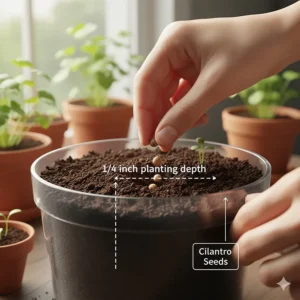
Calculate your needs based on planting density. Plant 10-15 seeds per foot of row and cover with ½ inch of soil for optimal spacing. A 4-foot row needs 40-60 seeds. Succession planting every 2-3 weeks requires multiplying this by the number of plantings you plan.
Small space gardeners (containers, windowsills): 100-200 seeds Medium gardens (raised beds 4×8 ft): 300-500 seeds
Large production gardens: 1,000+ seeds or bulk options
5. Packaging and Storage Features
Quality seed packaging dramatically affects germination rates. Look for:
- Waterproof, resealable packaging (extends viability 2-5 years)
- Mylar bags with zipper closures (superior moisture protection)
- Clear germination dates and variety information
- Detailed growing instructions included
Avoid paper packets unless you plan to plant all seeds within one season—moisture infiltration reduces germination rates significantly.
Slow Bolt Cilantro: Why This Matters
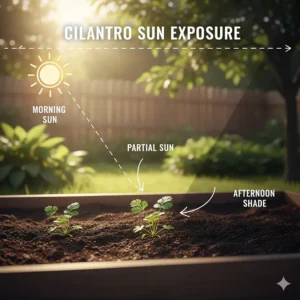
The difference between standard and slow bolt cilantro can make or break your harvest, especially in warmer regions. Bolting is the process where cilantro shifts from producing leaves to flowering and seed production, triggered primarily by heat and day length.
Standard cilantro varieties bolt when temperatures consistently exceed 75-80°F. This happens fast—sometimes within 3-4 weeks of planting. Once bolting starts, leaves turn bitter and lose that fresh, citrusy flavor we love.
Slow bolt cilantro varieties are bred to tolerate higher temperatures and resist the flowering impulse. Popular slow bolt varieties include Santo, Leisure, Calypso, and Slow Bolt. These can extend your leaf harvest window by 3-4 weeks, giving you up to 8 weeks of productive cutting before flowering begins.
Popular slow bolting cultivars include ‘Slow Bolt,’ easy to grow and takes 50 days to mature for leaf harvest; ‘Leisure,’ heat tolerant, high yielding, and ready to harvest in 28 to 40 days; ‘Santo,’ with darker leaf color but good, uniform flavor; and ‘Calypso,’ the slowest to bolt of the varieties, three weeks slower than ‘Santo’. Research from Penn State Extension confirms that these slow-bolting varieties can extend your harvest window significantly.
Even with slow bolt varieties, succession planting remains your best strategy for continuous fresh herb seeds Amazon gardens or homegrown setups. Plant a new batch every 2-3 weeks from early spring through early summer, then resume in late summer for fall harvesting.
Companion Planting: Pairing Cilantro with Other Herbs
Smart companion planting transforms individual herbs into a productive, pest-resistant ecosystem. Cilantro particularly benefits from strategic companions that share similar growing requirements while offering mutual advantages.
Best Companion Plants for Cilantro:
Italian flat leaf parsley seeds make perfect companions since both herbs prefer cool weather, moderate water, and similar soil conditions. The tall parsley provides light shade that helps delay cilantro bolting in warm weather, while cilantro’s strong scent confuses pests that might target parsley.
Dill and fennel share the same Apiaceae family as cilantro, attracting beneficial insects like lacewings and parasitic wasps that control aphids and caterpillars. However, avoid planting too close together as they can cross-pollinate, affecting seed production if you’re saving seeds.
Chives and green onions create a natural pest barrier. Their sulfur compounds repel aphids and spider mites that occasionally trouble cilantro. The vertical growth habit doesn’t compete for space with cilantro’s spreading leaves.
Basil planted nearby helps maximize garden productivity since basil thrives in the warm weather that causes cilantro to bolt. As cilantro finishes, basil takes over the space, creating a natural succession in the same garden bed.
Avoid planting near:
- Carrots (compete for nutrients and space)
- Lavender (requires drier conditions than cilantro prefers)
- Rosemary and thyme (Mediterranean herbs need less water)
This strategic approach to garnish herb varieties creates a self-supporting herb garden that requires less intervention and produces more abundant harvests.
Organic Cilantro Seeds: Are They Worth the Premium?
The organic versus conventional debate in cilantro seeds often comes down to gardening philosophy and budget reality. Let me break down what you’re actually paying for with organic cilantro seeds.
What Organic Certification Guarantees:
- Parent plants grown without synthetic pesticides or fertilizers
- Seeds produced without chemical treatments or coatings
- No genetically modified organisms (GMO-free by default)
- Soil and crop management meeting USDA organic standards
- Regular third-party inspections and compliance verification
The Price Reality: Organic cilantro seeds typically cost $0.02-0.04 per seed versus $0.008-0.015 for conventional non-GMO seeds. For most home gardeners planting 100-300 seeds, this translates to a $2-5 difference—minimal in the context of your total gardening budget.
Performance Differences: In my experience growing both types side-by-side, germination rates and plant vigor show no consistent difference between quality organic and conventional seeds. Both types produce identical cilantro flavor when grown in the same soil and conditions. The real difference comes from HOW you grow them, not which seeds you start with.
When Organic Makes Sense:
- You’re committed to completely chemical-free gardening
- You want to support organic agriculture practices
- You plan to save seeds for future planting (organic → organic chain)
- You’re growing for commercial “certified organic” sale
When Conventional Works Fine:
- Budget-conscious gardening on larger scales
- First-time growers experimenting with cilantro
- You’ll use organic growing practices regardless of seed type
- Growing primarily for personal consumption
The bottom line: if you can afford the modest premium and value organic principles, go for certified organic options like Seeds of Change or The Old Farmer’s Almanac. If budget is tight or you’re planting large areas, quality conventional non-GMO seeds from HOME GROWN or Seed Needs perform excellently.
Fresh Herb Seeds Amazon: Shopping Smart for Quality
Amazon has become the go-to marketplace for fresh herb seeds, offering unprecedented variety and competitive pricing. However, navigating thousands of listings requires savvy shopping strategies to avoid low-quality seeds and maximize your investment.
Red Flags to Watch For:
- Listings with obviously photoshopped images (unrealistic yields, unnaturally vibrant plants)
- Generic product names like “Cilantro Seeds 100pcs” without variety specification
- Sellers with limited feedback or recent account creation dates
- Reviews mentioning seeds from incorrect species or poor germination
- Prices significantly below market average (often indicates old or improperly stored seeds)
Quality Indicators:
- Established brands (HOME GROWN, Seed Needs, Seeds of Change, Burpee)
- Detailed product descriptions including variety name, seed count, and growing zones
- Multiple customer photos showing actual germination and growth results
- Recent reviews (within past 3-6 months) confirming current seed quality
- Clear packaging dates or “packed for 2026 season” statements
Amazon-Specific Advantages:
- Prime Shipping ensures seeds arrive quickly, minimizing time in hot delivery trucks
- Customer Reviews provide real-world germination data and growing experiences
- Return Policies protect against defective seeds (though used seeds can’t be returned)
- Subscribe & Save options reduce costs on seeds you’ll purchase annually
Best Practices:
- Order seeds 2-4 weeks before planting time to allow for potential returns
- Read recent negative reviews to identify consistent issues
- Compare price-per-seed across similar products, not just total price
- Check seller ratings specifically for the Garden & Outdoor category
- Photograph seed packets upon arrival to document packaging dates
Many gardeners successfully source coriander seed packets and other fresh herb seeds Amazon offers by following these guidelines. The convenience and selection surpass local garden centers, especially for specialty varieties like slow bolt or heirloom organic options.
Coriander Seed Packets: From Garden to Spice Rack
One of cilantro’s unique advantages is its dual purpose—you can harvest both fresh leaves and dried seeds (coriander spice) from the same plants. Understanding when and how to collect coriander seed packets from your garden extends the value of your cilantro planting investment.
Timing the Harvest: Allow selected plants to complete their full life cycle without harvesting leaves. For coriander seeds, wait until the plant has flowered and the seed heads turn brown. This typically occurs 90-110 days after planting, depending on variety and weather conditions.
The Collection Process: Watch for seeds to transition from green to tan-brown color. Cut entire seed heads on a dry morning after dew has evaporated. Place stems upside-down in a paper bag in a cool, dry location. Seeds will naturally fall into the bag as they fully dry over 1-2 weeks.
Processing for Kitchen Use: Spread collected seeds on a baking sheet and allow additional drying for 3-5 days. Test by attempting to crush a seed between your fingers—properly dried seeds snap cleanly rather than bending. Store whole seeds in airtight glass jars away from light and heat. They’ll maintain full potency for 2-3 years.
Toasting for Enhanced Flavor: Before grinding, toast whole coriander seeds in a dry skillet over medium heat for 2-3 minutes until fragrant. This releases essential oils and intensifies the warm, citrusy flavor that makes coriander indispensable in curry powders, pickling spices, and baked goods.
Seed Saving for Replanting: The same seeds work perfectly as cilantro seeds for planting next season. However, separate your finest, healthiest seeds for planting from those designated for culinary use. Store planting seeds in a cool (40-45°F), dry location in moisture-proof packaging to maintain maximum germination viability.
This dual harvest approach means a single packet of seeds can provide months of fresh cilantro leaves followed by homegrown coriander spice, then seeds for next year’s planting—exceptional value from one modest investment.
Common Mistakes to Avoid with Cilantro Planting
Even experienced gardeners stumble with cilantro because it behaves differently from most common herbs. Learning from these frequent mistakes saves frustration and maximizes your harvest success.
Mistake #1: Planting Too Deep Cilantro seeds need light to germinate optimally. Planting deeper than ½ inch significantly reduces germination rates and delays emergence. Surface scatter seeds and barely cover with fine soil or vermiculite for best results.
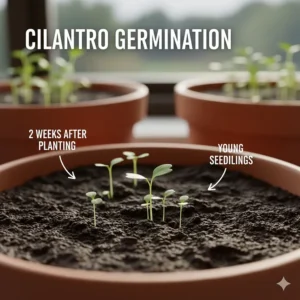
Mistake #2: Inconsistent Watering During Germination Seeds must stay consistently moist (not waterlogged) for the 7-21 day germination period. Even brief drying can kill emerging seedlings. It is important to keep the seeds moist during their germination, so remember to water the plants regularly. Use a spray bottle or gentle misting to maintain surface moisture without washing seeds away.
Mistake #3: Transplanting Mature Plants Cilantro is most successfully grown by direct seeding or from starts. But be careful, as the long roots make it difficult to transplant. The long taproot doesn’t tolerate disturbance well. If you must transplant, do so when seedlings have only 2-3 true leaves, and move with maximum soil around roots.
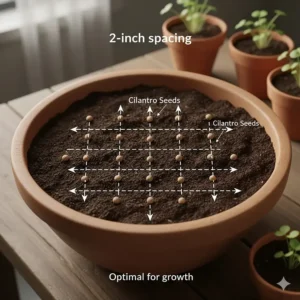
Mistake #4: Crowding Plants New gardeners often skip thinning, leading to weak, spindly plants competing for nutrients and light. Thin seedlings to 6-8 inches apart for leaf harvest or 8-10 inches for seed production. Yes, it feels wasteful, but properly spaced plants produce 3-4 times more usable leaves.
Mistake #5: Harvesting Too Aggressively Taking more than one-third of the plant at once stresses cilantro and triggers early bolting. Cut outer stems first, leaving central growing points intact. This “cut and come again” approach extends harvest periods by several weeks.
Mistake #6: Ignoring Succession Planting Planting only once means only one harvest window. Even slow bolt varieties eventually flower and decline. Planting small batches every 2-3 weeks from spring through early summer ensures continuous fresh cilantro availability.
Mistake #7: Wrong Season Planting Planting in mid-summer heat guarantees disappointment. According to Utah State University Extension, in warmer areas, plant cilantro in the fall and harvest in the spring. It’s best to grow cilantro in fall and winter in hot climates since it tends to quickly flower and go to seed when the days get long and warm. Time plantings for cool seasons when cilantro performs best naturally.
FAQ: Cilantro Seeds for Planting
❓ How long does it take for cilantro seeds for planting to germinate?
❓ Can you plant cilantro seeds directly in the ground or do they need to start indoors?
❓ What is the difference between slow bolt cilantro and regular cilantro seeds?
❓ How many cilantro seeds for planting should I sow per foot of garden row?
❓ Can organic cilantro seeds be saved and replanted next year?
Conclusion: Growing Your Best Cilantro Garden
Starting your cilantro journey with quality cilantro seeds for planting sets the foundation for months of fresh, flavorful herbs that transform everyday cooking into something special. Whether you choose organic cilantro seeds for their chemical-free purity or budget-friendly options like HOME GROWN’s 1000+ seed packs, success comes from matching variety to your climate and committing to succession planting.
The products highlighted in this guide—from slow bolt cilantro specialists to companion Italian flat leaf parsley seeds—represent the best options available on Amazon in 2026. Each brings specific advantages whether you’re container gardening on a city balcony or managing full outdoor garden beds.
Remember these key takeaways: plant in cool seasons for longest harvest, choose slow bolt varieties in warm climates, practice succession planting every 2-3 weeks, and never harvest more than one-third of the plant at once. These simple practices, combined with quality coriander seed packets from trusted suppliers, virtually guarantee abundant harvests.
Your fresh herb seeds Amazon investment pays dividends far beyond the modest initial cost. One packet of seeds can provide fresh cilantro for months, homegrown coriander spice, and saved seeds for future plantings—exceptional value for any budget. The satisfaction of snipping fresh cilantro grown from your own garden genuinely changes how you approach cooking and eating.
Start with one of the seven products reviewed above, follow the growing guidelines in this guide, and join thousands of successful home gardeners enjoying unlimited fresh cilantro whenever recipes call for it. Your taste buds (and dinner guests) will thank you.
Recommended for You
- 7 Best Herb Garden Seed Kit for Kitchen Gardens 2026
- 7 Best Basil Seeds for Planting 2026
- 7 Best Vegetable Seeds for Beginners That Actually Grow in 2026
Disclaimer: This article contains affiliate links. If you purchase products through these links, we may earn a small commission at no additional cost to you.
✨ Found this helpful? Share it with your friends! 💬🤗
