
In This Article
✨Was this helpful? Spread the word! 🚀
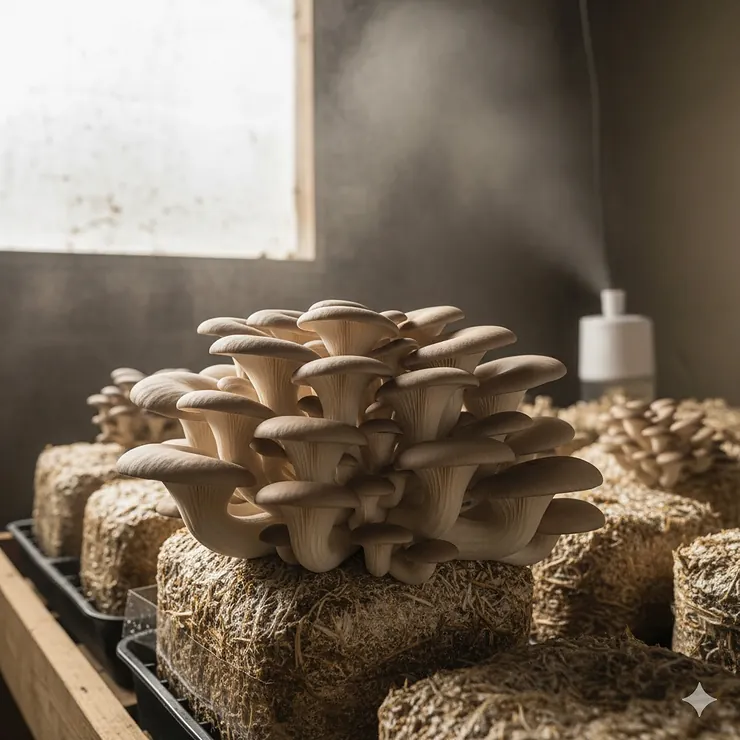
You’re standing in your basement, staring at your first mushroom grow bag, and wondering: do mushrooms need light to grow? It’s a question that stumps many beginner cultivators, and honestly, the answer might surprise you.
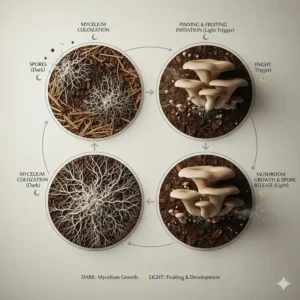
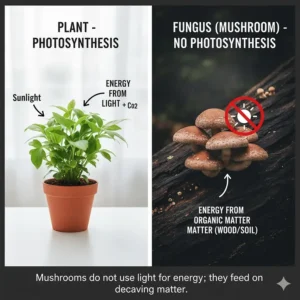
Here’s the thing—mushrooms aren’t plants. They’re fungi, which means they don’t photosynthesize like your tomatoes or basil. So technically, they don’t need light for energy. But here’s where it gets interesting: light plays a crucial role in triggering fruiting, guiding growth direction, and even affecting the quality of your harvest. Think of light as a signal rather than fuel.
After years of experimenting with various growing mushrooms lighting setups and talking to commercial growers, I’ve learned that the right light for growing mushrooms can mean the difference between sad, spindly specimens and robust, picture-perfect fungi. Whether you’re cultivating oyster mushrooms in your closet or running a small-scale shiitake operation, understanding mushroom lighting is essential. So do you need light to grow mushrooms? The answer is more nuanced than a simple yes or no, and in this guide, I’ll break down everything you need to know about what is the best light for mushroom growing, including reviews of the top led grow lights for mushrooms and best LED bar lights for mushroom tents available in 2025.
Quick Comparison Table: Top 7 Mushroom Growing Lights
| Product | Spectrum | Wattage | Coverage Area | Price Range | Best For |
|---|---|---|---|---|---|
| Meonum LED Mushroom Light | 6000K Blue + 5000K White | 15W | 2-3 sq ft | $25-35 | Small tents, beginners |
| Terra Fungus 6500K LED | 6500K Blue spectrum | 15W (108 LED) | 3-4 sq ft | $35-45 | Monotubs, grow bags |
| Miracle LED Shroom Grow Kit | Full + Blue spectrum | 4 bulbs | 4-6 sq ft | $50-65 | Complete starter setup |
| Active Grow Strip T5 4FT | 450nm + 6500K | 24W | 8-10 sq ft | $99 | Professional setups |
| Barrina LED 4FT 4-Pack | Full spectrum | 168W (42W×4) | 12-16 sq ft | $79-99 | Large-scale cultivation |
| Myco Labs Grower’s Select | 6500K | 15W | 2-3 sq ft | $25-35 | Budget-friendly option |
| Active Grow Dual T8 2FT | 450nm + 6500K | 20W | 4-6 sq ft | $99 | Compact fruiting chambers |
💬 Just one click – help others make better buying decisions too! 😊
🔥 Don’t Wait—These Lights Sell Out Fast!
Ready to upgrade your mushroom setup? Click any highlighted product name above to check current prices and availability on Amazon. These professional-grade lights will transform your cultivation game and help you grow restaurant-quality mushrooms at home! 🍄✨
Top 7 LED Grow Lights for Mushrooms: Expert Analysis
1. Meonum 1 Pack LED Growing Lights for Mushroom
If you’re just getting started with mushroom cultivation, the Meonum LED Mushroom Light hits that sweet spot between affordability and functionality. This compact powerhouse delivers exactly what fungi need without the overwhelming complexity of professional systems.
Key Specifications:
- Dual spectrum: 6000K blue light for pinning + 5000K white light for growth
- 15W power consumption with 4.9-foot extension cord
- 360° light distribution for even coverage
- Aluminum construction with waterproof sealing
The beauty of this light lies in its simplicity. Customers consistently praise how it “just works” right out of the box. One reviewer mentioned harvesting 2.5 pounds of oyster mushrooms from a single fruiting chamber using just this light. The blue spectrum specifically triggers primordia formation, while the white light supports healthy mycelium development.
Pros:
✅ Plug-and-play setup—literally hang it and flip the switch
✅ Low heat emission (perfect for enclosed spaces)
✅ Affordable entry point for beginners
Cons:
❌ Single light may not cover larger grow tents
❌ Cord length limits placement flexibility
Price: $25-35 on Amazon
Customer Rating: 4.6/5 stars based on verified purchases
2. Terra Fungus Mushroom Grow Light 6500K
The Terra Fungus 6500K LED stands out in the crowded marketplace with its impressive 108 high-potency LED configuration and natural daylight spectrum. This isn’t your average grow bulb—it’s specifically engineered for fungal cultivation.
Key Specifications:
- 6500K blue spectrum (ideal for fruiting stage)
- 1055 lumens output with 108 HP LEDs
- 50,000-hour lifespan (approximately 6 years)
- Low heat emission at 70°F-75°F operating range
What makes this light special? The 6500K spectrum mimics natural daylight conditions that trigger optimal fruiting responses. Growers report more uniform pin sets and sturdier stem development compared to generic plant lights. One commercial grower shared that switching to Terra Fungus lights increased their shiitake yield by 18% over a three-month period.
Pros:
✅ Exceptionally long lifespan reduces replacement costs
✅ 360° coverage eliminates shadow areas
✅ Minimal heat prevents temperature fluctuations
Cons:
❌ Higher upfront cost than basic bulbs
❌ E27 socket adapter sold separately
Price: $35-45
Customer Rating: 4.7/5 stars with excellent long-term reliability feedback
3. Miracle LED Shroom Grow Indoor LED Grow Light Kit
For those who want a complete, ready-to-roll solution, the Miracle LED Shroom Grow Kit delivers everything you need in one package. This kit includes both full-spectrum daylight bulbs and blue spectrum bulbs, plus a 4-socket fixture with a built-in timer—talk about convenience!
Key Specifications:
- 4 Ultra Grow Full Spectrum + 4 Blue Spectrum bulbs included
- 4-socket corded fixture with Sproutmatic timer
- 6-foot flexible strings for versatile placement
- Water-resistant design with durable rubber cord
The included timer is a game-changer for maintaining consistent light cycles. Mushrooms benefit from 12-hour light periods during fruiting, and this automated system handles it perfectly. Users love that they can set it and forget it, especially when growing varieties like lion’s mane that require consistent environmental conditions.
Pros:
✅ Complete kit—no additional purchases needed
✅ Automated timer for hands-free operation
✅ Energy-efficient at less than $1.66 per year per bulb
Cons:
❌ Bulkier setup than single-bulb solutions
❌ Timer programming can be initially confusing
Price: $50-65
Customer Rating: 4.5/5 stars, highly recommended for beginners
4. Active Grow Integrated Strip T5 4FT LED
Stepping into semi-professional territory, the Active Grow Strip T5 4FT represents a significant upgrade in both performance and build quality. This fixture is what serious hobbyists and small commercial operations rely on for consistent, high-quality yields.
Key Specifications:
- Blue sun spectrum: 450nm blue + 6500K white light
- 24W power draw (replaces 54W fluorescent T5)
- IP65 watertight connections for high-humidity environments
- 40,000-hour lifetime with 3-year warranty
According to independent testing by mushroom cultivation forums, this light delivers 100% more effective spectrum for mushroom growth compared to standard fluorescent fixtures. The integrated tube design ensures uniform light distribution, which translates to more even pinning across your entire growing surface. Commercial growers report that it reduces energy costs by approximately 60% compared to traditional T5 fluorescent systems.
Pros:
✅ Professional-grade construction built for durability
✅ Daisy-chain capability (connect up to 16 fixtures at 120V)
✅ IP65 waterproof rating handles humid fruiting chambers
Cons:
❌ Higher initial investment
❌ Non-replaceable integrated tubes
Price: $99
Customer Rating: 4.8/5 stars from professional growers
5. Barrina LED Grow Light 4FT 4-Pack
When you need to cover serious square footage without breaking the bank, the Barrina LED 4FT 4-Pack delivers exceptional value. This is my go-to recommendation for anyone running multiple fruiting chambers or larger grow tent setups.
Key Specifications:
- Full spectrum with emphasis on blue and red wavelengths
- 168W total (4×42W strips)
- V-shaped reflector design increases efficiency by 17-20%
- Linkable design—connect up to 6 strips in series
The V-shaped reflector is where this light really shines (pun intended). That reflector design directs more photons exactly where you need them—onto your mushroom blocks—rather than wasting light on walls and ceilings. Growers using these lights report denser fruit bodies and improved stem thickness compared to non-reflector designs. Plus, with 768 LEDs across four strips, you’re getting incredible coverage for the price.
Pros:
✅ Exceptional value for coverage area
✅ Easy installation with multiple mounting options
✅ Full spectrum supports all growth stages
Cons:
❌ Pinkish-white color may not suit all aesthetic preferences
❌ Requires adequate ventilation due to heat from multiple strips
Price: $79-99 (varies with sales)
Customer Rating: 4.6/5 stars, over 2,000 verified purchases
6. Myco Labs Grower’s Select E26 LED Light
The Myco Labs Grower’s Select represents the budget-conscious grower’s best friend. Don’t let the lower price fool you—this light punches well above its weight class, especially for small to medium cultivation projects.
Key Specifications:
- 15W power consumption with 900 lumens output
- 360-degree coverage with E26 standard base
- Includes socket outlet adapter for maximum versatility
- Energy-efficient design (equivalent to 120W traditional bulb)
What I appreciate about this light is its universal adaptability. The included socket adapter means you can literally screw it into any extension cord or power outlet—perfect for DIY setups. Small-scale growers consistently praise its reliability, with many reporting continuous operation for over 18 months without issues. The 360-degree emission pattern ensures no dark spots, which is crucial for preventing uneven fruiting.
Pros:
✅ Lowest cost entry point without sacrificing quality
✅ Fits standard fixtures—maximum flexibility
✅ Minimal energy consumption
Cons:
❌ Lower light output limits coverage to smaller areas
❌ Basic design without advanced features
Price: $25-35
Customer Rating: 4.5/5 stars, best value pick
7. Active Grow Integrated Dual T8 2FT LED
For compact fruiting chambers and space-conscious setups, the Active Grow Dual T8 2FT offers professional performance in a smaller footprint. This is particularly popular among urban growers working with limited space.
Key Specifications:
- Dual integrated T8 tubes (non-replaceable)
- 20W total power consumption
- 450nm blue + 6500K full spectrum
- Built-in reflectors for uniform distribution
The dual-tube design provides excellent light intensity for 2-foot coverage areas, making it perfect for shotgun fruiting chambers or smaller grow tents. According to mushroom cultivation research, this spectrum combination increases fresh weight and cap size in oyster mushrooms by up to 30% compared to dark conditions. The built-in rocker switch adds convenience, and the ability to daisy-chain multiple fixtures makes scaling up straightforward.
Pros:
✅ Compact size ideal for smaller setups
✅ Integrated reflectors maximize efficiency
✅ Universal voltage compatibility (120-277V)
Cons:
❌ Limited to 2-foot coverage without additional fixtures
❌ Non-replaceable tubes mean eventual fixture replacement
Price: $99
Customer Rating: 4.7/5 stars from space-conscious growers
Understanding How Light Affects Mushroom Growth
The Science Behind Fungal Photobiology
Unlike plants that convert light into energy through photosynthesis, mushrooms use light primarily as an environmental cue. Research from the National Center for Biotechnology Information demonstrates that light triggers specific genetic pathways in fungi, particularly those controlling fruiting body formation and directional growth.
Blue Light: The Fruiting Trigger
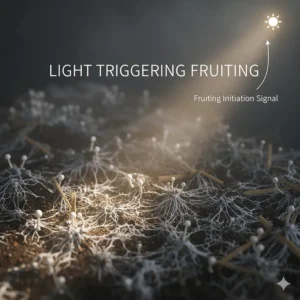
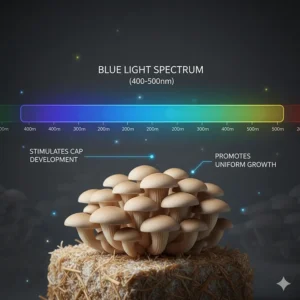
Studies show that blue light wavelengths (450-500nm) play a critical role in initiating primordia formation—the early stage of mushroom development. When mycelium detects blue light, it interprets this as a signal that it has reached the surface and conditions are favorable for reproduction. This is why most mushroom-specific lights emphasize the blue spectrum.
Phototropism vs. Gravitropism
Mushrooms exhibit both phototropism (growth toward light) and gravitropism (growth in response to gravity). While gravitropism ensures caps grow upward even in darkness, phototropism helps mushrooms orient themselves for optimal spore dispersal. Providing adequate lighting creates more aesthetically pleasing, uniform fruits with straight stems.
Do Mushrooms Really Need Light During Colonization?
The Colonization Phase: Complete Darkness Wins
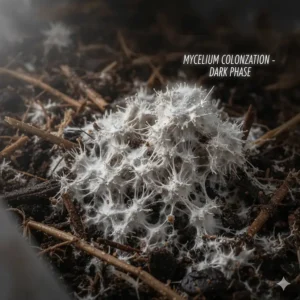
Here’s where many beginners mess up—they provide light during colonization when mushrooms actually prefer darkness. During the colonization phase, when mycelium is spreading through substrate, light can actually slow growth or trigger premature pinning.
Best Practice: Keep your spawn bags, jars, or blocks in complete darkness or very low light (less than 50 lux) until colonization reaches 80-100%. This typically takes 2-4 weeks depending on species and temperature.
When to Introduce Light
Once colonization is complete, gradually introduce light to trigger the transition from vegetative growth to fruiting. Start with 12 hours of light daily at around 500-1000 lux for most common species. Some cultivators use natural ambient light, but controlled LED lighting produces more consistent results.
Species-Specific Lighting Requirements
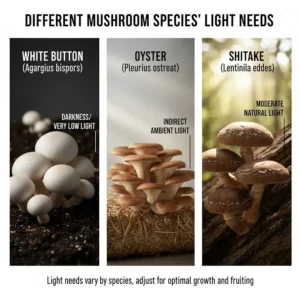
Different mushroom species have varying light sensitivities:
- Oyster mushrooms: Require 1000-1500 lux during fruiting
- Shiitake: Tolerate lower light (500-1000 lux)
- Lion’s mane: Similar to oysters, benefit from good illumination
- Button mushrooms (Agaricus): Can fruit in near-darkness
- Reishi: Require strong light (1500-2000 lux) for proper formation
What Is the Best Light Spectrum for Growing Mushrooms?
The 6500K Standard
The gold standard for mushroom cultivation is 6500K “daylight” spectrum, which closely mimics natural sunlight. This spectrum provides the blue wavelengths fungi use as fruiting triggers while also supplying full-spectrum light that supports healthy development.
Why Blue Light Matters Most
Research published in mycology journals indicates that blue light (450-480nm specifically) increases:
- Fresh weight of fruit bodies by 15-30%
- Cap diameter and thickness
- Stem firmness and quality
- Overall yield per flush
Full Spectrum vs. Blue-Only Lights
While blue spectrum is crucial, full-spectrum lights offer advantages for multi-species cultivation. Full spectrum provides:
- Better color rendering (important for visual inspection)
- More natural appearance of mushrooms
- Flexibility for growing various species with different preferences
My Recommendation: For single-species operations, dedicated blue spectrum lights (6500K) optimize yields. For diverse cultivation, full-spectrum lights with enhanced blue offer better versatility.
LED vs. Fluorescent vs. Natural Light for Mushrooms
LED Grow Lights: The Modern Standard
Advantages:
✅ Energy efficiency (60-80% less power than fluorescents)
✅ Minimal heat generation
✅ Longevity (30,000-50,000 hours typical)
✅ Precise spectrum control
✅ Lower operating costs over time
Disadvantages:
❌ Higher upfront investment
❌ Some models require better heat dissipation
Fluorescent Lights: The Traditional Choice
Advantages:
✅ Lower initial cost
✅ Readily available
✅ Proven effectiveness
✅ Simple installation
Disadvantages:
❌ Higher energy consumption
❌ Shorter lifespan (10,000-20,000 hours)
❌ Generate more heat
❌ Contain mercury (disposal concerns)
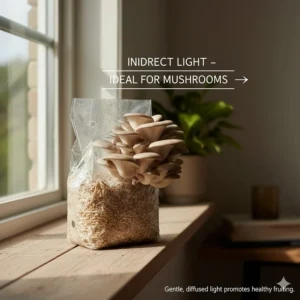
Natural Window Light
Advantages:
✅ Free and readily available
✅ Full spectrum automatically
✅ No electricity costs
Disadvantages:
❌ Inconsistent intensity
❌ Seasonal variations
❌ Difficult to control light cycles
❌ Potential temperature fluctuations
Comparison Table
| Light Type | Energy Efficiency | Lifespan | Initial Cost | Heat Output | Control |
|---|---|---|---|---|---|
| LED | ⭐⭐⭐⭐⭐ | 40,000+ hrs | $25-150 | Very Low | Excellent |
| Fluorescent | ⭐⭐⭐ | 15,000 hrs | $15-50 | Moderate | Good |
| Natural | ⭐⭐⭐⭐⭐ | Infinite | Free | Variable | Poor |
How to Choose the Right Light for Your Mushroom Setup
Step 1: Assess Your Growing Area Size
Calculate your growing surface area in square feet. As a rule of thumb:
- Small setup (2-4 sq ft): 15-20W LED sufficient
- Medium setup (4-10 sq ft): 25-50W LED recommended
- Large setup (10+ sq ft): 75W+ LED or multiple fixtures
Step 2: Determine Your Mushroom Species
Research the specific light requirements of your target species. Oyster mushrooms, for instance, demand more intense lighting than button mushrooms. Check cultivation guides specific to your species for optimal lux levels.
Step 3: Consider Your Budget
Balance initial investment against long-term savings. While LEDs cost more upfront, they pay for themselves within 12-18 months through energy savings and reduced replacement costs compared to fluorescents.
Step 4: Evaluate Installation Complexity
Consider your technical comfort level. Simple screw-in bulbs work great for beginners, while more complex strip lights or fixtures offer better performance for those willing to do slightly more involved installation.
Step 5: Plan for Scalability
If you’re likely to expand your operation, choose lights with daisy-chain capabilities or modular designs that allow adding additional fixtures easily. This future-proofs your investment.
Setting Up Your Mushroom Growing Light System
Optimal Placement and Distance
Position lights 12-18 inches above your growing surface for most LED systems. Closer placement increases intensity but may create hot spots; further placement reduces intensity but improves uniformity. Adjust based on your species’ requirements and monitor mushroom response.
Creating Proper Light Cycles
Implement consistent 12-hour light/12-hour dark cycles during fruiting. Use timers to automate this—consistency is crucial. Some growers report better results with 16/8 cycles for light-hungry species like oysters, while others prefer natural day/night rhythms.
Managing Heat in Enclosed Spaces
Even low-heat LEDs generate some thermal energy. In smaller fruiting chambers, ensure adequate ventilation to prevent temperature spikes. Consider:
- Adding small circulation fans
- Mounting lights outside clear chamber walls
- Using heat-sink equipped fixtures
- Monitoring temperature with digital thermometers
Maintaining Your Lighting System
Weekly Tasks:
- Wipe dust from LED surfaces with dry cloth
- Check connections and cords for damage
- Verify timer settings remain accurate
Monthly Tasks:
- Measure light intensity with lux meter
- Inspect for any dimming or color shifts
- Clean reflectors and lenses if applicable
Annual Tasks:
- Replace any degraded fixtures
- Upgrade components if needed
- Review system efficiency
Common Mushroom Lighting Mistakes and Solutions
Mistake #1: Providing Light During Colonization
The Problem: Many beginners illuminate spawn bags or jars during colonization, thinking it helps growth. This can trigger premature, weak pinning or slow mycelium expansion.
The Solution: Keep colonizing substrate in complete darkness or very low ambient light until fully colonized. Only introduce light when ready to initiate fruiting.
Mistake #2: Using Incorrect Spectrum
The Problem: Standard warm white bulbs (2700-3000K) lack sufficient blue spectrum for optimal mushroom development, resulting in leggy, weak fruits.
The Solution: Always use cool white or daylight spectrum (5000-6500K) lights specifically designed for growing or plant/mushroom cultivation.
Mistake #3: Insufficient Light Intensity
The Problem: Mushrooms receive inadequate light intensity (less than 200 lux), leading to poorly formed fruit bodies, excessive stem length, and small caps.
The Solution: Use a lux meter to measure light at growing surface level. Adjust fixture distance or add additional lights to reach species-appropriate levels (typically 500-1500 lux).
Mistake #4: Uneven Light Distribution
The Problem: Point light sources create shadow areas and hot spots, resulting in uneven fruiting patterns with clusters in bright areas and nothing in shadows.
The Solution: Use multiple light sources, reflective materials on chamber walls, or fixtures with wide beam angles (like the 360-degree designs) to ensure uniform coverage.
Mistake #5: Neglecting Light Cycle Consistency
The Problem: Irregular lighting schedules confuse fungal development signals, leading to erratic pinning and reduced overall yields.
The Solution: Invest in a basic timer (digital or mechanical) to maintain consistent daily light cycles. Set it and forget it—mushrooms thrive on predictability.
Maximizing Yields with Proper Lighting Techniques
The Two-Stage Lighting Approach
Advanced growers use different light intensities for different fruiting stages:
Initial Pinning (Days 1-3): Higher intensity (1500-2000 lux) for 24-48 hours can trigger massive pin sets. This “light shock” mimics breaking through soil or bark.
Fruit Development (Days 4-7): Reduce to standard intensity (800-1200 lux) with regular 12-hour cycles for even growth and proper cap formation.
Supplementing with Side Lighting
For vertical growing systems or bags, adding side lighting prevents one-sided growth and improves overall mushroom quality. Simple LED strips mounted vertically create more uniform fruits.
Using Reflective Materials
Maximize your lighting investment by lining grow chamber walls with reflective material:
- White paint (flat finish): 80-85% reflection
- Mylar film: 90-95% reflection
- Aluminum foil (dull side): 75-80% reflection
This effectively increases light intensity without additional fixtures.
Adjusting for Seasonal Variations
If using natural window light as supplementation, adjust artificial lighting schedules seasonally. Shorter winter days may require extended artificial lighting periods to maintain 12-hour minimums.
Troubleshooting Light-Related Growing Issues
Problem: Mushrooms Growing Toward One Side
Likely Cause: Uneven light distribution or single point light source
Solution: Add reflective materials opposite your light source or introduce additional lights to create uniform illumination. Rotate containers daily if using directional lighting.
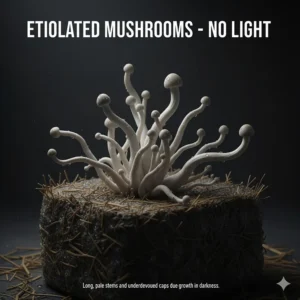
Problem: Excessive Stem Length (Etiolation)
Likely Cause: Insufficient light intensity during fruiting
Solution: Move lights closer to growing surface (maintain 12-16″ distance for most LEDs) or upgrade to higher-output fixtures. Verify achieving minimum 500 lux at mushroom level.
Problem: Small, Underdeveloped Caps
Likely Cause: Wrong spectrum or inadequate light duration
Solution: Switch to 6500K daylight spectrum if using warm white lights. Ensure 12-hour minimum light exposure daily. Some species like oysters benefit from 14-16 hour photoperiods.
Problem: No Pin Formation Despite Proper Conditions
Likely Cause: Insufficient blue light wavelengths triggering fruiting response
Solution: Verify lights provide adequate blue spectrum (450-500nm). Consider adding dedicated blue LED bulbs if using older fluorescent fixtures.
Problem: Heat Stress Symptoms
Likely Cause: Excessive heat from lights in enclosed space
Solution: Improve ventilation, increase light-to-surface distance, or switch to cooler-running LED fixtures. Monitor chamber temperature, keeping it below 75°F for most species.
Advanced Lighting Strategies for Commercial Operations
Zoned Lighting Systems
Commercial growers often implement different lighting zones for various growth stages:
Zone 1 – Colonization: No light or <50 lux ambient
Zone 2 – Pinning Initiation: High intensity 1500-2000 lux
Zone 3 – Fruit Development: Standard 800-1200 lux
Zone 4 – Final Maturation: Reduced 500-800 lux
This approach optimizes each stage independently, maximizing overall facility output.
Automated Light Control Systems
Professional operations increasingly use programmable LED controllers that adjust:
- Intensity throughout the day
- Spectrum ratios (blue/red balance)
- Photoperiod based on growth stage
- Integration with environmental controls
Cost-Benefit Analysis for Scaling Up
When expanding beyond hobby scale, calculate:
- Energy costs per flush
- Light replacement frequency
- Labor for maintenance
- Yield improvements from optimized lighting
Quality LED systems typically show ROI within 6-12 months at commercial scale through improved yields and reduced energy costs.
Frequently Asked Questions
❓ Do mushrooms need light to grow in complete darkness?
❓ What is the best color light for growing mushrooms indoors?
❓ How many hours of light do mushrooms need during fruiting?
❓ Can you use regular LED bulbs for growing mushrooms?
❓ How close should grow lights be to mushrooms?
Conclusion: Illuminating Your Mushroom Success
So, do mushrooms need light to grow? The short answer is no—but the complete answer is that proper lighting dramatically improves quality, consistency, and yields. Throughout this guide, we’ve explored how light functions as a crucial environmental signal rather than an energy source for fungi.
The seven lights I’ve reviewed here represent the best options available in 2025 across different price points and scale requirements. Whether you’re starting with a single Meonum LED bulb for a small closet setup or investing in professional Active Grow fixtures for commercial production, the right lighting transforms your cultivation results.
Remember these key takeaways: Use 6500K blue-enhanced spectrum for optimal fruiting, maintain consistent 12-hour photoperiods with timers, keep colonizing substrate in darkness until fully mature, and position lights 12-18 inches above your growing surface. These fundamentals apply regardless of species or scale.
The beauty of modern LED technology is that it’s never been more affordable or accessible to implement proper mushroom lighting. Energy-efficient, long-lasting, and precisely tuned to fungal needs, today’s LED grow lights for mushrooms deliver professional results for hobby growers while scaling beautifully for commercial operations.
Start with proper lighting, and you’ll see the difference in your first flush. Tighter clusters, thicker stems, more robust caps, and significantly improved yields—that’s what quality lighting delivers. Your mushrooms are waiting to show you what they can really do with the right light for growing mushrooms.
🍄 Ready to Upgrade Your Mushroom Setup?
Don’t let another grow season pass with suboptimal lighting! Click the highlighted product names throughout this article to check current Amazon prices and start growing premium mushrooms today. Your best harvest is just one lighting upgrade away! 🌟
Recommended for You
- Mushroom Grow Light: 7 Best Options for 2025 Success
- Grow Lights for Rosemary: 7 Best Options for Indoor Herb Success
- Tomato Growing Light: 7 Best Picks for 2025 Success
Disclaimer: This article contains affiliate links. If you purchase products through these links, we may earn a small commission at no additional cost to you.
✨ Found this helpful? Share it with your friends! 💬🤗
