
In This Article
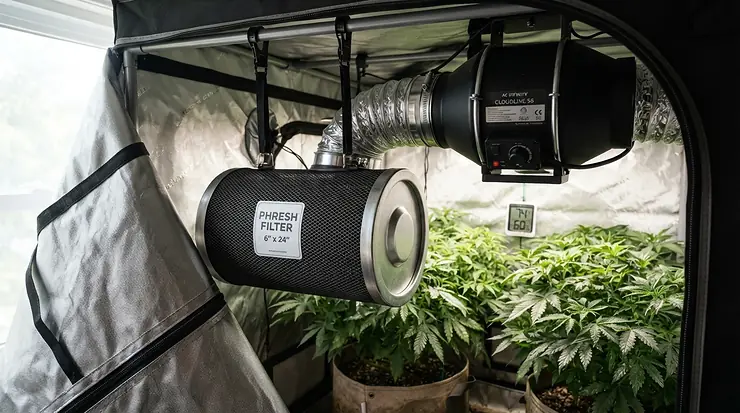
A 4×4 grow tent is a hot, damp shoebox with big ambitions. Lights pour heat in, plants breathe moisture out, and unless something moves that air on purpose, everything inside gets sluggish and sticky. That “something” is an inline fan, and picking the wrong one is the quickest way to turn a tidy setup into a loud, humid headache.
So here is a Vivosun 6 inch inline fan review for 4×4 tent owners that does the unglamorous part properly. It compares real specs, real model lineups and the real themes that show up in buyer reviews. One honest note first: this guide is research-based. It doesn’t claim lab testing or personal ownership, and where a fact can’t be verified, it says so.
The numbers are friendlier than you’d expect. A 4x4x6.5 ft tent holds about 104 cubic feet of air. A fan rated around 400 CFM can, on paper, swap that entire volume several times a minute. That is plenty of headroom, which is why the 6-inch size keeps coming up for 4×4 builds, and why the Vivosun 6 inch inline fan review for 4×4 tent question is really about which 6-inch fan. Controls, noise and long-term reliability matter more than raw airflow.
Below you’ll find seven real fans, honest analysis and a few mistakes worth dodging.
Quick Comparison: 7 Fans for a 4×4 Tent at a Glance
| Fan | Max Airflow | Motor | Noise (listed) | Best For |
|---|---|---|---|---|
| Vivosun AeroZesh T6 | 408 CFM | EC, PWM | 28–45 dB (varies by listing) | Hands-off climate automation |
| Vivosun AeroZesh S6 | 405 CFM | EC, PWM | ~45 dB | Smart upgrade path on a budget |
| Vivosun R6 | 390 CFM | AC, variable controller | <37 dB | Budget-conscious beginners |
| Vivosun Z6 | 440 CFM | AC, variable controller | 49 dB | Filter-heavy or hot setups |
| AC Infinity Cloudline T6 | 402 CFM | EC, PWM | 32 dBA | Closed-loop VPD control |
| AC Infinity Cloudline S6 | 402 CFM | EC, PWM | Quiet-class (check spec) | Simple, premium, no-app control |
| Hon&Guan 6 Inch Booster | ~345 CFM | AC | Check spec | Bare-minimum budget build |
The pattern is clear. Every fan except the Hon&Guan 6 Inch Booster lands at 390 CFM or above, so airflow won’t separate your options. Noise, controller brains and motor type will. If you value quiet and automation, the EC-motor models (Vivosun AeroZesh T6, Vivosun AeroZesh S6, AC Infinity Cloudline T6, AC Infinity Cloudline S6) are the shortlist. If upfront cost is the priority, the Vivosun R6 is the budget lane.
💬 Just one click — help others make better buying decisions too!😊
What Is a Vivosun 6 Inch Inline Fan for a 4×4 Tent?
A Vivosun 6 inch inline fan is a duct-mounted exhaust fan that connects to 6-inch ducting and pulls warm, humid, odorous air out of a grow tent. It typically moves 340–440 CFM and pairs with a carbon filter. For a 4×4 tent, it is the most common size for controlling heat, humidity and smell.
That definition hides one detail worth knowing: CFM is a slippery number. CFM is a volumetric flow rate that changes with air density and pressure, and manufacturers usually quote it in free air, meaning no filter and no ducting. Once you add a carbon filter and a few bends, real airflow drops. That is why a fan with 3-4x your tent’s volume in rated CFM isn’t overkill. It’s the margin that keeps you from running flat out.
Vivosun’s lineup splits cleanly. The AeroZesh G, S and T series use EC motors with PWM control, and the T series is the one built to talk to the GrowHub controller and app. The older R and Z models use AC motors with a simple variable-speed knob. Same duct size, very different personalities.
Top 7 Picks: Vivosun 6 Inch Inline Fan Review for 4×4 Tent Growers
1. Vivosun AeroZesh T6 — smartest 6-incher for hands-off climate control
The AeroZesh T6 is Vivosun’s flagship 6-inch and the model most closely matched to a 4×4. It pairs a mixed-flow design with an EC motor, so it keeps airflow up even when a filter chokes the duct.
The listed figures are 408 CFM at roughly 3,100 RPM, with an EC motor drawing about 35 W. Noise claims are messy: retailer pages quote anywhere from 28 dB to under 45 dB for the same fan. Treat 45 dB as the safe planning number. Low speeds will sit well below it.
The controller bundle decides everything. The E12 version adds an environmental probe and ten adjustable speed levels. The E42A version adds WiFi, the app, and four output ports, so a second fan can share the schedule. Based on the spec comparison, the T6 suits people who want the tent to manage itself while they’re at work.
Customer-review sentiment: the reseller pages I found carried no published reviews for this specific model. The overall Vivosun 6-inch review pool leans positive on airflow value, so verify recent ratings before buying.
Pros:
- ✅ EC motor with low power draw
- ✅ Probe or WiFi controller bundles available
- ✅ Strong airflow headroom for a 4×4
Cons:
- ❌ Noise claims vary wildly between listings
- ❌ Smart features lock you into the Vivosun ecosystem
Price range: roughly $130–$170 depending on controller bundle (check current price). Verdict: the best fit for a 4×4 if you value automation.
2. Vivosun AeroZesh S6 — same EC engine, fewer frills
The AeroZesh S6 is the T6’s slightly plainer sibling: 405 CFM, an EC motor and a PWM design, compatible with GrowHub but sold in simpler configurations. Think of it as the T6 minus a little polish.
Those 3 CFM of difference are irrelevant in a 104-cubic-foot tent. What matters is the bundle. Vivosun sells the S6 alone, with an E12 speed controller, with the E42A WiFi controller, and in a kit with a 6-inch carbon filter and clamps. That kit is the tidy option for a first build, since filter, fan and clamps are all matched to 6-inch ducting.
Here is what the spec sheet won’t tell you, but the lineup structure suggests: if you plan to automate later, buy the S6 now and add the controller when budget allows. It saves a little today without closing the door on app control.
Customer-review sentiment: I couldn’t verify standalone reviews for the S6 on the pages reviewed. Expect its reception to track the wider Vivosun EC-fan lineup.
Pros:
- ✅ EC efficiency at a lower entry price
- ✅ Kit option bundles filter and clamps
- ✅ Upgradeable to GrowHub control
Cons:
- ❌ Listed around 45 dB at full speed
- ❌ Fewer verified reviews than older models
Price range: roughly $100–$190 from fan-only to full kit (check current price). Verdict: great value if you buy the kit.
3. Vivosun R6 — the budget classic with a knob
The R6 is the fan most people picture when they hear “Vivosun inline.” It is old-school and simple, with a knob on a cord.
The specs: 390 CFM at 2,550 RPM, a listed noise level under 37 dB, plastic housing and blades, and a variable speed controller. On paper, 390 CFM sits inside the 340–405 CFM band commonly recommended for a 4×4. In practice, this is the “turn the dial until it feels right” fan, with no probe and no feedback.
Aggregated sentiment: the combo kit listing mirrored at a retailer shows about 4.6 out of 5 across roughly 1,500 ratings. Reviewers on Vivosun’s 6-inch listings repeatedly describe running the fans 24/7 for months at a time without complaint. A recurring caution is that a 6-inch fan can be too much for a small tent, with humidity dropping fast once warm, moist air is pulled out.
Because the dial is manual, you become the thermostat. Sensible for beginners, tiresome for everyone else.
Pros:
- ✅ Lowest cost of entry among Vivosun 6-inch fans
- ✅ Large review pool with positive sentiment
- ✅ Simple knob control, no app needed
Cons:
- ❌ Manual speed control only
- ❌ AC motor draws more power at low speed
Price range: budget tier, typically well below the EC models (check current price). Verdict: a solid starter if you don’t mind babysitting the dial.
4. Vivosun Z6 — most airflow for filter-heavy builds
The Z6 is the muscle car of the family. It’s rated at 440 CFM and 2,450 RPM with a variable speed controller, and the listing quotes 49 dB, the noisiest figure here.
For a 4×4, that extra airflow is rarely needed. Where it earns its keep is a hot room, a high-wattage light, or a long duct run with a dense filter. Static pressure from filters and flex duct eats real airflow, and the Z6 has the buffer to absorb that. In a tight tent with a modest light, you’d be throttling it down most of the day, so you pay for capacity you don’t use.
Customer-review sentiment: I found no dedicated Z6 reviews, but related Vivosun 6-inch feedback includes an HVAC business owner calling a 440 CFM-class combo “severely oversized” for small tent kits and suggesting a 4-inch fan instead. For a 4×4, a hot-climate bedroom or garage is the most defensible reason to pick this one.
Pros:
- ✅ Highest airflow in this lineup
- ✅ Handles dense carbon filters comfortably
- ✅ Variable speed lets you dial down
Cons:
- ❌ Loudest listed noise level of the seven
- ❌ Oversized for most 4×4 setups
Price range: mid-budget tier (check current price). Verdict: pick it only if your room runs hot.
5. AC Infinity Cloudline T6 — closed-loop VPD control with a quiet reputation
The Cloudline T6 is the benchmark competitor and the fan most reviewers measure Vivosun against. It delivers 402 CFM at a listed 32 dBA, with an EC motor, a mixed-flow impeller and dual ball bearings.
The headline feature is the controller, which handles temperature, humidity and VPD programming, plus WiFi app control. VPD, or vapor pressure deficit, is the humidity-and-temperature relationship plants actually respond to, so a fan that can react to it saves guesswork. The controller can run multiple devices in the AC Infinity ecosystem, so a tent can stay under one brain.
One caution from grower forums: AC Infinity controllers don’t recognize Vivosun fans, so mixing brands means two controllers. The reseller listings I saw advertise a two-year warranty, which is a meaningful trust signal.
Customer-review sentiment: reviewers of AC Infinity’s 6-inch Cloudline Pro line consistently praise reliability, customer service and low noise.
Pros:
- ✅ Quiet listed noise of 32 dBA
- ✅ Temp, humidity and VPD automation built in
- ✅ Dual ball bearings and a two-year warranty
Cons:
- ❌ Higher price than most Vivosun options
- ❌ Doesn’t pair with Vivosun controllers
Price range: roughly $170–$215 (check current price). Verdict: the polished premium choice.
6. AC Infinity Cloudline S6 — premium airflow without the app
The Cloudline S6 shares the T6’s 402 CFM rating and EC motor but swaps the smart controller for a simple speed dial. It is the “buy once, forget about it” fan.
Roundups of grow-tent fans repeatedly slot the S-series into the premium category for 4×4 and 5×5 tents running powerful LEDs. The logic is sound. A fixed-speed EC fan set to roughly 40–60% gives you most of the benefit of automation for a lot less setup. It will still lag the T6 whenever temperature spikes mid-day, because it won’t adjust unless you do.
Based on the spec comparison, the S6 suits growers who already have a separate environment controller or simply prefer fewer moving parts. It is also the neutral choice if you want EC quality without committing to Vivosun’s GrowHub or AC Infinity’s app.
Customer-review sentiment: I couldn’t verify S6-specific review totals, but the wider Cloudline family earns strong praise for quiet running and efficiency.
Pros:
- ✅ EC efficiency with simple speed control
- ✅ Same 402 CFM headroom as the T6
- ✅ No app, fewer failure points
Cons:
- ❌ No built-in temperature or humidity automation
- ❌ Costs more than comparable AC-motor fans
Price range: mid-to-premium tier (check current price). Verdict: elegant if you hate apps.
7. Hon&Guan 6 Inch Booster — bare-minimum budget option
The Hon&Guan 6 Inch Booster is the budget outlier, listed at roughly 345 CFM in recent roundups. That sits at the low end of the 340–405 CFM range commonly cited for a 4×4.
The trade-off is headroom. Add a carbon filter and a few duct bends and a 345 CFM fan has less margin than any other fan here. It will still ventilate a 4×4 with a modest LED, but it won’t comfortably handle a hot garage or a high-wattage light.
Information on this model is thin. I could verify the CFM rating from comparison lists but not detailed noise, bearing or warranty data, so confirm those before buying. Treat this as the “I just need something working” pick, and avoid it if your ventilation demands are higher than average.
Pros:
- ✅ Lowest-cost way to reach 6-inch ducting
- ✅ Compatible with standard 6-inch filters
- ✅ Simple on/off-style operation
Cons:
- ❌ Least airflow headroom of the seven
- ❌ Limited verifiable noise and durability data
Price range: budget tier (check current price). Verdict: acceptable for light loads, risky for hot rooms.
Side-by-Side Spec Reality Check
| Fan | Max CFM | Power Design | Smart Control | Best For |
|---|---|---|---|---|
| Vivosun AeroZesh T6 | 408 | EC, ~35 W | Yes (E12/E42A) | Automation fans |
| Vivosun AeroZesh S6 | 405 | EC | Optional | Upgrade-later buyers |
| Vivosun R6 | 390 | AC | No | Beginner budgets |
| Vivosun Z6 | 440 | AC | No | Hot rooms |
| AC Infinity Cloudline T6 | 402 | EC | Yes (WiFi, VPD) | Premium automation |
| AC Infinity Cloudline S6 | 402 | EC | No | Simple premium |
| Hon&Guan 6 Inch Booster | ~345 | AC | No | Tight budgets |
The table splits the field along one line: EC versus AC. The four EC fans share efficient, speed-friendly motors, while the three AC fans trade efficiency for a lower price. For a 4×4 running most hours of the day, that efficiency gap shows up on the power bill over time, which the cost section below puts numbers to.
How to Choose a Fan for a 4×4 Tent
Skip the spec-sheet scavenger hunt. These steps cover what matters, in priority order.
- Match CFM to tent volume with margin. A 4×4 is roughly 104 cubic feet, and fans of 340–405 CFM are the commonly cited range. Aim for about 3-4 times that volume so the fan can run at 40–60%.
- Budget for filter and duct losses. Free-air CFM overstates reality. Carbon filters and flex duct restrict flow, so pick a fan with spare capacity.
- Choose EC if the tent runs most of the day. EC fans slow down efficiently. AC fans mostly lose airflow without saving as much power.
- Decide how much automation you actually want. A probe or app controller adjusts speed to temperature and humidity. A dial leaves that to you.
- Check controller compatibility early. Vivosun fans work with GrowHub controllers, and AC Infinity fans work with AC Infinity controllers. Cross-brand pairing is the classic dead end.
- Plan for noise honestly. Use the highest listed noise figure for planning. If the tent sits in a bedroom, treat anything near 45–49 dB as audible.
- Match the filter diameter. A 6-inch fan wants a 6-inch filter, ducting and clamps. Kits remove the guesswork.
Notice what isn’t on the list: brand loyalty. All seven fans cover a 4×4 on raw airflow, so choosing by control, noise and total cost is the sane way to decide.
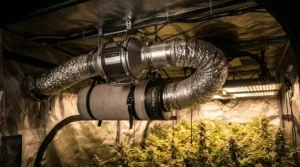
Vivosun T6 Fan Performance Test: What the Numbers Predict
A quick transparency note: this section is a performance analysis built from published specs, not a bench test I ran myself. Treat it as the Vivosun T6 fan performance test you can do on paper, then confirm with your own readings after setup.
Start with the rated 408 CFM at about 3,100 RPM. In a 104-cubic-foot tent, that equals roughly four full air exchanges per minute in free air. Real systems never get free air. Add a carbon filter and ducting, and the effective airflow can fall well below the nameplate. Even a heavy loss leaves more than enough capacity to refresh the tent comfortably.
The mixed-flow design matters here. Vivosun says it holds airflow better under duct resistance than a basic axial fan. That is the right design choice for a filtered setup, though the manufacturer’s claim is not an independent measurement.
Efficiency is the other half. With a listed draw around 35 W, the EC motor sips power compared with AC-motor fans. At 40–60% speed, expect a calm, steady hum. The honest caveat is noise. Listings range from 28 dB to under 45 dB, so don’t trust a single number.
The practical aim is stable humidity as well as temperature. Too much exhaust can drop humidity fast, and extension research on vapor pressure deficit explains why air that is too dry or too wet stresses plants. A controller with a humidity probe, like the T6’s, is the cure for over-ventilating.
Vivosun 6 Inch Pros and Cons: The Honest Ledger
The Vivosun 6 inch pros and cons really come down to one family decision, EC or AC, so here they are in plain terms.
The upsides are real. Vivosun’s fans cost less than most premium alternatives, and the lineup covers every control level, from a dial to a WiFi app. The EC models bring efficient, speed-friendly motors, and the kits bundle fan, filter and clamps in matching sizes. Large review pools for older models consistently describe long daily running hours without drama.
The downsides are just as real. Noise claims are inconsistent. One T6 reseller page lists 28 dB while another says under 45 dB for the same fan. The cheaper R6 and Z6 use AC motors that gulp more power at low speed. And the smart controllers don’t talk to other brands, so you commit to one ecosystem.
Then there is oversizing. Reviews of Vivosun’s 6-inch combos include an HVAC business owner who called the fan “severely oversized” for small tent kits and warned that humidity drops fast when you exhaust warm, moist air too aggressively. That isn’t a defect. It is the risk of buying more fan than your tent needs and then running it flat out.
Overall, the sensible reading is positive but conditional. Vivosun 6-inch fans suit a 4×4 well, provided you control speed rather than leaving them at 100%.
Vivosun 6 Inch Durability Review: What We Can and Can’t Verify
Any Vivosun 6 inch durability review should start with an honest limit: I can’t verify multi-year hardware data that I haven’t seen. What can be said comes from specs and buyer reports.
On the hardware side, the AC-motor R6 uses plastic housing and blades, and one listing for a Vivosun 6-inch model describes a permanently lubricated motor meant to be maintenance-free. The EC models have no brushes to wear out, a general advantage of the technology. Brushless EC motors avoid brush wear and tend to run cooler, which should help longevity in principle.
On the buyer side, reviewers on Vivosun’s 6-inch listings describe running fans around the clock for months across several grows. One reviewer reports a fan running 24/7 for three years. Those are anecdotes from retailer-mirrored pages, not controlled studies, but they point the same way. On the complaint side, one buyer reported a bad experience and said Vivosun reached out with a full refund offer, which at least suggests responsive support.
For comparison, AC Infinity Cloudline T6 listings advertise dual ball bearings and a two-year warranty, a stronger paper guarantee. Vivosun backs the AeroZesh T6 with a one-year after-sale service coverage at the resellers I reviewed.
The bottom line on durability: promising but not proven. Budget for a plan B and keep your receipts.
EC vs AC Motors: What Changes for a 4×4 Tent
Here’s the comparison most buyers skip, even though it drives noise, power bills and control.
| Factor | EC Motor Fans | AC Motor Fans |
|---|---|---|
| Speed control | Smooth, efficient at low speed | Often a knob; less efficient when slowed |
| Noise | Generally quieter in practice | Often louder |
| Power use | Lower, esp. at partial speed | Higher |
| Automation | Works with probes and apps | Mostly manual |
| Upfront cost | Higher | Lower |
| Best For | Long daily runtime | Tight budgets |
The upshot is that EC models like the Vivosun AeroZesh T6 and AC Infinity Cloudline T6 cost more up front and pay it back in efficiency and quiet. Fans such as the Vivosun R6 and Vivosun Z6 win on price alone. For a tent that runs most of the day, I’d lean EC.
Efficiency numbers back this up. Electronics-cooling references suggest EC fans typically reach efficiencies far above older shaded-pole and PSC designs. That is a general industry finding, not a Vivosun-specific measurement. It does explain why EC has become the default for new quiet-fan designs.
Features That Actually Matter (And Those That Don’t)
Marketing loves big numbers. Here is the filter.
Worth caring about: a probe-equipped controller if you can’t tweak settings daily, EC motors if the fan runs most hours, matched 6-inch filter and duct sizes, and a warranty you can read.
Mostly noise: a 50 CFM edge between models (irrelevant in 104 cubic feet), “commercial-grade” language on a hobby fan, and bundled extras you’d never buy separately.
Worth double-checking: the noise rating. With the same fan quoted anywhere from 28 to 45 dB across listings, ask which speed the number refers to.
The single most underrated feature is a low minimum speed. Many problems in small tents come from over-ventilation, not under-ventilation. A fan that can idle gently solves more problems than one that can sprint.
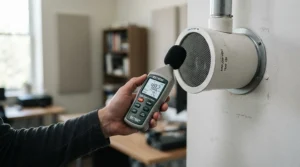
Setup and Optimization Guide: Getting a 6-Inch Fan Running Right
Amazon listings tell you what a fan is, not how to hang it. Here is a practical first-weekend routine.
Mount high, and keep ducts short. Hang the fan near the top of the tent so it removes the hottest air. Every foot of flex duct and every bend adds resistance, so keep runs straight and tight.
Filter first, fan second. Position the carbon filter inside the tent on the intake side of the fan, so the fan pulls air through the filter. This also keeps the filter’s resistance from stealing airflow at the exhaust end.
Use matched clamps and seal the joints. Leaks at connections cost airflow and let odors escape. Matching 6-inch clamps and ducting from the same kit avoids gaps.
Start at 40–50% speed. Run the fan low for a day, then adjust. If you have a probe controller, set temperature and humidity targets rather than a fixed speed.
Watch for negative pressure. Properly exhausting should gently suck the tent walls inward. If the walls are bulging out, something is blocking the fan. If they’re caved in hard, open an intake or slow the fan down.
Common first-month mistakes: running at 100% all day, ignoring humidity, mixing controller brands, and leaving old filters in place.
Keep the schedule simple. Check connections monthly, vacuum dust from the intake and replace the carbon filter on the manufacturer’s schedule.
Real-World Scenarios: Which Fan Fits Which Grower
Three buyer profiles show how the choices play out.
The apartment first-timer (budget-conscious, bedroom tent). Noise matters most, and so does cost. The Vivosun AeroZesh S6 kit gives EC quietness with a filter and clamps in one box. Run it at low speed and upgrade the controller later.
The busy professional (away 10 hours a day). Set-and-forget matters most. The Vivosun AeroZesh T6 with the E42A controller, or the AC Infinity Cloudline T6 if you’d rather stay in that ecosystem, will adjust to temperature and humidity without supervision.
The garage grower in a hot climate (high-wattage light, long duct run). Raw airflow wins. The Vivosun Z6 at 440 CFM has the buffer for a restrictive filter and warm ambient air. Noise is the price of admission.
A fourth, quieter category is the grower who already owns a standalone climate controller. For them, the AC Infinity Cloudline S6 is a clean, controller-agnostic EC fan.
Notice that budget, noise and room temperature decided each case, not CFM. That is the thread running through the whole guide.
Common Problems and Quick Fixes
Humidity crashes too fast. Usually the fan is oversized or running at 100%. Drop speed, or switch to a probe controller. The vapor pressure deficit concept explains why humidity and temperature have to be balanced together, not one at a time.
The fan is louder than expected. Check which speed the listing’s noise figure refers to, reduce speed, and add vibration-damping hangers or a silencer duct section.
Odor escapes the tent. Confirm the filter is on the intake side of the fan, the tent is under slight negative pressure and every duct joint is sealed.
The tent runs hot despite a strong fan. Look at duct bends, a clogged filter or a heat-soaked room. A hot room needs a cooler intake, not just more exhaust.
The controller won’t see the fan. Brand mismatch. Vivosun fans use Vivosun’s GrowHub controllers, and AC Infinity controllers won’t recognize them.
Long-Term Cost and Value Analysis
Sticker price tells only part of the story. A fan that runs most of the day racks up hours quickly, so efficiency matters.
| Tier | Example | Upfront Cost | Running Cost | Best For |
|---|---|---|---|---|
| Budget AC | Vivosun R6, Hon&Guan 6 Inch Booster | Lowest | Higher | Light use, tight budgets |
| Mid EC | Vivosun AeroZesh S6 | Low-to-mid | Low | Value seekers |
| Smart EC | Vivosun AeroZesh T6 | Mid ($130–$170) | Low | Automation buyers |
| Premium EC | AC Infinity Cloudline T6 | Higher ($170–$215) | Low | Quiet, premium builds |
The key insight is total cost of ownership. A listed 35 W EC draw is small compared with typical AC-motor fans, so the premium pays itself back slowly through power savings and, arguably more important, through reduced noise and fewer manual tweaks. If the tent runs only part of the day, the gap narrows and the budget AC models look better.
Looking at the comparison above, the Vivosun AeroZesh S6 probably delivers the best balance of efficiency and price. The Vivosun AeroZesh T6 earns its extra cost if you actually use the automation, and the AC Infinity Cloudline T6 is worth the premium mostly for its quiet reputation and warranty. Remember that prices change often, so check the current price before you decide.
✨ Don’t Miss These Exclusive Deals!
🔍 Take your tent ventilation to the next level with these carefully selected fans. Click on any highlighted item to check current pricing and availability. The right fan will help you create a stable, quiet, comfortable growing environment!
FAQ: Vivosun 6 Inch Inline Fans for 4×4 Tents
❓ Is a 6 inch inline fan too big for a 4x4 grow tent?
❓ Can I run a Vivosun 6 inch fan 24/7?
❓ Does the Vivosun AeroZesh T6 work with AC Infinity controllers?
❓ How loud is the Vivosun AeroZesh T6 at full speed?
❓ Should I buy the fan alone or a kit with a carbon filter?
Conclusion: The Short Version
If you made it this far, the takeaway of this Vivosun 6 inch inline fan review for 4×4 tent buyers is refreshingly simple. Every fan here has enough airflow. What separates them is control, noise and total cost.
Pick the Vivosun AeroZesh T6 if you want the tent to manage itself. Pick the Vivosun AeroZesh S6 kit if you want EC efficiency without paying for features you won’t use yet. Go with the Vivosun R6 if upfront cost is everything and you don’t mind a manual dial. Choose the Vivosun Z6 only for hot rooms. Step up to the AC Infinity Cloudline T6 or AC Infinity Cloudline S6 if quiet and a stronger warranty matter more than price. And treat the Hon&Guan 6 Inch Booster as the minimalist fallback.
Whichever you buy, the fan is only half the system. Start at low speed, keep the filter on the intake side, seal your joints and let humidity guide you rather than the loudest setting. Check current prices before you click, because they move often.
✨ Ready to Upgrade Your Tent Airflow?
🌿 Compare the options above, check current pricing and availability, and choose the fan that matches your space, your noise tolerance and your schedule. Your plants (and your neighbors) will thank you!
Recommended for You
- Vivosun 6 Inch Fan And Carbon Filter Combo: 7 Best Kits Ranked 2026
- Cheapest Vivosun 6 Inch Inline Fan Deal: 7 Proven Picks 2026
- AC Infinity Cloudline 6 Inch For 4×8 Tent Airflow: 7 Proven Fans 2026
Disclaimer: This article contains affiliate links. As an Amazon Associate, I earn from qualifying purchases. If you purchase products through these links, we may earn a small commission at no additional cost to you.
✨ Found this helpful? Share it with your friends! 💬🤗
