
In This Article
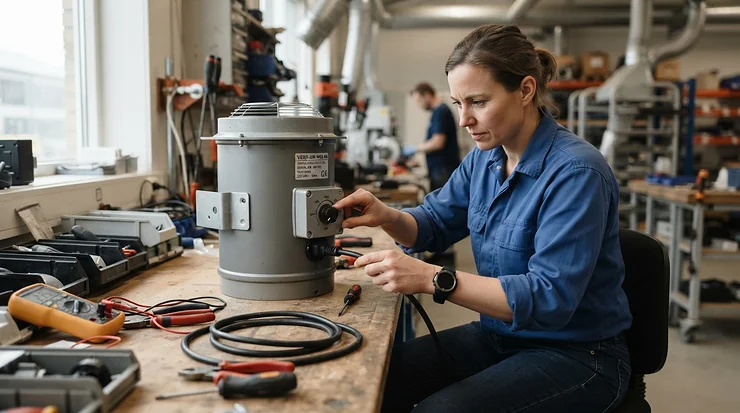
Basements are strange places to grow anything. They’re cool, they’re private, and they’re quietly damp. Concrete walls sweat, summer air sneaks in thick as soup, and the stuff you hang in there (a tent, a rack, a propagation shelf) lives or dies by how well the air moves. Get ventilation wrong and you don’t just stress your plants. You invite the musty smell and the mold that every basement is already auditioning for.
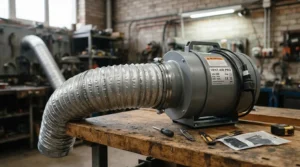
What is a Vivosun 6 inch fan for basement grow room use? It’s a 6-inch inline duct fan from Vivosun that pulls warm, stale, moisture-laden air out of a grow tent or enclosed space through ducting. Depending on the model, it’s rated from roughly 240 to 408 CFM. Plants get fresh air, and your basement avoids a damp-air buildup.
Why does moisture matter this much? The EPA advises keeping indoor humidity below 60%, ideally between 30 and 50%, to discourage mold, and it specifically suggests a dehumidifier when a basement runs too humid. That second half is the part most grow guides skip, and we’ll come back to it.
This guide compares seven real Vivosun 6-inch options, translates every spec into plain English, and shows you how to wire the whole thing into a basement without turning it into a swamp. No invented test stories here. Just specs, aggregated review sentiment, and honest reasoning.
Quick Comparison: Seven Vivosun 6 Inch Fan Options for a Basement Grow Room
| Product | Rated Airflow | Listed Noise | Control | Price Range | Best For |
|---|---|---|---|---|---|
| VIVOSUN AeroZesh G6 with E12 Controller | 388 CFM | 32 dB (listing) | 10-speed dial + probe | Check current price | Quiet, efficient basements |
| VIVOSUN AeroZesh G6 E42A+ PRO Kit | 388 CFM | 32 dB (listing) | WiFi app + probe | Low-to-mid $200s | Complete smart setups |
| VIVOSUN AeroZesh T6 with E12 Controller | 408 CFM | <45 dB | 10-speed dial + probe | Check current price | Longer duct runs |
| VIVOSUN AeroZesh S6 | 405 CFM | ~45 dB | PWM EC, GrowHub-ready | Around $100-$110 | Budget EC fans |
| VIVOSUN Air Filtration Kit R6 | 390 CFM | Not stated | Variable-speed dial | Check current price | Filter + fan in one box |
| VIVOSUN 6 Inch 390 CFM Inline Fan Combo | 390 CFM | 37 dB | Speed control (check listing) | Check current price | Proven review track record |
| VIVOSUN 6 Inch Inline Duct Fan 240 CFM | 240 CFM | <37 dB | Plug-in, no controller listed | Under $50 | Room-level exhaust |
The pattern is clear. If you want the quietest long-haul performer and don’t mind spending, the VIVOSUN AeroZesh G6 family leads on paper. If you’re counting every dollar, the VIVOSUN AeroZesh S6 and the VIVOSUN 6 Inch 390 CFM Inline Fan Combo deliver similar airflow for less. The VIVOSUN 6 Inch Inline Duct Fan 240 CFM is the odd one out: it’s the cheapest, but it can’t be paired with a carbon filter, so it’s built for a different job.
💬 Just one click — help others make better buying decisions too!😊
Top 7 Vivosun 6 Inch Fan for Basement Grow Room Options: Expert Analysis
1. VIVOSUN AeroZesh G6 with E12 Controller — whisper-quiet EC efficiency
The standout here is the motor. Instead of a conventional AC motor, the VIVOSUN AeroZesh G6 with E12 Controller uses a PWM-controlled EC motor that sips power while spinning.
Vivosun rates it at 388 CFM, 35 watts, and 2500 RPM, with ten speed levels, a memory that restores your last setting after a power blip, and three on/off cycle modes. It also ships with a temperature and humidity probe that nudges the fan speed as conditions drift. The spec sheet adds an IP44 housing. On paper, 35 watts running nonstop works out to about 25 kWh a month, which is why EC fans suit rooms that never switch off.
Based on the spec comparison, this is the model for people who hate fan noise. Vivosun lists 32 dB, though one third-party database lists roughly 45 dBA, so treat the lower figure as a manufacturer claim until you hear it yourself. Vivosun also notes you can upgrade to the E42A WiFi controller later.
I couldn’t verify detailed owner reviews during research (one database page had no comments yet), so there’s no review sentiment to report.
Pros:
- ✅ EC motor keeps running costs low
- ✅ Probe adjusts speed as conditions change
- ✅ Upgradeable to app-based E42A control
Cons:
- ❌ Fan only, no carbon filter included
- ❌ Noise figures vary between sources
Pricing: check current price, since it varies by retailer. The efficiency and upgrade path make it a strong long-term value.
2. VIVOSUN AeroZesh G6 E42A+ PRO Kit — complete smart-controlled package
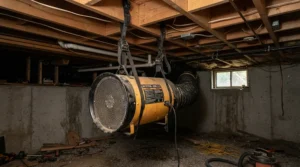
Think of the VIVOSUN AeroZesh G6 E42A+ PRO Kit as the “open the box and you’re basically done” option. It bundles the 6-inch G6 fan with the GrowHub E42A+ controller and its temperature/humidity probe, plus a carbon filter and 8 feet of ducting.
The fan carries the same 388 CFM and 2500 RPM rating as the standalone G6, and the controller lets you check climate data and change settings through the Vivosun app. That matters in a basement, where the grow area might be down a flight of stairs from where you actually sit. Remote monitoring means you catch a humidity spike from the couch instead of discovering it a week later.
Here’s the analytical catch. App control depends on a decent WiFi signal, and thick concrete walls are notorious for weakening it. Test your signal at the exact spot before committing to a wireless-only workflow.
Verified owner reviews for this specific kit weren’t available, so I won’t invent sentiment. The components share a platform with the G6 fan above, so the same caveats about noise claims apply.
Pros:
- ✅ Fan, controller, filter, and ducting included
- ✅ App monitoring from anywhere in the house
- ✅ Probe-driven speed adjustment
Cons:
- ❌ Highest upfront cost on this list
- ❌ Needs reliable basement WiFi
Pricing: low-to-mid $200s at the time of research. It’s good value if you’d otherwise buy each piece separately.
3. VIVOSUN AeroZesh T6 with E12 Controller — extra airflow for longer duct runs
The VIVOSUN AeroZesh T6 with E12 Controller is the one to look at if your ducting wanders. It’s rated at 408 CFM and 3100 RPM, the highest airflow among the AeroZesh models here, with a mixed-flow design Vivosun says creates higher static pressure.
Static pressure is the push needed to move air through resistance: bends, a carbon filter, long hoses. A fan with more of it holds its airflow better when your duct run snakes across a basement ceiling. The E12 controller gives ten speeds and an included probe, and you can upgrade to E42A later.
Noise claims conflict again. The spec table lists under 45 dB, while the product copy mentions a quiet 28 dB. For a basement under living space, assume mid-range noise and plan on duct silencing or rubber mounting.
My take: pick the T6 for a 5×5 tent, tight corners, or a filter-heavy setup, and dial it down for everyday running.
One retailer page showed no reviews at research time, so I can’t summarize owner feedback.
Pros:
- ✅ Highest airflow among the AeroZesh options
- ✅ Handles filter and duct resistance better on paper
- ✅ Probe plus ten adjustable speeds
Cons:
- ❌ Louder rating than the G6 family
- ❌ No verified review base yet
Pricing: check current price; the E42A version sat in the upper $100s at one retailer. Worth it only if you need the extra push.
4. VIVOSUN AeroZesh S6 — budget-friendly EC performance
The VIVOSUN AeroZesh S6 is where EC technology gets affordable. Vivosun lists 405 CFM and PWM control, with GrowHub compatibility, at around $100 to $110 on its own site when I checked.
Vivosun’s comparison page lists the S6 at 388 CFM and 45 dB, so airflow figures differ slightly across listings. Either way, we’re in the same ballpark as the pricier G6. What you sacrifice is the G6’s ultra-quiet reputation: 45 dB is roughly “quiet office” territory, fine in a detached basement bay but noticeable if your bedroom sits right above.
The practical read: the S6 is the sweet spot if you want PWM control and room to grow into app automation without paying for a bundled kit. Add a separate carbon filter (the S6 also ships in a kit with filter and clamps) only if odor is a concern.
The listing displayed a review count of 37 when I looked, but I couldn’t pull the text, so I won’t characterize it.
Pros:
- ✅ Lowest price among EC models here
- ✅ GrowHub-compatible for later upgrades
- ✅ Strong airflow for a 4×4 or 5×5 space
Cons:
- ❌ Louder than the G6 family
- ❌ Airflow listed inconsistently across pages
Pricing: around $100 to $110. Excellent value for what you get.
5. VIVOSUN Air Filtration Kit R6 — dial-controlled all-in-one
Some people want zero apps, zero probes, zero firmware. The VIVOSUN Air Filtration Kit R6 gives them a 6-inch fan rated up to 390 CFM, a variable-speed controller you turn with your hand, a carbon filter, and ducting with clamps.
The carbon bed is described as 1050+ RC 48 Australian virgin charcoal, and the directions call for hanging the fan and filter inside the top of the tent with the included straps. Vivosun also advises keeping the tent at slight negative pressure so air exits only through the filter.
What that means in practice: a dial is brutally simple. You set it, you forget it, and a speed knob doesn’t break when your router restarts. The tradeoff is manual babysitting, because nothing reacts when humidity creeps up overnight.
Review sentiment specific to the R6 wasn’t separable from its sibling combos, so see the combo below for what buyers say about this fan family.
Pros:
- ✅ Everything in one box
- ✅ Simple dial control, no apps
- ✅ Carbon filter scrubs exhaust odor
Cons:
- ❌ No automatic humidity response
- ❌ Filter needs periodic replacement
Pricing: check current price. A solid value for a no-fuss basement tent.
6. VIVOSUN 6 Inch 390 CFM Inline Fan Combo — most proven review record
If you want the product with the biggest paper trail, this is it. The VIVOSUN 6 Inch 390 CFM Inline Fan Combo carries a 4.6-star average across roughly 1,564 ratings on its Amazon listing, a galvanized steel fan at 2550 RPM, and a 37 dB noise rating. The kit adds a 6×16-inch carbon filter, fire-retardant aluminum ducting, and stainless clamps.
Reviewers consistently report that the filter eliminated odor and that the fan ran 24/7 on low settings in a 5×5 tent. Common complaints include a flimsy connection lip between fan, filter, and duct, one reported filter life of only two to three grows, and one buyer whose fan developed a hum after a few weeks (Vivosun refunded them, per the review). An HVAC business owner called the fan excellent but oversized for small tents.
Here’s the interesting part for basements: “oversized” is a feature when you have long ducts and a speed controller. You can run it slow and keep headroom for summer.
Pros:
- ✅ Large, consistently positive review base
- ✅ Filter, ducting, and clamps included
- ✅ Steel housing feels built to last
Cons:
- ❌ Connection points reportedly loose
- ❌ Some reports of filter wearing quickly
Pricing: check current price. Great value if you want a known quantity.
7. VIVOSUN 6 Inch Inline Duct Fan 240 CFM — cheap room-level exhaust
Not every basement problem is a tent problem. The VIVOSUN 6 Inch Inline Duct Fan 240 CFM is marketed for basements, bathrooms, kitchens, and attics, with a 2960 RPM motor, a permanently lubricated bearing, and a noise rating below 37 dB.
The detail to catch: the listing says it cannot be used with a carbon filter. That makes it a room-level exhaust or booster fan, not a tent-and-filter fan. Imagine venting a utility corner or a damp storage nook straight outdoors.
The listing shows a 4.6-star average across 982 ratings. Reviewers describe uses like a dryer-vent booster and evacuating heat from a computer, one wanted more air movement than it delivered, and one reported the blades coming loose. In short, buyers like it for light-duty ducting, so don’t treat it as a grow-tent workhorse.
Pros:
- ✅ Lowest price on this list
- ✅ Compact and easy to install
- ✅ Quiet rating for basic exhaust
Cons:
- ❌ Can’t be used with a carbon filter
- ❌ Lower airflow, one reported blade failure
Pricing: under $50 range. Real value for the right (non-grow) job.
Setup Guide: Installing Your Vivosun 6 Inch Fan for Basement Grow Room Use
Amazon’s product page won’t tell you this, so here’s the order of operations that saves headaches.
- Size the fan. Multiply tent length × width × height for cubic feet. A 4x4x7 tent is 112 ft³; a 5x5x7 is 175 ft³. A common rule of thumb is one full air exchange per minute, with extra capacity (often 50% or more) to offset carbon filter and duct losses. Every 6-inch model above clears that for typical tents.
- Mount the fan high. Hot, humid air rises, so hang the fan and filter near the top of the tent with straps.
- Keep the duct short and straight. Every bend and every foot of hose steals airflow.
- Set the intake passive and low. Slight negative pressure (tent walls gently pulling inward) keeps air flowing through your filter rather than leaking out of seams.
- Place the probe at canopy height. For humidity-based automation, a sensor at the ceiling reads the wrong air.
- Watch VPD, not only RH. Michigan State Extension explains that vapor-pressure deficit predicts plant water loss better than relative humidity alone, with lower targets for young cuttings and higher ones for finishing plants.
- Mind the first 30 days. Check duct clamps weekly, listen for new rattles, and log basement RH morning and night.
The most common new-grower mistake is blasting the fan at 100% because it feels productive. Over-ventilating in a cold basement can strip heat and push humidity up when outdoor air is wetter than room air.
Problem → Solution Guide: Fixing the Most Common Basement Fan Headaches
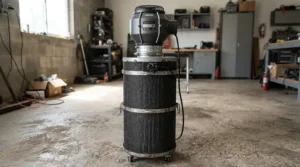
Problem 1: Basement humidity climbs every summer. Cool concrete plus warm, wet outdoor air equals condensation. Solution: use your fan to exhaust tent air outdoors, and add a dehumidifier for the room itself. A fan moves moisture; it doesn’t destroy it.
Problem 2: The fan hums through the ceiling. Hanging the fan from rigid chain transmits vibration. Solution: suspend it with the included straps or rubber isolators, and run it slower. The VIVOSUN AeroZesh G6 family is the quietest on paper, while the VIVOSUN 6 Inch 390 CFM Inline Fan Combo has the most owner commentary on noise and failure.
Problem 3: Humidity reads fine but leaves look unhappy. Relative humidity changes with temperature. Vapor-pressure deficit is the more meaningful gauge, since it combines the two. Solution: log temperature and RH together, and use a VPD chart.
Problem 4: Odor leaks into the house. Solution: confirm negative pressure, seal duct joints, and replace carbon when it’s saturated. The VIVOSUN Air Filtration Kit R6 and the VIVOSUN 6 Inch 390 CFM Inline Fan Combo both bundle filters.
Problem 5: Exhaust air pools in the basement. Solution: duct it outdoors through a window insert or similar path, because venting humid tent air into the same cold room just relocates the problem.
✨ Don’t Miss These Exclusive Deals!
🔍 Take your basement grow to the next level with these carefully selected fans. Click on any highlighted item to check current pricing and availability. These tools will help you create the stable, healthy growing conditions your plants deserve!
Buyer’s Decision Framework: Which Vivosun 6 Inch Fan Fits Your Basement?
Skip the spec-sheet staring contest. Match your situation:
- If your grow area sits under a bedroom, choose the VIVOSUN AeroZesh G6 with E12 Controller, because its listed 32 dB is the lowest here.
- If you want everything in one box with remote monitoring, choose the VIVOSUN AeroZesh G6 E42A+ PRO Kit for the controller, filter, and ducting in one purchase.
- If your duct run is long or twisty, choose the VIVOSUN AeroZesh T6 with E12 Controller for its higher airflow and static pressure.
- If budget is the priority but you still want EC control, choose the VIVOSUN AeroZesh S6.
- If you want dial simplicity and a filter included, choose the VIVOSUN Air Filtration Kit R6.
- If you value the largest review sample, choose the VIVOSUN 6 Inch 390 CFM Inline Fan Combo.
- If you simply need to exhaust a damp corner (no grow tent, no carbon), choose the VIVOSUN 6 Inch Inline Duct Fan 240 CFM.
A fast priority checklist: noise → control type → filter included → budget. Whichever comes first on your list wins.
How to Choose a Vivosun 6 Inch Fan for Basement Grow Room Use
Here are the six steps that matter most:
- Measure your space. Tent volume sets the baseline CFM. Larger rooms need more.
- Decide on a filter. If odor control matters, avoid fans that can’t take a carbon filter, like the VIVOSUN 6 Inch Inline Duct Fan 240 CFM.
- Pick your control style. A dial is simple, while a probe or app reacts automatically.
- Check noise against your floor plan. A basement under living space magnifies hum.
- Plan the exhaust path. Know where the air goes before buying.
- Budget for add-ons. Hygrometer, duct hangers, replacement carbon, and a dehumidifier all count.
The biggest overlooked variable is step 5. The fan you buy matters less than where the exhaust ends up.
Basement Grow Ventilation Vivosun Setups: Intake, Exhaust, and Makeup Air
Good basement grow ventilation Vivosun style starts with a simple idea: air that leaves must be replaced. If your exhaust fan pulls from the tent, fresh air has to enter somewhere. In a basement, that source is often the surrounding room, which may be cool, damp, and stagnant.
Passive intake works for most tents through louvered vents or bottom flaps. In a tightly sealed basement, though, you may also need a path for makeup air from upstairs or outdoors. A fan that fights a sealed room runs less effectively and pulls from sketchy places.
Combustion safety is the sleeper issue. If a gas furnace or water heater shares that basement, strong exhaust can create negative pressure that interferes with venting. That’s a good reason to test with a CO alarm nearby and talk to an HVAC professional.
One more point on climate. A forum discussion on Green Building Advisor pointed out that pulling humid outdoor air into a cooler room can raise relative humidity sharply, so ventilation isn’t always the dry-air hero it seems. Summer is when this bites.
Pair any VIVOSUN AeroZesh model with a duct that terminates outdoors, keep runs short, and treat room-level humidity as a separate job.
Humidity Control Basement Vivosun Fan Strategy: What a Fan Can and Can’t Do
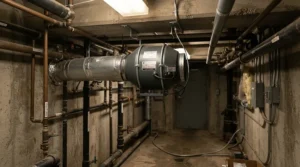
Let’s be direct about humidity control basement Vivosun fan setups. A fan is an air mover. It helps by replacing damp air with drier air when the outside is drier, and by carrying away what your plants transpire. It doesn’t pull moisture out of a damp basement by itself.
North Carolina State Extension’s mold checklist recommends keeping indoor humidity between 30 and 50% and checking basements with a humidistat. EPA guidance likewise points to a dehumidifier when a basement stays too humid.
So the winning formula is layered:
- Tent level: an AeroZesh G6, T6, or S6 with a probe adjusting airflow to temperature and humidity.
- Room level: a properly sized dehumidifier holding the basement in the 30-50% band.
- Source level: fix gutters, grading, and leaks, since dampness from outside is the real villain.
The VIVOSUN AeroZesh G6 with E12 Controller and the VIVOSUN AeroZesh T6 with E12 Controller both include probes that respond to environmental changes, which suits this approach. The dial-based VIVOSUN Air Filtration Kit R6 needs you to be the sensor.
Vivosun 6 Inch Fan vs Dehumidifier vs Wall Exhaust Fan
| Option | What It Does | Strength | Weakness | Best For |
|---|---|---|---|---|
| VIVOSUN AeroZesh G6 with E12 Controller | Exhausts tent air outdoors | Quiet, efficient, adjustable | Doesn’t remove room moisture | Tent ventilation |
| Dehumidifier | Condenses moisture from room air | Directly lowers basement RH | Adds heat, needs draining | Whole-basement humidity |
| Simple wall exhaust fan | Moves room air outside | Cheap, easy | Can import humid summer air | Damp corners |
Read the table this way: the fan and the dehumidifier aren’t rivals, they’re teammates. The fan manages the tent environment and odor, while the dehumidifier keeps the basement from drifting toward mold-friendly territory. A plain wall fan is the most limited option, because it can’t filter and can’t respond to conditions.
If forced to buy only one, buy based on your actual problem. Warm, smelly tent? Fan. Clammy, musty room? Dehumidifier.
Long-Term Cost & Maintenance
| Item | Upfront Tier | Running Cost Notes | Maintenance |
|---|---|---|---|
| VIVOSUN AeroZesh G6 with E12 Controller | Mid-range | 35W rating, roughly 25 kWh/month nonstop | Wipe housing, check clamps |
| VIVOSUN AeroZesh S6 | Budget-to-mid | EC efficiency | Same |
| VIVOSUN 6 Inch 390 CFM Inline Fan Combo | Budget-to-mid | Wattage not confirmed in research | Replace carbon as it saturates |
| VIVOSUN 6 Inch Inline Duct Fan 240 CFM | Lowest | Wattage not confirmed | Bearings are permanently lubricated |
At typical electricity rates of roughly 15 to 20 cents per kWh, a 35-watt fan running constantly costs about $4 to $5 a month. EC efficiency adds up over years, which is why the VIVOSUN AeroZesh line can beat a cheaper fan on total cost despite a higher sticker price.
The ongoing expense most people forget is carbon. One reviewer reported a filter lasting only two to three grows, so budget for periodic replacement. Vivosun’s R6 guidance also says to swap the filter as the carbon loads up. Add a basic hygrometer, and you’ve covered the whole maintenance picture.
Safety, Electrical, and Local Rules for a Basement Grow Setup
A basement mixes water, electricity, and concrete, so treat setup like it matters.
- Use GFCI-protected outlets and keep power strips off the floor.
- Respect IP ratings. The VIVOSUN AeroZesh G6 is listed with an IP44 housing, which handles splashes but isn’t a license to stand in puddles.
- Check combustion appliances. Strong exhaust can interfere with furnace or water heater venting, so keep a working CO alarm nearby.
- Use fire-retardant ducting and keep hoses away from heat sources.
- Know your local rules. Zoning, rental agreements, and electrical codes vary, so verify before you build.
The point of ventilation is a healthier space. A fan that makes your basement air worse, or your electrical panel nervous, is a bad trade.
FAQ: Vivosun 6 Inch Fan for Basement Grow Room
❓ What CFM do I need for a 4x4 tent in a basement?
❓ Can a Vivosun fan lower basement humidity by itself?
❓ Is the VIVOSUN AeroZesh G6 worth it over the VIVOSUN Air Filtration Kit R6?
❓ Can I use the 240 CFM Vivosun duct fan with a carbon filter?
❓ Where should the exhaust duct go in a basement?
Conclusion: Choosing Your Vivosun 6 Inch Fan for Basement Grow Room Success
Here’s the short version. The VIVOSUN AeroZesh G6 with E12 Controller and its E42A+ PRO Kit lead for quiet, efficient, automated control. The VIVOSUN AeroZesh T6 with E12 Controller is the long-duct specialist, and the VIVOSUN AeroZesh S6 is the budget EC pick. The VIVOSUN Air Filtration Kit R6 and the VIVOSUN 6 Inch 390 CFM Inline Fan Combo are the practical kits, the latter with the strongest review record. The VIVOSUN 6 Inch Inline Duct Fan 240 CFM is a cheap room exhaust, not a grow-tent fan.
The bigger lesson is that a Vivosun 6 inch fan for basement grow room use is one layer in a system. Plan where the exhaust goes, measure humidity honestly, add a dehumidifier when the room needs it, and keep basement grow ventilation Vivosun style simple: short ducts, quiet speeds, regular checks. With humidity control basement Vivosun fan planning done right, you get healthier plants and a basement that still smells like a basement and not a swamp.
✨ Ready to build a calmer, cleaner grow space?
🌿 Check current pricing on the fan that matches your setup, and give your basement the airflow it’s been begging for!
Recommended for You
- Vivosun 6 Inch Inline Fan Noise Level: Honest 7-Fan Guide 2026
- Vivosun 6 Inch Fan Vs Terrabloom 6 Inch: 7 Proven Picks (2026)
- Vivosun 6 Inch Inline Fan Review For 4×4 Tent: 7 Honest Picks 2026
Disclaimer: This article contains affiliate links. As an Amazon Associate, I earn from qualifying purchases. If you purchase products through these links, we may earn a small commission at no additional cost to you.
✨ Found this helpful? Share it with your friends! 💬🤗
