

In This Article
Your grow tent has a pulse, and the exhaust fan is its heart. Get the airflow right and temperature, humidity, and odor fall into line. Get it wrong and you’re fighting a 90°F tent with a fan that sounds like a leaf blower in a phone booth.

That’s why a Vivosun 6 inch inline fan with speed controller keeps landing in shopping carts. The pitch is simple: roughly 400 CFM of airflow (that’s cubic feet per minute, the standard measure of how much air a fan moves) and a way to dial it down so you aren’t paying for noise you don’t need. Vivosun’s own sizing chart pairs 6-inch fans with 3×4 and 4×4 tents, so this is the workhorse size for a huge share of home setups.
But “speed controller” covers a lot of ground. Some models have a simple dial on the power cord. Others pair an EC motor with a ten-step digital controller and a climate probe. Those are different machines with different price tags, noise profiles, and failure modes.
This guide sorts them out. You’ll get seven real fans (five from Vivosun, two rivals for perspective), plus deep dives on the Vivosun 6 inch variable speed dial, the adjustable Vivosun 6 inch controller options, RPM settings, wiring, heat math, and long-term durability.
One honest note: everything here comes from spec sheets, manufacturer sizing guidance, and patterns in published customer reviews. It does not come from bench testing, so treat noise and durability notes as reported, not measured.
Quick Comparison Table: Six-Inch Fans With Speed Control
| Product | Max Airflow | Controller | Listed Noise | Price Range | Best For |
|---|---|---|---|---|---|
| VIVOSUN R6 | 390 CFM | Stepless dial on cord | ~34-37 dB | $80-$100 | Budget 3×4 tents |
| VIVOSUN Z6 | 440 CFM | Dial on cord | ~49 dB | $80-$100 | Max airflow on a budget |
| AeroZesh G6 | 388 CFM | E12, 10 speeds | ~32 dB | Check current price | Quiet, set-and-forget |
| AeroZesh T6 | 408 CFM | E12, 10 speeds | <45 dB | Check current price | Climate-reactive control |
| VIVOSUN Inline Booster Duct Fan | 275 CFM | Dial on cord | <35 dB | $30-$40 | HVAC boosting, tiny tents |
| AC Infinity Cloudline S6 | 402 CFM | 10-speed wired | ~30-32 dB | $100-$120 | Quietest rival pick |
| iPower 6″ 405 CFM EC Fan | 405 CFM | 10-speed wired | ~34 dB | $120-$150 | EC motor alternative |
The pattern is clear. Dial-controlled VIVOSUN R6 and VIVOSUN Z6 deliver the most air per dollar, while EC-motor models like AeroZesh G6 and AC Infinity Cloudline S6 trade price for quieter operation. If your tent sits in a bedroom or living space, the noise column should weigh as heavily as the CFM column. Note that VIVOSUN Inline Booster Duct Fan is a different animal, built for small duct runs rather than a full 4×4 tent.
💬 Just one click — help others make better buying decisions too!😊
What Is a Vivosun 6 Inch Inline Fan With Speed Controller?
A Vivosun 6 inch inline fan with speed controller is a duct fan that fits standard 6-inch ducting and moves roughly 275-440 CFM depending on the model. A built-in or included controller lets you lower the motor’s speed, trading airflow for quiet. It’s used mainly to exhaust grow tents, pair with carbon filters, and boost HVAC runs.
Two families exist. The older dial-style fans (R6, Z6, and the booster) use a controller on the power cord. The newer AeroZesh line uses an EC motor with PWM control, an E12 ten-step controller, and an upgrade path to the GrowHub E42A app controller.
Top 7 Vivosun 6 Inch Inline Fans With Speed Controllers: Expert Analysis
1. VIVOSUN R6 — best budget all-rounder for 3×4 tents
The VIVOSUN R6 is the baseline everything else gets measured against. It’s rated at 390 CFM and 2550 RPM, with a stepless dial on the cord instead of fixed steps.
Here’s what the specs mean in practice. 390 CFM is roughly three to four times the throughput a 4×4 tent needs, so you’ll typically run it well below maximum. That headroom is exactly why the dial matters. Listings quote noise between about 34 and 37 dB depending on the retailer, so expect a low hum rather than silence, and expect that to climb with ducting turns and a carbon filter.
Based on the spec comparison, this fan suits first-time growers who want one dependable exhaust fan and don’t need automation. Reviewers on retailer listings generally report solid airflow for the money. One recurring complaint pattern is hum or vibration developing on some units, and the review I found for a kit with this fan described Vivosun sending a replacement refund quickly.
Pros:
- ✅ Strong airflow for a very low price
- ✅ Stepless dial allows fine tuning
- ✅ Often bundled with carbon filter kits
Cons:
- ❌ Dial offers no temperature automation
- ❌ Some units report hum or vibration
Price sits around the $80-$100 range at the time of research. Verdict: excellent value if you accept manual control.
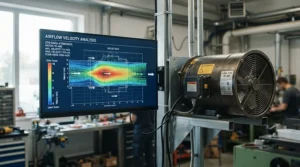
2. VIVOSUN Z6 — loudest airflow, most muscle per dollar
The VIVOSUN Z6 pushes 440 CFM at 2450 RPM, making it the highest-airflow dial model in the lineup. It includes dual flanges for easier ducting hookup.
That extra air has a price. Vivosun lists roughly 49 dB, noticeably louder than the VIVOSUN R6. On paper, the Z6 makes sense where a long duct run or a stacked carbon filter eats airflow before it ever leaves the tent. Here’s what to weigh: if your tent is in a spare room or garage, the noise rarely matters. In a bedroom, it will.
Retailer listings for the combo kit show ratings around 4.5 out of 5 across thousands of reviews. Some reviewers describe running it 24/7 for months across multiple grows. Others mention it being louder than expected, and at least one reported a grinding stop, which the company resolved with a refund after contact. That’s a mixed but typical profile for a budget blower.
Pros:
- ✅ Highest airflow in the dial lineup
- ✅ Handles carbon filters and long ducts
- ✅ Dial speed control built in
Cons:
- ❌ Noticeably louder at full speed
- ❌ Occasional reports of bearing noise
Expect the $80-$100 range. Verdict: the right pick if airflow beats silence for your space.
3. AeroZesh G6 — quietest Vivosun with ten-step control
The AeroZesh G6 abandons the dial for an EC motor and the included E12 controller. It’s rated at 388 CFM, 2500 RPM, 32 dB, and only about 35 watts.
Ten PWM speed steps mean predictable, repeatable settings. The controller also remembers your last speed after a power blip, which matters for unattended grows. Retail copy describes an environmental probe that adjusts speed to temperature and humidity, so verify that your specific bundle includes it before buying.
Compared to the VIVOSUN R6, you give up nothing in airflow and gain a noticeably lower noise rating and a smart-controller upgrade path (the E42A and GrowHub app). That upgrade ladder is the quiet superpower here: you can start simple and automate later without replacing the fan.
I could not verify independent customer reviews for this model on the retailer pages I found, so treat reliability as unproven beyond Vivosun’s one-year warranty.
Pros:
- ✅ Very low listed noise at 32 dB
- ✅ Ten fixed speeds with memory
- ✅ Upgradeable to app controller
Cons:
- ❌ Costs more than dial models
- ❌ Limited independent review history
Pricing varies by retailer and bundle, so check current price. Verdict: best long-term value for quiet spaces.
4. AeroZesh T6 — highest RPM, climate-reactive brains
The AeroZesh T6 lists 408 CFM at 3100 RPM with a mixed-flow EC design. It sits at the top of Vivosun’s six-inch range, and the brand’s sizing chart pairs it with 3×4 and 4×4 tents.
Don’t be fooled by the bigger RPM figure. It buys only about 18 more CFM than the AeroZesh G6, because mixed-flow EC designs convert speed into pressure rather than raw volume. That pressure is useful: it helps push air through a carbon filter and a few ducting bends. Retail listings show under 45 dB at maximum, louder than the G6 on paper but still quiet at lower steps.
The E12 controller offers ten speeds plus three ON/OFF cycle modes, handy for duty-cycle ventilation during lights-off. Vivosun also claims significantly lower power use than competing fans, which is a brand claim I’d treat as directional rather than verified.
I found no verified customer reviews for this model on retailer pages, so durability evidence is thin.
Pros:
- ✅ Strong pressure through filters and ducts
- ✅ Cycle modes for night-time ventilation
- ✅ Clear upgrade path to GrowHub
Cons:
- ❌ Louder at max than the G6
- ❌ Higher price than dial models
Check current price. Verdict: choose it if you plan to automate.
5. VIVOSUN Inline Booster Duct Fan — cheapest way into speed control
The VIVOSUN Inline Booster Duct Fan is the odd one out. It’s rated at 275 CFM and 3120 RPM, with a centrifugal impeller and a dial on the cord. That’s plenty for a 2×4 tent, a closet, or boosting a weak HVAC branch.
Think of it as the sensible small-scale cousin. At 275 CFM, you’ll want it paired with a short duct run and ideally no thick carbon filter, since filters can cut real-world airflow substantially.
User feedback on an earlier-spec listing of this booster family (which carries thousands of ratings around 4.3 out of 5) is consistently practical. People describe using it to push air upstairs through a 6-inch HVAC duct. One reports running it around the clock for three years. Another says the speed control is reasonably linear with no dead zones on the dial. The common gripe is a steady white-noise sound, and one tip is to hang the fan on bungee cords.
Pros:
- ✅ Very low entry price
- ✅ Dial feels smooth across its range
- ✅ Great for HVAC booster duty
Cons:
- ❌ Too small for a 4×4 grow tent
- ❌ Audible white-noise sound
Roughly $30-$40. Verdict: smart for small spaces, wrong for big tents.
6. AC Infinity Cloudline S6 — the quiet benchmark rival
The AC Infinity Cloudline S6 is the rival that Vivosun’s EC fans chase. It’s rated at 402 CFM, 30-32 dBA, with a wired ten-speed controller and dual ball bearings that the maker rates at 67,000 hours.
What the spec sheet won’t tell you, but the design implies: the motor box detaches from the mounting frame for cleaning, and the fan can mount in any direction. Those are practical wins when you’re wedging a fan into a cramped tent corner.
The controller is also compatible with the brand’s wider smart-controller ecosystem, mirroring Vivosun’s upgrade-path idea. I did not verify independent review sentiment here, so the quietness claim is the manufacturer’s.
For buyers, the real question is ecosystem loyalty. If you already own other gear in one brand’s app, that tilts the decision more than a few dB.
Pros:
- ✅ Very low rated noise level
- ✅ Detachable motor box for cleaning
- ✅ Long-rated dual ball bearings
Cons:
- ❌ Pricier than Vivosun’s dial fans
- ❌ Different app ecosystem than Vivosun
Around the $100-$120 range. Verdict: best silent option for bedrooms and closets.
7. iPower 6″ 405 CFM EC Fan — EC motor alternative with ten steps
The iPower 6″ 405 CFM EC Fan uses a PWM-controlled EC motor and a wired ten-speed controller, with 34 dB listed noise. It also advertises compatibility with app-based controllers.
Functionally, it’s the closest rival to the AeroZesh G6: similar airflow, similar noise, similar control philosophy. The differences are mostly ecosystem and price. Where a plain dial can leave you guessing, ten fixed steps let you note “step 4 keeps my tent at 76°F” and return to it after a power cut.
Retailer pricing for this model ran higher than most Vivosun options, and I could not verify review sentiment for this specific version. Treat it as a spec-sheet pick: worth a look if it’s discounted or you’re already invested in iPower gear.
Pros:
- ✅ EC motor with ten fixed steps
- ✅ App-controller compatibility
- ✅ Comparable airflow to AeroZesh
Cons:
- ❌ Premium pricing over dial fans
- ❌ Unverified review history here
Around the $120-$150 range. Verdict: solid, but not a clear win over the AeroZesh G6.
Vivosun 6 Inch Variable Speed Dial: How It Actually Works
The Vivosun 6 inch variable speed dial is the simplest control in the lineup. A small box sits on the power cord, and turning the knob changes how much power reaches the motor. There are no menus or memory, just a knob.
Retail copy calls the VIVOSUN R6 control “stepless,” and a reviewer of a related model said the response is reasonably linear, with no dead stretches on the dial. That matters more than it sounds. A bad dial feels like nothing happens for the first half and everything happens in the last quarter.
Here’s the practical catch. Dial controllers on budget AC-style fans work by reducing power, which can add motor hum at low settings, and very low settings may not spin the blades reliably. Set the dial where the fan sounds clean, not just quiet, and confirm it restarts after a power cycle.
Compared to ten-step EC controllers, the dial is cheaper and finer-grained but forgetful. If your power flickers, you may return to a fan at full blast or stopped.

Adjustable Vivosun 6 Inch Controller: Dial vs E12 vs E42A
An adjustable Vivosun 6 inch controller comes in three flavors. The EC fans use pulse-width modulation, a method that switches power on and off rapidly to control speed without wasting energy as heat.
| Control Style | Models | Speed Steps | Smart Upgrade | Best For |
|---|---|---|---|---|
| Inline dial | VIVOSUN R6, VIVOSUN Z6, VIVOSUN Inline Booster Duct Fan | Stepless | None | Low budgets |
| E12 controller | AeroZesh G6, AeroZesh T6 | 10 | Upgrades to E42A | Repeatable settings |
| E42A / GrowHub | AeroZesh T6 bundles | App-driven | Full automation | Hands-off grows |
Looking at the table, the dial wins on price and finesse, while E12 wins on repeatability and memory. The E42A route makes sense only if you want remote schedules and sensor-driven ramping. For most home growers, E12 is the sweet spot: you get the quiet EC motor without paying for automation you’ll rarely touch.
Vivosun Fan RPM Settings: What the Numbers Really Mean
Vivosun fan RPM settings look like a spec race, but they’re easy to misread.
| Model | Max RPM | Max CFM | Listed Noise | Best For |
|---|---|---|---|---|
| VIVOSUN R6 | 2550 | 390 | ~34-37 dB | Value |
| VIVOSUN Z6 | 2450 | 440 | ~49 dB | Airflow |
| AeroZesh G6 | 2500 | 388 | ~32 dB | Quiet |
| AeroZesh T6 | 3100 | 408 | <45 dB | Pressure |
| VIVOSUN Inline Booster Duct Fan | 3120 | 275 | <35 dB | Small spaces |
RPM alone predicts nothing. The VIVOSUN Inline Booster Duct Fan spins fastest but moves the least air, while the VIVOSUN Z6 spins slower and moves the most. Impeller design and motor type decide the real result.
What you can count on is the fan-law rule of thumb: airflow falls roughly in line with speed, while pressure and noise fall faster. Drop the dial to about 60% and you lose around 40% of airflow but cut noise by much more. That is exactly why oversizing and dialing down beats buying a smaller fan and running it flat out.
Controller Wiring Diagram: How the Hookup Works
A controller wiring diagram for these fans is simpler than it looks, because Vivosun’s controllers are plug-in components rather than something you splice. Here’s the simplified signal flow:
DIAL STYLE (R6 / Z6 / Booster)
Wall outlet ──► [Dial on power cord] ──► Fan motor

E12 STYLE (AeroZesh G6 / T6)
Wall outlet ──► Fan power cord ──► EC fan motor
E12 controller ──► low-voltage control cable ──► Fan control port
Temp/humidity probe ──► E12 controller
Treat this as a mental model, since connector layouts vary by bundle and the manual rules. The key idea is that dial fans interrupt the mains power, while EC fans keep full power and receive a low-voltage speed signal instead.
If you want the electrical theory behind EC control signals, the Airius EC speed controller installation guide shows how a 0-10V potentiometer controller is wired for commercial EC fans. Note that Vivosun’s included controllers are plug-and-play, so the generic diagram is for understanding only. Never open or rewire a mains-powered controller yourself; if you need a custom setup, hire a licensed electrician.
✨ Don’t Miss These Exclusive Deals!
🔍 Take your grow tent ventilation to the next level with these carefully selected fans. Click on any highlighted item to check current pricing and availability. These picks will help you create the stable, comfortable climate your plants will love!
Speed and Temperature Relationship: The Math Behind Your Dial
The speed and temperature relationship is the whole reason you bought a controller. Here’s a rule of thumb for sensible heat: the temperature rise inside the tent equals heat load in BTU/hr divided by 1.08 times the CFM of air you’re moving.
Try a real example. A light and gear dumping 400 watts of heat gives about 1,365 BTU/hr. Through 260 CFM of effective airflow (a 400 CFM fan after filter losses), that’s roughly a 5°F rise over room temperature. Cut the airflow to 130 CFM and the rise doubles to nearly 10°F.
That’s why the dial isn’t a gimmick. Common grow guidance targets about 68-77°F in daytime lights-on periods. AC Infinity’s grower setup guide also notes that small spaces swing quickly in both temperature and humidity, so tiny changes in dial position matter more than you’d expect.
Humidity moves the other way. Common guidance suggests 60-70% for seedlings and 40-50% in flower, so a faster fan helps dry a damp tent, while a slower one keeps humidity up. Start at a mid setting, wait an hour, then nudge the dial in small steps while watching a thermometer and hygrometer.
Dial Durability: What Reviews and Warranties Suggest
Dial durability is the least-documented spec in the whole category. No one tests the knob for you, so you’re left with patterns.
Based on retailer reviews, the fans themselves often survive long stretches of continuous running. One reviewer reported five grows with the fan running around the clock, another reported three years, and there are also reports of units developing hum or grinding within weeks. The dial controller is rarely the named culprit, which is mildly reassuring but not proof.
Vivosun’s UK and AU listings cite a one-year after-sale service period, and the AeroZesh G6 is described as carrying a one-year warranty. That’s the baseline you should assume.
A few habits stretch the life of any controller. Keep it off the floor and away from tent condensation, avoid coiling the cord tightly around the box, and hang the fan on bungee cords so vibration doesn’t loosen connections over time. For EC models like the AC Infinity Cloudline S6, the maker’s rated bearing life of 67,000 hours is a brand figure, but it signals what the market is chasing.
How to Choose a Vivosun 6 Inch Inline Fan: 6 Steps
- Match tent size. A 4×4 or 3×4 tent is the sweet spot for six-inch fans; smaller tents suit the VIVOSUN Inline Booster Duct Fan.
- Count your filter. Retail sizing guides note carbon filters can cut real airflow by roughly a quarter to a third, so size up.
- Decide on noise. Bedrooms favor EC fans like AeroZesh G6; garages tolerate VIVOSUN Z6.
- Pick the control style. Dial for simplicity, E12 for repeatable steps, E42A for automation.
- Plan the duct run. Fewer bends equals more usable CFM.
- Check the warranty. One year is typical, so keep your receipt.
Real-World Scenarios: Three Buyer Profiles
The closet grower. A 2×4 tent in a quiet apartment needs low noise and modest airflow. The VIVOSUN Inline Booster Duct Fan keeps costs low, while the AC Infinity Cloudline S6 wins if silence is the priority and you can spend more.
The summer-garage grower. A 4×4 tent in a hot garage needs maximum heat removal. The VIVOSUN Z6 gives the biggest airflow cushion, and its noise barely matters out there.
The automation fan. Someone who travels for work wants stable conditions without daily dial tweaks. The AeroZesh T6 with an E12 or E42A controller is built for exactly that, and memory after power loss helps.
For venting an enclosed closet or garage tent, AC Infinity’s grower guide also covers exhaust options and when air conditioning becomes necessary.
Common Mistakes When Buying a 6 Inch Inline Fan With a Controller
- Buying by RPM. As shown above, RPM tells you almost nothing without the impeller design.
- Sizing to the exact CFM. Filters, bends, and age eat airflow.
- Setting the dial too low. Voltage-reducing controllers can cause hum or stalling at the bottom of the range.
- Hard-mounting the fan to the tent frame. Reviewers recommend bungee cords to kill vibration.
- Skipping a thermometer. Without readings, you’re adjusting blind.
- Buying an oversized kit. One reviewer called a combo “great fan, but oversized,” so match the bundle to your tent.
Features That Actually Matter (And Those That Don’t)
What matters: the control type, listed noise at your intended speed, pressure performance with filters attached, bearing quality, and warranty. Upgrade paths also matter if you suspect you’ll automate later.
What doesn’t: peak RPM, brand claims of dramatic power savings without data, and extra bundled accessories you can’t use. A fan advertised as using far less power than rivals is only useful if you compare watts yourself, which is easy to do with the listed wattage.
Also ignore “Amazon-recommended” tent pairing in a vacuum. One reviewer noted being steered to a six-inch fan for a 5×5 tent, which is a fine fit, but it depends on your lights and room temperature.
Long-Term Cost & Maintenance
| Model | Price Band | Control | Long-Term Value | Best For |
|---|---|---|---|---|
| VIVOSUN R6 | $80-$100 | Dial | Low upfront, manual | Tight budgets |
| VIVOSUN Inline Booster Duct Fan | $30-$40 | Dial | Cheapest to replace | Small spaces |
| AeroZesh G6 | Check current price | E12 | Quiet, upgradeable | Long-term growers |
| AC Infinity Cloudline S6 | $100-$120 | Wired 10-speed | Long bearing rating | Silent setups |
Electricity cost is small but real. The AeroZesh G6 is listed at 35 watts, which works out to roughly 25 kWh a month running nonstop, or about $45 a year at 15 cents per kWh. A higher-wattage EC model listed around 77 watts would cost roughly double.
The table shows that the cheapest fan isn’t always the cheapest over time. If a dial unit needs replacing after a year, an EC fan with a longer warranty and lower power draw can close the gap. Maintenance is simple: dust blades every few months, check duct clamps, and listen for new hums.
FAQ: Vivosun 6 Inch Inline Fan With Speed Controller
❓ Can I run a Vivosun 6 inch inline fan with speed controller 24/7?
❓ What size tent suits a six-inch Vivosun fan?
❓ Does turning the dial down reduce noise?
❓ Can I upgrade an AeroZesh E12 controller later?
❓ Is a Vivosun inline fan quiet enough for a bedroom?
Conclusion
Here’s the short version. If you want maximum air for minimum money, the VIVOSUN R6 and VIVOSUN Z6 are the obvious Vivosun 6 inch inline fan with speed controller picks, and the Vivosun 6 inch variable speed dial is simple enough to learn in five minutes. If you want quiet, memory, and an upgrade path, the AeroZesh G6 and AeroZesh T6 are the better long-term bets. Rivals like the AC Infinity Cloudline S6 and iPower 6″ 405 CFM EC Fan keep Vivosun honest on noise, while the VIVOSUN Inline Booster Duct Fan is the right call only for small spaces.
Whatever you choose, remember the lessons from the heat math: oversize the fan, dial it down, and trust a thermometer more than your ears. Check current prices and availability before you buy, because retailer bundles and ranges shift often.
✨ Ready to find your fan?
🔍 Click on any highlighted product above to check current pricing and availability. Your plants (and your ears) will thank you!
Recommended for You
- Vivosun 6 Inch Fan For Basement Grow Room: 7 Proven Picks 2026
- Vivosun 6 Inch Inline Fan Noise Level: Honest 7-Fan Guide 2026
- Vivosun 6 Inch Fan Vs Terrabloom 6 Inch: 7 Proven Picks (2026)
Disclaimer: This article contains affiliate links. As an Amazon Associate, I earn from qualifying purchases. If you purchase products through these links, we may earn a small commission at no additional cost to you.
✨ Found this helpful? Share it with your friends! 💬🤗
