
In This Article
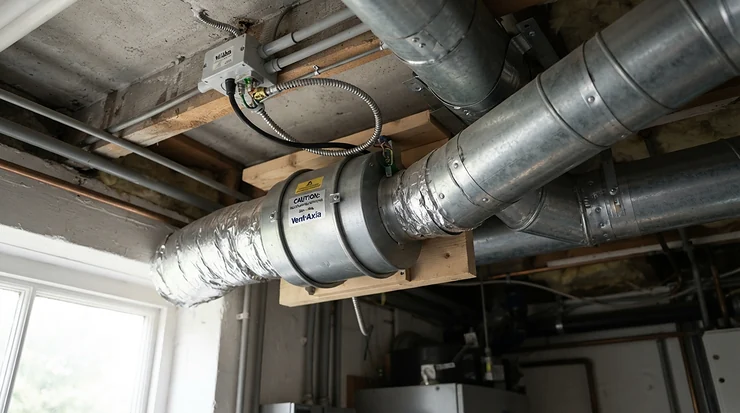
A TerraBloom 6 inch inline fan is a compact duct fan sized for a standard 6-inch (150 mm) duct. Depending on the model, it moves roughly 190 to 400 cubic feet of air per minute. People mostly use it for grow tent exhaust, attic or basement ventilation, and boosting weak register airflow.

Now the awkward part. The price Terrabloom 6 inch inline fan shoppers see on Amazon is not one number. It’s a moving target spread across at least five different 6-inch models, from a 188 CFM “low noise” blower to a 355 CFM silenced EC unit. Two listings both titled “TerraBloom 6 inch” can differ by a motor type, a warranty and a very real chunk of money.
This guide untangles that. You’ll get an honest read on what each model is, who it suits, and where the money goes over time. You’ll also get a toolkit for catching real discounts and dodging sketchy sellers. Fake reviews are a live problem, which is why the Federal Trade Commission finalized a rule banning fake reviews and testimonials. That rule took effect in 2024, and it’s a decent reminder to read ratings with a raised eyebrow.
One transparency note. Amazon prices swing constantly, so every figure below is a range or an estimated band, not a live quote. Where I couldn’t verify something, I say so. Check the current price before you buy.
Price Terrabloom 6 Inch Inline Fan: Quick Comparison of 7 Picks
Here’s the whole field on one screen. Five are TerraBloom models, and two are rivals included so the price context makes sense. Price bands marked “est.” are estimates built from TerraBloom’s own storefront and comparable retail listings, so treat them as starting points.
| Model | Airflow / Power | Noise Notes | Est. Price Band* | Best For |
|---|---|---|---|---|
| TerraBloom MFIF-6 | 395 CFM / 70W | Listing data shows a high figure | est. $60-$100 | Tight budgets needing max airflow |
| TerraBloom 240 CFM Metal Fan | 240 CFM | Not verified | est. $50-$90 | Small tents, register boosting |
| TerraBloom LN-DBF-6 | 188 CFM / 26W | Marketed as silent | est. $50-$80 | Quiet HVAC boosting |
| TerraBloom ECMF-150 | 288 CFM / 36W | 31 dBA listed | est. $100-$140 | Bedrooms, 24/7 efficiency |
| TerraBloom ECMF-150-S2 | 355 CFM / 45W | Silenced housing | est. $140-$200 | Quiet and filtered setups |
| AC Infinity CLOUDLINE PRO S6 | 402 CFM / 38W | 32 dBA | $120-$160 range | Best overall rival |
| VIVOSUN R6 | 390 CFM / 67W | 34 dB (roundups) | around $80 | Value-first buyers |
*Estimated bands, not live Amazon prices.
Look at the table and one thing jumps out: the cheapest sticker prices belong to the loudest, thirstiest motors. TerraBloom MFIF-6 and VIVOSUN R6 both promise roughly 390 CFM at a sub-$100 price, while the EC-motor fans cost more up front but sip power. If you run a fan around the clock, the cheap sticker may not be the cheap choice. Buyers who only need a few hours of daily airflow should lean toward the lower-cost AC units, and the AC Infinity CLOUDLINE PRO S6 shows what happens when you pay a bit more for both quiet and efficiency.
💬 Just one click — help others make better buying decisions too!😊
Top 7 Fans Around the Price Terrabloom 6 Inch Inline Fan: Expert Analysis
1. TerraBloom MFIF-6 — most airflow for the least money
The TerraBloom MFIF-6 (model TB-MFIF-6) is the budget muscle car of the lineup. It’s rated at 395 CFM from a 70W motor, with a 2400 RPM fan turning inside a lightweight 5.5-pound ABS housing. A built-in controller trims output down to roughly half, and the duct ends come off for cleaning.
What does that mean in practice? Free-air CFM is a best-case number. Add a carbon filter and a few bends of ducting and real flow drops, so the generous headroom is useful. The built-in dial matters too, because full blast is overkill for most tents. The catch is efficiency: 395 CFM at 70W works out to about 5.6 CFM per watt, the weakest ratio among the TerraBloom 6-inch models.
Based on the spec comparison, this fan suits anyone who wants strong exhaust now and plans to run it a few hours a day. Retailer mirror data shows an average near 4.4 stars across roughly a thousand ratings, though I couldn’t verify individual review text, so check the live page. The listing’s own noise field is high, which tells you not to put it next to a bed.
Pros:
- ✅ Highest airflow rating in the TerraBloom 6-inch range
- ✅ Built-in speed control, no add-on needed
- ✅ Light 5.5 lb body is easy to hang
Cons:
- ❌ Lowest CFM-per-watt of the TerraBloom group
- ❌ Listing noise data is poor for quiet rooms
Price: expect the budget bracket, roughly $60-$100 by my estimate, and verdict: strong value if you run it intermittently.

2. TerraBloom 240 CFM Metal Fan — steel shell for rougher spaces
The TerraBloom 240 CFM Metal Fan is the plain-spoken option. It’s made from paint-coated steel, ships with a pre-wired 6-foot grounded cord, carries an ETL listing and has a one-year warranty. TerraBloom pitches it for grow tent intake and exhaust, and as a register booster on 6-inch ducts.
Here’s the real-world meaning. 240 CFM is a comfortable match for a small tent, or for nudging air down a long, weak duct run. The steel casing also shrugs off a hot attic or a dusty garage better than a lightweight plastic body would, which is reasoning rather than a tested claim. You’re paying for sturdy basics, not for smart features.
Analytically, this is the pick for someone who wants a TerraBloom unit without paying EC prices and doesn’t need 400 CFM. I couldn’t verify a trustworthy aggregate of customer reviews for this specific listing, so read recent ratings and look for notes on noise and vibration before buying. The one-year warranty is half of what the EC models carry, which is worth weighing.
Pros:
- ✅ Sturdy steel body for garages and attics
- ✅ Grounded 6-foot cord, ready to plug in
- ✅ Handles tent and register-booster duty
Cons:
- ❌ Only a one-year warranty
- ❌ No built-in speed control to speak of
Price: likely budget tier, est. $50-$90, and verdict: fair value if you need durability over finesse.
3. TerraBloom LN-DBF-6 — quietest-minded budget blower
The TerraBloom LN-DBF-6 belongs to TerraBloom’s “Low Noise” series. It’s a mixed-flow blower rated at 188 CFM on only 26W, built for ducts, vents and quiet air movement rather than raw force. That works out to roughly 7.2 CFM per watt, noticeably better than the TerraBloom MFIF-6.
The practical reading is simple: this is a booster, not a tent-exhaust workhorse. 188 CFM won’t pull air through a thick carbon filter in a big tent, but it can lift flow in a stubborn bedroom duct or ventilate a closet quietly. Low wattage also keeps the running bill small.
Here’s what to weigh. If your goal is to move conditioned air to a back room, this is a calmer fit than a 400 CFM unit that would whistle through a register. If you’re venting a 4×4 tent, skip it. Verified customer review data wasn’t available to me, so I can’t summarize reviewer sentiment, and I’d rather say that than invent it. Look closely at the latest reviews for noise comments.
Pros:
- ✅ Only 26W power draw
- ✅ Quiet-focused mixed-flow design
- ✅ Good fit for HVAC register boosting
Cons:
- ❌ Lowest airflow of the group
- ❌ Too weak for filtered grow exhaust
Price: est. $50-$80, and verdict: good value for the right, quieter job.
4. TerraBloom ECMF-150 — the efficient, quiet all-rounder
The TerraBloom ECMF-150 is where TerraBloom gets serious. It uses a brushless EC motor, delivers 288 CFM from 36W, lists 31 dBA, runs on dual ball bearings and carries ETL listing plus a two-year warranty. Newer versions add an 8-speed digital controller and 110-220V support.
The meaning is practical. At about 8 CFM per watt, this fan costs less to run than the TerraBloom MFIF-6 even though it moves less air on paper. And 31 dBA is roughly library-quiet, which matters in a bedroom or apartment. One caution: sources list the ECMF-150 at both 288 CFM and about 351 CFM across versions, so confirm the exact model on the page before paying.
My read is this fan wins on total cost for anyone running 24/7. A third-party retailer page shows an average rating around 4.5 across several hundred reviews, though you should confirm it live. If you want to avoid noise complaints, this is the lower-risk TerraBloom 6-inch choice.
Pros:
- ✅ Efficient 36W EC motor
- ✅ 31 dBA listed noise level
- ✅ Two-year warranty
Cons:
- ❌ Higher upfront price
- ❌ Version differences cause spec confusion
Price: est. $100-$140, and verdict: best long-run value in the family.
5. TerraBloom ECMF-150-S2 — silenced, sealed and 2026-fresh
The TerraBloom ECMF-150-S2 is the 2026 silenced version. It pairs a brushless EC motor with a dual-jet impeller, a sound-insulating EPP housing and an IP 6X ingress rating, delivering about 355 CFM from 45W.
So what? That jump from 288 to 355 CFM matters when a carbon filter or long duct eats airflow. The insulated housing targets exactly the noise problem that haunts attic and bedroom installs, and the dust-tight rating adds durability in grubby spaces. Efficiency lands near 7.9 CFM per watt, so you keep most of the TerraBloom ECMF-150‘s thrift while gaining muscle.
The honest limitation is time. Because it’s a newer model, review history is thin, and I couldn’t verify a meaningful aggregate. Buy it if you need filtered airflow without the noise, and be ready to read the first wave of owner feedback carefully.
Pros:
- ✅ Roughly 355 CFM on 45W
- ✅ Sound-insulating EPP housing
- ✅ IP 6X dust-tight rating
Cons:
- ❌ Highest price in the TerraBloom 6-inch set
- ❌ Limited review history so far
Price: est. $140-$200, and verdict: worth it only if quiet airflow is non-negotiable.

6. AC Infinity CLOUDLINE PRO S6 — the benchmark every TerraBloom gets measured against
The AC Infinity CLOUDLINE PRO S6 is the rival to beat. It lists 402 CFM, 32 dBA, a 38W EC motor and a 10-speed controller. Several 2026 roundups name it their top pick and give it about 4.8 stars, though roundups are editorial opinions, so weigh them accordingly.
The meaning is blunt. 402 CFM at 38W is roughly 10.6 CFM per watt, better than every TerraBloom 6-inch model on paper. You get more air, less noise and a lower power bill. A retailer listing shows a street price well under the roughly $160 list, but availability can vary, and one retailer showed it backordered.
My analysis: if you’re comparing pure value over years, this fan makes the TerraBloom ECMF-150 work hard. TerraBloom’s counter-argument is price and the S2’s sealed, silenced housing. If you’re torn, price history tools (covered below) will tell you whether today’s cost is a real dip.
Pros:
- ✅ Best efficiency of the seven
- ✅ 32 dBA and 10-speed control
- ✅ Strong editorial reputation
Cons:
- ❌ Pricier than the budget AC fans
- ❌ Stock can run short at some retailers
Price: roughly $120-$160, and verdict: the value benchmark.
7. VIVOSUN R6 — budget challenger with a speed dial
The VIVOSUN R6 targets the same buyer as the TerraBloom MFIF-6. It lists 390 CFM, a 67W brushless motor, about 34 dB and a stepless controller on the cord. Roundups give it around 4.5 stars, and a major retailer listing puts it near $80.
In practice, you get nearly identical airflow to the TerraBloom MFIF-6 with a better-reviewed controller experience and a lower noise rating. The wattage is the giveaway: 67W is still an AC-class appetite, about 5.8 CFM per watt, so the savings are upfront rather than ongoing.
Analytically, think of it as the price anchor for the whole category. If a TerraBloom listing climbs well above it without delivering quieter or more efficient operation, the premium needs a reason. I wouldn’t call the R6 better, only a useful yardstick when you’re deciding whether a TerraBloom deal is actually a deal.
Pros:
- ✅ Around 390 CFM at a budget price
- ✅ Stepless speed control
- ✅ Roundup ratings around 4.5
Cons:
- ❌ Still a 67W power draw
- ❌ Noisier than EC-motor rivals
Price: around $80, and verdict: strong value for part-time use.
✨ Don’t Miss These Exclusive Deals!
🔍 Take your ventilation setup to the next level with these carefully selected fans. Click on any highlighted product name to check current pricing and availability. These picks will help you build airflow you can rely on, quietly and efficiently!
Terrabloom 6 Inch Price Comparison: What the Spread Really Tells You
A proper Terrabloom 6 inch price comparison isn’t about the sticker alone. It’s about what each dollar buys in airflow, efficiency and warranty. The figures below use midpoint estimates from the bands above, so read the “dollars per CFM” column as a rough guide.
| Model | CFM per Watt | Warranty Notes | Rough $ per CFM (est.) | Best For |
|---|---|---|---|---|
| TerraBloom MFIF-6 | about 5.6 | Check listing | about $0.20 | Cheap max airflow |
| TerraBloom 240 CFM Metal Fan | not listed | 1 year | about $0.29 | Sturdy basic duty |
| TerraBloom LN-DBF-6 | about 7.2 | Check listing | about $0.35 | Quiet boosting |
| TerraBloom ECMF-150 | about 8.0 | 2 years | about $0.42 | 24/7 operation |
| TerraBloom ECMF-150-S2 | about 7.9 | Check listing | about $0.48 | Silenced filtered airflow |
| AC Infinity CLOUDLINE PRO S6 | about 10.6 | Check listing | about $0.35 | Overall value |
| VIVOSUN R6 | about 5.8 | Check listing | about $0.21 | Budget buyers |
Read it this way: TerraBloom MFIF-6 and VIVOSUN R6 are the cheapest per unit of airflow, but they’re also the thirstiest. The TerraBloom ECMF-150 costs about double per CFM, and it earns that back through lower power use and a longer warranty. Meanwhile, the AC Infinity CLOUDLINE PRO S6 delivers the best mix of efficiency and moderate cost per CFM, which is exactly why it keeps topping roundups.
The takeaway for your price Terrabloom 6 inch inline fan research: decide whether you’re optimizing the purchase price or the ownership cost, because the two lists rank these fans differently.

Cheapest Terrabloom 6 Inch Fan: Where the Real Floor Is
The cheapest Terrabloom 6 inch fan is, on likely sticker price, the TerraBloom 240 CFM Metal Fan or the TerraBloom LN-DBF-6. Both sit in the entry bracket. But “cheapest” hides a trap: low price usually means low airflow, so you may buy a fan too weak for the job and then buy again.
Here’s a cleaner way to hunt for the cheapest Terrabloom 6 inch fan that still works. First, define the airflow you need. A small tent or a single weak register might be fine with 188-240 CFM. A tent with a thick carbon filter and a few duct bends needs more headroom, which pushes you toward the TerraBloom MFIF-6.
Second, compare against cheap rivals. The VIVOSUN R6 sits around $80, and a smaller VIVOSUN 6 Inch 240 CFM model shows up in 2026 roundups as a budget pick. If a TerraBloom listing can’t undercut or beat those on features, it isn’t the floor.
Third, count the extras. Some fans need a separate speed controller, so a cheaper sticker can end up costing more. For most people, the cheapest Terrabloom 6 inch fan worth owning is whichever one fits the airflow target without an add-on.
Terrabloom Fan Discount Deal: How to Spot a Real One
A true Terrabloom fan discount deal means the price is lower than it normally sits, not lower than a crossed-out “was” number. Sellers can inflate list prices so a normal price looks like a bargain. That’s why a Terrabloom fan discount deal needs a reality check against history.
Seasonal timing helps. Black Friday lands on November 27, 2026, with Cyber Monday on November 30. Amazon hadn’t published its consumer schedule at the time of research, though seller guidance points to a Black Friday Week stretching across late November. Expect deals to start earlier than the Friday itself, and don’t assume any specific TerraBloom model will be marked down.
Watch for off-Amazon flash sales too. A TerraBloom 4-inch unit appeared on a flash-sale site at a discounted price and was already sold out, a reminder that real bargains vanish fast. A marketplace seller’s “15% off” label on a pricier silenced model likewise only matters if the “was” price was real.
Any Terrabloom fan discount deal worth taking passes three checks: it’s lower than the recent price range, the seller is trustworthy, and the model matches the specs you need. Never assume that buying through any particular link lands a lower price, because it doesn’t.
Amazon Deal Alerts: Set Them Once, Let Them Work
Amazon deal alerts are the lazy person’s superpower. Instead of refreshing a listing for two weeks, you tell a tracker what price you’d pay and let it ping you. This is especially useful for the price Terrabloom 6 inch inline fan, because several models sit close together in price and one can dip while another doesn’t.
The two big names are CamelCamelCamel and Keepa. CamelCamelCamel is free and offers price watches you can create just above its price history graph. Keepa’s free plan lets you track deals, receive price alerts and use browser plugins, with deeper features behind a paywall.
Practical setup is quick:
- Paste each fan’s listing URL into the tracker.
- Set the alert slightly above the lowest historical price, not at it, so the alert actually fires.
- Add two or three models, such as the TerraBloom ECMF-150, TerraBloom MFIF-6 and AC Infinity CLOUDLINE PRO S6, so you compare dips side by side.
- Confirm the seller before you click buy (more on that shortly).
One honest caveat: Amazon deal alerts tell you the price moved, not that the product is right for you. Pair them with the specs in this guide.
Price History Tools: Keepa and CamelCamelCamel in Plain English
Price history tools turn guesswork into a chart. Both CamelCamelCamel and Keepa plot an item’s price over time, and both offer browser add-ons. The Yahoo Tech walkthrough on checking Amazon price history covers the basic steps, including using the Camelizer extension to see the graph directly on a product page.
How do they differ? Reviewers describe CamelCamelCamel as simpler, with high, low and average views that suit casual shoppers. Keepa goes deeper with more detailed charts, flexible alerts and a deals section, but it can feel busier. Pick one, or install both if you’re tracking several fans.
Here’s how to read a chart for a fan. Look at the three-to-six-month range rather than the all-time low, which may be a stale flash sale. Note whether the price is steady or bounces constantly, because constant bouncing means patience will probably pay. And spot sudden jumps, which can signal a new model version replacing the old one, a real risk when TerraBloom sells multiple variants under similar titles.
Use price history tools as a sanity check on every Terrabloom fan discount deal. If the “deal” is just the normal price, the chart will show it.
Seller Verification: Who Is Actually Selling You This Fan?
Seller verification takes thirty seconds and prevents most unpleasant surprises. On an Amazon product page, look just below the Add to Cart and Buy Now buttons for the “Ships from” and “Sold by” lines. How-To Geek explains how to tell if you’re buying from a third-party seller, including the difference between Amazon-sold, third-party fulfilled by Amazon, and third-party shipped items.
Why bother? “Fulfilled by Amazon” only describes logistics. It doesn’t guarantee the seller is trustworthy or the product genuine. Third-party sellers can be perfectly legitimate, but counterfeits and mislabeled variants tend to live in that group.
Run this quick seller verification routine:
- Check who sells the item, and whether it matches the brand’s own storefront or an established reseller.
- Compare the model number in the title with the spec bullets. TerraBloom’s multiple 6-inch variants make mix-ups easy.
- Skim recent reviews for complaints about the wrong model arriving.
- Be suspicious of a price far below every other listing.
- Keep your order records, and note that Amazon’s guarantee covers third-party purchases that don’t match their description.
CNBC’s tips for spotting fake online reviews add useful red flags: bursts of vague five-star reviews posted in a short window, and reviewers with only one review ever.

How to Choose a 6 Inch Inline Fan: 7 Steps With Expert Reasoning
Picking a fan is easier when you work through the decision in order. Follow these steps for any price Terrabloom 6 inch inline fan decision.
- Define the job. Tent exhaust, attic ventilation and register boosting need different airflow, so decide first and shop second.
- Set an airflow target with headroom. CFM ratings are best-case, and filters and bends cut real flow, so aim for 20-30% above the minimum you calculated.
- Choose a motor type. AC motors cost less upfront, while EC motors run quieter and cheaper over time.
- Check the noise rating. Anything near 30-34 dBA is calm; unrated or high figures deserve skepticism.
- Look for speed control. A built-in dial or included controller beats buying one separately.
- Confirm certifications and warranty. ETL listing and a two-year warranty signal a more serious product.
- Verify price and seller. Use alerts, history charts and seller checks before you buy.
If you skip step two, you’ll likely buy a fan that technically meets the spec and underperforms in your actual duct run.
Features That Actually Matter (And Those That Don’t)
Marketing loves a big CFM number, but CFM alone is only half the story. For a primer on the unit itself, Carrier’s explanation of CFM explains how airflow depends on duct area and velocity, and why restrictions in the ductwork drop real airflow below the rated figure.
Features that matter:
- Efficiency (CFM per watt). It predicts your running cost far better than headline airflow.
- Noise rating. The difference between 31 dBA and a loud AC hum decides whether you keep the fan.
- Speed control. Dialing down is how you hit quiet, comfortable airflow.
- Warranty length. Two years versus one is a cheap insurance policy.
Features that matter less:
- Peak CFM beyond your need. Surplus capacity you never use costs money.
- App connectivity. Smart controls look appealing, but a simple dial does the job for most people.
- Fancy finishes. Black paint doesn’t move air.
Notice the pattern: the TerraBloom ECMF-150 and AC Infinity CLOUDLINE PRO S6 win on the first four, while the TerraBloom MFIF-6 wins on the one that matters least once you’ve met your airflow target.
Long-Term Cost & Maintenance: The Math Behind the Sticker
Here’s an illustrative calculation. Suppose you run a fan 24 hours a day. A 70W unit like the TerraBloom MFIF-6 uses about 613 kWh a year, and a 36W unit like the TerraBloom ECMF-150 uses about 315 kWh. The difference is roughly 298 kWh. At an assumed 17 cents per kWh, that’s about $50 a year, and your local rate will change the result.
| Factor | AC-Motor Fan (e.g., TerraBloom MFIF-6) | EC-Motor Fan (e.g., TerraBloom ECMF-150) | Best For |
|---|---|---|---|
| Upfront cost | Lower | Higher | AC for tight budgets |
| Running cost (24/7) | Higher | Lower | EC for constant use |
| Noise | Typically louder | Typically quieter | EC for living spaces |
| Speed range | Often limited | Usually wider | EC for fine control |
Looking at the comparison, the EC premium of perhaps $40-$60 can pay for itself in about a year of continuous operation. If your fan runs only a few hours a day, the math flips and the cheaper AC unit wins.
Maintenance is light. Clean the intake and removable duct ends every few months, check duct connections for leaks, and inspect for dust buildup. EC models should stay in air no hotter than 140°F for extended periods, according to TerraBloom’s own guidance.
Real-World Scenarios: Matching the Fan to the Person
The renter with a small tent. She has a 2×4 tent, a bedroom that must stay quiet and a budget that stretches a little. Based on the numbers, the TerraBloom ECMF-150 at 31 dBA is the natural fit, running on a dimmable controller most of the day. If the budget is truly tight, the TerraBloom LN-DBF-6 can work for a very small tent, though airflow is marginal with a filter.
The homeowner with a stuffy bonus room. He needs to push air through a long, weak duct. The TerraBloom LN-DBF-6 or TerraBloom 240 CFM Metal Fan can act as a booster for a modest cost. Because noise matters in a living area, the quieter option wins.
The workshop builder on a shoestring. He wants strong exhaust for a basement bench and plans to run the fan only during work hours. The TerraBloom MFIF-6 or VIVOSUN R6 give him around 390 CFM for under $100, and part-time use keeps the power cost modest.
The “money no object” shopper. If silence and sealed housing matter more than price, the TerraBloom ECMF-150-S2 or the AC Infinity CLOUDLINE PRO S6 deserve a hard look.
The pattern: the more hours the fan runs and the closer it sits to a bed, the more EC-class efficiency and noise performance justify a higher price.
Practical Setup Guide: Your First 30 Days With a 6 Inch Inline Fan
Buying the right fan is half the win. Installing it well gets you the rest.
Setup basics:
- Mind the airflow arrow. The TerraBloom MFIF-6 includes a mounting bracket that indicates airflow direction, so match it to your exhaust or intake plan.
- Pull through the filter. In a carbon-filter setup, place the fan after the filter so it pulls air through rather than pushing it.
- Keep ducting taut. Slack flex duct, sharp bends and crushed sections choke airflow and cost you the CFM you paid for.
- Hang it loose, not rigid. Straps or a hanger reduce vibration transfer to walls.
First-30-day habits:
- Start at a low speed and raise it only until the temperature and humidity are where you want them.
- Listen for rattles in week one, and tighten clamps and hangers before they loosen further.
- Check duct joints for leaks with a hand held near the seams.
- Wipe dust from intake areas.
- Set up your Amazon deal alerts for a spare fan or an upgrade, since a backup is cheap insurance.
Common mistakes include running full speed 24/7 “just in case,” forgetting that a controller disconnect on EC models can send the fan to 100%, and skipping the model-number check at delivery.

FAQ: Price Terrabloom 6 Inch Inline Fan Questions
❓ How much does a TerraBloom 6 inch inline fan usually cost?
❓ Is a TerraBloom 6 inch inline fan better than an AC Infinity fan?
❓ Where can I find the cheapest TerraBloom 6 inch inline fan right now?
❓ Do TerraBloom fans go on sale for Black Friday?
❓ How can I tell if a TerraBloom listing is genuine?
Conclusion: Buy for the Hours You’ll Run It, Not for the Sticker
The price Terrabloom 6 inch inline fan decision comes down to one honest question: how many hours a day will this thing run? For part-time duty, the TerraBloom MFIF-6 and VIVOSUN R6 give you roughly 390 CFM for an entry-level budget. For round-the-clock operation, the TerraBloom ECMF-150 and AC Infinity CLOUDLINE PRO S6 repay their higher price in power savings and peace and quiet. The TerraBloom ECMF-150-S2 is the specialist pick when noise and sealing matter most, and the TerraBloom LN-DBF-6 and TerraBloom 240 CFM Metal Fan cover lighter jobs.
Whatever you choose, shop like a pro. Check the price history, set your Amazon deal alerts, run a quick seller verification and confirm the exact model number before checkout. Do that, and any Terrabloom fan discount deal you take will be a genuine one.
Recommended for You
- Vivosun 6 Inch Inline Fan With Speed Controller: 7 Best Picks 2026
- Vivosun 6 Inch Fan For Basement Grow Room: 7 Proven Picks 2026
- Vivosun 6 Inch Inline Fan Noise Level: Honest 7-Fan Guide 2026
Disclaimer: This article contains affiliate links. As an Amazon Associate, I earn from qualifying purchases. If you purchase products through these links, we may earn a small commission at no additional cost to you.
✨ Found this helpful? Share it with your friends! 💬🤗
