
In This Article
If you’ve ever watched $300 worth of plants wilt because your cheap tent leaked light like a cracked disco ball, you understand why quality grow tent selection is not a place to cut corners. The difference between a mediocre tent and a genuinely well-built one isn’t marketing copy — it’s canvas denier ratings, zipper tooth density, pole diameter, and whether the reflective mylar was actually lab-tested or just called lab-tested on the packaging.
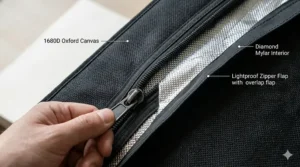
A quality grow tent is essentially a sealed, light-controlled microclimate you build inside your home. It’s the chassis around which your entire indoor garden operates. Get it wrong and no amount of fancy LED lighting will save you — light leaks stress photoperiod plants, thin canvas creates temperature swings, and flimsy poles mean your equipment comes crashing down mid-flower cycle. Get it right, and you’re looking at consistent harvests, dialed-in climate control, and a setup that pays for itself in your very first cycle.
In 2026, the indoor growing market has matured dramatically. According to the American Horticultural Society, indoor food production and hobby horticulture have both surged over the past five years, driven by urban gardeners, home herb enthusiasts, and small-scale cultivators who’ve discovered that a spare bedroom or basement can become surprisingly productive real estate. Smart grow tents now integrate with WiFi controllers, app-based automation, and UIS (Unified Intelligent Systems) ecosystems that would have seemed science fiction just a decade ago.
This guide reviews 7 real, currently available quality grow tents on Amazon — covering everything from budget-friendly beginner options to industrial-grade rigs for serious growers — so you can make the right call for your space, your plants, and your wallet.
Quick Comparison: 7 Best Quality Grow Tents of 2026
| Product | Size | Canvas | Pole Diameter | Best For |
|---|---|---|---|---|
| AC Infinity CLOUDLAB 844 | 4×4 ft | 2000D | 22mm steel | Overall best value/quality |
| Gorilla Grow Tent Pro 4×4 | 4×4 ft | 1680D | 19mm all-steel | Heavy equipment, premium builds |
| MARS HYDRO 4×4 Advanced | 4×4 ft | 1680D | 0.8mm steel | Mid-range with great reflectivity |
| VIVOSUN S448 | 4×4 ft | 600D | Metal | Budget-friendly beginner |
| Spider Farmer 4×4 | 4×4 ft | 1680D | Metal | Intermediate, SF ecosystem |
| Gorilla Grow Tent 2×2.5 | 2×2.5 ft | 1680D | All-steel | Small-space, closet grows |
| TopoLite 3×3 | 3×3 ft | 600D | 16mm metal | Ultra-budget starter |
Table Analysis: Looking at this spread, canvas denier is where the biggest quality gap lives. The 2000D canvas on the CLOUDLAB 844 isn’t just a number — denser weave means better light-blocking, superior insulation, and meaningfully longer lifespan. The budget options at 600D will work fine for beginners on a tight budget, but if you’re investing in a serious lighting and ventilation setup, the tent itself shouldn’t be the weak link. Pole diameter matters most once you’re hanging multiple heavy items — anything under 19mm will flex noticeably under combined LED + filter + fan loads.
💬 Just one click — help others make better buying decisions too! 😊
Top 7 Quality Grow Tents: Expert Analysis
1. AC Infinity CLOUDLAB 844 — Best Overall Quality Grow Tent (4×4, 48″×48″×80″)
If I could only recommend one quality grow tent for 2026, this would be the one — and I say that having spent time with most of the competition. The CLOUDLAB 844 hits a sweet spot that’s genuinely rare: premium-grade materials without the premium-grade markup that pushes some competitors into “serious commitment” price territory.
Construction: The 2000D oxford canvas is the thickest in its price class, with reinforced corners and a 500G light-proof inner layer. What does 2000D actually mean for you? It means that when you check your tent at 3 AM (yes, we’ve all done it), you won’t find any of those pinhole light leaks along the zipper seams that plague cheaper options. The 22mm diameter steel poles are 50% thicker than the standard 16mm you’ll find in most grow tents — they support up to 250 lbs, which means you can hang a full LED panel, inline fan, carbon filter, and humidifier simultaneously without the structure creaking.
The lab-tested diamond mylar interior — verified with an Agilent UV-Vis-NIR Spectrophotometer — reflects light more efficiently than standard mylar coatings. That means your plants actually see more usable photons from the same wattage, translating directly to improved canopy density and yield over time.
Who it’s for: This is the tent for the serious hobbyist who’s done their first grow or two and is ready to build a legitimate setup. It’s also a smart pick for someone entering the space who wants to “buy once, cry once” rather than upgrade 18 months later. The controller mounting plate with lightproof cable passthrough is a detail that matters enormously once you’re running an AC Infinity fan system — clean cable management isn’t vanity, it’s safety.
Customer feedback: Reviewers consistently praise the zipper quality and pole thickness, with many noting they’ve switched from cheaper brands specifically because of light leak frustration. A common refrain: “Should have bought this first.”
✅ 2000D canvas — best light-proofing in class
✅ 22mm steel poles, 250 lb hang capacity
✅ Controller mount plate + SBS™ zippers included
❌ Heavier and bulkier to store/move than budget options
❌ Premium price vs. 600D alternatives
Price range: Mid-to-premium range, around $150–$200 for the 4×4.
2. Gorilla Grow Tent Pro 4×4 — Best for Heavy Equipment & Professional Grows
Gorilla is the name that serious growers drop when asked what’s on their wish list. There’s a reason. The Gorilla Grow Tent Pro 4×4 (48″×48″, adjustable from 6’11” up to 7’11” with the included extension kit) builds on a philosophy that most tent manufacturers skip entirely: the structure should outlast every piece of equipment inside it.
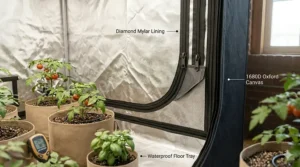
Construction: The 1680D canvas is thick and light-tight, but what really sets this tent apart is the all-steel frame architecture. Every connector, every pole, every hanging bar — steel, not aluminum, not plastic. The result is a 300 lb hang capacity that makes every other tent in this guide look timid by comparison. You could hang two large LED panels, a carbon filter, two inline fans, AND a clip fan and still not push this frame. The patented height-adjustable design is a legitimately useful feature — not marketing fluff — particularly for photoperiod growers who need vertical clearance for flowering stretches.
The EZ Clean diamond reflective interior wipes down cleanly between grows, a detail that sounds minor until you’re dealing with your second or third run and realize that residue buildup on reflective walls noticeably reduces light efficiency over time.
Who it’s for: Commercial-minded hobbyists, multiple-light setups (two quantum boards in a 4×4 is not unusual), and anyone who has ever had a tent pole collapse on a mature crop and swore “never again.” This is also the tent for growers who run heavy hydro systems — the floor tray and structural integrity handle weight that lighter tents simply won’t.
Customer feedback: Long-term owners (5+ years of use) are a common sight in reviews. The most repeated compliment is durability — this tent holds up to years of assembly/disassembly cycles without the zippers degrading or poles bending.
✅ 300 lb hang capacity — the strongest in this guide
✅ Height-adjustable up to 7’11” with extension kit
✅ All-steel frame, commercial-grade build
❌ Highest price in this guide — a meaningful investment
❌ Heavier and less easy to move than aluminum-frame tents
Price range: Premium tier, generally in the $300–$450 range.
3. MARS HYDRO 4×4 Advanced Grow Tent — Best Mid-Range Performance (48″×48″×80″)
MARS HYDRO has been in the growing game since 2009, and their standalone 4×4 Advanced Grow Tent reflects that institutional experience in a product that competes well against more expensive options. This is the tent that sits right at the intersection of price and performance — not the cheapest, not the priciest, but consistently reliable.
Construction: The 1680D diamond mylar canvas delivers 25% more PPFD (photosynthetic photon flux density) than 600D alternatives — meaning your lights work harder inside this tent than they would in a budget option of identical wattage. In practical terms: same light, more growth. The metal frame uses 0.8mm-thick steel poles (vs. 0.6mm in cheaper alternatives), supports up to 110 lbs of hanging equipment, and features an exclusive shade cloth stitched between the zipper and canvas specifically to eliminate pinhole light leaks at that notoriously vulnerable seam.
The dual-layer black lining on the heavy-duty metal zippers creates a genuinely lightproof seal that holds up to repeated cycling. One thing the spec sheet won’t tell you: the smooth-gliding zippers on this tent are quieter than competitors, which matters if your grow room shares a wall with a bedroom.
Who it’s for: The intermediate grower who’s outgrown their starter tent but doesn’t need the top-of-the-line Gorilla investment. Also an excellent choice for growers who are already in the MARS HYDRO lighting ecosystem — the compatibility with TSW2000, FC4800, and FC-E4800 fixtures means your equipment plays well together without adapter headaches.
Customer feedback: Buyers frequently compare it favorably to more expensive tents, highlighting the canvas quality and zipper reliability. A few noted the assembly instructions could be cleaner, but the hardware itself draws consistent praise.
✅ 1680D canvas — 25% better light reflection vs. 600D
✅ Shade cloth at zipper seam eliminates pinhole leaks
✅ Compatible with FC4800/FC-E4800 MARS ecosystem
❌ 110 lb hang capacity — less than CLOUDLAB or Gorilla
❌ Assembly instructions not always intuitive
Price range: Mid-range, around $80–$120 for the tent alone.
4. VIVOSUN S448 4×4 Grow Tent — Best Budget Quality Grow Tent for Beginners (48″×48″×80″)
VIVOSUN is the brand that taught a generation of first-time indoor growers how to start without bankrupting themselves. The S448 remains one of the best-selling grow tents on Amazon for a simple reason: it works, it’s easy to set up, and it won’t make you feel like you’ve made an expensive mistake on your first attempt.
Construction: Built with 600D Oxford canvas lined with 100%-reflective mylar walls and a reinforced PE inner layer, this tent does what it needs to do for the price. The upgraded black inner lining on the zippers — a detail VIVOSUN added based on customer feedback — meaningfully reduces light leakage compared to earlier models. Metal poles support up to 100 lbs on the top bars, which is enough for a single LED panel, fan, and filter combo (the standard beginner configuration). Double-stitched seams and 340g high-density fabric make this more tear-resistant than many competitors at this price point.
Where the S448 shines brightest is in the setup experience. VIVOSUN’s tool-free corner connectors and smooth-gliding zippers on multiple access doors make this a tent a first-timer can assemble alone in under 45 minutes. That matters more than people realize — a frustrating assembly experience at hour three of fighting with a stubborn frame is not how you want to start your growing journey.
Who it’s for: First-time indoor growers, students experimenting with herbs or vegetables, and anyone who wants to test the hobby before committing to the premium tier. The S448 pairs naturally with the wider VIVOSUN ecosystem — their GrowHub controllers and AeroZesh fans integrate seamlessly — so your upgrade path is clearly mapped if you want to level up later.
Customer feedback: Over 30,000 reviews with consistently high ratings. Most-praised attributes: price-to-quality ratio, ease of assembly, and the observation window that lets you check on plants without disturbing the internal climate.
✅ Easy assembly, tool-free corner connectors
✅ Observation window + floor tray included
✅ VIVOSUN GrowHub ecosystem compatible
❌ 600D canvas — thinner and less light-proof than 1680D/2000D options
❌ 100 lb hang capacity limits heavy equipment configurations
Price range: Budget-friendly, typically in the $60–$100 range.
5. Spider Farmer 4×4 Grow Tent — Best for the Spider Farmer Ecosystem (48″×48″×80″)
Spider Farmer has earned its reputation as a premium mid-tier brand, and their 4×4 tent carries the same design philosophy as their lighting lineup: thoughtful features, solid materials, and an integration-first approach that rewards growers who build within their ecosystem.
Construction: The 1680D thickened mylar canvas is genuinely light-proof, double-stitched, and built to last multiple grow cycles. The enlarged observation window — measurably bigger than competitors’ standard windows — gives you a genuine view of your canopy without compromising the tent’s environmental seal. The integrated controller hook (compatible with Spider Farmer’s GGS controller system) keeps your equipment tidy without requiring improvised mounting solutions. What most buyers overlook about this model is the removable floor tray design: it’s larger and deeper than VIVOSUN’s equivalent, which means real spill containment when you’re working with hydroponic systems or fabric pots that moisture-manage aggressively.
The metal pole construction handles typical hobby loads well, and the zipper quality is consistently smooth across the tent’s lifespan — a detail that sounds minor until you’ve dealt with a zipper that sticks at 10 PM during a feeding session.
Who it’s for: Growers already running or planning to run Spider Farmer lighting (SF4000, SE5000, G5000) will find the equipment compatibility genuinely useful. It’s also a strong choice for anyone who values the wider, cleaner observation window and the GGS smart hook integration.
Customer feedback: Buyers frequently highlight the canvas quality and the enlarged window as standout features. A consistent note: the tent assembles faster than expected, and the zippers remain smooth even after dozens of open/close cycles.
✅ 1680D canvas with enlarged observation window
✅ GGS controller hook integration
✅ Deep removable floor tray for hydro setups
❌ Ecosystem-specific features less useful outside Spider Farmer gear
❌ Pole diameter not as thick as CLOUDLAB or Gorilla
Price range: Mid-range, around $80–$130.
6. Gorilla Grow Tent 2×2.5 — Best Small-Space Quality Grow Tent
The fact that Gorilla makes a 2×2.5 tent at all says something interesting about where indoor growing has gone. Not everyone has a spare 4×4 to dedicate to plants — but Gorilla correctly identified that small-space growers are often the most committed, and they deserve proper equipment too.
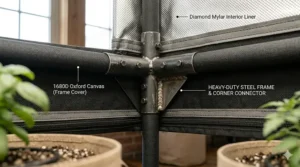
Construction: The 2×2.5 ft footprint (roughly 24″×30″, 6’6″ tall) is built to the same standard as Gorilla’s flagship line: 1680D canvas, all-steel frame, 300 lb hang capacity. Yes — this small tent has the same structural integrity as the professional 4×4. That means even in a compact configuration, you can hang a properly sized LED, fan, and filter without any structural anxiety. The extra 6″ of depth over a standard 2×2 solves the “can’t-reach-the-back-corner” problem that plagues square small tents — a detail that sounds trivial until you’re trying to water a plant wedged into a corner.
The tight-sealing zippers are built to Gorilla’s standard (among the best in the industry), and the light-proof 1680D canvas is overkill for a tent this size — in the best possible way.
Who it’s for: Closet growers, apartment dwellers, anyone managing one or two photoperiod plants or three to four autos in a tight footprint. Also excellent as a dedicated clone or propagation tent alongside a larger primary flowering space.
Customer feedback: Reviewers specifically praise the build quality relative to size — the consistent note is that this feels like a real tent, not a compromised small version of one.
✅ 300 lb hang capacity even in 2×2.5 footprint
✅ Gorilla-grade 1680D canvas and steel frame
✅ Extra depth vs. standard 2×2 solves corner-access issues
❌ Limited floor space — planning equipment layout requires care
❌ Premium price for a small tent
Price range: Mid-to-premium, around $150–$200 for the 2×2.5 size.
7. TopoLite 3×3 Grow Tent — Best Ultra-Budget Quality Grow Tent (36″×36″×72″)
Here’s the honest truth about TopoLite: this isn’t the sexiest tent in the guide. It doesn’t have a smart mounting plate or lab-tested mylar or 22mm steel poles. What it does have is 96% reflective diamond mylar, 600D lightproof Oxford cloth, 16mm white-paint-coated metal rods, and a price that makes indoor growing genuinely accessible to anyone. And in 2026, that still counts for a lot.
Construction: The 600D canvas is functional — it blocks light adequately for the vast majority of grow applications, particularly with herbs, vegetables, and low-light-sensitive plants. The 16mm metal rods with sturdy plastic corner connectors create a stable frame for single-light setups (the brand recommends LED 300W-600W with a 4″ filter-fan ventilation kit for the 3×3). The 96% reflective mylar interior punches above its weight, bouncing light efficiently around a canopy that doesn’t need the industrial-grade uniformity a 2000D tent provides. Tool-free installation means this goes up in 30 minutes, flat.
What the spec sheet won’t tell you: the plastic connectors are actually more stable in some configurations than metal ones, because plastic has slight flex tolerance that absorbs vibration from inline fans without the rattling that rigid metal connectors sometimes produce.
Who it’s for: The grower on a genuine budget, trying the hobby for the first time, or needing a secondary propagation tent without spending serious money. Also excellent for vegetable gardeners, herb enthusiasts, and anyone whose primary concern is extending a growing season indoors rather than maximizing cannabis yield.
Customer feedback: Budget-focused buyers consistently express pleasant surprise at the build quality for the price. The most common note: “Expected worse, got better.”
✅ Ultra-affordable — lowest price in this guide
✅ 96% reflective diamond mylar interior
✅ Tool-free assembly, multiple size options available
❌ 600D canvas — thinnest in this guide, more prone to light leaks over time
❌ Plastic corner connectors — functional but less premium than all-metal
Price range: Budget tier, typically $40–$65.
How to Set Up Your Quality Grow Tent for Maximum Performance (Practical Guide)
Getting the tent is step one. Getting the most out of it is where most new growers leave yield on the table. Here’s what the product listings won’t tell you.
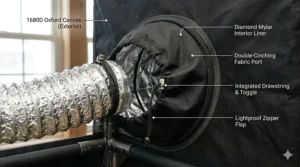
Days 1–3: Assembly and sealing. When you first assemble your tent, run it dark for a full 24 hours before introducing plants. Stand outside with the interior light on and look for any pinhole leaks along zipper seams, duct port edges, or anywhere fabric meets frame. A piece of black electrical tape fixes most micro-leaks in under five minutes. Doing this early prevents the “why aren’t my plants flowering?” mystery that plagues beginner growers who don’t realize their 12/12 light schedule is being disrupted by ambient light intrusion.
Ventilation math: A common mistake is undersizing the inline fan. Your fan should turn over the entire air volume of the tent at least once per minute — more often in hot weather. A 4×4×7 tent holds roughly 112 cubic feet of air. A 4″ fan rated at 200 CFM will cycle it approximately every 33 seconds — solid. Size up if you’re in a warm climate or running high-wattage HID lighting.
Humidity management: During the vegetative stage, target 50–70% relative humidity. Flowering plants prefer 40–50%. Most beginner growers learn this the hard way when powdery mildew arrives uninvited. A digital hygrometer (under $15) mounted inside at canopy height — not clipped to the tent wall — gives you accurate readings. If you’re running a quality grow tent with good insulation like the CLOUDLAB 844 or Gorilla Pro, your humidity stays far more stable between checks.
Avoid the floor heating problem. Tents placed directly on cold concrete floors create a temperature gradient that stresses root zones. A simple $15 rubber mat under the tent floor tray creates meaningful insulation. This single tweak can improve root health noticeably in cooler climates.
Matching Your Grow Tent to Your Situation: Real-World Scenarios
Not all growers are the same. Here’s how three different grower profiles map to the tents in this guide.
Profile 1 — The Urban Herb Enthusiast. Sarah lives in a studio apartment in Chicago. She wants year-round basil, cherry tomatoes, and maybe some spinach. She has a 3×3 corner of her bedroom available, a $150 total budget, and no interest in complex automation. Best fit: TopoLite 3×3. It fits her space, respects her budget, and handles vegetables beautifully. She pairs it with a simple 100W quantum board and a 4″ clip fan. Done.
Profile 2 — The Intermediate Hobbyist. Marcus completed two successful grows with a budget tent and is ready to take quality seriously. He runs a 4×4 space in his basement, wants to hang a 480W LED along with a proper AC Infinity fan-filter combo, and values smart ecosystem integration. Best fit: AC Infinity CLOUDLAB 844. The 22mm poles handle his equipment without flex, the controller mount plate integrates cleanly with his CLOUDLAB fan system, and the 2000D canvas eliminates the light leak frustrations he had with his previous tent.
Profile 3 — The Serious Cultivator. Diana runs a two-tent system — a 4×4 flowering tent and a smaller propagation space. She’s hanging two quantum boards in the flower tent and needs maximum structural integrity. She also wants height flexibility for training heavy phenotypes. Best fit: Gorilla Grow Tent Pro 4×4 for flower, Gorilla 2×2.5 for propagation. The 300 lb hang capacity handles her dual-light configuration, and the height-adjustable design gives her the clearance she needs during late-flower stretch.
✨ Don’t Miss These Exclusive Deals!
🔍 Take your indoor garden to the next level with these carefully selected quality grow tents. Click on any highlighted product to check current pricing and availability. These tents will help you create a consistent, high-yield growing environment your plants will love!
How to Choose a Quality Grow Tent: 7 Criteria That Actually Matter
There is a lot of noise in the grow tent market. Here’s what actually separates a great tent from a mediocre one, ranked by real-world importance.
1. Canvas denier rating. This number — 600D, 1680D, 2000D — tells you how densely woven the fabric is. Higher denier means better light-proofing, better insulation, and longer lifespan. For a serious setup, don’t go below 1680D. For a simple herb garden, 600D is sufficient.
2. Pole diameter and material. Standard poles run 16mm aluminum. Step up to 19–22mm steel (Gorilla, AC Infinity) and your hang capacity roughly doubles. If you’re running a combined LED + carbon filter + fan + humidifier load, this matters enormously — frame flex under heavy loads creates structural fatigue over time.
3. Zipper quality. The zipper is the most-used mechanical component on your tent. Cheap zippers fail within 12–18 months of daily use. Look for metal teeth (not plastic), double-layer black lining backing, and smooth operation under resistance. If a tent has a flimsy zipper, everything else is irrelevant.
4. Reflectivity — lab-tested vs. claimed. “Highly reflective mylar” appears on every tent listing ever written. What matters is whether that claim is verified. AC Infinity uses Agilent spectrophotometer testing. Most budget brands use a number they chose themselves. Higher verified reflectivity means your existing lights deliver more photons to your canopy — a real, measurable yield difference.
5. Duct port count and placement. You need at minimum: one top exhaust port (heat rises), one or two side intake ports with mesh screens, and a bottom floor port for fresh-air intake. Tents with four to six ports give you flexibility to reconfigure airflow as your setup evolves.
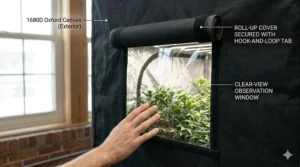
6. Observation window size and design. Checking on your plants without opening the tent — and triggering a light or humidity change — is a daily quality-of-life detail. Spider Farmer’s enlarged window and AC Infinity’s largest-in-class zipper window are genuinely useful, not just spec sheet filler.
7. Ecosystem compatibility. If you’re planning to run smart fans, controllers, or automated lighting, choose a tent from the same brand’s ecosystem (AC Infinity, VIVOSUN, Spider Farmer). The integrated mounting plates, cable passthroughs, and controller hooks are designed together and save significant frustration.
Common Mistakes When Buying a Quality Grow Tent
The reviews section of any grow tent on Amazon is a goldmine of cautionary tales. Here are the five most expensive errors buyers make.
Buying too small. The single most common regret, full stop. Plants and equipment consistently take up more space than you imagine pre-purchase. A 2×2 tent that looks spacious in your living room becomes claustrophobic once you’re running a proper LED, two fabric pots, a clip fan, and a training net. When in doubt, buy one size up from what you think you need.
Ignoring pole diameter. A 600D tent with 16mm poles might seem “good enough” until you’re hanging a 480W LED, a 6″ carbon filter, and an inline fan simultaneously. Frame deflection under heavy loads doesn’t just look bad — it stresses the canvas at connection points and shortens the tent’s usable life.
Not sealing the duct ports. Every unused duct port is a potential light leak. The cinching cords included with most tents are functional, but wrapping unused ports with a double-wrapped rubber band after cinching takes 30 seconds and meaningfully improves light discipline.
Placing the tent before thinking about humidity control. A good quality grow tent retains humidity effectively — which is excellent for plant growth and potentially catastrophic for the walls of a bedroom closet with poor ventilation. Make sure your setup includes adequate air exchange with the room and that the exhaust exits properly.
Chasing low price on a permanent install. Budget tents are perfect for experimenting. But if you’re building a permanent indoor garden and investing in quality lighting and automation, anchoring that investment to a 600D tent with plastic connectors is like putting economy tires on a sports car. The tent is the chassis — it deserves proportional budget.
Quality Grow Tent vs. DIY Grow Room: A Detailed Comparison
Some growers swear by building custom grow spaces — a dedicated closet lined with reflective material, a framed-out wooden box, a dedicated room with painted white walls. So how does a quality grow tent stack up?
| Feature | Quality Grow Tent | DIY Grow Room |
|---|---|---|
| Setup time | 30–90 minutes | Days to weeks |
| Portability | High — assembles/disassembles | Permanent fixture |
| Light-proofing | Engineered, tested | Depends on workmanship |
| Reflectivity | 93–98% mylar interior | Paint ~85%, mylar DIY variable |
| Upfront cost | $60–$450 | $200–$2,000+ depending on size |
| Scalability | Limited to tent size | Fully customizable |
| Best for | Most hobbyists and intermediates | Commercial-scale or permanent installs |
Analysis: For the vast majority of home growers — whether you’re raising tomatoes, herbs, flowers, or anything else — a quality grow tent outperforms DIY rooms in almost every practical dimension. The time savings alone (days of construction vs. an afternoon) justify the purchase. The engineered light-proofing and calibrated reflectivity consistently outperform hand-built alternatives unless the builder has real construction skills and invests in professional-grade mylar lining. The one clear advantage of a DIY room is scale — if you’re managing 10+ plants across multiple growth stages, a permanent room with separate zones makes more sense than purchasing multiple tents. For everyone else, the tent wins.
Long-Term Cost & Maintenance: What Owning a Quality Grow Tent Actually Costs
Let’s talk total cost of ownership — because a $75 tent that needs replacing every 18 months isn’t cheaper than a $200 tent that lasts five years.
Tent lifespan by tier:
- Budget (600D, 16mm poles): 2–3 years with careful use; zipper failure is common by year 2
- Mid-range (1680D): 3–5 years; canvas holds up well; zipper quality varies by brand
- Premium (2000D, 22mm+ poles): 5–8 years; Gorilla owners regularly report 5+ years without degradation
Maintenance essentials (monthly): Wipe down the mylar interior with a slightly damp microfiber cloth — dust and mineral deposits from humidifiers reduce reflectivity measurably over time. Inspect zipper teeth for debris after every grow cycle. Check duct port cinching cords for fraying. A quality grow tent maintained properly will outlast multiple sets of lights, fans, and filters.
Replacement cost math: A CLOUDLAB 844 at around $180 amortized over 6 years costs approximately $30 per year. A budget tent at $70 replaced every 2 years costs $35 per year — and delivers inferior performance throughout. The premium option is genuinely more economical. The University of California’s Cooperative Extension program on urban agriculture consistently notes that equipment quality directly impacts consistency of output — and consistency is the difference between a productive hobby and a frustrating one.
Grow Tents for Specific Audiences: Tailored Advice
For beginners: Start with the VIVOSUN S448 or TopoLite 3×3. Don’t over-invest before you know your preferences. The VIVOSUN ecosystem gives you a clear upgrade path once you’re ready to level up without throwing away your existing equipment.
For intermediate growers: The AC Infinity CLOUDLAB 844 is almost certainly the right call. It hits every technical benchmark a serious hobbyist needs, integrates cleanly with smart fan systems, and delivers premium-tier performance at mid-range pricing. It’s the tent most growers eventually arrive at after one or two tent upgrades.
For advanced and commercial-minded growers: Gorilla Grow Tent Pro, full stop. The 300 lb hang capacity, height-adjustable design, and all-steel construction are built for the demands of multi-light, multi-cycle operations. This is the tent professional cultivators use — and the one that makes every piece of expensive equipment hanging inside it feel secure.
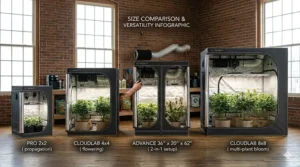
For small-space growers: The Gorilla 2×2.5 for quality-first builds, or the TopoLite 2×4 if budget is the primary constraint. The extra footprint depth vs. a standard 2×2 pays dividends in plant access and airflow management.
FAQ: Your Quality Grow Tent Questions, Answered
❓ What canvas thickness do I need for a quality grow tent?
❓ How many plants fit in a 4×4 quality grow tent?
❓ Can I use a quality grow tent for vegetables and herbs, not just cannabis?
❓ What's the difference between a professional grow tent and an intermediate grow tent?
❓ How do I prevent light leaks in a quality grow tent?
Conclusion: The Quality Grow Tent That’s Right for You
There’s no universal “best” quality grow tent — but there’s absolutely a best one for your situation. The key variables are budget, physical footprint, the weight of equipment you plan to hang, and whether you want to stay within a particular brand’s smart ecosystem.
For most growers in 2026, the AC Infinity CLOUDLAB 844 earns the top recommendation. It threads the needle between premium materials and accessible pricing better than anything else in this guide. The Gorilla Grow Tent Pro is the choice when maximum structural integrity is non-negotiable. The VIVOSUN S448 remains the best starting point for anyone who wants to learn before committing to bigger investment.
What all seven tents on this list share is genuine availability, verified real-world performance, and the kind of build quality that won’t send you back to Amazon in 12 months. The indoor growing space is full of forgettable knockoffs — these aren’t them.
Indoor growing has never been more accessible, more technically sophisticated, or more rewarding. The right tent is where it starts.
✨ Don’t Miss These Exclusive Deals!
🔍 Ready to grow? Click on any of the highlighted tents above to check current pricing and availability on Amazon. Start building the indoor garden you’ve been planning — your plants are waiting!
Recommended for You
- Best 1680D Grow Tent 2026: 7 Heavy-Duty Picks That Won’t Fail You
- Budget vs Premium Grow Tent: 7 Best Choices for 2026
- 7 Best Budget Grow Tents That Won’t Break Your Bank (2026)
Disclaimer: This article contains affiliate links. As an Amazon Associate, I earn from qualifying purchases. If you purchase products through these links, we may earn a small commission at no additional cost to you.
✨ Found this helpful? Share it with your friends! 💬🤗
