

In This Article
A 6 inch inline duct fan for HVAC boost is a small electric blower that mounts inside a 6-inch round supply duct and adds pressure and velocity to the air your furnace or air handler already delivers. It helps conditioned air reach rooms at the end of long, restrictive duct runs.
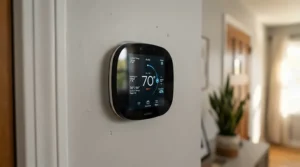
Every house has that room. The upstairs bedroom that bakes at 4 p.m. The bonus room where the register wheezes like a tired accordion. Meanwhile the thermostat, smugly parked in a downstairs hallway, reports a perfect 72°F. The culprit is usually geometry, not a broken system. Long flex runs, tight elbows and sagging duct all add resistance, and air always takes the easy way out.
Before you buy anything, though, know this. In a typical home, roughly 20 to 30 percent of the air moving through the ducts is lost to leaks and poorly connected joints, according to ENERGY STAR. A fan can’t boost air that’s escaping into your attic. Diagnosis comes first, hardware second.
This guide covers seven real 6-inch models and what their specs mean in practice. It explains how duct static pressure decides whether a fan helps or just makes noise, what your options are for a thermostat-controlled fan, and when HVAC contractor installation is the smarter call.
A note on method. Specs come from manufacturer and retailer listings. Owner sentiment comes from published roundups, not hands-on testing of my own. Prices are ranges, because they shift constantly.
Quick Comparison: 6 Inch Duct Booster Fan HVAC Options at a Glance
| Model | Airflow (CFM) | Noise Rating | Control | Best For |
|---|---|---|---|---|
| AC Infinity CLOUDLINE S6 | 402–425 | 30–32 dBA | 10-speed wired controller | Quiet bedroom and office runs |
| AC Infinity CLOUDLINE T6 | 425 | 30 dBA | Temperature/humidity controller + app | Automated, set-and-forget boosting |
| Suncourt Inductor DB206C | 160 free air / 250 max boosted | 52 dBA (retailer spec sheet) | Single speed; optional DuctStat | Plug-in retrofits with no wiring |
| Tjernlund EF-6 | 180 | Check spec sheet | Switch, variable speed or Duct Airstat | Contractor-style installs |
| VIVOSUN R6 | 390 | Under 34–37 dB (listings differ) | Stepless speed controller | High CFM on a budget |
| Hon&Guan 6 Inch | 345 | 32 dBA | Speed controller | Lowest running watts |
| AC Infinity RAXIAL S6 | 265 | 35 dBA | Speed controller | Short, low-resistance runs |
Looking at the table, CLOUDLINE S6 and CLOUDLINE T6 pair the highest airflow with the lowest noise, exactly what bedrooms demand. Hon&Guan 6 Inch and VIVOSUN R6 chase similar CFM at a lower entry cost. Suncourt DB206C and Tjernlund EF-6 give up some raw airflow for HVAC-specific engineering: safety listings, pressure- or temperature-sensing controls, and in the Tjernlund’s case published static-pressure performance data. Noise figures use different test methods (dBA versus dB), so treat them as rough guides, not a leaderboard.
💬 Just one click — help others make better buying decisions too!😊
Top 7 Picks: 6 Inch Inline Duct Fan for HVAC Boost, Analyzed
Each pick below is judged on what its specs mean for a real duct run. Where I couldn’t verify owner reviews, I say so rather than guess.
1. AC Infinity CLOUDLINE S6 — quietest strong-airflow pick
The headline here is the motor. CLOUDLINE S6 uses a PWM-controlled EC motor, which lets the fan idle at very low speeds without the hum that voltage-controlled AC fans tend to produce.
Retail listings show 402 CFM and 32 dBA, while AC Infinity’s current page lists 425 CFM and 30 dBA, so confirm which revision you’re buying. The mixed-flow design is meant to hold airflow when duct resistance climbs, which matters in flex runs with bends. The dual ball bearings are rated for 67,000 hours, roughly 7.6 years of nonstop running on paper. The motor box detaches for cleaning, and the fan mounts in any orientation.
Based on the spec comparison, this is the pick when the fan lives near living space. The ten-speed controller lets you run a gentle boost most days and step up only on the hottest afternoons. It’s more fan than one small bedroom branch strictly needs. Still, oversizing and dialing down beats undersizing and maxing out.
One published roundup summarizing owner feedback reports an average near 4.8 stars across roughly 5,500 reviews. Owners praised quiet operation and complained about upfront cost, a short controller cable and audible noise above the middle speeds. Check the live listing for current numbers.
Pros:
- ✅ Very quiet EC motor at low and mid speeds
- ✅ Mixed-flow design copes with resistive duct runs
- ✅ Detachable motor box makes cleaning easy
Cons:
- ❌ Higher upfront cost than most rivals
- ❌ Short controller cable limits placement
Expect the low-to-mid $100s at the time of research; check current price. Verdict: premium, but justified wherever noise matters.
2. AC Infinity CLOUDLINE T6 — temperature-aware brain built in
Where CLOUDLINE S6 waits for you to twist a dial, CLOUDLINE T6 ships with a smart controller that watches temperature and humidity and adjusts on its own.
It uses the same 6-inch mixed-flow EC platform, rated 425 CFM and 30 dBA. The controller adds timer, cycle and schedule modes, dynamic temperature programming and WiFi app control. One controller can manage up to four compatible UIS devices, and CLOUDLINE S6 can be linked to a T6 controller to share programming and power.
Here’s the honest framing. This is the closest consumer product to a thermostat-controlled fan, with one catch: it reacts to the temperature at its own probe, not to your wall thermostat. Put the probe in the duct or the target room, and set the fan to ramp up as that temperature crosses your threshold. The result is a booster that idles quietly when the room is comfortable. Misplace the probe near a warm attic hatch and it will run when it shouldn’t.
I couldn’t verify a meaningful body of HVAC-specific owner reviews for this model. It’s marketed heavily to grow-room users, so feedback about home ductwork is thinner. Treat this analysis as reasoning from specs, not a verdict from field data.
Pros:
- ✅ Automated temperature-based speed control
- ✅ Same quiet EC, mixed-flow platform as the S6
- ✅ App scheduling and expandable to several fans
Cons:
- ❌ Costs noticeably more than the plain S6
- ❌ Probe placement takes some trial and error
Expect roughly $150–$200 at the time of research; prices may vary. Verdict: worth it only if you’ll actually use the automation.
3. Suncourt Inductor DB206C — plug-and-play, built for HVAC
The appeal is simplicity. Suncourt DB206C comes with a 6-foot grounded cord, so there’s no electrician and no hardwiring.
It’s rated at 160 CFM in free air and up to 250 CFM “boosted” against back pressure. It draws about 30 watts, uses a thermally protected motor with an automatic-reset thermal fuse, and has a polycarbonate blade designed to limit noise. It installs at any angle and is specified for 40°F–140°F operation. Retailer sheets cite a UL 1995 heating-and-cooling listing, but they variously name MET, UL or ETL, so confirm the mark on your box. An optional DuctStat DS100 switch plugs in for automatic temperature-based on/off control.
That 52 dBA figure on one retailer sheet is roughly conversational volume. Keep this fan in a basement, crawlspace or attic, not directly behind a bedroom register. The 250 CFM ceiling is plenty for a single 6-inch branch, and the 140°F limit gives more attic headroom than some plastic rivals.
I found no verified owner-review volume in the listing sources I checked, so I won’t invent a sentiment summary. The same sources mention a limited 12-month warranty, which is short next to some competitors.
Pros:
- ✅ Cord-and-plug install, no wiring required
- ✅ Safety-listed heating and cooling equipment design
- ✅ Wide 40°F–140°F operating range
Cons:
- ❌ Louder than EC-motor alternatives
- ❌ Single speed, so no fine-tuning
Expect it under roughly $100 at the time of research; check current price. Verdict: strong value for a simple, safe retrofit.
4. Tjernlund EF-6 — hardwired, contractor-style workhorse
This is the fan that reads like something a pro would spec. Tjernlund EF-6 is rated at 180 CFM and about 30 watts (roughly 0.40 amps).
It fits metal or flex duct and offers three control paths: a plain on/off switch, a variable speed controller, or a Duct Airstat that senses positive pressure and starts the fan whenever air is supplied. The EF series can serve as exhaust or intake, and Tjernlund publishes performance tables across static-pressure levels. Its note that a 90-degree elbow counts as roughly 10 feet of straight duct is worth memorizing. Four elbows quietly add about 40 feet of resistance.
For contractor-led jobs, that published data is the differentiator. You can compare real performance to your measured duct static pressure instead of trusting a single free-air number. The trade-off is lower headline airflow and hardwiring, which pushes most homeowners toward HVAC contractor installation.
I couldn’t verify a large pool of owner reviews for this exact model, so this take rests on the manufacturer’s data and how the controls work.
Pros:
- ✅ Published performance data at varying static pressures
- ✅ Pressure-sensing Duct Airstat option for auto-start
- ✅ Fits both metal and flex duct
Cons:
- ❌ Hardwired, so not truly plug-and-play
- ❌ Lower CFM than most competitors
Expect the low-to-mid $100s at the time of research, with controls extra. Verdict: pays off when a pro installs it.
5. VIVOSUN R6 — most airflow per dollar from a popular brand
Raw output is the pitch. VIVOSUN R6 is rated at 390 CFM at roughly 2,450–2,550 RPM (listings differ) with a stepless speed controller on the cord.
Noise claims are under 34 dB on one listing and under 37 dB on the brand’s site, so plan on “quiet, not silent.” The housing and blades are plastic, the duct ends are removable with locking tabs, and the cord is about 5.4 feet. One roundup calls the brand’s 6-inch fan one of the most-reviewed duct boosters on Amazon, with over 15,000 reviews.
The maximum ambient temperature is 104°F, and this is the spec most buyers overlook. Attic ducts in a hot climate can pass that in summer, so this fan belongs in the conditioned zone. A basement, closet or mechanical room is the safe choice.
The stepless controller is a genuine advantage for tuning. Owner-review depth is high by volume, but HVAC-specific feedback is mixed in with grow-tent use. Read recent reviews filtered for HVAC installs before buying.
Pros:
- ✅ 390 CFM rating at an accessible cost
- ✅ Stepless speed control for fine tuning
- ✅ Removable duct ends ease installation
Cons:
- ❌ 104°F ambient limit rules out hot attics
- ❌ Plastic housing feels less durable
Expect roughly $60–$90 at the time of research; check current price. Verdict: excellent value in a cool, accessible location.
6. Hon&Guan 6 Inch — lowest running watts of the group
Efficiency is the story. Hon&Guan 6 Inch moves a rated 345 CFM while drawing just 19.2 watts, thanks to its DC motor.
It’s rated at 32 dBA and runs about 3,300 RPM. The body and blades are plastic, and there’s no blade guard, so unplug it before reaching into the duct. At 19.2 watts, nonstop operation uses about 13.8 kWh a month. At a hypothetical $0.17 per kWh, that’s roughly $2.35, and less in practice since the fan should only run with your HVAC.
One roundup reports an average around 4.3 stars over roughly 2,900 reviews. The recurring complaint is the speed controller, which some owners say failed within a year. The common workaround is swapping in a third-party DC power supply. The same source notes inconsistent quality control, so buy from a seller with a clear return policy.
This is a good fit for DIYers who accept some babysitting in exchange for savings. If you want to install it and forget it for a decade, one of the EC-motor models above is the safer bet.
Pros:
- ✅ Very low 19.2W power draw
- ✅ Strong 345 CFM rating for the size
- ✅ Low entry price
Cons:
- ❌ Controller failures reported by owners
- ❌ Plastic body with no blade guard
Expect roughly $40–$70 at the time of research; prices may vary. Verdict: best budget value if you’re willing to gamble on the controller.
7. AC Infinity RAXIAL S6 — simple boost for easy duct runs
Think of it as the entry ticket to AC Infinity’s line. RAXIAL S6 is rated at 265 CFM and 35 dBA with dual ball bearings.
The kit includes an AC-powered fan, an inline speed controller with a power plug, mounting screws and a cable management set. The maker markets it for boosting heating and cooling and for ventilating attics, workshops, bathrooms and kitchens. It also warns that this fan can’t be used standalone in high static pressure applications like room ventilation.
That warning is the most useful sentence on the page. Axial designs push plenty of air in free space but lose ground as resistance rises, whereas CLOUDLINE S6 uses mixed flow for that reason. So RAXIAL S6 suits short, mostly straight 6-inch branches with few elbows. It’s a poor match for a 40-foot flex run with four bends.
I couldn’t verify enough independent owner reviews for this model to summarize sentiment. Its value is easier to judge by fit: cheap, quiet enough, and honest about its limits.
Pros:
- ✅ Quiet 35 dBA rating with ball bearings
- ✅ Complete kit with controller included
- ✅ Affordable way into a known brand
Cons:
- ❌ Manufacturer warns against high-static use
- ❌ Lowest airflow among the EC-class picks
Expect roughly $45–$75 at the time of research; check current price. Verdict: good value on easy runs, wrong tool for hard ones.
Top 7 Compared: Specs, Price Range and Value
| Model | Motor / Build | Approx. Price Range | Best For |
|---|---|---|---|
| CLOUDLINE S6 | EC (PWM), mixed flow | Low-to-mid $100s | Quiet bedroom and office runs |
| CLOUDLINE T6 | EC (PWM), smart controller | Roughly $150–$200 | Set-and-forget automation |
| Suncourt DB206C | AC inductor, safety-listed | Under about $100 | Plug-in, no-wiring retrofits |
| Tjernlund EF-6 | AC, hardwired | Low-to-mid $100s | Pro-installed, pressure-switch setups |
| VIVOSUN R6 | Plastic, stepless controller | Roughly $60–$90 | High CFM per dollar |
| Hon&Guan 6 Inch | DC motor, plastic | Roughly $40–$70 | Lowest running watts |
| RAXIAL S6 | Axial, dual ball bearings | Roughly $45–$75 | Short, low-resistance runs |
Ranges are approximate and change often, so check current prices before deciding.
The pattern is clear. Paying more buys quieter motors, longer bearing life and smarter controls, while paying less buys airflow with more risk in the controller. CLOUDLINE S6 wins where sound matters, and Hon&Guan 6 Inch wins where dollars matter. Tjernlund EF-6 is the odd one out, because you’re paying for data and pro-grade control options, not peak CFM.
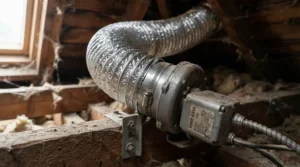
Duct Static Pressure: The Invisible Wall Your Booster Fan Pushes Against
Duct static pressure is the resistance air meets as it travels through filters, coils, elbows and duct. It’s measured in inches of water column. Every fan rating you see is a best-case, free-air number, and real performance falls as static rises.
According to HVAC School’s guide to static pressure, technicians generally want total external static pressure at 0.5 inches or less. Readings of 0.8 or higher are where trouble starts on most newer residential systems. High readings usually trace back to undersized returns, crushed ducts, restrictive filters or dirty coils.
Here’s why that matters for a strong airflow HVAC booster fan. If your unit is choking on a dirty filter, a booster on one branch won’t cure the underlying starvation. It just redistributes what little air exists. A quick check of the filter, the return grilles and the registers costs nothing and often solves the problem outright.
Where the problem is truly local, static pressure tells you which fan class to shop for. A long flex run with several elbows favors mixed-flow designs like CLOUDLINE S6 or fans with published static curves like Tjernlund EF-6. A short, straight branch is fine for RAXIAL S6.
How to Choose a 6 Inch Inline Duct Fan for HVAC Boost
- Confirm the diagnosis. Change the filter, open every register and check for leaks before buying a fan. If the whole system underperforms, a booster is a band-aid.
- Measure the duct. Confirm the branch is truly 6 inches round, and count the elbows. Remember that each 90-degree bend can count as roughly 10 feet of duct.
- Size the airflow. One roundup suggests about 1 CFM per square foot for moderate problems and 2 for severe ones. A 150-square-foot bedroom points to a 150–300 CFM target, and that includes any fan you’ll dial down.
- Check the noise and location. Anything near 50 dBA belongs in an attic, basement or crawlspace. Bedrooms want the 30–35 dBA class.
- Pick your control strategy. Manual speed dials are cheap. Temperature or pressure switches are hands-off.
- Verify temperature and safety ratings. VIVOSUN R6 caps at 104°F ambient, while Suncourt DB206C is specified to 140°F. Look for a recognized safety listing on the unit.
Whole-House Duct Fan Upgrade: Where a 6 Inch Booster Fits (and Where It Doesn’t)
The phrase “whole-house duct fan upgrade” means different things to different shoppers. Some mean a large attic-style whole-house fan, which is a different product. Others mean improving airflow across every room of a forced-air system.
A single 6-inch inline fan is a room-scale tool. One roundup states plainly that duct boosters work best for specific problem rooms, not whole-house fixes.
So treat a real whole-house duct fan upgrade as a sequence. First seal and repair the ducts, upgrade filtration and return capacity, and have the system balanced. Then add boosters only at the one to three branches that remain weak. A separate engineering source warns that raising airflow in one duct can worsen imbalance elsewhere. If four or five rooms are failing, the honest answer is probably ductwork redesign, zoning or a properly sized system, not four fans.
For the one or two rooms that remain, though, a 6 inch duct booster fan HVAC setup is one of the cheapest fixes around. The same logic applies whichever model you choose. Fix the system, then boost the stragglers.
6 Inch Inline Duct Fan vs Register Booster and Other Fixes
| Fix | What It Changes | Effort | Best For |
|---|---|---|---|
| 6 inch inline duct fan | Adds pressure inside one branch | Moderate (cut into duct) | Long, resistive runs to one room |
| Register booster fan | Pulls air at the vent | Easy (plug-in) | One weak register, lower CFM needs |
| Duct sealing and balancing | Restores lost and misdirected air | Moderate to high | Leaky or unbalanced systems |
| Return, zoning or system upgrade | Fixes the root design problem | High | Multiple failing rooms |
The table shows a ladder of effort and permanence. An inline fan moves more air than a register booster, since one roundup puts register boosters at roughly 75 to 200 CFM against 200 to 750 for inline models. In exchange, it needs a duct cut and a proper install. Sealing and balancing address causes, while fans address symptoms. The strongest plan usually combines cheap causes-first fixes with one targeted fan.
Common Mistakes When Buying a 6 Inch Duct Booster Fan HVAC Owners Should Avoid
- Shopping by free-air CFM alone. Real airflow drops under static pressure, so a 400 CFM rating won’t deliver 400 CFM through a twisty flex run.
- Ignoring temperature limits. Check ambient ratings before mounting anything in a summer attic.
- Mixing duct sizes without a reducer. One roundup notes this kills airflow and creates turbulence noise.
- Burying the fan in a finished ceiling. You’ll want access for cleaning and replacement.
- Installing it backward. Airflow arrows exist for a reason.
- Expecting extra cooling. Fans move air. They don’t create cooling capacity.
- Skipping the return path. A room with no return can pressurize, and no fan fixes that.
Thermostat-Controlled Fan Options for a 6 Inch Booster
True thermostat integration means the fan follows your wall thermostat’s call for heating or cooling. That’s a low-voltage wiring job, so most consumer setups use proxies instead. There are four common routes.
Temperature switch. Suncourt DB206C plugs into the optional DuctStat DS100, which turns the fan on and off based on duct air temperature without hardwiring. It’s simple but can lag behind the system.
Pressure switch. The Duct Airstat used with Tjernlund EF-6 senses positive pressure and starts the fan when air is supplied, in both heating and cooling. It tracks the blower directly. However, one roundup of a different AC Infinity model suggests low-stage or variable-speed systems can produce pressure changes too small for some sensors, so verify on your equipment.
Smart controller. CLOUDLINE T6 offers a probe and app-based rules. It’s flexible, and probe placement matters.
Relay wiring. A contractor can tie a fan into the blower circuit so it runs exactly when the system does. This is the most reliable route and the reason HVAC contractor installation is often worth it.

Practical Usage Guide: Installing and Tuning Your Booster in 8 Steps
- Baseline first. Log the problem room’s temperature at its worst hour, with a fresh filter and every register open.
- Trace the branch. Find the 6-inch supply run feeding that room and choose an accessible spot upstream of the register.
- Kill power and cut cleanly. Turn off the HVAC system before touching duct.
- Orient and secure. Point the airflow arrow toward the register, and strap the fan so its weight doesn’t hang on flex duct.
- Seal properly. The Department of Energy’s duct guidance names mastic as the preferred sealant and warns that cloth-backed, rubber-adhesive duct tape tends to fail quickly.
- Add your control. Use a DuctStat, Airstat, smart controller or relay, depending on your model.
- Start low. Begin at about 30–40 percent speed and step up until the room improves without audible whoosh at the register.
- Re-measure in 30 days. Check for vibration, loose clamps and temperature changes against your baseline.
Real-World Scenarios: Matching the Fan to the Home
These are hypothetical profiles, built to show the reasoning.
The budget DIYer. A two-story house has a 35-foot flex run with three bends to a 150-square-foot bedroom. The duct passes through a conditioned utility closet, so heat isn’t an issue. Hon&Guan 6 Inch at roughly 40–50 percent speed covers the need, and the owner keeps a spare controller in mind.
The work-from-home office. A converted room needs quiet above all. CLOUDLINE S6 at a low-to-mid setting, or CLOUDLINE T6 with a temperature trigger, keeps the fan near the 30 dBA range. The fan mounts in an accessible closet, not behind the desk.
The older ranch with attic ducts. Summer attic heat rules out fans with low ambient limits. Suncourt DB206C with a DuctStat, or Tjernlund EF-6 with an Airstat, fits better. The owner brings in a pro to measure duct static pressure first.
✨ Ready to Fix That Hot Room?
🔍 Take your comfort to the next level with these carefully selected fans. Click on any highlighted product name to check current pricing and availability. Match the fan to your duct, and your hottest room could finally catch up to the rest of the house!
Problem → Solution Guide: When Your Booster Doesn’t Behave
The fan runs, but the register barely improves. Suspect a leak, kink or crushed section upstream. Seal joints with mastic, straighten flex, and check duct static pressure.
It hums, rattles or whooshes. Strap-mount the fan, add vibration isolation and lower the speed. Oversized fans like VIVOSUN R6 or CLOUDLINE S6 often behave better dialed down.
It runs when the HVAC is off. That’s a control problem. Add a pressure switch like the Airstat, use the DuctStat, or program CLOUDLINE T6 properly. One roundup also suggests a backdraft damper to prevent backflow when the system is idle.
Other rooms now get weaker air. You’ve likely shifted the balance. Adjust dampers or ask a pro to run a proper air balance. Never assume one fan improves the whole system.
HVAC Contractor Installation: What a Pro Adds
HVAC contractor installation isn’t mandatory for every plug-in fan, but it earns its fee in three situations. The first is when the fan is hardwired, like Tjernlund EF-6. The second is when the ducts are hard to reach. The third is when you suspect leaks.
A technician can measure total external static pressure, check the coil and filter, and confirm whether a fan even belongs in the system. Several contractor sources recommend a professional inspection before installing any inline booster, because success depends on sizing, placement and correcting existing HVAC issues.
A pro can also test leakage. The Building America Solution Center’s duct sealing checklist calls for pre- and post-sealing leakage tests, with a target of preferably 10 percent or less of total airflow. That baseline tells you whether a fan is really the answer.
Ask for a written scope that covers where the fan goes, how it’s controlled, what static pressure was measured, and what happens if it doesn’t help.
Long-Term Cost & Maintenance of a Strong Airflow HVAC Booster Fan
Running cost is small. At a hypothetical $0.17 per kWh, a 30-watt fan like Suncourt DB206C or Tjernlund EF-6 costs roughly $3.70 a month if it ran around the clock. Since it should only run with your HVAC, the real number is lower. Hon&Guan 6 Inch, at 19.2 watts, lands nearer $2.35 on the same assumption.
Durability is where the real spending happens. One roundup reports that cheap plastic inline fans with basic controllers often fail within one to three years. A $50 fan replaced twice costs about the same as a $120 fan that lasts, so weigh lifespan against sticker price. CLOUDLINE S6 carries bearings rated for 67,000 hours, while Hon&Guan 6 Inch owners report controller failures.
Maintenance is simple:
- Wipe the impeller when you change filters.
- Check clamps and straps each season.
- Inspect mastic joints for cracking.
- Keep a spare controller for budget models.
Add an annual HVAC tune-up, since a healthy system makes any booster fan work less.

FAQ
❓ Can a 6 inch inline duct fan for HVAC boost damage my furnace or AC?
❓ Where should a 6 inch duct booster fan HVAC unit go in the duct run?
❓ Is a thermostat-controlled fan possible with a 6-inch inline booster?
❓ Is HVAC contractor installation required for a whole-house duct fan upgrade?
❓ Will a strong airflow HVAC booster fan raise my electric bill?
Conclusion
A 6 inch inline duct fan for HVAC boost is one of the cheapest ways to fix a stubborn hot or cold room, but only when the diagnosis is right. Fix leaks, filters and returns first. Then match the fan to your duct’s resistance, location and noise tolerance.
If quiet matters most, CLOUDLINE S6 is the strongest pick, and CLOUDLINE T6 adds automation if you’ll use it. For a plug-in, safety-listed retrofit, Suncourt DB206C is the simplest path. For pro-installed jobs with published performance data, Tjernlund EF-6 fits best. VIVOSUN R6 and Hon&Guan 6 Inch deliver the most airflow for the least money, provided you respect their limits, and RAXIAL S6 suits short, easy runs.
Measure twice, start the fan slow, and re-check in a month. Your thermostat and your upstairs bedroom may finally agree.
Recommended for You
- 6 Inch Inline Fan Vs 8 Inch For 4×8 Tent: 7 Best Picks 2026
- Quietest 6 Inch Inline Duct Fan For Grow Room: 7 Silent Picks
- 6 Inch Inline Fan For Basement Grow Room: 7 Best Picks (2026)
Disclaimer: This article contains affiliate links. As an Amazon Associate, I earn from qualifying purchases. If you purchase products through these links, we may earn a small commission at no additional cost to you.
✨ Found this helpful? Share it with your friends! 💬🤗
