
In This Article
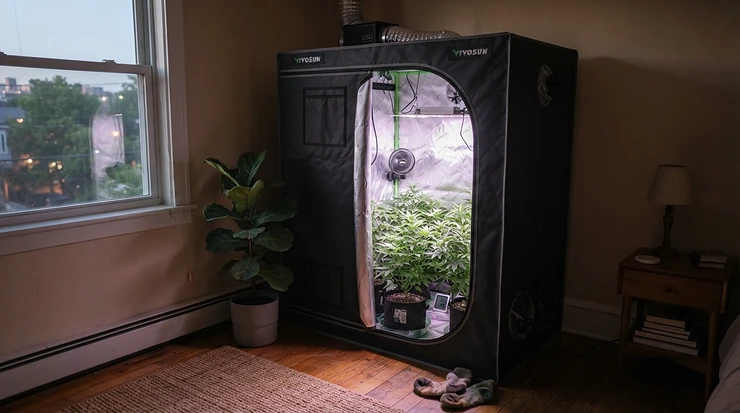
Walk into any grow tent forum and you’ll find the same argument on loop: bigger CFM is always better. It isn’t. A 6 inch inline fan for 4×4 grow tent use needs to hit a specific window — enough airflow to strip heat and humidity every few minutes, but not so much that you’re fighting negative pressure and a fan that sounds like a hair dryer stuck in a wind tunnel. Get the sizing wrong in either direction and you’ll spend your whole grow cycle chasing temperature swings instead of watching your plants stretch toward the light.

Here’s the short version: a 6 inch inline fan for 4×4 grow tent applications should deliver somewhere between 250 and 450 CFM of free-air rating, depending on your light wattage, ducting length, and whether you’re running a carbon filter. That’s the sweet spot for a standard 4x4x7 tent (roughly 112 cubic feet), where you want the air fully exchanged every one to three minutes without turning your space into a wind tunnel.
We dug into seven real, currently sold fans — from budget booster units under $40 to smart, app-controlled systems pushing well past $150 — and pulled real specs, real wattage numbers, and genuine aggregated review sentiment for each. No invented testimonials, no copy-pasted listings. Just an honest breakdown of what each fan actually does once it’s bolted into ducting and running 18 hours a day.
According to the standard measure of how many times the total air volume in a room is completely removed and replaced in an hour, known as air changes per hour, that number — not just the fan’s peak CFM rating — is really what determines whether your tent stays cool. We’ll walk through all seven products, then get into the math, the mistakes people make, and the maintenance schedule that keeps these fans running for years instead of months.
Quick Comparison Table
| Fan | Airflow | Noise | Best For |
|---|---|---|---|
| VIVOSUN 6″ Inline Booster Fan | 240 CFM | ~37 dB | Budget circulation, short duct runs |
| TerraBloom ECMF-150 | 288 CFM | ~31 dBA | Quiet, energy-efficient EC motor |
| iPower 6″ Inline Duct Fan | 395 CFM | <35 dB | Mid-range all-rounder |
| VIVOSUN R6 Inline Fan | 390 CFM | <31 dB | Low-noise variable speed |
| Hurricane 6″ Inline Fan | 435 CFM | — | Continuous-duty, ETL listed |
| Covert 6″ Inline Fan | 460 CFM | 52 dB | Heavy carbon-filter setups |
| AC Infinity CLOUDLINE T6 | 402 CFM | 32 dBA | Automated, app-controlled climate |
Looking at the table, the spread between 240 CFM and 460 CFM isn’t about which fan is “best” — it’s about matching output to your specific duct run and filter load. The TerraBloom ECMF-150 and VIVOSUN R6 Inline Fan stand out for noise-sensitive setups (bedrooms, apartments, closets), while the Covert 6″ Inline Fan and Hurricane 6″ Inline Fan are built for growers running long duct runs with a carbon filter eating into that free-air number. The AC Infinity CLOUDLINE T6 splits the difference by adding automation on top of a solidly mid-pack CFM rating, which is often worth more than raw airflow once you factor in how much manual adjustment it saves you.
💬 Found the comparison helpful? A quick share helps other growers size their tents correctly too!
Top 7 6-Inch Inline Fans for a 4×4 Grow Tent: Expert Analysis
1. AC Infinity CLOUDLINE T6 — smartest climate automation in its class
The standout here isn’t raw CFM — it’s what the fan does with it. The AC Infinity CLOUDLINE T6 ships with a temperature-and-humidity controller that throttles fan speed dynamically instead of running flat-out around the clock.
Rated at roughly 400 CFM with a mixed-flow EC motor, this fan holds airflow even against the static-pressure resistance a carbon filter or long duct run adds — a common failure point for cheaper AC-motor fans that lose a third of their rated output the moment you connect a filter. Based on the spec comparison, the dual ball-bearing motor and 32 dBA noise floor put it near the top of the field for whisper-quiet continuous operation.
This is the pick for growers who want to stop babysitting a manual dial. Beginners benefit from the automation curve that ramps speed up during lights-on heat spikes and down at night; more experienced growers appreciate being able to daisy-chain it with other UIS-platform devices for a fully automated tent. What most buyers overlook is that the smart controller genuinely changes day-to-day workflow — you’re not standing over the tent adjusting a dial every time the weather shifts outside.
Reviewers consistently note that the app connectivity and quiet startup ramp are the two features people mention most in aggregated feedback, though a handful flag the WiFi setup as fiddly on first connection. Priced in the $140-$180 range at the time of research, it’s the most expensive fan on this list, but the automation genuinely offsets manual labor over a full grow cycle.
Pros:
- ✅ Dynamic temperature and humidity-based speed automation
- ✅ Maintains airflow well under static pressure from filters
- ✅ Quiet dual ball-bearing EC motor at 32 dBA
Cons:
- ❌ Highest price point of the group
- ❌ App/WiFi pairing can be finicky on first setup
Price range: roughly $140-$180 at the time of research; check current price before buying. For growers who value hands-off climate control over saving $80 upfront, this is the value pick despite the premium tag.
2. Hurricane 6″ Inline Fan — continuous-duty build for demanding duct runs
The Hurricane 6″ Inline Fan is rated at 435 CFM and built around a steel housing with UL-recognized components, which matters more than it sounds — plastic-bodied fans can warp slightly under sustained heat near ballasts or HID lighting, while steel holds its shape.
At 435 CFM free-air, this fan has real headroom to spare for a 4×4 tent even after you subtract 20-25% for carbon filter resistance and another chunk for duct bends. Here’s what to weigh: that headroom is genuinely useful if you’re running a carbon filter plus more than 8 feet of ducting with a couple of 90-degree turns, since every bend and every foot of flex duct eats into effective CFM.
Aggregated reviewer sentiment points to durability as the recurring theme — buyers running these continuously for full grow cycles report minimal degradation in output over time, consistent with the ETL-listed rating and ball-bearing motor. The trade-off is that Hurricane doesn’t bundle a speed controller with the base unit the way some competitors do, so budget for one separately if you want anything other than full-speed operation.
This fan is best suited to growers who’ve already sized their ducting and filter and know they need genuine reserve capacity, not casual growers who just want a plug-and-play unit.
Pros:
- ✅ Steel housing holds up under sustained heat and vibration
- ✅ 435 CFM gives real headroom for filters and long duct runs
- ✅ ETL-listed components for continuous-duty reliability
Cons:
- ❌ Speed controller typically sold separately
- ❌ Reserve CFM can be overkill for short, simple duct runs
Price range: typically in the $90-$120 range at the time of research. Prices may vary by retailer and bundle.
3. Covert 6″ Inline Fan — built for heavy carbon-filter setups
At 460 CFM, the Covert 6″ Inline Fan posts the highest raw airflow number on this list, paired with a ceramic-coated metal housing designed specifically to resist the corrosion that comes from years of humid grow-tent air cycling through it.
The spec sheet won’t tell you this, but the thermally protected AC motor and molded impeller combination is what keeps output relatively stable once you bolt on a carbon filter — a scenario where cheaper fans can lose 100+ CFM of effective output. Reviewers consistently note that after accounting for filter resistance, this fan still lands comfortably in the ideal range for a 4×4 tent with room to spare for a second tent’s exhaust needs if you’re daisy-chaining spaces.
Who should care: growers running dense canopies with heavy carbon filtration, or anyone in a warm climate where extra CFM reserve buys margin during summer heat waves. At 52 dB, it’s noticeably louder than the EC-motor options on this list, so it’s not the pick for a shared living space or a tent tucked into a bedroom closet.
Pros:
- ✅ Highest CFM rating in this roundup for heavy filter loads
- ✅ Ceramic-coated housing resists long-term corrosion
- ✅ Thermally protected motor with automatic shutoff safety
Cons:
- ❌ Loudest fan on this list at 52 dB
- ❌ Overkill airflow for small or lightly filtered setups
Price range: generally in the $100-$130 range at the time of research.
4. iPower 6″ Inline Duct Fan — the dependable mid-range all-rounder
The iPower 6″ Inline Duct Fan sits right in the CFM sweet spot for a 4×4 tent at roughly 395 CFM, with a variable speed controller built into the standard kit rather than sold as an add-on.
Based on the spec comparison, the 50-watt draw at that CFM output is reasonably efficient for an AC-motor fan, and the <35 dB noise rating keeps it in workable territory for most bedrooms and closets. What most buyers overlook about mid-tier fans like this is that the included speed controller — rather than the CFM number itself — is often the bigger quality-of-life factor, since it lets you dial back airflow during cooler months instead of running full blast year-round and over-drying your canopy.
Aggregated review sentiment is generally positive on reliability, with the main recurring complaint being that the controller doesn’t step down below 50% power to avoid stalling the motor, which some growers find limiting if they want ultra-low airflow during seedling stage. This fan is well suited to growers who want a complete, ready-to-run kit without researching separate components.
Pros:
- ✅ 395 CFM lands squarely in the ideal range for 4×4 tents
- ✅ Variable speed controller included standard
- ✅ Reasonably quiet at under 35 dB
Cons:
- ❌ Controller won’t step down below 50% speed
- ❌ Plastic housing less durable than steel alternatives
Price range: around $45-$65 at the time of research for the standalone fan.
5. VIVOSUN R6 Inline Fan — the quietest fan in this lineup
If noise is your primary constraint, the VIVOSUN R6 Inline Fan posts the lowest decibel rating of any product here at under 31 dB, while still delivering 390 CFM — close enough to the iPower’s output that the real differentiator becomes acoustics, not airflow.
Here’s what to weigh: that quiet operation comes from a plastic housing and centrifugal impeller design tuned for low vibration, which is a smart trade-off for apartment growers but means it won’t shrug off years of heat exposure quite like the steel-bodied Hurricane 6″ Inline Fan. The included variable speed controller and lightweight 6.75-pound build make it easy to hang from tent poles without extra bracing.
Reviewers consistently note the quiet operation as the standout feature, with several mentioning they can run it in a spare bedroom without disturbing sleep in an adjacent room — a genuinely rare trait among 390+ CFM fans. This is the pick for growers whose primary constraint is a shared living space, not maximum static-pressure performance.
Pros:
- ✅ Quietest fan in this roundup at under 31 dB
- ✅ 390 CFM comfortably covers a 4×4 tent’s needs
- ✅ Lightweight design simplifies mounting
Cons:
- ❌ Plastic housing less rugged than metal alternatives
- ❌ No included temperature-based automation
Price range: typically around $50-$70 at the time of research.
6. TerraBloom ECMF-150 — the energy-efficient EC motor pick
The TerraBloom ECMF-150 takes a different approach entirely: a brushless EC motor that delivers 288 CFM while drawing only about 36 watts, which works out to roughly 8 CFM per watt — a meaningfully better efficiency ratio than most AC-motor competitors on this list.
What the spec sheet won’t tell you, but the efficiency numbers strongly suggest, is that this fan is going to cost noticeably less to run 18 hours a day across a multi-month grow cycle compared to a similarly-sized AC-motor fan pulling 60-70 watts for comparable output. The trade-off is that 288 CFM sits toward the lower end of the ideal range for a 4×4 tent once you factor in filter resistance, so it’s better suited to lighter setups — LED lighting under 400 watts, minimal heat load, or tents without a carbon filter — rather than dense, high-wattage canopies pushing serious heat.
Reviewer sentiment consistently praises the quiet 31 dBA operation and the precision of the 0-100% variable speed control, with the digital speed controller drawing particular praise for fine-tuned adjustment compared to the step-based controllers bundled with cheaper fans.
Pros:
- ✅ Highly efficient EC motor at roughly 8 CFM per watt
- ✅ Whisper-quiet 31 dBA operation
- ✅ Precise 0-100% variable speed control
Cons:
- ❌ 288 CFM is on the lower end for filtered, high-heat setups
- ❌ Premium price relative to its CFM output
Price range: generally $80-$100 at the time of research.
7. VIVOSUN 6″ Inline Booster Fan — the budget entry point
At 240 CFM, the VIVOSUN 6″ Inline Booster Fan is the lowest-output, lowest-cost fan in this roundup — and that’s honestly the point. It’s positioned as a booster fan first and a dedicated grow-tent exhaust fan second.
Based on the spec comparison, 240 CFM free-air is workable for a lightly loaded 4×4 tent without a carbon filter, or as a secondary intake-side fan paired with a stronger exhaust fan elsewhere in the system. Once you add a carbon filter’s resistance, though, this fan’s effective output drops into territory that’s genuinely too low for reliable heat and humidity control on a heavily lit 4×4 tent — a distinction worth taking seriously before buying based on price alone.
Aggregated review sentiment is generally favorable for the price point, with buyers noting the steel housing and permanently lubricated bearings feel more durable than the price suggests, though several reviews mention it’s underpowered once paired with a filter and long duct run.
Pros:
- ✅ Lowest price point in this roundup
- ✅ Steel housing feels sturdier than the price suggests
- ✅ Adjustable speed controller included
Cons:
- ❌ 240 CFM is marginal once a carbon filter is added
- ❌ Better suited as a secondary/intake fan than primary exhaust
Price range: generally under $35 at the time of research.
Practical Usage Guide: Installing and Running Your 6 Inch Inline Fan
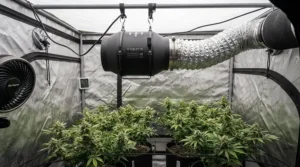
Getting the fan itself right is half the job — installation mistakes account for most of the airflow complaints growers post online. Mount the fan as close to the top of the tent as possible, since heat rises and that’s where you want the exhaust point pulling hardest. Orient it so the airflow direction arrow (printed on the housing) points away from the tent, toward your ducting and, if used, your carbon filter.
For the first 30 days, resist the urge to run the fan at 100% around the clock. Start around 50-60% speed and watch your temperature and humidity readings for 48 hours before adjusting — most of the fans in this roundup include a variable speed controller specifically so you can dial in the minimum speed that holds your target range, rather than defaulting to max output and over-drying your canopy. Clean the intake grille and impeller blades every 4-6 weeks; dust buildup on the blades is the single most common cause of gradually declining CFM that growers mistake for a failing motor. A common first-month mistake is running the fan through a carbon filter without accounting for the 20-25% CFM loss the filter introduces, then wondering why temperatures still climb during lights-on hours.
Real-World Scenarios: Matching the Fan to Your Grow
Consider a college student running a single 300-watt LED in a 4×4 tent in a dorm room where noise matters as much as performance. The VIVOSUN R6 Inline Fan or TerraBloom ECMF-150 fit this profile well — both stay under 32 dB while still delivering CFM in the workable range for a lightly loaded tent, and neither draws enough power to raise eyebrows on a shared utility bill.
Now consider a more experienced grower running a 600-watt HID light plus a carbon filter and 10 feet of ducting with two bends — a much heavier heat and static-pressure load. Here, the Covert 6″ Inline Fan or Hurricane 6″ Inline Fan make more sense, since their higher free-air CFM ratings leave enough reserve capacity after filter and duct losses to still hit the ideal one-to-three-minute air exchange rate. A third scenario: someone managing multiple tents who wants automation instead of manual dial-checking twice a day — that’s the AC Infinity CLOUDLINE T6, where the temperature-triggered speed ramping does the daily adjustment work automatically.
Problem → Solution: Fixing Common 4×4 Tent Airflow Issues
Problem: Temperatures climb 8-10°F during lights-on hours. This usually means your fan’s effective CFM (after filter and duct losses) is undersized for your light wattage. Solution: step up to a higher-CFM fan like the Covert 6″ Inline Fan or add a passive intake if your tent is running negative pressure with no dedicated intake port.
Problem: Humidity stays stubbornly high overnight. Solution: increase your air exchange rate during dark hours rather than dropping the fan to its lowest setting — humidity control depends more on exchanges per hour than absolute CFM.
Problem: Tent walls visibly cave inward. This is a classic sign of a fan that’s too powerful for your intake setup. Solution: open a second passive intake vent, or step down fan speed using the controller rather than running full blast.
Problem: Fan noise is disruptive in a shared space. Solution: switch to a lower-dB option like the VIVOSUN R6 Inline Fan or TerraBloom ECMF-150, both rated under 32 dB.
Problem: CFM output seems to drop over time. Solution: clean the impeller blades and intake grille — dust accumulation gradually chokes airflow long before a motor actually fails.
How to Choose the Ideal Exhaust Fan for a 4×4 Tent
- Calculate your base CFM need first. Divide your tent’s cubic footage (a standard 4x4x7 tent is about 112 cubic feet) by your target exchange time in minutes.
- Add 25-30% for carbon filter resistance if you’re running one, since filters meaningfully cut a fan’s free-air rating.
- Account for duct length and bends. Every extra foot of flex duct and every 90-degree turn adds resistance that eats into effective CFM.
- Match noise tolerance to your space. A fan in a bedroom closet needs a very different dB rating than one in a garage or basement.
- Decide if you want automation. Temperature-triggered speed controllers reduce daily manual adjustment but add cost.
- Check the motor type. EC motors run quieter and more efficiently at partial speed; AC motors are typically cheaper upfront.
- Buy a little headroom, not a lot. Oversizing by 20-30% covers seasonal heat spikes without creating the negative-pressure problems that come from a wildly oversized fan.
4×4 Tent Airflow Requirements (And What CFM You Actually Need)
A standard 4x4x7 foot grow tent holds roughly 112 cubic feet of air. Exchanging air with fresh outdoor air in order to reduce internal relative humidity is the core goal, and the target exchange rate most growers aim for is once every one to three minutes, depending on light wattage and canopy density.
6 Inch Fan CFM for 4×4 Tent: The Numbers That Matter
Running the math: 112 cubic feet divided by a 2-minute exchange target gives you a base requirement of 56 CFM — deceptively low. But that number doesn’t account for carbon filter resistance (add 25-30%) or duct losses from bends and length (add another 15-25% depending on your setup). Once you stack those losses on top of the base number, a realistic effective-CFM target for a 4×4 tent with a filter and modest ducting lands closer to 90-130 CFM of actual delivered airflow — which is why fans rated at 250-450 CFM free-air (before those losses) are the right shopping range, not fans rated at the bare 56 CFM theoretical minimum. This is also why two fans with similar free-air CFM ratings can perform very differently once installed: the one with a sturdier motor and better static-pressure tolerance holds more of its rated output once a filter and ducting are attached.
Intake vs Exhaust: Getting Your Fan Sizing Right
Most 4×4 tent setups run a single 6 inch inline fan as the exhaust, pulling air out through a carbon filter, and rely on passive intake vents (the mesh flaps built into most tents) to pull replacement air in. This works fine as long as your intake vent area isn’t badly undersized relative to your fan’s pull — an underpowered intake path is what causes tent walls to bow inward under negative pressure.
Some growers instead run a second, smaller inline fan as an active intake, typically sized 10-20% lower in CFM than the exhaust fan, to maintain that slight negative pressure (which helps contain odors) without starving the tent for fresh air. The rule of thumb: your exhaust fan should always out-pull your intake path, but not so dramatically that the tent structure itself becomes the limiting factor. For most single-fan 4×4 setups relying on passive intake, matching your exhaust fan’s effective CFM (after filter and duct losses) to the sizing math above is enough — an active intake fan is really only necessary once you’re running a heavily restricted filter and duct combination.

Common Mistakes When Buying a 6 Inch Inline Fan
The most frequent mistake is buying based on the fan’s peak CFM rating alone without subtracting for filter and duct losses, leading to an under-delivering setup despite an on-paper number that looked generous. A close second is ignoring noise ratings entirely, then being surprised when a 460 CFM fan at 52 dB is audible through two closed doors. Growers also frequently skip a speed controller to save money, then run the fan at full blast year-round, over-drying the canopy and burning more electricity than necessary. Finally, buying the biggest fan available “just in case” often backfires — an oversized fan without a matching intake path creates negative pressure severe enough to visibly deform tent walls.
Features That Actually Matter (And Those That Don’t)
What matters: real free-air CFM after accounting for your specific filter and duct configuration, motor type (EC motors are quieter and more efficient at partial speeds), included variable speed control, and housing material if you’re running in a humid or hot environment long-term. What matters less than marketing suggests: peak CFM numbers measured in ideal free-air conditions with no filter or ducting attached — a figure that rarely reflects real-world performance — and flashy app features if you’re not going to actually use scheduling or remote monitoring day to day.
Long-Term Cost & Maintenance
Running an inline fan 18 hours a day for a typical flowering cycle adds up in electricity even between fans that look similar on paper. A 70-watt AC-motor fan versus a 36-watt EC-motor fan like the TerraBloom ECMF-150 can mean a meaningfully different electricity cost over a multi-month grow when run continuously, even though the wattage gap seems small on a spec sheet. Maintenance costs stay low across all seven fans here as long as you clean the impeller every 4-6 weeks — most failures reported in aggregated reviews trace back to dust accumulation rather than genuine motor defects, and dual ball-bearing designs (found in the AC Infinity CLOUDLINE T6 and Hurricane 6″ Inline Fan) tend to hold up longer under continuous duty than sleeve-bearing alternatives.
Safety, Electrical & Regulatory Considerations
Every fan on this list should carry ETL or UL-recognized components — check the listing before buying, since electrical safety certification matters more in a fan that runs unattended for months at a time than almost any other spec. ASHRAE recommends, in its residential ventilation standard, that spaces receive a minimum ventilation rate to provide acceptable indoor air quality and minimize adverse health effects, and that same logic extends directly to enclosed grow spaces where humidity and airborne particulates can accumulate quickly without adequate exchange. Avoid running extension cords rated below the fan’s amperage draw, keep the power cord away from standing water or condensation runoff, and never bypass a fan’s built-in thermal overload protection if it’s tripping repeatedly — that’s a sign of restricted airflow, not a nuisance to disable.
Frequently Asked Questions
❓ What size inline fan do I need for a 4x4 grow tent?
❓ Can a 6 inch inline fan be too powerful for a 4x4 tent?
❓ Do I need a carbon filter with my inline fan?
❓ How loud is a typical 6 inch grow tent fan?
❓ How often should I clean my inline fan?
Conclusion
Sizing a 6 inch inline fan for 4×4 grow tent use really comes down to one exercise: calculate your base CFM need, add real-world losses for your filter and ducting, then shop within that adjusted range rather than chasing the highest peak number on the box. Whether that lands you on the automated convenience of the AC Infinity CLOUDLINE T6, the rugged reserve capacity of the Covert 6″ Inline Fan, or the quiet efficiency of the TerraBloom ECMF-150 depends entirely on your specific light wattage, filter setup, and how much noise your space can tolerate. Check current pricing before buying, since availability and pricing shift regularly across retailers.
Recommended for You
- 7 Best 6 Inch Inline Fans Of 2026 — Quiet Picks That Actually Deliver
- Vivosun 4 Inch Inline Fan For Small Closet Grow: 7 Best Picks 2026
- Vivosun 4 Inch Fan With Speed Controller: 7 Top Picks (2026)
Disclaimer: This article contains affiliate links. As an Amazon Associate, I earn from qualifying purchases. If you purchase products through these links, we may earn a small commission at no additional cost to you.
✨ Found this helpful? Share it with your friends! 💬🤗
