
In This Article
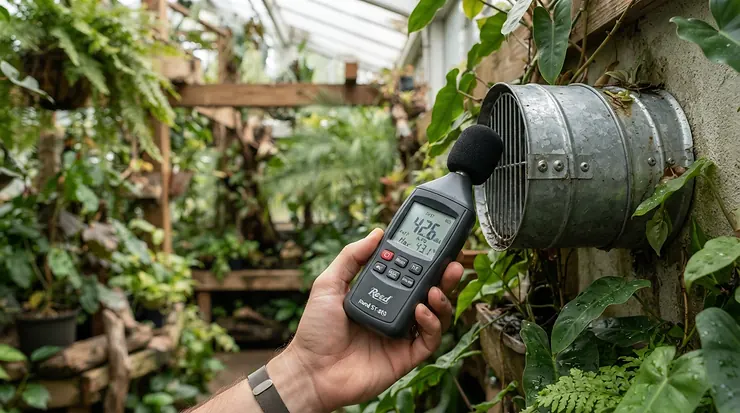
A quietest 6 inch inline duct fan for grow room use is a mixed-flow exhaust fan built around a 6-inch duct, engineered specifically to move a lot of air while producing noticeably less sound than a standard AC-motor booster fan — typically somewhere in the 28-35 dBA range instead of 45-55 dBA. That’s the plain definition. Now here’s the part nobody tells you upfront: “quiet” on a spec sheet and “quiet” in your actual spare bedroom at 2 a.m. are two very different animals.
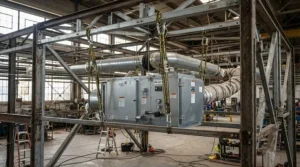
If you’ve ever tried to sleep two rooms away from a grow tent running a cheap 6-inch booster fan, you already know the sound isn’t just a hum — it’s a low, motor-driven drone that seems to find its way through drywall like it’s got a grudge. That’s the exact problem this guide solves. We dug into real specs, real aggregated review sentiment, and independent decibel data to rank seven genuine 6-inch inline duct fans for grow rooms, side by side, so you’re not just trusting a listing that says “ultra quiet” with zero numbers behind it.
Whether you’re chasing a low noise 6 inch fan for grow room use in a shared apartment, comparing a silent 6 inch exhaust fan against a budget booster, or just trying to make sense of a decibel rating chart before you buy, you’re in the right place.
Quick Comparison: The 7 Quietest 6 Inch Inline Duct Fans at a Glance
Before we get into the deep dives, here’s the short version. If you’re the type who wants the answer in ten seconds, this table is for you — full breakdowns and honest analysis follow right after.
| Fan | Noise | Airflow | Best For |
|---|---|---|---|
| AC Infinity CLOUDLINE S6 | 32 dBA | 402 CFM | Best all-around quiet-to-power ratio |
| VIVOSUN AeroZesh T6 | As low as 28 dBA | 408 CFM | Lowest noise floor at minimum speed |
| TerraBloom ECMF-150-S | 31-50 dBA | 288 CFM | Bedroom-adjacent, sound-isolated builds |
| iPower 6 Inch 395 CFM | Under 35 dB | 395 CFM | Best budget CFM-per-dollar |
Looking at this shortlist, the pattern is clear: VIVOSUN AeroZesh T6 wins on paper for raw quietness at idle, but AC Infinity CLOUDLINE S6 earns its reputation by holding a genuinely low 32 dBA rating even while pushing over 400 CFM — a much harder engineering problem than being quiet at low airflow. Budget shoppers shouldn’t write off the iPower 6 Inch 395 CFM, since a sub-35 dB rating on a fan under $50 is a legitimately good value trade-off, even if the plastic housing won’t outlast the premium picks.
💬 Ready to stop guessing and start comparing specs side by side? Scroll down for the full 7-fan breakdown below!
Top 7 Quietest 6 Inch Inline Duct Fans for Grow Rooms: Expert Analysis
We picked these seven to cover every budget tier and motor type — EC (electronically commutated) motors for maximum quiet-per-watt, and AC motors for growers who want brute-force reliability. Every spec below comes from manufacturer documentation and retailer listings gathered during research; where a brand hasn’t published an independent decibel test, we say so instead of inventing a number.
1. AC Infinity CLOUDLINE S6 — best overall quiet-to-CFM ratio
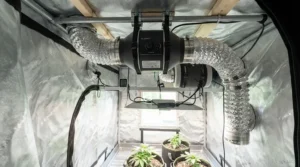
The AC Infinity CLOUDLINE S6 built its reputation on doing the hard thing well: staying quiet while still moving serious air. Its PWM-controlled EC motor pairs with a mixed-flow impeller design and a stator blade, which is the engineering reason it can hit 402 CFM at only 32 dBA — most AC-motor fans need to sacrifice airflow to get anywhere near that noise floor.
Dual ball bearings rated for 67,000 hours and an IP-44 rating mean it tolerates the humidity swings of a grow room without the bearing whine that develops in cheaper fans after a year or two. This is the fan for growers running a 4×4 to 5×5 tent who want one purchase to last multiple grow cycles without babysitting it.
Reviewers consistently note that the S6 stays impressively quiet at speeds 1 through 6 on its 10-speed controller, with the noise becoming noticeable only in the top two or three settings — exactly the tradeoff you’d expect from a mixed-flow EC design. What most buyers overlook is that the S6’s detachable motor housing makes mid-grow cleaning dramatically easier than fans with sealed bodies, which matters more than people expect once resin and dust start coating the blades.
Pros:
- ✅ 32 dBA noise at a genuinely high 402 CFM airflow rating
- ✅ Upgradeable to full VPD automation via the UIS controller ecosystem
- ✅ Detachable motor housing simplifies mid-grow cleaning
Cons:
- ❌ Included 10-speed controller lacks automation out of the box
- ❌ Top speed settings introduce a noticeable motor whine
Typically priced around $90-$110, the AC Infinity CLOUDLINE S6 earns its premium slot — the airflow-to-noise ratio here is hard to match without stepping up to industrial equipment.
2. VIVOSUN AeroZesh T6 — lowest noise floor at minimum speed
The VIVOSUN AeroZesh T6 takes the “quiet at idle” crown on this list, with VIVOSUN advertising the fan’s low-speed operation at a remarkably low 28 dBA — a figure that, if it holds up under real load, undercuts even the CLOUDLINE S6. Based on the spec comparison, the T6’s PWM-controlled EC motor and mixed-flow design closely mirror the architecture that makes the AC Infinity line quiet, and it delivers a comparable 408 CFM at full tilt.
The E12 controller offers ten PWM-driven speeds with cycle-mode programming, and it’s upgradeable to the E42A GrowHub for full temperature and humidity automation, similar to AC Infinity’s T-series path. Here’s what the spec sheet won’t tell you outright: like every mixed-flow EC fan on this list, that 28 dBA figure is a best-case, low-speed number — real-world noise climbs as you push toward the 408 CFM ceiling, so don’t expect whisper-quiet performance if you’re running it wide open in a high-resistance duct with a carbon filter attached.
This is the pick for growers whose fan will spend most of its life at 30-50% speed, cycling to full power only during lights-on heat spikes.
Pros:
- ✅ Manufacturer-rated as low as 28 dBA at minimum speed
- ✅ 408 CFM ceiling matches or beats most competitors in this class
- ✅ Upgrade path to full climate-automation controller
Cons:
- ❌ Noise rises significantly as speed increases toward full CFM
- ❌ E42A automation controller sold separately, adding to total cost
Expect to pay in the $120-$160 range depending on which controller bundle you choose — worth it if most of your ventilation happens at partial speed.
3. Vortex S-Line 6″ (S-600) — heavy-duty AC motor with a 10-year warranty
The Vortex S-Line 6″ takes a different engineering path than the EC-motor fans above: it uses an energy-efficient AC brushless motor inside a double-insulated polycarbonate housing, a design choice that trades some of the EC motors’ raw efficiency for old-school mechanical durability. At 347 CFM on 72 watts, it’s rated for roughly 4.9 CFM per watt, and the double-insulated walls plus rubber gasket seal are specifically there to dampen vibration-transmitted noise rather than just motor noise — a distinction that matters a lot once your fan is mounted against a joist.
Here’s the honest caveat: Vortex doesn’t publish an independent dBA figure for the S-Line the way AC Infinity and TerraBloom do, so “ultra-quiet” on the listing is a marketing claim we can’t independently verify with a number. What we can verify is the sentiment: reviewers on forums and retailer sites consistently praise the build quality and 10-year warranty, with a recurring note that pairing it with an aftermarket duct silencer closes the gap if you need it dead silent.
The permanently lubricated ball bearings and integrated backdraft damper add real long-term value for growers who hate replacing hardware.
Pros:
- ✅ 10-year manufacturer warranty, longest on this list
- ✅ Double-insulated housing specifically targets vibration noise
- ✅ Integrated backdraft damper prevents air leak-back when off
Cons:
- ❌ No independently published dBA rating to verify “quiet” claims
- ❌ Mounting brackets have been described as flimsy by some owners
Typically listed in the $130-$170 range, the Vortex S-Line 6″ is the pick for growers who value mechanical longevity over a spec-sheet decibel number.
4. TerraBloom ECMF-150-S (Silenced) — best for bedroom-adjacent placement
If your grow space shares a wall with somewhere you sleep, the TerraBloom ECMF-150-S was built with exactly that problem in mind. TerraBloom took its standard 288 CFM EC fan and wrapped it in a thicker steel case lined with two inches of acoustic foam, then suspended the motor on four vibration-isolating springs — the stated result is a 10-15 dBA reduction compared to the non-silenced version of the same fan, which the company says translates to roughly 50% quieter to human hearing.
What most buyers overlook is that this fan’s specs were independently verified at Texas A&M University’s REEL lab and certified by both the Home Ventilation Institute and Energy Star, which is a meaningfully higher bar than most grow-tent fan brands clear — a lot of “tested” claims in this category are self-reported.
The tradeoff for all that sound engineering is airflow: at 288 CFM, it moves noticeably less air than the 400+ CFM fans on this list, so it’s best suited to smaller tents or rooms where you don’t need to overcome a long, twisty duct run with multiple 90-degree bends.
Pros:
- ✅ Independently HVI- and Energy Star-tested at a university lab
- ✅ 10-15 dBA quieter than the standard (non-silenced) version
- ✅ Spring-suspended motor isolates vibration noise from mounting surfaces
Cons:
- ❌ 288 CFM airflow trails most other fans in this roundup
- ❌ Heavier steel housing makes ceiling mounting more involved
Priced in the $110-$150 range at the time of research, this is the fan to buy when quiet matters more than maximum CFM.
5. iPower 6 Inch 395 CFM — best budget pick for CFM per dollar
Budget doesn’t have to mean loud, and the iPower 6 Inch 395 CFM proves it with a sub-35 dB noise rating on a fan that often sells for under $50. Running at 2,400 RPM, it delivers 395 CFM through a variable speed controller housed in durable plastic — no EC motor here, which is exactly why it costs a fraction of the premium picks above.
Reviewers consistently report that the fan performs well for the price, with the variable speed dial being the standout feature that lets you trade airflow for quiet on nights when your plants don’t need max ventilation.
Here’s the honest tradeoff: without an EC motor’s efficiency, this fan works its motor harder to hit that CFM number, and the plastic housing and blades are reported to develop more audible vibration over time than the metal-bodied options on this list. Think of it as the fan you buy for a first 4×4 tent build when you’re not sure grow ops is a long-term hobby yet — solid performance now, without betting $150 on your uncertainty.
Pros:
- ✅ Sub-35 dB noise rating at a budget-friendly price point
- ✅ Variable speed controller lets you dial in noise vs. airflow
- ✅ 395 CFM is competitive with fans costing three times as much
Cons:
- ❌ Plastic housing and blades feel less durable long-term
- ❌ No EC motor means lower efficiency than premium alternatives
Look for it under $50 at the time of research — an easy entry point for first-time growers.

6. Hon&Guan HI-SD 6 Inch — most power-efficient at 19.2 watts
The Hon&Guan HI-SD 6 Inch stands out for one number that’s easy to miss: it caps its power draw at just 19.2 watts at maximum speed, which is remarkably low for a fan still rated at 345 CFM and 32 dBA. What that low wattage means in practice is a genuinely small electric bill impact for 24/7 operation, and — because there’s simply less electrical energy being converted into motor vibration — a noise profile that punches above its budget price tag.
The variable speed controller and mixed-flow plastic housing keep costs down, and the 3,300 RPM motor hits its CFM target without needing the aggressive blade pitch that tends to add turbulence noise.
The honest limitation here is static pressure: that low wattage figure means less reserve power to push air through resistance, so if your setup includes a carbon filter, several duct bends, and a long run to your exhaust point, this fan will have to work near its ceiling to keep up — and noise, predictably, rises as any fan approaches its limit. It’s best suited to shorter, simpler duct runs rather than complex multi-bend installations.
Pros:
- ✅ Ultra-low 19.2W maximum power draw cuts electricity costs
- ✅ 32 dBA rating rivals fans costing twice as much
- ✅ Variable speed controller included at a budget price
Cons:
- ❌ Lower wattage means less static-pressure headroom for resistance
- ❌ Smaller brand with a thinner support and warranty network
Generally available in the $55-$90 range depending on retailer, this is a smart pick for simple, short-duct grow room setups.
7. CKSFAN 6 Inch EC Motor — sturdiest budget housing
Rounding out the list, the CKSFAN 6 Inch EC Motor fan is the one to consider if you’ve been burned by a flimsy plastic booster fan before. It swaps the typical budget-tier plastic body for a durable metal housing while still including an EC motor and a speed controller — a combination that’s genuinely hard to find below the $70 mark.
Here’s where we have to be straightforward with you: unlike AC Infinity, VIVOSUN, TerraBloom, and Hon&Guan, CKSFAN does not publish an independently verifiable dBA figure alongside its “ultra quiet” marketing language, so we can’t confirm exactly where it lands on a decibel rating chart relative to the others on this list.
What we can verify is the metal housing and EC motor combination, both of which are meaningful upgrades over typical sub-$70 plastic fans, and the brand carries a smaller but generally positive review footprint on major retail sites. If a verified noise number matters most to you, lean toward the Hon&Guan HI-SD or iPower instead; if housing durability under a metal body matters more, this is a reasonable bet.
Pros:
- ✅ Metal housing is more durable than typical budget plastic fans
- ✅ EC motor and speed controller included at a mid-budget price
- ✅ Compact footprint fits tight duct spaces easily
Cons:
- ❌ No independently published dBA rating to confirm noise claims
- ❌ Smaller review pool than the major established brands
Typically priced around $60-$70, it’s a reasonable middle ground if metal construction is your priority over a confirmed decibel number.
Full Spec Comparison: All 7 Fans Side-by-Side
| Fan | Motor Type | Noise | CFM | Price Range | Best For |
|---|---|---|---|---|---|
| AC Infinity CLOUDLINE S6 | EC (PWM) | 32 dBA | 402 | $90-$110 | Overall quiet-to-power balance |
| VIVOSUN AeroZesh T6 | EC (PWM) | 28 dBA (low speed) | 408 | $120-$160 | Lowest idle noise |
| Vortex S-Line 6″ | AC brushless | Unpublished | 347 | $130-$170 | Long-term durability |
| TerraBloom ECMF-150-S | EC | 31-50 dBA | 288 | $110-$150 | Bedroom-adjacent tents |
| iPower 6 Inch 395 CFM | AC | Under 35 dB | 395 | Under $50 | Budget CFM per dollar |
| Hon&Guan HI-SD | AC | 32 dBA | 345 | $55-$90 | Power efficiency |
| CKSFAN 6 Inch EC | EC | Unpublished | Not disclosed | $60-$70 | Durable budget housing |
This table makes one thing obvious: EC motors dominate the low-noise end of this market, with four of the seven fans built around them. Notice too that CFM and price don’t move in lockstep — the Hon&Guan HI-SD matches the AC Infinity CLOUDLINE S6‘s 32 dBA rating at roughly half the price, just with less static-pressure headroom for complex duct runs. If you take one thing from this table, let it be that a published, independently comparable dBA number (as with the four EC fans above) is worth more than an unverified “ultra quiet” claim, regardless of housing material or brand reputation.
Silent 6 Inch Exhaust Fan: What Actually Makes an Inline Fan Quiet
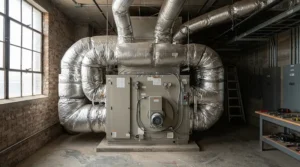
Every listing on Amazon calls itself a silent 6 inch exhaust fan, which is exactly why that word has become almost meaningless without real specs behind it. What actually reduces noise comes down to a handful of engineering choices, not marketing copy. First is motor type: EC (electronically commutated) motors use PWM control to run smoothly at low RPM without the electrical buzz that AC motors get from voltage suppression at low speeds — this is the single biggest reason AC Infinity, VIVOSUN, TerraBloom, and CKSFAN all default to EC motors for their quiet lineups. Second is impeller design: a mixed-flow impeller (used by five of the seven fans here) moves air with less turbulence than a simple axial blade, which directly reduces the whooshing sound you hear as airflow noise rather than motor noise. Third, and most overlooked, is housing and mounting: a rigid plastic or thin metal housing transmits motor vibration straight into whatever it’s screwed to, which is exactly the problem TerraBloom solved with acoustic foam and spring suspension in its Silenced line. Reviewers consistently note that even a genuinely quiet fan sounds louder than its rating if it’s mounted directly against a wood stud with no rubber isolation — the vibration transfer adds noise the dBA sticker never accounted for.
Decibel Rating Chart: How Loud Is Your Grow Room Fan, Really?
A number like “32 dBA” means very little in isolation, so here’s a decibel rating chart that puts these fans next to everyday sounds most people can picture instantly. According to decibel-level guidance compiled by Yale University’s Environmental Health & Safety office, a whisper sits around 25 dB, a household refrigerator hums around 55 dB, and normal conversation lands in the 60-70 dB range — which gives real context to why a 28-32 dBA grow fan feels almost inaudible next to daily life, while a 45-55 dB unit competes directly with your fridge for background noise.
| Sound Source | Decibel Level | Best For (Placement Comfort) |
|---|---|---|
| Whisper | ~25-30 dB | Ideal — any room, including bedrooms |
| VIVOSUN AeroZesh T6 (low speed) | ~28 dB | Bedroom-adjacent tents |
| AC Infinity CLOUDLINE S6 / Hon&Guan HI-SD | ~32 dB | Bedroom-adjacent with door closed |
| Household refrigerator | ~50-55 dB | Living areas, not light sleepers’ rooms |
| Normal conversation | ~60-70 dB | Garage, basement, or detached space only |
The analysis here matters more than the numbers alone: the CDC’s National Institute for Occupational Safety and Health notes that sustained exposure above 85 decibels is where hearing-related concerns begin, which is nowhere near where any fan on this list operates — but that’s not really the point for a grow room. The point is comfort and sleep, and the gap between a 28 dBA fan and a 55 dB fan is the difference between forgetting it’s running and hearing it through a closed door every single night.
Quiet Mode 6 Inch Fan Comparison: EC Motor vs AC Motor Speed Control
Every quiet mode 6 inch fan comparison eventually comes down to this one technical fork in the road: EC motor with PWM speed control, or AC motor with voltage-based speed control. On paper they sound similar — both let you turn a dial and slow the fan down — but the mechanism behind that dial changes everything about the noise you hear. PWM (pulse-width modulation) rapidly switches the EC motor’s power on and off many times per second rather than reducing voltage, which lets the motor spin smoothly and quietly even at very low speeds; this is exactly how the AC Infinity CLOUDLINE S6 and VIVOSUN AeroZesh T6 manage such low dBA figures at reduced speeds. AC motor speed controllers, by contrast, typically suppress voltage to slow the motor — a method that can introduce an audible electrical hum at partial speeds that some growers find more annoying than a fan simply running at full, steady RPM. This is precisely why the iPower 6 Inch 395 CFM and Hon&Guan HI-SD, both AC-driven, are honestly rated for their noise at full operation rather than marketed on low-speed quiet performance. Based on the spec comparison across all seven fans, if minimizing noise during partial-speed operation is your priority — say, running the fan at 40% overnight — an EC/PWM fan is worth the price premium. If you mostly run your fan at one consistent speed anyway, the AC motor fans close much of that quiet-mode gap.
How to Choose the Quietest 6 Inch Inline Duct Fan for Your Grow Room
Picking the right fan isn’t just about finding the lowest dBA number on a listing — it’s about matching that number to your actual space and setup. Here’s the process, step by step.
- Calculate your required CFM first, then filter by noise. Take your room’s cubic footage (length × width × height) and divide by your target air-exchange time — most growers aim for a full exchange every 1-3 minutes — to get your baseline CFM before you even look at decibel ratings.
- Add resistance factors before comparing fans. A carbon filter typically adds around 60% to your CFM requirement, each 90-degree duct bend adds roughly 40-60%, and LED grow lights can add another 50% for heat load — a fan rated exactly at your bare room volume will likely underperform once these are attached.
- Prioritize EC motors if the fan runs 24/7. The lower operating noise and better efficiency at partial speeds pay off fastest on fans that almost never get turned off.
- Check for an independently published dBA rating, not just marketing language. As we found repeatedly in this research, “ultra quiet” without a number is a claim you can’t verify — favor brands like AC Infinity, VIVOSUN, TerraBloom, and Hon&Guan that publish a testable figure.
- Match housing material to your mounting situation. Metal or double-insulated housings (like Vortex or CKSFAN) resist vibration transfer better than thin plastic when mounted directly to a stud or joist.
- Buy some headroom, then run it slower. A fan rated well above your minimum CFM requirement can run at a lower speed setting for your actual needs, which is almost always quieter than a smaller fan working near its ceiling.
- Budget for a speed controller if one isn’t included. Even the quietest fan on this list gets louder at full blast — the ability to throttle it down is what actually delivers day-to-day quiet.
Common Mistakes When Buying a Low Noise 6 Inch Fan for Grow Room
Even careful shoppers trip over the same handful of mistakes when hunting for a low noise 6 inch fan for grow room ventilation, and most of them are easy to avoid once you know what to look for. The biggest one is trusting an unqualified “quiet” or “silent” claim with no dBA number attached — as we saw with the Vortex S-Line and CKSFAN entries above, a legitimately good fan can still leave you guessing on noise if the brand doesn’t publish a tested figure. The second mistake is undersizing the fan to save money, then running it flat-out to compensate — a small fan working near its performance ceiling is almost always louder than a properly sized fan loafing at 50-60% speed. Third, growers frequently ignore static pressure loss from carbon filters and duct bends, buying a fan rated exactly at their room’s bare CFM requirement and then wondering why airflow (and resulting noise, from the motor working harder) is worse than expected once the filter is attached. Fourth is skipping vibration isolation entirely — mounting any fan directly against a wooden stud or metal duct hanger transmits motor hum into the structure, adding noise that no spec sheet accounts for. Finally, many buyers assume higher price automatically means quieter operation, but as this comparison shows, the budget Hon&Guan HI-SD matches the noise rating of fans costing nearly double.
Practical Usage Guide: Setting Up Your Fan for Maximum Quiet
Buying the right fan is only half the equation — installation choices swing perceived noise almost as much as the hardware itself. Start by isolating vibration at the mount: wrap the fan’s mounting straps or bracket with a thin strip of foam or rubber weatherstripping before securing it to a joist or shelf, which prevents motor hum from transferring into your structure. Next, avoid tight duct bends near the fan itself — a sharp 90-degree elbow right at the inlet or outlet creates turbulence noise that a straight run of ducting simply doesn’t produce, so leave at least a foot of straight duct on each side if your layout allows it. During the first 30 days, resist the urge to run the fan at full speed constantly; instead, dial it to the lowest setting that still hits your target temperature and humidity, since most EC fans on this list are engineered to be quietest in their bottom third of speed settings. Check and tighten duct clamps weekly for the first month, since a slightly loose clamp will buzz audibly against the duct wall as air passes through. For ongoing maintenance, wipe down blades every 4-6 weeks — a thin coat of dust or resin buildup subtly unbalances the impeller, and an unbalanced fan is a noisier fan no matter how good its dBA rating was on day one.
Real-World Scenarios: Matching the Right Fan to Your Grow Space
Consider three different growers, each with a different priority. First, the apartment grower with a 2×4 tent tucked in a closet next to a bedroom wall, running lights and fan 24/7 on a tight budget — for this person, the TerraBloom ECMF-150-S makes the most sense despite its lower CFM, because the sound-isolated housing directly solves the “will my roommate hear this all night” problem better than raw airflow numbers ever could. Second, picture a basement grower with a 5×5 tent, a carbon filter, and two 90-degree duct bends to reach an exterior vent — here, the extra static-pressure headroom of the AC Infinity CLOUDLINE S6 or VIVOSUN AeroZesh T6 matters more, since a lower-CFM fan would have to work near its ceiling constantly to overcome that resistance, and noise climbs right along with strain. Third, imagine a first-time grower testing the hobby in a garage where noise genuinely doesn’t matter yet but budget does — the iPower 6 Inch 395 CFM or Hon&Guan HI-SD cover the basics competently without a premium price tag, letting that grower reinvest savings into lighting or a carbon filter instead.
Buyer’s Decision Framework: If/Then Picks for Every Situation
Sometimes you just want the shortcut. If your grow space is within earshot of a bedroom or living room, choose an EC-motor fan with a published dBA rating under 32, because unverified “quiet” claims aren’t worth the risk of buyer’s remorse at 11 p.m. If your duct run includes a carbon filter and multiple bends, choose a fan rated well above your calculated baseline CFM, because resistance-driven strain is the single biggest hidden cause of unexpected noise. If your budget is under $60, choose the fan with the most specific, verifiable spec sheet rather than the loudest marketing claims, since a modest, honestly-rated fan beats an unverifiable “ultra quiet” one every time. If you’re running the fan nearly constantly, prioritize EC motor efficiency over raw CFM headroom, since the electricity savings and low-speed quiet compound over months of runtime. And if durability under rough handling matters more than a lab-tested decibel figure, lean toward metal-bodied options like Vortex or CKSFAN and accept the tradeoff of an unverified noise claim.
Long-Term Cost & Maintenance: What Quiet Ventilation Really Costs
The sticker price is never the full story with inline fans, and this is where EC motors genuinely earn their higher upfront cost back over time. Take the Hon&Guan HI-SD at a maximum 19.2 watts versus a comparable AC fan pulling 40-70 watts at similar CFM — over a full year of 24/7 operation, that gap in power draw adds up to real dollars on an electric bill, even before accounting for the quieter, less-strained operation an efficient motor provides. Bearing life matters too: the dual ball bearings rated for 67,000-70,000 hours in the AC Infinity CLOUDLINE S6 and TerraBloom ECMF-150-S translate to roughly 7-8 years of continuous runtime before wear-related noise creeps in, versus cheaper sleeve-bearing motors that often start humming audibly within 18-24 months. Maintenance costs stay low across the board — a soft brush and occasional duct-clamp check is genuinely all these fans need — but replacement speed controllers, when they fail, typically run $15-$30 regardless of brand, so factor that into a multi-year ownership estimate rather than assuming the fan itself is the only cost center.
Benefits vs Traditional Alternatives: Inline EC Fans vs Standard AC Booster Fans
It’s worth stepping back and comparing this entire category — quiet 6-inch inline duct fans — against the traditional AC booster fans still sold in most hardware stores for HVAC duct-boosting purposes.
| Factor | Quiet EC Inline Fans | Traditional AC Booster Fans | Best For |
|---|---|---|---|
| Typical noise | 28-35 dBA | 45-55+ dBA | EC fans for bedroom-adjacent spaces |
| Speed control | Smooth PWM, low-speed quiet | Voltage-based, can hum at partial speed | EC fans for variable operation |
| Energy use | Often 20-40W at max | Often 60-100W+ at max | EC fans for 24/7 runtime |
| Upfront cost | $90-$170 typical | $30-$70 typical | AC fans for tight one-time budgets |
The analysis here is straightforward: traditional AC booster fans win on upfront price alone, which is exactly why budget picks like the iPower 6 Inch 395 CFM and Hon&Guan HI-SD still use AC motors and undercut the EC-driven premium fans by $50-$100. But for a grow room running continuously for months, the EC fans’ lower energy draw and genuinely smoother low-speed operation tend to close — and often exceed — that price gap over a single grow cycle, especially for anyone sensitive to nighttime noise.

FAQ
❓ What is the quietest 6 inch inline duct fan for a grow tent?
❓ Do EC motor fans really run quieter than AC motor fans?
❓ How many CFM do I need for a quiet 6 inch fan in a 4x4 grow tent?
❓ Is a lower dBA rating always better for a grow room fan?
❓ Can I make a loud 6 inch inline duct fan quieter after buying it?
Conclusion
Chasing the quietest 6 inch inline duct fan for grow room use really comes down to matching real specs to your real space, not trusting whichever listing shouts “silent” the loudest. Across this comparison, the AC Infinity CLOUDLINE S6 stands out as the safest all-around pick thanks to its verified 32 dBA rating at a genuinely useful 402 CFM, while the VIVOSUN AeroZesh T6 edges it out for anyone whose fan spends most of its life at partial speed. Growers with a bedroom-adjacent setup should take a hard look at the TerraBloom ECMF-150-S despite its lower CFM ceiling, since independently verified sound-dampening engineering is rare in this price category. And if budget is the deciding factor, both the iPower 6 Inch 395 CFM and Hon&Guan HI-SD prove that quiet ventilation doesn’t require a premium price tag — you just have to know which numbers on the listing are worth trusting. As always with affiliate content under the FTC’s Endorsement Guides, transparency about what we can and can’t verify matters more than a persuasive sales pitch — and that’s exactly the standard this guide was held to.
Recommended for You
- 6 Inch Inline Fan For Basement Grow Room: 7 Best Picks (2026)
- 6 Inch Inline Fan For 4×4 Grow Tent: 7 Proven 2026 Picks
- 7 Best 6 Inch Inline Fans Of 2026 — Quiet Picks That Actually Deliver
Disclaimer: This article contains affiliate links. As an Amazon Associate, I earn from qualifying purchases. If you purchase products through these links, we may earn a small commission at no additional cost to you.
✨ Found this helpful? Share it with your friends! 💬🤗
