
In This Article
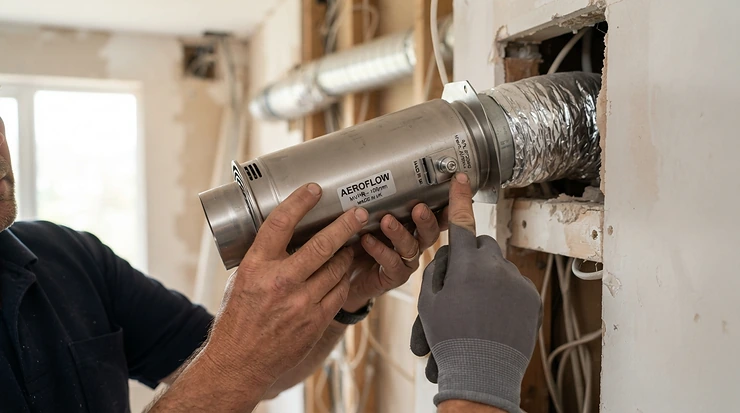
A Terrabloom 6 inch inline fan is a compact duct fan that pulls air through 6-inch ducting, usually from a carbon filter inside a grow tent out to the open air. TerraBloom’s ECMF-150 family pairs an EC motor, a steel housing and a speed controller to move roughly 288 to 355 CFM on just 36 to 46 watts.

This Terrabloom 6 inch inline fan review for grow tent growers starts with an awkward truth: TerraBloom sells several 6-inch fans with near-identical names. There’s the base ECMF-150, the quieter ECMF-150-S, the newer ECMF-150-V2, and the older-school MFIF-6. Grab the wrong one and you either overpay or end up with a fan that hums in the corner like a refrigerator with opinions.
Here’s the plan. We’ll sort the lineup, stack it against three popular rivals, and translate every spec into plain English. Along the way you’ll get a Terrabloom fan performance test (built from certified lab data and spec math), a CFM output accuracy check, and a build material quality audit. You’ll also get a Terrabloom fan durability review and a look at the customer support experience.
Everything below rests on published specs, lab-certification claims and aggregated buyer feedback, never on invented hands-on testing. Where the data is thin, you’ll hear about it. If you’re curious why EC motors run cooler and sip less power, this ebm-papst explainer on EC motors covers the basics well.
Quick Comparison: Terrabloom 6 Inch Models vs Top Rivals
| Product | Airflow | Power | Noise | Price Range | Best For |
|---|---|---|---|---|---|
| ECMF-150 | 288 CFM | 36W | From 31 dBA | Around $100-$150 | Efficient all-rounder for 4×4 tents |
| ECMF-150-S | 288 CFM | 36W | 31-50 dBA | Above the base model | Tents near bedrooms |
| ECMF-150-V2 | 355 CFM | 46W | Not stated; verify | Premium tier of the lineup | Humid tents, longer duct runs |
| MFIF-6 | 395 CFM | 70W | Louder at full speed | Budget-friendly tier | Maximum CFM per dollar |
| CLOUDLINE T6 | 402 CFM | ~38W | 32 dBA | Around $150 | Automation fans |
| AeroZesh S6 | 405 CFM | 35W | 39-45 dB (listings differ) | Around $100 | Budget EC buyers |
| VIVOSUN Z6 | 440 CFM | 135W | Under 50 dB | Check current price | Brute-force airflow |
Read the table sideways and a pattern jumps out. The EC fans cluster at 35 to 46 watts, while the AC-style MFIF-6 and VIVOSUN Z6 spend 70 and 135 watts for extra push. If your tent is a standard 4×4, the ECMF-150 or AeroZesh S6 already covers you with room to spare.
Need the loudest-possible airflow for a long, restrictive duct run? Then the MFIF-6 or VIVOSUN Z6 earn a look. Prices shift constantly, so treat every range here as a snapshot and check current pricing before you commit.
💬 Just one click — help others make better buying decisions too!😊
Top 7 Terrabloom 6 Inch Inline Fan Options and Rivals: Expert Analysis
Four TerraBloom variants and three rivals follow. Each gets honest analysis built on real specs and aggregated review themes.
1. TerraBloom ECMF-150 — the efficient everyday workhorse
If one fan defines the lineup, this is it. The ECMF-150 pairs a brushless EC motor with dual ball bearings and a cold-rolled steel housing, and it carries a two-year warranty.
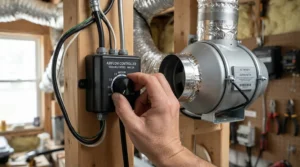
At 288 CFM on 36 watts, that’s 8 CFM per watt, roughly double what budget AC fans manage. The controller options are the real story: an 8-speed digital dial with a numeric screen, plus support for PWM and 0-10V controllers through a 3.5mm cable. Wireless and thermostat add-ons are sold separately.
Retail sizing guidance suggests a 4x4x7 tent needs roughly 140-150 CFM at the filter. That leaves this fan loafing at 50 to 60 percent, which is exactly where EC fans are quietest.
Review volume sits around 547 on one retailer mirror, but I could not verify detailed 6-inch review text, so I won’t invent a verdict. Across the ECMF line, buyers commonly describe low-speed quietness and praise the controller flexibility. One caution: older listings of this model show a different CFM figure, and some are marked discontinued, so confirm the exact version.
Pros:
- ✅ Efficient 8 CFM per watt
- ✅ Wide speed range via flexible controllers
- ✅ Two-year manufacturer warranty
Cons:
- ❌ 288 CFM trails 400 CFM rivals
- ❌ Not silenced, so full speed is audible
Expect a price around the $100-$150 range. For a typical 4×4, it’s strong value.
2. TerraBloom ECMF-150-S — silenced for tents near living spaces
The ECMF-150-S is the same 288 CFM, 36-watt core wrapped in insulation. TerraBloom says that trims noise by 10 to 15 dBA depending on speed, giving a 31-50 dBA range. A common acoustics rule of thumb says a 10 dB drop sounds roughly half as loud, so this is a meaningful step for anyone whose tent shares a wall with a bedroom.
The spec sheet also lists 396 Pa of pressure, an IP64 ingress rating, HVI certification, and a claim of meeting ENERGY STAR Most Efficient 2021 criteria. That pressure figure helps when you’re pulling air through a dense carbon filter.
The trade-off is physical. The fan is about 21.5 inches long and roughly 16.6 pounds, so you need sturdy hanging hardware and some headroom in the tent. The brand also warns that using it on fire-based heaters or fireplaces will damage the electronics.
Review data is very thin (only a handful of reviews on the brand page), so I can’t summarize buyer sentiment honestly. Judge it on the certifications and specs instead.
Pros:
- ✅ Insulated casing cuts noise noticeably
- ✅ 396 Pa pressure suits filter-heavy setups
- ✅ HVI-certified, with an efficiency claim
Cons:
- ❌ Long and heavy for small tents
- ❌ Same 288 CFM as the cheaper base model
Price sits above the base ECMF-150. You’re paying for quiet, not airflow.
3. TerraBloom ECMF-150-V2 — newest model with a waterproof-rated shell
The ECMF-150-V2 is TerraBloom’s “2026 model.” It moves 355 CFM on 46 watts and carries an IP68 rating, with insulated electronics and motor plus the 8-speed digital controller.
Do the math and the trade-off is clear. Airflow rises about 23 percent over the ECMF-150, while power draw rises about 28 percent. It’s slightly less efficient per watt (about 7.7 CFM per watt) but gives you real headroom for a 5×5 tent or a long duct run.
IP68 sounds dramatic, but treat it as humidity insurance. In a sealed, steamy tent, condensation near the electronics is the real enemy, and a fan built to shrug that off is genuinely reassuring. It doesn’t make the air move any faster.
Because the model is new, there’s little verifiable long-term review history. The brand also lists a companion ECMF-150-S2 (355 CFM, 45W, silenced) for quiet-first buyers.
Pros:
- ✅ 355 CFM gives filter and duct headroom
- ✅ IP68 rating protects against moisture
- ✅ PWM and 0-10V controller support
Cons:
- ❌ Slightly lower CFM per watt than base
- ❌ Limited long-term owner feedback so far
Expect pricing at the upper end of the TerraBloom 6-inch lineup. Worth it for humid or demanding grows.
4. TerraBloom MFIF-6 — most CFM per dollar in the brand
The MFIF-6 takes the muscle route: 395 CFM, 70 watts, 5.64 CFM per watt, ETL listing, a pre-wired 6-foot grounded cord and a built-in speed controller. It’s plug-and-go, with no controller shopping needed.
That 395 CFM is a real asset for a 4×8 tent. Retail guidance for a 4x8x7 space (224 cubic feet) calls for roughly 280-300 CFM at the filter, which implies a fan rated around 350-400 CFM free air. The MFIF-6 lands right in that window, where the 288 CFM models would struggle.
The price of that power is wattage. At 70 watts it draws nearly double the ECMF-150, which adds up for a fan that never sleeps.
Review sentiment is solid. The retail mirror shows about 4.4 out of 5 across roughly 1,000 ratings. One recurring theme I could verify is that the fan sounds busy at full speed on the bench but fades into room noise once installed. Treat that as one reported pattern, not gospel.
Pros:
- ✅ Highest free-air CFM among TerraBloom 6-inch fans
- ✅ Simple built-in speed controller
- ✅ Large review base to judge from
Cons:
- ❌ Draws about double the ECMF-150
- ❌ Noticeable at full speed
Typically budget-tier pricing, so check current price. Great for big tents on a tight budget.
5. AC Infinity CLOUDLINE T6 — smartest controls at a quiet 32 dBA
The CLOUDLINE T6 is the benchmark everyone measures against. It’s an EC fan listed at 402 CFM, 32 dBA and roughly 38 watts, with 10 speeds and app-based temperature and humidity automation.
The numbers work out to roughly 10.6 CFM per watt, comfortably ahead of every TerraBloom 6-inch model. Automation is the headline benefit: the fan can ramp up when the tent heats up and back off when it cools, which cuts both noise and wasted power.
Buyer sentiment is strong. Several roundups name it a top pick, and one aggregator reports a 4.7 average across more than 9,800 reviews (that figure is from a secondary source I couldn’t confirm firsthand).
The catch is price and complexity. If you just want a fan that moves air at a dial setting, you may be paying for app features you never open.
Pros:
- ✅ 402 CFM at a very low 32 dBA
- ✅ Temperature and humidity automation
- ✅ Highest efficiency of the premium options
Cons:
- ❌ Costs more than most alternatives
- ❌ App features overkill for simple tents
Pricing runs around $150. Best for growers who want set-and-forget climate control.
6. VIVOSUN AeroZesh S6 — budget-friendly EC with smart-ready upgrades
The AeroZesh S6 is a PWM-controlled, mixed-flow EC fan rated at 405 CFM on 35 watts at 3100 RPM. That works out to about 11.6 CFM per watt, the best efficiency in this guide, at an entry-level price near $100.
There’s a spec wrinkle worth knowing about. Product pages list noise at 45 dB, while a retailer kit page claims under 39 dB. Spec inconsistencies like this are a reminder to check which exact listing you’re buying and to treat noise numbers as approximate.
The housing is listed as plastic, which keeps weight and cost down but isn’t the rust-proof steel of the TerraBloom models. For most home tents, that’s a fair trade.
Review volume is small. One retailer shows 4.6 stars across 9 reviews, and the brand store shows a few dozen, so confidence in the average is low.
Pros:
- ✅ Best CFM per watt in this list
- ✅ Low entry price for EC technology
- ✅ Pairs with VIVOSUN’s GrowHub controllers
Cons:
- ❌ Plastic housing feels less premium
- ❌ Noise ratings vary by listing
Around $100 for the fan alone. A smart budget pick if you accept the thin review history.
7. VIVOSUN Z6 — brute-force AC airflow at 440 CFM
The VIVOSUN Z6 is the heavyweight: 440 CFM, 135 watts, 2450 RPM, a steel build, and a listed noise level under 50 dB. It weighs about 10.4 pounds.
The airflow is real, but so is the appetite. Dividing 440 CFM by 135 watts gives only about 3.3 CFM per watt, the least efficient fan here. Run it nonstop and electricity becomes a meaningful line item.
Where does it make sense? Long, bendy duct runs, big carbon filters and large tents, where raw static muscle matters more than efficiency. For a standard 4×4, it’s overkill, and the noise and negative pressure it creates will fight you.
The brand store shows a 4.8 average across 229 reviews. Since that’s seller-hosted, weigh it accordingly. One listing also says the controller is “none” while the title mentions a speed controller, so confirm what’s in the box.
Pros:
- ✅ Highest airflow of the seven
- ✅ Steel construction feels sturdy
- ✅ Large review base on brand store
Cons:
- ❌ Power-hungry at 135 watts
- ❌ Overkill and louder for small tents
Price is budget-leaning, but check current price and the included controller.
Efficiency Scorecard: What the Watts Really Cost
| Product | CFM per Watt | Est. Yearly Electricity (full speed, 24/7) | Review Signal | Best For |
|---|---|---|---|---|
| ECMF-150 | 8.0 | About $54 | ~547 reviews, limited detail | ECMF-150: everyday 4×4 tents |
| ECMF-150-S | 8.0 | About $54 | Very few reviews | ECMF-150-S: quiet-first setups |
| ECMF-150-V2 | 7.7 | About $68 | New, little history | ECMF-150-V2: humid or long-duct tents |
| MFIF-6 | 5.6 | About $104 | ~4.4/5, ~1,000 ratings | MFIF-6: big tents on a budget |
| CLOUDLINE T6 | 10.6 | About $57 | Widely praised | CLOUDLINE T6: automation fans |
| AeroZesh S6 | 11.6 | About $52 | Small sample | AeroZesh S6: low-cost EC |
| VIVOSUN Z6 | 3.3 | About $201 | 4.8 on 229 (brand store) | VIVOSUN Z6: raw airflow |
(Electricity is an illustration at an assumed $0.17 per kWh, running flat out all year. Real use will be lower, but the ranking holds.)
The table makes the efficiency gap plain. The EC fans cluster around $50 to $70 per year at worst-case usage, while the MFIF-6 roughly doubles that and the VIVOSUN Z6 quadruples it. If you can live with 288 to 355 CFM, the TerraBloom EC line saves real money over a few years.
Terrabloom fan performance test: What Lab Data and Spec Math Say
Let’s be clear: this isn’t a bench test. It’s a performance read built from certified lab data and spec arithmetic, because that’s the honest way to do it without hands-on units.
TerraBloom says its EC fans were tested at the REEL lab at Texas A&M, and that the results were certified by the Home Ventilating Institute and ENERGY STAR. The RELLIS Energy Efficiency Laboratory at Texas A&M describes itself as ISO 17025 accredited and an approved lab for HVI and ENERGY STAR testing. That’s a credible foundation for the brand’s published airflow and wattage.
Spec math then tells the story. A 4x4x7 tent holds 112 cubic feet, and retailer guidance says to add 25 to 30 percent for filter resistance. The ECMF models clear that bar easily, while a 4×8 tent really wants the 355-395 CFM class.
In everyday terms, it means the ECMF-150 at 50 percent speed can out-ventilate a 4×4 quietly, while the MFIF-6 has the lung capacity for a larger tent. The ECMF-150-V2 sits in the sweet middle. The big unknown is real-world noise, which varies by controller setting, mounting and ducting.
CFM output accuracy: Do the Numbers Hold Up?
CFM output accuracy is the question that matters most, and the answer is nuanced. TerraBloom says its spec-sheet figures come from a deliberately conservative, HVI-mandated method, which is the opposite of inflating marketing numbers.
The wrinkle is that older retail listings of the ECMF-150 advertised about 350 CFM on 40 watts, while current pages state 288 CFM on 36 watts. I can’t verify why the figure changed, so the practical lesson is simple: trust the current, certified listing, and don’t assume an old forum post describes your fan.
Lab airflow is also measured in controlled chambers, such as the test chambers built to ANSI/AMCA 210 at Texas A&M’s Energy Systems Lab. Your tent adds a carbon filter, bends and ducting, all of which cut real flow below the free-air number.
Want to sanity-check your own setup? A 6-inch duct has about 0.196 square feet of cross-section, so CFM equals air velocity (feet per minute) times 0.196. At 288 CFM, velocity would be around 1,470 feet per minute in free air. A handheld anemometer reading far below that, with a filter attached, is normal and a good reason to size up.
Build material quality: Steel, Bearings and Ingress Ratings
Build material quality is where TerraBloom’s fans quietly separate from budget plastic rivals. The ECMF-150 uses a cold-rolled steel housing that the brand says resists rust and accidental damage, and the fans carry dual ball bearings that a reseller listing rates for up to 70,000 hours.
The fans are also ETL listed to UL 507 and certified to CSA C22.2 No 113, a safety credential some commercial or insurance situations require. By contrast, the AeroZesh S6 lists a plastic housing, which is lighter but less rugged.
Ingress protection varies by version, and that matters. The older ECMF models list IPX4, the ECMF-150-S lists IP64, and the ECMF-150-V2 lists IP68. Always confirm which version you’re buying.
Operating limits apply to every model: the brand lists indoor use, a 140°F maximum, and humidity up to 90 percent. In plain terms, steel plus sealed electronics is a sturdy package, but it isn’t built for fireplaces or open weather.
Terrabloom fan durability review: Lifespan, Warranty and Failure Points
A fair Terrabloom fan durability review has to admit what the data can’t show: I couldn’t find rigorous multi-year torture tests. What exists is design evidence and a warranty.
On design, EC motors have no brushes to wear out, and 70,000 bearing hours works out to nearly eight years of nonstop running. That’s a rating, not a promise, but it’s far longer than the two-year warranty window.
The warranty itself is clear. TerraBloom lists two years against manufacturing defects on its ECMF series fans, one year on its other fans, and a lifetime warranty on extension cords.
The likely failure points are mundane. AC dimmers and rheostat controllers won’t work with ECMF fans and shouldn’t be tried, heat above 140°F can damage the electronics, and constant humidity or condensation is the long-term enemy of any motor. Wipe the blades, keep intake filters clean, and use the ECMF-150-V2‘s higher ingress rating if your tent runs steamy.
Customer support experience: What Buyers Can Expect
Customer support experience is hard to judge honestly. I found no reliable aggregated review text describing TerraBloom’s support, and I won’t invent any, so here’s what is verifiable.
Warranty service and application questions go to the brand’s support email, [email protected]. TerraBloom also tells owners to contact customer service for replacement ECMF controllers. Its brand statement describes the company as American and says it values accuracy and honesty.
If you buy through Amazon, the listing notes a 30-day return window for a refund or replacement in original condition. That’s your fastest safety net if a fan arrives noisy or damaged.
To make any warranty claim smooth, save your order number, note the exact model (ECMF-150, ECMF-150-S or another), and register the product on the brand’s site if it offers that. Photos or a short video of a fault usually speed things up with any manufacturer.
Terrabloom 6 inch pros and cons: The Honest Scorecard
Here is the Terrabloom 6 inch pros and cons summary, based on specs and the review themes I could verify.
Pros:
- ✅ Efficient EC motors with 8 CFM per watt
- ✅ Steel housings and dual ball bearings
- ✅ Flexible speed control with PWM and 0-10V support
- ✅ Two-year warranty on ECMF models
- ✅ Silenced and waterproof-rated variants
Cons:
- ❌ Base 288 CFM trails 400 CFM rivals
- ❌ Confusing model names and changing specs
- ❌ Limited verifiable review text for newer models
- ❌ No built-in app automation like the CLOUDLINE T6
What does this add up to? TerraBloom is a build-quality and efficiency brand rather than a spec-sheet brawler. If you value quiet, steel and certified numbers, it fits. If you want maximum CFM and app control at the lowest price, the rivals have a point.
How to Choose a Terrabloom 6 Inch Inline Fan for a Grow Tent
Start with your tent volume, add a filter buffer, and then match noise and controls to where the tent lives. Follow these steps:
- Calculate tent volume. Multiply length by width by height in feet. A 4x4x7 tent holds 112 cubic feet.
- Add 25-30 percent for the filter. Carbon filters resist airflow, so a 112-cubic-foot tent needs roughly 140-150 CFM at the filter.
- Pick the CFM class. Choose 288 CFM for 4×4 tents, 355 CFM for 5×5 or long ducts, and 395 CFM-plus for 4×8.
- Match noise to location. Near a bedroom, favor the ECMF-150-S; in a garage, the cheaper models will do.
- Decide your controller. Basic dial, wireless remote or thermostat; avoid AC dimmers, which won’t work.
- Check humidity and build. For steamy tents, consider the ECMF-150-V2‘s IP68 rating.
- Confirm the exact version. Specs and ratings change between model years, so verify the listing.

Practical Usage Guide: Setup, Tuning and Maintenance
A good fan can still underperform if it’s installed carelessly. These tips cover what listings rarely mention.
Install it right
Mount the fan outside or at the top of the tent, with the carbon filter inside and the fan downstream, so the filter sees negative pressure and the fan stays clean. Keep the duct as short and straight as possible, since long runs reduce effective CFM. Use rubber-isolated straps or a rubber-padded shelf to dampen vibration, and make sure the straps are rated for the fan’s weight, especially the heavier ECMF-150-S.
Tune the first week
Start at around 40 to 50 percent speed and watch the tent. Walls pulled tightly inward mean you’re over-exhausting; turn it down. Temperature and humidity swings tell you whether to nudge it up or down. EC fans stay quiet at moderate settings, so don’t default to full blast.
Maintenance schedule
- Monthly: wipe the housing and check mounting hardware.
- Every 3 months: clean the blades gently, with the fan unplugged.
- Every 6-12 months: inspect cords and controller connectors.
Common mistakes in the first 30 days
Running full speed “just because,” using an incompatible AC dimmer, and routing long ducts with tight kinks are the usual culprits. Skip them and the fan will behave.
Real-World Scenarios: Which Fan for Which Grower?
Consider three profiles, matched by space, budget and noise tolerance.
Scenario 1: The renter with a 4×4 tent in a spare bedroom. Budget is moderate and the tent runs daily. The ECMF-150-S is the logical pick: its insulated housing is built for close quarters, and 288 CFM comfortably exceeds the roughly 140-150 CFM the tent needs through a filter. The heavy body needs solid hanging hardware.
Scenario 2: The 5×5 grower with a long duct run. A 5x5x7 tent holds about 175 cubic feet, and a long duct adds resistance. The ECMF-150-V2 at 355 CFM, or the CLOUDLINE T6 at 402 CFM, offer the extra headroom. If you want automation and can afford it, the CLOUDLINE T6 is the cleaner choice; if you want a waterproof-rated shell, the ECMF-150-V2 wins.
Scenario 3: The garage grower with a 4×8 tent on a tight budget. At 224 cubic feet, this tent wants roughly 280-300 CFM at the filter. The MFIF-6 at 395 CFM is the economical fit, and the noise matters less in a garage. The AeroZesh S6 at around $100 is a cheaper EC alternative if you accept its thinner review record.
Problem → Solution Guide: Fixing Common Pain Points
Problem: the fan hums or vibrates. Isolate it with rubber-padded mounts and avoid mounting directly against the tent frame. Dropping the speed setting also helps, since noise rises sharply near full speed.
Problem: tent walls suck inward. That’s over-exhausting. Lower the speed, add intake openings, or consider a small intake fan. A fan that’s too strong for the tent is a common mistake with 400-CFM-plus models.
Problem: humidity keeps creeping up. Pair the fan with a thermostat or humidity controller, and watch the room as well as the tent. For context, the EPA recommends keeping indoor relative humidity below 60 percent, ideally 30 to 50 percent. That guidance is about your home, not your plants, but a damp room feeding your tent is worth fixing.
Problem: the controller won’t work. ECMF fans don’t accept AC dimmers or rheostats. Use the included controller or a compatible PWM or 0-10V unit, and contact support for a replacement if the stock one fails.
Terrabloom EC Fans vs Traditional AC Inline Fans
Choosing between an EC fan and a traditional AC fan comes down to long-term cost against upfront simplicity.
| Feature | EC fans (ECMF-150, AeroZesh S6) | AC fans (MFIF-6, VIVOSUN Z6) |
|---|---|---|
| Efficiency | 8-11 CFM per watt | 3-6 CFM per watt |
| Speed control | Full range, quiet at low speeds | Often limited or noisier |
| Upfront cost | Typically higher | Typically lower |
| Noise | Quieter at moderate settings | Louder at full speed |
| Best for | Daily-run, noise-sensitive tents | Large tents, tight budgets |
The pattern is consistent: EC fans cost more up front but pay you back in electricity and quiet. If the fan runs year-round, ECMF-150 or AeroZesh S6 economics usually win, while the MFIF-6 makes sense when sheer CFM per dollar is the only goal.
Long-Term Cost & Maintenance: The Math Behind the Watts
Upfront price is only half the bill. Running a 36-watt fan nonstop uses about 315 kWh per year, which at an assumed $0.17 per kWh is around $54. A 70-watt fan like the MFIF-6 uses roughly double that, and a 135-watt VIVOSUN Z6 can top $200 annually in the worst case.
Over five years, those gaps matter. The ECMF-150 might cost around $270 in electricity at full-speed, 24/7 use, versus about $520 for the MFIF-6. In real life you’ll run lower speeds and fewer hours, but the ranking stays the same.
Maintenance costs are small: a wipe-down, occasional cord checks, and a replacement controller if one fails. With a two-year warranty on ECMF models and bearings rated for around eight years of continuous running, total cost of ownership favors the EC models for most growers.
✨ Don’t Miss These Exclusive Deals!
🔍 Take your grow tent ventilation to the next level with these carefully selected fans. Click on any highlighted product name to check current pricing and availability. The right fan will help you create the steady, quiet climate your plants will love!

FAQ
❓ Does a Terrabloom 6 inch inline fan work with a carbon filter?
❓ Can I use a dimmer with a Terrabloom EC fan?
❓ How long is the Terrabloom warranty?
❓ Is the ECMF-150 or CLOUDLINE T6 better for a 4x4 tent?
❓ Can a Terrabloom 6 inch inline fan run 24/7?
Conclusion
So where does this Terrabloom 6 inch inline fan review for grow tent growers land? TerraBloom’s EC models are efficient, solidly built and backed by two-year coverage and certified lab data, which makes them smart picks for 4×4 and 5×5 tents.
Choose the ECMF-150 for balanced value, the ECMF-150-S if the tent sits near a bedroom, and the ECMF-150-V2 for humid or demanding setups. The MFIF-6 wins for big tents on a budget, while the CLOUDLINE T6 is the premium pick for automation and the AeroZesh S6 the cheap EC alternative.
Keep the caveats in mind. Newer models have limited verifiable review history, specs vary across listings, and noise ratings differ from page to page. Confirm the exact model, size with a filter buffer, and check current prices before buying.
✨ Ready to upgrade your ventilation?
🔍 Compare the models above, match the CFM to your tent, and click any highlighted product name to check current pricing and availability. A well-chosen fan is the quiet hero of every healthy grow tent!
Recommended for You
- Terrabloom 6 Inch Fan And Filter Combo Kit: 7 Best Buys 2026
- Price Terrabloom 6 Inch Inline Fan: 7 Smart Buys (2026)
- Vivosun 6 Inch Inline Fan With Speed Controller: 7 Best Picks 2026
Disclaimer: This article contains affiliate links. As an Amazon Associate, I earn from qualifying purchases. If you purchase products through these links, we may earn a small commission at no additional cost to you.
✨ Found this helpful? Share it with your friends! 💬🤗
