
In This Article
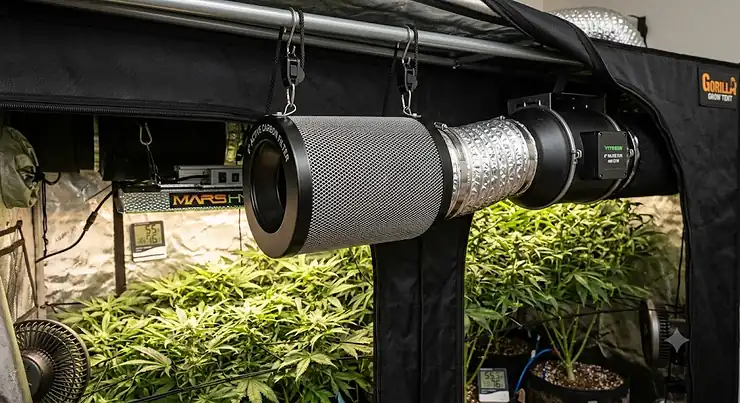
Your neighbor should never know what you’re growing before you tell them. That’s the entire job of a 6 inch carbon filter, and it’s a job most people underestimate until the day someone knocks on the door asking about “that smell.” A 6 inch carbon filter is a cylindrical duct-mounted scrubber packed with activated charcoal that pulls odor-causing compounds out of the air stream before it ever leaves your tent or grow room. Air gets pulled through a bed of porous carbon, odor molecules stick to the carbon’s surface, and what exits the other end is noticeably cleaner.
The tricky part isn’t finding a 6 inch carbon filter — Amazon alone lists dozens of them. The tricky part is picking one whose airflow rating actually matches your fan, whose carbon bed is thick enough to outlast a full flowering cycle, and whose price reflects real build quality instead of marketing copy. This guide walks through seven real, currently available models spanning budget to premium, breaks down what their specs actually mean day to day, and answers the sizing and lifespan questions that trip up first-time buyers. We’ll also touch on the 8 inch carbon filter option for larger rooms, how an inline carbon filter setup actually gets installed, and a straightforward CFM matching guide so you’re not guessing at fan compatibility. By the end, you’ll know exactly which filter fits your space — and why.
Quick Comparison Table
| Product | Airflow Rating | Carbon Type | Best For |
|---|---|---|---|
| AC Infinity 6″ Duct Premium Carbon Filter | ~310 CFM | Australian RC412, 1200+ IAV | Best all-around reliability |
| VIVOSUN 6 Inch Air Carbon Filter | 384-413 CFM | Australian RC412, 1200+ IAV | Best CFM-per-dollar |
| iPower GLFILT6M 6 Inch Carbon Filter | 400 CFM | Australian RC412, 1050+ IAV | Lightest, easiest to hang |
| TerraBloom 6 Inch Carbon Filter | Rated for 5×5-8×8 rooms | Deep-bed coconut/RC412 blend | Longest-lasting budget option |
| Gorilla Carbon Filter 6×24 | 500 CFM | Ultra-activated coconut carbon | Best for large tents needing headroom |
| FloraFlex Air Carbon Filter 6″ | 310 CFM | Australian RC412, 1200+ IAV | Best build quality for the price |
| Phresh Carbon Filter 6″x16″ | 400 CFM | RC-48 virgin carbon | Best premium pick, lightest housing |
A quick scan of that table already tells a story: airflow ratings cluster tightly between 300 and 500 CFM, which means your fan choice matters just as much as your filter choice. Where these seven models actually separate from each other is carbon bed depth, housing weight, and how much margin you get before the filter starts breaking through and letting odor slip past. The Gorilla Carbon Filter 6×24 stands out for sheer capacity, while the TerraBloom 6 Inch Carbon Filter wins on bed thickness relative to price. We’ll unpack every one of those differences in the product breakdowns below.
💬 Already know what you’re after? Scroll down to grab the pick that fits your setup!
💬 Just one click — help others make better buying decisions too!😊
Top 7 6 Inch Carbon Filters: Expert Analysis
1. AC Infinity 6″ Duct Premium Carbon Filter — most trusted name in the category
The AC Infinity 6″ Duct Premium Carbon Filter built its reputation by simply not failing when growers need it most, and that reliability is why it’s the default recommendation in most grow forums. Under the hood sits a 38mm bed of Australian Virgin charcoal rated at 1200+ IAV (iodine adsorption value), which in practical terms means the carbon has a dense enough pore structure to trap a wide range of organic odor compounds rather than just the easy ones. Reversible aluminum flanges let you flip the canister once the intake side starts to saturate, effectively giving you a second life out of one filter before replacement. Based on the spec sheet, this model is built for growers who want a “buy it once, stop thinking about it” experience rather than the cheapest possible entry point.
Reviewers consistently note that the AC Infinity 6″ Duct Premium Carbon Filter holds up well through a full 8-10 week flowering cycle in a 4×4 tent, though several also mention that humidity above 60% inside the tent noticeably shortens that window. A common thread in aggregated feedback is that the pre-filter cloth needs washing every few weeks to prevent premature clogging — not a flaw, just a maintenance reality worth planning for.
Pros:
- ✅ 1200+ IAV Australian charcoal handles a wide odor spectrum
- ✅ Reversible flange design effectively doubles usable filter life
- ✅ Backed by a well-established brand with responsive support
Cons:
- ❌ Performance drops noticeably in high-humidity tents
- ❌ Sits at a premium price point versus generic alternatives
Expect to pay in the $60-$80 range at the time of research, though prices fluctuate — always check current pricing before buying. For growers who’d rather spend a bit more upfront than gamble on an unknown brand, this is the safer bet.
2. VIVOSUN 6 Inch Air Carbon Filter — most CFM for the money
What most buyers overlook about the VIVOSUN 6 Inch Air Carbon Filter is that its airflow rating — anywhere from 384 to 413 CFM depending on the batch and listing — actually outpaces several pricier competitors on paper. That extra headroom matters because every carbon filter creates static pressure that eats into your fan’s real-world output; starting from a higher rated CFM gives you more buffer before your exhaust volume drops below what your tent actually needs. The 38mm charcoal bed uses the same RC412 Australian charcoal grade found in pricier filters, which is a big part of why this model punches above its price class.
Aggregated review sentiment describes the VIVOSUN 6 Inch Air Carbon Filter as a strong value pick for first-time tent growers, with several users specifically praising how little odor escapes during the first two months of use. The recurring complaint is weight — the steel mesh housing is heavier than the aluminum options here, which matters if you’re hanging it from a lightweight tent pole.
Pros:
- ✅ Among the highest rated CFM in the 6 inch class
- ✅ Same premium RC412 Australian charcoal as top-tier brands
- ✅ Reversible flange extends usable service life
Cons:
- ❌ Heavier housing puts more strain on tent support poles
- ❌ Steel mesh is more prone to surface rust in humid rooms
Pricing generally lands in the $45-$65 range, which places it firmly in “budget-that-doesn’t-feel-budget” territory. Reinforce your tent’s hanging bars before installing it, and it’s hard to find a better dollar-for-dollar odor scrubber.
3. iPower GLFILT6M 6 Inch Carbon Filter — lightest build in this lineup
Here’s what the spec sheet won’t tell you outright, but the aluminum construction of the iPower GLFILT6M 6 Inch Carbon Filter makes obvious the moment you pick it up: this thing weighs roughly half of what a comparable steel-bodied filter weighs, which is a genuinely practical advantage for anyone hanging equipment from a nylon tent pole rated for limited weight. Its 1050+ IAV RC412 charcoal sits a notch below the 1200+ IAV carbon used by AC Infinity and VIVOSUN, meaning it adsorbs a slightly narrower range of odor compounds, though the difference is marginal for most home-grow odor loads. Rated at 400 CFM, it comfortably matches mid-size inline fans without becoming the bottleneck in your ventilation chain.
Based on the spec comparison, this filter is best suited to growers running a single small-to-mid tent who prioritize easy installation over maximum odor-fighting headroom. Reviewers frequently mention the pre-filter needing replacement around the six-month mark to keep performance consistent, which matches iPower’s own stated recommendation.
Pros:
- ✅ Roughly half the weight of steel-bodied competitors
- ✅ 400 CFM rating suits most 4×4 and 5×5 tent setups
- ✅ Reversible flange and base for extended service life
Cons:
- ❌ Slightly lower 1050+ IAV rating than premium competitors
- ❌ Pre-filter needs more frequent replacement to maintain airflow
Typical pricing sits in the $40-$55 range. For apartment growers worried about a tent frame sagging under equipment weight, this is the pragmatic choice.
4. TerraBloom 6 Inch Carbon Filter — deepest carbon bed in its price class
TerraBloom built its entire pitch around one variable most shoppers never think to compare: bed thickness. The TerraBloom 6 Inch Carbon Filter uses a carbon bed roughly 40% deeper than typical competing filters at a similar price, and that extra depth translates directly into more total adsorption capacity before the carbon saturates and starts letting odor pass through untouched. In plain terms, a thicker bed means air spends more time in contact with active carbon surface, which is exactly the mechanism that determines how long a filter stays effective. TerraBloom recommends this model for rooms in the 5×5 to 8×8 range, which tracks with its rated airflow capacity.
Because independently verified customer review data on TerraBloom’s newer filter lineup is thinner than on longer-established brands like AC Infinity, the honest assessment here leans more heavily on the engineering rationale than on aggregated review sentiment — worth flagging so you can weigh that tradeoff yourself.
Pros:
- ✅ Roughly 40% thicker carbon bed than typical competitors
- ✅ Sized appropriately for mid-to-large grow rooms
- ✅ Strong value proposition on a cost-per-cubic-inch-of-carbon basis
Cons:
- ❌ Smaller, less-established independent review base to draw on
- ❌ Bulkier housing takes up more vertical clearance in shorter tents
Expect a price in the $50-$70 range depending on length ordered. If total carbon volume per dollar is your priority metric, this is the filter to put at the top of your list.
5. Gorilla Carbon Filter 6×24 — built for tents that have outgrown a standard filter
When your grow room stretches past a single 4×4 tent, the Gorilla Carbon Filter 6×24 is the kind of filter that keeps you from having to run two separate scrubbers. Rated at 500 CFM — noticeably higher than most 6 inch filters on this list — it uses Ultra-Activated Coconut Carbon, which Gorilla markets on the basis of higher micro-pore density compared to standard bituminous coal carbon. What most buyers overlook here is that coconut-shell carbon and coal-based carbon aren’t interchangeable in performance; coconut carbon typically offers a finer micro-pore structure suited to lighter organic odor molecules, while coal-based carbon spreads adsorption across a broader pore range. For a densely planted 5×5 or larger tent, that higher CFM ceiling means you can run your inline fan at a lower, quieter speed and still hit your target air exchange rate.
The tradeoff for that extra capacity is size and weight: at 24 inches long and nearly 18 pounds, this is not a filter you casually zip-tie to a tent pole.
Pros:
- ✅ 500 CFM rating outpaces most 6 inch filters on the market
- ✅ Coconut-shell carbon offers a finer, denser pore structure
- ✅ Sized for larger rooms without needing a second filter
Cons:
- ❌ Nearly 18 lbs — requires solid mounting hardware
- ❌ Overkill (and overspend) for a single small tent
Pricing typically runs in the $90-$120 range given its size. For a 5×5-and-up setup, the math on avoiding a second filter purchase usually works out in this filter’s favor.
6. FloraFlex Air Carbon Filter 6″ — commercial-grade build details at a consumer price
The FloraFlex Air Carbon Filter 6″ brings a detail most budget filters skip entirely: heavy-duty aluminum flanges paired with galvanized steel meshing on both the inner and outer canister walls, rather than the thinner single-layer mesh common in entry-level filters. Rated at 310 CFM with a 38mm bed of the same Australian RC412 charcoal (1200+ IAV) used in AC Infinity’s flagship, this filter is essentially aiming at the same performance tier while leaning on FloraFlex’s commercial cultivation pedigree. The pre-assembled hanging bracket is a small but genuinely useful touch — it shaves a step off installation that other brands leave to the buyer’s own hardware.
Here’s what the spec sheet won’t tell you, but the design choices suggest: dual-sided galvanized mesh resists the kind of corrosion that eventually lets steel-mesh filters shed rust flecks into your air stream after a year or two of humid operation.
Pros:
- ✅ Same 1200+ IAV Australian charcoal as top competitors
- ✅ Dual-sided galvanized mesh resists long-term corrosion
- ✅ Pre-assembled hanging bracket simplifies install
Cons:
- ❌ 310 CFM ceiling is lower than several competitors here
- ❌ Less widely available at brick-and-mortar hydro shops
Price generally falls in the $55-$75 range. If you want commercial-grade hardware details without stepping up to a full commercial filter, this is a strong middle path.
7. Phresh Carbon Filter 6″x16″ — half the weight, full-size performance
The Phresh Carbon Filter 6″x16″ solves a problem that’s easy to ignore until you’re the one hanging equipment from a tent’s ceiling bars: weight. Phresh builds this filter with aluminum tops and bases instead of the steel end caps common elsewhere, cutting overall weight roughly in half versus comparable filters while still delivering a rated 400 CFM. The 46mm RC-48 activated virgin carbon bed is on the thicker end for this size class, and the company’s “anti air bypass system” is designed to stop air from sneaking around the edges of the carbon bed instead of passing through it — a subtle engineering detail that directly affects real-world odor control, since bypassed air carries odor straight past the filter untouched.
What most buyers overlook about anti-bypass sealing specifically is that it matters more as a filter ages; a worn seal on a cheaper filter can let 10-15% of airflow slip past the carbon entirely, which is often the actual cause of “my new filter doesn’t work as well as my old one” complaints people post in grow forums.
Pros:
- ✅ Roughly half the weight of standard steel-cap filters
- ✅ Anti-bypass seal design reduces unfiltered air leakage
- ✅ Thicker 46mm carbon bed than several same-size rivals
Cons:
- ❌ Premium pricing relative to its 400 CFM rating
- ❌ Cone-shaped internal base reduces mounting flexibility in tight spaces
Expect to pay in the $65-$90 range. For growers who’ve been burned by bypass leakage on a previous filter, the sealing design alone can justify the premium.
Practical Usage Guide: Installing and Maintaining Your Filter
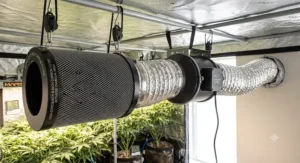
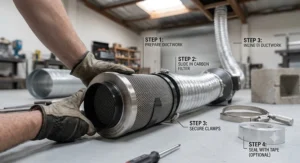
Getting a 6 inch carbon filter to actually perform starts before you even plug in the fan. Mount the filter so the pre-filter cloth faces the room air you’re pulling in — most setups run it as an inline carbon filter positioned inside the tent, connected directly to your inline fan, with ducting carrying scrubbed air outside. Hang it from a rated ratchet strap or rope hanger rather than resting weight on ducting alone; ducting joints aren’t built to bear a filter’s full weight long-term, and a sagging connection is the single fastest way to develop the air leaks that let odor bypass the carbon entirely.
In the first 30 days, the most common mistake is skipping pre-filter maintenance. Wash or replace the cloth pre-filter roughly every two to four weeks depending on dust and particulate load — a clogged pre-filter doesn’t just reduce airflow, it forces your fan to work harder, which shortens its lifespan too. Seal every duct connection with clamps, not just friction fit; even a small unsealed gap creates a path of least resistance that odor-laden air will find. Finally, resist the urge to run your fan at maximum speed around the clock. A slightly slower, steady airflow gives odor molecules more contact time with the carbon bed, which generally improves adsorption efficiency compared to blasting air through at top speed.
Real-World Scenarios: Matching a Filter to Your Situation
Consider three common buyer profiles. If you’re a college student running a single 2×4 tent in a shared apartment, discretion matters more than raw capacity — a lighter option like the iPower GLFILT6M 6 Inch Carbon Filter paired with a modestly sized fan keeps noise and weight manageable in a small space where every ounce on the tent frame counts.
If you’re managing a 5×5 flowering room with high plant density and don’t want to think about airflow shortfalls, the higher-CFM Gorilla Carbon Filter 6×24 gives enough headroom to run your fan quieter while still hitting your target air exchange rate — genuinely useful if your grow space shares a wall with a bedroom.
If you’re a budget-conscious first-time grower testing the waters with one small tent, the VIVOSUN 6 Inch Air Carbon Filter delivers a CFM rating and carbon grade that rival pricier options, letting you validate your setup without overcommitting financially before you know if you’ll stick with growing long-term.
Buyer’s Decision Framework
If your priority is minimum installed weight, choose an aluminum-bodied filter like the iPower GLFILT6M 6 Inch Carbon Filter or Phresh Carbon Filter 6″x16″, because aluminum construction directly reduces the load your tent frame has to support. If your priority is maximum odor-fighting margin in a larger room, choose a higher-CFM option like the Gorilla Carbon Filter 6×24, because extra rated airflow gives you buffer against the static pressure loss every filter introduces. If your priority is long-term cost efficiency, choose a deep-bed filter like the TerraBloom 6 Inch Carbon Filter, since a thicker carbon layer generally means a longer usable lifespan between replacements. And if you simply want the safest, most-reviewed default, the AC Infinity 6″ Duct Premium Carbon Filter remains the industry benchmark for a reason.
What Is a 6 Inch Carbon Filter?
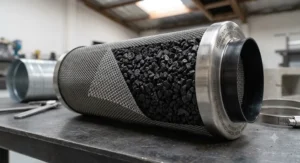
A 6 inch carbon filter is a cylindrical air-scrubbing device with a 6-inch duct opening, filled with activated charcoal, designed to remove odors and airborne organic compounds from air pulled through it by an inline fan before that air is exhausted from a grow tent or room. That job matters more than most people realize, since indoor concentrations of many organic compounds regularly run several times higher than what’s found outdoors, especially inside a sealed tent packed with fragrant plants.
How to Choose a 6 Inch Carbon Filter
- Match CFM to your fan and room size first. A filter’s rated CFM should meet or exceed your calculated air-exchange requirement, since the filter itself will reduce your fan’s real-world output.
- Check the IAV rating if listed. Higher iodine adsorption values, generally 1000+ IAV, indicate carbon with more micro-pore surface area, giving the filter a wider net for trapping organic odor compounds in a tightly sealed grow space.
- Consider carbon bed thickness, not just brand name. A deeper bed, as seen in models like TerraBloom’s lineup, generally extends usable lifespan even at similar CFM ratings.
- Weigh housing material against your tent’s weight capacity. Aluminum-bodied filters reduce strain on lightweight tent poles compared to steel-mesh housings.
- Factor in humidity. High humidity accelerates carbon saturation, so growers in humid climates should lean toward filters with thicker beds or plan for more frequent replacement.
- Confirm reversible flange design. This lets you flip the canister once one side saturates, effectively extending service life without buying a second filter.
- Budget for a compatible inline fan and ducting, since a mismatched fan undermines even the best filter’s real-world performance.
CFM Matching Guide: Sizing Your Filter to Your Fan
Getting CFM matching right is the difference between a filter that quietly does its job and one that leaves your whole apartment smelling like a greenhouse. Start with your tent’s volume in cubic feet — length times width times height — then divide by your target air-exchange time in minutes, typically one to three minutes for active grows. That gives you a base CFM figure. From there, add roughly 20-25% headroom to account for the static pressure the carbon filter itself introduces, plus additional loss from ducting length and bends. A filter rated for 400 CFM paired with a fan rated at exactly 400 CFM will actually deliver noticeably less than 400 CFM once real-world resistance is factored in — which is why growers with tight tents often end up sizing both fan and filter one tier above their bare-minimum calculation.
| Tent Size | Approx. Base CFM Needed | Recommended Filter CFM Range |
|---|---|---|
| 2×4 (small) | 60-90 CFM | 300-400 CFM rated filter |
| 4×4 (standard) | 150-220 CFM | 350-450 CFM rated filter |
| 5×5 or larger | 220-350 CFM | 450-500+ CFM rated filter |
This table underscores why the Gorilla Carbon Filter 6×24‘s 500 CFM rating earns its keep in bigger rooms, while a 300-400 CFM filter like the FloraFlex Air Carbon Filter 6″ or AC Infinity 6″ Duct Premium Carbon Filter comfortably covers a standard 4×4 tent. Undersizing either component is the single most common airflow mistake — oversizing slightly, on the other hand, mostly just costs you a bit more up front.
6 Inch vs 8 Inch Carbon Filter: Which Size Do You Need?
The jump from a 6 inch carbon filter to an 8 inch carbon filter isn’t just about duct diameter — it’s a meaningful step up in total carbon volume and airflow ceiling. An 8 inch carbon filter typically handles 500-700+ CFM and suits rooms in the 6×6 to 10×10 range or larger, where a 6-inch filter would need to work overtime and saturate faster to keep pace. If you’re running a single standard 4×4 or 5×5 tent, a 6 inch carbon filter paired with a correctly sized fan is almost always the more cost-effective and space-efficient choice — 8-inch hardware, ducting, and fans all cost meaningfully more and take up proportionally more vertical clearance inside a tent. The general rule: stick with 6-inch equipment until your room genuinely outgrows it, since oversized ducting in a small tent just wastes fan efficiency without any real odor-control benefit.
✨ Ready to lock in your size? Check current availability on the models above before your grow room needs it!
Inline Carbon Filter Setup: How It Fits Into Your Ventilation Chain
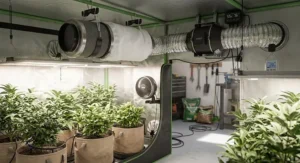
An inline carbon filter is designed to sit directly in your ducting path, in series with your inline fan, rather than as a standalone box unit. The standard configuration places the filter inside the tent near the top, ducted directly to the fan’s intake side, so the fan pulls air through the carbon bed before pushing it out through the exhaust ducting. This “filter-then-fan” order matters because running air through the filter under negative pressure (pulled, not pushed) tends to create a tighter seal around the carbon bed and reduces the chance of unfiltered air bypassing the canister. Growers sometimes flip this order, mounting the fan first and the filter downstream, which can work but generally increases the odds of pressurized air finding gaps around the filter’s edges before it reaches clean ducting.
Filter Lifespan Comparison: How Long Does a 6 Inch Carbon Filter Really Last?
Lifespan is the single most-searched question about carbon filters, and the honest answer is: it depends heavily on humidity, plant density, and bed thickness — but here’s how these seven models generally compare based on manufacturer guidance and aggregated user reports.
| Product | Typical Lifespan | Key Lifespan Factor |
|---|---|---|
| AC Infinity 6″ Duct Premium Carbon Filter | 9-12 months | Reversible flange extends usable life |
| VIVOSUN 6 Inch Air Carbon Filter | 8-12 months | Same-grade carbon as premium tier |
| iPower GLFILT6M 6 Inch Carbon Filter | Up to ~24 months with rotation | Reversible flange, lighter odor loads |
| TerraBloom 6 Inch Carbon Filter | 10-14 months | Deeper carbon bed extends saturation point |
| Gorilla Carbon Filter 6×24 | 12+ months | Larger total carbon volume |
| FloraFlex Air Carbon Filter 6″ | 9-12 months | Corrosion-resistant mesh preserves airflow |
| Phresh Carbon Filter 6″x16″ | 9-12 months | Anti-bypass seal reduces early leakage |
Looking at the table above, filters with either a reversible flange or a notably deeper carbon bed tend to outlast standard-depth models by a few months, even at similar price points. Humidity is the wildcard in every case — growers running dehumidifiers alongside their filter consistently report longer usable life than those in naturally humid climates. That tracks with what air-quality researchers have found more broadly: gas-phase filtration performance hinges on the carbon’s specific pore structure, not just raw fan power or airflow volume. Budget for replacement on the earlier end of these ranges if your grow room regularly sits above 60% relative humidity.
Common Mistakes When Buying a 6 Inch Carbon Filter
The most frequent mistake is buying a filter and fan as mismatched separate purchases instead of sizing them together — a 500 CFM filter paired with a 200 CFM fan wastes money, while the reverse starves your ventilation system. A close second is ignoring housing weight relative to tent pole ratings, which leads to sagging frames and duct leaks down the line. Buyers also frequently skip pre-filter maintenance entirely, not realizing that a clogged pre-filter chokes airflow long before the actual carbon bed saturates. Finally, many first-time buyers assume all “1200 IAV Australian charcoal” listings are identical in performance, when bed thickness and housing seal quality create real differences between otherwise similarly-marketed filters.
Features That Actually Matter (And Those That Don’t)
Carbon type and IAV rating matter — coal-based activated carbon, in particular, is prized for a pore-size range wide enough to adsorb the broad mix of VOCs found at typical indoor concentrations, which is why most reputable grow-tent filters lean on this carbon type rather than marketing gimmicks. Reversible flanges matter, since they offer a genuine way to extend usable life. What matters far less: cosmetic housing color, “extra thick” marketing claims without a stated bed measurement in millimeters, and inflated CFM numbers tested without any duct resistance, which rarely reflect real-world performance once ducting and bends are factored in.
Safety, Regulations, and Compliance Guide
Carbon filters exist primarily for discretion and comfort, but they also play a role in indoor air quality more broadly. The EPA does regulate VOCs in certain household products under the Clean Air Act, mainly because many VOCs react photochemically to form ozone, though the agency has no direct authority over indoor air quality itself — meaning there’s no federal filter-performance standard to check a product against, so buyers are largely relying on manufacturer-stated specs and aggregated user experience. If you’re growing in a rented apartment, check your lease for any ventilation or odor-control clauses before installing ducting through walls or windows, and always use lightproof, sealed ducting to prevent both odor and light leaks that could otherwise draw attention.
Frequently Asked Questions
❓ How long does a 6 inch carbon filter last?
❓ Can I use a 6 inch carbon filter with an 8 inch fan?
❓ Do I need a pre-filter with my carbon filter?
❓ Does a carbon filter reduce my fan's airflow?
❓ Is a bigger CFM rating always better for a carbon filter?
Conclusion
Choosing the right 6 inch carbon filter really comes down to three questions: how big is your space, how humid is your environment, and how much are you willing to spend upfront versus replace more often later. Budget-focused growers running a single small tent will get excellent value from the VIVOSUN 6 Inch Air Carbon Filter or iPower GLFILT6M 6 Inch Carbon Filter, while larger or denser setups justify the extra capacity of the Gorilla Carbon Filter 6×24. Growers who want the most tested, most reviewed option on the market keep landing on the AC Infinity 6″ Duct Premium Carbon Filter for good reason, and those chasing maximum carbon volume per dollar should take a close look at the TerraBloom 6 Inch Carbon Filter. Whichever you choose, remember that the filter is only half the equation — proper CFM matching, sealed ducting, and routine pre-filter maintenance are what actually determine whether your setup stays discreet for the long haul.
Recommended for You
- Activated Carbon Filter Tent: 7 Picks That Actually Kill Smell (2026)
- Climate Control Grow Tent: 7 Best Systems Tested for 2026
- Portable AC for Grow Tent: 7 Best Cooling Picks for 2026
Disclaimer: This article contains affiliate links. As an Amazon Associate, I earn from qualifying purchases. If you purchase products through these links, we may earn a small commission at no additional cost to you.
✨ Found this helpful? Share it with your friends! 💬🤗
