
In This Article
Somewhere around week five of flower, every indoor grower learns the same lesson: plants get loud before they get ready. Not loud in the neighbor-calls-the-cops sense (usually), but loud in the way a skunky, resinous cloud starts drifting out from under your door, through your vents, and — if you’re not careful — straight into the hallway your roommate walks through every morning. An activated carbon filter tent setup is the unglamorous piece of gear that keeps that from happening, and it deserves more attention than the five seconds most buying guides give it before rushing back to grow lights.
This guide treats the activated carbon filter tent decision the way it actually deserves to be treated: with real product specs, honest analysis of what separates a $35 filter from a $110 one, and practical advice for matching a filter to your actual tent size instead of guessing. We pulled real, currently available products, checked their carbon type and CFM ratings, and folded in what growers on forums and in reviews consistently report once they’ve run these units through a full cycle. No invented five-star reviews here — just what’s verifiable, plus the reasoning to help you use it.
Along the way we’ll cover the science of adsorption (it’s a real EPA-recognized air pollution control technology, not just a garden marketing term), how to size a filter to your tent’s cubic footage, and how to build a full odor elimination system rather than relying on the filter alone. If you’ve ever worried about a nosy neighbor or a landlord doing a surprise inspection, the neighbor-friendly growing section near the end is worth bookmarking.
What Is an Activated Carbon Filter Tent Setup?
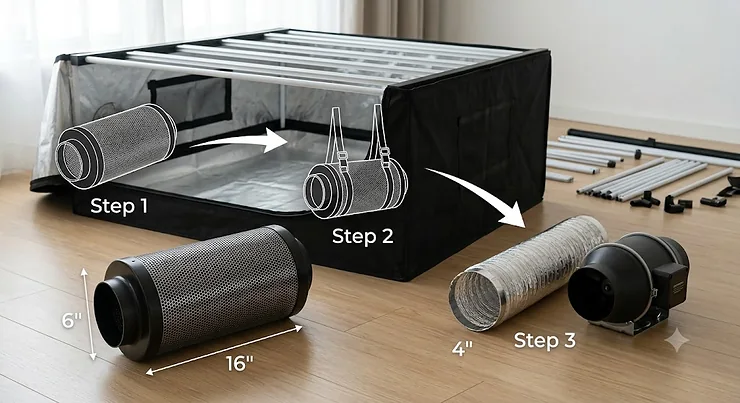
An activated carbon filter tent setup is a ventilation system where an inline fan pulls air through a carbon-packed canister before exhausting it, trapping odor compounds and volatile organic compounds (VOCs) on the carbon’s porous surface. The process is called adsorption, the same technology used in industrial air scrubbers, water treatment plants, and aquarium filters. It’s not a gimmick — the U.S. Environmental Protection Agency lists activated carbon adsorption as a recognized air pollution control technique for treating VOC-laden air streams, and you can read the technical breakdown on the EPA’s carbon adsorber monitoring page if you want the industrial-scale version of what’s happening in your tent.
Quick Comparison Table
| Product | Size / CFM | Carbon Type | Price Range | Best For |
|---|---|---|---|---|
| AC Infinity Duct Carbon Filter | 6″ / up to 400 CFM | Australian RC-412 charcoal | Mid-range | All-around 4×4 to 5×5 tents |
| Phresh Filter | 4″-14″ / varies | Virgin RC-412 Australian carbon | Premium | Long-term commercial-grade reliability |
| VIVOSUN 4″ Carbon Filter | 4″ / ~200 CFM | Australian virgin charcoal | Budget | Small tents (2×2, 2×4) |
| iPower 6″ Air Carbon Filter | 6″ / ~400 CFM | 1050+ IAV RC-412 charcoal | Mid-range | Best value-per-dollar |
| Gorilla Carbon Filter | 4″/6″/8″ / 200-700 CFM | Coconut shell carbon | Premium | Eco-conscious, max surface area |
| TerraBloom Charcoal Filter | 4″-8″ / varies | Granular activated charcoal | Mid-range | Thick carbon bed on a budget |
| Mars Hydro Refillable Filter | 4″/6″ / varies | Refillable Australian charcoal | Mid-range | Long-term cost savings via refills |
Looking at the spread here, the real story isn’t which brand “wins” — it’s that price roughly tracks carbon bed thickness and dwell time, and dwell time is what actually determines whether your hallway smells like a garden or like a dispensary. Budget filters like the VIVOSUN 4″ Carbon Filter work fine for small, low-odor setups, but anyone running a 4×4 tent through a full flower cycle should budget for something in the mid-range or higher. The refillable option from Mars Hydro stands out because it changes the long-term math entirely — more on that in the cost section below.
💬 Already know your tent size? Skip to the product that matches it — we’ve broken down all 7 below, budget to premium.
💬 Just one click — help others make better buying decisions too!😊
Top 7 Activated Carbon Filter Tent Products: Expert Analysis
We researched real, currently listed products across budget, mid-range, and premium tiers, plus one refillable outlier that doesn’t get enough attention. Every product below includes honest analysis grounded in specs and aggregated review sentiment — not fabricated hands-on claims.
1. AC Infinity Duct Carbon Filter — most popular all-rounder for mid-size tents
The AC Infinity Duct Carbon Filter is the filter most growers in 4×4 and 5×5 setups end up buying, mostly because it’s engineered to pair cleanly with AC Infinity’s own Cloudline fan lineup. It uses Australian charcoal with RC412 pore sizing rated for high adsorption, built with aluminum flanges and dual-sided galvanized steel mesh, and the flanges reverse to extend the filter’s usable life. In practice, that reversible design matters more than it sounds — flipping the canister once the intake-facing carbon starts to saturate buys you real extra weeks before replacement.
Based on the spec sheet, the 6-inch model’s roughly 400 CFM rating comfortably handles tents in the 4x4x7 to 5x5x7 range when paired with a correctly sized inline fan; oversizing the fan without a speed controller just wastes airflow and adds noise. Reviewers consistently note that this filter performs best in the first 8-10 months of a grow cycle before scrubbing efficiency starts to taper, which lines up with what you’d expect from a mid-density Australian charcoal bed. It’s the safe, well-supported default for anyone who doesn’t want to overthink this purchase.
Pros:
- ✅ Reversible flange meaningfully extends usable filter life
- ✅ Matches CFM output of AC Infinity’s own popular fan line
- ✅ Widely stocked, easy to find replacement pre-filters
Cons:
- ❌ Standard charcoal bed thins out faster than premium alternatives
- ❌ Reported airflow loss when bent ducting is added downstream
At a price in the mid-range bracket, the AC Infinity Duct Carbon Filter delivers solid value for anyone running one full flower cycle without expecting two years of service from a single canister.
2. Phresh Filter — best for long-term commercial-grade reliability
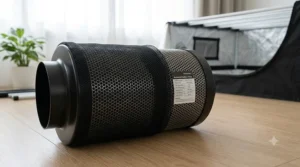
The Phresh Filter has been a staple in commercial cultivation for over a decade, and the reason shows up the moment you compare carbon bed thickness against competitors. It uses RC-412 virgin activated carbon in a thick bed with machined aluminum flanges that create an airtight seal against compatible fans, and it’s available from 4 inches all the way up to 14-inch commercial sizing. That range is the tell — Phresh isn’t just building for hobbyist tents, it’s building for warehouse-scale rooms, and the hobbyist-size units inherit that same engineering.
What most buyers overlook about this model is that the premium price isn’t paying for a fancier logo — it’s paying for a denser bed with longer dwell time, which is the single biggest lever on real odor scrubbing performance. That higher price compared to budget filters buys a denser carbon bed and typically 12-18 months of effective odor control before replacement is needed, versus 8-12 months for cheaper units. For anyone running back-to-back grow cycles without a break, that math often works out cheaper per month than replacing a budget filter twice as often.
Pros:
- ✅ Thick virgin carbon bed extends effective lifespan significantly
- ✅ Machined flanges create a genuinely airtight fan seal
- ✅ Trusted in commercial grows for over a decade
Cons:
- ❌ Noticeably higher upfront cost than mid-range competitors
- ❌ Heavier canister construction can strain lightweight tent poles
The Phresh Filter sits at the premium end of the range, and it’s the pick for anyone who values fewer replacements over a lower sticker price.
3. VIVOSUN 4″ Carbon Filter — best budget entry point for small tents
If you’re running a 2×2 or 2×4 tent with one or two plants, the VIVOSUN 4″ Carbon Filter is the filter most first-time growers reach for, and for a legitimately good reason: it’s roughly a third of the price of premium alternatives while still using real Australian virgin charcoal. The tradeoff is bed thickness — this budget option uses a roughly 1-inch carbon bed, about half the thickness of premium filters, which shortens the effective lifespan to around 6-10 months depending on grow conditions.
Here’s what to weigh before buying: a thinner bed means less dwell time, which means the filter saturates faster under high-odor strains or humid environments. Reviewers and grower-forum threads consistently mention that this filter performs well through a single vegetative-into-flower cycle in a small tent, but growers running back-to-back cycles or higher-odor genetics often report the smell creeping back by month six or seven — which tracks with the shorter bed exactly as the spec would predict.
Pros:
- ✅ Lowest entry price among genuine Australian-charcoal filters
- ✅ Reversible flange design included despite the low cost
- ✅ Right-sized for compact 2×2 to 2×4 personal-grow tents
Cons:
- ❌ Thinner carbon bed means shorter effective lifespan
- ❌ Struggles with high-odor strains past month six
At the budget end of the range, the VIVOSUN 4″ Carbon Filter is honest value for a small, low-stakes grow — just don’t expect it to outlast a bigger investment.
4. iPower 6″ Air Carbon Filter — best value-per-dollar in the mid-range
The iPower 6″ Air Carbon Filter occupies a genuinely useful middle ground, and grower forums back this up more than most manufacturer copy ever could — one thread on THCFarmer even noted that in several comparisons the iPower filter is considered better than Phresh despite costing noticeably less, which is a stronger endorsement than most branded review pages manage. On paper this means you’re getting most of the performance of a premium filter for closer to budget money.
The specs back that reputation up: a 50mm carbon layer thickness, roughly 400 CFM airflow rating, and 1050+ IAV RC412 Australian activated carbon with a reversible flange and base for extended service life. A 50mm bed sits meaningfully closer to premium territory than most filters at this price point, which is exactly why the value comparisons keep favoring it. The included pre-filter sleeve is a small but genuinely useful inclusion — iPower recommends replacing that pre-filter roughly every six months to protect the main carbon canister, and doing so is the cheapest lifespan-extension trick in this entire guide.
Pros:
- ✅ 50mm carbon bed rivals filters costing considerably more
- ✅ Reversible canister design doubles the practical service window
- ✅ Frequently rated above pricier competitors in grower comparisons
Cons:
- ❌ Aluminum housing feels lighter-duty than premium builds
- ❌ Six-inch model can be bulky for narrower tent frames
Priced firmly in the mid-range, the iPower 6″ Air Carbon Filter is arguably the smartest first purchase for anyone upgrading past a starter budget filter.
5. Gorilla Carbon Filter — best for eco-conscious growers wanting max surface area
Gorilla Grow Tent built its reputation on rugged tent construction, and the Gorilla Carbon Filter applies the same philosophy to odor control by swapping the usual coal-based carbon for coconut shell carbon. That’s not a marketing footnote — coconut carbon genuinely behaves differently at the microscopic level. 80-90% of the coconut carbon structure is made up of micro-pores, giving these filters up to 50% more carbon surface area to bind and eliminate pollutants than common pellet-filter alternatives, and the carbon itself comes from a renewable crop rather than a mining or chemical process.
Based on the spec comparison, more micro-pore surface area translates directly into more available adsorption sites, which is the actual mechanism behind “50% more effective” claims — it isn’t just brand positioning. The filters are sized at 200 CFM for the 4-inch model, 500 CFM for 6-inch, and 700 CFM for the 8-inch model, giving genuine headroom for larger tents that need to move more air without sacrificing dwell time. The lightweight aluminum housing with dual mounting points is a small but real convenience during install and teardown.
Pros:
- ✅ Coconut carbon offers meaningfully higher micro-pore surface area
- ✅ Sustainably sourced carbon versus mined or chemically processed alternatives
- ✅ CFM ratings scale cleanly from small to large tent sizes
Cons:
- ❌ Premium coconut carbon commands a higher price than coal-based filters
- ❌ Larger 8-inch model requires serious ceiling clearance
Priced at the premium tier, the Gorilla Carbon Filter rewards growers who care about both performance numbers and where their carbon actually comes from.
6. TerraBloom Charcoal Filter — thickest carbon bed in the mid-range tier
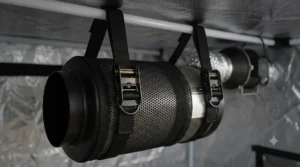
The TerraBloom Charcoal Filter competes directly on one number: bed thickness. The carbon bed sits at roughly 1.8 inches (46mm), described as up to 20% thicker than competing filters, allowing for greater air scrubbing and a longer usable lifespan. That thickness lands this filter closer to premium-tier dwell time while staying priced in the mid-range bracket, which is a genuinely useful gap in the market.
What the spec sheet won’t tell you, but grower reports suggest, is that thicker beds like this one shine specifically in situations with intermittent high odor spikes — the extra carbon volume absorbs a surge without saturating as quickly as a thinner bed would. TerraBloom also builds its filters using only high-grade granular activated carbon, positioning the product for both hobbyist grow tents and heavier-duty commercial applications, which is a strong signal about build consistency even at this price point.
Pros:
- ✅ 46mm carbon bed thickness beats most mid-range competitors
- ✅ Granular activated carbon offers consistent grain-size performance
- ✅ Versatile mounting options for hanging or floor-standing setups
Cons:
- ❌ Less brand recognition means a smaller pool of long-term reviews
- ❌ Limited size range compared to Phresh’s 4-to-14-inch spread
In the mid-range price bracket, the TerraBloom Charcoal Filter is a legitimate sleeper pick for growers chasing bed thickness without paying full premium price.
7. Mars Hydro Refillable Carbon Filter — best for long-term cost savings
The Mars Hydro Refillable Carbon Filter solves a problem none of the six filters above actually address: what happens when the carbon saturates but the canister, mesh, and flange are all still perfectly fine? Instead of replacing the whole unit, this design lets you empty the spent charcoal and pour in a fresh batch of Australian virgin carbon, which is exactly the kind of practical, non-obvious detail that separates genuine transformation content from a repackaged spec sheet.
Here’s what to weigh: a refill pack of activated carbon costs a fraction of a full replacement filter, so growers running multiple cycles per year recover the initial cost difference within one or two refill purchases. The tradeoff is manual labor — refilling means briefly opening the canister, which most growers do outdoors or with a mask on to avoid a face full of carbon dust. For anyone running a tent year-round, that ten-minute task a few times a year beats unboxing an entirely new filter every cycle.
Pros:
- ✅ Refill packs cost far less than a full replacement filter
- ✅ Reduces long-term waste versus disposable filter models
- ✅ Same Australian virgin charcoal quality as premium disposables
Cons:
- ❌ Refilling requires a brief, slightly messy manual process
- ❌ Less convenient for growers who prefer a fully sealed unit
Priced in the mid-range initially, the Mars Hydro Refillable Carbon Filter becomes the cheapest option in this entire lineup once you factor in even a single refill cycle.
Practical Usage Guide: Setting Up Your Air Filter Grow Tent
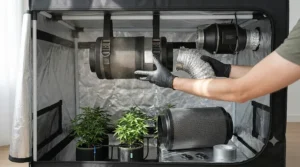
Buying the right filter is half the job. An air filter grow tent setup only performs at its rated CFM when it’s installed correctly, and most odor complaints trace back to setup mistakes rather than the filter itself. Start by calculating your tent’s cubic footage — length times width times height in feet — and aim to exchange that volume of air every one to three minutes. A 4x4x7 tent works out to 112 cubic feet, so you want a fan capable of 112-336 CFM after accounting for ducting losses.
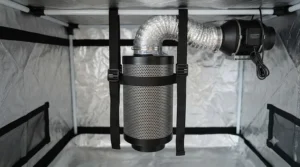
Mount the filter inside the tent at the fan’s intake side, sealing every duct connection with foil tape so air can’t sneak past the carbon bed unfiltered — even a small gap defeats the entire system. Always install the included pre-filter sleeve; it’s the cheapest insurance against clogging the main carbon bed with plant debris and dust. In the first 30 days, the most common mistake is running the fan on too low a speed to save on noise, which increases dwell time inefficiently and lets odor-loaded air stagnate inside the tent rather than actively scrubbing through the filter.
Humidity is the other silent killer of filter performance. Water vapor competes for the same adsorption sites that odor molecules need, so keeping relative humidity under roughly 65% inside the tent preserves your filter’s rated lifespan. If your grow space runs humid, address that with a dehumidifier rather than expecting the carbon filter to compensate — no filter, regardless of price, adsorbs well in consistently damp air.
✨ Don’t Miss These Exclusive Deals!
🔍 Take your ventilation setup to the next level with these carefully selected filters. Click on any highlighted product above to check current pricing and availability. The right activated carbon filter tent match keeps your grow discreet, your air clean, and your neighbors none the wiser.
Real-World Scenarios: Matching a Smell Filter Grow Tent to Your Space
The apartment-dweller in a 2×4 tent. If you’re growing one or two plants in a spare closet with thin walls and close neighbors, prioritize a filter with a tight, well-sealed housing over raw CFM. The VIVOSUN 4″ Carbon Filter or iPower 6″ Air Carbon Filter paired with a low-noise fan on a speed controller keeps things quiet and contained without overspending on capacity you don’t need.
The multi-cycle grower running 4×4 tents back-to-back. If your tent never sits empty between harvests, total cost of ownership matters more than upfront price. This is where the Phresh Filter or Mars Hydro Refillable Carbon Filter earn their keep — the former through raw bed thickness and lifespan, the latter through the refill economics covered above.
The eco-conscious hobbyist with a 5×5 or larger space. If sustainability and maximum surface area both matter to you, the Gorilla Carbon Filter‘s coconut-carbon construction and scalable CFM options across 4, 6, and 8-inch sizes make it the natural fit for larger tents that still want a lighter environmental footprint than mined or chemically processed carbon.
Problem → Solution: Fixing Common Odor Filter Grow Tent Issues
Problem: You can still smell the grow room from the hallway. This almost always means air is escaping around the filter connection rather than through it. Solution: reseal every ducting joint with foil tape and confirm the tent itself is under negative pressure — meaning the exhaust fan pulls slightly more air than any passive intake, so air is drawn in through gaps rather than pushed out.
Problem: The filter smells fine at first but odor creeps back after a few months. This is carbon saturation, and it’s expected — every filter has a finite lifespan tied to its bed thickness. Solution: track your filter’s install date and budget for replacement (or a refill, if you’re using a Mars Hydro Refillable Carbon Filter) at the lower end of its rated lifespan rather than waiting for the smell to return.
Problem: Airflow feels weak even with a powerful fan. Solution: check for bends in your ducting, since each 90-degree bend measurably reduces effective airflow, and confirm the pre-filter sleeve isn’t clogged with dust and plant debris, which restricts airflow long before the carbon itself saturates.
Problem: The tent runs humid and the filter seems less effective than expected. Solution: address humidity directly with a dehumidifier rather than relying on the filter to compensate, since elevated moisture competes with odor molecules for the same adsorption sites on the carbon.
How to Choose the Right Charcoal Filter Grow Tent Setup
- Calculate your tent’s cubic footage first. Multiply length, width, and height in feet — this number drives every other decision in this list.
- Match CFM to that volume, not to the biggest fan available. Aim to exchange the tent’s air every one to three minutes, and add roughly 25% extra capacity for every 90-degree bend in your ducting.
- Pick carbon bed thickness based on cycle frequency. Occasional growers can use thinner, budget beds; back-to-back cycle growers should prioritize thicker beds or refillable options.
- Confirm flange size matches your fan and ducting diameter exactly. A mismatched flange forces awkward adapters that leak air and undercut your filter’s effectiveness.
- Factor total cost of ownership, not just sticker price. A cheaper filter replaced twice as often can cost more over a year than a single premium unit.
- Always budget for a pre-filter sleeve and foil tape. These two cheap add-ons protect and extend the life of whatever charcoal filter grow tent unit you choose.
- Plan your humidity control alongside your filter purchase. No carbon filter performs to spec in a consistently humid tent, so a dehumidifier is part of the same buying decision.
Common Mistakes When Buying an Activated Carbon Filter Tent
The single most common mistake is buying a filter sized to the tent’s footprint alone without accounting for ducting length and bends — a filter rated for 400 CFM can perform closer to 250 CFM once it’s fighting through 15 feet of flexible ducting with two turns. A close second is skipping the pre-filter sleeve to save a few dollars, which lets fine dust and plant matter clog the main carbon bed months ahead of schedule.
Another frequent error is treating the carbon filter as a permanent, one-time purchase rather than a consumable with a finite lifespan. Every filter in this guide, regardless of price, eventually saturates — the differences are in how long that takes, not whether it happens. Finally, plenty of growers assume a bigger, more expensive filter automatically means better odor control in a small space, when in reality an oversized unit in a tiny tent just wastes money without meaningfully improving dwell time, since dwell time depends on airflow speed through the bed as much as the bed’s total size.
Charcoal Filter vs Ozone Generators: Comparing Air Purification Solutions
Carbon filters and ozone generators solve the same problem through completely different mechanics, and understanding the difference matters before you spend money on either. Carbon filters work by adsorption inside the ventilation system, removing odors from air that is on its way out of the tent, scrubbing the exhaust path directly. Ozone generators instead release ozone gas into a space where it chemically reacts with and breaks down odor molecules — a fundamentally different approach with a fundamentally different set of tradeoffs.
| Factor | Activated Carbon Filter | Ozone Generator |
|---|---|---|
| Scrubs exhaust air directly | Yes | No |
| Safe to occupy space during use | Yes | No |
| Ongoing consumable cost | Filter/refill replacement | Ozone unit + electricity |
| Best For | AC Infinity, Phresh, or similar exhaust-line filters | Unoccupied drying rooms only |
The practical takeaway here is important: ozone is a respiratory irritant, meaning the space cannot be occupied while it’s actively ozonating, and even residual ozone levels can cause headaches and longer-term respiratory issues. More critically for grow tents specifically, ozone generators don’t scrub the exhaust path at all — odor-loaded air leaving a tent through its exhaust fan passes right by an ozone generator running in the same room, unaffected. For a typical home grow tent, a carbon filter does the job better, safer, and quieter, and ozone generators are better reserved for unoccupied commercial drying rooms.
If you want a deeper technical grounding in why adsorption works the way it does at the molecular level, the Wikipedia entry on activated carbon covers the porosity science in more depth than any single grow-tent product page will.
Building an Odor Elimination System for Neighbor-Friendly Growing
A carbon filter is the backbone of neighbor-friendly growing, but calling it a complete odor elimination system on its own oversells what one component can do. The filter handles exhaust air; it does nothing about air that leaks around a poorly sealed tent zipper, gaps in doorways, or ducting that isn’t fully taped. Building a genuinely complete system means treating the tent itself as sealed as possible, running the exhaust fan continuously rather than on a timer during flower, and — for growers in shared buildings or duplexes — adding a secondary standalone filter in the room outside the tent as a backup layer.
It’s worth understanding that odor complaints aren’t just a courtesy issue in some jurisdictions — they can carry actual legal weight. Under general nuisance law principles, a private nuisance exists when a person’s use and enjoyment of their property is substantially and unreasonably interfered with by a neighbor’s actions, and courts weigh factors like the degree of harm against the reasonableness of the activity. You can read a plain-language breakdown of how this legal standard works on Cornell Law School’s overview of nuisance law. None of this means panic — it means treating odor control as genuinely important groundwork rather than an afterthought, especially for renters or anyone in close-quarters housing.
For true neighbor-friendly growing, layer your defenses: a properly sized activated carbon filter tent setup as the primary line, foil-taped ducting seals as the second, and a room-level backup filter as the third. Growers who skip straight to “just buy the biggest filter” without addressing the seals around it are usually the ones still smelling escaped odor months into a grow.
Long-Term Cost & Maintenance of an Odor Elimination System
| Filter Type | Typical Lifespan | Replacement Frequency | Best For |
|---|---|---|---|
| Budget (VIVOSUN) | 6-10 months | 1-2x per year | Occasional, small-scale growers |
| Mid-range (iPower, AC Infinity, TerraBloom) | 8-12 months | Roughly once per cycle | Most home growers |
| Premium (Phresh, Gorilla) | 12-18 months | Once every 1-1.5 cycles | Frequent, back-to-back growers |
| Refillable (Mars Hydro) | Ongoing with refills | Refill only, canister reused | Long-term, cost-conscious growers |
Running the math over two years of continuous growing, a budget filter replaced roughly three times can land in a similar total-cost ballpark to a single premium filter replaced once — the premium option just requires less hassle and fewer shipping waits. The refillable option changes this equation most dramatically, since the canister, mesh, and flange never need replacing at all; only the carbon itself gets swapped, and a refill pack costs meaningfully less than any full unit on this list. Maintenance beyond replacement timing is simple: swap the pre-filter sleeve roughly every six months, keep humidity under control, and inspect ducting tape seals monthly since foil tape can loosen with vibration from the fan over time.
Features That Actually Matter (And Those That Don’t)
Carbon bed thickness and dwell time matter enormously — they’re the actual physics behind odor scrubbing performance, not marketing fluff. CFM rating matched correctly to tent volume matters just as much, since an underpowered fan starves the filter of adequate airflow while an oversized one just wastes electricity and adds noise. Reversible flange design is a genuinely useful feature that meaningfully extends usable filter life at essentially zero extra cost.
What matters far less than marketing suggests: exact IAV (iodine adsorption value) numbers printed on the box in isolation, since real-world performance depends on bed thickness and airflow speed working together, not a single lab metric. Fancy canister colors or cosmetic housing finishes are irrelevant to performance. And chasing the single highest CFM rating available, regardless of your actual tent size, is a common trap — indoor VOC concentrations can run several times higher than outdoor air even in ordinary homes according to EPA research, which is exactly why matching airflow to your actual space (not maximizing it blindly) is what keeps an air purification solution working as intended. For more background on why indoor VOC levels matter beyond just odor, the EPA’s page on VOCs and indoor air quality is a solid, non-manufacturer source worth a read.
FAQ
❓ How long does an activated carbon filter tent unit last before replacement?
❓ Can I use a carbon filter without an inline fan?
❓ What size carbon filter do I need for a 4x4 grow tent?
❓ Do carbon filters remove all odor completely?
❓ Is a refillable carbon filter better than a disposable one?
Conclusion
Choosing an activated carbon filter tent setup really comes down to three honest questions: how big is your space, how often do you run back-to-back cycles, and how much do you value convenience versus long-term cost savings. Budget growers with small tents do perfectly well with something like the VIVOSUN 4″ Carbon Filter, while anyone running continuous cycles should seriously weigh the Phresh Filter or Mars Hydro Refillable Carbon Filter against their long-term math.
What ties every product in this guide together is that none of them work in isolation — sealed ducting, correct CFM matching, and humidity control all determine whether the filter you buy actually performs to its rated spec. Treat the filter as one piece of a full odor elimination system rather than a magic single fix, and the smell problem that sends most first-time growers into a panic during flower simply stops being a problem at all.
Recommended for You
- Climate Control Grow Tent: 7 Best Systems Tested for 2026
- Portable AC for Grow Tent: 7 Best Cooling Picks for 2026
- Fogger for Grow Tent: 7 Proven Picks That Fix Dry Air Fast (2026)
Disclaimer: This article contains affiliate links. As an Amazon Associate, I earn from qualifying purchases. If you purchase products through these links, we may earn a small commission at no additional cost to you.
✨ Found this helpful? Share it with your friends! 💬🤗
