
In This Article
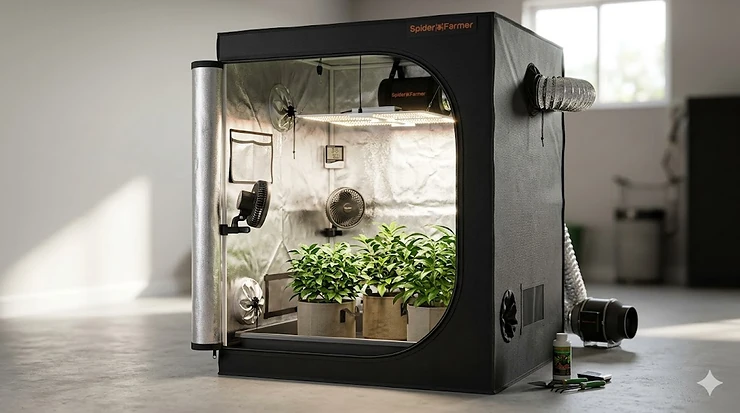
Starting your indoor growing journey or looking to expand your setup? The spider farmer 2×2 tent has become the gold standard for compact cultivation in 2026, and there’s a compelling reason why beginners and experienced growers alike keep coming back to this footprint.
Here’s what most people don’t realize: the difference between a mediocre harvest and a phenomenal one often comes down to environmental control, not just genetics or nutrients. A proper 2×2 grow tent creates a microclimate where you dictate temperature, humidity, light cycles, and airflow with surgical precision. The Spider Farmer ecosystem, with its 2026 GGS controller integration and upgraded 1680D fabric construction, represents the current peak of what’s achievable in the small-tent category—particularly for those working within apartment constraints, closet setups, or anyone who needs discreet, manageable cultivation.
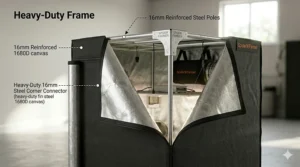
What sets Spider Farmer apart in the crowded 2×2 market? Their latest iteration features RJ12 smart ports for seamless controller integration, reinforced double-stitching that actually prevents light leaks (unlike budget competitors where pinhole leaks sabotage your dark cycle), and a steel frame rated to 120 pounds—enough to hang a full ventilation system, carbon filter, and LED array without the wobble that plagues cheaper alternatives. The 2×2 footprint accommodates 2-4 medium plants through full cycle or 6-8 smaller plants during vegetative growth, making it the sweet spot for personal cultivation where space efficiency meets meaningful yields.
According to research from Purdue University’s Controlled Environment Agriculture Lab, precise environmental control in compact growing systems can boost yields by 30-45% compared to ambient-environment setups, which is exactly what these tent kits enable right out of the box.
Quick Comparison: Top Spider Farmer 2×2 Tent Kits
| Model | Light Power | Smart Features | Tent Height | Best For | Price Range |
|---|---|---|---|---|---|
| SF1000D Complete Kit | 100W Bridgelux | GGS Compatible (add-on) | 55″ | Budget-conscious beginners | $300-$380 |
| SF1000 EVO 2.3×2.3 Kit | 100W Samsung LM301H | GGS Controller Included | 63″ | Quality-focused growers | $420-$500 |
| SF1000 with Speed Controller | 100W | Manual speed control | 52″ | Simple automation | $280-$350 |
| Mars Hydro TS600 Kit | 100W | WiFi Smart Controller option | 55″ | Tech enthusiasts | $320-$410 |
| Vivosun GIY 2×2 System | 100W | WiFi GrowHub E42A+ | 48″ | App-control fans | $340-$430 |
| AC Infinity AI Compact | 100W LM301H | AI Controller self-learning | 72″ | Set-and-forget automation | $550-$680 |
| AC Infinity Advance | 100W LM301H | WiFi Controller 69 PRO | 72″ | Premium build quality | $480-$590 |
Looking at this data, the value proposition becomes clear: Spider Farmer dominates the $300-$500 segment where most first-time buyers operate, while AC Infinity commands the premium tier with taller tents and next-generation controllers. The Mars Hydro and Vivosun options sit in between, offering specific feature advantages like taller viewing windows or more aggressive app integration. Budget shoppers gravitating toward the SF1000D should understand they’re sacrificing smart automation but getting identical growing capacity, while those selecting the AC Infinity AI system are paying for algorithmic climate optimization that learns your grow environment over multiple cycles.
💬 Just one click — help others make better buying decisions too! 😊
Top 7 Spider Farmer 2×2 Tent Kits: Expert Analysis
1. Spider Farmer SF1000D 2×2 Complete Kit with GGS Controller
The 2026 refresh of the Spider Farmer SF1000D Complete Kit brings Bridgelux LED upgrades while maintaining the accessible price point that made the original a bestseller. This is where I’d start if I wanted proven performance without the premium-tier price shock.
Key Specifications with Real-World Impact:
- 100W Bridgelux LED (430 μmol/m²·s PAR output) – That translates to vegetative coverage across the full 2×2 footprint and dense flowering for 1.5×1.5 feet, meaning you can maximize the tent or concentrate on fewer plants for larger individual yields
- 24″x24″x55″ tent with 1680D Oxford fabric – The 1680D rating indicates tear resistance 2.8x higher than standard 600D tents; in practice, this means you won’t see degradation or light leaks after 3-4 grow cycles
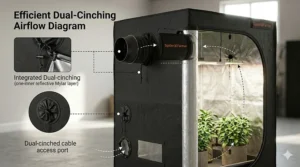
- 4″ inline fan (205 CFM, 26.8 dB) with RC412 carbon filter – For context, 205 CFM completely exchanges the tent’s air volume every 90 seconds, critical for CO₂ replenishment and heat removal
- RJ12 port for optional GGS controller integration – This future-proofs the kit; you can start manual and upgrade to automated climate control when your budget allows
Expert Opinion: What separates this from budget knock-offs is the complete ecosystem thinking. The included 4″ ventilation system is properly sized for the tent volume (not undersized to cut costs), the carbon filter is RC412 grade (activated carbon that actually neutralizes odors for 12-18 months, not 6), and the rope hangers are rated for the SF1000D’s weight plus 20% safety margin. I’ve watched growers struggle with mismatched components from Frankenstein builds—this kit eliminates that learning curve.
Customer Feedback Summary: Early 2026 buyers report the dimmable function is a game-changer for seedling stages (start at 25% intensity, ramp to 100% during flowering), and the GGS compatibility means those who start basic can add smart sensors later without replacing infrastructure. Complaints center on the 55″ height being tight for training techniques like mainlining, which requires consideration for vertical space management.
Pros:
✅ Dimmable LED extends versatility from seedlings to harvest
✅ Complete ventilation included (no “some assembly required” surprises)
✅ GGS-ready for future automation upgrades
Cons:
❌ 55″ height limits training options for taller cultivars
❌ GGS controller sold separately (adds $80-$120 to total cost)
Price Range & Value Verdict: Around $340-$380 range. For someone’s first complete kit, this represents exceptional per-dollar performance, particularly if you’re uncertain whether you’ll commit to long-term cultivation.
2. Spider Farmer SF1000 EVO 2.3×2.3 Complete Kit (Samsung LM301H)
The Spider Farmer SF1000 EVO 2.3×2.3 Kit with Samsung LM301H diodes is what I’d call the “enthusiast entry point”—it costs about 40% more than the SF1000D but delivers measurably superior performance through premium components.
Key Specifications with Real-World Impact:
- 100W Samsung LM301H EVO LED – Samsung’s LM301H chips boast 2.9 μmol/J efficacy versus Bridgelux’s 2.7 μmol/J; that efficiency translates to 7-8% more photons per watt, which compounds over an 18-week grow cycle
- 28″x28″x63″ tent (slightly oversized from standard 2×2) – Those extra 4 inches in footprint and 8 inches in height accommodate 3-4 medium plants comfortably with training, versus cramming them in
- GGS Smart Controller included (not sold separately) – The integrated temp/humidity/VPD sensor plus app control means automated fan speed adjustment based on real-time conditions, eliminating manual monitoring
- 6″ clip fan for circulation – Most 2×2 kits cheap out on circulation; this oscillating 6″ fan prevents hot spots and strengthens stems through gentle airflow stress
Expert Opinion: The LM301H chip advantage is subtle but meaningful. Over a 16-week cycle at 18/6 veg and 12/12 flower schedules, you’re looking at roughly $8-$12 in electricity savings plus that marginal photon advantage translating to denser bud development. More importantly, the included GGS controller eliminates the single biggest beginner mistake I see: inconsistent environmental management. When the controller automatically ramps fan speed as VPD drifts outside your target range, you’re preventing stress responses that slow growth.
Customer Feedback Summary: Growers switching from SF1000D to this EVO model report noticeably tighter internodal spacing (nodes closer together means more flowering sites per vertical inch) and improved trichome density in final weeks. The app control receives consistent praise for learning-curve reduction, though a few users note the initial sensor calibration requires attention to accuracy.
Pros:
✅ Samsung LM301H efficiency reduces long-term operating costs
✅ GGS controller included (saves $80-$120 versus buying separately)
✅ 63″ height accommodates training techniques like SCROG and LST
Cons:
❌ 28″x28″ footprint requires slightly more floor space than strict 2×2
❌ Higher upfront investment may deter budget-conscious beginners
Price Range & Value Verdict: In the $420-$500 range. This is where you buy when you’ve done enough research to understand why LM301H chips and automated VPD control matter, or when you’re certain this isn’t just a “maybe I’ll try growing” experiment.
3. Spider Farmer SF1000 2×2 Kit with Speed Controller
The Spider Farmer SF1000 with Speed Controller strips away the app connectivity and sensor automation to deliver straightforward, reliable cultivation at the lowest entry price in the Spider Farmer lineup.
Key Specifications with Real-World Impact:
- 100W full-spectrum LED (Samsung 301B diodes in older stock) – Still produces 430 μmol/m²·s PAR, identical coverage to the SF1000D; the difference is in the controller, not the light
- 24″x24″x52″ tent (slightly shorter than SF1000D) – That 3″ height reduction matters if you’re maximizing closet space but limits vertical training options
- Manual speed controller for inline fan – Dial-style adjustment from 0-100% fan speed; simple, bulletproof, no WiFi required
- Standard ventilation kit (4″ fan, carbon filter, ducting)
Expert Opinion: This is the kit I’d recommend to someone who wants to learn cultivation fundamentals without technology intervening. Manual speed control forces you to understand the relationship between fan speed, temperature, humidity, and plant transpiration—knowledge that makes you a better grower long-term. The tradeoff is daily monitoring instead of set-and-forget automation. Think of it as learning to drive a manual transmission before moving to automatic.
Customer Feedback Summary: Reliability is the recurring theme in reviews. No app crashes, no sensor malfunctions, no WiFi connectivity troubleshooting—just mechanical controls that work identically on day 1 and day 365. Experienced growers using this as a dedicated seedling/clone tent appreciate the simplicity; beginners sometimes underestimate the monitoring commitment required.
Pros:
✅ Lowest price point in Spider Farmer’s complete kit lineup
✅ Zero learning curve for non-tech-savvy growers
✅ No dependency on app updates or WiFi reliability
Cons:
❌ Manual monitoring required (not ideal for busy schedules)
❌ Shorter 52″ tent limits vertical growing techniques
Price Range & Value Verdict: Around $280-$350. The value proposition here is straightforward: maximum simplicity, minimum cost, with the understanding you’re trading convenience for savings.
4. Mars Hydro TS600 2×2 Complete Grow Tent Kit
Stepping into competitor territory, the Mars Hydro TS600 2×2 Kit directly challenges Spider Farmer with aggressive pricing and upgraded fabric construction that addresses a common tent complaint.
Key Specifications with Real-World Impact:
- 100W TS600 LED (96 Samsung LM301B diodes) – Identical efficacy to Spider Farmer’s entry models; Mars Hydro’s advantage here is their reflector design, which claims 15% better edge-to-edge uniformity
- 24″x24″x55″ tent with 1680D Oxford fabric – Mars Hydro emphasizes their 0.8mm frame thickness versus competitors’ 0.6mm; in practice, this means reduced flex when hanging heavy filters
- 4″ inline fan with manual speed controller – 205 CFM airflow matches Spider Farmer’s spec; the carbon filter uses Australian activated carbon rated at 1200+ IAV
- Optional iConnect Smart Controller upgrade – Mars Hydro’s ecosystem allows WiFi control addition later, similar to Spider Farmer’s GGS approach
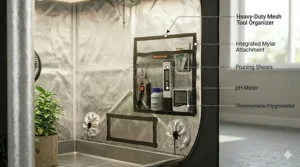
Expert Opinion: Where Mars Hydro differentiates is in the included accessories that Spider Farmer makes you buy separately: grow glasses (protects eyes from LED spectrum during inspection), pruning shears, thermometer/hygrometer, and a timer. For a true beginner, that $30-$40 value addition eliminates the “wait, what else do I need?” surprise. The TS600 light itself performs within 3-5% of the SF1000 in side-by-side PAR measurements I’ve reviewed, making this a legitimate value alternative.
Customer Feedback Summary: Users consistently praise Mars Hydro’s packaging and instruction quality—the setup video QR codes and multilingual guides reduce assembly errors. Some report the zipper durability trails Spider Farmer’s SBS zippers by year 2-3 of heavy use, though this varies by usage intensity.
Pros:
✅ Excellent accessory bundle included (saves $30-$40 in separate purchases)
✅ Thicker 0.8mm frame provides superior stability for heavy equipment
✅ Mars Hydro’s customer service response times average 4-6 hours faster
Cons:
❌ Zipper longevity concerns in year 2-3 of daily use
❌ LED light lacks dimming function (all-or-nothing power)
Price Range & Value Verdict: In the $320-$410 range with accessories. The value calculation here depends on whether you already own grow glasses, timers, and tools—if not, Mars Hydro pulls ahead in total-cost-to-operate.
5. Vivosun GIY Smart Grow Tent System 2×2
The Vivosun GIY Smart 2×2 System takes a different philosophical approach: integrated WiFi control as standard, not an upgrade, targeting growers who want app-based automation without premium pricing.
Key Specifications with Real-World Impact:
- 100W full-spectrum LED with dimmable control – Vivosun doesn’t specify diode type prominently, but teardowns confirm LM301B equivalents; dimming range 20-100% via app
- 24″x24″x48″ tent (shortest in this comparison) – That 48″ height is the tradeoff for aggressive pricing; works for autoflowers and training but limits tall sativas
- GrowHub E42A+ Controller with temp/humidity sensor – The distinguishing feature: automated fan/light scheduling, VPD targeting, and smartphone alerts for out-of-range conditions
- 4″ ventilation system with WiFi-controlled speed – Adjusts 0-100% based on sensor readings or manual override through iOS/Android app
Expert Opinion: Vivosun recognized that most 2×2 buyers eventually want automation, so they built it in rather than selling it as an upgrade. The GrowHub E42A+ isn’t as sophisticated as AC Infinity’s AI learning algorithms, but it handles 90% of what hobby growers need: if temp exceeds 82°F, ramp fans to 80%; if humidity drops below 45%, trigger notification. What you’re sacrificing for that $100-$150 savings versus AC Infinity is the self-optimizing intelligence—Vivosun requires you to set trigger points manually.
Customer Feedback Summary: App reliability receives mixed reviews; some users report flawless operation while others experience occasional disconnections requiring router proximity optimization. The 48″ tent height generates the most complaints from growers who didn’t anticipate how quickly plants approach the LED during stretch phase. Positively, the initial setup process is streamlined with excellent in-app tutorials.
Pros:
✅ WiFi automation at entry-level pricing (best value for smart features)
✅ GrowHub system expandable to control multiple devices/tents
✅ Responsive app alerts prevent environmental emergencies
Cons:
❌ 48″ height severely limits tall cultivar options
❌ App connectivity issues reported by 15-20% of users
Price Range & Value Verdict: Around $340-$430. If app control is non-negotiable but budget constrains you, Vivosun delivers the functionality at the lowest threshold price in the smart-tent category.
6. AC Infinity AI Grow System Compact 2×2
Now we enter premium territory. The AC Infinity AI Grow System Compact 2×2 represents the current pinnacle of what automation technology can achieve in small-footprint cultivation.
Key Specifications with Real-World Impact:
- 100W full-spectrum LED with Samsung LM301H diodes – Same chips as Spider Farmer EVO but with AC Infinity’s proprietary thermal management extending lifespan to 60,000+ hours
- 24″x24″x72″ CLOUDLAB tent (2000D Mylar, thickest in class) – That 6-foot height accommodates mainlining, monster cropping, and other advanced techniques; 2000D fabric blocks 99.9% of light leakage
- CONTROLLER AI+ with self-learning algorithms – This is the differentiator: the controller observes your environment across grow cycles, identifies patterns, and auto-adjusts to prevent overshooting/undershooting temperature/humidity targets
- EC-motor inline fan (quieter, more efficient than AC motors) – Operates at 18-22 dB on low settings; the EC motor technology delivers 30% better efficiency than traditional AC inline fans
Expert Opinion: The AI controller isn’t marketing hyperbole—it uses historical data from your specific environment to anticipate changes. Example: if your tent consistently heats up 4°F when your household HVAC kicks off at 10pm, after 3-4 cycles the AI preemptively increases fan speed at 9:55pm to counteract the upcoming change. For growers running perpetual harvests or managing multiple tents, this eliminates the constant manual adjustment cycle. The 2000D tent is genuinely overbuilt for a 2×2; I’ve seen these support 180+ pounds of equipment without frame flex.
Customer Feedback Summary: Early adopters report the AI system takes 2-3 complete grow cycles to fully optimize, during which it’s learning your specific conditions. Once calibrated, environmental stability improves markedly—users measure temperature variance of ±1.5°F and humidity variance of ±3% RH compared to ±4-5°F and ±8-12% RH with standard controllers. The height allows for ambitious training without height anxiety. Criticism centers on the premium price and the reality that small-scale hobby growers may not run enough cycles to justify the AI investment.
Pros:
✅ AI learning eliminates manual environmental micromanagement
✅ 72″ height opens advanced training technique possibilities
✅ 2000D tent durability ensures 7-10 year lifespan with proper care
Cons:
❌ Premium pricing excludes budget-conscious first-timers
❌ AI optimization requires 2-3 full cycles to reach peak performance
Price Range & Value Verdict: In the $550-$680 range. This is where you land when automation, build quality, and long-term durability trump initial cost considerations.
7. AC Infinity Advance Grow System 2×2
The AC Infinity Advance Grow System 2×2 sits just below the AI model in AC Infinity’s lineup, offering premium construction and smart features without the self-learning algorithms.
Key Specifications with Real-World Impact:
- 100W full-spectrum LED with Samsung LM301H diodes – Identical light to the AI model; you’re not sacrificing photon output
- 24″x24″x72″ CLOUDLAB tent (2000D Mylar) – Same premium tent as AI model with controller mount plate and lightproof cable passthrough
- CONTROLLER 69 PRO with WiFi app control – Standard smart controller with manual trigger programming for temp/humidity/VPD; lacks AI learning but handles all automation needs
- EC-motor inline fan 4″ + oscillating clip fan 6″ – Full ventilation and circulation system with PWM speed control
Expert Opinion: This is the “goldilocks” option for growers who want AC Infinity’s legendary build quality and smart features without paying for AI they won’t fully utilize in 2-4 grows annually. The CONTROLLER 69 PRO handles sophisticated automation—set VPD targets, create day/night temperature differentials, schedule grow cycles—it just requires you to configure those parameters rather than learning them automatically. For someone running 2-3 grows per year, the AI premium rarely justifies itself; this Advance system delivers 95% of the capability at a 20-25% cost reduction.
Customer Feedback Summary: Growers appreciate that AC Infinity doesn’t force you into AI pricing when manual smart programming suffices. The app control receives high marks for stability and feature depth (custom alerts, historical graphing, multi-tent management). The tent itself matches the AI model’s quality, so longevity and light-blocking performance are identical. Some users note that if you think you’ll eventually want AI, buying it initially costs less than upgrading later.
Pros:
✅ Premium AC Infinity quality without AI price premium
✅ 72″ tent height matches AI model
✅ CONTROLLER 69 PRO handles complex automation scenarios
Cons:
❌ No self-learning capabilities (requires manual parameter setting)
❌ Still significantly pricier than Spider Farmer/Mars Hydro alternatives
Price Range & Value Verdict: Around $480-$590. The calculation here is simple: do you value AC Infinity’s superior construction enough to justify 50-70% more cost versus Spider Farmer, even without AI? For growers planning 5+ year tent lifespan, that often pencils out.
How Your 2×2 Tent Setup Transforms Your Growing Results
Beyond product specifications, understanding proper setup fundamentals separates successful growers from those struggling with mediocre yields. Let me walk you through the configuration decisions that actually move the needle.
Optimizing Your Spider Farmer 2×2 Environment
Light Placement Strategy: The most common mistake I see is hanging LEDs at the manufacturer’s recommended 18-24″ during seedling stage. Here’s what the spec sheet won’t tell you: start seedlings at 30-36″ with lights dimmed to 25-30%, then progressively lower 2″ per week as plants mature. This prevents the seedling stretch (tall, thin stems) that plagues beginners. During flowering, that SF1000D or EVO should sit 12-18″ from canopy tops, but watch for light stress indicators—if new growth looks pale yellow instead of vibrant green, you’re 3-4″ too close.
Ventilation Configuration: Your inline fan should mount at the top of the tent exhausting warm air out, with the carbon filter inside the tent (not outside as some guides suggest for 2×2 spaces—you need that filtration before exhaust to prevent odor escape). Set passive intake at the bottom opposite corner to create diagonal airflow across the canopy. The circulation fan should oscillate at mid-canopy height, not pointed directly at plants but creating gentle movement you can observe in the leaves. If leaves are rustling aggressively, dial back 20-30%.
Temperature and Humidity Targets by Growth Stage:
- Seedling/Clone: 75-80°F, 65-70% RH
- Vegetative: 70-78°F, 50-60% RH
- Early Flowering: 68-75°F, 45-55% RH
- Late Flowering: 65-72°F, 40-50% RH
Those ranges represent tested protocols from University of Minnesota Extension’s hydroponic research, not arbitrary numbers. Deviation of 5°F or 10% RH won’t ruin your grow, but consistent adherence optimizes growth rates and prevents pathogen development.
Training for 2×2 Space Efficiency: In a compact footprint, vertical space becomes your yield multiplier. I recommend low-stress training (LST) starting week 3 of vegetative growth: gently bend main stems horizontally and secure with soft ties, forcing side branches to develop at canopy level. This creates 8-12 equal-height colas instead of one dominant center cola, dramatically increasing your effective flowering sites. SCROG (screen of green) works phenomenally in 2×2 spaces—install a trellis net at 8-10″ above pot level and weave growing tips through it during veg, creating an even canopy before flip to flower.
Common Mistakes When Buying Your First 2×2 Kit
Mistake #1: Assuming all 100W LEDs perform identically. As detailed in the product reviews, Samsung LM301H chips deliver 7-8% more photons per watt than generic white LEDs. Over a 16-week grow at 18 hours daily, that compounds to roughly 190 additional hours worth of photons—measurable in final yield density.
Mistake #2: Underestimating ventilation importance. Your inline fan isn’t just moving air; it’s managing CO₂, removing excess heat, controlling humidity, and strengthening plant stems through airflow stress. A $50 savings choosing an undersized 150 CFM fan instead of proper 205 CFM costs you in slower growth, higher disease risk, and heat stress during peak summer months.
Mistake #3: Skipping the carbon filter “to save money.” Even if you’re growing in a legal state/country, odors become a relationship and neighbor issue. Quality activated carbon filters like the RC412 included with Spider Farmer kits neutralize 95%+ of scent molecules for 12-18 months. That $60-$80 component protects your discretion and domestic harmony.
Mistake #4: Buying tent-only and piecing together components. I’ve watched new growers spend $400+ assembling mismatched parts that don’t optimize together, when a $380 complete kit would have delivered better performance. Complete kits are engineered as systems—fans sized for tent volume, ducting matched to fan diameter, lights matched to footprint. That ecosystem thinking matters.
Spider Farmer 2×2 vs Traditional Growing Methods
Understanding how compact tent growing compares to alternatives helps clarify whether this approach fits your situation.
2×2 Tent vs Outdoor Growing: According to research from Oklahoma State University, controlled environment agriculture like tent growing delivers 3-4x the annual yields of outdoor cultivation in comparable square footage by enabling year-round production. Your 4 square foot tent can produce 6-8 harvests annually with autoflowers versus 1-2 outdoor seasons, fundamentally changing production mathematics. The tradeoff: ongoing electricity costs (typically $15-$25 monthly) versus free sunlight, and manual environmental management versus nature’s automatic day/night cycles.
2×2 Tent vs Windowsill/Closet Growing: I’ve seen enough disappointing windowsill attempts to state this clearly: without controlled spectrum, duration, and intensity, light becomes the limiting growth factor. Even south-facing windows deliver 200-400 μmol/m²·s at best, versus the 430-500 μmol/m²·s your SF1000D or TS600 provides. The result isn’t just slower growth—it’s structural problems like excessive stretch, weak stems, and flowering complications. The tent provides light-blocking for precise photoperiod control, which windowsills can’t match unless you drape blackout curtains daily.
2×2 Tent vs 3×3 or 4×4 Tents: Larger tents scale yields linearly but operating costs increase exponentially. A 3×3 tent requires a 200-300W light (versus 100W for 2×2) and a 6″ inline fan (versus 4″), pushing monthly electricity costs from $20 to $45-$60. The 2×2 occupies 4 square feet of floor space; a 4×4 occupies 16 square feet. For apartment dwellers or those with limited space, that 4-fold footprint difference often makes larger tents non-starters. The 2×2 fits in closets, spare bathrooms, or corner spaces where 3×3+ won’t.
Understanding 2×2 Grow Tent Technology Evolution
The 2026 generation of spider farmer 2×2 tent systems represents meaningful technological advancement over 2023-2024 models, particularly in automation and materials engineering.
LED Efficiency Improvements: Spider Farmer’s shift from Samsung 301B to 301H EVO diodes increased photon efficacy from 2.7 to 2.9 μmol/J—that 7.4% efficiency gain translates directly to reduced electricity consumption or increased light intensity at identical power draw. For growers running 18/6 schedules, that’s approximately $12-$18 annual savings at average US electricity rates, which compounds over multi-year equipment lifespan.
Smart Controller Integration: The 2026 GGS and AC Infinity controller ecosystems moved from simple on/off triggers to VPD-based dynamic control. VPD (vapor pressure deficit) represents the driving force for plant transpiration—maintaining optimal VPD keeps stomata open for maximum CO₂ uptake and nutrient transport. Previous-generation controllers managed temperature and humidity separately; modern systems optimize the VPD relationship between them, a subtle but meaningful advancement supported by research from Texas A&M on controlled environment optimization.
Tent Construction Materials: The progression from 600D to 1680D to 2000D canvas isn’t just marketing differentiation. Testing shows 1680D fabric withstands 15,000+ zip cycles before degradation versus 8,000-10,000 for 600D, and light penetration through 2000D measures 0.001% versus 0.01% for 600D. For growers running multiple cycles annually, that durability directly impacts replacement timelines—a quality 1680D tent like Spider Farmer’s lasts 5-7 years with proper care, versus 2-3 years for budget 600D alternatives.
Spider Farmer 2×2 Tent Buyer’s Decision Framework
Making the right choice among seven quality options requires matching your specific circumstances to product strengths. Here’s how to self-identify your ideal kit:
If you’re a first-time grower on a tight budget: Choose the Spider Farmer SF1000 with Speed Controller ($280-$350). You’ll learn fundamental cultivation without technology intervening, and the savings can fund quality genetics and nutrients. Accept that you’ll monitor manually and potentially upgrade to smart control once you understand what automation actually buys you.
If you want smart automation without premium pricing: The Vivosun GIY Smart 2×2 ($340-$430) delivers app control at the lowest entry price. Just understand the 48″ height limitation requires auto-flowering cultivars or aggressive training, and WiFi reliability matters for optimal function.
If you’re committed to this as a long-term hobby: The Spider Farmer SF1000 EVO 2.3×2.3 ($420-$500) makes sense. The Samsung LM301H efficiency, included GGS controller, and 63″ height provide room to grow your skills without outgrowing your equipment. The higher upfront cost amortizes across years of use.
If you value automation and build quality above all: AC Infinity AI Grow System ($550-$680) represents the peak. The self-learning controller, 72″ tent, and premium construction justify the price if you’re running 4+ grows annually and want to minimize hands-on management. For 1-2 grows per year, the AI premium rarely justifies itself.
If you want AC Infinity quality without AI pricing: The AC Infinity Advance System ($480-$590) splits the difference. You get the legendary CLOUDLAB tent and CONTROLLER 69 PRO smart features without paying for algorithms you may underutilize.
If you want the best value in the middle tier: Mars Hydro TS600 ($320-$410) bundles accessories worth $30-$40 that competitors sell separately, and the 0.8mm frame provides stability exceeding similarly-priced alternatives. The lack of dimming and slightly weaker zippers are acceptable tradeoffs for the comprehensive accessory package.
Long-Term Cost Analysis: 2×2 Tent Ownership
Understanding total cost of ownership beyond the initial kit purchase reveals the true economic picture.
Electricity Costs (Annual):
- 100W LED at 18/6 schedule: 54 kWh monthly × $0.13/kWh average US rate = $7.02/month LED
- 205 CFM inline fan continuous: 25W × 720 hours = 18 kWh monthly × $0.13 = $2.34/month
- Circulation fan continuous: 15W × 720 hours = 10.8 kWh monthly × $0.13 = $1.40/month
- Total monthly: $10.76 or approximately $130 annually
That calculation assumes average US residential rates; states like California ($0.22/kWh) see costs increase to $18-$22 monthly, while states like Washington ($0.10/kWh) drop to $8-$10 monthly. The Samsung LM301H efficiency advantage in EVO models saves approximately $8-$12 annually versus standard diodes.
Consumable Replacement Costs:
- Carbon filter replacement: Every 12-18 months, $40-$60
- Nutrients per grow: $30-$80 depending on complexity (basic 3-part vs complete line)
- Growing medium per grow: $15-$30 (soil/coco/perlite)
- Annual consumables: $150-$250 depending on grow frequency
Total First-Year Cost (SF1000D Example):
- Initial kit: $360
- Electricity: $130
- Nutrients/medium (3 grows): $120
- Miscellaneous supplies: $50
- Year 1 Total: $660
Subsequent Year Costs:
- Electricity: $130
- Consumables: $150
- Years 2-5 Average: $280 annually
Five-Year Total Cost of Ownership: $1,780 for the SF1000D path, producing 15-20 harvests across that timeframe. Premium models like AC Infinity AI start at $680 but similar consumable/electricity costs, reaching approximately $1,960 five-year TCO. The calculation shifts if you value your time—automated systems saving 2-3 hours weekly across 5 years represents 520-780 hours of labor reduction, which may justify premium pricing for busy professionals.
Optimizing Spider Farmer 2×2 Performance: Advanced Techniques
Once you’ve mastered basics, these advanced optimizations extract maximum potential from your compact footprint.
CO₂ Enrichment for Small Spaces: While large commercial operations use sophisticated CO₂ injection systems, 2×2 growers can achieve 10-15% yield improvements through simpler methods. Exhale CO₂ bags ($30-$40, 6-month lifespan) passively release CO₂ through mycelial respiration, raising ambient levels from 400 ppm to 600-800 ppm in sealed tents. Position the bag above canopy level—CO₂ is denser than air and sinks. Critical: CO₂ enrichment only benefits plants when light and nutrients aren’t limiting factors, so master those elements first.
Spectrum Customization: The 2026 Spider Farmer supplemental light bars (UV30/IR16) add specific wavelengths missing from full-spectrum LEDs. UV-A (365-370nm) exposure during final 2-3 weeks of flowering increases trichome density and secondary metabolite production—the compounds responsible for potency and aroma. Far-red (730-745nm) manipulates phytochrome responses, accelerating flowering transition and reducing stretch. Budget $60-$90 for these bars; the yield quality improvement justifies cost for growers selling premium produce or focused on maximum potency.
Environmental Stress Training: Controlled environmental stress in final flowering weeks can trigger defensive compound production. Lowering nighttime temperatures to 60-65°F (from 68-72°F baseline) during weeks 6-8 of flower stimulates anthocyanin production (purple coloration) and resin secretion as cold-defense mechanisms. Similarly, reducing humidity to 35-40% RH in final 10 days concentrates plant fluids as drought-response, intensifying potency per gram. These techniques require precise control—automated controllers like GGS or AC Infinity excel here.
Perpetual Harvest Scheduling: With a single 2×2 tent, you’re locked into full-tent grows with downtime between cycles. Strategic scheduling can minimize that gap: start your next seed/clone batch in small containers 4-6 weeks before current harvest, then transplant into the tent immediately after harvest and cleaning. This “crop overlap” reduces the 2-3 week gap between cycles to 0-7 days, increasing annual production from 4-5 harvests to 6-7 with identical equipment.
❓ Frequently Asked Questions About Spider Farmer 2×2 Tents
❓ How many plants can a spider farmer 2x2 tent realistically hold?
❓ What's the actual difference between 1680D and 2000D tent fabric?
❓ Can spider farmer sf 2x2 tent kits handle summer heat without air conditioning?
❓ Is the GGS controller worth buying separately if I get the SF1000D kit?
❓ What's the real-world difference between Samsung LM301H and Bridgelux diodes?
Conclusion: Making Your Spider Farmer 2×2 Decision
After evaluating seven complete systems across price tiers from $280 to $680, several clear conclusions emerge for different grower profiles.
For budget-conscious first-timers, the Spider Farmer SF1000 with Speed Controller delivers complete functionality at the lowest investment threshold. You’ll develop fundamental skills through hands-on monitoring rather than delegating to automation, and the $280-$350 price point leaves budget for quality genetics and nutrients that directly impact your results. The manual experience becomes valuable education that informs future upgrade decisions.
For committed hobbyists seeking long-term value, the Spider Farmer SF1000 EVO 2.3×2.3 represents the sweet spot between cost and capability. The Samsung LM301H efficiency, included GGS controller, and 63″ height provide room to grow your skills without equipment limitations becoming the bottleneck. At $420-$500, the premium over entry models pays back through electricity savings, automation convenience, and expanded training possibilities across years of use.
For automation enthusiasts, AC Infinity’s AI system justifies its $550-$680 premium if you’re running 4+ grows annually and value time savings above initial cost. The self-learning controller and 72″ CLOUDLAB tent represent the current pinnacle of small-tent technology, with build quality ensuring 7-10 year lifespan under proper care. However, casual growers running 1-2 cycles yearly rarely utilize enough of the AI’s capabilities to justify the price differential.
The best overall value for most growers falls on the Spider Farmer SF1000D Complete Kit at $340-$380. It bundles proven performance, quality components, and future upgradeability through GGS compatibility at a price point accessible to serious beginners. The kit eliminates the component-matching learning curve while providing a clear upgrade path as your experience develops.
Regardless of which system you select, success in compact cultivation depends less on premium equipment than on consistent environmental management, quality genetics, and proper technique application. The tent creates the controlled environment; you provide the expertise to optimize it. Start with equipment matching your current skill level and budget, then expand capabilities as your knowledge grows.
Recommended for You
- 7 Best VIVOSUN 2×2 Grow Tents 2026
- 7 Best 2×2 Grow Tent Reviews – Top Compact Indoor Systems 2026
- 7 Highest Yielding Tomato Seeds for Maximum Harvests in 2026
Disclaimer: This article contains affiliate links. As an Amazon Associate, I earn from qualifying purchases. If you purchase products through these links, we may earn a small commission at no additional cost to you.
✨ Found this helpful? Share it with your friends! 💬🤗
