
In This Article
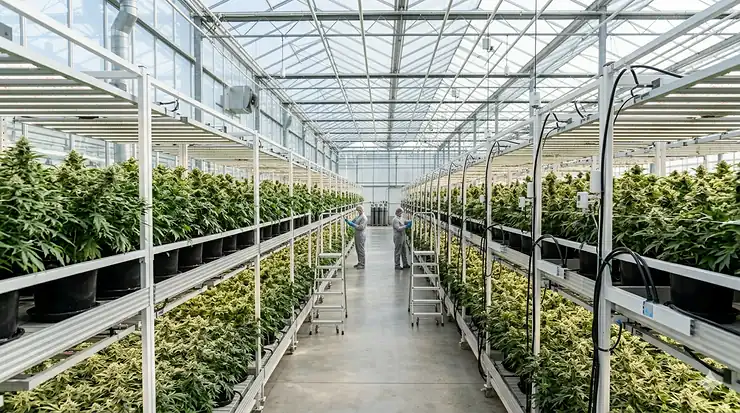
Let’s be blunt (pun fully intended): the difference between a mediocre harvest and a record-breaking one often has nothing to do with your genetics or your nutrients. It starts with your enclosure. A commercial cannabis tent is the invisible hand that governs your microclimate — your humidity corridors, your light intensity distribution, your VPD sweet spots. Get the tent wrong, and no amount of premium LED wattage or precision CO₂ dosing can fix the fallout.
A commercial cannabis tent is, simply put, a large-scale, professionally engineered enclosed growing structure designed to create a fully controlled indoor environment for cannabis cultivation at production scale. We’re not talking about the hobbyist 4×4 tucked into a spare bedroom. We’re talking warehouse grow tent commercial setups — structures spanning 8×8, 10×10, or even 10×20 feet — purpose-built for licensed cultivation facilities, multi-light configurations, and regulatory-compliant setups that need to pass inspection from day one.
The U.S. cannabis industry has exploded. According to the MJBizDaily 2025 Factbook, licensed producers nationwide are ramping up canopy space faster than ever, with indoor cultivation accounting for a significant share of total production. Yet the equipment decisions that shape those grows — particularly the grow enclosure itself — are often made with far too little scrutiny. A farm grade grow tent that fails under the weight of eight light fixtures doesn’t just destroy equipment; it wipes out an entire crop cycle and potentially costs a license.
So this guide was built for the serious operator. Whether you’re outfitting a new licensed facility, scaling up an existing production-scale growing operation, or simply replacing a tent that’s seen better days, you’ll find the seven best commercial cannabis tents available on Amazon today — with real specs, real analysis, and honest advice about who should buy what.
Quick Comparison: Top 7 Commercial Cannabis Tents at a Glance
| Product | Size | Canvas Density | Hang Capacity | Best For |
|---|---|---|---|---|
| Gorilla Grow Tent Pro 10×10 | 10’x10′ | 1680D | 300 lbs | Premium large-scale grows |
| AC Infinity CLOUDLAB 811 | 10’x10′ | 2000D | 250 lbs | Tech-forward operators |
| VIVOSUN P108 Pro 10×10 | 10’x10′ | 2000D | 150–400 lbs | Cost-conscious licensed grows |
| Mars Hydro 8×8 Advanced | 8’x8′ | 1680D | 330 lbs | Mid-scale commercial setups |
| Spider Farmer 10×5 | 10’x5′ | 1680D | Standard | Modular multi-tent facilities |
| iPower 10×10 | 10’x10′ | 600D | Standard | Budget builds & backup tents |
| Gorilla Grow Tent GGT1020 | 10’x20′ | 1680D | 300 lbs | High-volume warehouse grows |
Analysis: Reading across this table, the divide between budget and pro isn’t just price — it’s canvas density, hanging capacity, and zipper quality. The Gorilla 10×20 wins on raw floor space, but the AC Infinity CLOUDLAB 811 wins on build precision and modern features. For operators running multi-light arrays over 16 plants, the 2000D canvas tents pay for themselves quickly: thicker fabric means fewer light leaks, which means tighter photoperiod control and more consistent flowering. Budget options like the iPower serve a legitimate role as secondary tents for clones or drying rooms, but should never anchor a primary production zone at a licensed facility.
💬 Just one click — help others make better buying decisions too! 😊
Top 7 Commercial Cannabis Tents: Expert Analysis
1. Gorilla Grow Tent Pro 10×10 — The Industry Gold Standard
If the commercial cultivation world has a crown jewel, it’s this one. The Gorilla Grow Tent Pro 10×10 has been the tent serious growers reach for when they absolutely cannot afford failure — and the specs back that reputation up hard.
The 1680D canvas is legendary in this space. Thread density matters enormously in a commercial cannabis tent: cheaper 600D fabrics develop micro-tears at zipper stress points within months of heavy use, letting in light during dark periods and triggering hermaphrodism in flowering plants. The Gorilla’s canvas is 3–9x denser than most competitors, which in practice means you’re not chasing light leaks with electrical tape at 2 AM before a critical dark cycle. The adjustable height system — extending from 6’11” to 7’11” with the included extension kit, and up to 8’11” with an optional kit — is a genuine operational advantage. Taller clearance means you can hang high-intensity LED bars higher, widening the light footprint and reducing hotspots.
The all-steel interlocking frame supports 300 lbs of hanging equipment. At commercial scale, that matters: you’re often mounting multiple LED units, carbon filters, inline fans, and environmental controllers from the same structure. Lesser frames bow under that load.
Experienced growers love this tent. Customer feedback consistently highlights the zero-light-leak construction and the peace of mind that comes with the robust frame — particularly valuable for facilities that have failed state compliance inspections due to environmental control failures.
✅ Adjustable height up to 8’11” (or 9’11” with 2-ft extension kit)
✅ 1680D canvas — among the thickest in the industry
✅ 300 lb hang capacity for heavy commercial equipment
❌ Premium price point — a significant upfront investment
❌ Heavier and more complex to assemble than lighter-framed competitors
Best for: Licensed facilities and serious commercial operators who need a tent that will perform without surprises for multiple years of continuous use. In the $400–$600 range.
👉 Check Current Price & Availability on Amazon
2. AC Infinity CLOUDLAB 811 — The Tech-Forward Operator’s Pick
AC Infinity has quietly become one of the most trusted names in professional indoor cultivation, and the CLOUDLAB 811 10×10 is where their engineering philosophy reaches its commercial apex. This is the tent for the grower who treats their facility like a precision instrument.
The 2000D canvas is the thickest material on this list — denser even than Gorilla’s 1680D — and it’s been lab-tested using Agilent UV-Vis-NIR spectrophotometry to verify light reflectivity. That’s not marketing language; that’s the kind of verification documentation that matters when you’re running a regulatory-compliant setup and need to demonstrate environmental control to state auditors. The 1″ reinforced steel poles (22mm diameter, versus the 18mm standard) handle up to 250 lbs of equipment, and there are 16 hanging bars (8 primary + 8 extra) for serious fixture density.
What genuinely separates this tent, though, is the integrated controller mounting plate with lightproof cable passthrough. At production-scale growing operations, cable management is a real operational headache. Tangled cables create trip hazards, compromise tent seals, and make equipment swaps during a grow cycle unnecessarily painful. The CLOUDLAB 811’s built-in solution eliminates the need to improvise your own passthroughs — a small thing that saves hours over the course of a grow season. The tent accommodates 25 plants in 5-gallon pots, with 4″, 8″, and 10″ duct ports (18 total) to support large-scale ventilation builds.
Customer reviews repeatedly mention the SBS zippers — they glide smoothly even after months of daily use, which is a refreshing contrast to competitors whose zippers seize up after six weeks of humidity cycling.
✅ 2000D canvas — highest density on this list
✅ Integrated controller plate with lightproof cable passthrough
✅ 18 total duct ports for complex ventilation systems
❌ Hang capacity (250 lbs) slightly lower than Gorilla Pro
❌ No height extension option — fixed at 80″
Best for: Tech-forward facilities running smart controllers, automated environmental systems, and multi-device setups where clean cable management matters as much as structural strength. In the $350–$500 range.
👉 Check Current Price & Availability on Amazon
3. VIVOSUN P108 Pro 10×10 — The Smart Value Play for Licensed Grows
VIVOSUN is the brand that quietly supplies more indoor grows in the U.S. than almost any competitor, and the P108 Pro is their serious answer to the commercial cultivation tent segment. It shouldn’t be confused with the standard S108 — the Pro line is meaningfully different.
The P108 Pro runs 2000D Oxford canvas (same density as the AC Infinity) with a three-layer construction: Oxford outer shell, plant-friendly PE barrier, and 100% reflective Mylar interior. The zipper sections add a black inner lining for enhanced light prevention — solving a chronic failure point in cheaper tents where the zipper channel itself becomes a light conduit during flowering. The 1″ steel poles (22mm diameter) support between 150 and 400 lbs depending on configuration, which gives this tent a higher ceiling on hanging capacity than the CLOUDLAB 811 when fully rigged.
The SBS zipper door, enlarged observation window, and detachable door panel are the quality-of-life features that matter in daily operation at a farm grade grow tent. Being able to remove the door entirely for transplant days or harvest — and re-secure it via hook-and-loop fasteners — is a genuinely useful operational detail. The VIVOSUN app ecosystem, including the GrowHub E42A+ controller, integrates natively, making this a compelling choice for facilities already invested in VIVOSUN’s smart grow infrastructure.
Customer feedback is consistently strong for VIVOSUN’s build quality at this price tier, with growers particularly appreciating the value-to-durability ratio compared to premium-priced alternatives.
✅ 2000D canvas with three-layer construction
✅ Up to 400 lb hang capacity — highest maximum on this list
✅ Removable door for workflow flexibility during harvest
❌ VIVOSUN smart ecosystem required for full feature integration
❌ Less brand prestige than Gorilla in commercial facility contexts
Best for: Cost-conscious licensed operators who want premium canvas and hang capacity without the premium price tag, particularly those already using VIVOSUN lighting or controllers. In the $250–$380 range.
👉 Check Current Price & Availability on Amazon
4. Mars Hydro 8×8 Advanced Grow Tent — The Commercial Workhorse for Mid-Scale Operations
Not every licensed facility needs 100 square feet of canopy in a single tent. For operations running 16–36 plants in a modular, multi-tent layout, the Mars Hydro 8×8 Advanced is the commercial cultivation tent that hits a genuinely satisfying sweet spot between footprint, durability, and cost.
The 1680D canvas is identical in density to the Gorilla 10×10’s, lined with 98% reflective Mylar — 25% more light intensity return than standard interior linings, which translates directly into canopy penetration for lower bud sites. The steel framework supports 330 lbs of hanging equipment, which is actually heavier than the AC Infinity CLOUDLAB 811 despite a smaller footprint. This matters in a commercial cannabis tent context: an 8×8 running four heavy LED bar fixtures, a large carbon filter, and dual inline fans can easily push 250+ lbs of suspended weight.
Where Mars Hydro earns particular respect is in customer loyalty. Repeat buyers — including the grower quoted in one retailer’s listing who noted this was his fifth Mars Hydro 8×8 — signal genuine long-term durability. That kind of repeat-purchase behavior is the most honest form of quality validation in this category.
The 8×8 footprint also makes sense from a regulatory compliance standpoint. Many state licensing frameworks define canopy limits in ways that make modular multi-tent facilities easier to manage than single large-footprint grows.
✅ 1680D canvas — same density as Gorilla
✅ 330 lb hang capacity — exceeds many larger tents
✅ 98% reflective Mylar for superior light distribution
❌Smaller footprint than 10×10 options — limits single-room yield
❌ Less feature-rich than AC Infinity (no controller plate)
Best for: Mid-scale commercial operators, multi-tent facility buildouts, and licensed producers who prefer modular scalability over single large-footprint structures. In the $200–$320 range.
👉 Check Current Price & Availability on Amazon
5. Spider Farmer 10×5 Grow Tent — The Modular Specialist
The Spider Farmer 10×5 (120″x60″x80″) sits in an interesting niche in the warehouse grow tent commercial landscape: it’s not a square footprint, and that turns out to be exactly what many facilities need. A 10×5 is the natural companion footprint for single-bar LED configurations, tight row-and-aisle layouts, and facilities that need to run two tents side-by-side in a standard-width room without wasted space.
The 1680D canvas holds up to daily opening and closing in high-humidity environments, and the enlarged observation window with hook-and-loop door removal is a genuine workflow improvement for facilities running multiple daily inspections. The GGS smart hook system — introduced on Spider Farmer’s 2026 lineup — allows tool and controller hanging without the improvised bungee-cord solutions that plague lesser tents during heavy grows.
Spider Farmer’s brand trust has grown substantially among licensed facility operators who run their ecosystems on Spider Farmer lighting (G5000, SE7000, G7000 series), where the tent’s duct port placements are specifically optimized for those fixtures. If you’re running Spider Farmer LEDs, the tent is engineered to match.
Customer feedback highlights ease of assembly and good value relative to more expensive square-footprint competitors.
✅ Smart hook system for equipment organization
✅ Optimized duct port placement for Spider Farmer LED ecosystems
✅ Modular footprint ideal for row-and-aisle facility layouts
❌ Smaller canopy than 8×8 or 10×10 options
❌ Less commonly specified in large licensed facility builds
Best for: Facilities already running Spider Farmer lighting infrastructure, or operations building modular row-style layouts. In the $150–$250 range.
👉 Check Current Price & Availability on Amazon
6. iPower 10×10 Grow Tent — The Budget-Conscious Backup Builder
Here’s the honest truth about the iPower 10×10: it is not your primary production tent at a licensed facility. But that’s not the role it’s meant to play. At its price point, in the $100–$160 range, it’s the tent you build your quarantine zone in. Your clone nursery. Your drying room. Your overflow vegetative space during an unexpected production surge.
The 600D Mylar canvas is lighter and less dense than the other tents on this list — about a third the density of the Gorilla or AC Infinity options. Light leaks can occur with prolonged heavy use, particularly around zipper seams. For a flowering room, that’s unacceptable. For a 24-hour-light clone tent or a dark-cycle-independent drying space, it’s a non-issue.
What iPower does well is accessibility. Over a decade in the hydroponics equipment space has given them solid customer service infrastructure, and the tool-free assembly is genuinely fast. For a facility that needs to spin up a secondary growing zone quickly without committing to a premium investment, it fills the role competently.
Customer feedback is predictably mixed — strong satisfaction among growers who use it for its appropriate purpose, frustration from those who expected it to perform like a premium commercial cannabis tent.
✅ Highly affordable — lowest price point on this list
✅ Fast, tool-free assembly
✅ Solid brand support and customer service history
❌ 600D canvas insufficient for primary flowering rooms
❌ Lower hang capacity limits heavy equipment use
Best for: Secondary spaces, clone nurseries, drying rooms, or backup tent builds at licensed facilities. Not suitable as a primary production-scale growing enclosure. In the $100–$160 range.
👉 Check Current Price & Availability on Amazon
7. Gorilla Grow Tent GGT1020 10×20 — The High-Volume Warehouse Standard
Two hundred square feet of canopy in a single structure. That’s what the Gorilla Grow Tent GGT1020 10×20 represents — the largest commercially practical grow tent on Amazon, and the go-to choice for warehouse grow tent commercial operations that have outgrown the standard 10×10 footprint.
The 1680D canvas and all-metal interlocking frame carry Gorilla’s signature construction quality at this stretched footprint. The adjustable height poles — extending from 6’11” to 7’11” base, with extension kits available to push past 9′ — matter significantly at this scale. A 10×20 running eight to ten LED bar fixtures needs vertical clearance to manage heat stratification properly; adding a foot of height gives you the buffer to keep canopy temperatures in the 75–82°F target range even when pushing high-PPFD lighting strategies.
At this footprint, proper ventilation becomes critical. A 10×20 tent at 7-foot height represents approximately 1,400 cubic feet of air volume, requiring a minimum 1,750+ CFM exhaust capacity through a carbon filter — typically a 12-inch inline fan or dual 8-inch fans on split exhausts. The GGT1020 accommodates this with large 10″ double-cinching ducting ports and a 360-degree door access design that makes maneuvering within the structure manageable even during a full canopy grow.
Customer feedback among large-scale operators highlights the structural integrity under heavy equipment loads and the useful ‘EZ View’ observation windows for daily monitoring without disrupting the internal environment.
✅ Largest footprint on this list — 200 sq ft canopy
✅ Adjustable height system — critical at commercial scale
✅ 360-degree door access for operational workflow
❌ Significant investment — premium price for premium footprint
❌ Requires two people and significant time to assemble properly
Best for: High-volume licensed production facilities, warehouse-scale single-tent setups, and operators who want maximum canopy in a single enclosure. In the $500–$750 range.
👉 Check Current Price & Availability on Amazon
✨ Don’t Miss These Exclusive Deals!
🔍 Take your commercial cannabis cultivation to the next level with these carefully selected enclosures. Click any highlighted product name to check current pricing and availability. The right tent is the foundation of a compliant, high-yield operation — invest wisely.
Setting Up Your Commercial Cannabis Tent for Maximum Yield: A Practical Guide
Buying the tent is step one. What happens in the first 30 days of your setup will determine whether you harvest a record crop or spend three weeks troubleshooting avoidable problems. Here’s how to get it right from the start.
Step 1: Site prep before assembly. Measure twice. A 10×10 tent needs approximately 11×11 feet of clear floor space to account for zipper access, door swing, and a working perimeter. Place your waterproof floor liner before the tent goes up — not after.
Step 2: Hang heavy equipment first, then assemble around it. This sounds counterintuitive, but laying out your LED fixture positions and pre-running your ratchet reel hangers through the hanging bars before any plants or secondary equipment enter the tent saves hours of reconfiguration later.
Step 3: Seal every duct port you’re not using. This is the step most first-time commercial operators skip. Every unsealed port is a pressure leak — and in a positive-pressure ventilation setup, unsealed ports undermine your entire air exchange strategy. Use foam port covers; they’re cheap insurance.
Step 4: Run a 48-hour environmental baseline before introducing plants. Fire up your lighting, ventilation, and climate control. Let the tent stabilize. Log your baseline temperature, humidity, and VPD at canopy level and at three different heights. This data is your diagnostic baseline for the entire grow.
Step 5: Check zipper seals and corner seams under blackout conditions. Turn off all interior lights, close the tent, and stand outside in a darkened room. Any light escaping is a problem that needs sealing now — not six weeks into a 12/12 cycle.
Common first-30-day mistakes: Over-relying on a single temperature sensor (always use at least two, spaced across the canopy), ignoring condensation buildup on the floor tray (a sign your humidity is too high or your air exchange too slow), and skipping carbon filter break-in (run it at 60% capacity for the first week to maximize lifespan).
Which Commercial Cannabis Tent Matches Your Operation? Real-World Scenarios
Every operator is different. Here’s how three common facility profiles translate to specific tent recommendations.
The New Licensed Producer (Tier 1 Canopy, Single Room): You’re newly licensed, working within tight canopy limits — say, 500 square feet total — and need maximum output from a single production zone. You want reliability and regulatory compliance above all else. Recommendation: two or three AC Infinity CLOUDLAB 811 10×10 tents. The controller plate integration means your compliance documentation on environmental controls is clean, and the 2000D canvas minimizes any light-leak issues that could complicate state inspections.
The Scaling Mid-Tier Producer (Multi-Room Modular Build): You’ve outgrown your first facility and you’re building a modular multi-room setup across a warehouse space. You need tents that stack workflow-efficiently in rows. Recommendation: Mars Hydro 8×8 tents in a row-and-aisle configuration, supplemented with iPower 10×10 units for your vegetative and clone zones. The Mars Hydro’s 330 lb hang capacity handles your full lighting rigs, and the iPower tents keep your secondary zones affordable.
The High-Volume Single-Site Operator: You’ve got the warehouse, the license tier, and the ambition. You want the largest practical footprint in a single tent, maximizing harvest cycles per square foot per year. Recommendation: Gorilla Grow Tent GGT1020 as your primary flowering structure. Yes, it’s a commitment in cost and assembly time, but 200 square feet of primary canopy in a single certified enclosure is operationally simpler than managing multiple smaller tents — fewer environmental variables, fewer potential failure points.
How to Choose a Commercial Cannabis Tent: 6 Non-Negotiable Criteria
Shopping for a farm grade grow tent without a framework is how good growers make expensive mistakes. Here are the criteria that actually move the needle.
1. Canvas density — measured in Denier (D). Minimum 1680D for primary flowering rooms. The math is straightforward: a 600D fabric has less than half the thread density of 1680D, meaning more potential micro-tears, more light leakage risk, and a shorter working life under daily use in a humid, high-traffic environment.
2. Hang capacity. At commercial scale, you’re suspending significant weight. Total up your lighting fixtures, carbon filter, inline fan(s), and any environmental controllers. Add a 30% safety buffer. Then match that number to your tent’s rated hang capacity. Exceeding rated capacity isn’t just an equipment risk — it’s a crop-loss risk.
3. Zipper quality. Cheap zippers fail at stress points within months in humid commercial environments. Look for double-stitched zipper channels and SBS-type zippers, which are rated for significantly more open/close cycles than standard coil zippers.
4. Duct port sizing and quantity. A production-scale growing setup with multiple inline fans, carbon filters, and climate control equipment needs multiple ports in multiple sizes (4″, 8″, 10″). Count your ports before you commit to a tent footprint.
5. Height adjustability. Fixed-height tents lock you into specific fixture hanging heights. Adjustable-height systems — like Gorilla’s extension kit approach — give you the flexibility to optimize light distance as plants move through growth stages.
6. Regulatory compliance documentation. This is the criterion most commercial operators overlook until their first state inspection. A licensed facility equipment package should include the manufacturer’s specifications for canvas light-blocking performance. Some state programs require documentation of environmental controls as part of ongoing compliance reporting. Tents with lab-tested reflectivity data (like the AC Infinity with its Agilent spectrophotometry documentation) give you a defensible paper trail. See the USDA National Organic Program guidelines for relevant standards on controlled growing environments where dual licensing applies.
The Mistakes Commercial Growers Make When Buying a Commercial Cultivation Tent
Experience is expensive in this industry. Here are the errors we see repeatedly — so you can skip paying that tuition.
Buying for today’s canopy, not tomorrow’s. A 5×5 tent feels like plenty when you’re running four plants. It feels criminally small six months later when your license tier allows 24 plants and you’re staging multiple growth cycles. Upsize early — a bigger tent running partially full costs you nothing. A tent that’s too small costs you an entire canopy reconfiguration mid-season.
Ignoring the weight math. A single high-performance LED bar fixture can weigh 15–20 lbs. Multiply by four fixtures, add a 40 lb carbon filter, a 15 lb inline fan, and two environmental controllers, and you’re at 120+ lbs before you’ve added a single irrigation system component. Check the hang capacity of your tent before you finalize your lighting purchase.
Choosing price over duct port count. Budget tents typically have four to six ports. A serious commercial cannabis tent ventilation build — with dedicated intake, exhaust, carbon filtration, A/C passthrough, and humidifier connections — can easily require eight or more ports. Running cables and hoses through improvised holes in your tent canvas voids any light-proofing performance.
Skipping the setup baseline. See the setup guide above. We cannot stress this enough: the 48-hour environmental baseline run before plants enter the tent is the most valuable 48 hours you’ll spend in your entire grow cycle.
Conflating “waterproof” with “flood-proof.” Every tent on this list is water-resistant, not waterproof. The floor tray handles minor spills. A failed irrigation system or a catastrophic reservoir leak will overwhelm any floor tray. For facilities running automated irrigation at scale, a secondary waterproof barrier under the tent is non-negotiable infrastructure.
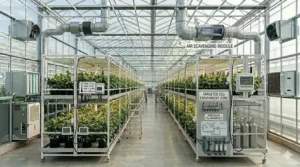
Commercial Cannabis Tent vs. Permanent Grow Room: What the Numbers Actually Say
This is the comparison every scaling operator eventually faces. And the answer isn’t as obvious as the grow room advocates would have you believe.
| Factor | Commercial Cannabis Tent | Permanent Grow Room |
|---|---|---|
| Upfront Cost | Low–Moderate | Very High |
| Setup Time | Hours | Weeks–Months |
| Environmental Control | High | Very High |
| Regulatory Flexibility | Excellent | Limited |
| Scalability | Modular | Fixed |
| Long-Term Durability | 3–7 years per unit | 15+ years |
| Best For | Early–mid scale licensed grows | Established high-volume operations |
Analysis: The build-out cost for a permanent grow room — framing, insulation, electrical, HVAC, reflective wall treatments, permitting — typically runs $50–$150 per square foot of canopy before you’ve purchased a single light fixture. A comparable warehouse grow tent commercial setup costs a fraction of that, deploys in days rather than months, and can be reconfigured as your license tier evolves. For operators in markets where regulations are still shifting (which, in 2026, is still most U.S. states), the flexibility of a tent-based facility is a genuine competitive advantage. The calculus flips when you’re running 10,000+ square feet of licensed canopy in a stable regulatory market — at that scale, the permanence and environmental precision of a built-out room starts to justify the capital outlay. For most operators reading this guide, the commercial canvas tent wins on ROI at their current scale.
For more on facility environmental standards, see Cornell University’s Controlled Environment Agriculture resources — one of the most authoritative academic sources on indoor crop production science in the U.S.
Features That Actually Matter (And the Marketing Hype You Can Safely Ignore)
Matters: Canvas denier rating. Every brand claims their tent is “the thickest” or “the most durable.” Denier is the objective measurement. 2000D > 1680D > 600D. Full stop.
Matters: Zipper type and stitching. SBS zippers on reinforced double-stitched channels are meaningfully better than standard coil zippers. You’ll feel the difference after six months of daily operation.
Matters: Port size variety. Having six 4″ ports is not the same as having two 4″, two 8″, and two 10″ ports. Match your port inventory to your ventilation and climate control equipment before buying.
Hype you can ignore: “99% vs. 98% reflective Mylar.” The difference between 98% and 99% light reflectivity is smaller than the variation created by a minor positional adjustment of your light fixture. Both are excellent. Neither will meaningfully change your harvest.
Hype you can ignore: Branded “diamond mylar” vs. standard mylar. The texture pattern on the Mylar interior does diffuse light slightly more evenly, but the practical yield impact is negligible compared to proper fixture placement and PPFD mapping.
Matters: Integrated cable management. At production-scale growing setups, cable and hose organization directly affects your ability to move safely inside the tent, your equipment longevity, and your inspection readiness. The AC Infinity controller plate passthrough is a genuinely useful feature, not a gimmick.
For context on how lighting and enclosure design affect controlled environment agriculture output, NASA’s research on plant growth under artificial lighting provides fascinating foundational science for the light-reflectivity arguments central to tent design.
Long-Term Maintenance & ROI for Your Farm Grade Grow Tent
A properly maintained commercial cannabis tent is a multi-year asset. Here’s how to protect that investment.
Monthly: Inspect all zipper channels for debris — dead plant material and salt buildup from humidity condensation are the primary zipper killers. Clean with a soft brush and a small amount of food-grade lubricant on the zipper teeth.
After each harvest cycle: Wipe down the interior Mylar walls with a diluted hydrogen peroxide solution (3% concentration, 1:1 with water). This prevents pathogen and mold buildup between cycles without degrading the reflective surface.
Annually: Inspect all pole connection points for micro-fractures, particularly at the top corners where hanging weight creates the most stress. Replace any deformed connectors immediately — a frame failure mid-grow is a crop-ending event.
The ROI math: A premium commercial cultivation tent in the $400–$600 range, properly maintained, will last 5–7 years of continuous use. That’s $60–$120 per year amortized cost as your primary production enclosure. Over that same period, the reflective interior, light-proof canvas, and environmental control it enables will contribute to the hundreds of thousands of dollars in compliant, consistent harvest output that pays your license fees, your staff, and your business overhead. The tent isn’t a cost center. It’s infrastructure.
Commercial Cannabis Tent Safety, Regulations & Compliance Guide
This section matters more than any specification table, and it doesn’t get enough attention in most buying guides.
Electrical load and fire safety. A 10×10 commercial cannabis tent running eight fixtures, multiple fans, and climate control equipment can easily pull 4,000–6,000 watts continuously. The tent itself is canvas and metal — neither of which is fireproof. Your electrical infrastructure (dedicated circuits, proper breaker sizing, quality power strips with surge protection, and no daisy-chaining of outlets) matters as much as the tent specification. The National Fire Protection Association’s NFPA 70 (National Electrical Code) is the governing standard; consult a licensed electrician for your facility’s specific load calculations.
State licensing and environmental documentation. Most U.S. state cannabis programs require licensed producers to document and demonstrate environmental controls as part of ongoing compliance. Your tent’s specifications — canvas light-blocking performance, temperature and humidity management systems, ventilation capacity — may need to be documented in your facility’s Standard Operating Procedures (SOPs). Keep manufacturer spec sheets for every enclosure in your compliance documentation folder.
Pest and pathogen control. A commercial canvas tent with a compromised seal isn’t just a light-proofing problem — it’s a contamination vector. Spider mites, fungus gnats, and botrytis spores travel on air currents. Maintaining positive pressure inside the tent (slightly more air pushed in than exhausted) combined with properly sealed ports is your first line of pest prevention at the enclosure level.
Worker safety. Inside a 10×10 tent running heavy-intensity lighting, temperatures at fixture level can approach 95°F+. Train anyone working inside your production-scale growing tents on heat exposure protocols, ensure adequate ventilation during extended canopy work, and never allow workers to operate inside a fully sealed tent without a clear communication protocol with someone outside.
FAQ: Commercial Cannabis Tents
❓ What is the best size commercial cannabis tent for a licensed facility?
❓ How thick should a farm grade grow tent canvas be for a professional grow?
❓ Can a warehouse grow tent commercial setup pass state cannabis compliance inspections?
❓ How many plants can a 10x10 commercial cultivation tent support?
❓ What is the difference between a commercial cannabis tent and a standard home grow tent?
Conclusion: The Right Commercial Cannabis Tent Pays for Itself
Every dollar you spend on the right commercial cannabis tent comes back multiplied in consistent environmental control, reduced crop loss, lower maintenance overhead, and cleaner compliance documentation. Every dollar you save buying an undersized or underdensity enclosure risks costing you an entire harvest cycle.
The hierarchy here is clear. If you’re building a flagship flowering room at a licensed facility and you want zero surprises, the Gorilla Grow Tent Pro 10×10 or the Gorilla Grow Tent GGT1020 are the industry standards for a reason. If you’re tech-forward and running smart environmental controllers, the AC Infinity CLOUDLAB 811 brings the cable management and verified performance data that make modern precision grows possible. If you’re scaling on a tighter budget without sacrificing canvas quality, the VIVOSUN P108 Pro delivers 2000D construction at a price that leaves capital for lighting and ventilation. And if you’re building modular, the Mars Hydro 8×8 is the workhorse you’ll still be buying for your fifth facility buildout.
Your grow tent is not a commodity purchase. It’s the controlled environment inside which everything else happens. Choose accordingly.
✨ Don’t Miss These Exclusive Deals!
🔍 Click any highlighted product to check current pricing and availability on Amazon. These are the enclosures that serious licensed producers trust — invest in the right foundation and your operation will thank you at harvest time.
Recommended for You
- 7 Best Commercial Grow Tents in 2026
- 7 Best Gorilla Grow Tent Premium Picks for Serious Growers in 2026
- 7 Best 2000D Grow Tent in 2026: Heavy Duty & Built to Last
Disclaimer: This article contains affiliate links. As an Amazon Associate, I earn from qualifying purchases. If you purchase products through these links, we may earn a small commission at no additional cost to you.
✨ Found this helpful? Share it with your friends! 💬🤗
