
In This Article
The AC Infinity Cloudline T6 is a 6-inch mixed-flow inline duct fan with an EC motor, a rated 402 CFM of airflow, and a smart controller that adjusts speed from temperature, humidity and VPD readings. In a 4×4 grow tent, it is the quiet exhaust workhorse that pulls hot, wet air out through your carbon filter.
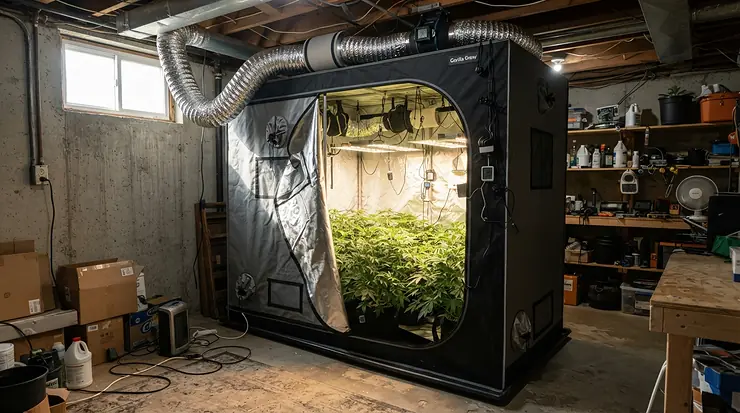
So why does one fan dominate every “best inline fan” roundup? Because a 4×4 tent is a tricky little ecosystem. A 4x4x6.5 ft tent holds about 104 cubic feet of air, and a lit tent can swing from comfortable to swampy in minutes. Ventilation people think in air changes per hour, and the fan is the lung that sets that rate.
This AC Infinity Cloudline 6 inch review for 4×4 tent buyers covers the numbers that matter, translated into plain English. You’ll get honest pros and cons, six rivals and siblings compared side by side, and setup advice the product page never bothers to give. It also covers the controller, the app and long-term reliability, since those decide whether the fan is a joy or a chore.
One note on method. Specs come from manufacturer pages and retailer listings. Review commentary is aggregated from retailer reviews and grower forums, not from hands-on testing, and where sources disagree, I say so.
Quick Comparison: 5 Fans for a 4×4 Tent at a Glance
| Model | Airflow | Rated Noise | Control | Best For |
|---|---|---|---|---|
| AC Infinity Cloudline T6 | 402 CFM | 32 dBA | Controller 69 Pro (temp, humidity, VPD) + app | Most 4×4 tents |
| AC Infinity Cloudline S6 | 402 CFM | 32 dBA | Wired 10-speed dial | Manual-control growers |
| AC Infinity Cloudline Lite A6 | 352 CFM | 34 dBA | Wired 10-speed dial | Tight budgets |
| VIVOSUN AeroZesh G6 | 388 CFM | Listings vary (32-45 dB) | E12 controller, E42A upgrade | Budget smart-ish builds |
| AC Infinity Cloudline T8 | 807 CFM | 39 dBA | Controller 69 Pro | Hot rooms, heavy lighting |
Look at the first two rows and you’ll see the real story: the S6 and T6 use the same fan, so you are paying for the brain, not the muscle. The Lite A6 gives up roughly 12% of the airflow in exchange for a lower entry price. The T8 is more fan than most 4×4 tents need, but it pays off when the room runs hot.
💬 Just one click — help others make better buying decisions too!😊
Top 7 Inline Fans for a 4×4 Tent: Expert Analysis
Seven real options follow, from budget to premium, each judged on what the spec sheet means in a 4×4 tent.
1. AC Infinity Cloudline T6 — best all-round pick for a 4×4 tent
The headline here is balance: enough muscle to haul heat out of a lit 4×4, and enough manners that the spare room doesn’t become a wind tunnel. Look for model AI-CLT6.
The rated figures are 402 CFM, 32 dBA and 503 Pa of static pressure, with an average draw near 38W (64W max). Static pressure is the number that matters once a carbon filter starts choking airflow, and it’s why this fan holds up behind a filter better than basic blowers. The EC motor with PWM control lets it idle at low speeds, which is where it spends most of its life in a 104-cubic-foot tent.
Based on the spec comparison, the T6 suits growers who want set-and-forget climate control without stepping up to an 8-inch unit. Beginners get automation out of the box, and veterans get VPD triggers. One caution: controller packaging has changed over the years, so confirm which controller your listing includes.
Reviewers across retailer pages and grower forums consistently praise the quiet low-speed operation, the light weight for hanging, and the easy programming. Some forum users report probe failures, and one older thread describes interference from a magnetic HPS ballast.
Pros:
- ✅ Strong static pressure for filtered setups
- ✅ Quiet at partial speed with EC motor
- ✅ Temperature, humidity and VPD automation built in
Cons:
- ❌ Probe and controller are the reported weak spot
- ❌ Costs more than dial-only fans
Expect the T6 in the $150-$200 range at the time of research (check current price). Value verdict: excellent for what is effectively a climate computer bolted to a fan.
2. AC Infinity Cloudline S6 — same fan, simpler dial control
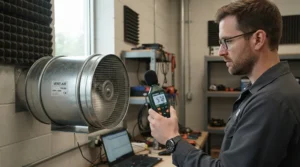
If you strip the smarts off the T6, you get the S6. Both share the 6-inch, 402 CFM, 32 dBA mixed-flow fan, the 503 Pa static pressure, IP44 rating and a 67,000-hour L10 bearing life.
The difference is a wired 10-speed controller instead of the sensor-driven brain. In practice, that means you set a speed and live with it. That’s fine if your tent sits in a steady-temperature room, or if you plan to add a UIS controller later anyway. The S6 is also compatible with the same platform, so upgrading is a plug-in affair rather than a rebuild.
On paper, the S6 is the savvy buy for anyone who already owns a controller or lights on a timer. It is also a sensible choice for growers who distrust automation and want a knob they can reach. Be honest with yourself, though: a 4×4 under a modern LED swings in temperature between lights-on and lights-off, and a fixed speed can’t follow that.
An older retailer head-to-head ranked the S6 first for efficiency, and the newer sibling comparisons I found describe it as the straightforward starter option.
Pros:
- ✅ Identical airflow to the T6
- ✅ Simple, tactile speed control
- ✅ Lower cost for the same motor
Cons:
- ❌ No temperature or humidity sensing out of the box
- ❌ No app control without an upgrade
Typical pricing sits around $100-$130 (check current price). Value verdict: the best deal in the family if you don’t need automation.
3. AC Infinity Cloudline Lite A6 — cheapest way into the Cloudline family
AC Infinity built the Lite series to reach more growers, and the trade-offs are spelled out. Airflow runs up to 20% below the main Cloudline line, noise ratings creep up a little, and the mounting base is plastic rather than steel.
For the Lite A6 (AI-CLA6), that translates to 352 CFM, 34 dBA and 394 Pa of static pressure, with an average draw around 35W. In a 4×4 tent, 352 CFM still moves roughly three and a half tent volumes every minute in free air. The lower static pressure is what you’d feel when a dense carbon filter and a long duct run enter the picture.
Here’s the analytical read: the Lite A6 works for a modest LED in a cool room, with a short duct and a decent filter. It strains first if the lights run hot or the duct snakes around the room. It ships with a wired 10-speed controller and also works with the Cloudline smart controllers, so you can upgrade later.
I couldn’t verify a deep pool of independent Lite A6 reviews at the time of research, so treat the comparison above as spec-based rather than review-based.
Pros:
- ✅ Lowest AC Infinity entry price
- ✅ Same EC-motor family as bigger siblings
- ✅ Upgrade path to smart controllers
Cons:
- ❌ Lower static pressure behind filters
- ❌ Plastic base and less headroom for heat
Usually the cheapest Cloudline option (check current price). Value verdict: smart for cool rooms, risky for hot ones.
4. AC Infinity Cloudline T8 — headroom for hot rooms and heavy lighting
When a 4×4 sits in a garage in July, or under a hungry high-wattage light, 6 inches can start to feel small. The 8-inch T8 (AI-CLT8) answers with 807 CFM, 39 dBA and 746 Pa of static pressure, plus the same smart controller family.
Those static-pressure numbers are the real prize. A bigger fan can run slowly through a filter and still move serious air, which keeps noise down. The average draw is around 78W, roughly double the T6, so heat removal comes with a slightly higher power bill.
My honest analysis: for a typical 4×4 in a temperate room, the T8 is oversized. Oversizing brings its own problem, since a fan that is too strong can pull tent walls inward unless the intake is sized generously. It also needs 8-inch ducting and an 8-inch filter. The T8 makes sense if you expect to expand toward a 4×8, live somewhere hot, or run a long duct.
I found less 4×4-specific review data on the T8, so I’m leaning on specs here, not on aggregated feedback.
Pros:
- ✅ Big airflow and static pressure reserve
- ✅ Runs quietly when slowed down
- ✅ Grows with your setup
Cons:
- ❌ Needs 8-inch ducting and filter
- ❌ Oversized for typical 4×4 builds
Pricing sits a step above the T6 tier (check current price). Value verdict: insurance for hot rooms, wasted money in cool ones.
5. VIVOSUN AeroZesh G6 — budget EC fan with an upgrade path
VIVOSUN’s pitch is similar to AC Infinity’s: a PWM-controlled EC motor, a mixed-flow design and a smart-controller upgrade. The VIVOSUN AeroZesh G6 is rated at 388 CFM and about 35W, with an IP44 rating.
It ships with an E12 speed controller and can be upgraded to the GrowHub E42A WiFi controller, which adds temperature, humidity and VPD monitoring. That is the same philosophy as the Cloudline route, in a different ecosystem. A 388 CFM rating still offers plenty of headroom for a 104-cubic-foot tent.
One thing the spec sheet won’t tell you: noise claims are inconsistent. Different VIVOSUN listing pages cite 32 dB for the G6 while the Amazon spec table lists under 45 dB. Treat the lower number with caution until you can verify it, because noise is the whole point of buying an EC fan.
I did not find enough independent reviews of the G6 itself to summarize reliability, so I won’t pretend otherwise. If you want a lower-priced entry into a smart-controller setup, it’s a reasonable candidate, but weigh the unknowns.
Pros:
- ✅ EC motor with low rated power draw
- ✅ Controller upgrade path to WiFi
- ✅ Typically priced below the T6
Cons:
- ❌ Conflicting noise claims across listings
- ❌ Thinner independent review base
Check current price; it usually lands below the T6 tier. Value verdict: promising budget option, but verify the noise rating before buying.

6. VIVOSUN AeroZesh T6 — kit-style convenience with a smart controller
Some people don’t want to hunt for a fan, a filter and ducting separately. The VIVOSUN AeroZesh T6 kit bundles a 408 CFM EC fan with the GrowHub E42A+ controller, a 6-inch carbon filter rated 1200+ IAV and 8 feet of ducting.
At 3,000 RPM and 408 CFM, airflow is nearly identical to the AC Infinity Cloudline T6. The kit’s dual sensors track internal and external temperature, humidity and VPD, which is genuinely useful because comparing tent conditions to the room outside tells you whether the fan is actually helping. Bundled ducting and filter also remove the compatibility guesswork for first-timers.
The noise story again needs care. One VIVOSUN page cites 32 dB, while another table lists under 45 dB for the same model. When two official pages disagree by that much, I’d plan around the louder figure.
This one is best for newcomers who value a one-box solution over the strongest brand-name ecosystem. It’s less compelling if you want proven long-term reliability data, because I could not verify much independent review coverage for this kit.
Pros:
- ✅ Fan, filter, ducting and controller in one box
- ✅ 408 CFM matches the Cloudline T6 class
- ✅ Dual sensors for inside-versus-outside comparison
Cons:
- ❌ Official noise figures disagree between pages
- ❌ Limited independent reliability evidence
Kit pricing varies (check current price). Value verdict: convenient and capable, with a few claims to verify.
7. iPower 6 Inch 442 CFM Inline Duct Fan — cheap, brute-force airflow
This is the old-school option: a centrifugal AC-motor fan rated at 442 CFM, drawing around 95W at 2,380 RPM, with a metal housing. Notably, it ships without a speed controller, so you add one separately.
The big CFM number looks great, but remember that CFM is measured under ideal conditions. AC-motor fans like this also tend to get noisier and less efficient when you slow them with a basic speed adjuster. Listings cite noise anywhere from under 50 dB to 65 dB, which is a wide range, and buyers’ comments on noise are mixed. Some say it’s quiet at full speed, while others report more noise once a speed controller is involved.
So who is it for? A garage or basement grower who doesn’t care about sound and wants raw air movement on a budget. It’s a poor fit for a bedroom. The warranty is also shorter, at 12 months on the listing I found.
Pros:
- ✅ High rated airflow at a low entry price
- ✅ Sturdy metal housing
- ✅ Simple, proven centrifugal design
Cons:
- ❌ Louder, especially with speed controllers
- ❌ No automation and a shorter warranty
Expect around $100-$120 per a recent roundup (check current price). Value verdict: fine for noisy spaces, a poor trade for living areas.
Top 7 Comparison: Specs, Prices and Best Use
| Model | Airflow | Rated Noise | Control | Price Range | Best For |
|---|---|---|---|---|---|
| AC Infinity Cloudline T6 | 402 CFM | 32 dBA | Smart (temp, humidity, VPD) | $150-$200 | Most 4×4 tents |
| AC Infinity Cloudline S6 | 402 CFM | 32 dBA | 10-speed dial | $100-$130 | Manual growers |
| AC Infinity Cloudline Lite A6 | 352 CFM | 34 dBA | 10-speed dial | Check current price | Cool rooms, tight budgets |
| AC Infinity Cloudline T8 | 807 CFM | 39 dBA | Smart | Above T6 tier | Hot rooms, expansion |
| VIVOSUN AeroZesh G6 | 388 CFM | Listings vary | E12 / E42A upgrade | Typically below T6 | Budget smart builds |
| VIVOSUN AeroZesh T6 | 408 CFM | Listings vary | GrowHub E42A+ | Check current price | Kit-style beginners |
| iPower 6 Inch 442 CFM Inline Duct Fan | 442 CFM | 50-65 dB (varies) | None included | $100-$120 | Noise-tolerant spaces |
Reading across the table, the AC Infinity Cloudline T6 is the only one that pairs low rated noise, strong static pressure and built-in automation at a mid-range price. If budget is the priority and noise isn’t, the iPower 6 Inch 442 CFM Inline Duct Fan moves plenty of air for less. If you want a cheaper way into smart control, the VIVOSUN AeroZesh G6 deserves a look once you verify its noise claims.
Practical Usage Guide: Setting Up a 6-Inch Fan in a 4×4 Tent
A fan can be excellent and still perform badly if it’s installed carelessly. Here’s the sequence worth following.
- Hang it high and tight. Mount the fan near the top of the tent frame with ratchet straps, so hot air at the ceiling exits first. Rubber isolation reduces vibration hum.
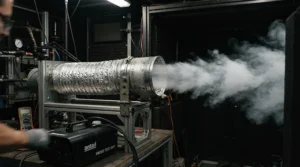
- Filter on the intake side. Place the carbon filter upstream so the fan pulls air through it. This creates negative pressure, which keeps odor from leaking out of zipper seams.
- Keep ducting short and straight. Every bend costs airflow, so straighten runs and avoid kinks.
- Place the probe at canopy height. Keep it out of direct light and away from the fan’s exhaust path.
- Program a floor, not just a ceiling. Set a minimum speed so air always moves, then let temperature and humidity triggers push it higher.
- Check the target range. Low VPD signals high humidity, which extension researchers at the University of Arizona link to longer leaf wetness and higher disease pressure.
During the first 30 days, watch for tent walls pulling inward, humidity spikes after lights-off, and a probe reading that doesn’t match a backup thermometer. For maintenance, the manufacturer notes the motor box detaches for cleaning, so schedule a monthly dust check.
Real-World Scenarios: Which Fan Fits Which Grower?
If you’re an apartment hobbyist running a modest LED in a 4×4 near your bedroom, the AC Infinity Cloudline T6 at low speed is the logical match. Its low-speed noise, automation and filter-friendly static pressure are exactly what a quiet room demands. One grower review I found described sleeping near a T6 in a small space, though that’s a single data point.
If you’re a garage grower facing hot summers with a stronger light, start with the T6, but know the AC Infinity Cloudline T8 is the escape hatch. A mild climate suits the T6, while a persistently hot one justifies the bigger fan’s reserve capacity.
If you’re on a tight budget with a cool basement, the AC Infinity Cloudline S6 or Lite A6 delivers the Cloudline motor family for less. Add a UIS controller later when funds allow. A noise-tolerant grower in a detached shed could even go with the iPower 6 Inch 442 CFM Inline Duct Fan and save more.
Match the fan to your environment, your noise tolerance and your appetite for tinkering, in that order.
Problem → Solution: Fixing the Most Common 4×4 Ventilation Headaches
Tent walls suck inward. The fan is outrunning your intake. Open the lower vent flaps wider, add a passive intake, or cap the maximum speed in the controller.
Humidity spikes when the lights go off. Without lights, the tent loses its heat engine and humidity climbs. Set a humidity trigger so the fan ramps up automatically, and keep a minimum speed running.
The temperature display freezes when the light kicks on. Forum users have reported probe problems near magnetic ballasts, with suggestions including relocating the probe, separating circuits, or contacting the manufacturer. If you run a Cloudline T6, keep a spare probe in mind.
A faint hum at low speed. Check mounting, since loose straps amplify vibration. Add isolation, and confirm the duct isn’t touching the tent frame.
Odor escapes. Confirm the filter sits upstream of the fan and the tent runs under negative pressure.
Cloudline T6 Performance Review: What It Does Under Real Load
In performance terms, the T6 is a heat remover first and a humidity manager second. Its EC motor and PWM control let it ramp smoothly instead of lurching between on and off, and that smoothness is why many growers describe it as quiet in practice. One 4×4 setup guide reports roughly 30-35 dB at 50% speed, though that is a secondary figure, not a lab measurement.
How does it cope under stress? A forum comment from a grower familiar with 4×4 setups suggests the T6 is generally sufficient with a 6×16-24 inch filter, but may come up short with very hot lights. That aligns with the physics: filters and ducting eat airflow, so a fan rated at 402 CFM won’t deliver that in your tent.
The takeaway from this Cloudline T6 performance review is simple. For modest-to-moderate lighting in a temperate room, it has ample headroom. For hot rooms or hungry lights, the step up to a T8 (or ensuring a clean, short duct run) matters more than any controller tweak.
CFM Output Rating: What 402 CFM Really Means in a 4×4
CFM is the volume of air a fan moves per minute, and the T6‘s rating is 402. Do the tent math: 104 cubic feet of volume at 402 CFM means the fan could, in free air, swap the entire tent’s air several times every minute.
But the CFM output rating is a best-case figure. As Wikipedia’s explainer on standard cubic feet per minute notes, CFM can be ambiguous because gases are compressible and conditions vary. Real tents add a carbon filter, bends and restricted intakes. One older forum thread even reported a measured figure near 351 CFM for a T6, though that is unverified and dated.
What should you do with this? Treat 402 CFM as a ceiling, not a promise. That is precisely why a three-to-four times oversized fan, run at 40-60% speed, tends to work better than a barely adequate one running flat out. You get reserve capacity, lower noise and a fan that isn’t straining.
Temperature Humidity Controller: How the Brain Actually Behaves
The controller is where this fan earns its reputation. The Controller 69 Pro offers temperature and humidity triggers, VPD triggers, timers, cycles and schedules, all driving PWM speed in ten levels.
Three settings deserve your attention. Min/max levels keep air moving and cap the maximum, which is the cure for tent-wall suction. Dynamic transitions ramp the fan gradually rather than snapping between speeds. The buffer prevents rapid on/off flutter as readings hover around a trigger.
Then there’s VPD. Vapour-pressure deficit is the difference between the moisture the air holds and what it could hold when saturated. It folds temperature and humidity into one number, which tracks plant water demand better than humidity alone. If VPD sounds like homework, start with temperature and humidity triggers and graduate later.
One practical limit: the listed operating range is 32-140°F and 35-85% RH, so extreme conditions are outside spec.
UIS App Ecosystem: Why the Platform Matters More Than the Fan
The UIS app ecosystem is AC Infinity’s bet that you’ll eventually own more than one device. The Controller 69 Pro connects to Cloudline fans, Cloudray and Ionframe series products, up to four UIS devices at once, and can reach non-UIS lights and outlets via select adapters.
The app, over Bluetooth or 2.4GHz WiFi, adds alarms, notifications, historical charts and data export. For a 4×4 grower, charts are the sleeper feature: you can see overnight humidity spikes you’d otherwise miss, then tune triggers accordingly.
The trade-off is lock-in. Your automation gets better the more you buy into the ecosystem, and your options narrow when you mix brands. VIVOSUN’s GrowHub is a rival ecosystem with the same logic. So the question isn’t just “which fan?” but “which family do I want to live in?”
Cloudline Reliability for 4×4 Tent: Long-Term Cost and Maintenance
On paper, the fan is built to last: dual ball bearings with a 67,000-hour L10 rating, IP44 dust and splash resistance, and a detachable motor box for cleaning. One retailer lists a 2-year manufacturer warranty, so verify current terms at purchase.
In practice, Cloudline reliability for 4×4 tent use is mostly a story about the sensor and controller, not the motor. Forum users report probe failures and interference near a ballast, while others describe the fan itself running without complaint. That spread is typical, and I can’t verify long-run failure rates.
Now the running cost. At an average draw of about 38W, continuous operation is roughly 27 kWh a month, around $4-$5 at a typical $0.17/kWh rate. The 95W iPower 6 Inch 442 CFM Inline Duct Fan would use more than double that. Over a couple of years, efficiency can close a chunk of the purchase-price gap.
AC Infinity 6 Inch Pros and Cons: The Honest Ledger
The fair summary of AC Infinity 6 inch pros and cons looks like this.
On the plus side:
✅ Quiet low-speed operation thanks to the EC motor
✅ Strong static pressure for filtered setups
✅ Automation that removes babysitting
✅ Ecosystem growth through the UIS platform
On the minus side:
❌ Probe and controller reliability concerns appear in forums
❌ Pricing above basic AC-motor fans
❌ Listing variations around which controller is included
❌ Ecosystem lock-in
Does the balance tip in its favor? For most 4×4 growers, yes, because the quiet-plus-automation combination is hard to match at this price. The honest caveat is that “most” excludes noise-tolerant budget builds and hot rooms that want an 8-inch fan.
How to Choose a 6-Inch Inline Fan for a 4×4 Tent
- Calculate tent volume. A 4x4x6.5 ft tent is about 104 cubic feet. That’s your baseline.
- Aim for generous headroom. Choose a fan with several times the tent volume per minute, so it can run slowly and quietly.
- Check static pressure. If you run a carbon filter, static pressure matters as much as CFM. The T6‘s 503 Pa beats the Lite A6‘s 394 Pa.
- Prefer EC/PWM motors. They hold low speeds without the buzz that cheap speed adjusters produce on AC motors.
- Pick your automation level. Dial-only (S6) or sensor-driven (T6), based on how steady your room is.
- Think ecosystem. Decide whether you’ll add lights, humidifiers or more fans later.
- Verify the listing. Confirm the included controller, warranty and cord lengths before you buy.
Benefits vs Traditional AC-Motor Fans
| Feature | AC Infinity Cloudline T6 (EC/PWM) | iPower 6 Inch 442 CFM Inline Duct Fan (AC) | Best For |
|---|---|---|---|
| Rated airflow | 402 CFM | 442 CFM | Raw airflow: iPower |
| Average power | ~38W | ~95W | Efficiency: T6 |
| Speed control | Built-in, 10 PWM levels | Add-on required | Convenience: T6 |
| Automation | Temp, humidity, VPD, app | None | Hands-off growers: T6 |
| Warranty (listings found) | 2 years (retailer-listed) | 12 months | Peace of mind: T6 |
The traditional fan wins on rated airflow and upfront cost, which is why it persists. The T6 wins everywhere that shows up after the first month: electricity, noise at partial speed and automation. If your tent sits in a living space, that second list matters far more than 40 extra CFM.

FAQ
❓ Does the Cloudline T6 need WiFi to work?
❓ How long does the AC Infinity Cloudline T6 last?
❓ Where should I mount a 6 inch Cloudline in a 4x4 tent?
❓ Can the Cloudline T6 control a humidifier or light?
❓ Is the Cloudline T6 too much fan for a smaller tent?
Conclusion
After weighing the specs, the sentiment and the competition, the verdict of this AC Infinity Cloudline 6 inch review for 4×4 tent buyers is straightforward. The AC Infinity Cloudline T6 is the default choice because it pairs strong static pressure, low-speed quiet and genuine automation at a mid-range price. Its weak spot is the probe and controller, so keep a spare probe in mind and place it away from ballasts.
If you don’t need automation, the AC Infinity Cloudline S6 delivers the same fan for less. The AC Infinity Cloudline Lite A6 suits cool rooms and tight budgets. The AC Infinity Cloudline T8 earns its place only if heat or expansion is on the horizon. Among rivals, the VIVOSUN AeroZesh G6 and VIVOSUN AeroZesh T6 are worth considering once you verify their noise claims, and the iPower 6 Inch 442 CFM Inline Duct Fan is a noisy but capable budget workhorse.
Size for headroom, run the fan slowly, keep the duct short, and let the controller do the babysitting.
✨ Don’t Miss These Exclusive Deals!
🔍 Take your grow tent ventilation to the next level with these carefully selected fans. Click any highlighted product name to check current pricing and availability. The right fan will help you create a calm, stable climate your plants will love!
Recommended for You
- Price AC Infinity Cloudline 6 Inch Fan: 7 Smart Buys (2026)
- AC Infinity Cloudline 6 Inch Bundle Deal With Filter: 7 Best 2026
- 6 Inch Inline Duct Fan For HVAC Boost: 7 Best Picks 2026
Disclaimer: This article contains affiliate links. As an Amazon Associate, I earn from qualifying purchases. If you purchase products through these links, we may earn a small commission at no additional cost to you.
✨ Found this helpful? Share it with your friends! 💬🤗
