
In This Article
There’s something almost magical about biting into a sun-warmed tomato you’ve grown yourself. That explosion of flavor, that perfect balance of sweetness and acidity—it’s worlds apart from those sad, mealy supermarket imposters. But here’s the thing: not all tomato seeds are created equal.
I’ve spent the better part of a decade testing different varieties in my backyard garden, and I can tell you with absolute certainty that choosing the right seeds makes or breaks your harvest. Whether you’re a complete novice looking for foolproof beginner friendly tomato seeds or an experienced gardener hunting for those elusive tasting tomato varieties that’ll make your neighbors jealous, this guide has you covered.
The best tomato seeds combine reliable germination rates, disease resistance, and most importantly, outstanding flavor. After testing dozens of varieties and consulting with master gardeners, I’ve narrowed down the top contenders available on Amazon right now. These aren’t just random picks—they’re carefully selected based on performance, customer reviews, and real-world growing conditions across different climate zones.
What makes these seeds special? For starters, many are open-pollinated heirloom varieties that have been perfected over generations. These heirloom varieties breed true and come in a wide variety of colors, shapes, flavors, and sizes, offering you incredible diversity beyond the standard red globe tomato. Others are modern hybrids engineered for superior disease resistance and productivity, giving you the best of both worlds.
Quick Comparison Table: Top Tomato Seeds at a Glance
| Product | Varieties Included | Seed Count | Price Range | Best For |
|---|---|---|---|---|
| Sweet Yards Organic 12-Pack | 12 heirlooms (Cherokee Purple, Black Krim, San Marzano, etc.) | 150+ per variety | $15-20 | Variety seekers |
| Survival Garden Seeds 10-Pack | 10 colorful varieties | 3,000+ total | $25-30 | Bulk growers |
| Burpee Best 10 Collection | 10 popular varieties | 50+ per variety | $35-40 | Brand reliability |
| Family Sown 10-Pack | 10 heirloom/classic | 200+ per variety | $18-24 | Beginners |
| Sereniseed Organic 10-Pack | 10 certified organic | 100+ per variety | $22-28 | Organic gardeners |
| Gardeners Basics 16-Pack | 16 heirloom varieties | Variable | $20-26 | Maximum diversity |
| Burpee Early Girl | Single variety | 50 seeds | $8-12 | Quick harvest |
💬 Just one click – help others make better buying decisions too! 😊
Top 7 Tomato Seeds for 2026: Expert Analysis
1. Sweet Yards Organic Tomato Seeds Variety Pack – Best Overall Value
If you’re looking for maximum diversity without breaking the bank, this 12-variety pack is absolutely spectacular. I planted these last season and was blown away by the germination rates and plant vigor.
Key Specifications:
- 12 individual seed packets (150+ seeds per variety)
- Certified organic and non-GMO
- 2026 season fresh seeds
- Includes Cherokee Purple, Black Krim, Pink Brandywine, San Marzano
The real magic here is the variety selection. You get everything from Sweet Yards Organic beefsteak giants perfect for sandwiches to paste tomatoes ideal for sauces. The Cherokee Purple alone is worth the price of admission—it’s one of the most flavor-packed heirloom varieties you’ll ever taste, with a deep, complex sweetness that borders on wine-like.
Customer feedback consistently praises the high germination rates (typically 85-90%), and the reusable zipper packaging keeps unused seeds viable for future seasons. One gardener from Minnesota reported harvesting over 200 pounds of tomatoes from just this one pack!
✅ Pros:
- Exceptional variety diversity
- Premium organic certification
- Includes growing instructions
- Great for both beginners and experienced gardeners
- Backed by germination guarantee
❌ Cons:
- Some varieties require longer growing seasons
- Seeds are smaller quantities than bulk options
Price: $15-20 | Target: Home gardeners wanting diverse harvests
2. Tomato Seeds 10 Variety Pack from Survival Garden Seeds – Best for Bulk Planting
When you need serious seed quantities, this collection delivers over 3,000 seeds across ten carefully selected varieties. It’s basically a garden insurance policy.
Key Specifications:
- 10 variety pack with 300+ seeds each
- Non-GMO heirloom varieties
- Includes Aunt Ruby’s Green, Hillbilly, Mortgage Lifter
- Open-pollinated for seed saving
What sets Survival Garden Seeds apart is their focus on hardy, productive varieties that perform well even in challenging conditions. The Mortgage Lifter variety alone can produce fruits weighing up to 2.5 pounds! I particularly appreciate their inclusion of Aunt Ruby’s German Green—a stunning lime-green tomato that stays green when ripe and has an incredibly sweet, low-acid flavor profile.
Customers rave about the seed viability and comprehensive growing guides included with each packet. The quantities make this perfect for community gardens or if you’re planning to share seeds with friends and family.
✅ Pros:
- Massive seed quantities
- Excellent for seed saving
- Diverse color range
- Strong germination rates
- Great customer support
❌ Cons:
- May be too much for small gardens
- Some varieties need staking support
Price: $25-30 | Target: Bulk growers, community gardens, serious seed savers
3. Burpee Best 10 Tomato Seed Collection – Most Trusted Brand
There’s a reason Burpee has been America’s most trusted seed company since 1876. Their quality control is unmatched, and this collection showcases their greatest hits.
Key Specifications:
- 10 seed packets of top varieties
- Non-GMO with 35% higher germination rates
- Includes cherry, beefsteak, paste, and slicer types
- Backed by Burpee’s 100% guarantee
The Burpee Best 10 collection reads like a who’s who of tomato royalty. You’re getting proven performers that have stood the test of time, from the classic Big Boy to the super-sweet Sun Gold cherry tomato. Burpee’s germination rates are 35% higher than industry standards, which means more plants from every packet.
What I love about this collection is the thoughtful curation—you get varieties suited for every culinary purpose. The Celebrity variety alone is disease-resistant and produces consistently, making it perfect for gardeners who’ve struggled with blight or wilt issues.
✅ Pros:
- Premium brand reliability
- Exceptional germination guarantee
- Wide range of tomato types
- Detailed growing instructions
- Excellent customer service
❌ Cons:
- Higher price point
- Fewer seeds per packet than budget options
Price: $35-40 | Target: Quality-focused gardeners, beginners wanting reliability
4. Family Sown Tomato Seeds 10-Pack – Best for Beginners
Sometimes the best choice is the one that makes success easy, and that’s exactly what Family Sown delivers with their beginner-friendly collection.
Key Specifications:
- 10 individual seed packets
- 200+ seeds per variety
- 2026 fresh season seeds
- Includes Brandywine Pink, Cal Ace, Beefsteak Rainbow
This collection strikes the perfect balance between classic varieties and interesting heirlooms. The Cal Ace is particularly beginner-friendly—it’s a determinate variety that produces heavily over a concentrated period, perfect if you want to make a big batch of sauce. Meanwhile, the Beefsteak Rainbow offers that wow factor with its multicolored stripes.
Customers consistently mention how helpful the included planting instructions are, with clear guidance on spacing, watering, and harvest timing. One reviewer from Texas noted that even in brutal summer heat, these varieties kept producing quality fruit.
✅ Pros:
- Easy-to-grow selections
- Clear planting instructions
- Beautiful giftable packaging
- Good seed quantities
- Reliable germination
❌ Cons:
- Limited to more common varieties
- Fewer unusual heirlooms
Price: $18-24 | Target: First-time tomato growers, gift giving
5. Sereniseed Certified Organic Tomato Seeds – Best for Organic Gardeners
If you’re committed to organic gardening, Sereniseed offers USDA-certified organic seeds with an impressive variety lineup.
Key Specifications:
- 10-pack certified organic collection
- Non-GMO, open-pollinated
- Includes Green Zebra, Chocolate Cherry, Black Krim
- 100+ seeds per variety
The Green Zebra variety in this pack is an absolute showstopper—it has a distinct green look and was first introduced in 1993, offering a tangy-sweet flavor that’s perfect for salads. The Chocolate Cherry is another unique addition, producing deep burgundy cherry tomatoes that taste like concentrated tomato essence.
What makes this collection special is the organic certification throughout the entire growing process, from seed production to packaging. This means no synthetic pesticides or fertilizers were used at any stage, giving you the cleanest possible start for your organic garden.
✅ Pros:
- Full organic certification
- Unique flavor profiles
- Open-pollinated for seed saving
- Good variety selection
- Supports sustainable agriculture
❌ Cons:
- Smaller seed counts
- Premium pricing
- Some varieties need longer seasons
Price: $22-28 | Target: Organic gardeners, farmers market growers
6. Gardeners Basics 16 Variety Heirloom Pack – Maximum Diversity Winner
When variety is your top priority, this massive 16-variety collection brings incredible diversity to your garden beds.
Key Specifications:
- 16 heirloom variety packets
- Mix of determinate and indeterminate
- Includes Tiny Tim, Tomatillo varieties, Yellow Pear
- Free plant markers included
This collection is like a tomato encyclopedia in seed form. You get everything from the compact Tiny Tim (perfect for containers) to massive paste tomatoes like San Marzano. The San Marzano is a type of Roma tomato that’s great for salsas, sauces, and pastes, producing meaty fruits with fewer seeds.
The inclusion of tomatillo varieties (Grande Rio Verde and Verde) is a brilliant touch for anyone who loves making salsa verde or chili verde. Plus, those free plant markers are genuinely useful for keeping track of what you planted where.
✅ Pros:
- Unmatched variety count
- Includes specialty varieties
- USA-grown seeds
- Free bonus markers
- Money-back guarantee
❌ Cons:
- Variable seed counts per packet
- Can be overwhelming for beginners
- Requires more garden space
Price: $20-26 | Target: Experienced gardeners, variety collectors
7. Burpee Early Girl Tomato Seeds – Best Single Variety for Quick Harvests
Sometimes you just want one reliable variety that delivers fast, and Early Girl is the speed champion of the tomato world.
Key Specifications:
- 50 non-GMO seeds
- Indeterminate variety
- Harvest in just 50-55 days
- 5 oz. slicing tomatoes
The Burpee Early Girl is legendary among gardeners for good reason. These tomato plants bear fruit extremely early and continue producing longer than most varieties, giving you fresh tomatoes weeks before your neighbors. I’ve had Early Girl plants producing quality fruit well into October when frost finally ended their run.
The flavor is surprisingly good for such a fast-maturing variety—meaty, well-balanced, and perfect for slicing onto sandwiches or burgers. The indeterminate growth habit means you’ll get continuous harvests rather than one big flush, which is ideal for home gardens where you want a steady supply for fresh eating.
✅ Pros:
- Fastest maturity time
- Extended harvest period
- Reliable producer
- Great flavor for an early variety
- Proven track record
❌ Cons:
- Single variety only
- Needs staking/caging
- Smaller packet size
Price: $8-12 | Target: Impatient gardeners, short growing seasons
✨ Don’t Miss These Exclusive Deals!
🔍 Take your tomato garden to the next level with these carefully selected seed collections. Click on any highlighted item to check current pricing and availability on Amazon. These seeds will help you create authentic garden-fresh harvests your family will love!
Understanding Tomato Seed Types: Heirloom vs Hybrid
The debate between heirloom and hybrid tomatoes is one of the most passionate in gardening circles, but the truth is both have their place in your garden.
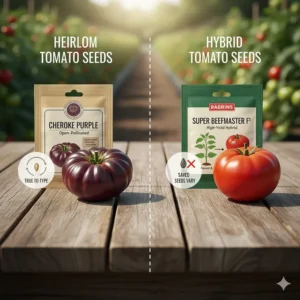
Heirloom tomatoes are open-pollinated varieties that have been passed down through generations, often 50 years or older. What makes them special? The flavor, first and foremost. Modern tomato cultivars lack the genetic ability to produce various important flavor compounds because they were bred for appearance and shipping qualities rather than taste. That’s why heirlooms often taste dramatically better than supermarket tomatoes.
The heirloom tomato varieties available today represent hundreds of years of selective breeding by gardeners who prioritized flavor above all else. Varieties like Brandywine and Cherokee Purple have devoted followings, and for good reason—they deliver taste experiences that modern hybrids simply can’t match.
However, hybrid tomatoes aren’t without merit. They’re created by crossing two parent plants to produce offspring with specific desirable traits: disease resistance, uniform size, concentrated ripening, or improved yields. The trade-off? You can’t save seeds from hybrids and expect the same plant next year, as they don’t breed true.
Which Should You Choose?
For most home gardeners, I recommend a mix of both. Grow heirlooms for incredible flavor and variety, but include a few disease-resistant hybrids as insurance against common tomato diseases. If you’re in an area with heavy disease pressure (hello, Southeastern gardeners dealing with late blight!), hybrids might save your harvest.
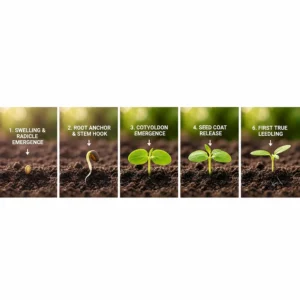
Climate Zones and Tomato Seed Selection
Your climate zone dramatically impacts which tomato seeds will thrive in your garden. Tomatoes take 60 days to more than 100 days to harvest depending on the variety, so matching variety maturity to your growing season is crucial.
Short Season Zones (Zones 3-5): Focus on determinate varieties and early-maturing types like Early Girl (55 days) or Fourth of July (49 days). These varieties complete their growth cycle before frost hits. Cherry tomatoes are also excellent choices, as they mature faster than large beefsteak types.
Moderate Season Zones (Zones 6-7): You have the luxury of growing almost anything. This is where you can experiment with slower-maturing heirlooms like Brandywine (80-100 days) while also growing early varieties for an extended harvest season.
Long Season Zones (Zones 8-10): Heat tolerance becomes your main consideration. Look for varieties bred for hot climates—many paste tomatoes like Roma and Amish Paste perform well in heat. Most tomatoes grow and produce best when daytime temperatures range from 70 to 80 degrees F, and night temperatures fall between 60 to 70 degrees F, so southern gardeners should consider heat-tolerant varieties.
The key is timing your planting correctly. Northern gardeners should start seeds indoors 6-8 weeks before the last frost date, while southern gardeners might get multiple plantings—one in early spring and another in late summer for fall harvest.
Determinate vs Indeterminate: Which Growth Type Suits You?
This is one of the most important decisions in tomato growing, yet many beginners don’t understand the difference.
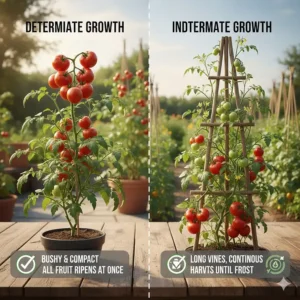
Determinate Tomatoes are the “bush” types. They grow to a predetermined height (usually 3-4 feet), set all their fruit at once, and then decline. Think of them as the sprinters of the tomato world—they give you one big harvest over 2-3 weeks, perfect for canning and sauce-making. Varieties like Roma, Celebrity, and Ace 55 are determinate.
Indeterminate Tomatoes are the “vining” types that keep growing until frost kills them. Indeterminate types are tall growing plants, normally 5 to 8 feet tall, producing a fruit cluster on the stems between every third leaf. They produce fruit continuously throughout the season, which is ideal for fresh eating. Most heirlooms fall into this category, including Brandywine, Cherokee Purple, and Black Krim.
Space Considerations
Determinate varieties work beautifully in containers and small spaces. A single plant in a 5-gallon bucket can produce 10-15 pounds of tomatoes. Indeterminate varieties need more room and substantial support—we’re talking sturdy cages or tall stakes, as these plants can easily reach 6-8 feet tall.
I grow determinates in my raised beds for sauce production and indeterminates along my back fence where they can climb to their heart’s content. This gives me both concentrated harvests for preserving and steady supplies for fresh eating.
Soil Preparation and Seed Starting Success
The secret to exceptional tomatoes starts long before you plant seeds. Proper soil preparation is absolutely critical for healthy, productive plants.
According to the USDA’s tomato production guidelines, tomatoes are self-pollinating and should be grown in well-drained, fertile soil. Start by testing your soil pH—tomatoes prefer slightly acidic conditions between 6.0 and 6.8.
Indoor Seed Starting (Recommended):
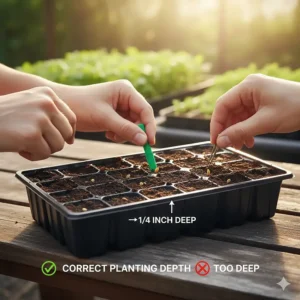
Start seeds indoors 6-8 weeks before your last frost date. Use a quality seed-starting mix, not garden soil. Plant seeds 1/4 inch deep in small cells or peat pots, keeping soil consistently moist but not waterlogged. Bottom heat from a seedling heat mat dramatically improves germination rates, especially for heat-loving varieties.
Once seedlings emerge, they need strong light—either a sunny south-facing window or grow lights positioned 2-3 inches above the plants for 14-16 hours daily. Weak, leggy seedlings result from insufficient light.
Hardening Off:
This is the step most beginners skip, and it’s why their transplants struggle or die. About a week before transplanting, begin acclimating seedlings to outdoor conditions gradually. Start with an hour of outdoor time in shade, increasing exposure daily until they can handle full sun and wind.
Transplanting Tips:
When transplanting, bury stems deeply—tomatoes can develop roots along buried stem portions, creating stronger plants. Remove lower leaves and bury up to the top remaining leaves. Add organic compost and a handful of bone meal to each planting hole for phosphorus, which promotes root development and fruiting.
Disease Resistance: VFN and Other Important Codes
One of the most frustrating experiences in gardening is losing your tomato crop to disease. This is where understanding disease resistance codes becomes invaluable.
Many seed packets display codes like VFN, VFNT, or VFFNT. Here’s what they mean:
- V = Verticillium wilt resistance
- F or FF = Fusarium wilt resistance (FF means resistance to multiple races)
- N = Nematode resistance
- T = Tobacco mosaic virus resistance
- A = Alternaria (early blight) resistance
- L = Septoria leaf spot resistance
If you’ve had disease problems in previous years, prioritize varieties with appropriate resistance codes. For example, if you’re in the humid Southeast where fungal diseases run rampant, look for varieties with F, V, and A resistance.
However, remember that disease resistance doesn’t mean disease immunity. Good cultural practices are still essential: Remove all lower leaves that touch the soil, as many soil diseases are splashed onto the foliage by rain or watering. Water at soil level rather than overhead, mulch to prevent soil splash, and rotate crop locations yearly.
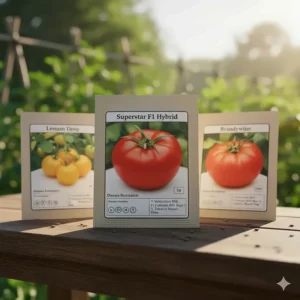
Flavor Profiles: Finding Your Perfect Taste
Not all tomatoes taste the same, and understanding flavor profiles helps you select varieties you’ll actually enjoy eating.
Red and black tomatoes are more acidic with vibrant and tart flavors, while pink tomatoes are milder cousins with less acid. Orange and yellow varieties tend to be low-acid and mellow, while green-when-ripe varieties are surprisingly sweet and bright despite their appearance.
For Sweet Flavor Lovers: Try Sun Gold (incredibly sweet cherry), Pineapple (yellow with red streaks, fruity notes), or Prairie Fire (rated 10 out of 10 on the Brix sweetness scale). Pink Brandywine is famously sweet with low acid.
For Bold, Acidic Tomato Taste: Classic red varieties like Early Girl, Celebrity, or Rutgers deliver that quintessential tomato tang. Cherokee Purple offers complex acidity balanced with sweetness.
For Low-Acid Diets: Yellow varieties like Golden Jubilee or Lemon Boy are naturally lower in acid while still flavorful. Aunt Ruby’s German Green is another excellent low-acid choice.
For Sauce and Canning: Paste tomatoes like San Marzano, Amish Paste, or Roma have meaty flesh with fewer seeds and less water content, concentrating flavor and reducing cooking time. They’re specifically bred for processing.
The beauty of growing from seed is you can try multiple flavor profiles and discover your personal favorites. I plant at least 2-3 varieties from different flavor categories each year to keep things interesting.
Container Gardening with Tomato Seeds
Don’t have garden space? No problem! Many tomato varieties thrive in containers, bringing fresh homegrown flavor to patios, balconies, and rooftops.
Container Requirements:
Minimum 5-gallon container for determinate varieties, 10+ gallons for indeterminate types. Drainage holes are absolutely critical—tomatoes hate wet feet. Use quality potting mix, not garden soil, which compacts in containers and restricts root growth.
Best Varieties for Containers:
Determinate varieties like Tiny Tim, Patio, or Bush varieties work beautifully in containers. Cherry tomatoes like Sun Gold or Sweet 100 are also excellent choices, producing abundantly in confined spaces. The key is matching plant size to container capacity.
Container Care Tips:
Containers dry out faster than ground soil, often requiring daily watering in summer heat. Add slow-release organic fertilizer at planting, then supplement with liquid fertilizer every 2 weeks once flowering begins. Position containers where they’ll receive 6-8 hours of direct sunlight daily.
Saving Seeds for Future Seasons
One of the great joys of growing heirloom tomatoes is saving seeds for future plantings. It’s not difficult, and it connects you to centuries of gardening tradition.
The Fermentation Method:
Select fully ripe tomatoes from your healthiest plants. Scoop out seeds and gel into a small container, add equal parts water, and let ferment for 2-4 days, stirring daily. A mold layer will form—that’s normal and actually helps break down the gel coating. After fermentation, viable seeds sink while debris floats. Pour off debris, rinse seeds thoroughly, and spread on paper towels to dry completely. Store dried seeds in paper envelopes in a cool, dry place.
Important Notes:
Only save seeds from open-pollinated or heirloom varieties, not hybrids. Hybrid seeds won’t grow true to the parent plant. Heirloom tomato seeds may be stored for up to ten years when kept cool and dry, though germination rates gradually decline.
Common Mistakes to Avoid When Growing from Seed
After years of growing tomatoes and helping others troubleshoot their gardens, I’ve seen these mistakes repeatedly:
1. Starting Seeds Too Early: Overeager gardeners often start seeds in January for a May planting. The result? Leggy, overgrown seedlings that struggle after transplanting. Stick to the 6-8 week timeline.
2. Overwatering Seedlings: More seedlings die from overwatering than underwatering. Soil should be moist, not soggy. Let the surface dry slightly between waterings.
3. Insufficient Light: Windowsill seedlings often grow tall and weak. Invest in grow lights or be prepared for compromised plants.
4. Skipping Hardening Off: Transplant shock can set plants back weeks or kill them entirely. Always acclimate seedlings gradually to outdoor conditions.
5. Planting Too Deep or Too Shallow: Tomatoes should be planted deeper than most vegetables, but the stem shouldn’t be buried below the soil line in a way that causes rot. Remove lower leaves and plant up to the remaining leaf set.
6. Crowding Plants: Proper spacing (18-36 inches depending on variety) prevents disease and ensures adequate air circulation. Overcrowded plants compete for resources and are more susceptible to fungal diseases.
Organic vs Conventional Tomato Seeds
The organic vs conventional seed debate extends beyond just growing practices—it starts with the seeds themselves.
Organic Seeds are produced under certified organic conditions, meaning no synthetic pesticides, fertilizers, or genetic modifications during the seed production process. Organizations like USDA Organic certify these seeds. For gardeners committed to organic gardening, starting with organic seeds ensures your entire growing process remains organic.
Conventional Seeds may be produced using synthetic inputs but are still non-GMO (genetically modified tomatoes aren’t commercially available for home gardeners). They’re typically less expensive and more widely available.
Does It Matter?
For plant performance, organic vs conventional seeds show no significant difference—what matters is variety selection, growing conditions, and care. However, if you’re selling tomatoes as organic or have personal convictions about organic practices, starting with certified organic seeds is important.
The good news? Many companies now offer organic options for popular varieties, making it easy to grow organically from start to finish.
Companion Planting Strategies for Tomatoes
Smart companion planting can boost your tomato harvest while reducing pest problems naturally.
Beneficial Companions:
Basil is the classic tomato companion, improving flavor (some say) while repelling aphids and whiteflies.
Marigolds deter nematodes and other soil pests.
Nasturtiums act as trap crops for aphids.
Carrots can grow underneath tomato plants without competing for resources.
Avoid These Neighbors:
Keep tomatoes away from brassicas (cabbage, broccoli), fennel, and potatoes. Potatoes share diseases with tomatoes, while brassicas and fennel can inhibit tomato growth.
Succession Planting:
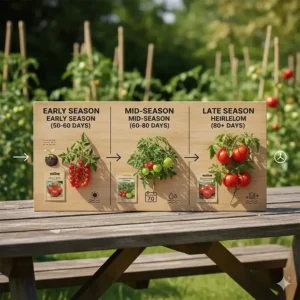
Plant determinate varieties every 2-3 weeks for continuous harvests. Alternatively, combine early, mid-season, and late varieties for extended production without multiple plantings.
FAQ: Your Top Tomato Seed Questions Answered
❓ How long do tomato seeds stay viable for planting?
❓ What's the difference between determinate and indeterminate tomato seeds?
❓ Can I grow tomato seeds from store-bought tomatoes?
❓ When should I start tomato seeds indoors for best results?
❓ Which tomato seeds are most disease resistant for humid climates?
Conclusion: Growing Your Best Tomato Garden Ever
Choosing the best tomato seeds isn’t just about picking varieties—it’s about matching seeds to your climate, space, experience level, and taste preferences. Whether you’re drawn to the incredible flavors of heirloom varieties, the reliability of modern hybrids, or the diversity of mixed seed collections, there’s never been a better time to start your tomato growing journey.
From my personal experience testing dozens of varieties, I can confidently say that the seven seed collections reviewed above represent the best value, quality, and diversity available on Amazon in 2026. The Sweet Yards Organic 12-Pack offers unbeatable variety for most gardeners, while Burpee’s collections provide premium reliability. Whichever you choose, you’re investing in months of delicious, homegrown tomatoes.
Remember that successful tomato growing combines good genetics (quality seeds) with proper care. Start with disease-resistant varieties if you’ve struggled with plant health issues. Choose early-maturing types for short growing seasons. Pick flavors that match your culinary preferences—whether that’s sweet cherry tomatoes for snacking or meaty paste tomatoes for sauce.
The most important step? Just get started. Every experienced gardener was once a beginner who planted their first tomato seed. Your garden is waiting, and these seeds are your ticket to fresh, flavorful harvests that’ll make those supermarket tomatoes seem like sad, pale imitations.
✨ Don’t Miss These Exclusive Deals!
🔍 Ready to transform your garden? These carefully selected tomato seed collections are available now on Amazon with competitive pricing and fast shipping. Click any highlighted variety above to check current availability and start your 2026 growing season strong. Your taste buds will thank you!
Recommended for You
- Microgreens vs Sprouts Growing: 7 Top Kits Reviewed 2026
- 7 Best Countertop Microgreens Kit For Small Spaces 2026
- 7 Best Microgreens Kit Gift: Health Meets Sustainability (2026)
Disclaimer: This article contains affiliate links. If you purchase products through these links, we may earn a small commission at no additional cost to you.
✨ Found this helpful? Share it with your gardening friends! 💬🤗
