
In This Article
The commercial microgreens growing kit market has exploded in recent years, and restaurants are leading the charge. I’ve watched countless chefs transform their menus by growing their own microgreens on-site, and the results speak volumes. These tiny greens pack up to 40 times more nutrients than their mature counterparts, according to USDA research, making them a nutritional powerhouse that diners actively seek out.
What started as a California restaurant trend in the 1980s has evolved into a full-scale agricultural revolution. The global microgreens market reached $2.59 billion in 2022 and continues growing rapidly. Restaurant owners are discovering that investing in a large microgreens system not only cuts produce costs by up to 70% but also guarantees the freshest possible garnishes and ingredients. When you can harvest broccoli microgreens just minutes before service, the flavor intensity is incomparable to anything you’d get from a distributor.
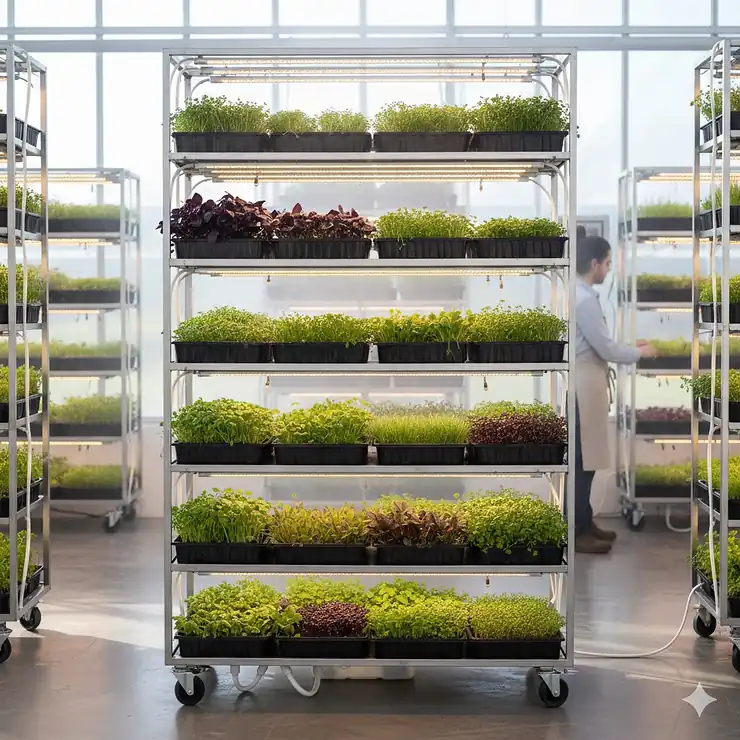
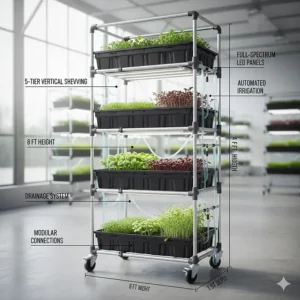
The beauty of commercial microgreens growing systems lies in their space efficiency. A single 4-tier rack system can produce enough microgreens to supply a busy restaurant’s weekly needs, all within a footprint smaller than most walk-in coolers. I’ve seen kitchen managers convert unused storage closets into thriving microgreens operations that generate thousands in monthly savings.
Quick Comparison: Top Commercial Microgreens Growing Kits
| Product | Best For | Capacity | Price Range | Harvest Time |
|---|---|---|---|---|
| Bootstrap Farmer 1020 Trays | Commercial bulk growing | 30-100 trays | $80-$250 | 7-14 days |
| Active Grow T8 LED System | Restaurant supplier setup | 2’x4′ coverage | $150-$200 | 7-10 days |
| AOMGD 4-Tier System | Space-efficient operations | 4 levels | $35-$50 | 10-14 days |
| ingarden Automated Kit | Premium presentation | 3 pads | $300-$400 | 7 days |
| Gardyn Complete System | Flexible production | 20 seed pads | $80-$120 | 7-10 days |
💬 Just one click – help others make better buying decisions too!😊
✨ Don’t Miss These Exclusive Deals!
🔍 Take your restaurant operations to the next level with these carefully selected products. Click on any highlighted item to check current pricing and availability. These tools will help you create authentic farm-to-table experiences your customers will love!
Top 7 Commercial Microgreens Growing Kit: Expert Analysis
1. Bootstrap Farmer Commercial 1020 Microgreen Trays (30-Pack)
If you’re serious about bulk microgreens growing, the Bootstrap Farmer 1020 trays represent the industry standard. These extra-strength trays measure 21″ x 10.75″ x 1.25″ and are specifically engineered for commercial operations. Made from BPA-free food-grade PP plastic in the USA, they’re designed to withstand the daily abuse of high-volume restaurant environments.
Key Specifications:
- 30-pack configuration (available in 5, 10, or 30-pack)
- 1.8-2.0mm thickness for superior durability
- Available with or without drainage holes
- 2-year warranty against cracks
Customer feedback consistently praises these trays’ longevity. One commercial grower reported using the same set for over 3 years without replacement. The shallow design makes harvesting effortless, maximizing stem length while minimizing soil use.
✅ Pros:
- Commercial-grade durability lasts multiple seasons
- Perfect for stacking and space optimization
- Made in USA with recyclable materials
❌ Cons:
- Higher upfront investment than budget options
- Requires separate humidity domes (sold separately)
Price: $80-$250 depending on quantity Ideal for: Restaurants needing consistent high-yield growing system
2. Active Grow Integrated Dual T8 4FT LED Grow Light
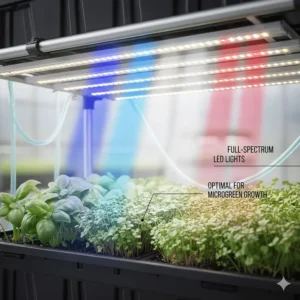
For restaurant supplier setup operations, the Active Grow T8 LED system delivers professional-grade illumination at a fraction of traditional grow light costs. This 38W fixture produces 75 PPF output with Sun White Full Spectrum (4000K CCT, CRI 95) that mimics natural sunlight perfectly for microgreens.
Key Specifications:
- 4-foot integrated dual T8 design
- Linkable up to 12 units on 120V circuits
- 40,000-hour lifetime (approximately 10+ years)
- Covers 2’x4′ area at optimal height
Restaurant operators appreciate the daisy-chain functionality, which allows scaling from a small test operation to full commercial production without rewiring. The polycarbonate construction handles high-humidity environments without degradation, essential for microgreens cultivation.
✅ Pros:
- 60% less energy consumption than fluorescent
- Zero heat emission keeps growing area cool
- Professional spectrum optimized for microgreens
❌ Cons:
- Fixed color temperature (not adjustable)
- Requires 12″ mounting height for proper coverage
Price: $150-$200 per unit Ideal for: Commercial operations prioritizing energy efficiency
3. AOMGD 4-Tier Stackable Sprouts Growing Tray
The AOMGD 4-Tier system offers remarkable value for restaurants testing microgreens for restaurants concepts before committing to larger infrastructure. This stackable design maximizes vertical space, allowing simultaneous cultivation of multiple varieties.
Key Specifications:
- 4 independent growing tiers
- Food-grade PP material construction
- Blackout sleeve included for germination
- Mesh ventilation for optimal airflow
Customer reviews highlight how easily this system fits into existing kitchen workflows. The stackable nature means you can start small and expand tiers as demand grows. Each tier operates independently, perfect for staggered planting schedules that ensure continuous harvest.
✅ Pros:
- Extremely affordable entry point for commercial testing
- Stackable design saves crucial kitchen space
- Easy cleaning and maintenance
❌ Cons:
- Seeds not included in kit
- Smaller capacity than professional systems
Price: $35-$50 Ideal for: Restaurants exploring profitable microgreens business models
4. ingarden Microgreens Growing Kit (Automated LED System)
The ingarden represents the premium tier of commercial microgreens growing systems, featuring fully automated hydroponic technology with integrated LED grow lights. This sophisticated system appeals to high-end restaurants prioritizing presentation alongside production.
Key Specifications:
- 15W energy-efficient LED with 4-stage growth cycle
- Ceramic bowl with stainless steel frame (plastic-free)
- Self-watering hydroponic system
- 7-day germination guarantee
The automated technology adjusts lighting through four distinct growth stages, optimizing phytochemical development. Studies show microgreens grown under proper LED spectrums develop 4X faster than soil-grown alternatives. The ceramic and steel construction matches modern kitchen aesthetics, making it suitable for visible growing areas.
✅ Pros:
- Zero-maintenance automated growing cycle
- Award-winning design (Red Dot, iF Design Awards)
- 90% less water usage than traditional methods
❌ Cons:
- Premium pricing limits bulk production
- Limited to 3 seed pads per cycle
Price: $300-$400 Ideal for: Upscale restaurants with front-of-house growing displays
5. Gardyn Complete Microgreens Growing Kit
Gardyn’s Complete System bridges the gap between home-scale and full commercial operations. With 20 seed pads and reusable grow plates, this kit provides flexibility that restaurant operators love for menu experimentation.
Key Specifications:
- 20 seed pads (5 each of 4 varieties: Arugula, Mild Blend, Spicy Blend, Red Mustard)
- Includes nursery, bamboo wicks, and 10 grow plates
- Hydroponic system design
- Compatible with Gardyn hydroponics systems
Restaurant chefs particularly appreciate the variety selection, which allows testing customer preferences before committing to bulk seed purchases. The bamboo wick system ensures consistent moisture distribution without daily watering requirements, crucial for busy kitchen environments.
✅ Pros:
- Excellent variety selection for menu testing
- Reusable components reduce ongoing costs
- Simple plug-and-grow operation
❌ Cons:
- Best results require Gardyn’s proprietary system
- Medium-scale capacity may not meet high-volume needs
Price: $80-$120 Ideal for: Restaurants transitioning to in-house microgreens production
6. Gardener’s Supply Company All-in-One Microgreen System
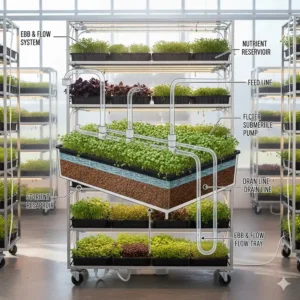
The Gardener’s Supply All-in-One System delivers a turnkey solution for restaurants wanting zero-complexity setup. This integrated system combines growing tray, water reservoir, LED grow light, and timer in a single compact unit.
Key Specifications:
- Aluminum alloy and iron frame construction
- Integrated LED with built-in timer
- Dual growing options (hydroponic or soil-based)
- Water reservoir with capillary mat system
The versatility stands out—you can grow hydroponically using capillary mats or opt for traditional potting mix depending on microgreens variety. Sunflower and pea shoots thrive in soil, while brassicas excel hydroponically. This flexibility makes it ideal for restaurants growing diverse microgreens.
✅ Pros:
- True plug-and-play operation
- Timer automation eliminates manual light management
- Dual growing system accommodates all microgreen types
❌ Cons:
- Single tray limits production volume
- Growing mats sold separately
Price: $120-$180 Ideal for: Restaurants wanting hassle-free microgreens production
7. ZestiGreens Self-Watering Microgreens Growing Kit
The ZestiGreens Kit offers an elegant solution for restaurants prioritizing both functionality and aesthetics. The bamboo-framed design with 12″x6″ tray makes it suitable for visible growing areas while maintaining serious production capability.
Key Specifications:
- Self-watering hydroponic system
- Bamboo surround with blackout felt lid
- Includes 2 hemp grow mats and organic seed varieties
- 16-page illustrated growing guide
Restaurant operators love the dual-mode capability—use the hydroponic insert for brassicas or remove it for soil-based growing of larger varieties like sunflower. The self-watering feature ensures consistent moisture even during busy service periods when staff attention is divided.
✅ Pros:
- Attractive bamboo design suitable for customer-facing areas
- Self-watering reduces daily maintenance
- Excellent seed germination rates
❌ Cons:
- Smaller footprint limits high-volume production
- Hemp mats require replacement between crops
Price: $40-$60 Ideal for: Bistros and cafes with limited growing space
Understanding Commercial Microgreens: What Makes Them Profitable
A commercial microgreens growing kit transforms unused kitchen space into a revenue generator. According to industry research, microgreens can be produced at costs ranging from $10-$100 per tray while selling for premium prices of $30-$80 per pound at wholesale.
The Science Behind Microgreens’ Nutritional Superiority
Research published in the Journal of Agricultural and Food Chemistry examined 25 commercially available microgreens varieties, measuring essential vitamins and carotenoids. The findings were remarkable: vitamin C content ranged from 20 to 147 mg per 100 grams of fresh weight. Red cabbage, cilantro, garnet amaranth, and green daikon radish demonstrated the highest concentrations of vitamins C, K, E, and carotenoids respectively.
According to Medical News Today, microgreens contain higher concentrations of bioactive compounds including ascorbic acid, tocopherols, carotenoids, folate, and phylloquinones compared to mature vegetables. This nutritional density makes them particularly valuable for restaurants marketing health-conscious menus.
The USDA Agricultural Research Service conducted extensive studies showing microgreens can contain 4-40 times higher vitamin levels than mature leaves depending on variety. For restaurant operators, this means marketing legitimate superfood status to customers who increasingly value nutritional transparency.
How to Select the Right Commercial System for Your Restaurant
Assess Your Production Requirements
Calculate your weekly microgreens consumption before investing. A typical upscale restaurant uses 2-4 pounds of microgreens weekly, requiring approximately 4-8 standard 1020 trays harvested biweekly. Fast-casual establishments might need 6-12 pounds weekly, demanding larger systems or multiple growing stations.
Consider variety requirements. If your menu features multiple microgreen types, you’ll need either a larger system with dedicated sections or multiple smaller units for staggered planting. The high-yield growing system approach allows rotation between radish (7-day harvest), broccoli (10-day harvest), and sunflower (12-day harvest) for continuous availability.
Space and Infrastructure Planning
Commercial microgreens cultivation requires surprisingly minimal space. A standard 4-tier rack system occupies just 4-6 square feet while producing enough microgreens for most mid-size restaurants. Key infrastructure considerations include:
Electrical capacity: LED systems typically draw 40-200 watts depending on scale. Plan for dedicated circuits if installing multiple units to avoid kitchen electrical overload.
Water access: Hydroponic systems need daily water additions, though self-watering designs reduce labor. Position near water sources for convenience, but ensure proper drainage to prevent kitchen flooding risks.
Temperature control: Microgreens thrive at 65-75°F. Avoid placement near cooking equipment, walk-in refrigerators, or exterior doors where temperature fluctuates dramatically. Consistent conditions ensure predictable harvest schedules.
Ventilation: Good airflow prevents mold and disease. Position systems where kitchen exhaust systems provide ambient air circulation without direct drafts that could dry seedlings.
Budget Allocation for Startup and Operations
Initial investment varies dramatically based on scale. Budget-conscious restaurants can start with $200-500 for basic tray systems and shop lights. Mid-range operations typically invest $1,000-3,000 for commercial-grade trays, dedicated LED systems, and quality growing media.
Ongoing costs include seeds ($30-100 monthly), growing medium ($25-75 monthly), electricity ($5-20 monthly), and labor (2-5 hours weekly). Most restaurants achieve positive ROI within 2-4 months when factoring wholesale microgreens costs of $25-50 per pound versus production costs of $3-8 per pound.
Step-by-Step Setup Guide for Restaurant Microgreens Systems
Initial System Configuration
Start by assembling your chosen commercial microgreens growing kit according to manufacturer specifications. For tray-based systems like Bootstrap Farmer, create a growing station with proper drainage. Position catch trays underneath to prevent water damage to kitchen floors.
Install LED grow lights 12-18 inches above growing trays. Active Grow T8 systems mount easily with included hanging hardware. Connect timer switches to automate 14-16 hour daily light cycles. This automation eliminates the human error factor that often plagues manual operations.
Prepare growing medium according to microgreen variety. Brassicas (broccoli, kale, radish) thrive in hydroponic setups using hemp or coconut coir mats. Larger seeds (sunflower, pea) prefer 1-2 inches of organic potting mix. Pre-moisten growing medium before seeding to ensure even germination.
Seeding and Germination Process
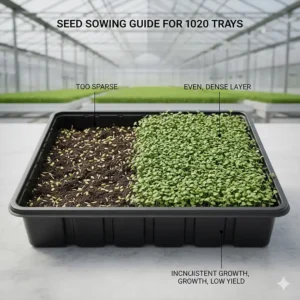
Calculate seed density based on variety. As a general guideline, use 10-12 grams of small seeds (broccoli, radish) per 10×20 tray, or 30-50 grams for larger seeds (sunflower, pea). Spread seeds evenly across pre-moistened medium, avoiding clumping that creates uneven germination.
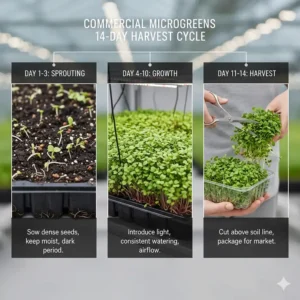
Cover trays with humidity domes or blackout sheets for 3-5 days. This darkness period encourages stem elongation while roots establish. Maintain consistent moisture by bottom watering—never spray directly on seeds, which can cause damping-off disease.
Monitor germination daily. When seeds show 1-2 inch stems with closed cotyledons, remove blackout covers and expose to grow lights. This transition marks the shift from germination to vegetative growth phase.
Growth Management and Harvest Timing
Once exposed to light, microgreens enter rapid growth. Maintain consistent moisture through bottom watering every 1-2 days. Growing medium should feel damp but never waterlogged. Proper drainage prevents root rot, the most common commercial microgreens failure.
Observe daily growth progression. Most microgreens reach harvest size when true leaves begin emerging but haven’t fully developed—typically 7-14 days depending on variety. Radish and mustard harvest at 7-9 days, broccoli and kale at 10-12 days, sunflower and pea at 12-14 days.
Harvest using sharp scissors or harvest knives, cutting just above soil line. Rinse gently in cold water, spin dry in salad spinner, and store in breathable containers at 35-40°F. Properly harvested microgreens maintain peak quality for 5-7 days, though flavor intensity decreases after 3-4 days.
Maximizing Profit from Your Microgreens Operation
Variety Selection for Restaurant Menus
Choose microgreens varieties that align with your cuisine style and customer preferences. Upscale establishments favor delicate varieties like micro basil, amaranth, and shiso that provide subtle flavor enhancement. Fast-casual restaurants succeed with bold flavors like radish, mustard, and arugula that stand up to hearty dishes.
According to research on wholesale microgreens suppliers, the most profitable varieties for restaurant supply include radish (fastest turnover), sunflower (highest yield), pea shoots (premium pricing), and specialty blends (best margins). Develop signature microgreens blends unique to your restaurant for product differentiation.
Test market acceptance before committing to large-scale production. Introduce new microgreen varieties as limited-time specials, gathering customer feedback through server interactions and online reviews. This approach minimizes waste while maximizing customer engagement.
Production Scheduling for Continuous Harvest
Implement staggered planting schedules to ensure continuous availability. For restaurants using 2 pounds weekly, plant one tray every 3-4 days. This creates overlapping growth cycles where mature trays are always ready for harvest while new plantings ensure pipeline continuity.
Create a production calendar tracking planting dates, expected harvest dates, and actual harvest yields. Most successful commercial operations plant Monday, Wednesday, and Friday, harvesting on a similar schedule 7-14 days later. This routine synchronizes with typical restaurant purchasing patterns.
Account for seasonal menu changes and special events. Holiday periods often require 50-150% increased production. Plan these surges 2-3 weeks in advance, increasing planting frequency to match anticipated demand spikes.
Cost Control and Waste Reduction
Purchase seeds in bulk once you’ve identified successful varieties. Wholesale seed prices drop 40-60% when ordering 5-25 pound quantities versus retail packets. Store seeds properly in cool, dark, dry conditions to maintain germination rates for 1-2 years.
Reuse growing trays and equipment to minimize recurring costs. Commercial-grade trays like Bootstrap Farmer systems last 3-5+ years with proper cleaning. Sterilize between uses with diluted hydrogen peroxide solution (1:10 ratio) to prevent disease transmission.
Compost spent growing medium and root systems rather than disposal. Many restaurants partner with local composting services or maintain small on-site composting systems. This closed-loop approach reduces waste costs while supporting sustainability marketing.
Common Challenges and Solutions in Commercial Production
Preventing Disease and Pest Issues
Damping-off disease poses the greatest threat to commercial microgreens operations. This fungal infection causes seedlings to collapse at soil line, destroying entire trays. Prevention requires proper air circulation, avoiding over-watering, and maintaining optimal temperature ranges. If damping-off appears, immediately remove affected trays and sterilize surrounding equipment.
Mold growth typically indicates excessive humidity combined with poor ventilation. Commercial operations should maintain 40-60% relative humidity with gentle air circulation. Position oscillating fans to provide ambient movement without directly blowing on seedlings, which causes excessive drying.
Pest infestations rarely affect indoor commercial systems but can hitchhike on improperly stored supplies. Inspect all incoming materials—growing medium, trays, and seed packages—before introducing to growing areas. Quarantine suspect items for 24-48 hours while monitoring for pest emergence.
Quality Control and Consistency
Establish standard operating procedures for every production step. Document seed quantities, soaking times, light schedules, and harvest timing for each variety. This standardization ensures consistent quality regardless of which staff member handles production.
Train kitchen staff on proper harvesting techniques. Inexperienced harvesters often cut too high (wasting stem) or too low (including growing medium). Demonstrate optimal cutting height—just above soil surface—and inspect initial harvests for technique compliance.
Implement quality checks before service. Examine color vibrancy, stem firmness, and leaf development. Reject trays showing yellowing, excessive stretching, or uneven growth. These quality failures usually indicate environmental issues—incorrect lighting distance, inadequate water, or temperature extremes.
Scaling Production Without Quality Compromise
Expand gradually as demand increases and systems prove reliable. Adding one additional growing unit every 2-3 months allows time to refine processes before multiplying complexity. Restaurants rushing to large-scale production often encounter quality problems that damage customer relationships.
Consider vertical integration as production scales. Successful commercial microgreens operations eventually invest in dedicated growing rooms with climate control, automated irrigation, and professional-grade lighting. These dedicated spaces prevent kitchen cross-contamination while optimizing growing conditions.
Document production metrics religiously. Track germination rates, days to harvest, yield per tray, and waste percentages. Analyze trends quarterly to identify improvement opportunities. Data-driven decisions separate profitable operations from money-losing hobbies.
Advanced Techniques for Restaurant Supplier Operations
Hydroponic vs. Soil-Based Growing
Hydroponic systems offer several advantages for bulk microgreens growing. They eliminate soil-borne diseases, reduce cleanup time, and provide cleaner final products requiring less washing. Hydroponic microgreens also develop more intense colors due to consistent nutrient availability throughout growth.
Soil-based systems excel for specific varieties, particularly sunflower, pea, and larger seeds that benefit from physical root anchoring. Organic potting mix provides natural nutrients eliminating fertilizer requirements for short growth cycles. Many restaurants use hybrid approaches—hydroponics for brassicas and leafy varieties, soil for shoots and larger species.
Cost considerations favor hydroponics at scale. While initial investment in growing mats runs higher, the elimination of soil purchasing, disposal, and cleanup labor creates long-term savings. Commercial operations growing 20+ trays weekly typically achieve 30-40% cost reduction with hydroponic systems.
Nutrient Management for Enhanced Quality
Microgreens grown in quality growing medium rarely require additional fertilization during standard 7-14 day cycles. However, longer-growing varieties benefit from light fertilization at 50% strength applied 5-7 days after germination.
Organic liquid fertilizers like fish emulsion or kelp extract enhance flavor complexity and nutritional profiles. Apply as foliar spray or bottom-water addition at diluted concentrations (quarter-strength of manufacturer recommendations). Over-fertilization creates leggy growth and bitter flavors.
Some commercial operations experiment with specialized nutrient solutions designed specifically for microgreens. These formulations typically emphasize nitrogen for leaf development while limiting phosphorus and potassium that encourage premature flowering. Research optimal formulations for your specific varieties.
Storage and Shelf Life Extension
Proper post-harvest handling dramatically extends microgreens shelf life. Harvest during cool morning hours when plants contain maximum moisture. Rinse immediately in cold water to remove growing medium residue and lower core temperature.
Dry thoroughly using commercial salad spinners. Excess moisture accelerates spoilage, yet overly dry microgreens wilt rapidly. Target 90-95% relative humidity storage in breathable containers—perforated plastic clamshells work well for commercial operations.
Store at 35-38°F in dedicated refrigeration away from ethylene-producing fruits. Properly stored microgreens maintain peak quality 5-7 days, acceptable quality 10-12 days. Some varieties like pea shoots last 14+ days while delicate varieties like basil decline within 3-5 days.
Legal and Food Safety Considerations
Licensing Requirements for Commercial Production
Most states classify on-site microgreens production as food preparation rather than agriculture, falling under existing restaurant licenses. However, verify with local health departments before beginning operations. Some jurisdictions require additional permits for growing food in commercial kitchens.
If you plan selling microgreens to other restaurants (becoming a restaurant supplier setup), separate business licensing may be necessary. Agricultural producer licenses, food handler permits, and potential cottage food law compliance vary significantly by state. Consult food safety attorneys or extension agents for guidance.
Commercial operations growing 100+ trays weekly might qualify for agricultural exemptions from standard commercial kitchen requirements. These exemptions allow dedicated growing facilities without full commercial kitchen specifications. Research potential cost savings versus regulatory complexity.
Food Safety Protocols and HACCP Compliance
Implement Good Agricultural Practices (GAP) principles even for small-scale operations. Use potable water for all growing and rinsing. Clean and sanitize equipment between batches. Maintain pest-free growing environments. Document all inputs including seed sources, water testing, and cleaning procedures.
Larger operations should develop Hazard Analysis Critical Control Points (HACCP) plans specifically for microgreens production. Critical control points typically include seed quality verification, growing medium sanitation, water source testing, and temperature control during storage and transportation.
Train all staff handling microgreens on proper food safety procedures. Emphasize hand washing, preventing cross-contamination, and temperature control. Many local health departments offer free food safety training programs applicable to produce handling.
Record Keeping and Traceability
Maintain detailed production records for liability protection and quality improvement. Document seed lot numbers, planting dates, harvest dates, and distribution records. This traceability allows rapid response if food safety issues emerge.
Create standard operating procedure manuals covering all production aspects. Include step-by-step instructions with photos, troubleshooting guides, and quality standards. These manuals ensure consistency when training new staff and provide legal protection demonstrating due diligence.
Consider third-party food safety certifications as operations scale. Programs like Primus GFS or GlobalG.A.P. certification demonstrate commitment to food safety, opening doors to larger restaurant groups and distributors requiring certified suppliers.
Marketing Your In-House Microgreens Program
Menu Integration Strategies
Feature microgreens prominently on menus to justify premium pricing. Rather than generic “microgreens” descriptions, specify varieties and highlight unique characteristics. “Garnished with spicy radish microgreens” provides more value perception than “topped with microgreens.”
Create signature dishes showcasing microgreens as primary ingredients rather than garnishes. Microgreens salads, microgreens pesto, or microgreens-topped proteins demonstrate versatility while commanding higher prices. These feature items educate customers about microgreens’ culinary value.
Photograph menu items showing vibrant microgreens presentation. Visual appeal drives ordering decisions, particularly for health-conscious diners seeking nutritious options. Professional food photography featuring colorful microgreens significantly increases item selection rates.
Customer Education and Transparency
Develop table tent cards or menu inserts explaining your on-site microgreens program. Detail nutritional benefits, sustainability advantages, and freshness superiority. Educational marketing creates value perception justifying premium pricing while building brand loyalty.
Offer kitchen tours or behind-the-scenes social media content showing growing operations. Transparency about food sourcing increasingly influences restaurant selection, particularly among millennials and Gen Z diners. Visual documentation of growing processes builds trust and authenticity.
Train serving staff to discuss microgreens knowledgeably. Equip servers with talking points about specific varieties’ flavor profiles, nutritional benefits, and harvest timing. Enthusiastic staff endorsement converts curious diners into loyal customers.
Social Media and Content Marketing
Document your microgreens journey on social media platforms. Time-lapse videos showing seed-to-harvest progression generate high engagement while demonstrating farm-to-table commitment. Behind-the-scenes content humanizes your brand and differentiates from corporate competition.
Collaborate with local food bloggers and influencers for microgreens-focused content. Invite them for tasting events featuring creative microgreens applications. Their reach amplifies your marketing efforts while providing third-party credibility.
Create blog content or recipe videos highlighting microgreens versatility. Share content across platforms driving traffic to your website and increasing SEO visibility. This content marketing establishes thought leadership within local food communities.
Future Trends in Commercial Microgreens Production
Technology Integration and Automation
Emerging technologies are revolutionizing commercial microgreens growing kit systems. Automated watering systems with moisture sensors eliminate daily watering tasks while optimizing growth conditions. Computer-controlled LED lighting adjusts spectrum and intensity based on growth stage, maximizing nutritional density.
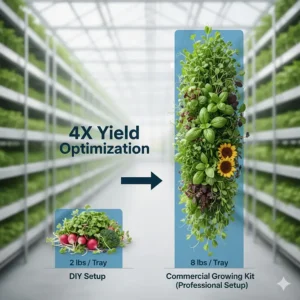
Vertical farming innovations allow dramatically increased production within existing footprints. Multi-tier systems with integrated climate control can produce 10-20X more microgreens per square foot than traditional single-level operations. As technology costs decline, these systems become accessible to mid-size restaurant operations.
Artificial intelligence and machine learning applications optimize growing parameters. Smart systems analyze environmental data, adjust conditions automatically, and predict harvest timing with increasing accuracy. While currently expensive, these technologies will become standard within 5-10 years.
Sustainability and Regenerative Practices
Consumer demand for sustainable food sources continues growing. Commercial microgreens production aligns perfectly with sustainability messaging—minimal water usage, zero pesticides, reduced transportation emissions, and minimal packaging waste. Forward-thinking restaurants emphasize these environmental benefits in marketing.
Closed-loop systems integrating composting, water recycling, and renewable energy represent the future of commercial microgreens operations. These regenerative approaches not only reduce environmental impact but also lower operating costs through resource efficiency.
Carbon-neutral certification programs emerging in food service industry provide competitive advantages. Microgreens operations inherently generate minimal carbon footprints, positioning early adopters as sustainability leaders within local markets.
Market Expansion Opportunities
The profitable microgreens business model extends beyond restaurant supply. Successful operations increasingly sell to grocery stores, meal kit services, and direct-to-consumer through farmers markets or CSA programs. Diversification reduces dependence on single revenue streams while maximizing production capacity utilization.
Specialty varieties command premium prices in niche markets. Exotic microgreens like shiso, amaranth, and fennel appeal to gourmet customers willing to pay $50-80 per pound. Research emerging varieties and test market acceptance before large-scale production.
Educational workshops and growing kit sales provide additional revenue streams. Experienced growers can monetize expertise through hands-on classes, online courses, or selling turnkey home growing kits. These side businesses leverage existing infrastructure while building community relationships.
FAQ: Commercial Microgreens Growing Kit
❓ What is the average startup cost for a commercial microgreens growing kit for restaurants?
❓ How much space does a profitable microgreens business require in a restaurant kitchen?
❓ Which microgreens varieties offer the highest profit margins for restaurants?
❓ Can restaurants legally sell excess microgreens to other businesses?
❓ What ROI timeline should restaurants expect from commercial microgreens investments?
Conclusion: Building Your Commercial Microgreens Empire
The commercial microgreens growing kit represents one of the smartest investments forward-thinking restaurants can make in 2026. Beyond immediate cost savings and quality improvements, these systems position your establishment at the forefront of farm-to-table authenticity that customers increasingly demand.
Starting your microgreens journey doesn’t require massive capital investment or dedicated facilities. Many successful operations began with $500 in basic equipment, a spare corner in the kitchen, and commitment to learning the process. The key is starting small, mastering fundamentals, and scaling thoughtfully as demand and expertise grow.
The restaurant industry stands at an inflection point where food provenance matters as much as flavor. Diners want transparency about ingredient sources, production methods, and nutritional value. On-site microgreens production delivers all three while creating compelling marketing narratives that differentiate your establishment from competitors still relying on distributed produce.
Whether you’re a small bistro testing the concept with a single tray system or a restaurant group building dedicated growing facilities, the opportunities in commercial microgreens continue expanding. The combination of nutritional superiority, environmental sustainability, and economic viability makes this one of the rare business decisions where financial logic and social responsibility align perfectly.
Your microgreens operation can start tomorrow. Choose equipment matching your production needs, source quality seeds, and begin experimenting with varieties your customers will love. The path from first planting to profitable production is shorter than you imagine—most restaurants see results within their first harvest cycle.
Recommended for You
- 7 Best Modern Sprout Grow Kits 2026
- 7 Best Organic Microgreens Growing Kits (USDA Certified 2026)
- 7 Best Complete Microgreens Growing Systems (2026 Guide)
Disclaimer: This article contains affiliate links. If you purchase products through these links, we may earn a small commission at no additional cost to you.
✨ Found this helpful? Share it with your friends! 💬🤗
