
In This Article
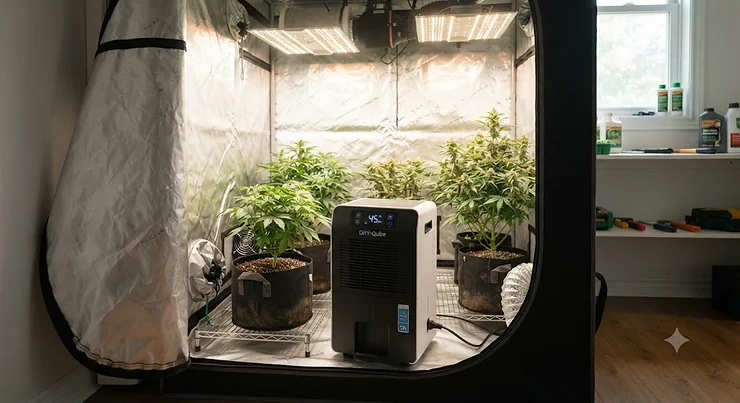
Somewhere around week three of flower, a lot of growers learn a hard lesson: your tent doesn’t just hold plants, it holds weather. Close that zipper and you’ve built a tiny, self-contained climate — and if nobody’s managing the humidity in it, that climate turns against you fast. One night you’re proud of your canopy, the next morning you’re picking gray fuzz off a cola you were counting on. An electric dehumidifier tent setup is the fix, and it’s a lot less complicated than the spec sheets make it sound.
At its core, an electric dehumidifier tent is simply a compressor- or semiconductor-powered unit sized and placed to pull excess water vapor out of an enclosed grow space, keeping relative humidity in the range your plants actually want at each growth stage. Unlike a passive desiccant pack, it runs continuously, actively, and — when sized right — practically invisibly.
This guide isn’t a rewritten spec sheet. We dug into real products, real aggregated review sentiment, and the engineering differences between compressor and desiccant tech so you’re not guessing. You’ll get seven genuine product picks across budget, mid-range, and premium tiers, honest comparisons of moisture removal efficiency, noise levels, and running costs, plus practical guides for setup and troubleshooting. Excess humidity is quietly the number-one killer of indoor harvests, and the EPA’s guidance on mold and moisture is blunt about it: fixing the underlying water problem is the actual solution, not just cleaning up whatever mold has already appeared. Let’s make sure that’s never your tent.
Quick Comparison Table
| Product | Type | Capacity | Best For |
|---|---|---|---|
| VIVOSUN AeroDrain D12 | Compressor, app-controlled | 12L/day | Growers who want remote monitoring |
| AC Infinity HYDRONE 7 | Compressor, VPD control | ~7 pints equiv. | VPD-focused precision growers |
| Spider Farmer Dehumidifier | Compressor, duct-out | 32 pints/day | 4×4 and larger tents |
| MARS HYDRO 18L/Day | Compressor, digital | 18L/day | Mid-size tents, budget-conscious |
| Eva-Dry E-333 | Desiccant (silica gel) | 0.38 pint/day | Propagation domes, drying tents |
| TABYIK 35 OZ | Compressor, compact | 35 oz tank | 2×2 / 3×3 closets |
| Stropum Auto Small | Compressor, temp-controlled | Mini | Cabinets, small enclosures |
Look closely and you’ll notice this isn’t a straight “biggest number wins” contest. The AeroDrain D12 and the Spider Farmer unit both move serious water, but they solve different problems — one prioritizes remote monitoring, the other prioritizes raw duct-out capacity for bigger tents. Meanwhile, the Eva-Dry sits in a category of its own: no compressor, no watts, just silica gel doing quiet chemistry in a corner. If you’re growing in anything larger than a closet, treat the desiccant option as a supplement, not your primary defense.
💬 Just one click — help others make better buying decisions too!😊
Top 7 Electric Dehumidifier Tent Products: Expert Analysis
1. VIVOSUN AeroDrain D12 Dehumidifier with Sensor & Remote — best for remote app monitoring
The standout here is control from your couch, not your tent. The AeroDrain D12 pairs a compressor rated to pull up to 12 liters of moisture per day with a smart app and physical remote, so you’re not crawling behind grow lights to check a dial.
Its high-precision sensors track temperature and humidity simultaneously and auto-adjust output as conditions swing, which matters more than it sounds — a static dehumidifier setting during a hot afternoon can undershoot, while the same setting overnight can overshoot and dry your canopy too fast. Independent testing clocked average power draw at roughly 180 watts, which is lean for a 12L-class compressor unit.
Who should buy it: growers running 4×4 tents who travel or work irregular hours and want a visual history of humidity swings rather than a guess. Reviewers consistently flag the whisper-quiet operation and the caster wheels that make repositioning painless during transplant days.
Pros:
- ✅ App and remote control cut manual monitoring trips
- ✅ Dual drainage options support unattended long runs
- ✅ Notably low power draw for its 12L class
Cons:
- ❌ App dependency frustrates growers who prefer analog dials
- ❌ Premium price relative to non-smart competitors
At the time of research, the AeroDrain D12 sits in the mid-to-upper price bracket for smart compressor units — expect a $180-$260 range. For growers who already run app-controlled lights and fans, folding this into the same ecosystem is genuinely worth the premium.
2. AC Infinity HYDRONE 7 Plant Dehumidifier with VPD Control — best for VPD-based precision growing
AC Infinity built its name on controllers, and the HYDRONE 7 leans hard into that identity by targeting vapor pressure deficit directly instead of relative humidity alone.
Where most units let you set a flat RH percentage, VPD control accounts for both temperature and humidity together, which better reflects what your plant’s stomata are actually experiencing. Growers already running AC Infinity’s CONTROLLER series can typically integrate the HYDRONE into that same automation chain, syncing it with exhaust fans and lights.
Based on the spec comparison against flat-RH competitors, this is the pick for anyone chasing consistent transpiration rates rather than a single humidity number — Michigan State University’s floriculture extension program explains that VPD is the more physiologically accurate target because it captures the true driving force behind how fast a plant loses water, something raw humidity readings can mask entirely.
Pros:
- ✅ True VPD targeting, not just flat humidity percentage
- ✅ Integrates with AC Infinity’s broader controller ecosystem
- ✅ Appeals to data-driven growers tracking canopy transpiration
Cons:
- ❌ Steeper learning curve than simple RH-percentage units
- ❌ Premium pricing puts it out of reach for casual hobby grows
Expect this unit in the $300-$400 range, positioning it as a genuine premium pick rather than an entry point — best reserved for growers who already understand VPD charts or are ready to learn.
3. Spider Farmer Dehumidifier with Sensor Probe — best for larger tents needing duct-out placement
What most buyers overlook about grow-specific dehumidifiers is heat output, and this is exactly the problem Spider Farmer engineered around. A dedicated air duct lets you physically locate the unit outside your tent while an external sensor probe still reports the actual in-canopy reading.
The compressor moves up to 32 pints daily, adjustable between 30% and 80% RH across three operating modes, with a 24-hour timer for scheduling around lights-off humidity spikes. That duct-out design solves a problem cheaper units can’t: compressor dehumidifiers generate warm exhaust air as a byproduct of condensing moisture, and dumping that heat inside an already-warm flowering tent fights against your climate goals.
Aggregated review sentiment is largely positive on setup ease and the flexibility of positioning the unit outside the tent, though some users note the size makes it better suited to mid-to-large tents than closets, and a few mention the exhaust runs noticeably warm — a normal characteristic of compressor tech, not a defect.
Pros:
- ✅ Duct-out design keeps compressor heat outside the tent
- ✅ External sensor probe reads true canopy-level humidity
- ✅ Washable filter reduces long-term maintenance cost
Cons:
- ❌ Bulkier footprint than closet-friendly compact units
- ❌ Warm exhaust air needs deliberate placement planning
Pricing typically falls in the $150-$220 range, which is reasonable for 32-pint capacity — just budget mental space for the duct routing, since it’s part of what makes this unit work as intended.
4. MARS HYDRO 18L/Day Dehumidifier with Digital Control — best all-around mid-range compressor
Mars Hydro built a reputation on grow lights, and the digital dehumidifier extends that same “practical over flashy” philosophy. An 18-liter daily capacity with a digital display lets you dial in anywhere from 30% to 90% RH, and smart auto mode holds that target without babysitting.
Here’s what the spec sheet won’t tell you outright: the washable filter and caster wheels are what actually determine whether this unit is pleasant to own two years from now, not the headline capacity number. Filters that require disposable replacements quietly become a recurring cost; a washable one doesn’t.
This is the dehumidifier for growers who want dependable performance without paying for app connectivity or VPD math — auto restart after a power blip and full-tank shutoff protection cover the two failure points that actually cause tent disasters (a dead unit after an outage, or an overflowing reservoir you forgot to check).
Pros:
- ✅ Wide 30-90% RH range covers every growth stage
- ✅ Washable filter avoids recurring replacement costs
- ✅ Auto restart protects against power-outage gaps
Cons:
- ❌ No smartphone app for remote monitoring
- ❌ Caster wheels feel flimsy on uneven tent flooring
Priced in the $140-$200 range at the time of research, this lands as the mid-range workhorse most 4×4 growers will actually reach for — capable without the premium-tier price tag.
5. Eva-Dry E-333 — best desiccant dehumidifier tent option for propagation and drying spaces
This is the odd one out on this list, and deliberately so — it’s a genuine desiccant dehumidifier tent solution rather than a compressor unit, and it earns its spot by solving a problem the others can’t: total silence with zero cord in the growing space itself.
The E-333 uses renewable silica gel beads that absorb moisture and visibly shift from blue to pink as they saturate. Once full, you plug the unit in for 8-10 hours, the beads recharge back to blue, and you’re good for another cycle. There’s no compressor, no fan hum, no watts drawn while it’s actively working in your tent — the only power draw happens during the recharge phase, away from your plants.
Reviewers consistently describe using these in drying tents and propagation domes specifically because they can’t run a power cord into those spaces, and the completely silent operation matters where even a quiet compressor would still be audible. Just don’t mistake this for a main-tent solution: desiccant capacity tops out nowhere near what plant transpiration demands once you’re into full flower with multiple mature plants.
Pros:
- ✅ Completely silent, cordless operation inside the tent
- ✅ Reusable technology with a 5-year manufacturer warranty
- ✅ Extremely affordable entry point for supplemental drying
Cons:
- ❌ Capacity far too limited for active flowering tents
- ❌ Requires manual recharge cycles every 20-30 days
At roughly $15, the E-333 isn’t competing on raw output — it’s competing on being the only silent, cordless option on this list, which makes it a smart $15-$20 add-on rather than a primary system.
6. TABYIK 35 OZ Small Dehumidifier — best compact dehumidifier growing pick for 2×2 and 3×3 tents
If your growing space is a closet or a 2×2 tent, most of the units above are simply oversized for the job — which is exactly the gap this compact dehumidifier fills. The 35-ounce transparent tank lets you see water collection at a glance instead of guessing when to empty it.
Energy usage sits under 1 kWh per day according to aggregated testing data, which matters for growers running multiple small tents where every device’s draw adds up. The auto shut-off engages once the tank fills, preventing overflow onto grow media below — a real risk with compact units that lack drain-hose options.
Based on real user feedback, the reusable filter is the standout value point here, since it avoids the recurring replacement cost that erodes the savings on cheaper disposable-filter competitors. This won’t touch a 4×4 flowering tent’s moisture load, but for a 2×2 veg tent, clone dome, or micro-grow closet, it’s proportioned correctly instead of overkill.
Pros:
- ✅ Transparent tank shows water level without guesswork
- ✅ Reusable filter avoids ongoing replacement costs
- ✅ Compact footprint fits 2×2 and 3×3 tents without crowding
Cons:
- ❌ Inconsistent unit-to-unit performance reported by some buyers
- ❌ Not rated for anything larger than small enclosures
Expect a budget-friendly range around $30-$50, making this the go-to when “compact dehumidifier growing” describes your actual situation rather than a 4×4 flowering room.
7. Stropum Automatic Small Dehumidifier for Grow Tent, Electric Box, Storage Cabinet — best budget pick with temperature-switch control
Rounding out the list is a genuinely clever budget option built as much for equipment protection as plant care. The Stropum’s temperature-and-humidity sensor doubles as a switch that can trigger a connected fan or heater, giving it a supporting role beyond simple moisture removal.
Dual-voltage AC/DC 85-265V support means it works across different regional electrical setups without a separate transformer, a detail that matters for growers who’ve relocated or bought secondhand equipment from overseas listings. Installation uses a hook or rail mount plus a small flathead screwdriver for wiring, keeping the footprint out of your limited floor space entirely.
In independent testing inside a roughly 9-cubic-foot enclosure, the unit dropped humidity from 80% down to 45% in about 50 minutes — a fast response time for something this small and inexpensive, though that speed comes from a tightly sealed micro-enclosure rather than a full-size tent.
Pros:
- ✅ Temperature-switch function protects equipment, not just plants
- ✅ Dual-voltage support works internationally
- ✅ Space-saving hook or rail mounting frees floor room
Cons:
- ❌ Best suited to cabinets and micro-enclosures, not full tents
- ❌ Manual wiring setup intimidates less technical buyers
At a budget-friendly $25-$40, this is less a grow-tent centerpiece and more a specialized tool for electric boxes, clone cabinets, and safes where humidity threatens equipment as much as plants.
Practical Usage Guide: Setting Up Your Electric Dehumidifier Tent
Getting the hardware right is only half the job — placement and habits do the rest. Start by positioning the unit away from direct airflow off your intake fan; blasting fresh, humid air straight into the sensor gives you false readings and constant cycling. If your model supports duct-out placement like the Spider Farmer unit above, route that duct before you power anything on, not after.
For the first 30 days, check the reservoir daily even if you’ve got continuous drainage connected — hoses kink, and a full reservoir triggers auto-shutoff that can let humidity climb from 45% to nearly 80% overnight before you notice. Set your target RH based on growth stage rather than a single “safe” number: seedlings want it humid, late flower wants it dry, and moving the target as you go prevents both mold and stunted growth.
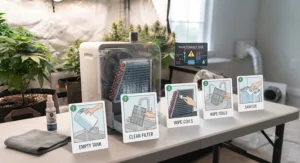
Common first-month mistakes include mounting the unit too close to a tent wall (starving intake airflow), running it on the lowest fan speed to save on noise (which tanks moisture removal efficiency), and forgetting to clean the filter monthly — a clogged filter is the single most common cause of a unit that “stopped working” when it’s really just suffocated.
Real-World Scenarios: Which Dehumidifier Tent Fits Your Situation
The apartment micro-grower: Two plants in a 2×2 tent tucked in a closet, quiet is non-negotiable, and there’s no budget for a smart app. The TABYIK 35 OZ or the Eva-Dry E-333 as a supplement covers this footprint without waking up roommates.
The serious hobbyist, 4×4 tent, four plants: Transpiration load is real here — potentially 1-3 gallons daily by late flower. This is squarely Spider Farmer or MARS HYDRO territory, where duct-out placement or a wide RH range earns its keep.
The remote-monitoring enthusiast: Works long shifts, travels often, already runs app-controlled lights and fans. The VIVOSUN AeroDrain D12 or AC Infinity HYDRONE 7 fits this life, trading a higher price for peace of mind checked from a phone screen.
Buyer’s Decision Framework: Matching Tent Size to Dehumidifier Type
If you’re running a 2×2 or 3×3 tent or a closet grow, choose a compact dehumidifier growing solution like the TABYIK or Stropum, because oversized compressor units add unnecessary heat and noise to a space that small. If you’re managing a 4×4 or 5×5 tent with multiple flowering plants, choose a duct-capable mid-range unit like the Spider Farmer or MARS HYDRO, because their capacity actually matches realistic transpiration loads. If you want automation synced with existing smart-fan or smart-light systems, choose an app- or VPD-controlled premium unit, because manual monitoring becomes the real bottleneck once your grow scales past one tent. And if you only need supplemental drying-room or propagation-dome control, choose a desiccant dehumidifier tent option like the Eva-Dry, because silence and zero wiring outweigh raw capacity in those specific spaces.
✨ Don’t Miss These Exclusive Deals!
🔍 Take your grow tent climate control to the next level with these carefully selected dehumidifiers. Click on any highlighted item to check current pricing and availability. These picks will help you protect the harvest your effort actually deserves!
How to Choose an Electric Dehumidifier Tent
Picking the right unit comes down to a handful of decisions, not dozens:
- Measure your tent’s real transpiration load — count mature flowering plants, not just square footage, since that’s what actually drives moisture output.
- Decide between compressor and desiccant technology — compressor units handle serious volume; desiccant only supplements small or supplemental spaces.
- Check duct-out compatibility if your tent runs warm, since compressor exhaust heat adds up fast in enclosed spaces.
- Confirm the RH range covers your full grow cycle, from humid seedling stages down to dry late flower.
- Weigh noise tolerance against placement — a unit inside a bedroom closet needs a lower decibel rating than one in a garage.
- Factor in filter type, since washable filters save money over a multi-year ownership period compared to disposable ones.
- Match the price to your grow’s stakes — a single 2×2 hobby tent rarely justifies a $300 VPD controller, but a commercial-adjacent 5×5 setup usually does.
Desiccant Dehumidifier Tent vs Electric Compressor Dehumidifiers
The core difference isn’t marketing — it’s physics. Compressor units use refrigerant-cooled coils to condense moisture out of the air, the same basic mechanism as your refrigerator, and they scale to real capacity because that process keeps working as long as power flows. A desiccant dehumidifier tent solution instead relies on a hygroscopic material — silica gel in the Eva-Dry’s case — that physically absorbs water molecules until it’s saturated, then needs to be dried out before it can absorb more.
| Factor | Compressor | Desiccant |
|---|---|---|
| Daily capacity | High (12-32+ pints) | Low (under 1 pint) |
| Noise | Low hum to moderate | Silent |
| Power draw during use | 48-500+ watts | Zero (only during recharge) |
| Best tent size | 3×3 and larger | 2×2, propagation domes |
| Cold-weather performance | Strong | Also strong |
The analysis here is straightforward: for anything beyond a small closet or drying tent, compressor technology wins on sheer moisture-removal capacity, and one review guide’s testing found compressor units deliver roughly 39 times the dehumidification capacity of comparable semiconductor or desiccant designs. Desiccant earns its place specifically where silence and zero wiring matter more than volume — propagation domes, drying tents, or as a supplemental unit tucked in a corner your primary dehumidifier can’t quite reach.
Moisture Removal Efficiency: What the Specs Actually Mean
A “32 pints/day” rating sounds impressive until you understand it’s measured under specific lab conditions — usually 80% RH at 80°F — that rarely match your actual tent environment. Real-world moisture removal efficiency drops as ambient humidity falls, because there’s simply less water vapor available in the air to pull out. This is why a unit rated for 32 pints might realistically pull 18-22 pints daily once your tent stabilizes closer to a 55-60% RH target.
What actually predicts real-world efficiency better than the headline capacity number is airflow design and coil surface area — units with wider intake grilles and larger evaporator coils maintain closer-to-rated performance as humidity drops, while budget units with cramped internals see efficiency fall off a cliff below 60% RH. This is exactly why the duct-out Spider Farmer and digital MARS HYDRO units, both built with larger coil assemblies, tend to hold their advertised numbers better than compact closet units, which were never engineered for sustained high-volume extraction in the first place.
Silent Operation Comparison: Noise Levels You’ll Actually Notice
Noise matters more in a bedroom-adjacent grow than almost any other spec on this list, and it’s the one most listings understate. Compressor units generally run somewhere between a soft hum and the volume of a quiet conversation, while desiccant units like the Eva-Dry produce genuinely zero operational sound since there’s no motor running during active use.
Among the compressor options here, aggregated review sentiment consistently praises the VIVOSUN AeroDrain D12 for whisper-quiet operation even at full output, while compact budget units tend to run louder relative to their size because smaller fans have to spin faster to move comparable air volume. Since noise perception ties directly to how much moisture the air is holding relative to its saturation point — the basic idea behind relative humidity itself — a unit working harder in a more humid tent will naturally run louder than the same unit in a drier one. If a silent operation comparison is your deciding factor and you’re working with a small enough space, pairing a compact compressor unit for daytime capacity with a desiccant unit for quiet overnight hours can split the difference nicely.
Energy Consumption Rates and Long-Term Operating Costs
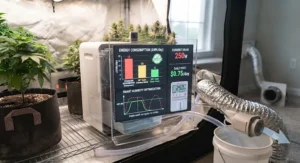
Energy consumption rates vary dramatically across this category, and the difference compounds over a grow season. A 50-pint home dehumidifier typically draws 500-700 watts, costing roughly $1.50-$3.00 daily at average 2026 electricity rates, while a compact unit under 60 watts might cost pennies per day. The AeroDrain D12’s roughly 180-watt average draw sits comfortably below that 50-pint baseline while still delivering serious capacity — a meaningful efficiency win if you’re running the unit continuously through a multi-month flowering cycle.
Looking for the ENERGY STAR certification matters here too, since certified units rely on more efficient refrigeration coils, compressors, and fans to remove the same amount of moisture as a similarly sized conventional model while drawing roughly 20% less power. Over a full grow season running 12-16 hours daily, that efficiency gap between a certified and non-certified unit of similar capacity can realistically add up to $30-$60 in avoided electricity costs — not dramatic on its own, but meaningful across multiple grow cycles or multiple tents.
Common Mistakes When Buying an Electric Dehumidifier Tent
The single most common mistake is undersizing based on tent square footage alone instead of plant count and growth stage — a 4×4 tent with four mature flowering plants transpires far more water than the same tent with two seedlings, and a unit sized for the latter drowns in the former. Second is ignoring exhaust heat: buying a powerful compressor unit for a tent with poor exhaust ventilation just trades a humidity problem for a temperature problem.
Third, buyers frequently skip checking whether continuous drainage is supported, then get burned the first time they leave town for a weekend and the reservoir fills. Fourth is chasing the lowest price without checking filter type — a disposable-filter budget unit can cost more over two years than a slightly pricier washable-filter model. Finally, plenty of growers buy a desiccant unit expecting it to handle a full 4×4 flowering tent, when its actual design intent is supplemental or small-space use only.
Frequently Asked Questions
❓ Is an electric dehumidifier tent worth it for a small 2×2 grow?
❓ Where should I place the dehumidifier inside my tent?
❓ Do electric dehumidifiers make my grow tent hotter?
❓ How often should I clean or replace the filter?
❓ Can a desiccant dehumidifier replace a compressor unit in a 4×4 tent?
Conclusion
Humidity control isn’t the glamorous part of growing — nobody posts a photo of their dehumidifier’s reservoir — but it’s arguably the single variable most likely to make or break a harvest you’ve spent months on. The seven products covered here span the realistic range of what growers actually need: the Eva-Dry for silent supplemental drying, the TABYIK and Stropum for tight closets and cabinets, the MARS HYDRO and Spider Farmer for dependable 4×4 workhorse duty, and the VIVOSUN AeroDrain D12 or AC Infinity HYDRONE 7 for growers who want precision and remote peace of mind.
There’s no single “best” pick here, only the best match for your tent size, your tolerance for noise, and how much automation you actually want to manage. Size correctly for your plant count and growth stage, respect the physics difference between compressor and desiccant tech, and keep an eye on that filter — do those three things and an electric dehumidifier tent quietly becomes the least dramatic, most effective piece of equipment in your entire setup.
✨ Ready to Protect Your Harvest?
🔍 Don’t let excess humidity undo months of careful growing. Compare these picks against your tent size today and lock in the moisture control your plants are counting on!
Recommended for You
- Small dehumidifier grow tent: 7 Real Picks to Stop Mold in 2026
- 7 Best Electric Heater Grow Tent Picks That Actually Work (2026)
- Best Space Heater for Grow Tent: 7 Top Picks for 2026
Disclaimer: This article contains affiliate links. As an Amazon Associate, I earn from qualifying purchases. If you purchase products through these links, we may earn a small commission at no additional cost to you.
✨ Found this helpful? Share it with your friends! 💬🤗
