
In This Article
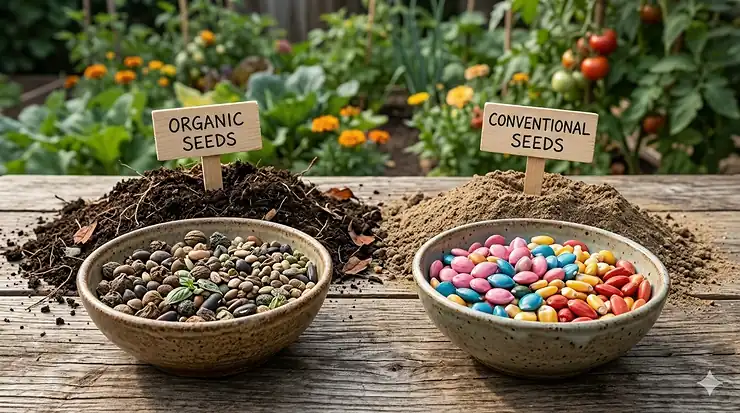
Picture this: You’re standing in the garden center, seed packet in each hand, wondering if those extra dollars for organic seeds are worth it. I’ve been there too, staring at nearly identical packaging with wildly different price tags. Here’s the thing — the choice between organic seeds vs conventional isn’t just about money. It’s about what you’re planting for your future harvests, your soil’s health, and honestly, your peace of mind.
The organic seed market has exploded in recent years, and gardeners across the USA are asking harder questions about where their seeds come from. Are USDA organic certified seeds genuinely different from conventional options? Do non-GMO seed benefits justify the premium price? And what about those sustainable seed sources everyone keeps mentioning?
After growing both types in my own garden beds and researching countless studies, I’m here to break down everything you need to know about organic seeds vs conventional. Whether you’re a certified organic growing enthusiast or just curious about chemical-free gardening, this guide will help you make informed choices. We’ll explore real products currently available, compare certifications, and dive deep into what truly matters when you’re selecting seeds for your garden.
The bottom line? Understanding the differences between these seed types could transform not just your garden, but your entire approach to growing food.
Quick Comparison Table: Organic Seeds vs Conventional at a Glance
| Feature | Organic Seeds | Conventional Seeds |
|---|---|---|
| Certification | USDA Organic seal required | No certification needed |
| Growing Methods | No synthetic pesticides/fertilizers for 3+ years | May use synthetic chemicals |
| GMO Status | Prohibited by law | GMOs not available to home gardeners |
| Price Range | $4-$8 per packet | $2-$4 per packet |
| Germination Rate | Similar to conventional | Similar to organic |
| Environmental Impact | Lower chemical footprint | Higher chemical usage in production |
| Seed Treatment | Untreated or approved organic treatments only | May include fungicide coatings |
| Availability | Growing but still limited | Widely available |
| Best For | Certified organic growers, eco-conscious gardeners | Budget-conscious, conventional gardeners |
💬 Just one click – help others make better buying decisions too!😊
Top 7 Organic Seeds: Expert Analysis for Your 2026 Garden
1. Sweet Yards Organic Herb Seeds Variety Pack
If you’re starting your organic gardening journey with herbs, this 10-pack collection hits the sweet spot between variety and manageability. Sweet Yards has earned a solid reputation for freshly packed seeds with the 2026 season guarantee.
Key Specifications:
- 10 individual packets including basil, cilantro, dill, thyme, and parsley
- USDA Organic certified and Non-GMO verified
- Germination guarantee with 30-day money-back policy
Price Range: $16-$22
This starter pack includes premium giftable packaging with reusable zippers and complete planting instructions. Customers consistently praise the high germination rates, with many reporting 80-90% success even for novice gardeners. The family-run company stands behind their seeds with confidence.
✅ Pros:
- Fresh 2026 season seeds ensure maximum viability
- Perfect variety for kitchen herb gardens
- Excellent customer support with germination guarantee
❌ Cons:
- Smaller packet sizes compared to bulk options
- Premium pricing for beginner-friendly packaging
2. Purely Organic Vegetable Garden Starter Kit
For serious organic gardeners ready to tackle vegetables, Purely Organic delivers over 2,500 certified organic seeds across 9 essential varieties. This kit targets gardeners who want diversity without overwhelming complexity.
Key Specifications:
- 9 varieties: Waltham 29 Broccoli, Crimson Sweet Watermelon, Scarlet Nantes Carrot, and more
- USDA Organic seal on every packet
- Open-pollinated, heirloom varieties from US-based farms
Price Range: $24-$32
What sets this kit apart is the thoughtful variety selection — these aren’t random seeds thrown together. You get workhorse varieties proven in organic growing conditions. Customer feedback highlights the excellent germination rates and the fact that Purely Organic sources from US farms whenever possible, supporting local organic agriculture.
✅ Pros:
- Proven variety selection ideal for organic systems
- Individually styled packets with detailed growing instructions
- US-sourced seeds when available
❌ Cons:
- May substitute up to 2 varieties based on availability
- Higher price point than conventional starter kits
3. Sweet Yards Organic Southern Garden Seeds Variety Pack
Southern gardeners have unique challenges, and this 10-pack addresses them head-on with heat-tolerant varieties suited for warmer climates. The 2026 season freshness matters even more in hot, humid conditions.
Key Specifications:
- 10 southern-adapted varieties including Sugar Ann Snap Pea and Sweet Crimson Watermelon
- Climate-specific selections for USDA zones 7-10
- Certified organic with non-GMO verification
Price Range: $18-$25
The regional focus makes this collection stand out. Rather than generic vegetable seeds, you get varieties selected specifically for southern heat and humidity. Customer reviews from Texas, Georgia, and Florida consistently mention better performance compared to standard northern varieties.
✅ Pros:
- Climate-adapted varieties for southern success
- Fresh 2026 seeds with guaranteed germination
- Premium packaging with moisture protection
❌ Cons:
- Limited usefulness for northern gardeners
- Smaller seed quantities per packet
4. Sweet Yards Organic Seeds Gardener Variety Pack
This is the powerhouse collection — 30 individual packets covering vegetables, herbs, and fruits. It’s designed for committed organic gardeners planning comprehensive gardens or those building seed libraries.
Key Specifications:
- 30 certified organic varieties including rare options like Rosa Bianca Eggplant and Lacinato Kale
- Comprehensive selection from leafy greens to melons
- 2026 season fresh with premium storage packaging
Price Range: $45-$58
The breadth here is remarkable. You get everything from Walla Walla Yellow Onion to Pink Brandywine Tomato, covering nearly every garden category. Customers building food independence particularly appreciate this collection, as it provides genuine crop diversity. The reusable zipper packaging helps maintain seed viability for multi-year use.
✅ Pros:
- Exceptional variety spanning all garden categories
- Includes both common and specialty varieties
- Best value per seed packet in Sweet Yards lineup
❌ Cons:
- Significant upfront investment
- May include varieties you won’t use
5. Sweet Yards Organic Herb Seeds Variety Pack (35-Pack)
For herb enthusiasts and medicinal gardeners, this comprehensive 35-packet collection goes beyond basic culinary herbs to include tea varieties, aromatics, and apothecary herbs.
Key Specifications:
- 35 unique herb varieties from sweet basil to medicinal chamomile
- Ultimate collection for herbal tea gardens and natural remedies
- USDA certified organic, 2026 fresh
Price Range: $52-$68
This isn’t just expanded basil and parsley — you get specialty herbs like multiple basil types, calming chamomile, and various mints. Customer testimonials from herbalists and natural health enthusiasts consistently rate this as their go-to collection. The variety enables entire seasonal herb gardens or dedicated medicinal plantings.
✅ Pros:
- Unmatched herb diversity in one collection
- Perfect for tea gardens and herbal remedies
- Guaranteed germination backs large investment
❌ Cons:
- Premium pricing reflects specialty status
- Overwhelming for casual herb gardeners
6. Sereniseed Certified Organic Vegetable Seeds (10-Pack)
Sereniseed brings scientific precision to organic seeds with their quality-tested approach. This 10-pack focuses on kitchen garden essentials with varieties selected for reliability and flavor.
Key Specifications:
- 10 core varieties: Brandywine Pink Tomato, Bush Blue Lake Bean, Cascadia Snap Pea, and more
- Germination and purity tested before packing
- Scientific names provided for precision identification
Price Range: $22-$28
The standout feature? Every seed lot undergoes germination and purity testing before packaging. Sereniseed’s attention to quality control shows in customer satisfaction rates. Gardeners appreciate knowing exactly which cultivar they’re planting — the scientific naming removes guesswork. The company also provides seed-starting videos, making this ideal for learning organic growing techniques.
✅ Pros:
- Pre-tested germination rates provide confidence
- Excellent educational resources included
- Professional-quality seeds at consumer prices
❌ Cons:
- Smaller variety selection than competitor packs
- Limited to most popular vegetables
7. Sweet Yards Organic Tomato Seeds Variety Pack
Tomato lovers rejoice — this 12-variety collection celebrates organic heirloom tomatoes in all their colorful glory. From classic Roma to exotic Black Krim, you get the full tomato spectrum.
Key Specifications:
- 12 tomato varieties including Roma, Cherry, Black Krim, Yellow Pear, and Pineapple
- Mix of slicing, cherry, and paste tomatoes
- 2026 season certified organic seeds
Price Range: $24-$32
The variety mix here is chef-worthy. You’re not getting 12 variations of the same red slicing tomato — instead, you get genuine diversity in color, size, and flavor profile. Home gardeners building tomato variety collections particularly value this pack. Customer photos show stunning rainbow harvests that simply aren’t possible with conventional hybrid tomatoes.
✅ Pros:
- Outstanding variety diversity for tomato enthusiasts
- Includes hard-to-find heirloom varieties
- Perfect for testing multiple types in one season
❌ Cons:
- All tomatoes may not suit every climate
- Requires significant garden space for full collection
✨ Don’t Miss These Exclusive Deals!
🔍 Take your organic gardening to the next level with these carefully selected products. Click on any highlighted item to check current pricing and availability. These tools will help you create authentic chemical-free harvests your family will love!
Understanding Organic Seed Certifications: What Those Seals Really Mean
When you flip over a seed packet and see that USDA Organic seal, you’re looking at the end result of a rigorous certification process. But what does it actually guarantee?
The USDA Organic Certification Process
Organic seed certification isn’t just a marketing gimmick. According to the USDA’s National Organic Program, land used for growing seed crops cannot have prohibited substances applied for three years prior to harvest. That means the parent plants producing your seeds grew in soil free from synthetic pesticides and fertilizers for a full three-year transition period.
The certification involves annual inspections by USDA-accredited certifying agents who verify everything from seed sourcing to harvest practices. Seed producers must maintain detailed organic system plans (OSP) documenting their methods, inputs, and management practices.
What USDA Organic Certified Seeds Guarantee
When you purchase USDA organic certified seeds, you’re getting:
Prohibited Practices Eliminated:
- No synthetic fertilizers were used on parent plants
- No synthetic pesticides or herbicides applied
- No genetic modification (GMO) at any stage
- No irradiation or sewage sludge
Required Practices Followed:
- Natural soil fertility management through compost and cover crops
- Biological and mechanical pest control methods
- Prevention of organic/conventional product commingling
- Thorough record-keeping and traceability
Beyond USDA: Other Organic Seed Certifications
Several organizations provide additional verification. The Organic Materials Review Institute (OMRI) reviews and approves materials for organic production. The Maine Organic Farmers and Gardeners Association (MOFGA) certifies many seed companies, conducting annual on-site inspections.
The Non-GMO Project Verified seal adds another layer of assurance. While USDA Organic already prohibits GMOs, this independent verification provides additional testing and ongoing monitoring for genetic contamination.
The Commercial Availability Clause
Here’s where it gets interesting. The National Organic Program regulations allow certified organic farmers to use non-organic untreated seeds when equivalent organic varieties are not commercially available. This “loophole” has been slowly closing as organic seed availability improves, but certifying agencies now require documented searches across multiple sources before allowing conventional seed use.
For home gardeners not pursuing certification, this doesn’t apply — but it explains why even certified organic farmers sometimes plant conventional seeds for rare varieties.
Non-GMO Seed Benefits: Separating Fact from Fiction
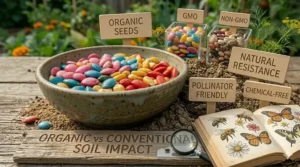
The GMO conversation generates more heat than light, so let’s cut through the confusion with facts.
GMOs and Home Garden Seeds: The Reality
Here’s something that surprises most gardeners: GMO seed is NOT available to home gardeners. GMO seeds are sold only to commercial farmers who sign strict usage agreements. You literally cannot accidentally buy GMO seeds for your backyard garden.
So why do seed companies emphasize “Non-GMO” labeling? Two reasons:
- Consumer confidence — Many gardeners want explicit confirmation
- Organic certification requirements — Organic standards prohibit excluded methods including genetic engineering
Real Benefits of Non-GMO Seeds
While GMO availability isn’t the issue, non-GMO seed benefits include:
Genetic Diversity Preservation: Non-GMO seeds, especially open-pollinated and heirloom varieties, maintain genetic diversity. This contrasts with conventional farming’s reliance on a narrow genetic base that reduces biodiversity.
Seed-Saving Capability: Non-GMO open-pollinated seeds allow gardeners to save seeds from their harvests. GMO crops often include terminator technology or sterility, preventing seed saving.
Environmental Adaptation: Non-GMO varieties selected over generations for specific climates perform better in those conditions than varieties bred in controlled environments with synthetic supports.
Chemical Independence: Many GMO crops are engineered for herbicide tolerance (like Roundup-ready crops). Non-GMO varieties don’t create dependency on specific chemical products.
The Organic/Non-GMO Relationship
All organic seeds are non-GMO, but not all non-GMO seeds are organic. A seed can be non-GMO yet grown with synthetic pesticides and fertilizers. This distinction matters when you’re comparing products.
According to USDA guidelines on GMOs in organic products, the use of genetic engineering is strictly prohibited in organic production. This means organic farmers can’t plant GMO seeds, and organic seed producers can’t use GMO parent plants.
If your priority is avoiding genetic engineering, both organic and conventionally-grown non-GMO seeds work. If you want both GMO-free AND chemically-free production, choose USDA organic certified seeds.
Chemical-Free Gardening: The Soil-to-Seed Connection
The true difference between organic seeds vs conventional becomes clearest when we examine what happened before those seeds reached your hands.
Organic farming practices fundamentally differ from conventional agriculture in their approach to soil health, pest management, and input usage. These philosophical differences extend all the way back to seed production.
How Conventional Seeds Are Produced
Conventional seed production is one of the most chemically intensive types of agriculture. Because seed crops themselves aren’t for human consumption, pesticide regulations are less stringent than for vegetable crops, allowing higher doses of potentially harmful chemicals.
Think about it: Seed crops must complete their entire life cycle before seeds mature. That’s significantly longer than harvesting vegetables at peak ripeness. The extended growing period creates more opportunities for pest and disease pressure, leading conventional seed producers to apply pesticides liberally.
The Organic Seed Production Difference
Organic seed production flips the script entirely. Instead of reactively spraying chemicals, organic seed growers focus on prevention:
Disease-Resistant Variety Selection: Organic growers choose parent plants naturally resistant to local pest and disease pressures.
Protected Growing Environments: More organic seed production happens in protected environments that reduce disease pressure, greatly reducing the need for harmful chemicals.
Biological Pest Management: Beneficial insects, companion planting, and crop rotation replace chemical sprays.
Soil Health Foundation: Rich, living soil produces stronger plants better able to resist pest and disease challenges without chemical intervention.
Does Seed Production Method Affect Your Garden?
Here’s the million-dollar question: If conventional seeds receive chemical treatments during production, does that affect the plants you grow?
The science suggests minimal direct transfer. Any residual chemicals on the seed casing represent a tiny, tiny amount — it’s essentially a non-issue for the consumer. However, the question extends beyond direct chemical transfer.
The Adaptation Factor: Seed produced organically is better suited to organic growing conditions. Conventional varieties are often selected in high-input systems where nutrients come readily available through synthetic fertilizers. These varieties may underperform in organic systems where plants must efficiently extract nutrients from organic-based soil.
Organic seeds come from plants that successfully thrived without synthetic chemical supports. That genetic selection creates varieties better adapted to chemical-free gardening methods.
Sustainable Seed Sources: Building a Resilient Seed System
Choosing sustainable seed sources extends beyond organic certification — it’s about supporting a seed system that preserves genetic diversity, supports small farmers, and ensures seed availability for future generations.
What Makes a Seed Source Sustainable?
Open-Pollinated and Heirloom Varieties: These seeds produce true-to-type plants, enabling seed saving. Unlike F1 hybrids that don’t breed true, open-pollinated seeds let gardeners become self-sufficient.
Regional Adaptation: Sustainable seed sources often feature varieties adapted to specific climates and growing conditions, reducing the need for external inputs.
Small-Scale Organic Seed Farmers: Supporting small, independent seed farmers maintains a decentralized seed system less vulnerable to market consolidation.
Seed Sovereignty: Sustainable sources prioritize farmer and gardener ownership of seeds, opposing patent restrictions and seed monopolies.
The Safe Seed Pledge Movement
The Safe Seed Pledge was created in 1999 when High Mowing Organic Seeds guided a coalition of 9 seed companies in drafting a statement about genetic engineering. Over 370 seed companies worldwide have now signed this pledge, as documented by leading organic seed organizations.
Companies taking this pledge commit to:
- Not knowingly buying or selling genetically engineered seeds
- Regular testing to ensure seed purity
- Transparent labeling and source disclosure
Building Your Sustainable Seed Network
Create resilience by:
- Diversifying Seed Sources: Don’t rely on a single supplier
- Learning Seed Saving: Start with easy crops like beans and tomatoes
- Joining Seed Libraries: Many communities now host seed-sharing programs
- Supporting Regional Seed Companies: Local companies understand your climate
- Choosing Open-Pollinated Varieties: These enable long-term sustainability
Sustainable seed sourcing isn’t just environmental idealism — it’s practical security for your garden’s future.
Certified Organic Growing: Seed Selection Requirements
If you’re pursuing certified organic production (or considering it), seed selection isn’t optional — it’s mandated by federal regulations.
The USDA’s Seed Sourcing Requirements
The USDA organic regulations require that organic producers use organic seeds, annual seedlings, and planting stock. This isn’t a suggestion; it’s a certification requirement.
However, there’s flexibility. The regulations allow producers to utilize non-organic seeds and planting stock when equivalent organic varieties are not commercially available.
Proving Commercial Unavailability
Certifying agents require documented proof that organic versions aren’t available. This typically involves:
Search Documentation: Producers must search at least three seed catalogs or databases for organic versions of their desired varieties.
Quality Considerations: Examples of commercial unavailability include insufficient germination rate, presence of weed seeds in the seed mix, inadequate shelf life, or disease and pest resistance issues.
Quantity Considerations: Sometimes organic seeds are available but not in appropriate quantities for the operation’s scale.
Annual Verification: Certifying agents verify commercial availability requirements on an annual basis as part of reviewing the organic system plan.
Treated Seeds and Organic Certification
Even when using non-organic seeds is permitted, they must be untreated. Seeds coated with fungicides or other synthetic treatments aren’t allowed.
Substances used for seed cleaning and preparation after harvest (like trisodium phosphate and chlorine solutions) are not considered “treatment” since they don’t remain on the seed when planted.
Seedling Requirements
Annual seedlings must be grown organically with stricter rules than seeds themselves. The only exception is replanting after natural disasters recognized by USDA.
Importantly, seeds for sprouting (microgreens and sprouts) must always be organically grown without exception.
Germination Rates, Vigor, and Performance: The Science
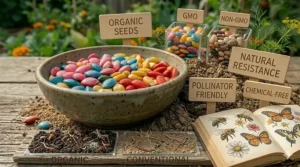
One common belief holds that organic seeds germinate better or produce healthier plants than conventional seeds. What does the science actually show?
Germination Rate Comparisons
Multiple studies comparing organic and conventional seed germination find minimal differences when both are fresh and properly stored. Research shows no inherent advantages in organic seeds themselves in terms of germination, growth habit, disease resistance, or productivity when all other factors are equal.
Both organic and conventional seed companies test germination rates before packaging. Responsible companies only sell seeds meeting minimum germination standards (typically 70-85% depending on crop type).
The Vigor Question
Where differences emerge is in plant vigor under organic growing conditions. Seeds from plants selected in organic systems often show superior performance when grown organically.
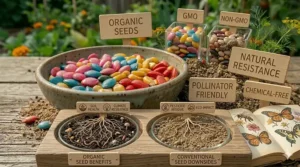
Why This Happens: Conventional varieties bred in high-input systems with readily available synthetic nutrients may struggle in organic systems where nutrients release more slowly from organic matter. Organic varieties selected over multiple generations in organic conditions exhibit better nutrient efficiency and root development.
Adaptation and Selection Pressure
From a genetics standpoint, organic seeds may be stronger because plants that fend off pests naturally without synthetic pesticides become more resilient and better suited to growing in adverse conditions.
This natural selection creates subtle genetic advantages. Over time, organic breeding programs select for:
- Enhanced root systems for efficient nutrient uptake
- Natural disease resistance mechanisms
- Improved stress tolerance
- Better flavor profiles (since flavor isn’t sacrificed for cosmetic appearance)
Storage and Viability
Both organic and conventional seeds require proper storage for maximum viability. Temperature, humidity, and light exposure affect both types equally.
Premium organic seed companies often invest in superior packaging (moisture barriers, resealable packets) that can extend seed life. This isn’t inherent to organic seeds but reflects company quality standards.
Price Comparison: Are Organic Seeds Worth the Premium?
Let’s talk money. Organic seeds typically cost 30-75% more than conventional equivalents. For budget-conscious gardeners, this raises legitimate questions about value.
Breaking Down the Price Difference
Production Costs: Organic seed production requires more labor-intensive pest management, longer crop rotations, and organic inputs that cost more than synthetic alternatives. Lower yields in organic seed production also increase per-seed costs.
Certification Expenses: Annual organic certification fees, inspections, and record-keeping requirements add overhead that gets passed to consumers.
Scale Economics: The conventional seed industry operates at massive scale, driving prices down. Organic seed production remains more decentralized with smaller production volumes.
Testing and Quality Control: Many organic seed companies invest heavily in germination testing, disease screening, and purity verification exceeding industry minimums.
Value Beyond the Packet
The premium pays for more than just seeds:
Environmental Externalities: Conventional seed production’s chemical usage creates environmental costs not reflected in the price. Organic production internalizes these costs through sustainable practices.
Genetic Diversity: Many organic seed companies actively preserve heirloom varieties and maintain genetic diversity that conventional agriculture ignores.
Small Farm Support: Premium prices help sustain small-scale organic seed farmers who can’t compete on volume with agricultural giants.
Future Seed Security: Supporting organic seed companies builds infrastructure for a resilient seed system not controlled by a handful of corporations.
When Conventional Seeds Make Sense
Honest talk: Organic seeds aren’t always necessary. Consider conventional seeds when:
- Starting experimental gardens where some crops may fail
- Growing annual ornamentals for aesthetics rather than food
- Testing multiple varieties to find what works in your garden
- Budget constraints make organic seeds prohibitive
- Specific varieties aren’t available organically
Remember: Growing conventionally-sourced seeds with organic methods still produces organic food (though you can’t legally label it “certified organic” for sale).
Storage, Viability, and Seed-Saving Practices
Maximizing your seed investment requires understanding proper storage and knowing which seeds save successfully.
Optimal Seed Storage Conditions
Seeds remain viable longest in cool, dark, dry conditions:
Temperature: Store seeds at 32-41°F for maximum longevity. Basement cool spots or dedicated refrigerator space work well.
Humidity: Keep relative humidity under 40%. Silica gel packets in storage containers prevent moisture damage.
Light Exposure: Darkness prevents premature germination triggers and preserves seed coat integrity.
Container Selection: Glass jars, metal tins, or vacuum-sealed bags protect better than paper envelopes alone.
Seed Viability by Crop Type
Different crops maintain viability for varying durations:
Short-Lived (1-2 years): Onions, parsnips, parsley, corn
Medium-Lived (3-4 years): Beans, peas, carrots, beets, tomatoes
Long-Lived (5+ years): Cucumbers, melons, squash, lettuce
Proper storage can extend these timelines, but germination rates decline annually.
Saving Seeds from Organic vs Conventional Sources
Both organic and conventional seeds can be saved, but success depends on variety type:
Open-Pollinated Seeds: Save freely — plants grow true to type from saved seeds.
Heirloom Varieties: Perfect for seed saving, maintaining characteristics across generations.
F1 Hybrids: Don’t save these — second generation shows unpredictable traits.
Cross-Pollination Considerations: Prevent unwanted crosses by isolating varieties of the same species or using physical barriers.
Organic seeds offer no inherent advantage for saving except that organic companies more commonly offer open-pollinated varieties suitable for seed saving.
Making the Switch: Transitioning Your Garden to Organic Seeds
Ready to transition from conventional to organic seeds? Strategic planning makes the switch manageable and affordable.
The Gradual Transition Strategy
You don’t need to replace all seeds at once. Prioritize:
Year One: Focus on crops where you eat the seeds directly (beans, peas, corn) or crops with longest growing seasons (tomatoes, peppers).
Year Two: Add leafy greens and root vegetables while building your organic seed collection.
Year Three: Complete the transition to fully organic seed sources while beginning seed-saving efforts.
Crops to Prioritize
High-Impact Switches:
- Tomatoes (significant flavor differences in heirloom organic varieties)
- Herbs (consume leaves directly, organic matters more)
- Lettuce and greens (eat the whole plant)
- Beans and peas (consume the seeds)
Lower Priority:
- Ornamental flowers grown for aesthetics
- Cover crops and green manures
- Experimental varieties you may not continue growing
Budget-Friendly Transition Tips
- Join Seed Swaps: Community seed libraries offer free or low-cost organic seeds
- Start Seed Saving: Once you buy organic seeds once, save seeds to eliminate future costs
- Buy in Bulk: If you know you’ll grow a variety for years, bulk organic seeds reduce per-seed costs
- Focus Quality Over Quantity: Better to grow fewer varieties well with quality organic seeds than spread yourself thin
Partnering with Your Certifier (If Pursuing Certification)
If you’re pursuing organic certification, work closely with your certifying agent during transition:
- Document your seed search process thoroughly
- Keep all seed purchase receipts and lot numbers
- Maintain detailed planting records showing organic seed usage
- Communicate when organic varieties aren’t commercially available
Certifying agents want to help you succeed — they’re partners in your organic journey, not obstacles.
Regional Considerations: Climate Zones and Seed Selection
Your USDA hardiness zone dramatically affects which seeds succeed in your garden. Smart seed selection accounts for regional realities.
Understanding Seed Adaptation
Seeds from plants grown in similar climates to yours typically perform better. A tomato variety selected over generations in the Pacific Northwest handles cool, wet conditions differently than one bred in the desert Southwest.
Regional Seed Companies: Supporting seed companies in your region often yields better-adapted varieties. They’ve already done selection work matching their climate.
Heat Units and Days to Maturity: Northern gardeners need short-season varieties completing production before frost. Southern gardeners need heat-tolerant varieties resisting bolting.
Disease Pressure Variations: Humid southern regions face fungal disease pressures northern gardens don’t experience. Regional varieties often include natural disease resistance.
Organic Seeds for Specific Zones
Cold Climate Success (Zones 3-5): Look for organic seeds of short-season varieties, cold-hardy greens, and root vegetables. Early Girl tomatoes, Napoli carrots, and Ruby Queen beets perform well.
Moderate Climate Gardens (Zones 6-8): The widest seed variety selection works in these zones. Focus on heirloom diversity and experiment with specialty crops.
Hot Climate Challenges (Zones 9-11): Heat-tolerant varieties are essential. Seek organic seeds for Moskvich tomatoes, Yuma lettuce, and Royal Burgundy beans bred for heat stress.
Microclimates Matter
Your actual growing conditions may differ from your zone designation due to:
- Urban heat islands
- Coastal moderating effects
- Elevation changes
- Wind exposure
- Sun/shade patterns
Select organic seeds based on your specific microclimate rather than just zone numbers.
❓ FAQ: Your Organic Seeds vs Conventional Questions Answered
❓ Are organic seeds always non-GMO or can they be genetically modified?
❓ How can I verify if seeds are truly USDA organic certified?
❓ Can I save seeds from organic plants and still call them organic?
❓ Do conventional seeds treated with fungicides affect my garden's organic status?
❓ What's the difference between organic seeds and heirloom seeds?
Conclusion: Growing Beyond the Seed Packet
The debate about organic seeds vs conventional ultimately returns to your personal values and goals. If you’re pursuing chemical-free gardening and want your seed sourcing to align with organic principles from the ground up, certified organic seeds make sense. If you’re working within tight budgets and growing experimentally, conventional seeds offer accessibility while you develop your skills.
Here’s what I’ve learned through years of growing both: The best seed is the one you actually plant. A conventional seed in the ground produces food; an expensive organic seed left in the packet produces nothing but regret.
That said, as organic seed availability improves and more companies enter the market, the price premium continues shrinking. The sustainable seed sources we support today build the resilient seed system we’ll depend on tomorrow. Supporting USDA organic certified seeds, understanding non-GMO seed benefits, and choosing organic seed certifications that match your values — these decisions ripple beyond your garden beds.
Start where you are. Use what you have. Transition thoughtfully. Whether that means buying one packet of organic tomato seeds this year or converting your entire garden to certified organic growing, you’re participating in something larger than weekend gardening. You’re voting with your wallet for the kind of agriculture and seed system you want to exist.
The future of our food supply begins with the seeds we choose today. Make yours count.
Recommended for You
- 7 Best Heirloom vs Hybrid Tomatoes 2026
- 7 Best Grow Anything Seed Kits for Indoor Gardens – 2026
- 7 Best Gourmet Herb Seed Pod Kit Reviews 2026 – Fresh Herbs Year-Round
Disclaimer: This article contains affiliate links. If you purchase products through these links, we may earn a small commission at no additional cost to you.
✨ Found this helpful? Share it with your friends! 💬🤗
