
In This Article
You spent weeks dialing in your VPD, hand-watering to runoff, talking to your plants at 2 AM like a proud and slightly unhinged parent. And now, harvest day is here. The buds are glistening. The room smells like a five-star terpene buffet. And then — most growers completely blow it.
Not because they grew badly. Because they dried carelessly.
Here’s the truth that separates beginner harvests from boutique-quality flower: the cannabis drying tent you use matters as much as your genetics. A purpose-built drying tent controls the two variables that define your final product — humidity and light. Get them wrong, and months of careful cultivation evaporate along with your terpenes. Get them right, and every jar you crack open rewards you with smooth, aromatic, potent flower that tastes exactly like the strain promised.
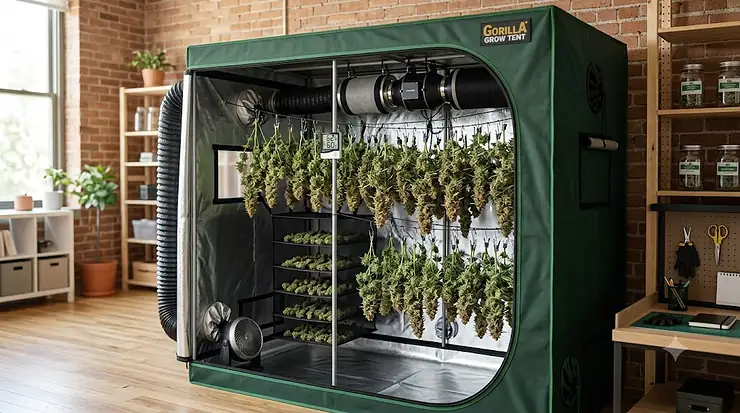
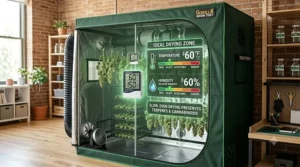
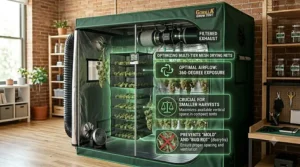
A proper cannabis drying tent is a sealed, light-blocking enclosure — typically made from reflective or neutral-lined Oxford cloth — equipped with ventilation ports, internal hanging space, and a structure that lets you maintain the 60–70°F temperature and 45–55% relative humidity window that preserves terpenes, prevents mold, and breaks down chlorophyll slowly. Think of it as a climate-controlled spa retreat for your buds, where slow and steady wins every race.
In this guide, we’ve researched and tested the best options currently available on Amazon — from dedicated post harvest tents built specifically for curing, to high-performance grow tents that double as elite drying chambers. Whether you’re pulling a couple pounds from a home closet grow or managing a serial harvest cycle, there’s a setup here that fits your space, your budget, and your standards.
Let’s get into it.
Quick Comparison: Top 7 Cannabis Drying Tents at a Glance
| Product | Size | Canvas Density | Vent Ports | Best For | Price Range |
|---|---|---|---|---|---|
| Canna Dry Tent | 36″×18″×72″ | 600D Oxford + PEVA | 4×6″ + 1 roof | Dedicated bud drying | $$ |
| VIVOSUN S425 | 48″×24″×60″ | 600D Mylar | Multiple | Budget-friendly dual-use | $ |
| AC Infinity CLOUDLAB 642 | 48″×24″×72″ | 2000D Diamond Mylar | Large + observation window | Premium, long-term use | $$$ |
| Mars Hydro 4×2×6 | 48″×24″×71″ | 1680D Mylar | Multiple | Mid-range performance | $$ |
| Gorilla Grow Tent 4×4 | 48″×48″×83″ | 1680D Canvas | Multiple | High-volume drying | $$$$ |
| Spider Farmer Pro 4.6×2.3 | 55″×28″×80″ | 2000D Mylar | Multiple + roll-up door | Space-efficient pro setup | $$$ |
| VIVOSUN S448 4×4 | 48″×48″×80″ | 600D Mylar | Multiple | Budget large-batch option | $$ |
The table above tells an interesting story. The Canna Dry Tent and VIVOSUN S425 dominate the value tier, but they differ in a crucial way — the Canna Dry Tent is engineered specifically for drying, with a white PEVA liner (more on why that matters shortly), while the VIVOSUN S425 is a versatile grow tent pressed into drying duty. For growers who only need the tent for post-harvest use, the Canna Dry is the smarter buy. If you need one tent for both growing and drying in rotation, the mid-range AC Infinity or Mars Hydro entries justify every extra dollar.
💬 Just one click — help others make better buying decisions too! 😊
Top 7 Cannabis Drying Tents: Expert Analysis
🏅 1. Canna Dry Tent — Herb Drying Tent with Hanging Dry Rack (36″×18″×72″)
The Canna Dry Tent is the only product in this lineup built from the ground up with cannabis drying — not growing — in mind. That distinction sounds minor. It isn’t.
Key specs, with real-world meaning: The tent measures 36″×18″×72″ — compact enough to tuck into a spare bedroom corner without dominating the room, yet tall enough to hang whole branches vertically. It ships with an integrated dry rack offering 30 linear feet of hanging space across 2 rows deep and 5 rows high, which in practical terms means you can hang around 2–2.5 lbs of wet harvest (strain-dependent) without cramming branches together and risking hot spots where mold silently blooms.
The liner is white PEVA, not mylar. That’s a deliberate and smart engineering call: mylar reflects light aggressively, which is what you want when growing but absolutely don’t want during drying, since UV exposure degrades THC and terpenes. PEVA is also VOC-free, meaning no off-gassing onto your flower as it dries. Four 6-inch side vents (compatible with 4″ and 6″ ducting) plus a 12″×12″ closable roof vent let you tune airflow precisely — critical for maintaining that 45–55% RH sweet spot without blowing air directly across your buds.
Two full-panel doors (front and back) make harvest hanging and removal far easier than fighting a single-door setup. Zippers are heavy-duty on the doors and lighter-duty where the flooring attaches — the right call for longevity. The powder-coated steel frame holds up to regular use without wobbling under a heavy wet hang.
Who this is for: Home growers harvesting 1–3 plants at a time who want a dedicated, purpose-built drying chamber and nothing else. If you’re tired of converting your grow tent and playing equipment Tetris between cycles, this is the clean solution.
Customer feedback: Users consistently highlight how the VOC-free PEVA liner eliminated the “plastic smell” complaints common with mylar-lined tents, and the two-door setup gets praised for making staggered harvest pulls effortless.
✅ Purpose-built for drying — no compromises
✅ PEVA liner is light-blocking and VOC-free
✅ 30 feet of hanging space in a compact footprint
❌ Too small for growers harvesting 4+ plants at once
❌ Not a dual-use tent — dedicated to drying only
Price range: $–$$, very reasonable for a specialized tool. Check current price on Amazon →
🥈
2. VIVOSUN S425 4×2 Grow Tent (48″×24″×60″)
The VIVOSUN S425 is the workhorse of entry-level home cultivation, and for good reason: it hits a performance-to-price ratio that most competitors can’t touch. As a cannabis drying tent, it punches well above its cost.
Key specs, with real-world meaning: At 48″×24″×60″ with 600D Oxford cloth and a highly reflective mylar interior, the S425 gives you a sealed, lightproof environment that’s surprisingly stout for the price. The 600D canvas isn’t as thick as the 1680D or 2000D options on this list, but the reflective mylar lining compensates by bouncing any stray photons (from nearby room lighting) around instead of letting them penetrate. For drying purposes, you’ll want to keep the tent in a naturally darker space — the canvas is adequate but not bombproof.
The multiple vent ports accommodate 4″ fans and ducting comfortably, and the observation window lets you peek at your hang without opening the tent and disrupting the micro-climate inside — a detail that sounds minor until you’ve watched perfectly drying buds swell back up with humidity from a carelessly opened door.
Who this is for: First-time growers who want one tent that serves double duty — growing in spring, drying in fall, maybe mother-plant housing in winter. This tent earns its keep across the whole calendar year. The shorter height (60″) is the one real limitation; tall hanging branches may need to be broken down.
Customer feedback: Reviewers with multiple grows report VIVOSUN tents lasting 3+ years without significant zipper or canvas degradation, which is rare praise for a budget entry. Light leaks around zippers are noted in a few reviews — easily solved with a strip of black tape or by placing the tent in an already-dark room.
✅ Outstanding value for dual-use growers
✅ Proven longevity, 3+ year track record
✅ Reflective mylar helps maintain even environment
❌ 600D canvas not as blackout-reliable as premium alternatives
❌ 60″ height restricts large branch hangs
Price range: Budget-tier, under $100 for most sizes. Check current price on Amazon →
🥉 3. AC Infinity CLOUDLAB 642 Advance Grow Tent (48″×24″×72″)
This is the tent for growers who’ve graduated from “it’s good enough” thinking. The CLOUDLAB 642 is AC Infinity’s 4×2 entry in their premium CLOUDLAB line, and every design decision signals that it’s built for people who care deeply about their grow — and their cure.
Key specs, with real-world meaning: The 2000D Diamond Mylar canvas is lab-tested for highest reflectivity in its class — denser than the Gorilla Grow Tent’s 1680D, and noticeably thicker to the touch. The 1-inch thick steel poles aren’t just a spec flex; they mean this tent doesn’t flex, wobble, or rack under a heavy wet hang. The hang capacity matters during drying because wet cannabis is heavy, and cheap tents with thin poles have a nasty habit of deforming precisely when you’ve just loaded them with $800 worth of fresh harvest.
At 72″ tall vs. the VIVOSUN’s 60″, the CLOUDLAB 642 accommodates full-length branch hangs without the awkward bend-and-fold that uneven canopies require. The controller mount plate is CLOUDLAB’s signature thoughtful touch — a built-in shelf bracket for mounting an AC Infinity controller, which means your CLOUDLINE fan and humidity controller become truly hands-free. The largest zipper window in its class is genuinely useful: peek-and-adjust without opening the main door.
AC Infinity backs this tent with a 2-year warranty and provides a return shipping label — which speaks volumes when budget brands make you fight for every return.
Who this is for: Intermediate-to-advanced growers who want a permanent, reliable drying station and are willing to spend a bit more once to avoid spending less twice.
✅ Thickest 2000D canvas — true blackout performance
✅ 1″ steel poles handle heavy wet hangs without flexing
✅ 2-year warranty with no-hassle return policy
❌ Premium price may overshoot casual growers’ needs
❌ Overkill if you’re only drying once per year
Price range: Mid-to-upper tier, $150–$200 range. Check current price on Amazon →
4. Mars Hydro 4×2×6 Advanced Grow Tent (48″×24″×71″)
Mars Hydro built its reputation on grow lights first, tents second — but that doesn’t mean their canvas game is weak. The 4×2×6 is a consistently well-reviewed mid-range option that sits comfortably between budget and premium without feeling like a compromise.
Key specs, with real-world meaning: The 1680D mylar canvas is meaningfully thicker than 600D alternatives — light bleed is minimal even in brighter rooms, which is important if your drying tent lives in a home office or bedroom where ambient light is unavoidable. The smooth zipper action consistently mentioned in reviews is something you only appreciate after fighting with rough, sticky zippers on cheaper tents at 1 AM.
At 71″ tall, this tent handles full-length branch hangs comfortably, and the multiple vent ports let you run a small 4″ inline fan for gentle circulation without direct bud contact. The observation window is well-positioned for monitoring without tent-opening disruption.
What most buyers overlook about the Mars Hydro tent is that the 1680D canvas holds up significantly better to humidity cycling than 600D alternatives — repeated exposure to high-humidity drying environments over multiple cycles stresses tent walls in ways that thin canvas shows quickly (bubbling, sagging). The Mars Hydro canvas stays taut.
Who this is for: Growers harvesting medium-sized plants (2–4 per cycle) who want solid construction without the AC Infinity price tag. Also excellent for growers who run multiple tents and want a reliable secondary.
✅ 1680D canvas resists humidity cycling stress over time
✅ Smooth zippers — sounds minor, matters constantly
✅ Clean mid-range price for the quality delivered
❌ Accessories integration not as polished as AC Infinity
❌ No specific brand warranty terms as prominent as competitors
Price range: Mid-range, $80–$130 depending on size and promotions. Check current price on Amazon →
5. Gorilla Grow Tent 4×4 Fixed Height (48″×48″×83″)
Gorilla Grow Tent is the name professional cultivators drop when they’re talking about the gold standard. The 4×4 Fixed Height version is the workhorse of their lineup — no extension kit, no frills, just 1680D canvas, all-steel frame, and a 300-lb hang capacity that makes every other tent on this list look nervous.
Key specs, with real-world meaning: That 300-lb hang capacity isn’t marketing copy — it’s engineering reality. When you’re hanging 4–6 lbs of wet cannabis (each lb of wet flower weighing roughly 4–5× its dried weight), you need a frame that doesn’t sway or deform. The all-steel Gorilla frame is the structural equivalent of a tank versus the aluminum-frame alternatives. The 83″ ceiling height is also the tallest on this list, which allows for staggered multi-tier hanging setups — a game-changer for medium-volume harvests.
The 1680D canvas delivers genuine blackout performance. Where budget tents rely on room darkness as a backup plan, the Gorilla tent handles it solo. The double-stitched corners mean no stress fractures at the seams over years of repeated setup and teardown.
The honest critique: Gorilla Grow Tents are premium priced, and for pure drying purposes (not growing), that premium is harder to justify unless you’re processing multiple lbs per harvest cycle. As a grow tent that doubles as a premium drying chamber, the calculus shifts favorably.
Who this is for: Serious home cultivators harvesting 4–6 plants per cycle, or anyone who’s bought a cheap tent before and vowed to never do it again.
✅ 300-lb hang capacity handles the heaviest wet harvests
✅ All-steel frame — industry benchmark for structural integrity
✅ 83″ height enables multi-tier hanging setups
❌ Premium price is a serious barrier for casual growers
❌ Overkill for 1–2 plant home grows
Price range: Upper premium tier, $200–$300+ range. Check current price on Amazon →
6. Spider Farmer Pro Series 4.6×2.3×6.6 Grow Tent (55″×28″×80″)
Spider Farmer’s Pro Series quietly upgraded their tent game from “competitive budget” to “legitimately impressive mid-range,” and the 4.6×2.3 is the model that earns that assessment most convincingly.
Key specs, with real-world meaning: The 2000D thickened mylar canvas matches AC Infinity’s spec sheet but arrives at a slightly lower price point — for the budget-conscious grower who won’t settle for 600D but can’t quite stretch to full CLOUDLAB pricing. The roll-up door is the Pro Series’ headline feature and a genuinely useful drying advantage: instead of wrestling with a full swing-open door that disrupts tent airflow, you unroll exactly as much access as you need, load your hangs, and roll it back down.
At 80″ tall in a 55″×28″ footprint, the Spider Farmer Pro is the “tall and narrow” option on this list — perfect for spaces where floor area is precious but vertical room exists. Think utility closets repurposed as drying stations. The controller hook (a small but thoughtful touch) keeps your environmental monitoring hardware organized rather than dangling from a zip tie.
Who this is for: Growers with space-constrained grow rooms who want maximum hanging height in a minimal floor footprint. Also the right call for anyone whose drying tent needs to share a room with other equipment and space is genuinely limited.
✅ 2000D canvas matches premium spec at a friendlier price
✅ Roll-up door minimizes airflow disruption during loading
✅ Tall, narrow profile — smart use of vertical space
❌ 28″ width is narrow for large branch spreads
❌ Pro Series is newer — less long-term durability data than VIVOSUN or Gorilla
Price range: Mid-to-upper range, around $100–$170. Check current price on Amazon →
7. VIVOSUN S448 4×4 Grow Tent (48″×48″×80″)
The VIVOSUN S448 is the budget answer to the 4×4 drying challenge. If the Gorilla 4×4 is a Land Rover, this is a reliable Honda — less glamorous, fewer headlines, but it shows up every day and does the job.
Key specs, with real-world meaning: At 48″×48″×80″, the S448 offers the same generous drying floor space as the Gorilla at a fraction of the price. The 600D canvas is adequate for darker rooms and the observation window is genuinely helpful for monitoring without tent entry. VIVOSUN’s zippers have improved across their tent line over the past two years — the S448 generation is notably more reliable than older VIVOSUN models.
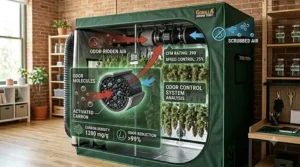
What this tent does brilliantly is give large-harvest home growers a spacious drying environment without asking for Gorilla money. The floor tray catches any loose leaf or debris during hang-up and teardown. Multiple vent ports support a full ventilation setup: intake fan, exhaust fan, and carbon filter if odor control is a priority in your home setup.
The honest limitation: 600D canvas in a 4×4 size means the tent relies on being placed in a dark room for truly reliable blackout performance. In a bright room, light bleed is more likely than with 1680D or 2000D alternatives.
Who this is for: Budget-conscious growers processing 4–6 plants per cycle who need the floor space of a 4×4 without the premium price. A legitimate “best value” pick for larger home operations.
✅ Largest drying footprint at a budget price point
✅ Proven VIVOSUN reliability across multiple grow cycles
✅ Full ventilation port options for complete environmental control
❌ 600D canvas needs dark-room placement for reliable blackout
❌ Lower canvas density shows wear faster under heavy use
Price range: Budget-friendly, under $100 for most size configurations. Check current price on Amazon →
✨ Don’t Miss These Exclusive Deals!
🔍 Protect your harvest with the right cannabis drying tent. Click any highlighted product above to check current pricing, availability, and customer reviews. The right setup is one click away — your terpenes will thank you.
How to Set Up Your Cannabis Drying Tent Like a Pro
Most growers hang their harvest and walk away. That’s exactly where hard-earned quality starts to slip. Here’s what the spec sheet on any cannabis drying tent won’t tell you — and why setup procedure matters as much as product choice.
Step 1: Dial in the environment before hanging anything. Run your tent empty for 24 hours with a hygrometer and thermometer inside. Record ambient readings. Your target: 60–70°F and 45–55% relative humidity, consistently. If the room is naturally humid (basement, bathroom-adjacent space), you’ll need a small dehumidifier. If it’s dry (desert climate, heavily air-conditioned rooms), a passive humidifier or even a damp towel hanging near — not in — the tent can stabilize things early on.
Step 2: Don’t point fans at your buds. This is the single most common mistake and the fastest route to uneven drying, crispy outer layers hiding wet cores, and terpene evaporation. Instead, position your small 4″ inline fan to move air around the tent interior, not across the flowers directly. Gentle circulation prevents stagnant hot spots where mold starts.
Step 3: Hang with spacing in mind. Branches should have 2–3 inches of clear space between them. Overcrowding is how entire batches lose quality overnight. If you run out of hanging space, prioritize the larger colas and trim the smaller buds into a mesh net dry rack (like the AC Infinity 6-Layer Hanging Mesh Net, which fits neatly inside any of the grow tents on this list).
Step 4: Monitor twice daily, at least for the first 4 days. The most critical drying window is days 3–6. If you’re consistently hitting 65°F and 50% RH, you’re in an excellent lane. If humidity spikes above 60%, crack a vent port slightly more. If it drops below 45%, close a port.
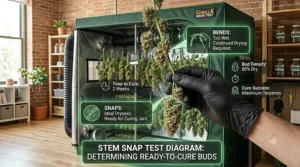
Step 5: The small-stem snap test. Around day 7–10, test a small branch. If it bends and doesn’t snap, you need more time. When small stems snap cleanly and the outer layer has a slight papery feel — move your buds to jars for the curing phase. That transition is where the final terpene development happens.
Common mistake to avoid after week 1: Don’t rush to cure because buds feel dry on the outside. The interior moisture redistributes slowly. Research published in PMC on cultivar-specific drying found that uneven moisture distribution is the primary driver of chlorophyll retention and harsh smoke — exactly the hay-bale taste everyone wants to avoid.
Cannabis Drying Tent Scenarios: Which Setup Fits Your Operation?
Not every grower needs the same tent. Here’s a practical breakdown based on real-world grow profiles.
Profile 1: The First-Time Home Grower (1–2 plants, closet setup) You’re harvesting maybe half a pound, wet weight. You don’t want to invest heavily before you know this is a long-term hobby. The Canna Dry Tent or VIVOSUN S425 is your call. Both fit in a standard closet space, don’t require external ventilation if placed in a naturally moderate-humidity room, and get your first cure done cleanly. Start here.
Profile 2: The Dedicated Hobbyist (3–4 plants, 2–3 oz dried per plant) You’re cycling grows seasonally and need a tent that handles drying for 2–3 weeks between grow cycles. The Mars Hydro 4×2×6 or the AC Infinity CLOUDLAB 642 fits this profile perfectly. Both provide enough vertical height for full branch hangs, enough canvas density for reliable environmental isolation, and enough ventilation ports for proper air management. The AC Infinity is the better long-term investment; the Mars Hydro is the smarter value play.
Profile 3: The Serious Home Cultivator (4–6+ plants, 4+ oz dried per plant) You’re no longer messing around. You need a 4×4 footprint, maximum hang capacity, and reliable blackout performance. The Gorilla Grow Tent 4×4 is the only tent on this list that meets all three criteria without compromise. If budget is a hard constraint, the VIVOSUN S448 4×4 delivers 80% of the experience for half the cost — just keep it in a naturally dark space.
Profile 4: The Space-Constrained Urban Grower You’re working in an apartment or a small room where floor space is genuinely precious. The Spider Farmer Pro 4.6×2.3 is your friend — tall enough for full-length hangs, narrow enough to slide into a space that a 4×4 tent simply won’t fit. Pair it with a small clip fan on the lower pole and a basic hygrometer/controller combo, and you have a professional-grade drying setup in under 4 square feet of floor space.
How to Choose a Cannabis Drying Tent: 6 Criteria That Actually Matter
1. Canvas Density (600D vs. 1680D vs. 2000D)
Canvas density determines how much light gets through the walls — and light is the enemy of terpenes and THC during drying. 600D canvas is adequate in dark rooms; 1680D and 2000D deliver true blackout performance anywhere. If your drying tent lives in a bedroom or office with ambient light, do not go below 1680D.
2. Liner Material: Mylar vs. PEVA
Mylar reflects light — ideal for growing, counterproductive for drying. If your tent will be used exclusively for post-harvest work, a white PEVA liner (like the Canna Dry Tent uses) is actually the superior choice. For dual-use grow/dry tents, mylar is the practical standard.
3. Vent Configuration
You need at minimum two side vent ports (for intake and exhaust circulation) and ideally a roof vent for passive heat escape. The number and diameter of ports determine what fans you can use and how precisely you can control airflow. All seven tents on this list cover the basics; the Canna Dry Tent’s four 6-inch side vents plus roof vent offer the most flexible airflow control.
4. Hanging Height
Branches hang vertically. A tent shorter than 60″ forces you to trim down large branches, losing hanging efficiency. 70″+ is ideal; the 80″+ height of the Gorilla and Spider Farmer Pro are the most comfortable for large-plant harvests.
5. Frame Strength & Hang Capacity
Wet cannabis is shockingly heavy. A half-pound dry yield might weigh 2.5 lbs wet. Four plants at that ratio = 10+ lbs on your tent’s horizontal bars. Cheap aluminum frames bend. Steel frames hold. The Gorilla’s 300-lb rating is the gold standard; most quality tents handle 100–150 lbs without issue.
6. Zipper Quality
This is the detail that separates one-season tents from multi-year investments. Smooth, heavy-duty zippers mean fewer light leaks and less frustration. According to community feedback from experienced growers, zipper failure is the #1 reason growers replace tents prematurely. Leafly’s 2026 grow tent recommendations consistently prioritize “zipper reliability” alongside canvas quality as the two most critical hardware factors.
Cannabis Drying Tent vs. Hanging in Your Grow Tent: The Real Difference
Many growers skip buying a dedicated post harvest tent and simply hang their harvest inside their existing grow tent with the lights off. It works. But it’s not ideal — and here’s why the distinction matters.
Your grow tent’s mylar interior was engineered to maximize light reflection and retain heat. Both of those properties work against you during drying. The enclosed reflective environment creates pockets of still, warm air that can push you above the 70°F ceiling where terpene degradation starts accelerating. The grow light fixtures, fans, and ducting already mounted inside also compete for vertical space with your hanging branches.
| Feature | Grow Tent (Lights Off) | Dedicated Drying Tent |
|---|---|---|
| Light control | Adequate (if no leaks) | Purpose-designed blackout |
| Liner type | Reflective Mylar (heat retention) | Neutral/PEVA (better RH stability) |
| Available hanging space | Partial (gear takes space) | Full vertical hang capacity |
| Equipment disruption | Grow cycle interrupted | Fully independent operation |
| VOC off-gassing risk | Possible with aged mylar | PEVA liners are VOC-free |
| Long-term cost | Equipment idle during drying | Runs concurrently with next grow |
The table above highlights the real-world operating advantage that experienced growers understand: a dedicated cannabis drying tent lets your grow tent continue doing its job while your harvest cures in parallel. If you’re growing on any kind of continuous cycle — which most serious cultivators are — the double-tent setup pays for itself in one harvest cycle by eliminating the downtime gap between chop and replant.
Features That Actually Matter (And Those That Don’t)
Actually Matters:
Canvas density. Already covered above, but worth repeating: it’s the single most important hardware spec for a drying tent.
Observation window. Every time you open the tent to check your hang, you disturb the micro-climate. A good observation window eliminates 80% of those door-opens during the critical first 5 days.
Vent port diameter. 4″ ducting is the standard. 6″ ports give you more airflow options. Anything smaller restricts your fan choices.
Frame material. Steel poles over aluminum, period, if you’re hanging significant weight.
Doesn’t Matter Nearly As Much As Brands Claim:
Exact canvas color. Black exterior, green exterior, dark gray — irrelevant for drying purposes. Only the interior liner matters.
Number of corner shelf brackets. Nice for growing. Near-useless for drying.
Included grow net trellis. Irrelevant for a drying setup entirely.
“Diamond” Mylar vs. standard Mylar. For drying, any reflectivity difference between mylar variants is marginal. Don’t pay a premium for “diamond-cut” patterns if your tent is exclusively used for post-harvest work.
According to cannabis drying science published by 42 Fast Buds, the three environmental factors that determine final product quality in order of importance are: humidity control, temperature stability, and light exclusion. The tent’s job is to enable all three — everything else is secondary.
Long-Term Cost of Drying Wrong vs. Investing in the Right Setup
Let’s run the numbers that no one talks about because they’re uncomfortable.
Average home grower producing 1 lb dried per cycle, selling or consuming at roughly $150–$250/oz market value: that’s $2,400–$4,000 of value per harvest in 2026.
A poorly dried pound — rushed, heat-spiked, mold-spotted, terpene-stripped — might retail or use at half that value on a good day. The difference? $1,200–$2,000 per harvest cycle lost to a bad drying environment.
The most expensive tent on this list — the Gorilla Grow Tent 4×4 — costs around $250–$300. Even at that price, it pays back the cost difference over a budget $80 setup on your first harvest. Not your tenth. Your first.
This is not an argument to always buy the most expensive option. It’s an argument for understanding that the cost of post harvest equipment is not a discretionary “upgrade” — it’s insurance on the value you’ve already created during the grow. The VIVOSUN S448 at under $100 for 4×4 drying space is genuinely excellent value. The Canna Dry Tent for under $150 is a steal for dedicated drying duty. But “the cheapest tent that holds some hangers” is how harvests turn into compost.
For authoritative context on cannabis quality science, the National Institutes of Health research on cannabis drying methods is worth reading — it confirms that controlled-environment drying preserves terpene and cannabinoid content significantly better than uncontrolled alternatives.
FAQ
❓ What size cannabis drying tent do I need for 4 plants?
❓ Can I use my grow tent as a cannabis drying tent?
❓ What humidity level should I maintain in my cannabis drying tent?
❓ How long does cannabis take to dry in a controlled drying tent?
❓ Do I need a carbon filter for my cannabis drying tent?
Conclusion
The gap between a good harvest and a great one is rarely in the seed or the light. It’s almost always in the dry. A proper cannabis drying tent — the right size, the right canvas density, the right liner, and the right ventilation configuration — is the piece of equipment that converts weeks of cultivation work into the jar-worthy, top-shelf result you actually wanted.
For dedicated post-harvest use, the Canna Dry Tent is the cleanest, most purpose-built choice available on Amazon right now. For dual-use growers, the AC Infinity CLOUDLAB 642 is the long-term investment that pays dividends across every cycle. For budget-first growers who don’t want to compromise on space, the VIVOSUN S425 and S448 are among the most proven, longest-lasting options at their price points.
Whatever you choose: buy once, dial in your environment, hang with spacing in mind, and have patience. The 7–10 day slow dry is where your terpenes either survive or disappear forever. Build the environment that gives them a fighting chance.
✨ Ready to Protect Your Harvest?
🔍 Click any product in this guide to check current pricing and stock on Amazon. Your cure is the last mile of your grow — don’t leave it to chance.
Recommended for You
- 7 Best Propagation Chamber Tent Options in 2026 for Thriving Starter Plants
- Best Propagation Grow Tent 2026: 7 Top Picks for Thriving Starts
- 7 Best Commercial Cannabis Tents for Licensed Growers in 2026[
Disclaimer: This article contains affiliate links. As an Amazon Associate, I earn from qualifying purchases. If you purchase products through these links, we may earn a small commission at no additional cost to you.
✨ Found this helpful? Share it with your friends! 💬🤗
