
In This Article
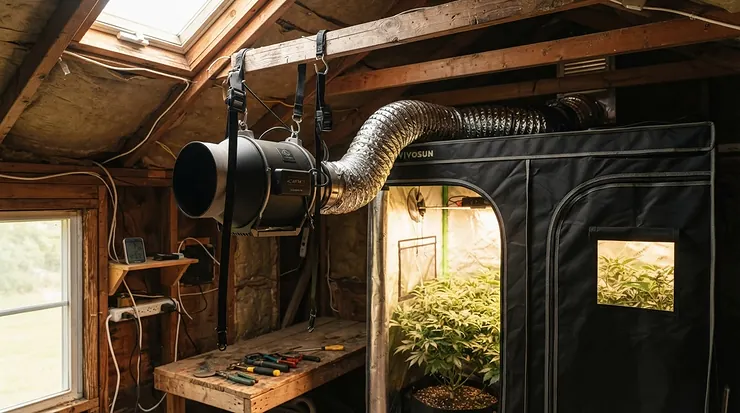
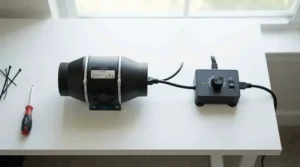
Here’s a confession: the fan is the least glamorous purchase in any indoor garden, and it’s also the one that decides whether your plants thrive or mold out in week six. A Vivosun 4 inch fan with speed controller is, in plain terms, a compact inline duct fan built for 4-inch ducting that comes paired with a dial or digital module letting you throttle airflow up or down instead of running full-blast, all-day, every day. That distinction matters more than it sounds — a fixed-speed fan is a sledgehammer, and a controllable one is a scalpel.

If you’ve spent any time browsing tents, you already know the confusion: Vivosun alone sells at least half a dozen 4-inch models under names like Z4, R4, D4, and M4, each with its own controller style, noise rating, and price tier. Add in a couple of serious outside competitors and picking “just a fan” turns into an afternoon of tab-hoarding. Improper ventilation isn’t just an inconvenience, either — the EPA’s guidance on indoor moisture control is blunt about what happens when humid air sits still: mold takes hold, and once it’s established, it’s a genuinely miserable cleanup job.
This guide breaks down seven real, currently-sold 4-inch inline fans — five from Vivosun’s own lineup and two credible outside alternatives — with honest analysis pulled from real spec sheets and aggregated buyer feedback, not marketing copy. You’ll get a quick-scan comparison table, a deep dive on each unit, a buyer’s framework for matching fan to tent size, and answers to the questions people actually type into Google before they buy. No fabricated reviews, no invented ratings — just what the data and the aggregated sentiment actually say.
Quick Comparison Table: Vivosun 4 Inch Fan With Speed Controller Lineup
| Fan | Airflow (CFM) | Noise Level | Controller Type | Price Range | Best For |
|---|---|---|---|---|---|
| VIVOSUN Z4 | 203 CFM | ~49 dB | Variable speed dial | $65-$85 range | Quietest housing on a budget |
| VIVOSUN R4 | 190 CFM | <31 dB | Adjustable variable controller | $45-$60 range | First-time growers |
| VIVOSUN Inline Booster | 106 CFM | ~28 dB | Variable speed controller | $25-$40 range | Tight spaces, small tents |
| VIVOSUN M4 | 195 CFM | Low (EC motor) | Adjustable EC speed dial | $60-$80 range | Long-term energy savings |
| VIVOSUN AeroZesh G4 | 195 CFM | Low (EC/PWM) | E12 10-speed programmable | $75-$95 range | Smart, app-upgradeable setups |
| AC Infinity Cloudline S4 | 205 CFM | 28 dBA | 10-speed PWM controller | $85-$100 range | Whisper-quiet priority |
| iPower 4″ Variable Speed | 200 CFM | ~29 dB | 3-position variable dial | $30-$45 range | Absolute lowest entry cost |
Look at that table long enough and a pattern jumps out: CFM barely moves between most of these units — they’re all clustered between 190 and 205 CFM — but noise level and controller sophistication swing wildly, and that’s where the real price difference lives. The AC Infinity Cloudline S4 and VIVOSUN AeroZesh G4 both lean on EC motors with PWM (pulse-width modulation) control, which is the actual reason they cost more and run quieter than the iPower or VIVOSUN Inline Booster. If your tent sits in a garage or basement where nobody’s sleeping nearby, that quiet premium buys you very little; if it’s in a spare bedroom, it buys you your sanity back.
💬 Just one click — help others make better buying decisions too!😊
Top 7 Vivosun 4 Inch Fans With Speed Controller: Expert Analysis
1. VIVOSUN Z4 4 Inch Inline Duct Fan — quietest build wrapped in vegan leather
The VIVOSUN Z4 wraps a galvanized-steel fan housing in a stitched vegan-leather sheath, and that’s not just cosmetic — it’s a vibration dampener, and it’s the reason this unit earns a spot at the top of a “quiet fan” search despite not carrying an EC motor. At 203 CFM against a rated 49 dB noise floor, the Z4 pushes real air while staying noticeably calmer than bare-metal fans running similar CFM, because the leather layer absorbs the mid-frequency hum that centrifugal impellers are notorious for. The variable speed dial sits inline on the power cord, letting you dial from a near-silent idle up to full 203 CFM output depending on how hot your lights are running that day.
Who should buy it: anyone running a single 2×4 or 4×4 tent in a shared living space where a droning fan is a dealbreaker, but who doesn’t need the app-connected bells of the AeroZesh line. Aggregated buyer feedback across retail listings for the Z4 line skews toward praise for how much quieter it runs at low-to-mid dial settings compared with plain-metal competitors, with a recurring theme in the written feedback pointing at the factory-painted housing holding up well against the humidity swings inside a grow tent. The more common complaint centers on the leather sheath showing wear if it’s handled roughly during install — treat it like a Sunday driver, not off-roading gear.
Pros:
- ✅ Leather-wrapped housing noticeably dampens vibration hum
- ✅ 203 CFM keeps pace with pricier EC-motor rivals
- ✅ Dual flanges make ducting hookup fast and tool-free
Cons:
- ❌ No EC motor, so power draw runs higher at full speed
- ❌ Leather sheath can scuff if handled roughly during install
At the time of research, the VIVOSUN Z4 typically lists in the $65-$85 range — check current price before buying, since retail pricing shifts often. For the noise reduction alone, it’s a fair value against similarly-CFM’d AC-motor competitors.
2. VIVOSUN R4 4 Inch Inline Duct Fan — best beginner value with quick-release ducting
The VIVOSUN R4 is the fan most first-time growers land on, and honestly, it’s a sensible default. It moves 190 CFM at 2,300 RPM while staying under 31 dB — genuinely quiet for a fan that skips the EC-motor premium entirely — thanks to a durable plastic housing and blade design tuned specifically to cut resonance. The adjustable variable speed controller sits mid-cord and lets you throttle output in a single twist, which matters more than it sounds like: running a fan at 60% speed instead of 100% around the clock is the single easiest way to stretch a carbon filter’s working life, since less static pressure means less wear on the media bed.
What most first-time buyers overlook about this model is the removable duct-end design with locking tabs — it sounds minor, but it means you can pull the whole unit for cleaning or bulb-swaps without wrestling a stuck clamp, which becomes a real quality-of-life difference by month three of ownership. Reviewers consistently point to the light plastic build as a double-edged trait: it keeps the unit affordable and easy to hang from a rope ratchet, but a subset of buyers report the housing feeling less substantial than the metal-bodied Z4 when handled directly.
Pros:
- ✅ Under 31 dB noise despite the budget-friendly price point
- ✅ Tool-free removable duct ends speed up maintenance
- ✅ 5.9-foot cord gives real placement flexibility in a tent
Cons:
- ❌ Plastic housing feels less premium than metal alternatives
- ❌ No EC motor means less efficiency at sustained high speed
Priced in the $45-$60 range at the time of research, the R4 is the pick if you want a genuinely adjustable Vivosun fan controller without paying for smart-home features you’ll never touch.
3. VIVOSUN Inline Booster Duct Fan — smallest footprint for tight ducting runs
Not every setup needs 200 CFM. The VIVOSUN Inline Booster is a compact 106 CFM unit built specifically for shorter duct runs, small tents, or as a secondary in-line booster placed mid-duct to compensate for a long, bendy exhaust path — the kind of situation where a full-size fan is genuinely overkill. Spinning at nearly 2,990 RPM but rated around 28 dB, it’s engineered to stay unobtrusive in tight quarters like closets, small 2×2 tents, or bathroom and kitchen exhaust boosts, and its variable speed controller lives right on the cord for quick on-the-fly adjustment.
Here’s what the spec sheet won’t spell out directly: lower CFM units like this one draw meaningfully less power (around 14W), which is a real consideration if you’re running a fan around the clock in a space with limited circuit capacity, like a shared apartment breaker panel. Based on the spec comparison against its full-size siblings, this unit trades raw airflow for a smaller physical footprint and lower running cost — the right call if your tent volume genuinely doesn’t need 190-plus CFM, and the wrong call if you’re trying to save money on a tent that actually needs the bigger units above.
Pros:
- ✅ Compact size fits tight closets and small tents easily
- ✅ Low 14W power draw keeps operating cost minimal
- ✅ Simple variable controller needs no learning curve
Cons:
- ❌ 106 CFM undersized for anything larger than a small tent
- ❌ Lacks the EC motor efficiency of pricier Vivosun models
Expect a price in the $25-$40 range at the time of research, making this the budget entry point for smaller grow spaces or secondary boost applications.
4. VIVOSUN M4 4 Inch Inline Duct Fan — EC motor efficiency for lower power bills
The VIVOSUN M4 is Vivosun’s answer to the “I want the smart-motor benefits without paying AC Infinity money” crowd. It runs an EC (electronically commutated) motor at 195 CFM with fully adjustable speed, and the practical upshot is real: EC motors are documented to run meaningfully more efficient than traditional AC motors, because they use permanent-magnet rotors controlled electronically rather than brute-force copper windings. In plain English, that means the M4 sips less power at low-to-mid dial settings than an AC-motor fan pushing the same CFM, and it runs cooler doing it, which tends to extend motor life over years of continuous grow-tent duty.
Based on the spec comparison, the M4 sits in an interesting middle tier: it doesn’t have the app-programmability of the AeroZesh line, but it beats plain AC-motor units like the R4 and Z4 on long-term running cost, especially for growers who leave a fan running 18-24 hours a day for months at a stretch. That’s the kind of math that doesn’t show up on the box but shows up on your electric bill. Buyer sentiment aggregated from retail listings tends to highlight the quieter startup and smoother speed ramp as standout traits versus AC-motor competitors, with occasional notes that the adjustable dial’s low end could use finer gradation for whisper-quiet setups.
Pros:
- ✅ EC motor design cuts power draw at partial speeds
- ✅ Runs cooler, which typically extends long-term motor life
- ✅ Smooth speed ramp avoids the harsh “kick” of AC motors
Cons:
- ❌ Dial has fewer granular low-speed steps than PWM units
- ❌ Costs more upfront than Vivosun’s AC-motor models
At the time of research, the M4 typically runs in the $60-$80 range — a reasonable premium if you’re running this fan for more than a season or two.
5. VIVOSUN AeroZesh G4 4 Inch Inline Duct Fan — most programmable, app-upgradeable pick
If you’re the type who wants your grow tent talking to your phone, the VIVOSUN AeroZesh G4 is the one to look at. It ships with an E12 speed controller offering ten distinct PWM-controlled fan speeds, backup memory that restores your last setting after a power cut, and a three-mode ON/OFF cycling feature designed to save energy by pulsing the fan rather than running it continuously. What most buyers overlook about this model is the upgrade path: the E12 controller can be swapped for Vivosun’s E42A multi-device controller, which folds the fan into the GrowHub app ecosystem for temperature- and humidity-triggered automation — meaning this fan can graduate from a manual dial to a closed-loop climate system without buying a new fan.
That programmability is genuinely useful for anyone managing multiple environmental variables at once (temp, humidity, VPD) rather than just “turn the dial and hope.” Reviewers of this line commonly note the ten-speed granularity as a meaningful step up from basic three-position dials, since it lets you land on the exact noise-to-airflow tradeoff for your specific room instead of picking between “too loud” and “not enough air.” The tradeoff is complexity for buyers who just want a simple twist-knob — the E12 controller has a slightly steeper learning curve than a basic dial.
Pros:
- ✅ Ten PWM speed steps allow precise airflow tuning
- ✅ Upgradeable to app-based GrowHub climate automation
- ✅ Backup memory restores settings after a power cut
Cons:
- ❌ E12 controller has more of a learning curve than a dial
- ❌ Premium pricing versus Vivosun’s simpler AC-motor models
The AeroZesh G4 typically lands in the $75-$95 range at the time of research, and it’s the pick if you expect to expand your setup later rather than replace the fan.

6. AC Infinity Cloudline S4 — quietest overall at just 28 dBA
No honest comparison of this category skips AC Infinity, and the Cloudline S4 earns its reputation. At 205 CFM against a rated 28 dBA noise floor, it’s the quietest unit in this entire lineup on paper, helped along by a PWM-controlled EC motor, dual ball bearings rated for any mounting orientation, and a mixed-flow impeller design built to maintain airflow even against the resistance of a carbon filter and long duct run. The included wired 10-speed controller is compatible with AC Infinity’s broader UIS smart-controller ecosystem, similar in spirit to Vivosun’s E42A upgrade path, but with a more established software history behind it.
Here’s the honest analysis: this fan justifies its price premium almost entirely through the noise number. 205 CFM at 28 dBA against 195-203 CFM at 49 dB from the AC-motor Vivosun units is a genuinely different experience in a bedroom-adjacent tent — for reference, common noise-level references put 30 dB roughly at whisper level and 50 dB near normal rainfall, so that 20-decibel gap is not a rounding error, it’s the difference between “background hum” and “barely there.” If your tent lives somewhere quiet matters — a bedroom, an apartment with thin walls, a home office — this is the fan worth the extra $20-$30 over Vivosun’s comparable AC-motor units. If it’s in a garage, you’re paying for a benefit you won’t notice.
Pros:
- ✅ 28 dBA is the quietest rating in this entire comparison
- ✅ Dual ball bearings work in any mounting orientation
- ✅ Detachable motor box simplifies cleaning and maintenance
Cons:
- ❌ Highest price point of the fans compared here
- ❌ UIS ecosystem lock-in if you want full app automation
At the time of research, the Cloudline S4 typically sits in the $85-$100 range, positioning it as the premium benchmark this whole category gets measured against.
7. iPower 4 Inch Inline Duct Fan with Variable Speed Controller — cheapest capable adjustable-speed pick
Budget doesn’t have to mean “no speed control,” and the iPower 4 Inch Inline Duct Fan proves it. Rated at roughly 200 CFM off a 2,500 RPM motor with a noise level in the high-20s dB range, it ships with a straightforward variable speed controller offering off/low/medium/high-adjustable settings on a single switch — not as granular as the ten-step PWM units above, but genuinely functional for anyone who just needs to turn things down at night. The composite fan blades and center hub are specifically designed to cut vibration and noise versus a bare metal impeller, which is a smart concession for a fan at this price tier.
What the spec sheet won’t tell you, but the pattern across budget inline fans in general suggests, is that entry-level 3-position controllers like this one are the right call for a first tent and the wrong call if you’re chasing a precise noise-to-airflow sweet spot — you get off, low, medium, and high, not a dial-in-anywhere experience. Aggregated feedback on similarly-specced iPower units tends to cluster around solid value-for-money sentiment, with the most common critique being that the plastic mounting components feel less durable than metal-bodied competitors under long-term daily use.
Pros:
- ✅ Lowest price point of any fan in this comparison
- ✅ Composite blades cut noise versus bare metal impellers
- ✅ Simple 3-position control needs zero learning curve
Cons:
- ❌ Fewer speed steps than Vivosun’s PWM-controlled units
- ❌ Plastic components feel less durable over years of use
At the time of research, this iPower unit typically runs in the $30-$45 range, making it the fan to grab if budget is the deciding factor and you can live without granular speed control.
Practical Setup and First 30 Days Guide
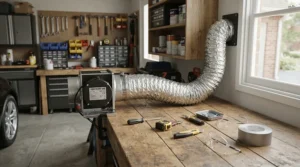
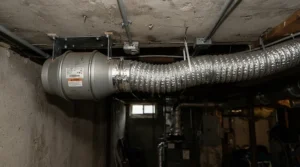
Getting a Vivosun 4 inch fan with speed controller mounted correctly matters more than most first-timers assume. Start by hanging the fan itself using rope ratchets rated for at least double the fan’s actual weight — a fan swinging loose mid-cycle will eventually work its ducting connections apart. Orient it so airflow direction matches the arrow printed on the housing (intake fans and exhaust fans are mounted opposite ways, and it’s an easy mistake to reverse them). Secure every duct connection with a stainless clamp rather than just tape; tape degrades in humidity within weeks.
For the first 30 days, resist the urge to run the fan at max speed constantly — start around 40-50% on the controller and adjust upward only if your temperature and humidity readings say you need more exchange. Common early mistakes include mounting the fan too close to the carbon filter (leave at least a few inches of straight ducting on either side for airflow to normalize) and forgetting that a fresh carbon filter has higher initial resistance, meaning your fan may need a slightly higher dial setting in week one than it will in week eight once the filter beds in. Check your ducting connections weekly for the first month — vibration loosens hardware faster than people expect.
Real-World Scenarios: Matching the Right Fan to Your Setup
Consider three grower profiles. First, the apartment-dweller running a 2×2 tent in a bedroom closet, worried about roommates hearing a fan hum through the wall at 2 a.m. — that’s the AC Infinity Cloudline S4 or VIVOSUN Z4 territory, where the noise number does the heavy lifting. Second, the budget-conscious first-timer with a 2×4 tent in a garage where nobody’s sleeping nearby — the VIVOSUN R4 or iPower unit covers the CFM need without paying for noise suppression you won’t benefit from. Third, the grower running two or three tents who wants centralized, humidity-triggered automation down the road — the VIVOSUN AeroZesh G4 with its GrowHub upgrade path, or AC Infinity’s UIS ecosystem, sets that up without a second fan purchase later.
The pattern across all three: match the controller sophistication to how much you’ll actually use it, and match the CFM to your tent’s real cubic footage — not the biggest number on the shelf.
Common Problems and Their Fixes
A few issues come up again and again with 4-inch inline fans, and most have straightforward solutions. If the fan runs but airflow feels weak, check for kinked ducting or an oversaturated carbon filter — both create static pressure that a fan’s dial setting alone can’t overcome. If the variable speed controller seems unresponsive at low settings, this is often normal for AC-motor units like the R4 or Z4, since very low voltage can stall a basic motor; EC-motor units like the M4 or AC Infinity S4 handle low-speed operation more gracefully. If the fan is louder than its rated dB suggests, inspect the mounting hardware first — a loose rope ratchet or an unsecured duct clamp is a far more common noise source than the fan itself. And if you’re smelling ozone or noticing overheating, unplug it immediately and check the manufacturer’s warranty terms rather than troubleshooting a potential electrical issue yourself.
How to Choose a Vivosun 4 Inch Fan With Speed Controller
Picking the right unit comes down to five practical checks, in order of importance:
- Calculate your actual CFM need first. Multiply your tent’s length, width, and height in feet, then divide by your target air-exchange time (2-3 minutes is standard) — a full sizing walkthrough with worked examples is worth bookmarking if math isn’t your thing — don’t buy CFM you don’t need.
- Factor in carbon filter and ducting resistance. A carbon filter alone can add 60% to your effective CFM requirement, and every 90-degree duct bend adds meaningful resistance on top of that.
- Decide how much noise sensitivity actually matters. A garage tolerates 49 dB fine; a shared bedroom often doesn’t.
- Weigh EC motor savings against upfront cost. If the fan runs 18+ hours a day for a full season, an EC motor’s efficiency gain can offset its higher sticker price over time.
- Consider your automation ambitions. If you might expand to app-based climate control later, a fan with an upgradeable controller (AeroZesh’s E12→E42A path, or AC Infinity’s UIS compatibility) saves a second purchase down the road.
Common Mistakes When Buying a 4 Inch Inline Fan
The single most common mistake is buying based on CFM alone without accounting for carbon filter and ducting losses — a fan rated for your exact tent volume will underperform once resistance is added. The second is ignoring noise ratings entirely and being surprised later at how audible even a “quiet” 45-50 dB fan is in a small bedroom at night. Third, buyers frequently skip checking duct diameter compatibility, assuming all “4-inch” fans and filters use identical flange sizing, when minor manufacturing tolerances can make connections tighter or looser than expected. Finally, many first-timers underestimate long-term running cost, comparing sticker price alone rather than factoring in an EC motor’s efficiency advantage across months of continuous operation.
Vivosun Variable Speed Dial vs Fixed-Speed Fans: What Actually Changes
The gap between a Vivosun variable speed dial and a old-school fixed-speed exhaust fan is bigger than it looks on a spec sheet. A fixed-speed fan gives you exactly one setting: full blast, all the time — which means you’re either overcooling your tent and wasting energy, or you’re stuck with a CFM rating that’s wrong for at least part of your grow cycle (seedlings need far less exchange than a fully-flowered canopy pulling max wattage from your lights). A variable dial, by contrast, lets the same fan serve a tent through its entire lifecycle, dialed low during vegetative growth and cranked up once flowering heat and humidity spike.
The practical benefit compounds over a full grow season: less wear on a carbon filter running at reduced static pressure, lower electricity draw during the weeks you don’t need full CFM, and meaningfully less noise during the stretches when a whisper-quiet setting is genuinely sufficient. A fixed-speed fan simply can’t make that tradeoff — it’s one setting or nothing, which is why every fan in this comparison, budget or premium, ships with some form of adjustable control rather than a single-speed motor.
Benefits vs Traditional Fixed-Speed Alternatives
| Factor | Adjustable-Speed Inline Fan | Fixed-Speed Exhaust Fan | Best For |
|---|---|---|---|
| Airflow control | Dial or PWM steps match output to need | One speed, no adjustment | VIVOSUN R4 — dial control for daily use |
| Energy use over a season | Lower, since speed drops during cooler stages | Higher, runs at max draw constantly | VIVOSUN M4 — EC motor savings |
| Noise flexibility | Can run near-silent when full CFM isn’t needed | Same noise level day and night | AC Infinity Cloudline S4 — quiet at any stage |
| Carbon filter lifespan | Extended by reduced static pressure at lower speeds | Shortened by constant max-pressure operation | VIVOSUN AeroZesh G4 — programmable low-load running |
The takeaway here isn’t subtle: a fixed-speed fan is cheaper to buy but more expensive to run and harder on your other equipment over time. Every fan featured in this guide, from the budget iPower to the premium AC Infinity Cloudline S4, includes some form of speed adjustment specifically because growers overwhelmingly value that flexibility over the marginal savings of a single-speed unit.
Adjustable Vivosun Fan Controller: Long-Term Cost and Maintenance
Total cost of ownership on an adjustable Vivosun fan controller isn’t just the sticker price — it’s sticker price plus electricity plus replacement-part frequency over years of continuous use. AC-motor units like the R4 and Z4 typically draw more power at high speed than EC-motor units like the M4, but they also tend to cost meaningfully less upfront, so the payback period on the EC premium depends heavily on how many hours a day the fan actually runs. For a fan running 18-24 hours daily across a multi-month grow cycle, an EC motor’s efficiency advantage can close that price gap within a season or two; for occasional or seasonal use, the cheaper AC-motor option often makes more financial sense.
Maintenance-wise, controller longevity tends to track build quality more than brand — a controller housed in a sealed, weather-resistant switch (as most of these units feature) generally outlasts one exposed to constant humidity swings without protection. Cleaning the fan blades every few months (dust buildup on an impeller measurably reduces CFM output over time) and inspecting the controller’s cord for wear at the strain-relief point are the two highest-value maintenance habits for extending a controller’s working life well past the one-year warranty window most of these units ship with.
Safety, Electrical Considerations, and Regulations
Inline duct fans plug into standard household circuits, but a few safety basics deserve attention. Never daisy-chain multiple high-draw grow equipment items (lights, humidifiers, fans) off a single extension cord rated below their combined amperage — this is a legitimate fire risk, not a theoretical one. Keep humidity in check as a matter of both plant health and building safety: the EPA’s guidance referenced earlier in this article recommends keeping indoor humidity in the 30-50% range specifically because higher levels create conditions for mold growth that can spread well beyond a single tent if left unchecked. Ground-fault protection (a GFCI outlet) is a smart addition in any space with elevated humidity, since it’s specifically designed to cut power faster than a standard breaker if moisture creates a ground fault. None of the fans in this comparison require special permitting for home use, but always check local electrical code if you’re wiring a dedicated circuit rather than using an existing outlet.
What to Expect: Real-World Performance vs the Spec Sheet
Numbers on a box rarely tell the full story. A 200 CFM rating assumes zero static pressure — no carbon filter, no ducting, no bends — so real-world output on any of these fans, once connected to a filter and a few feet of ducting, typically runs noticeably below the rated CFM. That’s normal, not a defect, and it’s exactly why buying a fan rated meaningfully above your calculated CFM need (rather than exactly at it) is the standard advice among experienced growers. Similarly, dB ratings are usually measured at a fixed distance under lab conditions, so a “28 dB” fan mounted directly against a wall stud will transmit more perceived noise through the structure than the same fan hung freely on rope ratchets. Expect real-world noise to run a few decibels above the spec sheet once mounting and duct resonance are factored in.
Price Range & Value Analysis
| Tier | Representative Fans | Typical Price Range | Value Verdict |
|---|---|---|---|
| Budget | VIVOSUN Inline Booster, iPower 4″ Variable Speed | $25-$45 range | Best for small tents or a first, low-risk purchase |
| Mid-range | VIVOSUN R4, VIVOSUN M4 | $45-$80 range | Best balance of controller quality and running cost |
| Premium | VIVOSUN Z4, VIVOSUN AeroZesh G4, AC Infinity Cloudline S4 | $65-$100 range | Best for noise-sensitive spaces or future smart-home expansion |
Reading this table against your own priorities is the fastest way to shortcut decision fatigue: if your tent lives somewhere quiet is non-negotiable, spend up in the premium tier and don’t look back. If you’re testing the waters with your first grow, the mid-range tier gets you real speed control without premium pricing, and the budget tier is a perfectly reasonable place to start if you’re not yet sure indoor growing is a long-term hobby.
Frequently Asked Questions
❓ What size Vivosun fan do I need for a 4x4 grow tent?
❓ Is a Vivosun 4 inch fan with speed controller loud?
❓ Can I run a Vivosun inline fan on a timer instead of the speed controller?
❓ Do EC motor fans actually save money over AC motor fans?
❓ How often should I clean a Vivosun fan's blades?
Conclusion
If there’s one takeaway from comparing all seven of these fans side by side, it’s that CFM is the least interesting number on the spec sheet. Every unit here lands somewhere between 106 and 205 CFM, and for most standard tent sizes, several of them would technically “work.” The real decision points are noise tolerance, motor type, and how much automation you actually want to pay for. The VIVOSUN R4 remains the sensible default for most first-time growers. The VIVOSUN Z4 and AC Infinity Cloudline S4 earn their price premiums specifically through quieter operation, with the Cloudline S4 taking the outright noise crown. The VIVOSUN M4 rewards anyone running long grow cycles with genuine electricity savings, and the VIVOSUN AeroZesh G4 is the one to buy if you expect to expand into app-based climate automation later rather than replace the fan.
Whichever you choose, remember that a fan is only as good as the ducting, filter, and mounting hardware around it — pair it thoughtfully, size it against your real tent volume rather than the biggest number on the shelf, and it’ll quietly do its job for years without you thinking about it again.
Recommended for You
- Vivosun 4 Inch Fan Noise Level: 7 Quiet Picks For 2026
- Vivosun 4 Inch Fan For 2×2 Tent Setup: 7 Top Picks (2026)
- Vivosun 4 Inch Inline Fan Review For Grow Tent: 7 Picks Tested For 2026
Disclaimer: This article contains affiliate links. As an Amazon Associate, I earn from qualifying purchases. If you purchase products through these links, we may earn a small commission at no additional cost to you.
✨ Found this helpful? Share it with your friends! 💬🤗
