
In This Article
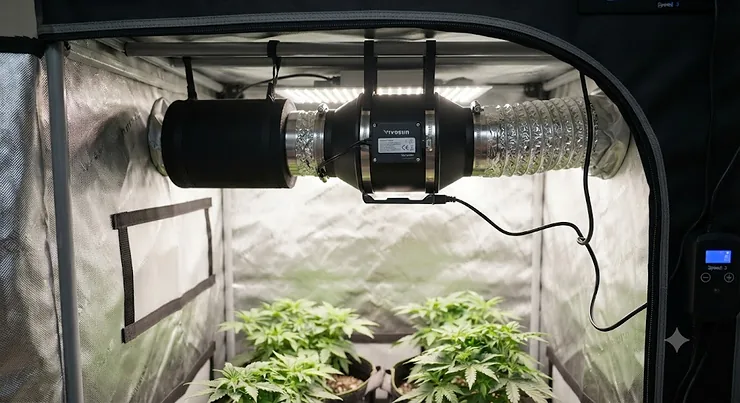
Here’s the thing nobody tells you when you set up your first 2×2: the tent is the easy part. The fan is where people either get it right or spend the next three months fighting mold, heat spikes, and a bedroom that smells like a greenhouse gone wrong. A 4 inch inline fan for 2×2 grow tent setups is the piece of gear that decides whether your plants stretch happily in cool, moving air or sit there sweating in a stagnant little box.
I’ve spent a chunk of the last few weeks knee-deep in spec sheets, CFM calculators, and grower forums arguing about whether a “4 inch is enough” (spoiler: for a 2×2, it almost always is). What follows isn’t a rewritten Amazon listing — it’s a comparison of seven real fans, what their numbers actually mean once you hook up a carbon filter and ducting, and which one fits your specific situation, whether that’s a single autoflower in a closet or a full veg-to-flower single plant grow setup you’re running year-round.
Quick note before we dive in: this article contains affiliate links, and prices shift constantly, so treat any dollar figures here as ballpark ranges rather than gospel — always check the current price before buying.
Quick Comparison Table
| Fan | CFM (rated) | Noise | Controller | Best For |
|---|---|---|---|---|
| AC Infinity CLOUDLINE T4 | 205 | 28 dBA | Smart WiFi + app | Best overall for a 2×2 |
| AC Infinity CLOUDLINE S4 | 205 | 28 dBA | 8-speed manual | Best manual alternative |
| VIVOSUN AeroZesh S4 | ~208 | ~30 dBA | EC variable speed | Best value EC motor |
| iPower GLFANXINLINE4 | 195 | ~30 dBA | Single-speed / basic | Best true budget pick |
| TerraBloom ECMF-100 | 141 | ~28 dBA | 0-100% variable | Most energy-efficient |
| Mars Hydro iFresh 4″ | ~200 | ~32 dBA | RJ12 speed controller | Best all-in-one starter kit |
| TerraBloom TB-MFIF-4 | 188 | ~32 dBA | Built-in speed dial | Best lesser-known alternative |
Looking at the table, the two AC Infinity CLOUDLINE fans dominate on the noise-to-airflow ratio, which matters enormously in a tent this small because you genuinely don’t need all 205 CFM most of the time. The TerraBloom ECMF-100 stands out for the opposite reason — it delivers less raw airflow but sips power doing it, which is the right trade for someone running the fan 24/7 in a bedroom. Budget shoppers should note that the iPower GLFANXINLINE4 and Mars Hydro iFresh 4″ get you into a working setup for less money, but you’ll be running them closer to full speed more often, which shows up in the noise column.
💬 Just one click — help others make better buying decisions too!😊
Top 7 4 Inch Inline Fans for a 2×2 Grow Tent: Expert Analysis
Picking a fan for a 2×2 is a different exercise than picking one for a 4×4. Tent volume is small (roughly 32 cubic feet before you factor in duct length and filter resistance), so most of these fans are working well under their max-rated CFM most of the time — meaning noise, controllability, and build quality end up mattering more than raw airflow. Here’s how the seven stack up.
1. AC Infinity CLOUDLINE T4 — best overall smart control for a 2×2
The standout here is the app-connected smart controller, and it’s not just a gimmick — it’s the difference between manually nudging a dial every time the weather shifts and just setting a humidity target and walking away. Specs-wise, you’re looking at 205 CFM free-air rating, 28 dBA at its quietest setting, and a dual-ball-bearing EC motor rated for years of continuous duty. In a 2×2 tent that only needs roughly 40-55 CFM at the filter once you calculate volume and add the standard 25% buffer, this fan spends most of its life running at 15-25% speed — which is exactly where the EC motor shines, staying whisper-quiet while still holding negative pressure.
Based on the spec comparison, this is the fan for someone who wants to set a temperature and humidity trigger once and never touch it again, which matters more than people expect once they’re three weeks into flower and don’t want to babysit a dial every evening. Reviewers consistently report that the WiFi app connection can be finicky to pair initially but works reliably once set up, and several long-term owners note the fan is still running quiet after two-plus years of nightly use. If you can’t verify the exact review count at the time you’re reading this, treat that as a reason to check current buyer feedback yourself rather than take anyone’s word for it, including mine.
Pros:
- ✅ App-based temp/humidity automation removes daily guesswork
- ✅ Whisper-quiet EC motor even at higher speeds
- ✅ Detachable motor housing makes cleaning genuinely simple
Cons:
- ❌ WiFi pairing can be a minor hassle on first setup
- ❌ Costs noticeably more than a basic single-speed fan
Price sits in the $90-$120 range at the time of research, and for a grower who values their evenings, it’s worth the premium.
2. AC Infinity CLOUDLINE S4 — most popular manual alternative
Same 205 CFM airflow and 28 dBA noise floor as its smart sibling, but you get an 8-speed manual dial instead of app automation — and honestly, for a 2×2 tent, that’s not a downgrade so much as a different tool for a different grower. What most buyers overlook about this model is that the manual controller actually responds faster in practice, since there’s no sensor lag; you turn the dial, the fan changes speed immediately.
The mixed-flow design and EC motor carry over from the T4, so you’re not sacrificing build quality to save money — you’re sacrificing convenience. Aggregated reviewer sentiment consistently points to this being the “set it once and forget it” fan for people who dial in a speed during veg and rarely touch it again, since a 2×2’s ventilation needs don’t swing wildly once you’ve found your baseline setting.
Pros:
- ✅ Same premium EC motor and airflow as the smart version
- ✅ Instant manual response with no app dependency
- ✅ Eight distinct speeds for fine-tuned airflow control
Cons:
- ❌ No automated temperature or humidity response
- ❌ Manual dial means you’re the one checking conditions
Expect to pay somewhere in the $55-$80 range, making it the fan to pick if you’d rather save the money the smart controller adds and just dial it in yourself.
3. VIVOSUN AeroZesh S4 — best value EC motor pick
The VIVOSUN AeroZesh S4 delivers roughly 208 CFM through a PWM-controlled EC motor, putting it in direct competition with the AC Infinity duo on paper while typically landing at a lower price point. Here’s what the spec sheet won’t tell you outright: PWM control on an EC motor means smoother low-speed operation than the old-school AC-motor fans, so even at a low setting appropriate for a 2×2, you avoid the buzzy hum that cheaper motors produce when throttled down.
This is a solid pick for the grower who wants EC-motor quiet performance without paying for AC Infinity’s brand premium or app ecosystem. Reviewers frequently mention the build quality feels a step up from earlier VIVOSUN fan generations, with tighter tolerances on the housing and less vibration transmitted through mounting brackets. On paper this means less rattling against your tent poles at 2am, which is a small thing until you’re the one lying awake listening for it.
Pros:
- ✅ EC motor delivers smooth, low-buzz performance at low speeds
- ✅ Competitive CFM rating relative to premium competitors
- ✅ Generally lower price than comparable AC Infinity models
Cons:
- ❌ Speed controller interface is less polished than AC Infinity’s
- ❌ Smaller accessory and replacement-parts ecosystem
Price typically falls in the $45-$65 range, which makes it a genuinely strong middle option for anyone comparing 4 inch inline fan for 2×2 grow tent choices on a tighter budget than premium buyers.
4. iPower GLFANXINLINE4 — best true budget pick
At roughly 195 CFM and about 30 dB of noise, the iPower GLFANXINLINE4 covers the bare-minimum airflow math for a 2×2 tent without adding smart features, EC motor refinement, or a fancy controller — and that’s exactly the point. This is the fan for someone building their very first tent on a tight budget who needs proof of concept before investing more.
The honest analytical take here: an AC motor at this price point means less finesse at low speeds and a noticeably higher noise floor than the EC-motor options above it, but the airflow numbers are genuinely adequate for a single-plant 2×2 setup with light-to-moderate wattage. Aggregated review sentiment across major retailers is generally positive for reliability out of the box, though a recurring theme in buyer feedback is that the motor runs warm during extended 24/7 use in hot climates, so placement with some airflow around the housing itself is worth considering.
Pros:
- ✅ Lowest price point among CFM-adequate options for a 2×2
- ✅ Simple, no-frills installation with minimal parts
- ✅ Sufficient airflow for a single-plant or micro grow tent setup
Cons:
- ❌ Noticeably louder than EC-motor alternatives at similar CFM
- ❌ No variable speed control on the most basic version
Look for it in the under-$35 range, making it the entry point for anyone testing the waters before committing to a nicer fan later.
5. TerraBloom ECMF-100 — most energy-efficient pick
This is the fan for the grower who’s already thinking about their electric bill in month one. The TerraBloom ECMF-100 moves 141 CFM using a brushless EC motor at just 21 watts max — TerraBloom’s own testing, backed by independent lab verification referenced on their listings, puts continuous 24/7 operation at under $50 a year in most regions. For a 2×2 tent that only needs roughly 40-55 CFM at the filter, 141 CFM free-air is genuinely more than sufficient headroom.
What most buyers overlook about this model is the metal casing, which isn’t just cosmetic — it resists the warping and rattling that cheaper plastic housings develop after a year or two of vibration. Reviewers consistently note the fan runs cooler to the touch than plastic-bodied competitors during long sessions, which lines up with the lower wattage draw. The trade-off is lower max CFM than the other picks on this list, so if you’re planning to add a second light or scale up tent size later, this isn’t the fan to grow into.
Pros:
- ✅ Exceptionally low power draw for its airflow class
- ✅ Durable steel housing resists warping and vibration
- ✅ Independently lab-tested performance specs, not just marketing claims
Cons:
- ❌ Lower max CFM ceiling than most competitors on this list
- ❌ Speed controller sold separately on some listings
Expect a price in the $45-$60 range, positioning it as a smart pick for anyone prioritizing long-term running costs over maximum headroom.
6. Mars Hydro iFresh 4″ Exhaust Fan Kit — best all-in-one starter kit
Mars Hydro built its reputation on affordable, all-in-one grow gear, and the iFresh 4″ kit fits that mold by bundling an inline fan rated around 200 CFM with an RJ12 speed controller in one purchase — useful if you’re outfitting a 2×2 tent from zero and don’t want to shop for five separate components. Based on the spec comparison, the bundled controller is a meaningful advantage over piecing together a fan and a third-party speed control separately, since compatibility is guaranteed out of the box.
Here’s what the spec sheet won’t tell you: kit fans like this one are optimized for “good enough” performance across a wide range of setups rather than best-in-class performance in any one area, so don’t expect EC-motor smoothness or app integration. What you do get is a straightforward, single-purchase path to a working exhaust setup, which is exactly why it shows up so often in first-time grower recommendations across forums and grow-log threads.
Pros:
- ✅ Bundled speed controller removes a compatibility guessing game
- ✅ Adequate CFM for a 2×2 single-plant setup out of the box
- ✅ Straightforward single-purchase path for total beginners
Cons:
- ❌ Noisier at higher speeds than EC-motor competitors
- ❌ Build materials feel noticeably lighter-duty than premium picks
Pricing generally lands in the $40-$55 range for the fan-and-controller combination, at the time of research.
7. TerraBloom TB-MFIF-4 — best lesser-known budget alternative
Rounding out the list is a fan that doesn’t get nearly the attention the AC Infinity and VIVOSUN names do, despite solid specs: the TerraBloom TB-MFIF-4 delivers roughly 188 CFM with a built-in speed dial that lets you throttle output down to around 70% of max without buying a separate controller. The steel housing (a recurring TerraBloom theme) means better long-term durability than the ABS plastic shells common at this price tier.
Honest take: this fan won’t win on smart features or brand recognition, but for a grower who wants ETL-listed safety certification, a built-in controller, and steel construction without paying premium prices, it quietly checks more boxes than its low profile suggests. Reviewers who’ve compared it directly against similarly priced plastic-bodied competitors consistently mention it feels sturdier in hand and produces less vibration noise against tent poles, which matters more in a small 2×2 footprint where the fan often sits close to where you’re standing.
Pros:
- ✅ Built-in speed controller included at no extra cost
- ✅ Steel housing outlasts plastic-bodied budget competitors
- ✅ ETL-listed for verified electrical safety compliance
Cons:
- ❌ Less brand recognition means a smaller review pool to draw on
- ❌ No smart or app-based control options available
Price generally falls in the $40-$55 range, making it a genuine sleeper pick worth cross-shopping against the more famous names above.
✨ Don’t Miss These Exclusive Deals!
🔍 Take your 2×2 tent ventilation to the next level with these carefully selected fans. Click on any highlighted item to check current pricing and availability. The right fan turns a stuffy, humid box into a controlled environment your plants will actually thrive in!
Real-World Scenario: Matching Fans to Single Plant Grow Setups
A single plant grow setup in a 2×2 tent is genuinely one of the most forgiving ventilation situations you’ll run into, but “forgiving” doesn’t mean “ignore it entirely” — let’s walk through three profiles.
The closet grower with a 150W LED and one autoflower: heat load is low, humidity swings are gentle, and the TerraBloom ECMF-100 at 141 CFM is comfortably enough fan, especially since it’s the quietest, most power-frugal option on this list — ideal when the tent sits a few feet from where you sleep. Run it on low-to-medium speed continuously rather than cycling it, since constant gentle airflow beats intermittent bursts for humidity control.
The budget-first beginner running a single photoperiod plant through veg and flower: you need some headroom for the heat spike that comes with flowering-stage lighting, so the iPower GLFANXINLINE4 or Mars Hydro iFresh 4″ kit gives you the CFM buffer without overspending on a first grow you’re still testing commitment to. Pair it with a basic hygrometer so you’re not flying blind on humidity.
The grower who plans to keep this tent running indefinitely and wants zero maintenance headaches: this is where the AC Infinity CLOUDLINE T4 earns its price premium — a single plant setup running for years benefits enormously from automated humidity and temperature triggers, since you won’t be manually adjusting fan speed every time the seasons change outside your window.
Problem → Solution: Fixing Common 2×2 Tent Ventilation Issues
Problem: The tent walls are visibly sucking inward, sometimes touching the plant. This usually means your fan is oversized relative to your passive intake, creating excessive negative pressure. Solution: open your intake vent flaps fully, and if the issue persists, step down fan speed rather than assuming you need a smaller fan entirely.
Problem: Persistent musty smell even with a carbon filter installed. Nine times out of ten this traces back to filter age or a fan running too slow to push enough air through the carbon bed. Solution: confirm your fan’s CFM output at the filter (not just its rated free-air number) meets or exceeds your tent’s minimum requirement, and replace carbon media on the manufacturer’s recommended schedule rather than waiting for smell to return.
Problem: Temperature creeps up 8-10 degrees during the light cycle. This is almost always an airflow-through-time issue rather than a fan-strength issue. Solution: check for kinks or tight bends in your ducting, which the EPA’s guidance on moisture and ventilation notes can restrict airflow significantly even when the fan itself is functioning correctly, then straighten runs where possible.
Problem: The fan is louder than expected at the speed you actually need. Solution: if you bought a basic AC-motor fan and expected EC-motor quiet, that’s a mismatch between budget and expectations rather than a defect — stepping up to an EC-motor model like the ones ranked higher on this list solves it directly.
Problem: Humidity keeps climbing above 60% and won’t come down. Solution: increase exhaust speed incrementally and confirm your passive intake isn’t blocked, since trapped humid air is the single fastest path to mold — a risk the EPA specifically flags when ventilation fails to keep pace with moisture production indoors.
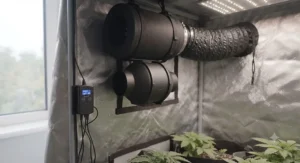
How to Choose a 4 Inch Inline Fan for a 2×2 Grow Tent
A 4 inch inline fan for 2×2 grow tent shopping comes down to matching CFM, noise tolerance, and controllability to your specific room and grow style. Here’s the process, broken into steps you can actually follow.
- Calculate your tent’s base volume. A standard 2x2x4 tent is roughly 32 cubic feet, though height varies by brand — measure yours directly rather than assuming.
- Add 25-30% for carbon filter resistance. This is the single most skipped step among first-time buyers, and it’s why fans that look “barely adequate” on paper often perform fine once you realize the filter buffer was already built into their rated CFM.
- Match ducting and filter diameter to the fan. A 4-inch fan needs a 4-inch filter and 4-inch ducting — mismatched sizes choke airflow regardless of how strong the fan itself is.
- Decide how much you value automation versus manual control. If you’ll be checking the tent daily anyway, manual dials save money; if you want to set-and-forget, a smart controller earns its premium.
- Weigh noise tolerance against your tent’s location. A tent in a bedroom benefits enormously from an EC motor’s low-speed quietness; a garage or basement setup has more noise headroom to work with.
- Check the motor type. EC motors run quieter and more efficiently at partial speed, which matters since a 2×2 rarely needs full fan output.
- Confirm the fan carries basic safety certification, such as ETL or UL listing, before installing it in an enclosed space.
2×2 Tent CFM Requirements and the Tent Size to CFM Ratio
The tent size to CFM ratio for a standard 2x2x4 (32 cubic feet) or 2x2x5 (40 cubic feet) tent works out to needing roughly 32-40 CFM to exchange the air completely once per minute, and industry convention adds 25-30% on top of that to compensate for carbon filter resistance — landing most 2×2 tent CFM requirements in the 40-55 CFM range at the filter. That’s genuinely a small number, which is exactly why every fan on this list, even the lowest-rated one, clears the bar with room to spare.
This is where a lot of first-time growers overthink things: chasing a 300+ CFM fan for a 2×2 tent is solving a problem you don’t have, and it usually just means running an oversized fan at a tiny fraction of its capacity, which can actually make fine-speed control harder rather than easier on cheaper controllers. The Wikipedia entry on cubic feet per minute is a useful primer if you want the underlying measurement logic, but for practical purposes, matching your fan’s free-air CFM to roughly 4-6x your tent’s base volume requirement gives comfortable headroom without wild overkill.
Small Tent Exhaust Fan Sizing: Getting It Right the First Time
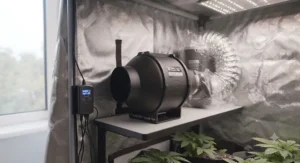
Small tent exhaust fan sizing trips people up less because the math is hard and more because two variables get ignored: ducting length and bends. A fan rated at 195 CFM in a straight, three-foot duct run performs very differently from that same fan pushing air through eight feet of ducting with two 90-degree bends — expect a real-world drop of 15-25% in the latter scenario.
Here’s what most buying guides won’t tell you plainly: buying slightly more CFM than your bare-minimum calculation suggests isn’t wasteful — it’s insurance against exactly this kind of real-world airflow loss. That’s why every fan on this list clears the 40-55 CFM theoretical minimum by a wide margin; the “extra” capacity isn’t marketing fluff, it’s compensating for the ducting reality your tent’s spec sheet doesn’t account for.
Best Fan for Micro Grow Tent Setups: What Changes Below 3×3
A fan for micro grow tent spaces — meaning 2×2 and smaller — needs a different set of priorities than a fan shopping list for a 4×4. Below 3×3, absolute CFM stops being the deciding factor almost entirely, since even the weakest fan here clears the requirement; noise, physical footprint, and how quietly the fan runs at low speed move to the top of the list instead.
Micro tents also sit closer to living spaces more often than larger setups — a closet, a bedroom corner, an office nook — which is precisely why the EC-motor options on this list (AC Infinity CLOUDLINE T4, AC Infinity CLOUDLINE S4, VIVOSUN AeroZesh S4, and TerraBloom ECMF-100) earn their higher price tags. Reviewers consistently mention that an AC-motor fan running near its low-end setting in a micro tent produces a low hum that becomes genuinely noticeable in a quiet room at night, whereas EC-motor fans stay closer to silent at the same relative speed.
Negative Pressure in Small Tents: Why It Matters More Than You Think
Negative pressure in small tents is the setup where your exhaust fan pulls slightly more air out than passively enters, creating a mild vacuum that sucks fresh air in through intake vents and any small gaps rather than letting odor or humid air push its way out through those same gaps. In a 2×2, this matters disproportionately because the tent’s small internal volume means even a modest pressure imbalance shows up fast — as visibly caved-in tent walls when it’s too aggressive, or as smell escaping when it’s too weak.
The practical target: your walls should show a gentle, consistent inward pull, not a collapse onto your canopy. If you’re running a carbon filter for odor control, negative pressure is actually doing double duty for you, since it forces essentially all outgoing air through the filter rather than letting it slip through unfiltered gaps. On the flip side, the EPA’s guidance on indoor moisture control is worth reading with your tent in mind — the same humidity-control logic that applies to a damp basement applies to a poorly ventilated tent, where trapped moisture becomes a mold risk far faster than in open household air.
Common Mistakes When Buying a 4 Inch Inline Fan
Buying based on max CFM alone, ignoring noise ratings. A fan’s headline CFM number tells you almost nothing about how it’ll sound in your actual room at the speed you’ll realistically run it, which is why the noise column in our comparison table above deserves equal weight.
Skipping the carbon filter CFM match entirely. Pairing a high-CFM fan with an undersized filter creates unnecessary resistance and can shorten motor life; pairing a low-CFM fan with an oversized filter just wastes money without adding real benefit.
Assuming louder always means stronger. An AC-motor fan can sound more powerful simply because it’s less refined mechanically, not because it’s actually moving more air than a quieter EC-motor competitor rated at the same CFM — motor noise and airflow performance aren’t the same measurement, a distinction the OSHA overview of occupational noise exposure makes clear when discussing how decibel readings work on a logarithmic scale rather than a simple linear one.
Ignoring duct diameter mismatches. A 4-inch fan forced through 6-inch ducting (or vice versa) loses efficiency at the transition point, and it’s a shockingly common oversight among first-time buyers assembling parts from different brands.
Overlooking total cost of ownership. A cheaper fan that needs a separate speed controller purchased afterward, or that burns noticeably more electricity over a year of 24/7 runtime, can end up costing more than a pricier fan with a controller and EC motor built in from day one.
Frequently Asked Questions
❓ What size inline fan do I need for a 2x2 grow tent?
❓ Is a 4 inch fan enough for a 2x2 tent with a carbon filter?
❓ How loud should my grow tent exhaust fan be?
❓ Do I need an intake fan for a 2x2 grow tent?
❓ How often should I replace my inline fan's carbon filter?
Conclusion
If there’s one thing worth taking away here, it’s that a 2×2 tent is genuinely the easiest ventilation math you’ll ever do — nearly every 4 inch inline fan for 2×2 grow tent option on this list clears the airflow bar comfortably, which means the real decision is about noise, automation, and how the fan fits into your daily routine rather than chasing bigger CFM numbers.
For most people, the AC Infinity CLOUDLINE T4 earns the top spot for its combination of quiet EC-motor performance and genuinely useful automation. Budget-conscious growers do perfectly well with the iPower GLFANXINLINE4 or Mars Hydro iFresh 4″ kit, and anyone thinking about long-term electricity costs should give the TerraBloom ECMF-100 a serious look. Whichever you pick, match it to a properly sized carbon filter and matching ducting diameter, and the fan will quietly do its job in the background for years — which, honestly, is exactly what you want from a piece of equipment you shouldn’t have to think about once it’s installed.
Recommended for You
- 7 Best 4 Inch Inline Fan and Carbon Filter Kits (2026 Picks)
- Inline Duct Fan vs Box Fan for Grow Tent: 7 Picks (2026)
- Inline Duct Booster Fan for HVAC: 7 Best Picks (2026)
Disclaimer: This article contains affiliate links. As an Amazon Associate, I earn from qualifying purchases. If you purchase products through these links, we may earn a small commission at no additional cost to you.
✨ Found this helpful? Share it with your friends! 💬🤗
