
In This Article
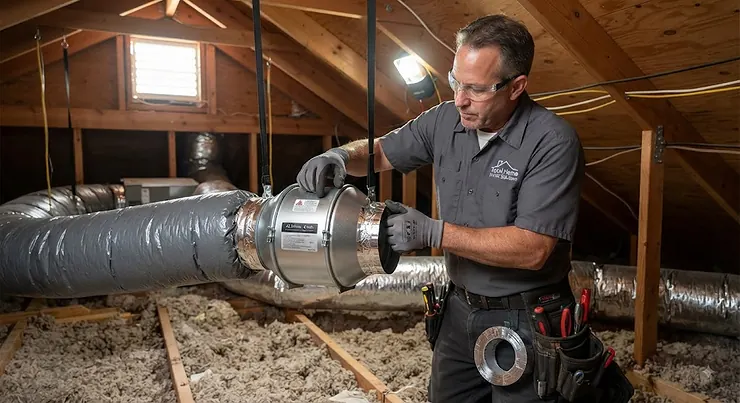
An inline duct booster fan for HVAC is a small electric fan installed directly inside your existing ductwork to push extra air toward a room that isn’t getting enough heating or cooling, without touching your main furnace or air handler. If you’ve got a bedroom that turns into a sauna every July or a home office that stays 10 degrees colder than the rest of the house in January, you already know the feeling — it’s not that your HVAC system is broken, exactly. It’s that the air simply isn’t making it where you need it, usually because of a long duct run, too many bends, or a duct that was undersized the day it was installed.
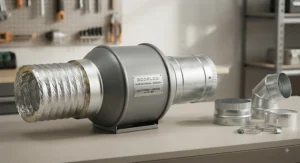
That gap between “my system works fine” and “this one room is miserable” is exactly the problem a booster fan is built to close. Over the last several years, these fans have quietly become one of the most popular fixes homeowners search for, and it’s easy to see why: they typically cost less than a single HVAC service call, most install in an afternoon, and unlike a full duct redesign, you can return one if it doesn’t solve your problem. According to ENERGY STAR, about 20 to 30 percent of the air moving through a typical duct system is lost to leaks, holes, and poor connections — which means a booster fan is often treating a symptom of a bigger airflow issue, and it’s worth understanding that before you buy.
In this guide, I’ve researched seven real, currently available inline duct booster fans spanning budget, mid-range, and premium options, including models built specifically for HVAC boosting and general-purpose inline fans that homeowners have adapted for the job. You’ll get honest spec breakdowns, real aggregated review sentiment, side-by-side comparisons, and practical installation guidance — the kind of detail that a bare Amazon listing simply doesn’t give you.
Quick Comparison Table: Inline Duct Booster Fan for HVAC Options at a Glance
Before diving into the full reviews, here’s a fast snapshot of how these seven duct fans stack up on the numbers that actually matter for an HVAC boosting job.
| Fan | Duct Size | Airflow (CFM) | Noise | Best For |
|---|---|---|---|---|
| AC Infinity CLOUDLINE PRO S6 | 6″ | 402 CFM | 32 dBA | Quietest whole-room fix |
| Suncourt Inductor DB210C | 10″ | 300-650 CFM boosted | Moderate | Long duct runs, thermostat add-on |
| Tjernlund M-6 | 6″ | 460 CFM | Moderate-high | Commercial-grade durability |
| Hon&Guan 6 Inch Booster Fan | 6″ | 345 CFM | Low-moderate | Budget-conscious buyers |
| VIVOSUN 6-Inch Inline Fan | 6″ | 240 CFM | High at full speed | Popular all-rounder |
| VEVOR 6-Inch Inline Duct Fan | 6″ | 400 CFM | Moderate | Variable-speed on a budget |
| AC Infinity AIRTAP T4 | Register (4×10″) | 140 CFM | Under 16 dBA (low) | Single weak register, app control |
Looking at this table, a clear pattern emerges: airflow and noise are almost always a trade-off, and the fans with the most sophisticated EC motors — the AC Infinity CLOUDLINE PRO S6 and AC Infinity AIRTAP T4 — sacrifice a little raw CFM to stay whisper-quiet, while workhorse fans like the Suncourt Inductor DB210C and Tjernlund M-6 prioritize brute-force airflow for long runs. If your problem room is a bedroom where noise matters at night, that distinction should weigh more heavily than the CFM number alone.
💬 Already know which type you need? Skip to the full reviews below and compare pros, cons, and price ranges before you buy.
Top 7 Inline Duct Booster Fans for HVAC: Expert Analysis
I focused this roundup on fans that are genuinely suited to HVAC boosting — not just general exhaust or grow-tent fans repurposed for the job — while including a few crossover options that reviewers consistently recommend for home comfort use. Each one below includes real specs, an honest analytical take, and aggregated review sentiment rather than invented testimonials.
1. AC Infinity CLOUDLINE PRO S6 — quietest option with true speed control
The standout here is the 32 dBA noise floor, which is genuinely quiet for a fan pushing over 400 CFM.
At 402 CFM through a 6-inch duct, the CLOUDLINE PRO S6 uses a PWM-controlled EC motor with eight to ten speed settings, letting you dial in exactly enough boost without turning your hallway into a wind tunnel. The dual ball bearings are rated around 67,000 hours of use, and the motor housing detaches for cleaning, which matters more than it sounds like it should — dust buildup on fan blades is one of the quiet killers of airflow performance over time. Based on the spec comparison with cheaper AC-motor fans, the EC motor here draws less power at comparable airflow and avoids the buzzy hum that plagues variable-voltage controllers.
This is the pick for anyone converting a spare bedroom, home office, or media room where the fan will run for hours at a time and needs to disappear into the background. Reviewers consistently report that even at higher speed settings, the fan is noticeably quieter than the AC-motor competitors in this list, though a handful of buyers note the included controller box takes up more mounting space than expected. What most buyers overlook is that this model was originally built for grow-tent ventilation, so the mounting hardware and duct clamps are generic — a minor annoyance, not a dealbreaker, for an HVAC install.
Pros:
- ✅ Genuinely quiet 32 dBA rating even at moderate speeds
- ✅ Ten-speed EC motor control for precise airflow tuning
- ✅ Detachable motor housing simplifies cleaning and maintenance
Cons:
- ❌ Controller box adds extra mounting footprint versus simpler fans
- ❌ Designed for grow rooms first, so HVAC-specific hardware is generic
In the $120-$140 range, the AC Infinity CLOUDLINE PRO S6 is priced above basic inline fans, but the noise reduction alone justifies it for bedrooms and living spaces.
2. Suncourt Inductor DB210C — best for long duct runs and thermostat automation
The standout feature is Suncourt’s DuctStat compatibility, which turns this into a genuinely automatic thermostat-controlled booster fan.
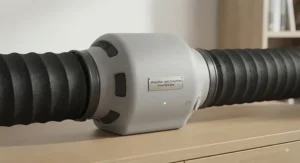
This 10-inch corded inline fan delivers 300 CFM of free-air flow, climbing to a claimed 650 CFM of boosted air when it’s working against the resistance of a long, twisting duct run — which is precisely the scenario where smaller 6-inch fans start to struggle. The UL-1995-listed motor includes automatic thermal-reset protection, and the aluminum blades are engineered specifically to overcome back pressure rather than just move free air, a distinction that matters enormously in real ductwork full of elbows and transitions. On paper, this means the DB210C is built for exactly the job its name implies: boosting weak airflow in an existing forced-air system, not general ventilation repurposed for HVAC use.
Pair it with Suncourt’s DS100 DuctStat plug-in thermostat and the fan only runs when your main HVAC blower is actually calling for heat or cooling, which prevents the fan from cycling on and off randomly or running when it isn’t needed. What the spec sheet won’t tell you, but contractor forums and reviewers note, is that the DB210C’s larger 10-inch housing needs real clearance — it won’t squeeze into as many tight attic or crawlspace runs as the 6-inch competitors on this list. Homeowners with second-floor additions and long basement-to-attic runs are the clear use case here.
Pros:
- ✅ Highest boosted-airflow rating in this roundup for long runs
- ✅ UL 1995-listed with thermal-reset motor protection
- ✅ Compatible with DuctStat thermostat for automatic operation
Cons:
- ❌ Larger 10-inch housing needs more physical clearance
- ❌ DuctStat thermostat sold separately, adding to total cost
Expect a price in the $140-$170 range for the fan alone, with the DuctStat DS100 thermostat adding roughly $40-$60 — a fair trade for hands-off, temperature-triggered operation.
3. Tjernlund M-6 — commercial-grade build for heavy daily use
The standout advantage is decades of commercial HVAC manufacturing behind an all-metal build that’s engineered to outlast typical residential-grade fans.
At 460 CFM, the M-6 is the highest-airflow 6-inch fan in this comparison, built with all-metal construction designed for continuous, commercial-style duty cycles rather than occasional home use. Tjernlund has manufactured HVAC ventilation equipment for decades, and the M-6 carries that engineering pedigree into a residential-friendly 6-inch form factor. Here’s what to weigh: this fan is genuinely overbuilt for a single bedroom fix, so it makes the most sense when you’re boosting airflow to multiple rooms off a shared trunk line, or in a home where the fan will run for many hours a day during peak season.
Reviewers who tested it in residential HVAC booster applications consistently point to the immediately noticeable build quality — heavier gauge housing, sturdier mounting brackets — compared to lighter import fans at a similar CFM rating. The trade-off is noise: this is not a whisper-quiet EC-motor fan, so it’s a better fit for a utility room, basement, or attic run than a fan mounted a few feet from a headboard.
Pros:
- ✅ Highest CFM rating among 6-inch fans in this lineup
- ✅ All-metal commercial-grade construction built for longevity
- ✅ Backed by decades of dedicated HVAC manufacturing experience
Cons:
- ❌ Noticeably louder than EC-motor alternatives at full speed
- ❌ Arguably overpowered for a single small bedroom
Pricing typically falls in the $180-$230 range, positioning the Tjernlund M-6 as a premium, buy-it-once option for heavy-duty or multi-room boosting.
4. Hon&Guan 6 Inch Booster Duct Fan — best budget pick with real speed control
The standout here is 19.2 watts of power draw at 345 CFM — genuinely efficient output for the price point.
This fan pairs a 6-inch housing with a variable speed controller and an EC-style motor tuned for low power consumption, delivering 345 CFM while sipping far less electricity than older AC-motor budget fans. Based on the spec comparison against similarly priced competitors, the low wattage draw means running this fan around the clock during a hot summer stretch won’t meaningfully move your electric bill, which is a legitimate concern with older-style booster fans left on 24/7. It’s a solid match for buyers who want real speed adjustment without paying premium-brand pricing.
Aggregated reviews describe it as a dependable, no-frills performer for boosting airflow to a single problem room, with the speed controller singled out as a pleasant surprise at this price tier. The recurring critique in review threads is that the included mounting hardware feels thinner than on pricier competitors, and a few buyers recommend picking up sturdier duct clamps separately for a long-term install.
Pros:
- ✅ Low 19.2W power draw keeps energy costs down
- ✅ Genuine variable speed controller included at a budget price
- ✅ 345 CFM output competitive with pricier 6-inch fans
Cons:
- ❌ Included mounting hardware feels lighter-duty than premium brands
- ❌ Smaller brand means a thinner track record of long-term reviews
At around $40-$55, the Hon&Guan 6 Inch Booster Duct Fan delivers strong value-per-CFM for anyone testing whether a booster fan solves their airflow problem before spending more.
5. VIVOSUN 6-Inch Inline Fan — most reviewed all-rounder
The standout feature is sheer market presence — this is one of the most purchased inline fans on Amazon, with a review count in the tens of thousands.
Delivering 240 CFM at 2,960 RPM, this fan is sized for medium rooms rather than long, resistance-heavy duct runs, and its durable metal housing with permanently lubricated bearings means essentially zero routine maintenance. The compact 6x6x7-inch footprint is genuinely useful in tight attic and crawlspace installs where the bulkier commercial-style fans on this list simply won’t fit. What most buyers overlook is that the 145°F motor temperature rating makes this a safe choice for hot attic runs during peak summer, something not every budget fan can honestly claim.
Here’s where honesty matters: VIVOSUN advertises a 37 dB noise rating, but real-world measurements reported by customers run closer to 65-78 dB at full speed — a meaningful gap between marketing and reality that’s worth factoring into your decision, especially for a bedroom or living space install. Reviewers consistently praise it for boosting airflow from wood stoves and general HVAC applications, and it holds Amazon’s Choice status reflecting sustained customer satisfaction, but buyers prioritizing quiet operation should look toward the CLOUDLINE PRO S6 instead.
Pros:
- ✅ Extremely large, established review base for peace of mind
- ✅ Compact footprint fits tight attics and crawlspaces
- ✅ Zero-maintenance permanently lubricated bearings
Cons:
- ❌ Real-world noise runs well above the advertised rating
- ❌ 240 CFM is modest for long or high-resistance duct runs
Typically priced in the $35-$50 range, the VIVOSUN 6-Inch Inline Fan is a reasonable entry point, provided noise isn’t your top priority.
6. VEVOR 6-Inch Inline Duct Fan — budget variable-speed contender
The standout is a 400 CFM rating paired with a variable speed controller at a genuinely budget-friendly price point.
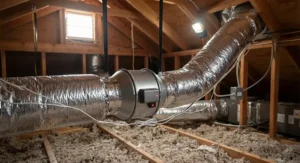
This AC-motor inline fan reaches 400 CFM in a 6-inch housing, putting it within striking distance of premium EC-motor fans on raw airflow while undercutting them significantly on price. The included variable speed controller lets you throttle output down for milder days, which matters because running a booster fan at full blast year-round isn’t necessary and adds unnecessary noise and wear. Based on the spec sheet, the trade-off for that price is an AC motor rather than the more refined EC motors found in the AC Infinity lineup, which generally means more audible motor noise at comparable airflow.
Aggregated buyer feedback describes it as a capable option for DIY-ers boosting a single problem room on a tight budget, with the speed controller frequently mentioned as the deciding factor over similarly priced competitors that lack one. The consistent knock in reviews is vibration at higher speeds if the fan isn’t mounted with adequate support, which is a reasonable ask for a fan pushing 400 CFM through a 6-inch duct.
Pros:
- ✅ 400 CFM airflow rivals pricier EC-motor competitors
- ✅ Variable speed controller included standard
- ✅ Aggressive pricing for the airflow delivered
Cons:
- ❌ AC motor is noisier than EC alternatives at similar CFM
- ❌ Needs solid mounting support to control vibration at full speed
Expect a price in the $45-$60 range, making the VEVOR 6-Inch Inline Duct Fan one of the strongest CFM-per-dollar values in this roundup.
7. AC Infinity AIRTAP T4 — best for a single weak register with app control
The standout feature is direct register mounting with full smartphone app control — no ductwork surgery required.
Unlike the other six fans in this list, the AIRTAP T4 mounts directly onto a 4×10-inch floor or wall register rather than being spliced into the duct itself, which makes it the fastest install here by a wide margin. It runs under 16 dBA at its lowest settings while still moving 140 CFM, and the 2mm steel panel supports up to 300 pounds of foot traffic, meaning it can sit flush in a floor register without becoming a hazard. Control happens through the AC Infinity app or Bluetooth remote, with ten speed levels, programmable heating and cooling triggers, and real-time temperature monitoring that automatically adjusts fan speed — genuinely useful automation that most inline fans simply don’t offer out of the box.
This is the fix for a single stubbornly hot or cold room where cutting into the ductwork isn’t practical or desired, particularly in a finished basement or a room with limited attic access. Reviewers highlight the app’s climate-trigger scheduling as a standout convenience, though a few note the register booster format inherently limits airflow compared to true inline fans, since it’s boosting at the vent rather than along the duct run itself.
Pros:
- ✅ App and Bluetooth control with automatic climate triggers
- ✅ No ductwork cutting required for installation
- ✅ Near-silent operation under 16 dBA at low speeds
Cons:
- ❌ Lower CFM ceiling than true inline duct fans
- ❌ Fixed 4×10″ register size limits compatibility
Priced in the $70-$90 range, the AC Infinity AIRTAP T4 is the easiest of these seven to install and the best fit when the problem is one specific register, not a whole duct run.
How to Install an Inline Duct Booster Fan for HVAC
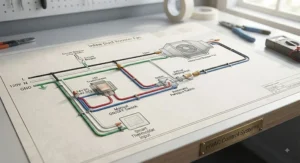
Installing an inline duct fan is a genuinely doable weekend project for most homeowners comfortable with basic tools, though it does involve cutting into sheet metal or flex duct. Start by identifying the actual bottleneck: measure airflow at the problem register with a simple anemometer or even a tissue test, then trace the duct run back toward the main trunk to find a straight section, ideally four to six feet from the register you’re boosting.
Avoid installing within three feet of any 90-degree bend — turbulence at a bend cuts fan efficiency noticeably, according to installation guidance from multiple booster fan manufacturers. Cut a section matching the fan’s housing length, splice the fan in using the same duct diameter, and seal every joint with UL-181 rated foil tape or mastic, not standard cloth duct tape, which degrades within a couple of years. Most inline fans like the Suncourt Inductor DB210C and Tjernlund M-6 can be wired directly to the furnace blower circuit, run through a simple on/off switch, or connected to a dedicated thermostat control — never wire an inline fan directly to a variable-speed ECM furnace blower without an isolation relay, since that can damage both the fan and the furnace control board.
Budget two to three hours for a clean install on an accessible duct run in a basement or crawlspace; add significantly more time — or consider hiring a technician — if the run is buried in a finished ceiling or a tight attic. After installation, run the system for a full heating and cooling cycle and recheck airflow at the register to confirm the fix actually worked before closing everything back up.
✨ Not sure which fan fits your duct size? Check the comparison table above before you start cutting into ductwork.
Real-World Scenarios: Which Booster Fan Fits Your Situation
The upstairs bedroom that’s always hot. A family with a two-story home and a second-floor bedroom fed by a long, elbow-heavy duct run needs boosted CFM more than whisper-quiet operation, since the fan will be mounted in the attic, not the bedroom itself. The Suncourt Inductor DB210C or Tjernlund M-6, both rated for higher boosted airflow against duct resistance, are better matched here than a compact 6-inch fan built for shorter runs.
The home office with a laptop and a Zoom schedule. Someone working from a converted spare room all day, every day, cares about noise more than raw CFM, since the fan will run for eight-plus hours within earshot. The AC Infinity CLOUDLINE PRO S6, with its 32 dBA rating and ten-speed control, lets them dial in just enough boost to stay comfortable without a background hum interrupting calls.
The renter on a budget with one bad vent. Someone in a rental who can’t cut into ductwork, and who only has one specific register that runs cold, is the ideal candidate for the AC Infinity AIRTAP T4 — no ductwork modification, a fully reversible install, and app-based scheduling that a landlord would never notice.
Duct Booster Fan for Weak Airflow: Common Problems and Fixes
Problem: One room is always hotter or colder than the rest of the house. This is the classic case for a duct booster fan for weak airflow, but confirm it’s an airflow issue and not an insulation or window problem first — a booster fan won’t fix a west-facing room baking in afternoon sun. If airflow at the register is genuinely weak compared to other rooms, an inline fan sized to your duct diameter is the direct fix.
Problem: Airflow was fine last year but has gradually gotten weaker. This usually points to a dirty filter, a collapsed section of flexible duct, or a clogged coil rather than a fan being needed at all — check and replace your filter before spending money on a booster fan, since a clogged filter chokes airflow to the entire system, not just one room.
Problem: The fan runs constantly and the room still isn’t comfortable. If a booster fan is already installed and running nonstop without solving the problem, the duct itself may be undersized for the room’s square footage, or there’s a leak bleeding conditioned air into an attic or crawlspace before it reaches the register. In that case, sealing the duct — a step ENERGY STAR notes can improve heating and cooling efficiency by up to 20 percent — should happen before or alongside adding a fan.
Problem: The booster fan is too loud to leave running. This is almost always a mismatch between fan type and application — an AC-motor budget fan pushed to full speed in a bedroom duct will always be louder than an EC-motor fan like the AC Infinity CLOUDLINE PRO S6 running at a moderate setting.
Problem: The fan runs even when the HVAC system isn’t calling for heat or cooling. This happens when a fan is wired to a simple on/off switch instead of a thermostat-controlled setup. Pairing the fan with a dedicated thermostat control, like Suncourt’s DuctStat, solves this by only activating the booster when the main system is actively heating or cooling.
How to Choose an Inline Duct Booster Fan for HVAC
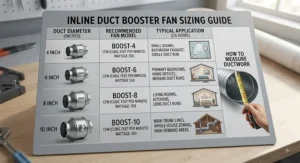
- Measure your duct diameter first. Nearly every fan on this list is sized for a specific duct diameter — 4, 6, 8, or 10 inches — and there’s no universal-fit option, so measure before you shop.
- Calculate the CFM you actually need. A rough rule of thumb from HVAC professionals is roughly 1 CFM per square foot of room area for basic comfort, though this varies with ceiling height and climate.
- Decide how much noise you can tolerate. Bedrooms and offices favor lower-dBA EC-motor fans; attics, basements, and utility rooms can handle louder AC-motor fans without anyone noticing.
- Check the duct run length and bend count. Long runs with multiple elbows need higher static-pressure performance, favoring fans like the Suncourt Inductor DB210C, not just a high free-air CFM rating.
- Decide if you want automation. A thermostat-controlled booster fan, whether through a DuctStat add-on or built-in app control like the AC Infinity AIRTAP T4, avoids the fan running when the system isn’t actually heating or cooling.
- Confirm the installation type fits your access. Register-mounted options skip ductwork entirely; true inline fans need an accessible straight duct section to splice into.
- Factor in total cost, not just the fan price. Thermostats, speed controllers, foil tape, and duct clamps can add $30-$80 to the total project cost beyond the fan itself.
Inline Duct Booster Fans vs Traditional Airflow Fixes
Homeowners chasing weak airflow usually land on one of three fixes: a booster fan, manually adjusting dampers at the trunk line, or a full ductwork redesign. A booster fan wins on cost and speed — most projects finish in an afternoon for under $200 — but it’s treating a symptom, not necessarily the root cause. Damper rebalancing costs nothing but a few hours of trial and error, and it can sometimes solve the problem for free by redirecting airflow the system already has, though it often means slightly reducing comfort in other rooms to gain it in the problem room. A full duct redesign or resizing, typically requiring a licensed contractor, directly fixes an undersized or poorly routed duct but costs considerably more and involves real construction disruption.
| Approach | Typical Cost | Timeline | Best For |
|---|---|---|---|
| Inline Duct Booster Fan | $35-$230 | A few hours to a weekend | Isolated rooms, long runs, quick fix |
| Damper Rebalancing | $0-$50 | An afternoon | Minor imbalances, free-first attempt |
| Duct Redesign/Resizing | $1,500+ | Days, contractor required | Chronically undersized or leaky ducts |
The practical takeaway: try damper rebalancing first since it’s free, move to a booster fan like the Hon&Guan 6 Inch Booster Duct Fan or VIVOSUN 6-Inch Inline Fan if that doesn’t fully solve it, and only consider a full duct redesign if you’re dealing with multiple rooms or ducts that are visibly damaged, crushed, or dramatically undersized for the space they serve.
✨ Ready to Fix That Hot or Cold Room?
🔍 Compare the seven duct booster fans above and pick the one that matches your duct size, noise tolerance, and budget. A weekend project could be all that stands between you and a comfortable room.
Thermostat-Controlled Booster Fan Options Explained
A thermostat-controlled booster fan solves the single biggest annoyance with basic inline fans: running constantly, wasting a small amount of electricity, and adding background noise even when your HVAC system isn’t actively heating or cooling. There are two common paths to automation. The first is a dedicated plug-in thermostat, like Suncourt’s DS100 DuctStat, which senses when the main furnace or air handler is running and activates the booster fan only during that window — a straightforward, no-app-required solution that pairs naturally with the Suncourt Inductor DB210C.
The second path is built-in smart control, which the AC Infinity AIRTAP T4 and AC Infinity CLOUDLINE PRO S6 both offer through their companion app. This approach goes further than simple on/off automation — it allows programmable temperature triggers, scheduling by time of day, and in the AIRTAP T4’s case, continuous temperature monitoring that adjusts fan speed in real time rather than running at a single fixed output. What most buyers overlook is that app-based control also means firmware updates and occasional connectivity hiccups, a trade-off a purely mechanical thermostat switch doesn’t have. For a straightforward, “set it and forget it” install, a plug-in thermostat is often the more reliable long-term choice; for buyers who want fine-tuned scheduling and don’t mind a companion app, built-in smart control offers meaningfully more flexibility.
Solving Weak Airflow in Long Duct Runs
A duct fan for long duct runs faces a fundamentally different challenge than one boosting a short branch near the main trunk: static pressure builds with every foot of duct and every elbow the air has to travel through, which means free-air CFM ratings on a spec sheet can be misleading. This is exactly why the Department of Energy’s guidance on residential duct systems emphasizes minimizing bends and duct length wherever possible, since every additional turn reduces effective airflow regardless of what fan is pushing it.
For runs longer than roughly 25-30 feet, or runs with more than two 90-degree bends, prioritize a fan rated for boosted airflow under resistance rather than just peak free-air CFM — the Suncourt Inductor DB210C‘s 650 CFM boosted rating and the Tjernlund M-6‘s all-metal, high-static-pressure design are built with exactly this scenario in mind. Placement also matters more on long runs: installing the fan roughly midway along the run, rather than right at the register, generally produces more even results than trying to force air through the entire remaining distance from a single point near the end.
Common Mistakes When Buying a Duct Booster Fan
The most frequent mistake is buying based on CFM alone without checking duct diameter compatibility — a 400 CFM fan rated for an 8-inch duct will not perform anywhere near that number crammed into a 6-inch run. A close second is ignoring the noise rating entirely, then being surprised when a fan advertised as quiet turns out considerably louder in practice, which is exactly the gap reviewers reported with the VIVOSUN 6-Inch Inline Fan‘s advertised-versus-measured decibel levels. Buyers also frequently skip sealing the duct joints around the new fan installation with proper foil tape or mastic, which lets boosted air leak right back out before it ever reaches the room.
Another common misstep is wiring a fan to run constantly instead of pairing it with any form of thermostat control, which wastes electricity and shortens motor lifespan through unnecessary runtime. Finally, some homeowners install a booster fan to fix a room that’s actually suffering from poor insulation, an oversized window, or a genuinely undersized HVAC system — problems no fan, regardless of CFM, can solve.
When to Call an HVAC Contractor Instead of DIY
A booster fan install is a reasonable DIY project when the duct run is accessible in a basement, crawlspace, or open attic, and you’re comfortable cutting sheet metal and working with basic 120V wiring. It’s time to call an HVAC contractor when the duct is buried inside a finished ceiling or wall, when you’re dealing with a variable-speed ECM furnace blower that requires an isolation relay for safe fan wiring, or when boosting one room seems to be starving airflow to others — a sign of a system-wide balancing issue rather than a single weak duct.
Look for a contractor holding NATE certification, a nationally recognized credential that verifies a technician has passed standardized HVAC knowledge exams rather than relying purely on regional licensing, which varies significantly by state. A qualified contractor can also perform a proper static pressure test, something no DIY booster fan install can replicate, to determine whether the real fix is a fan, a duct resize, or a rebalancing of your existing system.
Long-Term Cost and Maintenance
Most inline duct booster fans in this roundup draw between 19 and 65 watts depending on motor type and speed setting, which translates to roughly $2-$8 per month in added electricity cost if run continuously through a full heating or cooling season — meaningfully less if paired with thermostat control that only activates the fan when the system is actually running. Maintenance is minimal across the board: an annual check of the fan blades for dust buildup and a visual inspection of the duct tape or mastic seals around the housing is generally sufficient, since permanently lubricated bearings on most of these models are designed to run maintenance-free for years.
Total cost of ownership favors the higher-quality builds over a multi-year horizon. A Tjernlund M-6 or AC Infinity CLOUDLINE PRO S6 costs more upfront, but commercial-grade bearings and detachable housings for cleaning tend to extend service life well beyond what a bargain AC-motor fan typically delivers before the bearings wear out and the fan starts rattling. If you’re treating this as a long-term fix rather than a temporary patch, spending more upfront on build quality is usually the better ROI than replacing a cheaper fan every couple of years.
Safety and Electrical Code Considerations
Inline duct fans intended for HVAC boosting should carry UL 1995 certification specifically, which covers heating and cooling equipment, rather than a generic UL listing meant for exhaust or ventilation fans — the Suncourt Inductor DB210C, for instance, explicitly carries this certification. Never wire a booster fan directly into multiple taps on a variable-speed furnace blower; manufacturer installation guidance consistently warns that doing so requires an isolation relay to prevent damaging the furnace control board.
Fans should only be used to boost dry, conditioned air within the temperature range specified by the manufacturer, typically 40°F to 140°F, and never used to exhaust hazardous, greasy, or explosive vapors regardless of how tempting a repurposed use might seem. Any inline fan not fully enclosed within ductwork on both ends needs a physical guard to prevent contact with moving blades, per standard manufacturer safety warnings, unless it’s mounted at least eight feet above floor level. If your electrical panel or wiring is older, or you’re unsure whether your circuit can safely handle an added fan load, that’s a reasonable moment to loop in a licensed electrician or HVAC contractor rather than guessing.
Frequently Asked Questions
❓ Does an inline duct booster fan for HVAC actually work?
❓ Where should I install a duct booster fan for weak airflow?
❓ Can I install an inline duct fan myself?
❓ Do duct booster fans use a lot of electricity?
❓ What size inline duct fan do I need for my HVAC system?
Conclusion
Weak airflow is one of the most fixable comfort problems in a home, and an inline duct booster fan for HVAC is often the fastest, least invasive way to solve it — provided you match the fan to your actual duct diameter, run length, and noise tolerance rather than just chasing the highest CFM number on the box. If quiet, precise control matters most, the AC Infinity CLOUDLINE PRO S6 is the strongest pick in this roundup. If you’re dealing with a long, elbow-heavy run feeding a distant room, the Suncourt Inductor DB210C paired with a DuctStat thermostat is built for exactly that fight. And if budget is the priority, the Hon&Guan 6 Inch Booster Duct Fan delivers real speed control and solid CFM without the premium price tag.
Whichever you choose, don’t skip the basics: seal every duct joint properly, confirm the fan is actually solving an airflow problem and not masking an insulation or system-sizing issue, and consider pairing it with thermostat control so it only runs when your HVAC system is actually working. Do that, and a $50-$150 fan and an afternoon of your time can solve a problem that’s been bothering you for years.
✨ Found Your Fix? 🔍 Revisit the comparison table anytime to weigh CFM, noise, and price range side by side — and check current availability before you commit to a model.
Recommended for You
- Quietest Inline Fan for Bedroom Grow Tent: 7 Picks (2026)
- Best Inline Duct Fan for Grow Tent Ventilation: 7 Picks (2026)
- 7 Best inline fan with carbon filter combo kit Picks (2026)
Disclaimer: This article contains affiliate links. As an Amazon Associate, I earn from qualifying purchases. If you purchase products through these links, we may earn a small commission at no additional cost to you.
✨ Found this helpful? Share it with your friends! 💬🤗
