
In This Article
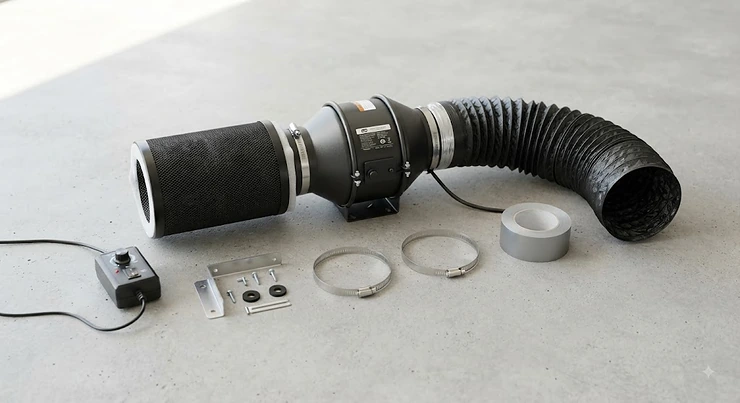
An inline fan with carbon filter combo kit is a bundled ventilation system — a duct fan, an activated-carbon filter, and connecting ducting sold together — that exhausts hot, humid air from an enclosed grow space while scrubbing odor-causing compounds out of it before that air ever reaches your hallway. That’s the textbook definition. In practice, it’s the difference between a grow tent that smells like a greenhouse and one that smells like, well, nothing at all. If you’ve ever walked past a buddy’s “office” and caught a whiff of something distinctly herbal, you already understand why this single purchase decision matters more than almost any other piece of gear on your shopping list.
Here’s the thing nobody tells you before your first grow: the fan and the filter aren’t two separate purchases you can mix and match carelessly. They’re a matched pair, like running shoes and orthotics — buy them independently and you’ll spend weeks chasing a mismatch instead of growing plants. A filter with too much resistance chokes a fan that’s not powerful enough to push through it, and a fan that’s wildly oversized for its filter will howl at low efficiency instead of running quiet and steady. Get the pairing right, and the airflow does the boring, invisible work of keeping temperature, humidity, and odor in check 24 hours a day.
This guide breaks down seven real combo kits worth your money in 2026, walks through the CFM math so you’re not guessing, and covers the setup details — negative pressure, duct silencers, filter lifespan — that most product listings conveniently leave out. The EPA’s technical documentation on how carbon adsorption captures organic compounds is a genuinely useful primer if you want the chemistry behind why this stuff works so well.
Quick Comparison Table
Before the deep dive, here’s a fast snapshot of five standout picks from the full lineup below. Each one targets a slightly different grower — from the apartment-dweller who can’t tolerate any fan noise to the multi-tent operation that needs serious CFM headroom.
| Kit | Duct Size | Airflow (CFM) | Best For |
|---|---|---|---|
| AC Infinity CLOUDLINE T4 | 4″ | 205 | Smart automation and quiet operation |
| VIVOSUN 4 Inch 203 CFM Combo | 4″ | 203 | Best all-around value |
| iPower 4 Inch 190 CFM Combo | 4″ | 190 | Tightest budget |
| Mars Hydro iFresh 4 Inch Combo | 4″ | 205 | Refillable filter, lower long-term cost |
| VIVOSUN 8 Inch 720 CFM Kit | 8″ | 720 | Large rooms and multi-tent setups |
Looking at this table, the pattern that jumps out is how tightly bunched the 4-inch fans are on raw CFM — most land within 15 CFM of each other — which means the real differentiators are noise level, controller sophistication, and filter design, not airflow numbers alone. If you’re outfitting anything larger than a 4×4 tent, skip straight to the 8-inch option rather than trying to squeeze a 4-inch fan past its comfortable ceiling. Budget-conscious growers should note that the cheapest kit on this list isn’t necessarily the cheapest to own once you factor in filter replacement frequency, which we’ll get into shortly.
💬 Already know which size tent you’re working with? Jump to the full breakdown below and find your match.
Top 7 inline fan with carbon filter combo kit Picks: Expert Analysis
1. AC Infinity CLOUDLINE T4 — smartest climate automation in a 4-inch fan
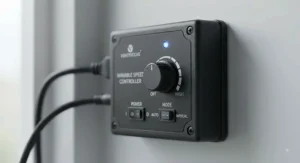
The standout here is the temperature-and-humidity controller that ships in the box, which turns a simple exhaust fan into something closer to a climate system. The AC Infinity CLOUDLINE T4 moves 205 CFM through a mixed-flow design built around a PWM-controlled EC motor, and it’s rated at just 28 dBA — quiet enough that most people notice their own breathing before they notice the fan.
What that spec sheet doesn’t spell out is how much the dual ball-bearing motor and detachable motor box matter over a full grow cycle. Being able to pop the fan housing off for a five-minute cleaning without touching the ducting is the kind of detail that separates a fan you’ll actually maintain from one you’ll ignore until it sounds like a jet engine. Based on the spec comparison against every other kit on this list, the CLOUDLINE T4 is the pick for growers who want dynamic programming — temperature triggers, humidity triggers, timers — without babysitting a manual dial three times a day.
Reviewers consistently report that the app connectivity and controller logic are the biggest draw, though some note the full VPD-based automation requires the optional Controller 69 Pro upgrade rather than coming standard. Read closely before assuming every automation feature ships in the base kit.
Pros:
- ✅ Whisper-quiet 28 dBA rating even at higher fan speeds
- ✅ Temperature and humidity programming built into the controller
- ✅ Detachable motor box simplifies cleaning and maintenance
Cons:
- ❌ Full VPD-based automation needs the optional Controller 69 Pro
- ❌ Priced higher than basic speed-controller-only kits
Expect to pay in the mid-$100s to low-$200s range depending on which controller bundle you choose, and check current price before buying since these kits get bundled differently across retailers. For growers who value quiet, programmable ventilation over raw price, this is money well spent.
2. AC Infinity CLOUDLINE T6 — headroom for 5×5 and 6×6 tents
Scale matters, and the AC Infinity CLOUDLINE T6 exists for exactly the moment your 4-inch fan starts running flat-out just to keep pace. It delivers 402 CFM — essentially double the T4 — while staying at a still-reasonable 32 dBA, using the same mixed-flow, dual-ball-bearing architecture that makes its smaller sibling reliable.
Here’s what most buyers overlook about upsizing: a fan that never has to run at 100% to hit your target CFM is quieter in practice than a smaller fan straining at full tilt, even if the bigger fan’s rated dBA number looks higher on paper. Running the CLOUDLINE T6 at 60-70% speed in a 5×5 tent produces noticeably less noise than forcing a 4-inch unit to scream through the same volume of carbon and ducting resistance.
The tradeoff is straightforward — this is a larger, heavier unit that needs sturdier ceiling or frame mounting, and it’s genuinely overkill if your tent tops out at 3×3 or 4×4. Match the fan to the room, not the room to the fan.
Pros:
- ✅ 402 CFM handles 5×5 and 6×6 tents with airflow to spare
- ✅ Same quiet EC motor and dual-ball-bearing design as the T4
- ✅ Can run at partial speed and still outperform a maxed-out 4-inch fan
Cons:
- ❌ Overkill and unnecessarily bulky for tents under 4×4
- ❌ Requires more robust mounting hardware given its size and weight
Price-wise, expect to land in the low-to-mid $200s range for the combo kit. If you’re already planning to scale up your grow space within the next year or two, buying the T6 now can save you a second purchase later.
3. VIVOSUN 4 Inch 203 CFM Inline Fan and Carbon Filter Combo — best all-around value
The VIVOSUN 4 Inch 203 CFM Combo is the kit most growers land on by process of elimination, and there’s a reason for that. It pairs a 2,450 RPM blower rated at 203 CFM with a 4-inch carbon filter packed with VIVOSUN’s 1050+ RC48 Australian virgin charcoal — a carbon grade that shows up across nearly every serious filter on the market because it genuinely captures more per pound than cheaper alternatives.
What most buyers overlook about this model is how much the leather-sheathed speed controller matters for real-world usability; it’s a small design touch, but it means the wiring won’t fray at the connection point the way bare-wire controllers sometimes do after a season of adjustment. On paper, 203 CFM sounds modest, but paired correctly with an 8-foot duct run and this specific filter, it comfortably handles a 3×3 or lightly-loaded 4×4 tent.
Reviewers consistently note that the odor control is genuinely effective — multiple users report zero detectable smell standing feet from a closed tent running stinky organic amendments — though a recurring complaint is that the controller won’t dial low enough for a whisper-quiet, always-on setting.
Pros:
- ✅ Reviewers report easy, straightforward installation
- ✅ Effectively scrubs odor even with pungent organic soil amendments
- ✅ VIVOSUN’s customer support gets consistent praise for responsiveness
Cons:
- ❌ Rated noise climbs to roughly 53 dB at full speed
- ❌ Speed controller doesn’t step down low enough for silent 24/7 running
Pricing typically falls in the $90-$130 range at the time of research. For buyers who want proven performance without paying a premium for smart features, this is the sensible default.
4. iPower 4 Inch 190 CFM Inline Fan Carbon Filter Combo — best entry-level budget pick
If your grow budget is genuinely tight, the iPower 4 Inch 190 CFM Combo is where most people start, and it does the fundamentals well enough that you won’t feel like you shortchanged your setup. It runs 190 CFM through a straightforward variable-speed controller with HIGH, MED, LOW, and OFF settings, paired with a filter packed with 1050+ IAV Australian charcoal — the same carbon family used in several pricier kits on this list.
The spec sheet won’t tell you this, but the included pre-filter is worth actually using and replacing on schedule; it’s a thin, inexpensive layer that catches dust and plant debris before it ever reaches the main carbon bed, which meaningfully extends how long the expensive part of the filter stays effective. Reviewers highlight that for the price, odor elimination punches above its weight class, and one recurring theme is how simple the three-position dial makes things for first-time growers who don’t want to think about airflow curves.
The catch: the controller intentionally won’t drop below 50% speed to protect the motor, which limits how quiet you can run it during sensitive hours, and 190 CFM is the lowest ceiling of any 4-inch kit here — fine for a 2×4 or 3×3, tighter for a loaded 4×4.
Pros:
- ✅ Lowest entry price point of any kit on this list
- ✅ Odor elimination performance exceeds what the price suggests
- ✅ Simple three-speed dial keeps setup approachable for beginners
Cons:
- ❌ Controller won’t adjust below 50% fan speed
- ❌ 190 CFM ceiling gets tight in fully-loaded 4×4 tents
Expect a price in the $70-$100 range, making this the easiest entry point for a first grow tent. Just budget mentally for an upgrade if your space grows.
5. Mars Hydro iFresh 4 Inch Smart Inline Duct Fan and Refillable Carbon Filter Combo — refillable filter, lower long-term cost
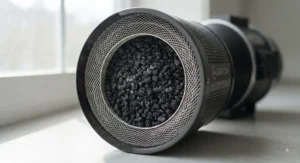
The Mars Hydro iFresh 4 Inch Combo does something genuinely different from the rest of this list: its carbon filter is refillable, meaning you replace just the charcoal media inside the housing rather than buying an entirely new filter body every 12-18 months. That’s a meaningful shift in the long-term math, since the housing — the more expensive part to manufacture — gets reused indefinitely.
At a stable 205 CFM airflow rating, it’s competitive with the AC Infinity and Spider Farmer kits on raw numbers, and the kit ships complete with a speed controller, ducting, three duct clamps, and two hanging straps — nothing extra to source separately. What most buyers overlook is that the base kit runs on manual speed control; the full app-based climate automation requires the separate MarsPro add-on pack, which is worth budgeting for if smart control is the reason you’re shopping this brand in the first place.
Aggregated reviewer sentiment describes the standard kit as reliable and easy to assemble, with the refillable filter concept earning particular praise from growers running multiple cycles per year who were tired of shipping cardboard filter housings to the trash every season.
Pros:
- ✅ Refillable carbon bed cuts long-term filter replacement cost
- ✅ Complete kit ships with clamps, straps, and controller included
- ✅ 205 CFM keeps pace with pricier smart-controller competitors
Cons:
- ❌ App-based climate automation requires the separate MarsPro add-on
- ❌ Base controller is manual, not dynamic, without that upgrade
Pricing generally sits in the $100-$160 range for the standard kit, with the add-on pack pushing the total higher. For growers running back-to-back cycles year-round, the refillable design can pay for itself within two or three filter-replacement cycles.
6. Spider Farmer 4-Inch 205 CFM Inline Fan with Speed Controller, Carbon Filter and Ducting Combo — balanced mid-range pick with humidity control
The Spider Farmer 4-Inch 205 CFM Combo slots neatly between the budget and premium tiers, delivering 205 CFM — matching AC Infinity’s flagship number — while bundling a controller that responds to humidity readings rather than just offering flat speed settings. That’s a genuinely useful step up from a basic dial, since humidity spikes (say, right after watering) are exactly when you want the fan to kick up automatically.
Here’s what the spec sheet doesn’t tell you: the extended 25-foot ducting option that Spider Farmer offers with some bundles solves a real installation headache for growers whose fan has to travel through a closet, around a corner, and out a window before reaching fresh air. Shorter ducting kits force awkward workarounds; this one just reaches.
Reviewers describe the kit as a dependable mid-tier performer, though the brand’s review base is thinner than AC Infinity’s or VIVOSUN’s simply because Spider Farmer built its reputation on grow lights first and ventilation gear second — worth knowing if long-term reliability data matters to your buying decision.
Pros:
- ✅ Humidity-responsive controller beyond simple on/off speed settings
- ✅ Long ducting options solve awkward exhaust-routing situations
- ✅ 205 CFM matches pricier competitors at a mid-range price point
Cons:
- ❌ Smaller review history compared to AC Infinity or VIVOSUN
- ❌ Controller interface feels less refined than app-based competitors
Expect pricing in the $100-$150 range depending on the ducting length bundled with your kit. It’s a smart pick for growers who want smarter-than-basic control without paying premium-brand pricing.
7. VIVOSUN 8 Inch 720 CFM Ventilation Kit — best for large rooms and multi-tent setups
When a 4-inch fan simply can’t move enough air, the VIVOSUN 8 Inch 720 CFM Kit exists for exactly that scenario. It steps up to 720 CFM through an 8-inch duct system, paired with an 8″x20″ carbon filter — a substantially larger carbon bed than any 4-inch filter on this list, filled with the same virgin Australian charcoal VIVOSUN uses in its smaller kits.
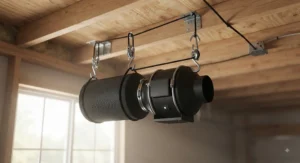
What most buyers overlook when jumping to this size is how much more the mounting matters. A filter and fan this large carries real weight, and hanging it from a flimsy tent-pole clip is asking for a mid-cycle collapse. Budget for proper rope ratchets and reinforced ceiling anchors from the start rather than retrofitting them after something sags.
This is the pick for converted-closet grow rooms, multi-tent operations sharing a single exhaust manifold, or any space north of 5×5 where a 4-inch fan would be stretched thin regardless of brand. It’s not the kit for a single 3×3 tent — that’s like using a leaf blower to dust a bookshelf.
Pros:
- ✅ 720 CFM comfortably scales to large rooms or multi-tent manifolds
- ✅ Larger 8″x20″ filter body holds significantly more carbon media
- ✅ Same proven virgin Australian charcoal used across VIVOSUN’s lineup
Cons:
- ❌ Size and weight demand sturdier mounting hardware
- ❌ Higher upfront cost and running wattage than any 4-inch option
Pricing typically runs $180-$260 depending on ducting length included. If you’re outgrowing a single tent or building out a dedicated grow room, this is the kit that scales with you.
Grow Tent Exhaust System Kit: What’s Actually in the Box
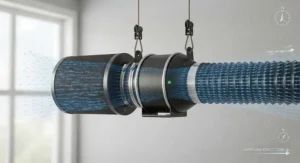
Shopping for a complete grow tent exhaust system kit means understanding what you’re actually buying beyond “fan plus filter.” A full system typically includes the inline fan itself, the carbon filter, a length of flexible ducting (usually aluminum-foil-and-PVC composite), duct clamps to secure connections, and some form of hanging hardware — rope ratchets or straps — to suspend both the fan and filter from your tent’s support bars.
The part first-timers most often underestimate is ducting length. Kits ship with anywhere from 8 to 25 feet, and it’s tempting to think more is always better, but excess slack means more bends, and every bend in the duct run adds resistance that eats into your effective CFM. Measure your actual path — tent to window, tent to closet vent, tent to exterior wall — before assuming the included length will work, and trim rather than coil any excess.
Assembly order matters too: filter connects to the fan inlet, fan connects to ducting, ducting routes to your exhaust point. Mount both units using the vibration-dampening straps included in most kits rather than rigid brackets, since rigid mounting transmits motor hum directly into your tent frame and, by extension, your walls.
Negative Pressure Setup: Getting the Airflow Direction Right
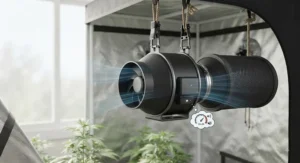
Getting your negative pressure setup correct is the single most important installation step, and it’s also the one most beginners get backward at least once. Negative pressure means your exhaust fan is pulling more air out of the tent than your passive intake vents are letting in, which creates a slight vacuum. You’ll know it’s working when the tent’s fabric walls bow gently inward and any intake flaps get pulled toward the exhaust side.
Why does this matter so much? A negative-pressure tent forces all air — and every odor molecule riding along with it — to exit through your carbon filter. A positive-pressure tent, by contrast, pushes unfiltered air out through every seam, zipper gap, and loose vent, completely bypassing the expensive filtration you just paid for. It’s the difference between a smell staying contained and a smell finding every crack in the room.
To test it yourself: close the tent, run the fan at your normal operating speed, and watch the walls for a few minutes. If they bow inward slightly, you’re set. If they bow outward or stay neutral, check for duct kinks, enlarge your passive intake opening, or bump the fan speed up a notch. It’s a two-minute check that prevents months of “why does the hallway smell like this” confusion.
Real-World Scenarios: Which Combo Kit Actually Fits Your Grow
Specs only mean so much until you match them to an actual situation. Here are three realistic profiles and the kit each one points toward.
The apartment grower in a 2×4 tent. Noise and stealth matter more than raw CFM here — neighbors share walls, and a loud fan at 2 a.m. is a fast way to draw attention nobody wants. The iPower 4 Inch 190 CFM Combo or AC Infinity CLOUDLINE T4 both fit, but the T4’s 28 dBA rating gives it the edge if budget allows.
The weekend hobbyist running a 4×4 tent through multiple cycles a year. Value and reliability matter more than smart features. The VIVOSUN 4 Inch 203 CFM Combo is the sensible default — proven performance, straightforward controller, and a lower price point that makes sense for someone who isn’t chasing every automation feature.
The converted-closet grower running a 5×5 or larger space, possibly with more than one tent. This is where the AC Infinity CLOUDLINE T6 or VIVOSUN 8 Inch 720 CFM Kit earns its keep. Undersizing here isn’t a minor inconvenience — it’s the difference between stable temperatures and a heat-stressed canopy every afternoon.
✨ Found your match above? Check current pricing before your tent size changes on you.
How to Choose an inline fan with carbon filter combo kit (And Match the CFM Right)
Matching fan and filter CFM correctly is the single calculation that determines whether your entire ventilation system performs as advertised or quietly underperforms for an entire grow cycle. Here’s the process, step by step:
- Calculate your tent’s cubic footage. Multiply length x width x height in feet. A standard 4x4x6.92 tent works out to roughly 111 cubic feet.
- Pick your target air-exchange interval. Most growers aim to fully replace the tent’s air every 1-3 minutes; more frequent exchange means more aggressive cooling and odor control.
- Divide volume by your exchange interval in minutes. A 111 cubic-foot tent on a 1-minute exchange needs a baseline of roughly 111 CFM.
- Add resistance multipliers for real-world equipment. A carbon filter typically adds around 60% resistance, ducting adds roughly 20%, and a silencer (if used) adds another 20% on top of that.
- Stack those multipliers onto your baseline. That same 111 CFM baseline, once adjusted for filter and ducting resistance, often lands closer to 200-230 CFM of rated fan capacity needed to hit your actual target.
- Always round up, never down. A fan rated slightly above your calculated need can run at a lower, quieter percentage and still hit your target; an undersized fan has no such flexibility.
- Match filter diameter to fan diameter exactly. A 4-inch fan needs a 4-inch filter — never mix diameters and rely on an adapter unless you enjoy troubleshooting weak airflow.
| Tent Size | Approx. Volume | Recommended CFM (w/ filter + ducting) | Suggested Kit |
|---|---|---|---|
| 2x2x5 | 20 cu ft | 60-90 CFM | iPower 4 Inch 190 CFM Combo (throttled down) |
| 3x3x6 | 54 cu ft | 100-150 CFM | VIVOSUN 4 Inch 203 CFM Combo |
| 4x4x7 | 112 cu ft | 190-230 CFM | AC Infinity CLOUDLINE T4 or Mars Hydro iFresh 4 Inch Combo |
| 5x5x7 | 175 cu ft | 300-400 CFM | AC Infinity CLOUDLINE T6 |
| Multi-tent / grow room | 300+ cu ft | 500-720+ CFM | VIVOSUN 8 Inch 720 CFM Kit |
The table makes the resistance math visible: notice how a 112 cubic-foot tent, which sounds like it needs barely 100 CFM on paper, actually calls for double that once you account for a real filter and duct run. This is exactly why so many first-time growers end up disappointed by a fan that looked adequate on the spec sheet but underperforms once it’s actually connected to a filter.
Common Mistakes When Buying an inline fan with carbon filter combo kit
Even experienced growers trip over the same handful of errors when shopping for ventilation gear.
Buying fan and filter CFM ratings at face value without adjusting for resistance. A fan’s rated CFM is measured with nothing attached — no filter, no ducting, no bends. Real-world performance drops 30-50% once everything is connected, which is exactly why the multiplier math above matters more than the number printed on the box.
Ignoring noise ratings entirely. A fan that’s 10 dBA louder doesn’t sound like a small difference — decibels are logarithmic, so that gap can feel roughly twice as loud in practice. If your tent shares a wall with a bedroom, prioritize the dBA rating as heavily as the CFM number.
Skimping on ducting length and fighting sharp bends afterward. Every 90-degree bend in a duct run can cut airflow efficiency significantly. Plan your physical exhaust route before buying, not after unboxing.
Assuming bigger is always better. An oversized fan running at 20% capacity to avoid overwhelming a small tent is often louder and less efficient than a correctly-sized fan running at a comfortable 60-70%.
inline fan with carbon filter combo kit vs Standalone Fan-and-Filter Setups
| Factor | Combo Kit | Buying Fan + Filter Separately |
|---|---|---|
| Compatibility | Guaranteed matched diameter and CFM | Requires manual research to avoid mismatches |
| Cost | Often bundled at a discount vs. buying apiece | Can cost more unless you find separate sales |
| Ducting/clamps included | Usually yes | Frequently sold separately |
| Flexibility to mix brands | Limited | Full control over brand and spec choices |
Looking at the comparison above, a combo kit removes the guesswork for anyone who isn’t already confident in resistance math, which is most first-time growers. Buying components separately only makes sense if you already know your exact CFM target and want a specific brand pairing — say, a favorite fan brand with a filter known for a particularly long activated carbon lifespan. For everyone else, the bundled kit’s guaranteed compatibility is worth more than any marginal savings from piecing it together yourself.
Odor Control Ventilation Kits for Different Spaces
Not every buyer shopping an odor control ventilation kit is running a dedicated grow tent, and the right pick shifts depending on the space.
Grow tents: This is the use case every kit on this list is built for — sealed fabric enclosure, defined intake and exhaust points, and a filter sized to match the tent volume covered in the CFM table above.
Basements and converted rooms: Less airtight than a tent, which actually works in your favor for passive intake but complicates achieving true negative pressure. Larger kits like the AC Infinity CLOUDLINE T6 or VIVOSUN 8 Inch 720 CFM Kit handle the extra room volume better than a 4-inch fan pushed to its limit.
Small closets or cabinets: Budget-tier kits like the iPower 4 Inch 190 CFM Combo are genuinely appropriately sized here — running a 400+ CFM fan in a small enclosed space wastes money and creates more noise than the space requires.
Matching the kit to the actual room, not just the plant count inside it, is what separates a setup that works quietly in the background from one you’re constantly fiddling with.
Activated Carbon Lifespan: When to Replace Your Filter
Activated carbon lifespan is the maintenance question every grower eventually asks, usually right around the moment odor starts creeping back despite the fan running fine. The short answer: quality filters typically last 12-18 months under normal use, though heavy-odor strains and continuous 24/7 operation can shorten that window meaningfully.
Activated carbon works through adsorption, not absorption — a distinction that actually explains why filters eventually fail. Odor molecules bond to the carbon’s enormous internal surface area rather than soaking in like a sponge, and once every available bonding site is occupied, the carbon simply has nowhere left to put new molecules. More detail on the underlying process is available on the EPA’s carbon adsorption documentation and on the general Wikipedia entry on activated carbon, which covers pore structure and surface area in more depth than any product listing bothers to.
Three signs your filter is done, not just dusty: persistent odor despite the fan running at normal speed, visible moisture damage or clumping in the carbon bed (humidity is the enemy of carbon longevity), and simply hitting the 18-month mark in a consistently humid environment. Mars Hydro’s refillable filter design, covered earlier in this guide, sidesteps part of this cost by letting you replace only the carbon media rather than the entire housing — worth strong consideration if you’re running back-to-back cycles year-round and want to avoid buying a full new filter body every season.
Extending lifespan is mostly about protecting the carbon from what it shouldn’t have to handle: keep a pre-filter in place and swap it every few months to catch dust before it clogs the main bed, and never let the filter sit in a damp environment when the fan isn’t running.
Do You Need a Duct Silencer? Noise Control Explained
A duct silencer is a muffler-style attachment that installs inline with your ducting, using foam or acoustic baffling to absorb sound waves generated by airflow turbulence and fan vibration before that noise reaches open air. Whether you need one comes down to a fairly simple question: does fan noise actually bother anyone in your household, or is it background hum you’ve already tuned out?
For context on why this matters beyond simple annoyance, the National Institute for Occupational Safety and Health sets 85 A-weighted decibels as the threshold where hearing risk begins to climb with sustained exposure — a level well above anything a properly-sized grow fan produces, but it’s a useful benchmark for why louder isn’t automatically fine just because it’s tolerable in the moment.
Most inline fans on this list run between 28 and 53 dBA, which sits well below any hazard threshold, but “not hazardous” and “not annoying at 2 a.m.” are different standards entirely. A silencer typically shaves noise by up to 50% at the cost of roughly 20% additional airflow resistance — meaning if you’re adding one, you should size your fan slightly larger to compensate for the extra resistance rather than bolting it onto an already-marginal setup.
Cheaper, equally effective noise fixes worth trying first: running the fan at 70-80% speed instead of maxing it out (noise increases nonlinearly with fan speed), mounting the fan and filter on vibration-dampening straps instead of rigid brackets, and minimizing sharp bends in your ducting, since turbulence at a bend is a noise source in its own right.
What to Expect: Real-World Performance
Specs describe a fan in a vacuum. Real-world performance describes what actually happens once it’s connected to a filter, routed through 10 feet of ducting with two bends, and running in a room with an ambient temperature that isn’t a perfectly controlled lab.
Expect roughly 20-40% less effective airflow than a fan’s unfiltered rated CFM once a carbon filter and typical ducting are attached — which is exactly why the resistance-adjusted CFM table earlier in this guide matters more than the number printed on the box. Expect noise to climb noticeably between 50% and 100% fan speed rather than scaling in a straight line, since airflow turbulence — not just motor speed — is a major noise contributor at higher settings. And expect your filter’s odor-control performance to degrade gradually rather than fail suddenly; it’s rarely “working perfectly” one day and “completely dead” the next.
For reference, even a fan running at the noisier end of this list’s range — around 53 dBA — sits nowhere near a workplace-hazard noise exposure limit that OSHA regulates at 85 decibels for an eight-hour workday. That’s not permission to ignore noise entirely, but it’s useful context before assuming any fan on this list is “too loud” in an absolute sense — most of the frustration growers report is about noise in a quiet bedroom at night, not noise that approaches any actual safety threshold.
FAQ
❓ What size inline fan with carbon filter combo kit do I need for a 4x4 grow tent?
❓ How long does an activated carbon filter last before it needs replacing?
❓ Do I need a duct silencer with my inline fan?
❓ What's the difference between positive and negative pressure ventilation?
❓ Can I use an inline fan with carbon filter combo kit outside a grow tent?
Conclusion
Choosing the right inline fan with carbon filter combo kit really comes down to three honest questions: how big is your space, how much does noise matter to the people around you, and how much are you willing to spend upfront versus over time. The AC Infinity CLOUDLINE T4 earns its price with genuinely smart, quiet operation. The VIVOSUN 4 Inch 203 CFM Combo remains the value benchmark that most growers land on. The iPower 4 Inch 190 CFM Combo gets a first tent running without breaking a budget. And if your space has outgrown a single 4-inch fan, the AC Infinity CLOUDLINE T6 or VIVOSUN 8 Inch 720 CFM Kit scale accordingly.
Whatever you choose, the CFM math and negative pressure setup covered in this guide matter more than any single brand name — a correctly sized, correctly installed budget kit will consistently outperform a premium fan that’s mismatched to its filter or installed backward. Get the fundamentals right first, then let personal preference on noise, smart features, and price guide the final pick.
Recommended for You
- Inline Fan and Filter Combo: 7 Top Picks for 2026
- Grow Tent for Vegetables: 7 Best Picks for 2026
- Quiet Grow Tent Setup: 7 Silent Picks That Won’t Snitch (2026)
Disclaimer: This article contains affiliate links. As an Amazon Associate, I earn from qualifying purchases. If you purchase products through these links, we may earn a small commission at no additional cost to you.
✨ Found this helpful? Share it with your friends! 💬🤗
