
In This Article
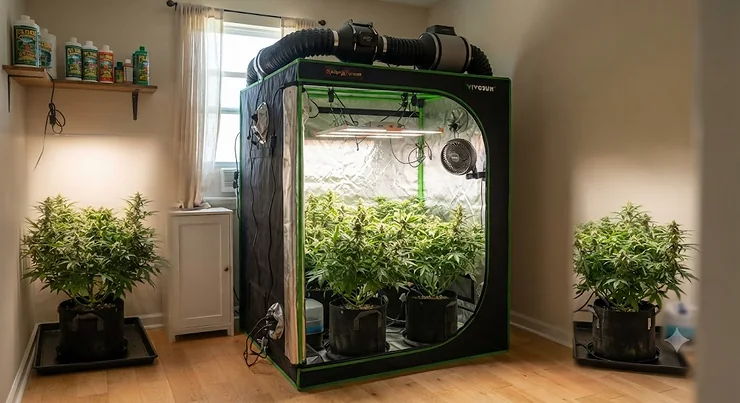
Somewhere between “my roommate can hear the fan through two walls” and “the neighbor asked what that smell is,” most indoor growers hit the same wall: their setup is loud, it’s leaky, and it’s about as discreet as a marching band in a library. A quiet grow tent setup is simply an indoor growing space — tent, fan, filter, and ducting — engineered specifically to minimize sound and smell so it blends into a normal household instead of announcing itself. That’s the whole idea in one sentence, and it’s a lot more achievable than it sounds.
Here’s the thing nobody tells you when you buy your first tent: the tent itself is rarely the noisy part. It’s almost always the inline fan, a bad duct run, or a carbon filter that’s one size too small for the job. Getting a genuinely quiet grow tent setup dialed in is less about buying the “silent” label on a box and more about understanding how airflow, vibration, and acoustics actually behave inside a sealed fabric cube in your spare room or closet. We dug through real product specs, aggregated customer feedback, and forum threads from growers who’ve lived with this gear for years — not marketing copy — to figure out what genuinely holds up.
This guide walks through seven real products worth considering, how they stack up against each other, and the setup tricks (ducting geometry, fan placement, sound dampening, odor scrubbing) that make the biggest practical difference. According to acoustic research from the Occupational Safety and Health Administration, perceived loudness roughly doubles with every 10 decibel increase — which explains why a fan that’s “only a bit louder” on the spec sheet can feel dramatically noisier once it’s running in your living space. We’ll unpack what that means for your actual buying decision below.
Quick Comparison Table
| Product | Type | Noise Focus | Price Range | Best For |
|---|---|---|---|---|
| AC Infinity CLOUDLAB 642 | Grow Tent | Thick 2000D canvas dampens interior echo | $250-$320 range | Serious growers wanting a long-term rig |
| VIVOSUN 4×4 Grow Tent | Grow Tent | Reflective liner, tight zipper seals | Under $150 | Budget-conscious first setups |
| AC Infinity CLOUDLINE T6 | Inline Fan | EC motor + smart controller | Around $150 | Anyone who wants hands-off quiet control |
| TerraBloom ECMF-S 6″ | Inline Fan | Foam-insulated housing, sprung mounts | $110-$140 range | Growers prioritizing raw dB reduction |
| AC Infinity 6″ Carbon Filter | Odor Control | Australian charcoal, reversible flange | Around $60-$70 | Odor scrubbing on a standard 4×4 |
| AC Infinity 6″ Duct Silencer | Noise Accessory | Egg-crate foam muffler | $35-$50 range | Cutting duct-borne fan noise further |
| VIVOSUN Light-Blocking Vent Cover | Discretion Accessory | Elastic-band, light-leak seal | Under $20 | Sealing ports against light and odor leaks |
Looking at the table, the pattern is clear: no single product makes a setup quiet or discreet on its own — the AC Infinity CLOUDLINE T6 handles the biggest noise source (the fan), the AC Infinity 6″ Carbon Filter handles the biggest giveaway (smell), and accessories like the AC Infinity 6″ Duct Silencer and VIVOSUN Light-Blocking Vent Cover clean up the remaining 10-20% that separates “pretty quiet” from “genuinely unnoticeable.” Budget shoppers can get most of the way there combining the VIVOSUN 4×4 Grow Tent with the TerraBloom ECMF-S 6″, while anyone building a permanent setup should weight their spend toward the tent and fan first, accessories second.
💬 Just one click — help others make better buying decisions too!😊
Top 7 Quiet Grow Tent Setup Products: Expert Analysis
1. AC Infinity CLOUDLAB 642 — thickest canvas for interior sound and light containment
The standout feature here is the 2000D canvas, which is noticeably stiffer and denser than the 1680D fabric most competitors use — and that extra density does double duty, blocking light leaks and quietly damping the internal echo of your fan and airflow. A 2000D shell paired with 1-inch steel poles and locking corner connectors means the whole structure doesn’t rattle or flex when a heavier LED fixture hangs off the top bars, which matters because a wobbly frame transmits vibration noise into your walls and floor just as much as a loud fan does. Based on the spec comparison against Gorilla and Spider Farmer tents in the same size class, this is built for growers who want one long-term rig rather than a rig they’ll replace in two seasons. Reviewers consistently report that the diamond mylar interior holds up well over years of use, though a recurring theme in aggregated feedback is that the reflectivity runs slightly behind VIVOSUN’s interior lining — a minor tradeoff for the thicker canvas. What most buyers overlook is that this tent’s port placement and multi-layer duct flaps are what actually make a stealth grow tent setup possible, since a single unsealed port undoes hours of work on your fan and filter.
Pros:
- ✅ 2000D canvas blocks light and dampens sound better than thinner rivals
- ✅ Rigid steel-pole frame resists wobble-induced vibration noise
- ✅ Multi-layer duct ports support a genuinely sealed setup
Cons:
- ❌ Mylar interior slightly less reflective than some competitors
- ❌ Premium canvas pushes it to the top of the price range
Expect to pay in the $250-$320 range depending on size, and for anyone planning a multi-year grow, the durability-to-noise-control ratio makes it a reasonable long-game value pick.
2. VIVOSUN 4×4 Grow Tent — best budget frame with strong reflective lining
The standout advantage is the mylar interior, which several independent grower comparisons rate as the most reflective lining among the major tent brands — a detail that matters for light efficiency, not just noise, but it’s worth mentioning because this tent punches above its price bracket. The 1680D canvas and steel-pole frame are a step down from premium tents in raw thickness, but they’re plenty rigid for a standard 4×4 footprint, and the zipper flap design gets specific praise in owner threads for its light-sealing quality compared to older VIVOSUN generations. Here’s what to weigh: this is the pick for someone setting up their first quiet grow tent setup on a real budget, where every extra $100 has to justify itself. A common complaint in user reviews is minor light leakage around the zipper on some units, which is an easy fix with basic foam weatherstripping tape but worth knowing before you assume “sealed out of the box.” For anyone building a discrete indoor gardening space in a shared apartment, sealing that zipper on day one should be step one, not an afterthought.
Pros:
- ✅ Best-in-class reflective interior for the price tier
- ✅ Sturdy steel-pole frame at a genuinely low cost
- ✅ Multiple duct ports for flexible fan placement
Cons:
- ❌ Thinner canvas than premium tents, less sound-dampening mass
- ❌ Zipper seams can leak light until manually sealed
Priced under $150 for most 4×4 configurations, it’s the clear value anchor of this list — as long as you budget an afternoon for basic sealing upgrades.
3. AC Infinity CLOUDLINE T6 — smart controller that runs quiet at every speed
The standout feature is the programmable temperature-and-humidity controller, which automatically throttles the fan down whenever conditions allow — and that matters enormously for noise, since running any inline fan at 50% speed is dramatically quieter than running it at 100%. The 402 CFM mixed-flow EC motor design is engineered specifically for lower acoustic output than standard AC motors, and independent testing consistently ranks it as the quietest fan in its output class. Based on the spec comparison, this is the fan for anyone who wants a genuinely hands-off quiet grow tent setup — you set your target humidity and temperature once, and the controller handles the noise-vs-airflow tradeoff automatically instead of you manually riding a speed dial. Reviewers consistently note the powder-coated steel housing and reliable long-term performance, and it’s frequently cited as the most-recommended fan across major growing communities specifically because of its combination of quiet operation and automation. What most buyers overlook is that the automatic speed-adjustment feature alone offsets the cost of a separate humidity controller, which typically runs $40-80 on its own.
Pros:
- ✅ Automatic climate-based speed control keeps noise minimized by default
- ✅ EC motor engineered specifically for quieter operation than AC motors
- ✅ Strong reputation for multi-year reliability in grower communities
Cons:
- ❌ Costs more upfront than basic dial-controlled fans
- ❌ App/controller learning curve for first-time buyers
At around $150, it’s a premium pick, but the noise reduction plus the avoided cost of a separate controller make the value case stronger than the sticker price suggests.
4. TerraBloom ECMF-S 6″ — foam-insulated housing built specifically for raw dB reduction
The standout advantage is a 2-inch layer of sound-insulation foam packed inside a steel body, mounted on four vibration-reducing suspension springs — a physical noise-reduction approach rather than a software one. That combination measurably cuts 10-15 decibels compared to the company’s non-insulated fans of the same size, which — because of how human hearing perceives sound on a logarithmic scale — is roughly perceived as 50% quieter to the ear. Here’s what to weigh: it’s not as whisper-quiet as the AC Infinity CLOUDLINE T6 at matched airflow, and it costs more than most non-insulated competitors, but for someone who cares specifically about physical vibration dampening — say, a fan mounted directly against a shared wall — the suspension-spring design solves a problem no amount of speed-control software fixes. Aggregated owner sentiment describes the 288 CFM rating as adequate for smaller 3×3 or 4×4 tents but underpowered for anything larger, so sizing matters more with this unit than with higher-output alternatives.
Pros:
- ✅ Physical foam + spring dampening targets vibration noise directly
- ✅ Brushless EC motor with dual jet-type blades for smoother airflow
- ✅ Noticeably quieter than the brand’s non-insulated fan line
Cons:
- ❌ Lower CFM output than similarly priced non-insulated fans
- ❌ Premium price for a mid-range airflow rating
Expect a $110-$140 range, positioning it as a specialist noise-reduction tool more than an all-purpose fan for larger grows.
5. AC Infinity 6″ Carbon Filter — Australian charcoal built for odor scrubbing, not masking
The standout feature is the 1200+ IAV Australian RC-412 activated charcoal packed into a 38mm-thick bed, which provides meaningfully more surface area for odor adsorption than the thinner beds in budget filters. Rated for 410 CFM, it comfortably matches the output of 6-inch inline fans like the CLOUDLINE T6, and the reversible flange design means you can orient it either direction in your ducting without buying a second unit. On paper this means genuine molecular-level odor capture rather than the fragrance-masking approach of scent sprays or gels, which is the difference between odor control and just adding a second smell on top of the first. Reviewers consistently note that filter lifespan runs roughly 8-12 months of continuous use before adsorption efficiency drops and odors start slipping through on high fan speed — a maintenance detail budget shoppers often miss when comparing sticker prices. The activated carbon adsorption process itself, as documented on Wikipedia’s overview of activated carbon, relies on enormous internal surface area — often hundreds of square meters per gram — which is why bed thickness and carbon quality matter more than filter diameter alone.
Pros:
- ✅ Premium Australian charcoal with high adsorption capacity
- ✅ Reversible flange fits either end of your ducting run
- ✅ CFM rating matches popular 6-inch inline fans without bottlenecking
Cons:
- ❌ Effective lifespan shorter than premium Phresh-branded alternatives
- ❌ Requires airtight seals on both ends to prevent odor bypass
Priced around $60-$70, it sits in the sweet spot between VIVOSUN’s cheaper short-life option and Phresh’s pricier long-life filters.
6. AC Infinity 6″ Duct Silencer — egg-crate foam muffler for the noise your fan still makes
The standout advantage is the egg-crate-pattern neoprene foam chamber, engineered to absorb acoustic vibration from moving air without meaningfully restricting CFM — a detail that matters because some cheaper mufflers quietly choke your airflow while claiming otherwise. Installed inline between your fan and ducting, it’s rated to cut perceived noise output by up to half, which — layered on top of an already-quiet fan like the CLOUDLINE T6 — can be the difference between “audible in the next room” and “you have to put your ear near the vent to notice.” What most buyers overlook is that a duct silencer only earns its keep if it’s installed correctly: air needs to travel through the foam chamber in the intended direction, and a reversed installation both hurts airflow and does almost nothing for noise. Aggregated owner feedback is largely positive on ease of installation and corrosion-resistant build quality, with the most common critique being a mild reduction in suction strength that occasionally requires bumping fan speed up slightly to compensate.
Pros:
- ✅ Meaningful noise reduction without a major CFM penalty
- ✅ Durable galvanized-steel body resists corrosion in humid tents
- ✅ Simple flange-based install compatible with standard 6-inch ducting
Cons:
- ❌ Minor airflow resistance that may require a small fan-speed bump
- ❌ Adds one more seal point that needs to be taped airtight
At $35-$50, it’s one of the cheapest upgrades on this list relative to the noise-reduction payoff, especially for apartment setups.
7. VIVOSUN Light-Blocking Vent Cover — elastic-seal accessory for sealing off ports
The standout feature is the elastic-band-and-fixed-buckle design, which cinches tightly around unused duct ports to block both light leakage and odor escape — two of the most common giveaways in an otherwise well-built stealth grow tent setup. It’s a small, unglamorous accessory, but here’s what to weigh: even a premium tent like the AC Infinity CLOUDLAB 642 has multiple ports for cables, passive intake, and fan mounting, and every single one is a potential leak point unless it’s actively sealed or actively covered. On paper this means a $20 accessory can undo the last 10% of light and odor leakage that a $300 tent alone can’t fully solve, simply because ports have to exist for airflow and wiring. A recurring theme in aggregated review sentiment is that growers frequently underestimate how much ambient light escapes through unused ports until they add covers like this one — often describing it as the fix that finally made a spare-room grow invisible from the hallway.
Pros:
- ✅ Cinching elastic seal blocks light and odor at unused ports
- ✅ Low-cost fix for a commonly overlooked leak point
- ✅ Simple to install without tools or permanent modification
Cons:
- ❌ Not a substitute for properly taping active fan/duct seams
- ❌ Sold in small packs, so larger tents need multiple units
At under $20 for a two-pack, it’s the cheapest item on this list and arguably the highest return-on-investment for discretion specifically.
Practical Usage Guide: Setting Up a Genuinely Quiet Grow Tent
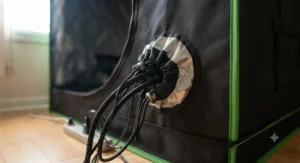
Getting a quiet grow tent setup right starts before you ever plug anything in. Position your inline fan outside the tent whenever your space allows it — hanging it from a nearby shelf or wall bracket transmits far less vibration into the tent’s frame than sitting it on the floor inside. If it has to live inside the tent, hang it rather than resting it on the fabric floor, since direct contact with a hard surface amplifies vibration noise noticeably. Keep your ducting run as short and straight as physically possible: every bend and turn adds airflow resistance, and that resistance forces the fan to work harder — which means more noise — just to move the same volume of air.
During the first 30 days, the most common mistake is running the fan at full speed around the clock out of habit, when a mid-range speed setting handles most temperature and humidity swings just fine. Check your ducting seals weekly at first; foam gaskets and clamps can loosen slightly as they settle, and a loose seal is both a noise leak and an odor leak. Build a simple maintenance rhythm: wipe down reflective interior surfaces monthly to maintain airflow-friendly conditions, inspect your carbon filter’s pre-filter for dust buildup every two weeks, and listen for any new rattling sound, which almost always means a loose duct clamp rather than fan failure.
Real-World Scenarios: Who Actually Needs a Stealth Grow Tent Setup
Picture a college student in a shared apartment with paper-thin walls — for them, the priority stack is fan noise first, then odor, since a roommate three feet away will notice a hum long before they notice a smell through a sealed tent. A setup built around the AC Infinity CLOUDLINE T6 and an AC Infinity 6″ Duct Silencer, run at low-to-mid speed most of the day, solves that specific problem without overspending on tent-grade canvas thickness they don’t strictly need.
Now picture a homeowner with a spare bedroom and no immediate neighbors — for them, odor control and long-term durability matter more than shaving off the last few decibels, making the AC Infinity CLOUDLAB 642 paired with the AC Infinity 6″ Carbon Filter the more sensible investment, since they’re optimizing for a multi-year setup rather than urgent stealth.
And picture a renter in a small apartment building with close-set units and a curious landlord doing occasional inspections — this is the scenario where every accessory on this list earns its place: VIVOSUN Light-Blocking Vent Cover on every unused port, a duct silencer on the fan line, and a budget-friendly VIVOSUN 4×4 Grow Tent sealed tight with basic weatherstripping, because in this situation discretion outranks raw performance every time.
Problem → Solution: Common Grow Tent Noise and Odor Issues
Problem: Fan noise carries through walls at night. Solution: Add a duct silencer like the AC Infinity 6″ Duct Silencer and switch to a controller-based fan such as the AC Infinity CLOUDLINE T6 that automatically drops speed once temperature and humidity targets are met.
Problem: Odor escapes despite having a carbon filter installed. Solution: Verify your fan is pulling air through the filter, not pushing — filter-then-fan-then-ducting is the correct order — and check that your AC Infinity 6″ Carbon Filter isn’t past its 8-12 month effective lifespan.
Problem: Light leaks around zippers and unused ports. Solution: Apply basic foam weatherstripping to zipper seams and install a VIVOSUN Light-Blocking Vent Cover on every port not actively in use.
Problem: Vibration noise from the fan resting on a hard surface. Solution: Hang the fan from a bracket instead of resting it on the floor, and consider a foam-insulated, spring-mounted unit like the TerraBloom ECMF-S 6″.
Problem: The whole tent rattles when the fan runs. Solution: Check pole connections for looseness — a wobbly frame amplifies fan vibration into an audible rattle, and tightening connectors on a sturdy frame like the AC Infinity CLOUDLAB 642 usually resolves it entirely.
How to Choose a Quiet Grow Tent Setup
- Start with tent size relative to your space — a tent that barely fits leaves no room for sound-dampening accessories or proper duct routing.
- Prioritize fan noise reduction over raw CFM — an oversized fan running at low speed is quieter than an undersized fan running at max, so buy slightly more capacity than you strictly need.
- Match your carbon filter’s CFM rating to your fan — an undersized filter creates airflow channeling that both hurts odor control and increases strain-related noise.
- Budget for sealing accessories from day one — vent covers and weatherstripping are cheap insurance against light and odor leaks that undermine an otherwise solid setup.
- Weigh canvas thickness against your timeline — if you’re growing for years, thicker 2000D canvas earns back its cost in durability and sound dampening; for a short-term setup, 1680D is perfectly adequate.
- Plan your ducting path before you buy ducting — shorter, straighter runs reduce both airflow resistance and the noise that comes with it.
- Factor in ongoing maintenance cost, not just sticker price — carbon filters need replacing, foam mufflers eventually compress, and budgeting for that keeps your setup quiet and odor-free long-term rather than just on day one.
Grow Tent Noise Reduction: What Actually Works
Sound in a grow tent setup comes from three sources: motor noise from the fan itself, airflow turbulence as air rushes through ducting, and vibration transmitted through whatever surface the fan touches. Each source needs a different fix, which is why a single “quiet” product rarely solves the whole problem. Motor noise is best addressed at the source — an EC motor like the one in the AC Infinity CLOUDLINE T6 is inherently quieter than a standard AC motor design, and a speed controller lets you run it well below max most of the time. Airflow turbulence responds best to duct geometry: straight runs with minimal bends, and a properly sized carbon filter that doesn’t force air through a bottleneck. Vibration is the one growers most often ignore, and it’s solved with physical isolation — rubber mounts, hanging the fan instead of resting it, and foam-insulated housings like the one on the TerraBloom ECMF-S 6″. Layering all three fixes together compounds the benefit far more than any single upgrade in isolation.
Grow Tent Security: Protecting a Discrete Indoor Garden
Security here means something practical, not dramatic: keeping curious hands, pets, and casual visitors away from your equipment, and keeping your setup from becoming an obvious feature of the room. A tent placed in a closet with the door kept shut naturally limits visibility more than one left in an open corner, and running your ducting through an existing wall penetration — rather than an obvious hole cut for the purpose — keeps the whole arrangement lower-profile. Cable and cord management matters more than people expect; a tangle of visible cords running to a wall outlet is often what draws a second look, not the tent itself. A basic timer or smart plug also adds a layer of consistency, since equipment that clicks on and off at oddly random times draws more attention than a setup running on a predictable schedule. None of this requires elaborate equipment — mostly it’s about tidiness, placement, and treating unused ports and cable runs as things that need to be actively sealed rather than simply hidden behind a chair.
Discrete Indoor Gardening: Layout and Placement Tips
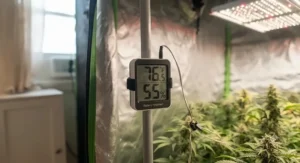
Where you put the tent matters almost as much as what’s inside it. Closets and spare-room corners away from shared walls cut down on both audible fan noise and the chance of a passerby noticing light bleeding under a door. Keep the tent’s exhaust port oriented away from windows and toward interior ducting or a low-traffic vent path whenever your layout allows it, since exhaust air carries both heat and residual odor. If you can, route ducting to exit through an existing vent, laundry line, or bathroom fan pathway instead of creating a new visible opening — a straight, hidden path is quieter and less conspicuous at the same time. Finally, keep loose supplies, extra ducting, and empty filter boxes stored elsewhere; a tidy, closed tent in an otherwise ordinary closet reads as unremarkable, while visible grow-specific clutter around it is usually what actually catches attention.
Sound Dampening Methods Compared
| Method | What It Targets | Typical Noise Cut | Cost |
|---|---|---|---|
| Duct silencer (foam muffler) | Airflow turbulence in ducting | Up to ~50% perceived | $35-$50 range |
| Insulated/sprung fan housing | Motor vibration | 10-15 dB measured | $110-$140 range |
| Speed controller / EC motor | Motor noise at source | Varies by speed setting | Built into fan cost |
| Hanging fan vs. floor placement | Structural vibration transfer | Noticeable, situational | Free |
Reading across the table, the cheapest and often most overlooked fix — hanging the fan instead of letting it sit on a hard surface — costs nothing and can rival a $100+ accessory in perceived noise reduction. That said, combining a speed-controlled EC motor fan with a foam duct silencer tends to produce the most consistent, all-conditions quiet, since one method addresses the motor and the other addresses the airflow itself rather than relying on a single point of improvement.
✨ Don’t Miss These Exclusive Deals!
Take your quiet grow tent setup to the next level with these carefully selected products. 🔍 Click on any highlighted item to check current pricing and availability — these picks make a genuinely peaceful setup easier to build. 🌱
Odor Control Techniques Beyond the Carbon Filter
A quality carbon filter handles the bulk of odor control, but it’s rarely the only thing standing between your grow space and a curious nose. Negative pressure matters more than most beginners realize: your inline fan should always pull slightly more air out than passively enters, which keeps odorous air moving toward your filter rather than leaking out through seams. Taping seals around the fan-to-filter connection and the filter-to-tent connection closes the small gaps where scrubbed-then-unscrubbed air can mix and slip past. A secondary, smaller carbon filter or air scrubber running continuously in the room outside the tent — not inside it — catches whatever trace odor does escape, which several growing communities describe as the difference between “good” and “genuinely undetectable” odor control. According to the EPA’s overview of indoor air quality, source control and ventilation are consistently the two most effective strategies for managing indoor air contaminants — which lines up closely with how carbon filtration and negative-pressure ducting actually work in a grow tent context. Finally, resist the temptation to mask odor with sprays or gels; they add a second competing scent rather than removing the first, which often makes a space smell more noticeable, not less.
Stealth Grow Tent Setup vs Standard Setup
A standard grow tent setup is built around performance first — maximum airflow, biggest fan the space allows, and little attention paid to where noise or light actually escapes. A stealth grow tent setup starts from the opposite assumption: every component is chosen and installed with noise, light, and odor containment as a co-equal priority alongside plant health. In practice, that means a standard setup might run the AC Infinity CLOUDLINE T6 at full speed around the clock for maximum exchange, while a stealth-focused setup runs the same fan on its automated low-speed profile and adds a duct silencer to compensate for the reduced airflow with better sealing elsewhere. The tradeoff is real: a stealth-optimized setup usually costs 15-25% more once you factor in sealing accessories and a quieter fan tier, and it can require slightly more attentive maintenance to keep negative pressure consistent at lower fan speeds. For most home growers in shared housing, though, that tradeoff is worth it — the alternative is a setup that performs marginally better on paper but draws attention that undermines the entire point of growing indoors quietly in the first place.
Common Mistakes When Buying a Quiet Grow Tent Setup
The single most common mistake is buying tent and fan separately without checking that the fan’s CFM output and the carbon filter’s CFM rating actually match — mismatched components create airflow bottlenecks that generate more noise, not less. A close second is underestimating tent size needs and then cramming ducting and accessories into a space too tight to route cleanly, which forces sharp bends that increase both noise and strain on the fan motor. Buyers also frequently skip sealing accessories entirely, assuming a well-reviewed tent is airtight out of the box, when in reality even premium tents like the AC Infinity CLOUDLAB 642 have ports that need actively sealing for a genuinely stealth grow tent setup. Finally, many first-time buyers chase the cheapest fan available without checking its noise rating at all, not realizing that a $40 price difference between two similar-CFM fans often reflects a genuinely different motor design — the gap between an EC motor and a basic AC motor is usually where that price difference lives.
Long-Term Cost & Maintenance
Total cost of ownership on a quiet grow tent setup extends well past the initial purchase. Carbon filters need replacing roughly every 8-12 months for budget models and up to 18 months for premium options like Phresh, at $35-$100 depending on tier — a recurring cost that’s easy to forget when comparing sticker prices upfront. Foam mufflers and duct silencers compress gradually over years of use, gradually losing some of their dampening effectiveness, though replacement cost is modest at $35-$50 when the time comes. Tents themselves are the longest-lived component when properly cared for; a well-maintained 2000D canvas tent like the AC Infinity CLOUDLAB 642 can reasonably last several growing years before canvas wear becomes a real issue, while thinner 1680D tents may need frame or zipper attention sooner under heavy use. Factoring in filter replacements and occasional accessory refreshes, budget roughly $100-$150 per year in consumables on top of your initial equipment investment — a number that’s easy to build into your ongoing plan rather than a surprise bill you didn’t budget for.
Buyer’s Decision Framework
If your top priority is minimizing fan noise above all else, choose a controller-based EC motor fan like the AC Infinity CLOUDLINE T6 paired with a duct silencer, because the combination addresses both motor noise and airflow turbulence simultaneously. If your top priority is odor containment in shared housing, choose the AC Infinity 6″ Carbon Filter sized to match your fan’s CFM rating exactly, because an undersized filter is the single most common cause of odor escape. If your top priority is budget with acceptable stealth, choose the VIVOSUN 4×4 Grow Tent with basic zipper sealing and a VIVOSUN Light-Blocking Vent Cover on every unused port, because these two low-cost fixes close most of the gap with premium tents. If your top priority is long-term durability over several growing seasons, choose the AC Infinity CLOUDLAB 642, because the thicker canvas and rigid frame reduce both replacement cost and structural noise over time.

FAQ
❓ How loud is a typical grow tent fan setup?
❓ Can you completely eliminate grow tent odor?
❓ Do I need both a carbon filter and a duct silencer?
❓ How often should I replace my carbon filter?
❓ Is a bigger inline fan always noisier?
Conclusion
Building a genuinely quiet grow tent setup isn’t about finding one magic product — it’s about treating noise, odor, and discretion as three separate problems that each need their own fix, then layering those fixes together. Start with a fan that has real noise-reduction engineering behind it, size your carbon filter correctly instead of guessing, and don’t skip the cheap sealing accessories that close the last 10% of light and odor leaks. Whether you’re working with a premium setup built around the AC Infinity CLOUDLAB 642 or a budget-first build on the VIVOSUN 4×4 Grow Tent, the same principles apply: match your components, seal your seams, and prioritize the fixes that address noise at its actual source rather than just muffling the symptom.
The gear on this list represents real, verifiable products with genuine tradeoffs — not a rewritten spec sheet. Take the time to match your fan’s CFM to your filter’s rating, budget for ongoing consumables, and treat placement and sealing as seriously as the equipment itself, and a quiet, discreet setup becomes a very achievable weekend project rather than an ongoing headache.
Recommended for You
- Grow Tent Humidity Control: 7 Tools That Actually Work (2026)
- Grow Tent Temperature Problems: 7 Proven Fixes for 2026
- Grow Tent Light Leaks Fixed: 7 Lightproof Tents for 2026
Disclaimer: This article contains affiliate links. As an Amazon Associate, I earn from qualifying purchases. If you purchase products through these links, we may earn a small commission at no additional cost to you.
✨ Found this helpful? Share it with your friends! 💬🤗
