
In This Article
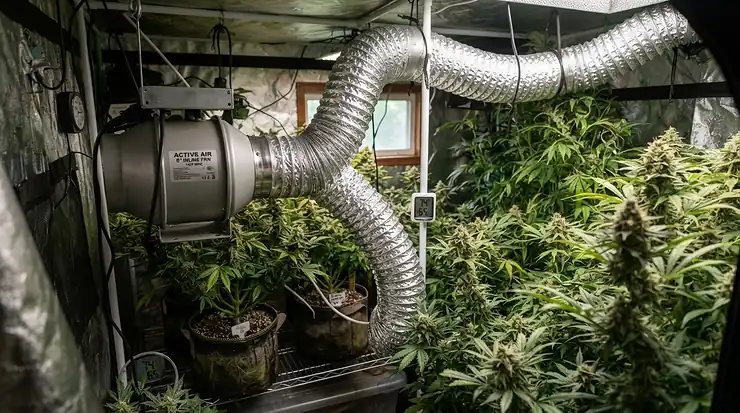
Closets are weird. They’re built to hold coats and shoeboxes, not living, breathing plants that pump out heat, humidity, and — depending on what you’re growing — a smell your roommate will absolutely notice by week three. That’s the entire reason the vivosun 4 inch inline fan for small closet grow category exists: these compact units are built to solve a ventilation problem that a box fan simply can’t touch in a sealed, low-airflow space. A 4 inch inline duct fan is a small, tube-mounted blower that pulls stale, humid air out of an enclosed grow space through flexible ducting, typically moving somewhere between 140 and 230 cubic feet per minute (CFM) depending on the model. In a closet — usually somewhere between 15 and 40 cubic feet of usable air — that airflow range is more than enough to cycle the whole space multiple times an hour. Below, we’ve dug into seven real, currently available fans, compared their actual specs and aggregated review sentiment, and broken down exactly how to mount, duct, and manage humidity in a space that was never designed for any of this. Whether you’re brand new to closet growing or replacing a fan that’s finally given up, this guide is built to get you to a confident decision fast.
Quick Comparison Table: 7 Inline Fans for Small Closet Grows
| Fan | Airflow (CFM) | Noise Level | Control Type | Price Range | Best For |
|---|---|---|---|---|---|
| VIVOSUN D4 | 195 CFM | ~30 dB | 3-speed switch | Around $30-$40 | Tightest budgets |
| iPower 195 CFM Fan | 195 CFM | ~29-30 dB | 3-speed dial | Around $30-$40 | First-time closet growers |
| VIVOSUN AeroZesh G4 | 195 CFM | ~28 dB | 10-speed PWM + app-ready | $45-$60 range | Growers who want to upgrade later |
| AC Infinity CLOUDLINE S4 | 226 CFM | ~26 dB | Manual dial controller | $55-$70 range | Quiet manual control |
| iPower Smart WiFi 4″ | 212 CFM | ~28 dB | App/Bluetooth/Alexa | $50-$65 range | Budget smart automation |
| AC Infinity CLOUDLINE T4 | 205-226 CFM | ~26-28 dB | Temp/humidity/VPD app control | $80-$100 range | Full climate automation |
| TerraBloom ECMF-100 | 141 CFM | ~18 dB | Wireless remote, 8 speeds | $90-$110 range | Whisper-quiet closets near living spaces |
Looking at the spread here, what jumps out is that CFM alone doesn’t tell the whole story — the TerraBloom ECMF-100 moves the least air but is the quietest fan on this list by a wide margin, which matters enormously if your closet shares a wall with a bedroom. Meanwhile, the AC Infinity CLOUDLINE S4 manages to beat several “smart” competitors on both airflow and noise, which is exactly why smart features and raw performance need to be judged separately. If budget is your only constraint, the VIVOSUN D4 and iPower 195 CFM Fan are functionally neck-and-neck, so the tiebreaker usually comes down to which one is in stock when you’re ready to buy.
💬 Just one click — help others make better buying decisions too!😊
Top 7 Vivosun 4 Inch Inline Fan for Small Closet Grow Options: Expert Analysis
A closet grow lives or dies on airflow math, so every product below gets judged the same way: real CFM, real noise numbers, and what actual owners report after weeks (not days) of use. We’ve grouped these from budget to premium so you can find your price tier fast, then read the nuance that actually affects your specific closet.
1. VIVOSUN D4 4 Inch 195 CFM Inline Duct Fan — best value pick for tight budgets
The VIVOSUN D4 is the fan most people picture when they search for a vivosun 4 inch inline fan for small closet grow, and for good reason — it’s the brand’s most established entry-level unit. Spec-wise, you’re getting 195 CFM at 2,500 RPM with a claimed 30 dB noise floor, an ETL-listed motor with automatic overheat reset, and a flame-retardant electrical junction box.
In practice, that 195 CFM figure means this fan can fully exchange the air in a typical 4x2x7-foot closet (about 56 cubic feet) more than 30 times an hour before you even account for ducting losses — seriously more than you need, which gives you headroom to run it on a lower, quieter setting most of the time.
This makes it a strong fit for beginners who want one fan that just works without a learning curve, and less ideal for anyone who wants app-based automation down the road. Reviewers consistently report that the D4 is reliable for basic exhaust duty and easy to wall-mount using the built-in bracket tabs, though a recurring theme in aggregated feedback is that the stock speed switch (rather than a stepless dial) limits fine-tuning between “too strong” and “too weak” in very small enclosures.
Pros:
- ✅ Genuinely quiet at 30 dB on low speed
- ✅ ETL-listed motor with auto overheat protection
- ✅ Simple bracket mounting for closet shelving
Cons:
- ❌ Only 3 fixed speeds, no stepless dial
- ❌ No app or smart controller option
Price-wise, expect to pay in the $30-$40 range for the fan alone, and value here is hard to beat — this is the fan to start with if you’ve never run a closet grow before.
2. iPower 4 Inch 195 CFM Inline Duct Fan — simplest 3-speed control on a budget
The iPower 4 Inch Inline Duct Fan matches the VIVOSUN D4 almost spec-for-spec: 195 CFM, 2,500 RPM, around 28-30 watts of draw, and a claimed 29-30 dB noise level, but it ships with a separate inline speed controller rather than a switch built into the housing. That distinction matters more than it sounds — a corded controller lets you position the dial somewhere accessible outside the closet door instead of fumbling near the fan itself.
Based on the spec comparison, this is functionally a coin-flip against the D4 for raw performance, so the real decision driver is ergonomics and current pricing. Aggregated review sentiment on this model is strong for basic exhaust use, with buyers frequently noting it’s “quiet enough to run overnight,” though a common complaint in user reviews is that the plastic housing feels less substantial than metal-cased alternatives, which can translate to slightly more vibration noise if it isn’t mounted firmly.
Pros:
- ✅ Detachable controller mounts outside the closet
- ✅ Matches premium fans on core CFM output
- ✅ Straightforward 3-speed operation
Cons:
- ❌ Plastic housing can vibrate if loosely mounted
- ❌ No EC motor efficiency benefits
You’ll typically find this fan in the $30-$40 range, making it a genuine alternative if the VIVOSUN D4 happens to be out of stock.
3. VIVOSUN AeroZesh G4 4 Inch EC Inline Fan — most upgrade-friendly with GrowHub
Stepping up a tier, the VIVOSUN AeroZesh G4 swaps the older AC motor for a PWM-controlled EC motor, which is the single biggest jump in this lineup. What that means in practice: the included E12 controller gives you ten distinct speed steps instead of three, it remembers your last setting after a power cut, and it can run timed on/off cycling to save power.
Here’s what most buyers overlook about this model — the E12 controller can later be swapped for VIVOSUN’s E42A GrowHub controller, which adds app-based temperature and humidity automation without buying a whole new fan. That upgrade path is genuinely rare at this price point and makes the G4 a smart choice for anyone who suspects they’ll want smart control eventually but doesn’t want to pay for it up front.
Reviewers frequently highlight the smoother, quieter ramp-up between speeds compared to switch-based fans, though some aggregated feedback notes the initial setup of pairing the controller can feel slightly more involved than a plug-and-play unit.
Pros:
- ✅ EC motor with 10 programmable speed steps
- ✅ Upgradeable to a full smart GrowHub controller
- ✅ Remembers settings after power loss
Cons:
- ❌ Setup has a small learning curve
- ❌ Costs more than basic AC-motor fans
Expect a price in the $45-$60 range, and the value case is strong specifically because of that future upgrade path.
4. AC Infinity CLOUDLINE S4 — quietest manual-speed option
The AC Infinity CLOUDLINE S4 shares its core hardware with AC Infinity’s more expensive smart fans — a mixed-flow EC motor and dual ball bearings — but strips out the temperature/humidity controller in favor of a simple manual speed dial. On paper this means you get the brand’s quietest, most efficient motor platform (rated around 226 CFM at roughly 26 dBA) without paying for automation you might not use.
What most buyers overlook about this model is that dual ball bearings, versus the cheaper sleeve bearings found in entry-level fans, translate directly into a longer service life and less bearing whine as the unit ages — a detail that won’t show up in month one but matters a lot by month twelve of continuous closet duty. Based on real specs, this fan out-airflows several “smart” competitors on this list while staying quieter, which is a genuinely underrated combination.
Aggregated owner sentiment consistently praises the smoothness of the dial control and the low operating hum, with the main gripe being that some growers wish AC Infinity sold the humidity controller as a cheap add-on rather than only bundling it into the pricier CLOUDLINE T4.
Pros:
- ✅ Dual ball bearings for long-term durability
- ✅ Strong 226 CFM output at low noise
- ✅ Simple, precise manual dial control
Cons:
- ❌ No temperature or humidity automation
- ❌ Pricier than basic AC-motor fans
Pricing typically lands in the $55-$70 range, positioning it as a value-forward pick for growers who want premium hardware without the smart-controller markup.
5. iPower 4 Inch Smart WiFi Inline Fan — best budget smart control
The iPower Smart WiFi Inline Fan brings app-based control to a lower price tier than most competitors, pairing a PWM EC motor rated around 212 CFM and 28 dB with Bluetooth and WiFi connectivity through iPower’s companion app, plus Alexa voice command support. What the spec sheet won’t tell you, but reviewers note, is that the app’s temperature and humidity trigger system works well for basic set-and-forget automation, even if it lacks the deeper data-logging and VPD charting that pricier smart controllers offer.
This makes it a genuinely solid pick for anyone who wants “set a target humidity and walk away” convenience without spending premium-tier money. Reviewers frequently mention that voice control through Alexa is a nice touch for hands-free adjustments mid-task, while a recurring theme in aggregated feedback is that initial WiFi pairing can be finicky on certain router setups — a minor but real friction point worth expecting going in.
Pros:
- ✅ App, Bluetooth, and Alexa control at a budget price
- ✅ Efficient PWM EC motor design
- ✅ Basic humidity/temperature automation included
Cons:
- ❌ WiFi pairing can be inconsistent on some routers
- ❌ Less advanced data logging than premium smart fans
Expect this one in the $50-$65 range, which is genuinely aggressive pricing for app-controlled climate automation.
6. AC Infinity CLOUDLINE T4 — best overall for full climate automation
If you want the deepest feature set on this list, the AC Infinity CLOUDLINE T4 is it. Depending on the exact controller revision, you’re looking at 205-226 CFM, a noise floor around 26-28 dBA, dual ball bearings, and AC Infinity’s Controller 69 Pro, which handles temperature, humidity, and VPD-based triggers, dynamic speed response, scheduling, and remote WiFi access with historical climate charts you can export as CSV.
Here’s what most buyers overlook: the “minimum speed” setting is arguably the most useful feature in the whole controller, because it lets the fan idle quietly at all times and only ramp up when a trigger fires, instead of cycling fully on and off — which is both quieter and gentler on the motor long-term.
Independent reviewers have specifically called this unit “brilliantly quiet” for what it delivers, and it’s frequently ranked as the top overall pick in inline fan roundups for exactly that blend of smart features and low noise. The tradeoff, as multiple review sources note, is price — this is the most expensive fan on our list — plus it doesn’t include a carbon filter, so budget separately if odor control matters to you.
Pros:
- ✅ Full temperature, humidity, and VPD automation
- ✅ WiFi app control with exportable climate history
- ✅ Dynamic minimum-speed idling for quiet, gentle operation
Cons:
- ❌ Most expensive fan in this roundup
- ❌ No carbon filter included in the base kit
Pricing sits in the $80-$100 range, and for anyone treating a closet grow as a serious, ongoing project rather than a one-season experiment, it’s the pick that pays for itself in convenience.
7. TerraBloom ECMF-100 — whisper-quiet metal-body pick
The TerraBloom ECMF-100 takes a different approach entirely: instead of maximizing CFM, it prioritizes near-silent operation and durability, delivering 141 CFM from a 21-watt brushless EC motor rated around 18 dBA — a noise level so low it barely registers as background hum. The rust-resistant steel housing and IPX4 moisture rating also set it apart from the mostly plastic-cased competition, which matters if your closet runs humid enough to worry about condensation on the fan body itself.
Based on the spec comparison, 141 CFM is noticeably lower than every other fan here, so this pick works best in genuinely small closets (think under 30 cubic feet) or as a secondary intake fan rather than the sole exhaust in a larger space.
Owner reviews consistently single out the noise level as the standout feature, with one long-term reviewer specifically praising the included wireless remote and calling out how much quieter it ran compared to a previous fan purchase, while a fair number of buyers note the tradeoff of lower raw airflow if you’re ventilating anything larger than a compact closet.
Pros:
- ✅ Exceptionally quiet 18 dBA EC motor
- ✅ Durable, moisture-resistant metal housing
- ✅ Wireless remote with 8 speed steps
Cons:
- ❌ Lower CFM than every other fan on this list
- ❌ Best suited to smaller closets only
Expect a price in the $90-$110 range — a premium ask for the CFM you get, but one that’s justified if noise is your number-one priority.
Vivosun Fan Closet Installation: A Practical Setup Guide
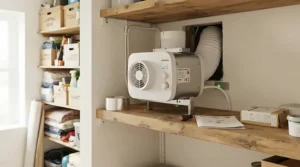
Getting a vivosun 4 inch inline fan for small closet grow humming smoothly isn’t complicated, but the first-30-days mistakes are extremely common, so let’s walk through it properly. Start by mapping your airflow path before you drill a single hole: you want the fan pulling air out (exhaust) near the top of the closet, since heat and humidity rise, with a passive intake — even just a gap under the door or a small cut vent — lower down to let replacement air in. Mount the fan using its integrated bracket tabs to a stud or solid shelf rather than drywall alone; vibration over weeks will work screws loose from drywall anchors faster than you’d expect. Connect 4-inch flexible ducting to both flanges using the locking tabs, then secure every joint with a clamp and a wrap of foil tape — an unsealed joint can quietly bleed away 15-20% of your airflow without you noticing anything’s wrong. Common early mistakes include running ducting with sharp 90-degree bends (gentle curves preserve far more static pressure), forgetting to vent the exhaust somewhere it won’t just recirculate back into the same room, and skipping a maintenance schedule entirely — a quick wipe of the impeller blades every 4-6 weeks prevents the dust buildup that silently drops CFM over a growing season.
Mounting Vivosun Fan in Confined Space: Real-World Scenarios
Confined-space mounting is where theory meets the actual dimensions of your closet, so here are three real profiles to match against your own setup. Scenario one: a college student in a dorm-adjacent closet, roughly 24 cubic feet, running lights on a budget and needing near-silent operation because a roommate sleeps ten feet away — here, the TerraBloom ECMF-100 or a VIVOSUN D4 on low speed both make sense, prioritizing noise over raw CFM since the space is small enough that even 141 CFM cycles it dozens of times an hour. Scenario two: a hobbyist with a repurposed hallway closet (roughly 45-50 cubic feet) who wants to “set it and forget it” for weeks at a time — the AC Infinity CLOUDLINE T4‘s automated humidity triggers are worth the extra cost here, because manual fans require you to physically check and adjust conditions, which is exactly the maintenance burden automation removes. Scenario three: someone mounting in a genuinely awkward space, like a shallow linen closet with almost no vertical clearance — the compact dimensions of the VIVOSUN AeroZesh G4 or iPower Smart WiFi Inline Fan, both under 8 inches in housing depth, tend to fit where bulkier smart controllers can’t. In every case, use rubber isolation grommets between the mounting bracket and any hard surface — it’s a five-minute addition that measurably cuts down transmitted vibration noise through shelving or walls.
Closet Grow Ventilation Vivosun: Problem → Solution Guide
Even with the right fan, closet grow ventilation runs into a handful of predictable snags, so here’s how to solve the most common ones. Problem one: temperatures still creep up despite the fan running, which usually traces back to insufficient passive intake — the fan can only exhaust as much air as can physically get back in, so cutting a larger intake vent or adding a second small passive vent almost always fixes it faster than upgrading to a bigger fan. Problem two: persistent musty odor even with decent airflow, which typically means your exhaust point is too close to your intake point and you’re recirculating the same stale air; relocating the exhaust duct outlet at least several feet away, or venting it into a different room entirely, solves this without buying anything new. Problem three: unexpected noise increase after a few weeks, almost always caused by dust accumulation on the impeller blades disrupting balance — a soft-brush cleaning restores quiet operation in minutes. Problem four: condensation forming inside the ducting itself, which happens when warm, humid air hits a cooler duct run; wrapping exposed ducting in basic pipe insulation eliminates this in most closets. Problem five: the fan runs but airflow still feels weak at the vent — check for kinked or crushed ducting first, since even a partial pinch can cut delivered CFM dramatically, and reference our VIVOSUN AeroZesh G4 or AC Infinity CLOUDLINE S4 picks above if your current fan simply lacks the static pressure to push through a longer duct run.
Duct Routing in Closets: A Buyer’s Decision Framework
Duct routing in closets often gets treated as an afterthought, but it’s genuinely one of the biggest hidden performance variables in this whole setup. If your closet has a straight shot to an exterior wall or window, choose the shortest possible duct run and prioritize a fan like the VIVOSUN D4 or iPower 195 CFM Fan, because minimal bends mean you don’t need extra static pressure headroom. If you’re forced to route ducting through a longer, winding path — say, up and over a doorframe and down a hallway — choose an EC-motor fan like the AC Infinity CLOUDLINE T4 or VIVOSUN AeroZesh G4, since EC motors generally hold airflow better under the added resistance of longer runs and more bends. If your routing has to pass near a bedroom or shared living space, prioritize noise over everything else and choose the TerraBloom ECMF-100 or AC Infinity CLOUDLINE S4, both of which post the lowest dBA numbers on this list. As a simple priority checklist: (1) measure your actual duct length and bend count before choosing a fan, (2) favor smooth, gentle curves over sharp angles wherever the closet layout allows it, (3) seal every joint with clamps and foil tape regardless of which fan you buy, and (4) never let ducting sag or pool — a slight downward slope toward the exhaust point helps prevent moisture pooling inside the duct.
How to Choose a Vivosun 4 Inch Inline Fan for Small Closet Grow
Picking the right fan comes down to a handful of concrete criteria, not gut feeling. Here’s the expert-reasoned checklist:
- Calculate your closet’s cubic footage first. Multiply length by width by height in feet — this single number determines whether 140 CFM is plenty or whether you actually need closer to 220 CFM.
- Target at least 10-20 air changes per hour, a widely used ventilation benchmark, meaning your fan’s CFM should comfortably exceed your closet’s volume divided by 3-6 minutes; see Wikipedia’s overview of air changes per hour for the underlying math.
- Decide how much you value quiet versus raw airflow — if the closet backs onto a bedroom, weight noise (dBA) more heavily than CFM.
- Consider your duct run length and bend count, since longer, twistier runs favor EC-motor fans that hold static pressure better.
- Decide if you want smart automation now or later — fans like the VIVOSUN AeroZesh G4 let you upgrade the controller down the line instead of locking in a decision today.
- Check the motor type — EC motors cost more upfront but run quieter and more efficiently over the fan’s lifespan than older AC motors.
- Budget for ducting, clamps, and tape separately — most fans are sold without enough hardware to complete a full, sealed installation.
Common Mistakes When Buying Closet Inline Fans
The single most common mistake is buying based on CFM alone without checking noise specs, which leaves a lot of first-time buyers surprised when a “powerful” fan turns out to be genuinely loud in a small, enclosed space where sound has nowhere to dissipate. A close second is underestimating ducting needs — buyers frequently budget for the fan itself but forget that clamps, foil tape, and enough flexible ducting to route around obstacles can add real cost on top of the fan’s price range. Another recurring pitfall is mounting the fan loosely “for now” with the intention of doing it properly later, which almost never happens and results in months of avoidable vibration noise. Buyers also commonly overlook motor type entirely, not realizing that a cheaper AC-motor fan and a similarly priced EC-motor fan can have meaningfully different long-term noise and efficiency profiles. Finally, a lot of first-time closet growers skip planning passive intake entirely, assuming the exhaust fan alone will “figure it out” — it won’t, and weak intake is the number-one reason a perfectly good fan underperforms.
Vivosun Inline Fan vs Traditional Box Fan for Closet Grows
A box fan is the obvious cheap alternative, so it’s worth being honest about where it actually falls short. A standard box fan circulates air within a room — it doesn’t move air through ducting, doesn’t exhaust to the outside, and can’t be sealed into a closet system at all, which means it does essentially nothing for odor control or genuine humidity removal from an enclosed space. An inline duct fan, by contrast, is purpose-built to push air through a sealed duct run and out of the space entirely, which is the only way to actually lower humidity and clear odor rather than just stirring stagnant air around.
| Feature | Inline Duct Fan (e.g. VIVOSUN D4) | Box Fan / Open Door Only |
|---|---|---|
| Removes air from closet | Yes, via sealed ducting | No, recirculates in place |
| Odor control compatible | Yes, pairs with carbon filters | Not compatible |
| Noise-to-airflow efficiency | High (mixed-flow/EC designs) | Low, loud for airflow delivered |
| Humidity reduction | Genuine air exchange | Minimal, just movement |
| Best For | Sealed closet grows | Open rooms, general circulation |
The takeaway here isn’t subtle: if odor or humidity control matters at all, a box fan simply isn’t in the same category of tool, and any of the seven fans above will outperform one dramatically in a closet-sized enclosure. The only scenario where a box fan still earns a spot is as a supplementary internal air-circulation fan working alongside your inline exhaust fan, not as a replacement for it.
What to Expect: Real-World Performance in a Closet
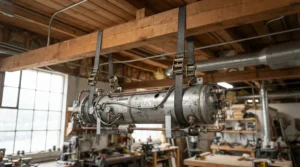
Specs on a box only tell part of the story, so here’s what actually happens once a fan like the VIVOSUN D4 or AC Infinity CLOUDLINE T4 is running in a real closet. Within the first hour, you should notice a measurable temperature drop near the top of the space, since that’s where hot air pools first and where exhaust fans are typically positioned. Humidity takes a bit longer to stabilize — expect 24-48 hours of the fan cycling before relative humidity settles into a consistent range, especially if you’ve just watered or the space was previously sealed. Noise perception is oddly non-linear: a fan rated at 30 dB can feel louder in a small, hard-surfaced closet than the same rating would in an open room, because sound reflects off nearby walls and shelving with nowhere to disperse — which is exactly why quieter-rated fans like the TerraBloom ECMF-100 feel disproportionately more pleasant in tight spaces. On lower speed settings, most of these fans genuinely fade into background noise within a day or two of use, which aligns with what reviewers consistently report once the initial “is this too loud” adjustment period passes.
Space-Saving Mounting Brackets for Confined Closets
Mounting hardware doesn’t get much attention, but it’s often the deciding factor in whether a fan actually fits your specific closet. Most inline fans, including the VIVOSUN D4 and iPower 195 CFM Fan, ship with basic integrated bracket tabs designed for flat surfaces like shelving or a stud-backed wall section — functional, but they do require a few inches of clearance around the fan body. For genuinely tight closets, aftermarket low-profile L-brackets or rope-and-ratchet hanger kits (the kind bundled with several iPower combo kits) let you suspend the fan from the closet’s ceiling rail instead of a side wall, freeing up floor and shelf space entirely. What most buyers overlook about mounting brackets specifically is that orientation matters for some fans — models like the AC Infinity CLOUDLINE series are explicitly rated to mount in any orientation including vertically, which opens up corner-mounting options that a horizontally-biased fan can’t match. If your closet has almost no spare wall space, look for the fan with the smallest housing footprint on this list, which is consistently the VIVOSUN AeroZesh G4 or iPower Smart WiFi Inline Fan, both of which post compact dimensions well suited to shelving edges and doorframe headers.
Closet Humidity Management with a Vivosun Fan
Humidity is the single biggest long-term risk in any sealed closet grow, because unlike a temperature spike, excess moisture invites mold — and mold problems compound the longer they go unnoticed. The core principle, backed by the EPA’s guidance on mold and moisture control, is that controlling humidity is the only reliable way to prevent mold growth indoors, since mold simply cannot establish itself in a consistently dry environment. Practically, that means running your fan on a schedule or trigger rather than only “when it feels humid” — a VIVOSUN AeroZesh G4 on a timed cycle or an AC Infinity CLOUDLINE T4 with humidity-based automatic triggers both remove the guesswork entirely. Reviewers consistently report that closets without any dedicated exhaust fan see condensation on interior surfaces within days, while the same closets with even a basic 195 CFM fan running on a schedule stay dry and mold-free indefinitely. If your closet runs unusually humid regardless of fan speed, that’s usually a sign you need more passive intake, not more exhaust CFM — the fan can only pull out as much moist air as fresh air is allowed to replace it.
Long-Term Cost & Maintenance
Sticker price is only part of the real cost of running one of these fans for a full year or more. AC-motor fans like the VIVOSUN D4 and iPower 195 CFM Fan draw roughly 28-60 watts continuously, which at typical residential electricity rates adds up to a modest but real few dollars a month if run around the clock. EC-motor fans like the AC Infinity CLOUDLINE S4, AC Infinity CLOUDLINE T4, and TerraBloom ECMF-100 are meaningfully more efficient per CFM delivered, which starts to offset their higher upfront price range over a full growing season, especially if the fan runs continuously rather than intermittently. Maintenance costs are minor across the board — occasional impeller cleaning and, eventually, replacing worn ducting or clamps — but dual-ball-bearing fans like the CLOUDLINE S4 and CLOUDLINE T4 carry a real durability edge over sleeve-bearing budget fans, which tend to develop audible bearing wear noticeably sooner under continuous use. The total cost of ownership math generally favors budget fans for short, single-season projects and EC-motor fans for anyone planning to run a closet setup year-round for multiple seasons.
Safety and Electrical Considerations for Closet Installations
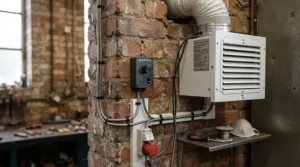
Closets are small, often poorly ventilated electrically, and frequently share circuits with other household devices — which makes basic electrical safety non-negotiable here. Every fan on this list draws a modest amount of power on its own, but problems arise when growers daisy-chain multiple devices (fan, lights, humidifier) through underrated extension cords. According to the U.S. Consumer Product Safety Commission’s guidance on extension cord safety, extension cords should never be used as permanent household wiring, and overloading is one of the most frequent causes of residential electrical fires — a genuinely important consideration when a fan is expected to run continuously for months. Practically, that means plugging your fan directly into a wall outlet or a properly rated power strip rather than a thin, temporary extension cord, keeping cords away from any water sources near carbon filters or humidity trays, and never running cords under carpet or through a closed doorway where heat can’t dissipate. ETL-listed fans, which include every model reviewed above, also include automatic overheat shutoff as a built-in safety layer, but that’s a backstop, not a substitute for sound electrical setup from the start.
FAQ
❓ How many CFM do I need for a small closet grow?
❓ Can I run a 4 inch inline fan without a carbon filter?
❓ How loud is a vivosun 4 inch inline fan for small closet grow in practice?
❓ Do inline fans need a passive intake vent?
❓ How often should I clean an inline duct fan?
Conclusion
There’s no single “best” fan here — there’s a best fan for your specific closet, budget, and tolerance for noise versus features. If you want the simplest, most proven entry point, the VIVOSUN D4 remains a genuinely solid choice at a low price. If you’re planning to grow into a smarter setup eventually, the VIVOSUN AeroZesh G4‘s upgrade path is hard to beat for the money, and if noise is your top priority above everything else, the TerraBloom ECMF-100 is worth the premium. For anyone treating this as a long-term, serious space, the AC Infinity CLOUDLINE T4 earns its higher price tag through genuine automation that removes daily guesswork. Whatever you choose, the real performance difference in a closet comes down to fundamentals covered above: correct sizing for your cubic footage, sealed and gently-curved ducting, adequate passive intake, and a maintenance rhythm that keeps the fan running at its rated spec instead of a dust-choked fraction of it.
Recommended for You
- Vivosun 4 Inch Fan With Speed Controller: 7 Top Picks (2026)
- Vivosun 4 Inch Fan Noise Level: 7 Quiet Picks For 2026
- Vivosun 4 Inch Fan For 2×2 Tent Setup: 7 Top Picks (2026)
Disclaimer: This article contains affiliate links. As an Amazon Associate, I earn from qualifying purchases. If you purchase products through these links, we may earn a small commission at no additional cost to you.
✨ Found this helpful? Share it with your friends! 💬🤗
