

In This Article
Here’s the thing nobody tells you when you buy your first 2×2 grow tent: the tent is the easy part. The fan is where people either nail it or quietly cook their plants in a humid little box for three months. If you’ve landed here searching for a Vivosun 4 inch fan for 2×2 tent setup, you’re already ahead of most first-time growers, because you’re thinking about airflow before your canopy turns to mush.
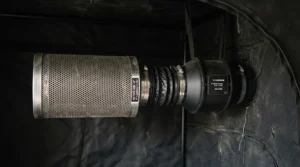
A 2×2 tent (that’s 4 square feet of floor space, roughly 8 cubic feet of air per foot of height) is small enough that a single well-sized 4-inch inline fan can do all the heavy lifting — pulling out hot, stale, humid air and letting fresh air replace it through a passive or actively-fed intake. Too small a fan and your tent turns into a sauna. Too big and you’re stripping out CO2 and humidity your plants actually need, while your electric bill and noise level both creep up for no reason.
Vivosun has built an entire lineup of 4-inch inline fans that span from bare-bones single-speed units under $30 to app-programmable EC motor fans that cost triple that. This guide walks through seven real, currently available Vivosun models — what their specs actually mean for a 2×2 tent, who each one is really built for, and where a Vivosun fan CFM for 2×2 tent needs starts to matter more than the marketing copy on the box. We’ll also get into sizing math, common rookie mistakes, and what genuine buyers report once the fan has been running for a few grow cycles.
Quick Comparison Table
| Model | Airflow | Speed Control | Best For |
|---|---|---|---|
| VIVOSUN 100 CFM Inline Fan | 100 CFM | Single-speed | Whisper-quiet closets and micro grows |
| VIVOSUN 130 CFM Speed-Controlled Fan | 130 CFM | Manual dial | Budget buyers who still want adjustability |
| VIVOSUN D4 195 CFM Fan | 195 CFM | Single-speed | Best all-around 2×2 workhorse |
| VIVOSUN Z4 203 CFM Fan | 203 CFM | Variable | Toughest build quality |
| VIVOSUN AeroZesh G4 | 195 CFM | 10-speed EC/PWM | Tech-forward, app-controlled growers |
| VIVOSUN R4 390 CFM Fan | 390 CFM | Variable | Overkill airflow, future-proofing |
| VIVOSUN Air Filtration Kit R4 | 190 CFM | Variable | All-in-one fan + filter + ducting bundle |
Looking at this table, notice how tight the CFM spread actually is between five of the seven models — most land between 100 and 205 CFM, which tells you something important: for a 2×2 tent, Vivosun has clearly engineered its mainstream lineup around what that footprint actually needs, not around chasing bigger numbers. The VIVOSUN R4 is the outlier at 390 CFM, and it’s really there for growers who might upgrade tent size later or who are running a scrubbing carbon filter that eats into effective airflow. The VIVOSUN Air Filtration Kit R4 trades a small amount of raw CFM for the convenience of a matched fan-filter-duct system, which matters a lot if you’ve never sized a carbon filter before.
💬 Found a pick you like already? Bookmark this page and keep scrolling — the full breakdown below explains exactly why each one made the list.
Top 7 Vivosun 4 Inch Fans for 2×2 Tent Setup: Expert Analysis
1. VIVOSUN 100 CFM Inline Duct Fan — quietest option under $25
The standout here is simple: this is the fan you buy when quiet matters more than raw power, and at under 30 dB it genuinely disappears into background noise.
Specs that matter: 110/120V, 14W draw, 2930 RPM, and a centrifugal impeller rated at 100 CFM. In practice, 100 CFM in a 2x2x5 tent (roughly 40 cubic feet) works out to well over 100 air exchanges per hour running flat-out, which sounds impressive until you remember that a carbon filter, bends in your ducting, and a closed tent all add resistance that eats into that number fast. Based on the spec comparison against the rest of this lineup, this model is the floor of what still qualifies as “usable” for a single small plant, not a flowering canopy under a 300W+ light.
Reviewers consistently report that it runs cooler and quieter than expected for the price, though a few buyers on Home Depot’s listing note the housing feels thin compared to metal-bodied competitors. If you can’t independently verify a specific customer complaint pattern beyond that, it’s fair to say the aggregate sentiment skews positive for basic ventilation use, less so for anyone pushing it hard 24/7 in a hot room.
Pros:
- ✅ Under 30 dB — one of the quietest fans in this list
- ✅ Compact housing fits tight tent corners easily
- ✅ Lowest price point of any model here
Cons:
- ❌ No speed control — it’s on or off
- ❌ 100 CFM is thin margin once a filter is added
Expect to pay around $20-$25 at the time of research. For a seedling tent, a closet grow, or a backup fan, the value here is hard to argue with.
2. VIVOSUN 130 CFM Inline Fan with Speed Controller — best budget upgrade with a dial
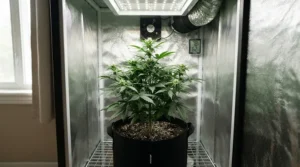
The short version: it’s the 100 CFM fan’s older sibling with one genuinely useful upgrade — a manual speed dial that turns an on/off switch into an actual tool.
The 130 CFM rating with an included speed controller means you can throttle airflow down during the vegetative stage (when your plants want more humidity) and open it up during flower (when moisture needs to leave fast). What most buyers overlook about this model is that the controller isn’t just about noise — it’s about matching airflow to the actual stage of the grow instead of running one fixed speed the entire cycle, which is exactly the kind of nuance a flat 100 CFM single-speed fan can’t offer.
Aggregated feedback on Vivosun’s speed-controlled small fans tends to mention two things repeatedly: the controller dial itself feels a little basic (a simple potentiometer knob, not digital), and the noise floor creeps up noticeably above the halfway mark on the dial. Neither is disqualifying, but it’s worth knowing going in rather than assuming silent operation at every setting.
Pros:
- ✅ Manual speed control fits both veg and flower stages
- ✅ 130 CFM leaves more headroom than the 100 CFM model
- ✅ Still budget-friendly for first-time growers
Cons:
- ❌ Noise increases meaningfully above mid-speed
- ❌ Analog dial, no memory or programmability
Price sits in the $25-$35 range, making this a smart middle step for anyone who wants adjustability without jumping to variable-speed metal-housed models.
3. VIVOSUN D4 4 Inch 195 CFM Inline Duct Fan — best all-around 2×2 workhorse
This is the one most 2×2 growers should actually start with, and the standout is balance: enough airflow to handle a real flowering canopy, without the premium price tag of the variable-speed models.
At 2500 RPM and 195 CFM, the D4 is rated ETL listed with an automatic reset function that trips if the motor overheats — a detail that matters more than it sounds, because a stuck impeller or blocked duct in a sealed tent is a real fire-risk scenario, not a hypothetical one. The flow deflector design keeps the published noise level at roughly 30 dB, and flanges on both ends make hookup to standard 4-inch ducting a five-minute job. Based on the spec sheet, 195 CFM against a 2×2’s roughly 32-40 cubic feet of air (depending on tent height) gives you a strong exchange rate even after accounting for filter resistance and a couple of 90-degree duct bends.
The Walmart listing for this exact model carries an aggregate 4.6-star rating across more than 150 reviews, which is a meaningfully large sample for this category — reviewers frequently cite easy installation and reliable long-term operation, with the more critical feedback centered on the fixed cord length feeling short for tents set up away from the nearest outlet.
Pros:
- ✅ 195 CFM comfortably covers a flowering 2×2 canopy
- ✅ ETL listed with automatic overheat reset
- ✅ Strong aggregate review rating (4.6★ across 150+ reviews)
Cons:
- ❌ Single-speed only, no dial or controller
- ❌ 5.9-foot cord can feel short in some room layouts
Expect a price in the $25-$35 range at most retailers, which puts it near the top of this list for pure value per CFM.
4. VIVOSUN Z4 4 Inch 203 CFM Inline Fan with Variable Speed Controller — toughest build in the lineup
The VIVOSUN Z4 stands out for one reason: galvanized steel construction in a category where most competitors, Vivosun included, lean on plastic housings.
At 2500 RPM and 203 CFM, the Z4’s numbers are close to the D4, but the real story is the build. Factory-painted galvanized steel resists corrosion in the kind of humid environment a grow tent inevitably becomes, and the aerodynamically shaped centrifugal impeller is engineered specifically to keep sound output disproportionately low for the airflow it produces — at least in theory. In practice, the published 49 dB noise rating is noticeably louder than the D4 or the R4, which is the tradeoff for that heavier housing; the sturdy vegan-leather cover helps dampen vibration but doesn’t fully close that gap. Here’s what to weigh: if your tent lives in a garage or basement where a few extra decibels don’t matter, the corrosion resistance is a legitimate long-term win. If it’s in a bedroom closet, the noise difference will be the thing you notice every single day.
Reviewer sentiment specific to long-term reliability on humid-environment steel-bodied duct fans tends to favor this build style precisely because it resists the rust and pitting that eventually degrades cheaper housings — a pattern well-documented across the broader inline fan category, even where individual review counts for this exact SKU are thinner than for the D4.
Pros:
- ✅ Galvanized steel resists rust in humid tents
- ✅ Variable speed controller included
- ✅ Vibration-dampening cover reduces rattling
Cons:
- ❌ 49 dB is louder than most fans on this list
- ❌ Premium build pushes price above the D4
Typical pricing lands around $45-$55, positioning the Z4 as the durability pick rather than the quiet pick.
5. VIVOSUN AeroZesh G4 4 Inch EC Inline Fan with E12 Speed Controller — best for tech-forward growers
The AeroZesh G4 is the smart-home version of a grow tent fan, and the standout is the E12 controller: ten PWM-selectable speeds with backup memory that remembers your last setting through a power cut.
What most buyers overlook about EC (electronically commutated) motors versus standard AC motors is that the efficiency gain isn’t just about electricity cost — a PWM-controlled EC motor can run smoothly at very low RPM without the motor whine and heat buildup that plague variable-voltage AC controllers at low settings. Vivosun doesn’t publish an exact decibel spec for the G4, but the architecture behind EC motors is specifically built to reduce that low-speed noise penalty, which is the main complaint growers have about older analog-dial fans like the 130 CFM model earlier on this list. The three ON/OFF cycle modes let the fan run on a duty cycle to save power overnight, and the controller itself is upgradeable to Vivosun’s E42A multi-device hub for app-based remote control through GrowHub.
Based on the spec comparison, 195 CFM puts the G4 in the same airflow bracket as the D4, so buyers aren’t paying this premium for more raw power — they’re paying for control precision and smart-home integration, plain and simple.
Pros:
- ✅ 10-speed PWM control with settings memory
- ✅ App-programmable via GrowHub with E42A upgrade
- ✅ EC motor design reduces low-speed noise and heat
Cons:
- ❌ Meaningfully pricier than same-CFM AC models
- ❌ App ecosystem adds complexity some growers won’t want
Expect to pay in the $60-$75 range, which is the steepest ask on this list — but it’s the only fan here built for climate-automation setups.

6. VIVOSUN R4 4 Inch 390 CFM Inline Fan with Variable Speed Controller — most airflow headroom
The R4’s standout is raw capability: 390 CFM at 2550 RPM is roughly double what the rest of this lineup offers, which sounds like overkill for a 2×2 — and often is.
Here’s the honest analysis: on paper, 390 CFM in a 2×2 tent is more airflow than most single-plant setups need, and running it wide open would likely over-dry the space and strip beneficial humidity during vegetative growth. The variable speed controller is what makes this fan usable rather than excessive — dialed down to 30-40% of max, it delivers airflow comparable to the D4 or Z4 while leaving enormous headroom for a carbon filter, extra duct length, or a future tent upgrade to a 3×3 or 4×4 without buying a new fan. The <37 dB noise rating at low-to-mid speeds is genuinely impressive given the motor’s total output ceiling, and the removable duct ends with locking tabs make filter swaps and cleaning noticeably faster than fixed-flange designs.
Reviewers who’ve run this model with a carbon filter attached tend to report that the effective airflow at moderate dial settings lines up closely with Vivosun’s published number, which is a meaningfully honest sign — a lot of inline fans lose 30-40% of rated CFM once resistance is added, and reports here suggest the R4 holds up better than some single-speed competitors under that same load.
Pros:
- ✅ 390 CFM ceiling covers filters, long ducting, and future tent upgrades
- ✅ Under 37 dB even though it’s the most powerful fan here
- ✅ Removable duct ends simplify cleaning and filter swaps
Cons:
- ❌ Requires dialing down significantly for a 2×2, adding a learning curve
- ❌ Higher upfront cost than same-CFM-effective single-speed models
Price generally falls in the $55-$70 range — solid value if you actually intend to use the extra ceiling eventually.
7. VIVOSUN Air Filtration Kit R4 (Fan + Carbon Filter + Ducting Combo) — best all-in-one bundle
The standout here isn’t the fan itself — it’s that Vivosun pre-matched the fan, carbon filter, and ducting so a first-time grower doesn’t have to guess whether the pieces fit together.
The kit centers on the R4 fan platform (2300 RPM, 190 CFM with variable speed control) paired with a carbon filter loaded with more than 1,050mg/g RC-rated Australian virgin charcoal in a 4-inch by 14-inch housing, plus triple-layer ducting with two stainless clamps. What the spec sheet won’t tell you, but reviewers note, is that odor control from activated carbon filters is a consumable process — the charcoal bed loses effectiveness gradually as it saturates, typically over 12-18 months of steady use, not indefinitely. Based on the spec comparison, buying this as a matched kit rather than piecing together a separate fan, filter, and ducting from three different sellers all but eliminates the sizing mismatch that trips up a lot of first-time buyers (an undersized filter choking airflow from an oversized fan is one of the most common setup mistakes in this hobby).
Aggregated sentiment around bundled fan-filter kits in this category tends to emphasize the simplicity of a single unboxing experience over any one individual component’s raw performance — buyers report fewer compatibility headaches, in exchange for slightly less flexibility to mix and match brands later.
Pros:
- ✅ Fan, filter, and ducting are pre-matched for you
- ✅ 1,050+ RC virgin charcoal handles real odor control
- ✅ Triple-layer ducting resists leaks and kinks
Cons:
- ❌ Carbon filter is a wearing part that needs replacing over time
- ❌ Bundle price is higher than buying the bare R4 fan alone
Expect a bundle price in the $75-$95 range — genuinely good value once you account for what buying the three components separately would cost.
Top 7 Products: Full Specs Comparison
| Model | Airflow | Noise | Speed Control | Price Range | Best For |
|---|---|---|---|---|---|
| VIVOSUN 100 CFM Fan | 100 CFM | <30 dB | None | $20-$25 | Micro grows, closets |
| VIVOSUN 130 CFM Fan | 130 CFM | Moderate | Manual dial | $25-$35 | Budget + adjustability |
| VIVOSUN D4 195 CFM | 195 CFM | ~30 dB | None | $25-$35 | Best all-around 2×2 pick |
| VIVOSUN Z4 203 CFM | 203 CFM | ~49 dB | Variable | $45-$55 | Toughest, humid rooms |
| VIVOSUN AeroZesh G4 | 195 CFM | Low (EC) | 10-speed PWM | $60-$75 | Smart/app control |
| VIVOSUN R4 390 CFM | 390 CFM | <37 dB | Variable | $55-$70 | Future-proofing, filters |
| VIVOSUN Air Filtration Kit R4 | 190 CFM | <37 dB | Variable | $75-$95 | All-in-one bundle |
Reading across this table, the value story is clear: the VIVOSUN D4 delivers the best CFM-per-dollar for a straightforward 2×2 flowering setup, while the VIVOSUN R4 and AeroZesh G4 justify their higher price tags through headroom and control precision rather than raw airflow. If odor control matters to you — which it usually does the moment flowering starts — the Air Filtration Kit R4 likely saves you money and guesswork versus buying a fan and filter separately from two different sizing charts.
Practical Usage Guide: Setting Up Your Vivosun Fan the Right Way
Getting a Vivosun 4 inch fan for 2×2 tent setup running well isn’t just plugging it in — the first 30 days set the tone for the entire grow cycle.
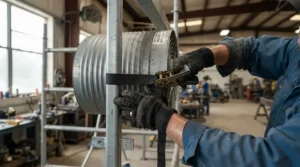
Mount the fan at the top of the tent, exhausting outward, with the airflow direction arrow (usually printed on the housing) pointing away from the tent interior. Attach your ducting with the included clamps or locking tabs, keeping runs as short and straight as possible — every 90-degree bend in flexible ducting costs you real CFM, sometimes 10-15% per bend according to HVAC ducting studies. If you’re running a carbon filter, mount it inside the tent directly above the fan so odor-laden air passes through the charcoal before it ever reaches the fan blades.
A common first-30-days mistake is running the fan at full speed non-stop from day one. Instead, start at a lower setting during seedling and early vegetative stages when your plants actually benefit from higher ambient humidity, then increase speed as the canopy fills in and transpiration ramps up. Check your tent walls: a slight inward bow means negative pressure is working correctly and odors are being contained; walls sucked in dramatically or ballooning outward both signal your passive intake is mismatched to your exhaust CFM.
Maintenance is minimal but not optional — wipe down the impeller blades every 60-90 days, since dust buildup unbalances the fan and increases both noise and electrical draw over time.
Real-World Scenarios: Which Vivosun Fan Fits Your Situation
Numbers on a spec sheet only mean so much until you match them to an actual grow. Here are three common profiles.
The apartment-dwelling first-timer: Growing one plant in a closet-adjacent 2×2 tent, sharing walls with neighbors, noise is the top priority. The VIVOSUN 100 CFM Fan or the VIVOSUN D4 are the obvious picks — quiet, simple, single-speed, and cheap enough that a mistake doesn’t sting.
The seasonal grower planning to upgrade tents: If you’re starting in a 2×2 now but eyeing a 3×3 or 4×4 within a year or two, buying the VIVOSUN R4 now means you won’t need to re-buy a fan when you scale up — just turn the speed dial higher.
The odor-conscious grower in a shared house: Anyone worried about smell escaping into shared living space should skip the bare fans entirely and go straight to the VIVOSUN Air Filtration Kit R4, since a mismatched aftermarket filter is one of the most common reasons odor control fails in small tents.
✨ Don’t Miss These Exclusive Deals!
🔍 Compare current pricing and availability on any of these seven picks before you commit — a few dollars’ difference between models can shift which one makes sense for your setup.
What Is a Vivosun 4 Inch Fan for 2×2 Tent Setup?
A Vivosun 4 inch fan for 2×2 tent setup is a 4-inch diameter inline duct fan from Vivosun’s ventilation lineup, sized specifically to exhaust hot, humid, or CO2-depleted air out of a 2×2-foot grow tent while pulling fresh air in through a passive or intake vent, typically rated between 100 and 400 CFM depending on the model.
The 4-inch diameter matches the standard duct size most 2×2 tents ship with, and it’s genuinely the correct size for this footprint — going up to a 6-inch fan on a 2×2 tent is a classic overkill mistake that just wastes money and over-dries the space. All of these fans are rated using cubic feet per minute (CFM), the standard volumetric airflow unit used across HVAC and ventilation equipment in the U.S., which is exactly why every spec sheet in this guide leans on that same measurement.
How to Choose the Right Vivosun Fan CFM for 2×2 Tent
Sizing a Vivosun fan CFM for 2×2 tent needs correctly comes down to a handful of decision points, not guesswork.
- Calculate your tent’s cubic footage first. Multiply length by width by height in feet — a standard 2x2x5 tent is about 20 cubic feet of usable growing volume, though the “true” air volume including headspace can run closer to 32-40 cubic feet.
- Target 1-3 full air exchanges per minute. Divide your tent’s cubic footage by your target exchange time (in minutes) to get your baseline required CFM.
- Add 20-30% CFM headroom for a carbon filter. Filters are the single biggest airflow tax in most setups, easily cutting effective CFM by a quarter or more.
- Add more headroom for duct length and bends. Every extra foot of ducting and every 90-degree turn reduces effective airflow further.
- Check your climate. Hot, humid regions need more exchange capacity than cool, dry ones to hold the same in-tent temperature.
- Decide if variable speed is worth the premium. If you’re running the same light and canopy density all season, single-speed may be enough; if you swing between seedling and full flower, variable speed earns its keep.
- Match noise tolerance to your living situation. A bedroom closet and a detached garage have very different acceptable noise ceilings.
Running these numbers for a typical 2×2 tent with a filter attached usually lands you in the 150-250 effective CFM zone — which is exactly why the D4, Z4, and AeroZesh G4 all cluster around 195-205 CFM rather than by coincidence.
Vivosun Fan Sizing Guide for Small Tents
A proper Vivosun fan sizing guide always starts with the same math used above: cubic footage times your target exchange rate, then padded for real-world resistance. As one detailed grow tent sizing breakdown puts it, the smart approach is to run the CFM calculation first, then buy the fan, filter, and duct as a matched set in whatever diameter that calculation points to, rather than picking parts separately and hoping they line up.
For a 2×2 tent specifically, most growers land comfortably in the 150-250 CFM window once a filter and moderate ducting are factored in, which rules out the smallest 100 CFM model for anything beyond a seedling-stage or micro-grow, and rules out running the 390 CFM R4 anywhere near full speed unless the tent is unusually leaky or the room ambient temperature is genuinely hot. If you’re unsure which bracket you fall into, oversizing slightly and running a variable-speed model at reduced power is the safer mistake to make, since you can always dial down airflow but you can’t dial past a single-speed fan’s ceiling.
Small Tent Airflow With Vivosun: What to Expect
Small tent airflow with Vivosun fans behaves differently than people expect coming from bigger grow rooms, mostly because a 2×2 tent has so little total air volume that changes happen fast — both the good kind and the bad kind.
Expect noticeable temperature swings within minutes of your light cycle flipping on or off, since there’s simply less thermal mass to buffer the change. Expect humidity to spike right after lights-off as the air cools and its capacity to hold moisture drops — this is exactly when your exhaust fan should still be running, not idling. University extension research on gray mold in enclosed growing environments notes that a thin film of surface moisture sustained for several hours is enough to trigger infection, which is exactly the window a lights-off humidity spike creates if the exhaust fan isn’t still moving air. And expect that even a modest single-speed 195 CFM fan like the D4 will noticeably out-perform a passive-only setup within the first few days, visible as drier tent walls and a canopy that isn’t drooping by midday.
What most first-timers don’t expect: a 2×2 tent with strong exhaust and a too-small passive intake will pull air in so forcefully that the intake vent whistles or the tent walls visibly cave inward — a sign to open up your intake, not to slow down your fan.
Single-Plant Tent Airflow Needs: How Much Is Enough?
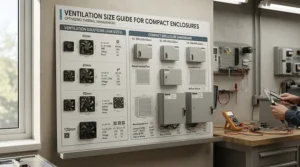
Single-plant tent airflow needs are almost always lower than growers assume walking in, because the marketing on these fans is written with multi-plant, high-density canopies in mind.
A single healthy plant in a 2×2 tent transpires far less water vapor and produces far less heat than a packed four-plant Sea of Green setup would in the same footprint, which means the lower end of this lineup — the 100 CFM or 130 CFM models — is genuinely sufficient through vegetative growth for most single-plant grows. Where single-plant tent airflow needs actually increase is late flower, when a single large, dense cola-heavy plant can transpire nearly as much moisture as a smaller multi-plant canopy would, and when trichome-heavy buds become genuinely susceptible to mold if humidity isn’t kept moving. That’s the point where stepping up to a 195-205 CFM model, or dialing a variable-speed fan higher, starts to matter even for a lone plant.
Common Mistakes When Buying a Vivosun 4 Inch Fan
Even careful buyers trip over a handful of predictable pitfalls in this category.
Buying based on CFM alone, ignoring noise, is probably the single most common regret — a fan that’s technically perfect on paper but too loud for a shared living space gets turned down permanently, which defeats the point of buying a higher-CFM model in the first place. Skipping the carbon filter math is a close second: pairing an undersized filter with an oversized fan chokes actual airflow far more than most buyers expect, sometimes cutting effective CFM by 40% or more. Mismatching duct diameter is another classic error — a 4-inch fan needs 4-inch ducting throughout the run, and stepping down to a smaller size anywhere along the path creates a bottleneck that undoes the fan’s rated performance entirely. Finally, ignoring intake sizing relative to exhaust is a mistake that shows up as a tent visibly straining at the seams; passive intake area should generally be two to three times the cross-sectional area of the exhaust duct.
Vivosun Inline Fans vs Passive & Clip Fans: What’s the Real Difference?
A lot of first-time growers wonder if they even need an inline exhaust fan versus just running a clip-on circulation fan and cracking the tent occasionally. The short answer: for anything beyond a seedling-stage grow, they’re solving two completely different problems.
| Factor | Inline Exhaust Fan | Clip-On Circulation Fan Only |
|---|---|---|
| Removes heat/humidity | Yes, actively | No, only stirs existing air |
| Prevents mold in flower | Effective | Insufficient alone |
| Odor control (with filter) | Yes | Not applicable |
| Noise | Low to moderate | Very low |
| Best For | Any tent past week 2-3 of veg | Seedling stage air circulation only |
The comparison above makes the case pretty plainly: a clip-on fan moves air around inside a sealed box, but it never actually replaces that air, which means heat, humidity, and CO2 depletion all just accumulate regardless of how much the leaves are rustling. Growers commonly run both together — an inline exhaust fan like the VIVOSUN D4 handling air exchange, and a small clip fan improving canopy penetration and stem strength — rather than treating them as competing options.
Features That Actually Matter (And Those That Don’t)
Marketing copy on inline fans loves to bury the features that actually change your day-to-day experience under ones that sound impressive but barely register.
What actually matters: real-world CFM after a filter is attached (not the marketing number on the box), noise level at the speed you’ll actually run day-to-day (not the lowest published dB at minimum speed), and duct connection design — flanges versus removable locking tabs genuinely affect how painless cleaning and filter swaps are months down the line. What doesn’t matter nearly as much as it sounds: RPM as a standalone number (it’s meaningless without knowing impeller design), and app connectivity for most casual single-tent growers, since a $10 mechanical timer accomplishes 90% of what most people actually use smart scheduling for.
Long-Term Cost & Maintenance
Sticker price is only part of the real cost of running any of these fans for a full year or more.
At roughly 14-28 watts depending on the model, running a Vivosun fan continuously (the recommended approach for most tents) costs somewhere in the range of a few dollars a month in electricity at typical U.S. residential rates — genuinely negligible compared to lighting costs in the same tent. The bigger long-term cost is the carbon filter, if you’re running one: expect to replace the charcoal bed roughly every 12-18 months of steady use, which is the main recurring expense the Air Filtration Kit R4 owners should budget for that bare-fan buyers don’t have to think about at all.
| Cost Factor | Budget Models (100-130 CFM) | Premium Models (Z4, G4, R4, Kit) |
|---|---|---|
| Upfront Price | Lower | Higher |
| Electricity (annual) | Marginally lower | Marginally higher |
| Expected Lifespan | Solid for casual use | Built for heavier, longer-term use |
| Best For | Occasional or single-season growers | Repeat, multi-season growers |
Looking at total cost of ownership rather than just the sticker price, the gap between the cheapest and most expensive fans on this list narrows considerably once you factor in years of use — a $70 fan that lasts through six grow cycles without needing replacement can easily beat a $25 fan you end up replacing twice.
Safety, Noise & Electrical Guide
A few safety basics apply regardless of which model you pick. All the fans on this list list ETL certification or equivalent safety listing, meaning they’ve been independently tested against U.S. electrical safety standards — always confirm this on the specific listing before buying from a third-party marketplace seller, since counterfeit listings do occasionally surface for popular grow equipment.
On noise: none of these fans come close to levels considered hazardous for regular human hearing exposure — OSHA’s occupational noise guidance sets the threshold for mandatory hearing protection around 85-90 decibels averaged over an 8-hour shift, and even the loudest fan here (the Z4 at roughly 49 dB) sits well under that. The practical noise concern for a bedroom or apartment isn’t safety, it’s simply whether the hum is loud enough to bother you or a neighbor while you sleep.
On humidity and mold specifically: keeping air moving through lights-off hours, not just lights-on, is a non-negotiable habit rather than an optional one, since that’s precisely when surface moisture on leaves and buds has the longest window to sit undisturbed.

Frequently Asked Questions
❓ What size Vivosun fan do I need for a 2x2 tent?
❓ Is 100 CFM enough for a 2x2 grow tent?
❓ Do I need a carbon filter with my Vivosun fan?
❓ How loud is a Vivosun 4 inch inline fan?
❓ Should my Vivosun fan run 24/7?
Conclusion
Picking the right Vivosun 4 inch fan for 2×2 tent setup really comes down to matching CFM, noise tolerance, and budget to how you actually intend to grow — not chasing the biggest number on the box. For most first-time single-plant growers, the VIVOSUN D4 hits the sweet spot of airflow, price, and simplicity. Budget-conscious buyers who want some adjustability should look at the VIVOSUN 130 CFM model, tech-forward growers will get more genuine value from the AeroZesh G4, and anyone worried about smell should skip straight to the Air Filtration Kit R4 rather than piecing together mismatched parts later.
Whichever model you land on, remember that a fan is only as good as the intake, ducting, and filter it’s paired with — get those fundamentals right, and even the least expensive fan on this list will keep a 2×2 tent healthy from seedling to harvest.
Recommended for You
- Vivosun 4 Inch Inline Fan Review For Grow Tent: 7 Picks Tested For 2026
- Vivosun 4 Inch Fan and Filter Combo: 7 Best Picks For 2026
- Cheapest Vivosun 4 Inch Inline Fan: 7 Budget Picks For 2026
Disclaimer: This article contains affiliate links. As an Amazon Associate, I earn from qualifying purchases. If you purchase products through these links, we may earn a small commission at no additional cost to you.
✨ Found this helpful? Share it with your friends! 💬🤗
