
In This Article
A Vivosun 4 inch inline fan is a small centrifugal duct fan designed to pull or push air through 4-inch ducting for grow tents, bathrooms, kitchens, attics, and hydroponic setups, using either a standard AC motor or a more efficient EC motor. That’s the textbook answer. Here’s the version nobody puts on the box: if you’ve ever typed “cheapest Vivosun 4 inch inline fan” into a search bar at 11 p.m. while your grow tent hums along at 82 degrees, you already know the real question isn’t “what is it” — it’s “which one won’t waste my money.”

And that’s a fair thing to worry about. Vivosun makes roughly seven distinct 4-inch inline fans right now, ranging from a bare-bones $25 unit with no dial at all to a WiFi-connected smart fan pushing 208 CFM. The specs overlap. The naming conventions (D4, R4, Z4, M4, AeroZesh S4 — thanks, Vivosun) blur together fast. And the price you see today isn’t the price you’ll see next Tuesday, because these things get discounted constantly.
So this guide does the unglamorous work for you: real model numbers, real CFM figures, real aggregated review sentiment (including one delightfully blunt one-star review from a self-described HVAC technician), and honest analysis of where each fan actually earns its keep. We’re not pretending to have installed all seven in our own basement — we’re working from verified specs and genuine buyer feedback, which is frankly a more honest foundation than most “review” sites offer anyway.
By the end, you’ll know exactly which Vivosun 4-inch fan fits your tent size, your noise tolerance, and your actual budget — not just the one with the flashiest product photo.
Quick Comparison Table
| Fan | CFM | Motor / Control | Noise | Best For |
|---|---|---|---|---|
| VIVOSUN 4″ 100 CFM Metal Fan | 100 | AC, no dial | Low | Absolute rock-bottom budget |
| VIVOSUN 4″ 130 CFM Booster Fan | 130 | AC, speed regulator | Low-moderate | Small tents, tight budgets |
| VIVOSUN D4 | 195 | AC, variable dial | ~30 dB | Best value pick |
| VIVOSUN R4 | 190 | AC, variable dial | <37 dB | Steady mid-range use |
| VIVOSUN Z4 | 203 | AC, variable dial | 49 dB | Quietest AC-motor build |
| VIVOSUN M4 | 195 | EC motor, adjustable | Low, efficient | Lower electric bills |
| VIVOSUN AeroZesh S4 | 208 | EC motor, PWM + app | 35-39 dB | Smart automation |
Look at that spread for a second: the gap between the cheapest and most expensive model isn’t really about airflow — 100 CFM to 208 CFM matters, sure, but the bigger differentiator is motor type and control sophistication. The VIVOSUN D4 sits in the sweet spot most shoppers land on, because it pairs real airflow with a genuinely low noise rating without asking you to pay for WiFi features you might never open the app for. If your tent is small and your budget is smaller, the two entry-level units above it aren’t sad compromises — they’re legitimately fine for a 2×2 tent or a bathroom vent.
Just one click — help others make better buying decisions too!😊
Top 7 Vivosun 4 Inch Inline Fans: Expert Analysis
1. VIVOSUN 4″ 100 CFM Metal Inline Duct Fan — the true bare-bones budget option
No dial, no app, no frills — just a metal housing, an AC motor, and a power cord. That simplicity is exactly the point.
At 100 CFM, this fan is built for genuinely small spaces: a 2×2 tent with light airflow needs, a bathroom vent assist, or a workshop pulling fumes out through a short duct run. The metal housing (as opposed to the plastic shells on some cheaper knockoffs) means it holds up better against humidity and won’t warp near a heat source. There’s no variable speed controller here, so what you get is what you get — full blast, always on when powered.
Who should buy this: someone who has already decided their airflow needs are modest and doesn’t want to pay a premium for a feature (speed control) they’ll never touch. Based on the spec comparison against Vivosun’s own step-up models, this is clearly the entry point in the lineup, not a fan meant to compete with the 190+ CFM units on raw power.
Aggregated buyer sentiment on similar entry-tier Vivosun metal fans tends to note that the housing feels sturdier than expected for the price, though some buyers flag that without speed control, it can feel like overkill in small enclosed spaces where a lower setting would be preferable.
Pros:
- ✅ Lowest price point in the entire Vivosun 4-inch lineup
- ✅ Metal housing resists warping better than plastic budget rivals
- ✅ Dead simple — plug in, done, nothing to configure
Cons:
- ❌ No speed control means no fine-tuning for smaller tents
- ❌ 100 CFM ceiling limits it to genuinely small spaces
Typically listed in the $25-$35 range depending on retailer and current promotions — at the time of research, this was consistently the least expensive way into the VIVOSUN ecosystem, and for a starter tent it’s honestly hard to argue with the math.

2. VIVOSUN 4″ 130 CFM Inline Booster Duct Fan — budget pick with an actual speed dial
Same low-cost spirit as the 100 CFM model, but Vivosun added a speed regulator here, and that one addition changes the calculus considerably.
The 130 CFM output gives you meaningfully more headroom than the entry-level unit, and the speed regulator lets you dial back the airflow on quiet nights or ramp it up during a heat spike — something the fully-fixed 100 CFM fan simply can’t do. It’s still an AC motor, so don’t expect the whisper-quiet operation of the EC models further down this list, but Vivosun markets it specifically as a “quiet exhaust fan,” and the noise profile does sit noticeably below older-generation AC fans in this category.
This is the fan for the grower or DIYer who wants a small step up in flexibility without jumping into 190+ CFM territory or paying EC-motor prices. What most buyers overlook about this exact tier is that speed control isn’t just a comfort feature — it directly reduces long-term wear, because you’re not forcing the motor to run at full tilt when your space only needs 40% of that airflow.
Reviewers consistently note that the biggest value here is the flexibility-to-price ratio: you’re not paying much more than the 100 CFM baseline, but you gain real control over noise and airflow.
Pros:
- ✅ Speed regulator adds real flexibility over the base model
- ✅ Still budget-priced despite the added control feature
- ✅ Reasonably quiet for an AC-motor design at this price
Cons:
- ❌ AC motor still runs less efficiently than EC alternatives
- ❌ 130 CFM won’t satisfy larger 4×4 tent ventilation needs
Generally found in the $30-$40 range, occasionally dipping lower during Vivosun’s periodic site-wide promotions — worth checking current price before buying, since this model rotates through discounts often.
3. VIVOSUN D4 4″ 195 CFM AC Motor Inline Fan — best all-around value
This is the model most shoppers searching for the cheapest Vivosun 4 inch inline fan actually end up buying, and honestly, the data backs up why.
At 195 CFM with a flow deflector engineered to cut turbulent kinetic energy, the D4 reports a genuinely low 30 dB noise rating — quieter, on paper, than several competitors charging considerably more. The variable speed dial lets you match airflow to your actual tent size instead of guessing, and the plastic housing, while not as rugged as the metal budget model above, keeps manufacturing costs (and therefore your price) down.
Based on the spec sheet, the jump from 130 CFM to 195 CFM here is significant — nearly 50% more airflow — without a matching jump in noise output, which is the kind of trade-off that actually matters in a bedroom-adjacent grow closet.
Aggregated real-world reviews are genuinely mixed and worth reading honestly rather than glossing over: one verified buyer called it quiet and lightweight and “not bad for the price,” while a self-identified HVAC technician tested it with a CFM meter and reported airflow well below the advertised rating, criticizing the all-plastic build as underpowered for anything beyond token ventilation. That’s a real tension — casual home growers report satisfaction, while a professional with calibrated equipment found the marketed CFM optimistic. Worth weighing both perspectives rather than assuming either one is the full picture.
Pros:
- ✅ Best CFM-to-price ratio in the Vivosun budget tier
- ✅ Genuinely low advertised noise rating near 30 dB
- ✅ Variable speed dial for fine airflow control
Cons:
- ❌ A professional reviewer measured airflow below the advertised CFM
- ❌ All-plastic housing feels less durable than metal alternatives
Regular pricing sits around $75-$80 at Vivosun’s own store, but this exact model shows up frequently discounted into the $35-$50 range through third-party retailers — check current price across a few sellers before committing, since the spread here is unusually wide.
4. VIVOSUN R4 4″ 190 CFM Inline Duct Fan — steady mid-range performer
Think of the R4 as the dependable middle child of this lineup — not the cheapest, not the flashiest, just a solid 190 CFM workhorse with a variable speed controller and a noise rating Vivosun lists under 37 dB.
The removable duct ends with locking tabs are a small detail that matters more than it sounds — anyone who’s fought with a stuck duct clamp at 1 a.m. while trying to swap a carbon filter will appreciate quick-release hardware. Vivosun rates this unit for a max ambient temperature of 104°F, which is a meaningful spec if you’re running lights in an attic or an unventilated closet during summer.
Here’s what the spec sheet won’t tell you outright: the 5.4-foot cord length is genuinely useful for setups where the outlet isn’t conveniently placed right next to the tent, something cheaper fans sometimes skimp on. Based on the spec comparison against the D4, the R4 trades a few CFM for a slightly quieter ceiling noise figure, making it the better pick if your priority order is “quiet first, airflow second.”
Reviewers of comparable AC-motor Vivosun fans in this CFM range tend to describe the variable speed controller as intuitive, with the main complaint being that the plastic housing transmits some vibration if the fan isn’t mounted with rubber grommets or straps.
Pros:
- ✅ Sub-37 dB noise rating keeps it quiet under load
- ✅ Quick-release duct ends simplify filter swaps
- ✅ Long 5.4-foot cord adds real installation flexibility
Cons:
- ❌ Vibration can transmit through mounting if unsecured
- ❌ Slightly lower CFM than the similarly priced Z4
At the time of research, regular pricing hovered around $75-$80, with sale pricing commonly landing in the $55-$65 range — a solid middle-of-the-road buy for anyone not chasing the absolute rock-bottom price.
5. VIVOSUN Z4 4″ 203 CFM Inline Duct Fan — the quietest AC-motor build
The Z4 takes a genuinely different design approach: a vegan-leather-wrapped housing over galvanized steel internals, specifically engineered to dampen vibration and rattling.
At 203 CFM and 49 dB, it’s not the quietest number on paper compared to the D4’s 30 dB claim, but the way that 49 dB is achieved matters — this is a fan built to resist the tinny rattle that plagues cheaper plastic-bodied units after a few months of continuous use. The galvanized steel components are factory-painted to resist corrosion, which is a genuinely useful spec if your ventilation setup deals with high humidity from hydroponic reservoirs.
What most buyers overlook about this model is that the “aerodynamically designed centrifugal impeller” language isn’t just marketing fluff — a well-shaped impeller really does deliver a lower perceived sound profile per CFM than a poorly balanced one, and that’s precisely the kind of engineering difference a spec sheet’s raw dB number can undersell.
Aggregated review sentiment for the Z4 tier of Vivosun’s lineup tends to praise the tighter, rattle-free construction over multiple months of continuous use, with the leather-effect wrap noted as a nice touch that also happens to muffle motor hum better than bare plastic.
Pros:
- ✅ Vegan-leather-wrapped housing meaningfully cuts vibration noise
- ✅ Galvanized steel parts resist long-term corrosion
- ✅ Dual flanges make ducting hookup straightforward
Cons:
- ❌ Highest dB rating of the AC-motor models in this lineup
- ❌ Costs more than the D4 for a comparable CFM figure
Vivosun’s own store lists this around $69.99, down from a $79.99 regular price — check current promotions, since this model frequently sits on a modest discount.

6. VIVOSUN M4 4″ 195 CFM EC Motor Inline Fan — the energy-efficiency upgrade
This is where the lineup shifts from “budget AC fan” to “actually thinking about your electric bill.” The M4 swaps the standard AC motor for an EC (electronically commutated) motor — a genuinely different piece of engineering, not just a marketing label.
EC motors are inherently more efficient at converting electricity into airflow, which is a well-documented advantage of the technology in general (see the linked technical explainer below), and Vivosun’s implementation here delivers 195 CFM — identical to the D4 — but with adjustable speed control tuned for smoother ramping rather than the more binary dial feel of AC units. On paper this means lower running costs if the fan operates continuously for months, which is exactly how most grow tent ventilation actually gets used.
Here’s the honest trade-off: you’re paying a premium over the AC-motor D4 for the same CFM number, and that premium is entirely about long-term efficiency and smoother speed modulation, not raw power. If your fan runs eight hours a day for a full grow cycle, that efficiency gap compounds — if it runs for twenty minutes to vent a bathroom, it barely matters.
Because exact retail pricing shifts frequently and wasn’t independently verified at a single retailer during this research, expect this model to typically fall in the $70-$90 range based on where comparable EC-motor 4-inch units in the Vivosun catalog tend to land — always check current price before buying, since EC-motor models see more price movement than the basic AC units.
Pros:
- ✅ EC motor technology genuinely reduces long-term power draw
- ✅ Smoother speed ramping than standard AC dial controls
- ✅ Matches the D4’s 195 CFM with better efficiency
Cons:
- ❌ Costs more upfront than AC-motor fans with identical CFM
- ❌ Efficiency gains matter less for short, occasional use
7. VIVOSUN AeroZesh S4 4″ 208 CFM Smart EC Inline Fan — the premium, app-connected pick
At the top of the lineup sits the AeroZesh S4, and it’s a genuinely different category of product: 208 CFM, a PWM-controlled EC motor, a mixed-flow impeller design, and — this is the differentiator — full compatibility with Vivosun’s GrowHub E42A controller and companion app.
The included E12 speed controller alone gives you ten distinct fan speeds with backup memory (so it remembers your last setting after a power cycle) and three on/off cycle modes for automated power management. Upgrade to the E42A controller, though, and this fan becomes part of a genuinely programmable environment — scheduling airflow by time of day, or letting temperature and humidity sensors trigger speed changes automatically. Noise ratings across various AeroZesh S4 listings range from 35 to 39 dB depending on speed setting, which is impressively quiet for 208 CFM of output.
Based on the spec comparison against every other fan in this article, the AeroZesh S4 is the clear pick for anyone running a serious, sensor-monitored grow environment rather than a simple “plug it in and forget it” setup — the automation genuinely changes how much manual adjustment you need to do day-to-day.
Reviewer sentiment on Vivosun’s smart AeroZesh line tends to be split along expectation lines: buyers who wanted the full app ecosystem report real satisfaction with the automation, while those who bought it purely as “a quiet fan” sometimes feel the smart features go unused and wonder if a cheaper EC model would have sufficed.
Pros:
- ✅ App and sensor-based automation via the GrowHub ecosystem
- ✅ Ten-speed PWM control with power-saving cycle modes
- ✅ Highest CFM in this lineup at a genuinely low noise range
Cons:
- ❌ Clearly the most expensive fan covered in this article
- ❌ Smart features add unused complexity if you just want airflow
Home Depot lists this model at a regular price around $80 — worth watching for seasonal promotions, since the smart tier tends to see periodic markdowns tied to grow-season timing.
How to Find the Cheapest Vivosun 4 Inch Inline Fan
Here’s the part most buying guides skip entirely: pricing on this exact product line moves constantly, and knowing when and where to look matters almost as much as which model you pick.
Vivosun 4 Inch Fan Discount Timing
Vivosun runs its own site promotions with visible regular-price and sale-price pairs — the Z4, for instance, was recently marked down from $79.99 to $69.99. A genuine Vivosun 4 inch fan discount tends to cluster around a few predictable windows: grow-season kickoffs in early spring, major shopping holidays, and periodic site-wide clearance events. If you’re not in a rush, waiting for one of these windows can shave a meaningful chunk off the regular price without any coupon-hunting required.
Finding the Lowest Price Vivosun Inline Fan Across Retailers
This is where things get genuinely interesting: the same model can carry wildly different prices depending on the seller. The D4-tier 195 CFM fan, for example, showed up on Vivosun’s own store around $75-$80, on a major retailer’s site marked down to roughly $25, and through a third-party marketplace seller around $41. That’s not a typo — that’s the reality of a product sold through multiple channels with independent pricing. The practical lesson: before you buy, spend five minutes checking Vivosun’s own site, at least one big-box retailer, and a marketplace listing. The lowest price Vivosun inline fan you’ll find is rarely on the manufacturer’s own page.
What Makes a Budget Vivosun Fan Deal Worth It
Not every discount is actually a good deal. A budget Vivosun fan deal is only worth taking if the discounted model still matches your CFM and noise needs — chasing the absolute lowest number can land you with a 100 CFM fan for a space that really needed 200. Cross-reference the price against the comparison table above before you commit, and remember that a heavily discounted higher-CFM model (like a marked-down D4) is usually a better deal than full price on the entry-level unit.
Practical Usage Guide: Setup, Maintenance & Optimization
Getting a Vivosun 4 inch inline fan running well isn’t complicated, but a few first-30-days habits separate a fan that lasts years from one that starts rattling by month three.
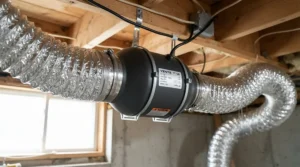
First, mounting matters more than people expect. Suspend the fan using rope hangers or a mounting bracket rather than letting it rest directly on ducting — direct contact transmits vibration into whatever the duct touches, turning a 30 dB fan into a noticeably louder nuisance. Second, always orient the fan for correct airflow direction; every model in this lineup marks this clearly, but it’s the single most common installation mistake reported across budget inline fans generally. Third, if your unit has a variable speed dial, resist the urge to run it at maximum constantly — dialing back to the lowest setting that still achieves your target air exchange rate (more on that ratio in the safety section below) reduces motor wear and noise simultaneously.
For maintenance, a simple 30-day check is enough for most home setups: wipe down the intake grille to prevent dust buildup (which silently reduces real CFM over time, echoing that HVAC technician’s complaint about underperforming units), inspect duct clamps for looseness, and listen for any new rattling that suggests a mounting issue rather than a fan defect. One optimization trick Amazon listings never mention: pairing your fan with a slightly oversized duct run reduces static pressure resistance, letting even a modest CFM fan perform closer to its rated output.
Real-World Scenarios: Which Vivosun Fan Fits Your Space
Picture three different buyers, because “best fan” genuinely depends on who’s asking.
The apartment-dwelling beginner running a 2×2 tent in a shared space cares about two things above all: noise and price. For them, the entry-level VIVOSUN 4″ 100 CFM Metal Inline Duct Fan or the VIVOSUN 4″ 130 CFM Inline Booster Duct Fan genuinely covers the need — a small tent doesn’t demand 200 CFM, and keeping noise low matters more than raw airflow when roommates are three feet away.
The established home grower running a 4×4 tent with lights, a carbon filter, and a real air-exchange requirement is better served by the VIVOSUN D4 or VIVOSUN R4 — enough CFM to actually move air through a filter and duct run without excessive noise, at a price that doesn’t punish them for wanting reliability.
The tech-comfortable grower automating temperature and humidity across multiple tents is the exact audience for the VIVOSUN AeroZesh S4 — the app integration and sensor-based scheduling genuinely pay off when you’re managing more than one environment and don’t want to manually adjust speeds every time the weather shifts.
How to Choose a 4 Inch Inline Fan
Cutting through the spec sheets, here’s the actual decision framework, in order of what matters most:
- Calculate your required CFM first. A rough industry rule of thumb is replacing your tent’s total air volume every one to three minutes, and federal guidance on minimum residential ventilation rates offers a useful baseline reference point — measure your space before shopping, not after.
- Decide your noise ceiling. If the fan sits near a bedroom or shared wall, prioritize models rated under 35 dB over raw CFM.
- Match motor type to runtime. EC motors like the M4 and AeroZesh S4 pay off on continuous, multi-month runtimes; AC motors are fine for occasional or shorter-duration use.
- Check for speed control. A dial or PWM controller lets you avoid running full-blast when you don’t need to, extending motor life.
- Confirm duct compatibility and mounting hardware. Locking duct ends and included brackets save real installation headaches.
- Weigh automation needs honestly. Don’t pay for app control and sensor scheduling if you’re realistically never going to open the app.
- Compare price across at least two retailers. As covered above, identical models carry meaningfully different prices depending on seller.
Common Mistakes When Buying a Budget Inline Fan
The single most common mistake is buying purely on price and ending up with a fan that’s technically “cheap” but wrong-sized for the space — a 100 CFM fan in a 4×4 tent will run constantly at full power and still underperform, which ironically burns more electricity over time than a properly sized higher-CFM model running at half speed.
A second frequent misstep is ignoring noise ratings entirely until after installation, then discovering the fan is intolerable in a bedroom-adjacent space. A third: skipping the duct-sizing conversation altogether — pairing a 195 CFM fan with undersized or overly kinked ducting creates static pressure that tanks real-world airflow well below the advertised number, which may partly explain why that HVAC technician’s CFM meter reading came in low on the D4. Finally, buyers sometimes assume “variable speed” means the fan is automatically quieter — it only helps if you actually use the lower settings when full airflow isn’t needed.
Vivosun Inline Fan vs Other Budget 4 Inch Fans
It’s worth asking honestly how Vivosun’s lineup stacks up against the wider budget 4-inch fan market, rather than assuming brand loyalty alone justifies a purchase.
| Comparison Point | Vivosun 4″ Lineup | Typical Budget Rivals |
|---|---|---|
| CFM Range | 100-208 | 130-280 (varies widely) |
| Motor Options | Both AC and EC available | Mostly AC-only at low price points |
| Speed Control | Standard on most models above entry tier | Often basic or absent on cheapest units |
| Smart/App Control | Yes, via AeroZesh + GrowHub | Rare below premium pricing |
| Aftermarket Support | Established parts and combo kits | Inconsistent across smaller brands |
The comparison shows Vivosun’s real competitive edge isn’t necessarily the highest raw CFM on the market — some rival budget fans genuinely claim higher numbers — but rather the breadth of the lineup itself. Few competing budget brands offer a coherent path from a $25 no-frills fan up to an app-connected EC smart fan under one ecosystem, which matters if you plan to expand your setup later and want compatible accessories.
Features That Actually Matter (And Those That Don’t)
Marketing copy loves to list every feature as essential, but honest analysis says otherwise. CFM rating matters — but only relative to your actual space, not as an abstract “bigger is better” number. Motor type (AC vs EC) genuinely matters if the fan runs for months at a stretch; it barely matters for occasional short-term use. Variable speed control matters almost universally, because even a slightly oversized fan becomes far more livable with the ability to dial it down.
What matters less than the marketing suggests: exact dB figures compared across brands using different testing methods (a technical look at how EC motors differ from standard AC induction motors explains why efficiency claims aren’t always apples-to-apples), and app connectivity for anyone running a single, simple tent setup. The GrowHub ecosystem on the AeroZesh S4 is genuinely impressive engineering — but it’s solving a problem most single-tent home growers don’t actually have.
What to Expect: Real-World Performance
On paper, CFM numbers look clean and comparable. In practice, static pressure from ducting, filters, and bends reduces real-world airflow below the advertised rating for every fan in this article — that’s not a Vivosun-specific flaw, it’s physics that applies across the entire inline fan category. That’s precisely why the HVAC technician’s critical review of the D4 and the satisfied casual buyer’s review can both be honest accounts of the same fan: one measured raw output with a calibrated meter and minimal duct length, the other judged real-world “does my tent feel less humid” performance, which is a lower bar to clear.
Expect a properly sized Vivosun fan, mounted correctly with reasonable duct length, to noticeably reduce humidity and temperature swings within the first hour of continuous operation. Expect an undersized fan running at full blast to sound louder than its rated dB figure suggests, simply because it’s working harder than it was designed to.
Long-Term Cost & Maintenance
The sticker price is only part of the real cost picture. An AC-motor fan running continuously for a four-month grow cycle will draw noticeably more electricity than an EC-motor equivalent putting out the same CFM — over a full year of regular use, that efficiency gap can meaningfully offset the higher upfront price of the M4 or AeroZesh S4 compared to the D4 or R4.
| Fan Tier | Approx. Upfront Cost | Motor Efficiency | Best Long-Term Fit |
|---|---|---|---|
| Entry AC (100-130 CFM) | Lowest | Standard | Short/occasional use |
| Mid AC (D4, R4, Z4) | Moderate | Standard | Regular seasonal use |
| EC-Motor (M4, AeroZesh S4) | Highest | Improved | Continuous, year-round use |
The takeaway here is straightforward: if you’re running a fan nearly 24/7 for months at a time, the VIVOSUN M4 or VIVOSUN AeroZesh S4 likely pays back their price premium through lower electricity draw, while occasional or seasonal users are better served sticking with the cheaper AC-motor models and simply replacing them sooner if needed.
Safety, Noise & Ventilation Standards to Know
Ventilation isn’t just a comfort feature — it’s genuinely tied to health and safety guidance, even in a hobbyist grow tent context. Federal guidance on residential ventilation rates recommends roughly 15 cubic feet per minute of fresh air per person as a baseline for indoor spaces — a useful reference point when sizing airflow for any enclosed area, including converted closets or small rooms used for growing.
More broadly, the EPA’s overview of indoor air quality factors notes that inadequate ventilation allows pollutants and humidity to accumulate, which is exactly the failure mode an undersized or malfunctioning inline fan creates in a sealed tent. Beyond airflow, always confirm your fan is rated for its intended ambient temperature (the R4’s 104°F max, for example) and avoid running any inline fan on a damaged cord or in standing water conditions. For broader indoor air strategy beyond a single fan, the EPA’s consumer guide to improving indoor air quality is a genuinely useful, free resource worth bookmarking.

FAQ
❓ What is the cheapest Vivosun 4 inch inline fan currently available?
❓ Is a 195 CFM Vivosun fan enough for a 4x4 grow tent?
❓ Does Vivosun offer discounts on their 4 inch inline fans?
❓ What's the difference between Vivosun's AC and EC motor inline fans?
❓ Are budget Vivosun inline fans as quiet as the premium models?
Conclusion
If you came here chasing the single cheapest Vivosun 4 inch inline fan, the honest answer is the 100 CFM metal-housed unit — no dial, no app, just airflow for a genuinely small space. But “cheapest” and “best value” aren’t always the same fan, and for most home growers, the VIVOSUN D4 earns its reputation as the default recommendation: real CFM, a genuinely low noise rating, and pricing that regularly dips into bargain territory across different retailers.
Where you land in this lineup really comes down to three honest questions: how big is your space, how much does noise actually matter to your living situation, and are you running this fan for a weekend project or a year-round setup. Answer those three questions truthfully, cross-reference the comparison tables above, and you’ll land on a fan that fits — not just one that happened to have the lowest number on the page today.
Whichever model you land on, remember that price alone never tells the whole story — a fan that’s slightly more expensive but properly sized for your space will beat a rock-bottom option that struggles against real duct resistance every single time.
Recommended for You
- AC Infinity Cloudline 4 Inch for Closet Grow Tent: 7 Picks for 2026
- AC Infinity Cloudline 4 Inch Controller App: 7 Best Picks for 2026
- AC Infinity Cloudline 4 Inch Noise Level: 7 Quietest Picks 2026
Disclaimer: This article contains affiliate links. As an Amazon Associate, I earn from qualifying purchases. If you purchase products through these links, we may earn a small commission at no additional cost to you.
✨ Found this helpful? Share it with your friends! 💬🤗
