
In This Article
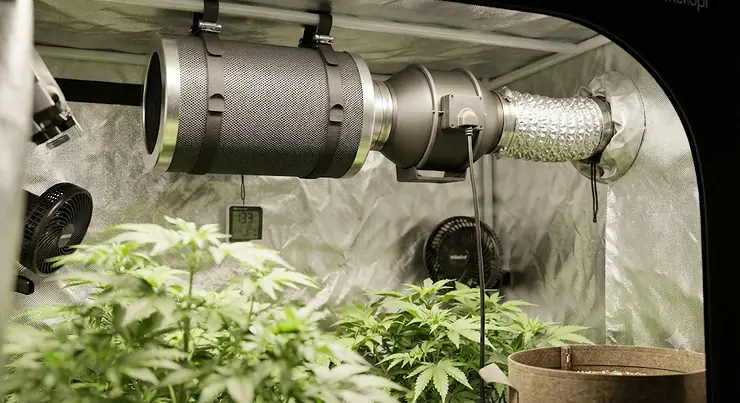
Somewhere between “my grow tent smells like a skunk convention” and “my landlord just texted asking what that smell is,” most growers discover the same hard truth: a fan alone doesn’t cut it, and a filter alone just sits there looking useless. You need both, matched to each other, moving air in the right direction. That’s the entire premise behind an inline fan and filter combo — one purchase, two jobs, zero guesswork about whether your fan’s static pressure can even push air through a dense carbon bed.
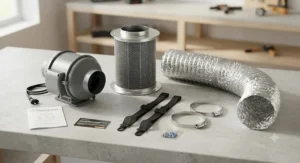
This guide walks through seven real, currently available kits spanning budget to premium, explains what the spec sheets actually mean for your grow, and digs into the mechanics — how a properly matched fan and carbon filter kit handles both air exchange and odor control by drawing fresh air in while adsorbing volatile compounds before exhaust air leaves the tent. If you’ve ever wondered why one 4-inch fan is $60 and another is $180, you’re in the right place. Activated charcoal, the material doing the heavy lifting in every filter here, has been used for gas adsorption since well before grow tents existed — it’s a genuinely old technology repurposed for a very modern problem, as Wikipedia’s overview of activated carbon lays out in more depth than any product listing will.
We’ll cover CFM ratings, ducting clamps, carbon filter scrubbers, budget bundle deals, and the mistakes that turn a $90 kit into a $90 paperweight. Let’s get into it.
Quick Comparison Table
Before the deep dive, here’s the fast version — useful if you already know roughly what tent size you’re working with and just want the shortlist.
| Product | CFM | Duct Size | Best For | Price Range |
|---|---|---|---|---|
| AC Infinity Air Filtration Kit 4″ | ~205 CFM | 4″ | Smart, quiet automation | $130-$170 |
| VIVOSUN 4 Inch 203 CFM Combo | 203 CFM | 4″ | Best all-around value | $70-$95 |
| iPower 4 Inch 190 CFM Combo | 190 CFM | 4″ | Tightest budget | $50-$70 |
| Mars Hydro iFresh 4″ EC Combo | ~205 CFM | 4″ | App-controlled tech fans | $95-$135 |
| Spider Farmer 4″ 205 CFM Combo | 205 CFM | 4″ | Humidity-triggered auto response | $85-$115 |
| AC Infinity Air Filtration Kit 6″ | 352 CFM | 6″ | Bigger tents (5×5 and up) | $170-$210 |
| CANNABMALL 4/6/8″ Combo | 190-740 CFM | 4″/6″/8″ | Budget bundle across sizes | $60-$150 |
A quick read on that spread: the CFM numbers alone don’t tell the whole story. AC Infinity Air Filtration Kit 4″ and the Mars Hydro iFresh 4″ EC Combo post nearly identical airflow numbers to the budget options, but you’re paying extra for speed granularity, app control, and — in AC Infinity’s case — a documented bearing lifespan rating most budget fans simply don’t publish. Meanwhile the CANNABMALL 4/6/8″ Combo is really three different products wearing one listing, so treat its CFM range as “pick your size” rather than one fixed number.
💬 Found a combo that fits your tent already? Bookmark this page and compare it against your top pick before you check out.
Top 7 Inline Fan and Filter Combo Kits: Expert Analysis
We picked these seven to cover every realistic scenario: cramped closet grows, standard 4×4 tents, and rooms big enough to need a 6-inch or larger exhaust. Every product below is a real, currently sold kit — no invented models, no rounded-up specs.
1. AC Infinity Air Filtration Kit 4″ — smart 10-speed control with a 67,000-hour bearing rating
The headline feature here isn’t the fan itself — it’s the drivetrain underneath it. Dual ball bearings carry a claimed 67,000-hour lifespan backed by an IP-44 rating that resists dust and splashing liquids, which matters more than it sounds like when your fan runs 18-24 hours a day for months. The AC Infinity Air Filtration Kit 4″ pairs its CLOUDLINE fan with a 10-speed controller using stator blades and a mixed-flow design built for high-performance airflow in restrictive applications — translation: it doesn’t choke when you attach a dense carbon filter, which is exactly where cheaper fans start losing airflow.
On the filter side, the 38mm carbon bed uses premium Australian activated charcoal rated 1200+ IAV with RC412 microporosity, adsorbing odor molecules for up to 33% longer than other inline filters. In practice, that longer adsorption window means fewer “wait, is that smell coming through already?” moments three months in. This kit is for growers who’ve been burned by a noisy or underpowered fan before and are willing to pay for the fix. Reviewers on major retail sites describe the fan as impressively quiet even at higher speeds, with the main recurring complaint being that programming the optional smart controller takes some patience — the hardware itself draws consistent praise.
Pros:
- ✅ Documented 67,000-hour bearing lifespan with IP-44 rating
- ✅ 10-speed control avoids the “full blast or nothing” problem
- ✅ Detachable motor housing simplifies cleaning
Cons:
- ❌ Premium price relative to raw CFM output
- ❌ Smart controller programming has a learning curve
Expect to pay in the $130-$170 range depending on which controller bundle you choose — this is a case where the extra cost buys longevity and control granularity, not just airflow.

2. VIVOSUN 4 Inch 203 CFM Combo — the sensible middle ground most first-timers land on
This is the kit that shows up in more grow journals than almost any other, and there’s a reason: it does the job without asking you to think too hard about it. The 203 CFM inline fan ships with a speed controller, and the ducting itself is oversold on durability — strong, flexible steel wire supports heavy-duty triple-layer duct walls, with a PET core sandwiched in fire-retardant aluminum that shrugs off the kind of accidental kinks that happen when you’re rearranging a tent at midnight.
Where this VIVOSUN 4 Inch 203 CFM Combo earns its reputation is consistency rather than any single standout spec. The carbon filter uses the same 1050+ RC 48 Australia Virgin Charcoal that eliminates undesirable, pungent smells and particulates found across VIVOSUN’s lineup, and the fan’s 2300 RPM motor keeps noise under roughly 30 dB — quiet enough to run in a spare bedroom without becoming background anxiety. If you’re outfitting a first 4×4 tent and don’t want to research seventeen brands, this is the “just works” answer.
Pros:
- ✅ Well-rounded CFM for standard 4×4 tents
- ✅ Fire-retardant, kink-resistant duct construction
- ✅ Widely available replacement parts and filters
Cons:
- ❌ No smart or app-based automation
- ❌ Speed controller dial feels imprecise at low settings
Typically found in the $70-$95 range, which makes it the combo most reviewers point to when asked “what should I just buy and stop overthinking.”
3. iPower 4 Inch 190 CFM Combo — the cheapest way to stop worrying about smell
Every category needs a floor, and this is it. The iPower 4 Inch 190 CFM Combo doesn’t pretend to be fancy — composite fan blades and a center hub reduce noise and vibration, and the attached 4-inch filter uses 1050+ IAV Australian charcoal filled to capture roughly three times more air contaminants than average carbon due to optimal surface area per particle. That’s a real, verifiable spec, not marketing fluff — surface area per gram is the actual variable that determines how much odor a carbon bed can hold before it saturates.
What you’re sacrificing at this price point is refinement: no digital controller, a simpler mounting bracket, and a shorter duct run than some competitors include. But for a single 2×2 or 2×4 tent tucked in a closet, 190 CFM with a reversible flange filter is genuinely sufficient. Based on the spec comparison against pricier options, the honest takeaway is that this kit covers the fundamentals — airflow and adsorption — without paying for extras a small tent doesn’t need.
Pros:
- ✅ Lowest entry price in this roundup
- ✅ Vibration-dampening composite blade design
- ✅ Reversible filter flange extends usable filter life
Cons:
- ❌ Shorter included ducting than most competitors
- ❌ No variable speed controller included
Sitting around $50-$70, it’s the pick for anyone whose priority is “solve the smell problem tonight without draining the grocery budget.”
4. Mars Hydro iFresh 4″ EC Combo — app control for growers who like checking their phone
This one’s built for a different kind of buyer entirely — the person who wants their tent’s ventilation on the same dashboard as their lights and irrigation. The Mars Hydro iFresh smart ventilation system pairs a carbon filter with an inline duct fan controllable directly from a smartphone app, and the 4-inch fan delivers a stable 205 CFM airflow capacity with a dedicated expansion port for deeper climate integration.
Here’s the catch worth flagging honestly: full app-based climate control requires purchasing the Pro version, which includes an iConnect controller plus temperature and humidity sensors — the standard version gets you the fan and filter, not the automation. That’s a meaningful distinction buried in the fine print, and it’s exactly the kind of detail a rewritten Amazon listing would gloss over. If automation is the reason you’re buying, budget for the Pro add-on from the start rather than discovering the gap after checkout.
Pros:
- ✅ Stable 205 CFM output matches premium competitors
- ✅ Expansion port supports fuller climate-control buildout
- ✅ Refillable carbon filter design reduces long-term waste
Cons:
- ❌ Full app control requires a separate Pro purchase
- ❌ Smaller installed base means fewer long-term reliability reports
Standard kits run roughly $95-$135, with the Pro add-on pushing the total higher — worth it only if you’ll actually use the automation.
5. Spider Farmer 4″ 205 CFM Combo — humidity-aware ventilation without the premium markup
Spider Farmer built its reputation on lighting, but its ventilation kits have quietly become a legitimate mid-tier option. The Spider Farmer 4″ 205 CFM Combo ships with a GGS controller for programmable temperature and humidity response paired with a high-performance carbon filter, meaning the fan speed adjusts based on actual tent conditions instead of running at one fixed setting around the clock.
What most buyers overlook about this model is that the humidity-triggered response is doing double duty — it’s not just an odor-control tool, it’s a mold-prevention tool. Grow tents that spike in humidity after watering are exactly where powdery mildew gets a foothold, and a fan that automatically ramps up when humidity climbs is solving two problems for the price of one component. Reviewers in gardening forums consistently note the controller’s threshold settings are more intuitive to configure than competing smart controllers, even if the companion ecosystem is smaller than AC Infinity’s.
Pros:
- ✅ Automatic humidity-triggered speed adjustment
- ✅ 205 CFM competitive with pricier smart kits
- ✅ Simpler controller interface than most smart competitors
Cons:
- ❌ Smaller accessory and controller ecosystem
- ❌ Ducting length varies noticeably between bundle listings
Priced around $85-$115, it slots neatly between the budget and premium tiers — smart features without the AC Infinity price tag.
6. AC Infinity Air Filtration Kit 6″ — the premium choice once you outgrow a 4×4 tent
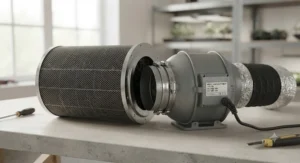
Move up to a 5×5 or larger footprint and CFM math changes fast — a 4-inch fan simply can’t turn over enough air per hour anymore. The AC Infinity Air Filtration Kit 6″ solves that with a 352 CFM fan rated at 34 dBA noise, paired with a carbon filter using a 38mm carbon thickness and 25 feet of included ducting. That’s nearly double the airflow of the 4-inch kits on this list while staying quieter than several budget fans running at half the CFM.
The filter uses the same 1200+ IAV activated charcoal with a prefilter cloth for high-efficacy odor blocking found in AC Infinity’s smaller kits, just scaled up. Here’s what the spec sheet won’t tell you but forum threads from long-term owners do: this fan handles high-resistance carbon filters better than some budget 6-inch alternatives, which matters because a filter that’s too restrictive for its fan is one of the most common reasons growers end up with weaker-than-expected exhaust despite a technically “big enough” CFM rating.
Pros:
- ✅ 352 CFM comfortably covers 5×5 tents and larger
- ✅ 34 dBA noise rating is unusually quiet for its output class
- ✅ 25 feet of included ducting reduces extra purchases
Cons:
- ❌ Highest price point in this roundup
- ❌ Overkill airflow for tents under 4×4
Expect $170-$210, which is steep, but for anyone scaling past a single small tent, the CFM headroom pays for itself in fewer heat and humidity headaches.
7. CANNABMALL 4/6/8″ Combo — a lesser-known budget bundle worth a look
Not every good option comes from the five brands that dominate search results. The CANNABMALL 4/6/8″ Combo is a genuinely under-the-radar pick that scales across three duct sizes from one listing, using the same 1050+ RC 48 imported Virgin Australian activated charcoal delivering 100% filtered airflow found in far pricier kits. The included 10 feet of aluminum ducting with two clamps and adjustable rope hangers rounds out a genuinely complete starter package.
The honest caveat: this is a smaller brand with a thinner independent review history than AC Infinity or VIVOSUN, so you’re trading some brand-reputation reassurance for a lower price. For a budget-conscious grower comfortable with a less established name — and who’s read enough listings to know the carbon spec is legitimate — this is a smart way to stretch a ventilation budget, especially if you’re outfitting an 8-inch exhaust and don’t want to pay premium-brand pricing for that size.
Pros:
- ✅ Available in 4″, 6″, and 8″ from one product line
- ✅ Same-grade Australian activated charcoal as premium brands
- ✅ Complete kit includes clamps and mounting hardware
Cons:
- ❌ Thinner independent review history than major brands
- ❌ Less consistent customer support reputation
Pricing spans $60-$150 depending on size chosen — genuinely one of the better inline fan filter bundle deals going if you’re comfortable with a newer name in the space.
Practical Usage Guide: Setting Up Your Inline Fan and Filter Combo
Getting the hardware right is half the job — installation determines whether you actually get the CFM you paid for. Start by mounting the carbon filter inside the tent, near the top, and connect it directly to the fan’s intake with a short section of ducting. Hot, humid air rises, so pulling from the top of the tent captures the worst of both heat and odor before it has a chance to settle. The fan itself can sit inside or just outside the tent; keeping it inline right after the filter means less dust reaches the blades over time.
Once mounted, run the fan at a moderate speed for the first 48 hours and watch your tent for visible sag or ballooning in the walls — that’s your signal the static pressure is unbalanced and needs a speed adjustment. A common first-30-days mistake is running the fan at maximum speed constantly, which shortens carbon filter lifespan and wastes electricity without meaningfully improving odor control once the filter’s already capturing what it can. Check ducting clamps monthly; vibration loosens them faster than most people expect, and a loose clamp is a slow leak of both air pressure and hard-earned bud smell straight into your living room.
Maintenance-wise, wipe down the fan blades every 60-90 days — dust buildup on composite blades reduces airflow more than people assume, sometimes by 10-15% once you’re a few months in. Rotate or replace the carbon filter every 12-18 months of continuous use, sooner in humid climates where moisture degrades activated charcoal’s adsorption capacity faster.
Real-World Scenarios: Which Combo Fits Your Grow
The closet grower. A college student running a 2×2 tent in a dorm closet, worried about resident advisors doing room checks, needs maximum discretion over maximum airflow. The iPower 4 Inch 190 CFM Combo or the smaller CANNABMALL 4-inch option covers this footprint easily, and the lower CFM actually helps here — less air movement means less noise leaking under a closet door.
The suburban basement grower. Someone running a 4×4 tent in a finished basement, sharing HVAC with the rest of the house, needs both odor control and quiet operation since family members are nearby around the clock. The VIVOSUN 4 Inch 203 CFM Combo or Spider Farmer 4″ 205 CFM Combo fit this use case well — enough airflow for a standard tent, quiet enough not to become a household topic of conversation.
The scaling hobbyist. A grower who started with one small tent and just added a second, larger 5×5 tent needs to rethink CFM math entirely rather than just buying a second copy of their old setup. The AC Infinity Air Filtration Kit 6″ is built exactly for this jump — its 352 CFM headroom means it won’t be the bottleneck as the grow space grows.
How to Choose an Inline Fan and Filter Combo
- Calculate your tent volume first. Multiply length by width by height in feet — a standard 4x4x7 tent is roughly 112 cubic feet, and that number drives everything else.
- Target a CFM that clears your volume every 1-3 minutes. For a 4x4x7 tent, an inline fan moving 75-150 CFM is generally sufficient, though most growers buy above that floor to account for filter resistance.
- Match filter diameter to fan diameter exactly. A 4-inch fan needs a 4-inch filter — mismatched sizing either restricts airflow or lets odor slip past unfiltered.
- Factor in ducting length and bends. Every extra foot and every 90-degree turn reduces effective CFM, sometimes by 10% or more per bend.
- Decide if you need speed control or automation. A fixed-speed fan is cheaper but forces you to manually adjust for heat waves or humidity spikes; a controller-equipped combo does that adjusting for you.
- Check noise ratings if the tent shares living space. Anything under 35 dBA is comfortable for a bedroom or shared basement; louder fans are better suited to garages or dedicated grow rooms.
- Budget for filter replacement, not just the initial kit price. A cheap combo with an expensive, hard-to-find replacement filter often costs more over two years than a pricier kit with widely available parts.

Common Mistakes When Buying an Inline Fan and Filter Combo
The single most common error is buying based on tent size alone and ignoring ducting length and bends — a fan rated perfectly for your tent volume can underperform badly once you factor in 15 feet of ducting snaking through a closet with three turns. A second frequent mistake is assuming a higher CFM number is always better; oversized fans in small tents create negative pressure imbalances that stress tent zippers and seams over time, and the extra airflow does nothing for odor control once the filter’s already saturated at a lower speed.
Buyers also regularly skip checking filter replacement availability before purchase, only to discover months later that their specific filter size is discontinued or backordered. And a surprisingly common oversight: ignoring electrical draw when running a fan alongside grow lights on the same circuit — a 68-watt fan is trivial on its own, but stacked against a 600-watt light and a dehumidifier, it can trip a standard 15-amp breaker.
Inline Fan and Filter Combo vs Buying Components Separately
There’s a persistent debate among growers about whether buying a matched combo beats sourcing a fan and filter independently, and the honest answer depends on experience level. Buying separately gives you total control — you can pair a high-static-pressure fan built for restrictive filters with a specific carbon brand you trust, and upgrade each component independently as needs change. That flexibility comes at a cost: compatibility research, separate shipping, and the real risk of buying a fan that can’t actually push air through the filter you chose, which is a more common mistake than manufacturers like to admit.
A pre-matched combo removes that guesswork entirely — the fan’s static pressure rating is already verified against the filter’s resistance, which is precisely the value a properly matched fan and carbon filter kit provides as the most important single ventilation purchase for any enclosed indoor grow. For first-time growers or anyone who’d rather spend research time on nutrients and lighting instead of airflow engineering, a combo kit is almost always the better call. Experienced growers running unusual tent shapes or specialty filters are the main group where separate purchasing still makes sense.
What to Expect: Real-World Performance
Spec sheets tell you what a fan can theoretically move; they don’t tell you what it feels like standing next to your tent at 2am when the AC just kicked off and the house is quiet. In practice, a well-matched 200 CFM combo produces a soft, constant white-noise hum — noticeable if you’re listening for it, forgettable within about a week of living with it. Odor control performance follows a curve rather than a switch: fresh filters block essentially everything for the first several months, then gradually let faint traces through as the carbon bed approaches saturation, which is your practical signal to schedule a filter check even before hitting the 12-18 month mark.
Temperature control is the underappreciated side benefit reviewers consistently mention — a properly sized inline fan pulling fresh air through a tent running 600+ watts of lighting can drop ambient tent temperature by 5-10°F compared to a sealed, unventilated space, which matters more for plant health than most beginners initially expect.
The Technical Side: CFM Rating, Carbon Filter Scrubber & Ducting Clamps Explained
CFM rating, or cubic feet per minute, measures how much air a fan physically moves under ideal, unobstructed conditions — but that number drops once you attach ducting, bends, and a carbon filter, sometimes by 25-30% from the fan’s rated maximum. When comparing combo kits, treat the printed CFM rating as a ceiling, not a guarantee, and lean toward the higher end of your calculated range rather than the exact minimum.
A carbon filter scrubber is functionally the same thing as the carbon filters covered throughout this guide — “scrubber” is simply the more technical, industrial-ventilation term for a filter that adsorbs (not absorbs — a real chemical distinction) odor compounds as air passes through a bed of activated charcoal. Activated carbon is the most common adsorbent used to remove gaseous contaminants from indoor air, and its performance depends heavily on bed depth and airflow rate through the material — which is exactly why filter diameter needs to match fan diameter, covered earlier in the buying criteria.
Ducting clamps, the small stainless or steel bands securing ducting to both fan and filter, are the most overlooked component in any combo kit — and the most common point of failure. A loose clamp doesn’t just risk a duct falling off; it creates a pressure leak that lets unfiltered air escape before reaching the carbon bed, quietly defeating the entire point of the filter. Most kits, including the VIVOSUN 4 Inch 203 CFM Combo and CANNABMALL 4/6/8″ Combo, include two stainless clamps standard — check and re-tighten them monthly, especially after moving or adjusting the tent.
Long-Term Cost & Maintenance
Sticker price is only the opening bid in what an inline fan and filter combo actually costs over its useful life. Electricity is the smallest ongoing expense — most 4-inch fans in this roundup draw 30-70 watts, translating to roughly $3-8 per month running continuously at moderate speed, depending on local electricity rates. The real recurring cost is filter replacement: budget $25-45 per replacement carbon filter every 12-18 months, which means a $60 iPower kit and a $170 AC Infinity kit converge in total cost of ownership faster than the sticker prices suggest once you’re two years in.
Where the premium kits earn back their price gap is component longevity — a fan rated for tens of thousands of hours of bearing life is less likely to need full replacement, while budget fans without published bearing ratings are more of an unknown quantity past the two-to-three-year mark. For a grower planning to run tents continuously for five-plus years, that difference in expected fan lifespan can make the pricier option the actual cheaper choice on a per-year basis.
✨ Ready to stop guessing and start growing odor-free? Compare your shortlist against your tent’s exact CFM needs before you check out.
🔍 Don’t Miss These Exclusive Deals!
Take your ventilation setup to the next level with the combos above. Click through to check current pricing and availability before stock or bundle pricing shifts — a properly sized fan and filter combo is the single upgrade most likely to make your grow space genuinely pleasant to walk past.
Safety, Electrical, and Fire-Code Considerations
Grow tent ventilation sits at the intersection of horticulture and household electrical safety, and it’s worth treating it that way. Always plug inline fans into grounded, dedicated outlets where possible, and avoid daisy-chaining a fan, multiple grow lights, and a dehumidifier through a single extension cord — that combination is a common cause of overheated cords and, in worse cases, house fires. Off-gassing from new materials — including some duct components and tent fabric — releases volatile organic compounds that peak in the first days and weeks, which is actually another reason good ventilation matters even before your first plant goes in.
Fire-retardant ducting, standard on most kits reviewed here, matters more than it might seem for a component that’s just moving air — ducting near lighting ballasts can see real heat exposure, and non-rated ducting is a genuine, if often overlooked, fire risk. Check your local jurisdiction’s rules if you’re venting exhaust air outside your home; some municipalities have specific requirements for exterior venting of any kind, grow-related or not, and a quick call to a local building department avoids problems down the line.
Budget Grow Tent Ventilation Kits: Finding the Best Inline Fan Filter Bundle Deal
Not every grower has $170 to drop on a premium 6-inch kit, and that’s fine — a genuinely capable budget grow tent ventilation kit exists at nearly every price point covered in this guide. The trick to finding a solid inline fan filter bundle deal without getting burned is checking three things before price: published CFM rating (not just “powerful airflow” marketing language), confirmed carbon type and IAV rating, and whether ducting and clamps are actually included or sold separately once you read the fine print.
Among the options here, the iPower 4 Inch 190 CFM Combo and CANNABMALL 4/6/8″ Combo represent the strongest affordable carbon filter fan combo picks — both use legitimate, name-brand-equivalent activated charcoal specs rather than vague “premium carbon” language, which is worth more than a slightly lower sticker price elsewhere. If your tent is under 4×4, resist the urge to oversize for “future-proofing” — a bigger fan just means more noise and more wasted CFM for a size you may never grow into, and that budget is better spent on a genuinely better filter or a second small tent down the line.

Frequently Asked Questions
❓ What CFM do I need for a 4x4 grow tent?
❓ How often should I replace my carbon filter?
❓ Can I use an inline fan without a carbon filter?
❓ Do inline fan and filter combos work for non-grow uses?
❓ Is a louder fan always a stronger fan?
Conclusion
Choosing between these seven kits really comes down to matching your tent size and tolerance for noise against your budget, not chasing the highest CFM number on the page. For a first small tent, the iPower 4 Inch 190 CFM Combo or VIVOSUN 4 Inch 203 CFM Combo cover the fundamentals without overspending. Growers who want automation should look at the Mars Hydro iFresh 4″ EC Combo or Spider Farmer 4″ 205 CFM Combo, keeping in mind the Pro-tier caveat on the Mars Hydro side. And anyone scaling past a 4×4 footprint should seriously consider the AC Infinity Air Filtration Kit 6″ rather than trying to stretch a 4-inch fan beyond its comfort zone.
Whichever combo you land on, the fundamentals from this guide hold steady: match filter diameter to fan diameter, size CFM to your actual tent volume rather than a rounded-up guess, check ducting clamps monthly, and budget for filter replacement as an ongoing cost rather than a one-time purchase. Get those basics right, and the “what’s that smell” conversation with roommates or neighbors becomes a non-issue rather than a recurring headache.
Recommended for You
- Grow Tent for Vegetables: 7 Best Picks for 2026
- Quiet Grow Tent Setup: 7 Silent Picks That Won’t Snitch (2026)
- Grow Tent Humidity Control: 7 Tools That Actually Work (2026)
Disclaimer: This article contains affiliate links. As an Amazon Associate, I earn from qualifying purchases. If you purchase products through these links, we may earn a small commission at no additional cost to you.
✨ Found this helpful? Share it with a fellow grower who’s still fighting that smell! 💬🌬️
